

Chief Policy Counsel, Council on Criminal Justice and Senior Advisor, Right on Crime
Marc A. Levin is the Chief Policy Counsel for the Council on Criminal Justice (counciloncj.org) and Senior Advisor for Right on Crime.
An attorney and accomplished author on legal and public policy issues, Marc began the Foundation’s criminal justice program in 2005. This work contributed to nationally praised policy changes that have been followed by dramatic declines in crime and incarceration in Texas. Building on this success, in 2010, Levin developed the concept for the Right on Crime initiative, a TPPF project in partnership with Prison Fellowship and the American Conservative Union Foundation. Right on Crime has become the national clearinghouse for conservative criminal justice reforms and has contributed to the adoption of policies in dozens of states that fight crime, support victims, and protect taxpayers.
In 2014, Levin was named one of the “Politico 50” in the magazine’s annual “list of thinkers, doers, and dreamers who really matter in this age of gridlock and dysfunction.”
Marc has testified on criminal justice policy on four occasions before Congress and has testified before legislatures in states including Texas, Nevada, Kansas, Wisconsin, and California. He also has met personally with leaders such as U.S. Presidents, Speakers of the House, and the Justice Commtitee of the United Kingdom Parliament to share his ideas on criminal justice reform. In 2007, he was honored in a resolution unanimously passed by the Texas House of Representatives that stated, “Mr. Levin’s intellect is unparalleled and his research is impeccable.”
Since 2005, Marc has published dozens of policy papers on topics such as sentencing, probation, parole, reentry, and overcriminalization which are available on the TPPF website. Levin’s articles on law and public policy have been featured in publications such as the Wall Street Journal, USA Today, Texas Review of Law & Politics, National Law Journal, New York Daily News, Jerusalem Post, Toronto Star, Atlanta Journal-Constitution, Philadelphia Inquirer, San Francisco Chronicle, Washington Times, Los Angeles Daily Journal, Charlotte Observer, Dallas Morning News, Houston Chronicle, Austin American-Statesman, San Antonio Express-News and Reason Magazine.
In 1999, Marc graduated with honors from the University of Texas with a B.A. in Plan II Honors and Government. In 2002, Marc received his J.D. with honors from the University of Texas School of Law. Marc was a Charles G. Koch Summer Fellow in 1996. He served as a law clerk to Judge Will Garwood on the U.S. Court of Appeals for the Fifth Circuit and Staff Attorney at the Texas Supreme Court.
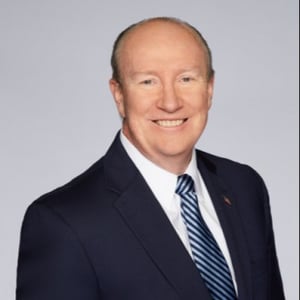
Senior Fellow, National Review
Bestselling author Andrew C. McCarthy is a contributing editor at National Review, a senior fellow at National Review Institute, and a Fox News contributor. He is a former Chief Assistant United States Attorney in the Southern District of New York and led the terrorism prosecution against the “Blind Sheikh” (Omar Abdel Rahman) and eleven other jihadists for conducting a war of urban terrorism against the United States that included the 1993 World Trade Center bombing and a plot to bomb New York City landmarks. During is 20-year career as a prosecutor, he received numerous honors, including the Justice Department’s highest awards. Andy speaks and writes widely on law and national security, radical Islam, politics, and culture. He has testified before Congress as an expert on issues of constitutional law, counterterrorism, and law-enforcement. He is a columnist for The Hill, and his essays and book reviews appear frequently at The New Criterion. His most recent New York Times bestselling book is Ball of Collusion (Encounter Books, 2019), about the Russiagate controversy (an updated version was published in 2020). His other books include Willful Blindness (2008), The Grand Jihad (2010), Spring Fever: The Illusion of Islamic Democracy (2012), and Faithless Execution (2014). He has also written several pamphlets in the Broadside series published by Encounter Books, most recently Islam and Free Speech (2015).

Co-Founder, American Society of Evidence-Based Policing
Renée J. Mitchell served in the Sacramento Police Department for twenty-two years and is currently a Senior Police Researcher with RTI International. She holds a B.S. in Psychology, an M.A. in Counseling Psychology, an M.B.A., a J.D., and a Ph.D. in Criminology from the University of Cambridge. She was a 2009/2010 Fulbright Police Research Fellow where completed research in the area of juvenile gang violence at the London Metropolitan Police Service. You can view her TEDx talks, “Research not protests” and “Policing in America Needs to Change: Trust me I’m a Cop”, where she advocates for evidence-based policing.
She is a co-founder of the American Society of Evidence-Based Policing, a National Police Foundation Fellow, a BetaGov Fellow, a member of the George Mason Evidence-Based Policing Hall of Fame, and a visiting scholar at the University of Cambridge. Her research areas include policing, evidence-based crime prevention, evaluation research and methods, place-based criminology, police/citizen communication, and procedural justice.
She has published her work in the Journal of Experimental Criminology, Justice Quarterly, and the Cambridge Journal of Evidence-Based Policing. She has an edited book with Dr. Laura Huey, Evidence Based Policing: An introduction, and coming out next March Implementing Evidence-Based Research: A How to Guide for Police Organizations.
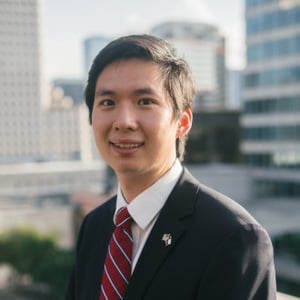
State District Judge, Austin, Texas
Cory Liu is a state district judge in Austin, Texas. He previously served as assistant general counsel to Texas Governor Greg Abbott. Mr. Liu clerked for Judge Andrew Oldham on the U.S. Court of Appeals for the Fifth Circuit and Judge Danny Boggs on the U.S. Court of Appeals for the Sixth Circuit. He was Editor-in-Chief of the Harvard Journal of Law & Public Policy and is a graduate of Harvard Law School and the University of Chicago.
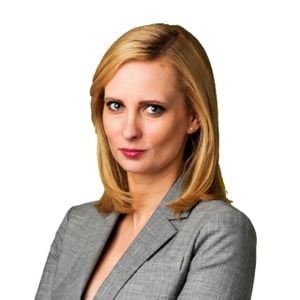
Executive Director, Committee for Justice
Ashley Baker is Executive Director of the Committee for Justice and founder of the Alliance on Antitrust coalition. Her work focuses on antitrust law, technology regulation, administrative-agency authority, the Supreme Court, and judicial nominations. She closely follows the Federal Trade Commission and the Department of Justice’s Antitrust Division, with particular attention to merger review, agency procedure, and the effects of regulation on American innovation and competitiveness. She is also founder of the Alliance on Antitrust Coalition.
Ashley has testified before the United States Senate on antitrust law. Her writing has appeared in Fox News, USA Today, The Boston Globe, The Hill, RealClearPolitics, The American Spectator, and other national publications. She also provides policy analysis through congressional testimony and correspondence, regulatory comments, and public commentary.
Ashley serves on the Federalist Society’s Regulatory Transparency Project and Antitrust and Consumer Protection Practice Group Executive Committee. She is also active in the Republican National Lawyers Association and has spoken on the Supreme Court and the federal judiciary. An authority on the judicial-confirmation process, she worked closely on the successful confirmation efforts for Justices Neil Gorsuch and Brett Kavanaugh, as well as multiple federal appellate judges.
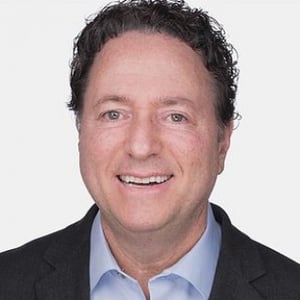
President, Committee for Justice
Curt Levey is President of the Committee For Justice, an organization devoted to advancing constitutionally limited government and individual liberty. He is a veteran of Supreme Court and other judicial confirmation battles and serves on the executive committee of the Federalist Society's Civil Rights Practice Group.
After graduating Harvard Law School with honors and clerking for the U.S. Court of Appeals for the Sixth Circuit, Mr. Levey served as Director of Legal & Public Affairs at the Center for Individual Rights (CIR). There he worked on landmark Supreme Court cases, including the University of Michigan affirmative action cases and the successful constitutional challenge to the Violence Against Women Act. After CIR, Mr. Levey headed the Title IX policy group at the U.S. Department of Education.
Before attending law school, Mr. Levey earned an M.S. and B.A. in computer science from Brown University and worked in the field of artificial intelligence (AI). He invented a new type of AI technology, for which he wrote a successful patent application.
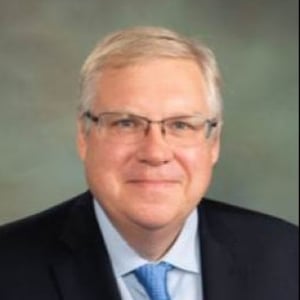
President and General Counsel, Public Interest Legal Foundation
J. Christian Adams is the President and General Counsel of the Public Interest Legal Foundation. He served from 2005 to 2010 in the Voting Section at the United States Department of Justice Voting Section. President Trump appointed Adams to the Presidential Advisory Commission on Election Integrity. President Trump also appointed Adams as a Commissioner to the United States Commission on Civil Rights where he also now serves with a term through 2025. He has been involved in election law lawsuits in 33 states and the territory of Guam. He has represented multiple presidential campaigns in election litigation. He has a law degree from the University of South Carolina School of Law. He is a member of the South Carolina and Virginia Bars.
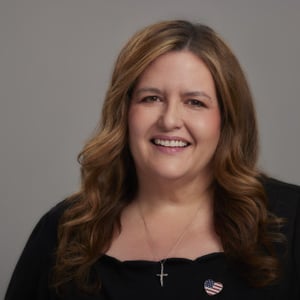
Attorney, Law Offices of Linda A. Kerns, LLC
Chief Policy Counsel, Council on Criminal Justice and Senior Advisor, Right on Crime
Marc A. Levin is the Chief Policy Counsel for the Council on Criminal Justice (counciloncj.org) and Senior Advisor for Right on Crime.
An attorney and accomplished author on legal and public policy issues, Marc began the Foundation’s criminal justice program in 2005. This work contributed to nationally praised policy changes that have been followed by dramatic declines in crime and incarceration in Texas. Building on this success, in 2010, Levin developed the concept for the Right on Crime initiative, a TPPF project in partnership with Prison Fellowship and the American Conservative Union Foundation. Right on Crime has become the national clearinghouse for conservative criminal justice reforms and has contributed to the adoption of policies in dozens of states that fight crime, support victims, and protect taxpayers.
In 2014, Levin was named one of the “Politico 50” in the magazine’s annual “list of thinkers, doers, and dreamers who really matter in this age of gridlock and dysfunction.”
Marc has testified on criminal justice policy on four occasions before Congress and has testified before legislatures in states including Texas, Nevada, Kansas, Wisconsin, and California. He also has met personally with leaders such as U.S. Presidents, Speakers of the House, and the Justice Commtitee of the United Kingdom Parliament to share his ideas on criminal justice reform. In 2007, he was honored in a resolution unanimously passed by the Texas House of Representatives that stated, “Mr. Levin’s intellect is unparalleled and his research is impeccable.”
Since 2005, Marc has published dozens of policy papers on topics such as sentencing, probation, parole, reentry, and overcriminalization which are available on the TPPF website. Levin’s articles on law and public policy have been featured in publications such as the Wall Street Journal, USA Today, Texas Review of Law & Politics, National Law Journal, New York Daily News, Jerusalem Post, Toronto Star, Atlanta Journal-Constitution, Philadelphia Inquirer, San Francisco Chronicle, Washington Times, Los Angeles Daily Journal, Charlotte Observer, Dallas Morning News, Houston Chronicle, Austin American-Statesman, San Antonio Express-News and Reason Magazine.
In 1999, Marc graduated with honors from the University of Texas with a B.A. in Plan II Honors and Government. In 2002, Marc received his J.D. with honors from the University of Texas School of Law. Marc was a Charles G. Koch Summer Fellow in 1996. He served as a law clerk to Judge Will Garwood on the U.S. Court of Appeals for the Fifth Circuit and Staff Attorney at the Texas Supreme Court.

Senior Attorney, Financial Industry Regulatory Authority
John-Michael Seibler is a senior attorney at the Financial Industry Regulatory Authority (FINRA).
Prior to joining FINRA, he directed The Heritage Foundation’s project to counter abuse of the criminal law, particularly at the federal level, and was a legal fellow in Heritage's Institute for Constitutional Government. Seibler started at Heritage as a visiting fellow through the Charles Koch Institute’s Koch Associate program.
He previously clerked for the House Judiciary Committee’s Crime Subcommittee, the Goldwater Institute’s Scharf-Norton Center for Constitutional Litigation, and the National Right to Work Legal Defense Foundation. He received his law degree from Washington & Lee University School of Law.
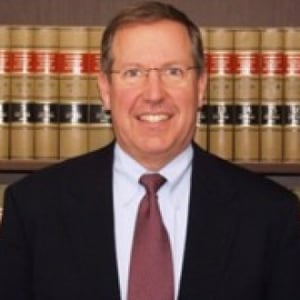
President and CEO, Association of Prosecuting Attorneys
Mr. David LaBahn is President and Chief Executive Officer (CEO) of the Association of Prosecuting Attorneys (APA), a national association representing elected and deputy or assistant prosecutors, and city attorneys. The association acts as a global forum for the exchange of ideas, allowing prosecutors to collaborate with all criminal justice partners, and conducts timely and effective training and technical assistance to improve the prosecutorial function. In addition, APA serves as an advocate for prosecutors on emerging issues related to the administration of justice, development of partnerships and implementation of problem-solving strategies.
Prior to forming APA, Mr. LaBahn was the Director of the American Prosecutors Research Institute (APRI) and the Director of Research and Development for the National District Attorneys Association (NDAA). In this dual capacity, he directed APRI’s Projects including editing and teaching in the areas of child and adult sexual assault and gang violence. He worked with other national organizations to lobby for the increase the funding to assist in the investigation and prosecution of child abuse as well as coordinate the efforts of these federally funded programs. He attended and spoke at numerous national conferences on NDAA’s behalf and applied for and received numerous federal grants to continue the Association’s efforts to support the nation’s district attorneys.
Before joining NDAA, Mr. LaBahn was the Executive Director of the California District Attorneys Association (CDAA). Appointed to this position in 2003, he had responsibility for all of the Association’s efforts and became the primary policy strategist and spokesperson for the organization. Much of his initial efforts involved working through a very difficult budget for the state and then the historic recall of Governor Davis caused a mid-term transition on the Governor’s Office. Throughout this tumultuous time, he managed to maintain and expand CDAA’s staff of approximately 50 full-time employees and annual budget of over $5 million. In 2006 he received the largest grant from the Governor’s Office of Highway Safety in Association history. During this time, he was involved in creating CDAA’s first Violence against Women Project, the Circuit Environmental Prosecution Project and the High Technology Prosecution Project. CDAA expanded its committee structure to include over 30 standing committees as new trends emerged like Community Prosecution, High Technology, Stalking, and Elder Abuse. He also lectured at state-wide MCLE programs on sexual assault and gang crime as well as edited the Legislative Digest to make certain that all prosecutors were aware of changes in the law. He personally staffed the Rural County Committee and taught at the Annual Rural Counties Conference in California.
Mr. LaBahn joined CDAA as the Deputy Executive Director in 1996 and at that time was responsible for the training and publications department, applying for and received state and federal grants, and lobbing the California State Legislature on criminal justice and budget matters. Mr. LaBahn was a former deputy district attorney in Orange and Humboldt counties in California (1987-96). He received numerous awards including being recognized with community service awards for his work with victims and the reduction of gang violence in the City of Westminster, CA.

Professor of Law, Antonin Scalia Law School, George Mason University
ILYA SOMIN is Professor of Law at George Mason University and the B. Kenneth Simon Chair in Constitutional Studies at the Cato Institute. His research focuses on constitutional law, property law, democratic theory, federalism, and migration rights. He is the author of Free to Move: Foot Voting, Migration, and Political Freedom (Oxford University Press, revised and expanded edition, 2022), Democracy and Political Ignorance: Why Smaller Government is Smarter (Stanford University Press, revised and expanded second edition, 2016), and The Grasping Hand: Kelo v. City of New London and the Limits of Eminent Domain (University of Chicago Press, 2015, rev. paperback ed., 2016), coauthor of A Conspiracy Against Obamacare: The Volokh Conspiracy and the Health Care Case (Palgrave Macmillan, 2013), and co-editor of Eminent Domain: A Comparative Perspective (Cambridge University Press, 2017). Democracy and Political Ignorance has been translated into Italian and Japanese.
Somin’s work has appeared in numerous scholarly journals, including the Yale Law Journal, Stanford Law Review, Northwestern University Law Review, Georgetown Law Journal, Critical Review, and others. Somin has also published articles in a variety of popular press outlets, including the New York Times, Washington Post, Wall Street Journal, Los Angeles Times, CNN, NBC, The Atlantic, USA Today, Boston Globe, US News and World Report, South China Morning Post, National Law Journal and Reason. He has been quoted or interviewed by the New York Times, Washington Post, Wall Street Journal, Time, Newsweek, The Economist, the Christian Science Monitor, the Financial Times, The Guardian, the Associated Press, CBS, MSNBC, NPR, BBC, Reuters, the Canadian Broadcasting Corporation, the Australian Broadcasting Corporation, Radio Free Europe/Radio Liberty, Al Jazeera, and the Voice of America, among other media.
Somin’s writings have been cited in decisions by the United States Supreme Court, multiple state supreme courts and lower federal courts, and the Supreme Court of Israel. He is co-counsel for the plaintiffs in VOS Selections, Inc. v. Trump, a case challenging the constitutionality of President Trump’s “Liberation Day” tariffs. Somin has testified on the use of drones for targeted killing in the War on Terror before the US Senate Judiciary Subcommittee on the Constitution, Civil Rights, and Human Rights. In 2009, he testified on property rights issues at the United States Senate Judiciary Committee confirmation hearings for Supreme Court Justice Sonia Sotomayor. Somin writes regularly for the popular Volokh Conspiracy law and politics blog, now affiliated with Reason magazine (previously affiliated with the Washington Post from 2014 to 2017). From 2006 to 2013, he served as Co-Editor of the Supreme Court Economic Review, one of the country’s top-rated law and economics journals.
Somin has served as a visiting professor at the University of Pennsylvania Law School. He has also been a visiting professor or scholar at the Georgetown University Law Center, the University of Hamburg, Germany, the University of Torcuato Di Tella in Buenos Aires, Argentina, Uriel Reichman University in Israel, and Zhengzhou University in China. He is a University Affiliate of the Schar School of Policy and Government at George Mason University, and an affiliated faculty member of the George Mason University Institute for Immigration Research. Before joining the faculty at George Mason, Somin was the John M. Olin Fellow in Law at Northwestern University Law School in 2002-2003. In 2001-2002, he clerked for the Hon. Judge Jerry E. Smith of the U.S. Court of Appeals for the Fifth Circuit. Professor Somin earned his B.A., Summa Cum Laude, at Amherst College, M.A. in Political Science from Harvard University, and J.D. from Yale Law School.

Alston & Bird Professor of Law, Duke University School of Law
Professor Young teaches constitutional law, federal courts, and foreign relations law. He is one of the nation's leading authorities on the constitutional law of federalism, having written extensively on the Rehnquist Court's "Federalist Revival" and the difficulties confronting courts as they seek to draw lines between national and state authority. He also is an active commentator on foreign relations law, where he focuses on the interaction between domestic and supranational courts and the application of international law by domestic courts. Professor Young also writes on constitutional interpretation and constitutional theory. He has been known to dabble in maritime law and comparative constitutional law.
A native of Abilene, Texas, Professor Young joined the Duke Law faculty in 2008, after serving as the Charles Alan Wright Chair in Federal Courts at the University of Texas at Austin School of Law, where he had taught since 1999. He graduated from Dartmouth College in 1990 and Harvard Law School in 1993. After law school, he served as a law clerk to Judge Michael Boudin of the 1st U.S. Circuit Court of Appeals (1993-94) and to Justice David Souter of the U.S. Supreme Court (1995-96). Professor Young practiced law at Cohan, Simpson, Cowlishaw, & Wulff in Dallas, Texas (1994-95) and at Covington & Burling in Washington, D.C. (1996-98), where he specialized in appellate litigation. He has also been a visiting professor at Harvard Law School (2004-05) and Villanova University School of Law (1998-99), as well as an adjunct professor at Georgetown University Law Center (1997).
Elected to the American Law Institute in 2006, Professor Young is an active participant in both public and private litigation in his areas of interest. He has been the principal author of amicus briefs on behalf of leading constitutional scholars in several recent Supreme Court cases, including Medellin v. Texas(concerning presidential power and the authority of the International Court of Justice over domestic courts) and Gonzales v. Raich (concerning federal power to regulate medical marijuana).
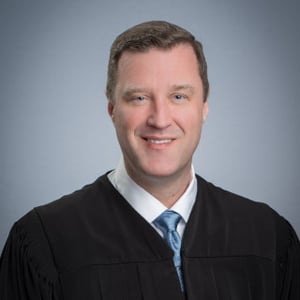
Justice, Texas Supreme Court
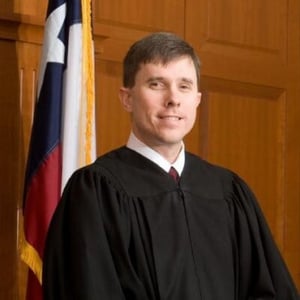
Evan Young is a Justice of the Supreme Court of Texas. Governor Greg Abbott, who appointed Young to fill an unexpired term, swore him into office on November 10, 2021. Justice Young was elected to a full term in November 2022.
Young graduated summa cum laude from Duke University in 1999, where he was inducted into Phi Beta Kappa. He was a British Marshall Scholar at Oxford University, where he completed his studies in 2001 and earned a First Class Honours degree in Modern History, focusing on British constitutional history. He earned his law degree from Yale Law School in 2004.
Young then worked as a lawyer in the judicial and executive branches of the federal government. He first served as a law clerk to Judge J. Harvie Wilkinson III of the U.S. Court of Appeals for the Fourth Circuit, and then to Justice Antonin Scalia at the U.S. Supreme Court. In 2006, after his clerkship with Justice Scalia ended, Justice Young became Counsel to the Attorney General at the U.S. Department of Justice, serving in the Office of the Attorney General under Attorneys General Alberto R. Gonzales and Michael B. Mukasey. While on the Attorney General’s staff, he accepted a detail to the U.S. Embassy in Baghdad, Iraq, where he was the Deputy Rule of Law Coordinator. In that position he worked to assist the Iraqi government in its efforts to strengthen its legal regime, including, for example, its courts and prison system.
Young returned to Texas and joined the Austin office of Baker Botts L.L.P. in 2009. His practice focused on trial and appellate litigation. He argued cases before both the Supreme Court of the United States and the Supreme Court of Texas, as well as many federal and state appellate courts. He represented clients across the country before every level of the state and federal judiciary.
Before joining the Texas Supreme Court, Young was appointed in 2017 by Governor Abbott and confirmed by the Texas Senate to serve as a member of the Texas Judicial Council, which is the policy-making body for the Texas Judiciary. In 2015, the Texas Supreme Court appointed him to the Supreme Court Advisory Committee, which assists the Court in drafting the rules that govern litigation in Texas courts. He served on both until his elevation to the bench.
Justice Young is an elected member of the American Law Institute and a member of the Texas Philosophical Society. He has been an adjunct law professor for many years at the University of Texas School of Law, where he has frequently taught the Federal Courts and Religious Liberty courses. He also has been an adjunct professor at the Unversity of Austin (UATX) and at the University of Mississippi School of Law. He served as Chair of the State Bar of Texas Business Law Section, Chair of the National Center for Missing and Exploited Children's Texas Regional Office, and Trustee of the Texas Supreme Court Historical Society.
Justice Young and his wife, Tobi, live in Austin with their daughter.

The Biden Administration on Policing: What's the Verdict?
Marc Levin, Andrew McCarthy, Renee Mitchell
Rising homicide rates, challenges in fully staffing police departments, and a shortfall in trust between...
State Court Docket Watch: Texas v. Hollins
Cory R. Liu
In Texas v. Hollins, the Supreme Court of Texas unanimously enjoined the Harris County Clerk...
State Court Docket Watch: In Re State of Texas
Cory R. Liu
In In re State of Texas, the Texas Supreme Court held that a voter’s lack...
The Role of Courts in a Pandemic
Austin Lawyers Chapter - Online Event
The Courts' Role at the Apex of State Power: Public Health Restrictions in the Time of Pandemics
Houston Lawyers Chapter
Houston, TXTrade Secrets Litigation: Do Damages Awarded in Texas Case Have Broader Ramifications?
Ashley Baker, Curt Levey
Intellectual property (IP) theft has taken an increasingly prominent place in the news as various...
Litigation Update: Non-citizen Voting
J. Christian Adams, Linda A. Kerns
The Public Interest Legal Foundation (“PILF”) filed a lawsuit against the Commonwealth of Pennsylvania’s Department...
Money Bail and Pretrial Detention
Marc Levin, John-Michael Seibler
Pretrial justice policies have recently emerged as a high profile issue and have a broad...
Compensation for the Wrongfully Imprisoned? - Podcast
David LaBahn, Ilya Somin
In recent years, there have been a growing number of cases where people have been...
United States Supreme Court Term in Review