

Supreme Court & Appellate Litigation Chair, Lex Politica; Of Counsel, Alliance Defending Freedom
Erin Morrow Hawley serves as Chair of Lex Politica's Supreme Court and Appellate Practice overseeing the firm’s strategic appellate litigation and critical motions practice in the trial courts. Erin is an experienced litigator who represents clients in constitutional, regulatory, and appellate matters in federal and state courts throughout the country.
Erin has represented dozens of clients before the Supreme Court of the United States, served as lead counsel in high-profile cases raising novel constitutional and statutory issues, and authored numerous successful petitions for certiorari and briefs in opposition. She has argued in state and federal appellate and trial courts throughout the country, including the Supreme Court of the United States. Erin represents diverse clients in high-stakes litigation from state governments to faith-based nonprofits to Fortune 100 companies. She possesses expertise on a wide range of subject matters including administrative law, the First Amendment, religious liberty, federal jurisdiction, federal preemption, equitable jurisdiction, tax law, the Affordable Care Act, and Title IX.
Erin represents clients in cases where public communications strategy is paramount. She is a sought-after speaker and writer, has testified multiple times before Congress, and is a frequent presenter on constitutional and administrative law issues, including at the Oxford Union, the National Federalist Society Convention, and university campuses across the country. She is a frequent commentator to media outlets, including Fox News, MSNBC, the Wall Street Journal, WORLD, USA Today, the Federalist, and the Hill.
Erin previously oversaw Alliance Defending Freedom’s--where she still serves as Of Counsel--litigation strategies to empower women and protect the dignity of life, defend pregnancy centers’ First Amendment rights from government overreach, and safeguard Americans’ freedoms from the ever-encroaching administrative state.

Editor, SCOTUSblog
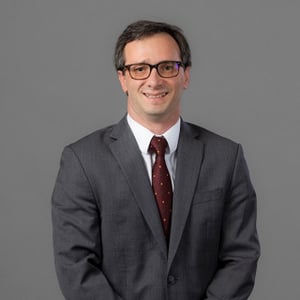
Assistant Professor of Law, George Mason University, Antonin Scalia Law School
Robert Leider is an Assistant Professor of Law at Antonin Scalia Law School, George Mason University. His scholarly interests are in criminal law, criminal procedure, and constitutional law, especially concerning questions about the use of force and the rule of law. He has written on the law of self-defense, the constitutional allocation of military power, and gun control. Among other places, he has published in the Florida Law Review (forthcoming), the Indiana Law Journal, and the Wall Street Journal.
Before joining Antonin Scalia Law School, Professor Leider was at Arnold & Porter in Washington, DC. He was previously with Mayer Brown LLP and was an Olin-Searle-Smith Fellow at the University of Pennsylvania Law School. He has clerked for Judge Diane S. Sykes, of the U.S. Court of Appeals for the Seventh Circuit, and Justice Clarence Thomas. Professor Leider earned a BA, summa cum laude, from The George Washington University, a JD from Yale Law School, and a PhD in Philosophy (dissertation defended with distinction) from Georgetown University. While at Yale, he served as an articles editor for the Yale Law Journal.
Professor Leider teaches criminal law and torts.
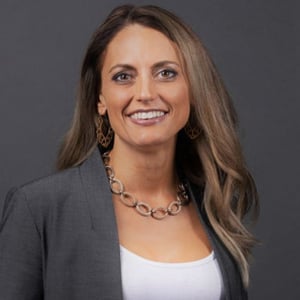
Judge, U.S. Court of Appeals for the Third Circuit
Hon. Jennifer Mascott served as Associate Professor of Law and Director of the Separation of Powers Institute at The Catholic University of America’s Columbus School of Law before her appointment to the federal bench. On July 16, 2025, President Donald J. Trump nominated her to the U.S. Court of Appeals for the Third Circuit (Delaware), and she was confirmed on October 9, 2025.
Prior to her confirmation, Judge Mascott wrote extensively in administrative and constitutional law, statutory interpretation, and the separation of powers. Her scholarship—published in leading journals including the Stanford Law Review, Notre Dame Law Review, and Supreme Court Review—was cited by the U.S. Supreme Court and multiple federal courts. She also contributed Supreme Court commentary for NBC Universal.
Before joining Catholic Law, she was an Assistant Professor and Co-Director of The C. Boyden Gray Center at George Mason University’s Antonin Scalia Law School. In 2022 she became co-author of Beermann, Cass & Diver’s Administrative Law: Cases and Materials (9th ed.). In 2023 she received the Justice Joseph Story Award for excellence in scholarship, teaching, and advancing the rule of law.
Judge Mascott also served as a Council Member of the ABA’s Administrative Law Section and as a Public Member of the Administrative Conference of the United States. She frequently testified before Congress on executive power, regulatory reform, and judicial jurisdiction, and participated in multiple Supreme Court confirmation hearings.
From 2019 to 2021, she took leave from academia to serve as Deputy Assistant Attorney General in the Department of Justice’s Office of Legal Counsel and later as Associate Deputy Attorney General, where she argued federal cases and assisted with Justice Amy Coney Barrett’s confirmation. Earlier in her career, she clerked for Justice Clarence Thomas and for then-Judge Brett M. Kavanaugh on the D.C. Circuit.
Judge Mascott earned her J.D. summa cum laude from the George Washington University Law School and her B.A. from the same institution.
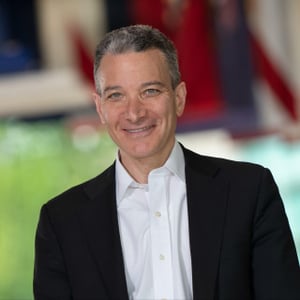
Professor of Law, The George Washington University Law School; CEO Emeritus, National Constitution Center
Jeffrey Rosen is the CEO Emeritus of the National Constitution Center, a professor of law at the George Washington University Law School, a senior fellow at the Foundation for Individual Rights and Expression (FIRE), and a contributing editor of The Atlantic. Host of "The Blessings of Liberty" podcast, he was previously the legal affairs editor of The New Republic and a staff writer for the New Yorker.
Rosen is the author of the New York Times bestsellers The Pursuit of Happiness and Conversations with RBG. His new book is The Pursuit of Liberty: How Hamilton vs. Jefferson Ignited the Lasting Battle Over Power in America.
Rosen is a graduate of Harvard College; Oxford University, where he was a Marshall Scholar; and Yale Law School. He is an elected member of the American Philosophical Society and the American Law Institute. In 2024, the French government recognized him as a Chevalier in the Ordre des Arts et des Lettres.

Professor of Law, Georgetown University Law Center
Nicholas Quinn Rosenkranz teaches constitutional law and federal jurisdiction, and he writes articles for the Harvard Law Review and the Stanford Law Review.
He is currently developing a new theory of constitutional interpretation and judicial review. The first installment, entitledThe Subjects of the Constitution, was published in the Stanford Law Review in May of 2010, and it is among the most downloaded articles about constitutional interpretation, judicial review, and/or federal courts in the history of SSRN. The second installment, The Objects of the Constitution, was published in May of 2011, also in the Stanford Law Review. And the comprehensive version is forthcoming as a book by Oxford University Press.
Rosenkranz has served and advised the federal government in a variety of capacities. He clerked for Judge Frank H. Easterbrook on the U.S. Court of Appeals for the Seventh Circuit (1999-2000) and for Justice Anthony M. Kennedy at the U.S. Supreme Court (October Term 2001). He served as an Attorney-Advisor at the Office of Legal Counsel in the U.S. Department of Justice (November 2002 - July 2004). He often testifies before Congress as a constitutional expert—most recently before the House Financial Services Oversight Subcommittee, regarding the Obama Administration's use of bank settlement agreements to circumvent the Appropriations Clause. He has also filed briefs and presented oral argument before the U.S. Supreme Court. His most recent Supreme Court brief, in Los Angeles v. Patel, was cited by Justice Alito in dissent.
Rosenkranz is a member of the New York Bar and the U.S. Supreme Court Bar. He is a Senior Fellow at the Cato Institute. He serves on the Board of Directors of the Foundation for Individual Rights in Education (FIRE). He is a founding member of Heterodox Academy and a member of its Executive Committee. He also serves on the Board of Directors of the Federalist Society and as the faculty advisor to the Georgetown chapter.
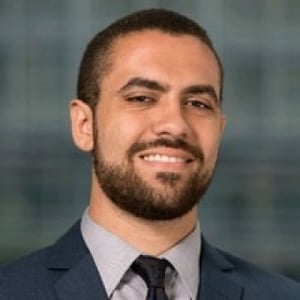
Director of Legal Policy, Firearms Policy Coalition
Matthew Larosiere is the policy director for the Firearms Policy Coalition. He writes on the subject of the 2nd Amendment, gun law, taxation, and gun violence. His work has been featured in National Review, Cato Blog, Fox Nation, Forbes, Wall Street Journal and more. Matt hosts the gun law myth-buster YouTube channel Fudd Busters.
Matthew graduated cum laude from the University of Alabama with a J.D. and Master of Laws in Taxation. During law school, he served as the president of the Federalist Society and the ethics opinion editor of the Journal of the Legal Profession. He holds a B.S. in Business Management from the University of Central Florida.
Wayne Fisher Research Professor, Professor of Law, South Texas College of Law Houston
Professor Dru Stevenson is a Wayne Fisher Research Professor and Professor of Law at South Texas College of Law Houston. He joined the faculty at South Texas College of Law Houston in 2003, and teaches Administrative Law/Regulation, Professional Responsibility, Nonprofit Incorporation, Legislation, and the Law & Economics seminar. He graduated Magna Cum Laude from the University of Connecticut School of Law, where he served as an editor of the Connecticut Law Review. After receiving his J.D., he practiced as a Legal Aid lawyer in Connecticut for three years. He earned his Master of Laws (LL.M.) from the Yale Law School in 2002, and became an Assistant Attorney General for the State of Connecticut until leaving to accept his position at South Texas College of Law Houston. Professor Stevenson’s publications cover topics ranging from criminal law to civil procedure, with an emphasis on the intersection of law with economics and linguistic theory. His articles have been cited in leading academic journals and treatises, by federal and state appellate courts, and in recent briefs to the U.S. Supreme Court. Professor Stevenson’s current research focus is firearm law and policy.
Director of Legal Policy, Firearms Policy Coalition
Matthew Larosiere is the policy director for the Firearms Policy Coalition. He writes on the subject of the 2nd Amendment, gun law, taxation, and gun violence. His work has been featured in National Review, Cato Blog, Fox Nation, Forbes, Wall Street Journal and more. Matt hosts the gun law myth-buster YouTube channel Fudd Busters.
Matthew graduated cum laude from the University of Alabama with a J.D. and Master of Laws in Taxation. During law school, he served as the president of the Federalist Society and the ethics opinion editor of the Journal of the Legal Profession. He holds a B.S. in Business Management from the University of Central Florida.
Wayne Fisher Research Professor, Professor of Law, South Texas College of Law Houston
Professor Dru Stevenson is a Wayne Fisher Research Professor and Professor of Law at South Texas College of Law Houston. He joined the faculty at South Texas College of Law Houston in 2003, and teaches Administrative Law/Regulation, Professional Responsibility, Nonprofit Incorporation, Legislation, and the Law & Economics seminar. He graduated Magna Cum Laude from the University of Connecticut School of Law, where he served as an editor of the Connecticut Law Review. After receiving his J.D., he practiced as a Legal Aid lawyer in Connecticut for three years. He earned his Master of Laws (LL.M.) from the Yale Law School in 2002, and became an Assistant Attorney General for the State of Connecticut until leaving to accept his position at South Texas College of Law Houston. Professor Stevenson’s publications cover topics ranging from criminal law to civil procedure, with an emphasis on the intersection of law with economics and linguistic theory. His articles have been cited in leading academic journals and treatises, by federal and state appellate courts, and in recent briefs to the U.S. Supreme Court. Professor Stevenson’s current research focus is firearm law and policy.
Attorney General, Alaska
Stephen J. Cox serves as the 28th Attorney General of the State of Alaska, where he oversees the state’s legal affairs and serves as the chief prosecutor with oversight of all district attorneys, general counsel to the Governor and executive branch, and represents the State in all civil and criminal cases in federal and state court. He brings to the role a proven record of public service at the highest levels of the U.S. Department of Justice, combined with deep experience in Alaska’s private sector and community life.
Before his appointment, he was Senior Vice President, Chief Legal and Strategy Officer of Bristol Bay Industrial—an investment platform of the Bristol Bay Native Corporation—acting as the chief legal officer for the industrial services portfolio on behalf of the Alaska Native shareholders in the Bristol Bay region. In that role, he led legal, compliance, and strategic planning for major energy, infrastructure, and utility projects across the State and in the Lower 48.
Earlier in his career, beginning in 2011, Cox served as in-house counsel for Apache Corporation, where he was the principal attorney for Apache Alaska and focused on new ventures and exploratory work in Cook Inlet, including seismic initiatives and ongoing regulatory coordination with state agencies.
Cox is deeply rooted in Anchorage’s community and faith life. He and his family attend Holy Family Old Cathedral in downtown Anchorage and support Mission Alaska, the Dominican friars’ outreach ministry under the Western Dominican Province. He was the founding board president and chairman of a new classical school in South Anchorage.
On the national stage, Cox held senior leadership roles in the U.S. Department of Justice under the Trump Administration. As Deputy Associate Attorney General, he co-chaired the DOJ’s Regulatory Reform Task Force and the Working Group on Corporate Enforcement and Accountability, and helped implement landmark policies aimed at curbing regulatory overreach and aligning enforcement with fairness and oversight. Later, as U.S. Attorney for the Eastern District of Texas, he oversaw prosecutions and civil litigation spanning 43 counties, prioritizing healthcare fraud, elder fraud, and violent crime while ensuring enforcement remained transparent and fair.
Earlier in his career, Cox practiced complex litigation at a major international law firm, served as counselor to the Director of U.S. Immigration and Customs Enforcement, and helped lead the William H. Webster Commission, which reviewed FBI counterterrorism intelligence and operations following the Fort Hood tragedy.
He began his legal career with a clerkship for Judge J. L. Edmondson of the U.S. Court of Appeals for the Eleventh Circuit. Cox earned a B.S. in Computer Science from Texas A&M University and a J.D., summa cum laude, from the University of Houston Law Center. He and his wife, Cristina, are raising their three children in Anchorage, and have made Alaska their home.
Vice President for Public Policy, American Forest and Paper Association
Paul Noe serves as Vice President for Public Policy at the American Forest and Paper Association. Paul has extensive regulatory, legislative and technical experience, including in environmental regulation, regulatory reform, renewable energy, biomass carbon neutrality, chemicals and product stewardship, workplace health and safety, and sustainability. He previously served as the Vice President of Regulatory Affairs at the Grocery Manufacturers Association.
Paul also has broad experience in public service, including as Counselor to the Administrator in the Office of Information and Regulatory Affairs, Office of Management and Budget (2001-2006), where he helped to lead the development of regulatory policy and White House review of regulations in the Administration of George W. Bush. He previously served as Senior Counsel to the U.S. Senate Committee on Governmental Affairs under Chairmen Fred Thompson, Ted Stevens and Bill Roth (1995-2001), where his work focused on reforming the regulatory process. He also has been a lawyer in private practice, most recently as a partner with C&M Capitolink LLC, as well as counsel in Crowell & Moring’s Environment and Natural Resources Group.
Paul currently serves as the Co-Chair of the Legislation Committee in the American Bar Association’s Section of Administrative Law and Regulatory Practice, and recently coauthored a chapter, “Beyond Process Excellence: Enhancing Societal Well-Being,” published in a book by Brookings Institution Press entitled, “Achieving Regulatory Excellence.” In the spring of 2016, he also served as a Policy Fellow at the University of Pennsylvania Law School, where he offered lectures in environmental law, advanced regulatory policy, legislation, and administrative law.
Paul is a graduate of The Georgetown University Law Center, where he was a John M. Olin fellow in law and economics and an editor on the law journal, and Williams College, where he was a member of Phi Beta Kappa.
Professor of Law, Fordham University School of Law
Professor Johnson is currently a Professor of Law at Fordham University School of Law, and teaches in the areas of Contracts, Environmental Law, and Gun Control/Gun Rights. He was previously Professor of Legal Studies in Business at Franklin and Marshall College (1988-93), Of Counsel at Kirkpatrick and Lockhard (1990-93), Vice President and Co-owner Westar Environmental Corporation (1988-90), and an Associate at Morgan, Lewis and Bockius (1985-88).
Professor of Law, Oklahoma City University School of Law
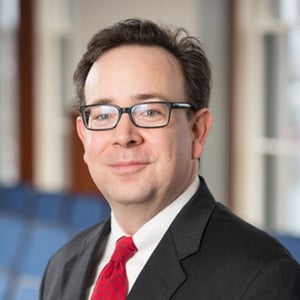
Professor O’Shea is a nationally recognized expert on firearms law and the Second Amendment. He is a co-author of the first law school casebook on the subject, Firearms Law and the Second Amendment: Regulation, Rights, and Policy, published in 2012. He serves as the Associate Director of OCU Law’s Center for State Constitutional Law and Government.
Professor O’Shea is an honors graduate of Harvard College and Harvard Law School. He also holds a master’s degree in philosophy from the University of Pittsburgh. Before coming to Oklahoma City University School of Law in 2006, he practiced commercial litigation in Chicago and in his hometown of Kansas City, Missouri. He also served as a law clerk to Chief Judge Danny J. Boggs of the U.S. Court of Appeals for the Sixth Circuit and to Judge John R. Gibson of the U.S. Court of Appeals for the Eighth Circuit.
Professor of Law, UCLA School of Law
Vice President for Legal Affairs, Cato Institute
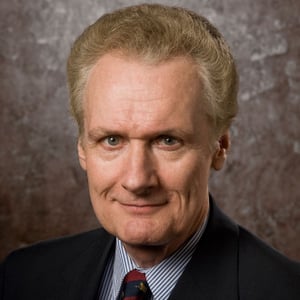
Roger Pilon is the Cato’s Institute’s vice president for legal affairs, the founding director of Cato’s Robert A. Levy Center for Constitutional Studies, the inaugural holder of Cato’s B. Kenneth Simon Chair in Constitutional Studies, and the founding publisher of the Cato Supreme Court Review.
Prior to joining Cato, Pilon held five senior posts in the Reagan administration, including at State and Justice, and was a national fellow at Stanford’s Hoover Institution. In 1989 the Bicentennial Commission presented him with its Benjamin Franklin Award for excellence in writing on the U.S. Constitution. In 2001 Columbia University’s School of General Studies awarded him its Alumni Medal of Distinction. Pilon lectures and debates at universities and law schools across the country and testifies often before Congress.
His writing has appeared in the Wall Street Journal, the Washington Post, the New York Times, the Los Angeles Times, Legal Times, National Law Journal, Harvard Journal of Law and Public Policy, Stanford Law and Policy Review, and elsewhere. He has appeared on ABC’s Nightline, CBS’s 60 Minutes II, Fox News Channel, NPR, CNN, MSNBC, CNBC, C-SPAN, and other media.
Pilon holds a BA from Columbia University, an MA and a PhD from the University of Chicago, and a JD from the George Washington University School of Law.
Director of Legal Policy, Firearms Policy Coalition
Matthew Larosiere is the policy director for the Firearms Policy Coalition. He writes on the subject of the 2nd Amendment, gun law, taxation, and gun violence. His work has been featured in National Review, Cato Blog, Fox Nation, Forbes, Wall Street Journal and more. Matt hosts the gun law myth-buster YouTube channel Fudd Busters.
Matthew graduated cum laude from the University of Alabama with a J.D. and Master of Laws in Taxation. During law school, he served as the president of the Federalist Society and the ethics opinion editor of the Journal of the Legal Profession. He holds a B.S. in Business Management from the University of Central Florida.
Wayne Fisher Research Professor, Professor of Law, South Texas College of Law Houston
Professor Dru Stevenson is a Wayne Fisher Research Professor and Professor of Law at South Texas College of Law Houston. He joined the faculty at South Texas College of Law Houston in 2003, and teaches Administrative Law/Regulation, Professional Responsibility, Nonprofit Incorporation, Legislation, and the Law & Economics seminar. He graduated Magna Cum Laude from the University of Connecticut School of Law, where he served as an editor of the Connecticut Law Review. After receiving his J.D., he practiced as a Legal Aid lawyer in Connecticut for three years. He earned his Master of Laws (LL.M.) from the Yale Law School in 2002, and became an Assistant Attorney General for the State of Connecticut until leaving to accept his position at South Texas College of Law Houston. Professor Stevenson’s publications cover topics ranging from criminal law to civil procedure, with an emphasis on the intersection of law with economics and linguistic theory. His articles have been cited in leading academic journals and treatises, by federal and state appellate courts, and in recent briefs to the U.S. Supreme Court. Professor Stevenson’s current research focus is firearm law and policy.

Supreme Court Preview: What Is in Store for October Term 2023?
Erin M. Hawley, Sarah Isgur, Robert Leider, Jenn L. Mascott, Jeffrey Rosen, Nicholas Quinn Rosenkranz
On September 26, 2023, the Federalist Society's Faculty Division and Practice Groups will host a panel at the Mayflower...
The Future of Homemade Firearms: The Legal and Political Implications of ATF Final Rule 2021R-05F
Matthew Larosiere, Dru Stevenson
Americans have been privately manufacturing and assembling firearms since before this country’s founding. Now, thanks...
The Future of Homemade Firearms: The Legal and Political Implications of ATF Final Rule 2021R-05F
Matthew Larosiere, Dru Stevenson
Americans have been privately manufacturing and assembling firearms since before this country’s founding. Now, thanks...
The Future of Homemade Firearms: The Legal and Political Implications of ATF Final Rule 2021R-05F
TeleforumTopics
Federal Government Orders Surrender of Personal Property Under . . . its Police Power?: Courts Grapple with Bump Stock Rule as a Fifth Amendment Taking
In December 2018, the Bureau of Alcohol, Tobacco, Firearms, and Explosives (ATF) issued a rule...
Shining a Light on Regulatory Dark Matter: Regulating Through Guidance
Stephen Cox, Paul R. Noe
For many years, concerns have been raised that the development and use of guidance documents...
Firearms Law and the Second Amendment - Faculty Book Podcast
Nicholas Johnson, Michael O'Shea, Adam Winkler
This podcast discusses Firearms Law and the Second Amendment: Regulation, Rights and Policy by authors...
Dragooning State Officials into Federal Service
Roger Pilon
In a century driven by the Progressive-Era view that ever-larger government can solve the manifold...