

Partner, Taft Stettinius & Hollister
Robert McBride is the partner-in-charge of the Kentucky office of Taft Stettinius & Hollister. As a seasoned trial attorney, he is experienced in investigating and prosecuting a wide variety of criminal matters. As lead attorney, Bob prosecuted cases involving complex financial frauds, money laundering, federal tax violations, healthcare fraud, national security matters, violations of the Export Control Act, immigration, and human trafficking crimes, and public corruption. He also prosecuted narcotics trafficking organizations, firearms violations and crimes against children. As a prosecutor, Bob successfully tried many federal cases to jury verdict. Bob is also experienced in litigating forfeiture claims, habeas actions and appeals before the Sixth Circuit Court of Appeals.
Bob has a long record serving the United States as an attorney before entering private practice. He was an Assistant United States Attorney in the Eastern District of Kentucky for over 15 years. As an AUSA, Bob first chaired criminal jury trials in U.S. District Court and handled appeals before the Sixth Circuit Court of Appeals. Additionally, he was the District’s National Security Prosecutor and the Anti-Terrorism Advisory Council Coordinator. Bob also held several leadership positions. In 2006, he was assigned as the manager of the London Branch Office. Shortly thereafter, he was promoted to Criminal Chief and served in that position until January 2010. As Criminal Chief, Bob supervised the Criminal Division’s personnel and exercised oversight of all prosecutions in the District. More recently, he was the supervisor of the Ft. Mitchell Branch Office, where he handled a number of high profile investigations and prosecutions.
Bob also served in the United States Navy, Judge Advocate General’s Corps, for 10 years. His major assignments included senior prosecutor on the Island of Guam, Officer-in-Charge of a Detachment in New Orleans focusing on criminal defense, and Staff Judge Advocate, Recruit Training Command. Bob attained the rank of Lieutenant Commander. He was also an enlisted Combat Engineer in the Army National Guard.

General Counsel, American Suppressor Association
Michael first joined ASA in 2014, and served as ASA’s General Counsel from 2015 to 2016, before leaving to join the Administration in 2017.
Michael began his federal service at the White House Office of Management and Budget (OMB), where he served two years as an attorney in the Office of General Counsel and focused on federal budget and regulatory matters. He then transitioned to the West Wing in March of 2019, where he served as Deputy Assistant to the President and Counselor to White House Chief of Staff Mick Mulvaney. During his time in the West Wing, Michael advised the Chief of Staff and the President on numerous matters, and served as the top White House policy advisor on Second Amendment issues. Michael left the West Wing in July of 2020 to serve as Acting General Counsel at the US Department of Housing and Urban Development (HUD), where he managed a budget of over $100 million and supervised a staff of nearly 300 attorneys and 250 other professionals.
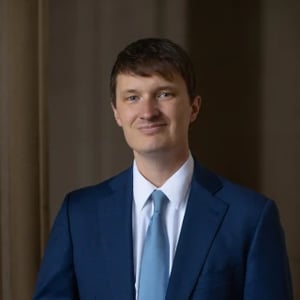
Partner, Boyden Gray PLLC
Trent McCotter is a partner with Boyden Gray PLLC. He previously served as Deputy Associate Attorney General of the United States and as an Assistant U.S. Attorney.
Mr. McCotter maintains an extensive appellate practice. He has considerable experience identifying and briefing cases that draw the Supreme Court’s attention, having persuaded the Court to grant certiorari in numerous cases raising issues of sovereignty, constitutional rights, due process, and criminal law. He has authored and submitted over 60 briefs at the Court.
He has also personally argued more than fifteen federal appeals across the Second, Fourth, Fifth, Sixth, Ninth, Eleventh, Federal, and D.C. Circuits—including once arguing three separate appeals in just four days. He has also twice argued before the 17-judge en banc Fifth Circuit. He has been counsel in over 50 other appeals raising matters from FOIA and the APA to constitutional rights and statutory construction.
As Deputy Associate Attorney General, Mr. McCotter oversaw DOJ’s Civil Appellate and Federal Programs branches, which are responsible for defending nearly all major litigation against the federal government. During his three years as a federal trial attorney in the Eastern District of Virginia’s “Rocket Docket,” Mr. McCotter won the Attorney General’s Award for Distinguished Service.
During his DOJ tenures, Mr. McCotter also assisted with the confirmations of two Supreme Court justices and over a dozen lower-court judges.
Mr. McCotter served as an inaugural clerk to the Hon. Steven J. Menashi on the U.S. Court of Appeals for the Second Circuit and also clerked for the Hon. R. Lanier Anderson III on the U.S. Court of Appeals for the Eleventh Circuit.

Professor of Law, Antonin Scalia Law School, George Mason University
ILYA SOMIN is Professor of Law at George Mason University and the B. Kenneth Simon Chair in Constitutional Studies at the Cato Institute. His research focuses on constitutional law, property law, democratic theory, federalism, and migration rights. He is the author of Free to Move: Foot Voting, Migration, and Political Freedom (Oxford University Press, revised and expanded edition, 2022), Democracy and Political Ignorance: Why Smaller Government is Smarter (Stanford University Press, revised and expanded second edition, 2016), and The Grasping Hand: Kelo v. City of New London and the Limits of Eminent Domain (University of Chicago Press, 2015, rev. paperback ed., 2016), coauthor of A Conspiracy Against Obamacare: The Volokh Conspiracy and the Health Care Case (Palgrave Macmillan, 2013), and co-editor of Eminent Domain: A Comparative Perspective (Cambridge University Press, 2017). Democracy and Political Ignorance has been translated into Italian and Japanese.
Somin’s work has appeared in numerous scholarly journals, including the Yale Law Journal, Stanford Law Review, Northwestern University Law Review, Georgetown Law Journal, Critical Review, and others. Somin has also published articles in a variety of popular press outlets, including the New York Times, Washington Post, Wall Street Journal, Los Angeles Times, CNN, NBC, The Atlantic, USA Today, Boston Globe, US News and World Report, South China Morning Post, National Law Journal and Reason. He has been quoted or interviewed by the New York Times, Washington Post, Wall Street Journal, Time, Newsweek, The Economist, the Christian Science Monitor, the Financial Times, The Guardian, the Associated Press, CBS, MSNBC, NPR, BBC, Reuters, the Canadian Broadcasting Corporation, the Australian Broadcasting Corporation, Radio Free Europe/Radio Liberty, Al Jazeera, and the Voice of America, among other media.
Somin’s writings have been cited in decisions by the United States Supreme Court, multiple state supreme courts and lower federal courts, and the Supreme Court of Israel. He is co-counsel for the plaintiffs in VOS Selections, Inc. v. Trump, a case challenging the constitutionality of President Trump’s “Liberation Day” tariffs. Somin has testified on the use of drones for targeted killing in the War on Terror before the US Senate Judiciary Subcommittee on the Constitution, Civil Rights, and Human Rights. In 2009, he testified on property rights issues at the United States Senate Judiciary Committee confirmation hearings for Supreme Court Justice Sonia Sotomayor. Somin writes regularly for the popular Volokh Conspiracy law and politics blog, now affiliated with Reason magazine (previously affiliated with the Washington Post from 2014 to 2017). From 2006 to 2013, he served as Co-Editor of the Supreme Court Economic Review, one of the country’s top-rated law and economics journals.
Somin has served as a visiting professor at the University of Pennsylvania Law School. He has also been a visiting professor or scholar at the Georgetown University Law Center, the University of Hamburg, Germany, the University of Torcuato Di Tella in Buenos Aires, Argentina, Uriel Reichman University in Israel, and Zhengzhou University in China. He is a University Affiliate of the Schar School of Policy and Government at George Mason University, and an affiliated faculty member of the George Mason University Institute for Immigration Research. Before joining the faculty at George Mason, Somin was the John M. Olin Fellow in Law at Northwestern University Law School in 2002-2003. In 2001-2002, he clerked for the Hon. Judge Jerry E. Smith of the U.S. Court of Appeals for the Fifth Circuit. Professor Somin earned his B.A., Summa Cum Laude, at Amherst College, M.A. in Political Science from Harvard University, and J.D. from Yale Law School.
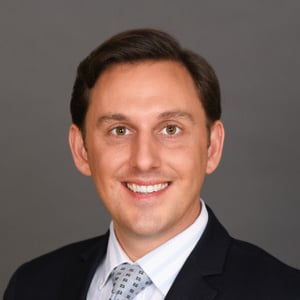
Senior Counsel - Civil Rights Division, US Department of Justice
Andrew Darlington was appointed in 2025 to serve as Senior Counsel to the US Department of Justice Civil Rights Division. He graduated the US Naval Academy in May, 2010 and was commissioned into the United States Marine Corps. He deployed twice to Afghanistan as an infantry officer. For his actions, he was awarded the Purple Heart and other personal combat awards. He later graduated Fordham University School of Law, and has since served as a prosecutor and in private practice. He joined the Florida Department of State in 2022 and was appointed Director of the Office of Election Crimes and Security in March, 2023. He is a member of the Madison Club, the National Security and International Law Practice Group, and the Washington, DC, Chapter.
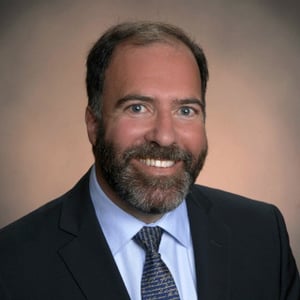
Professor of Law, Widener University Commonwealth Law School
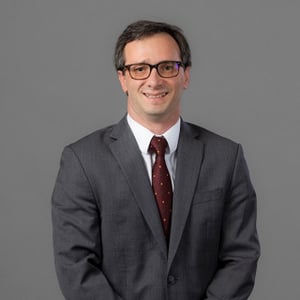
Assistant Professor of Law, George Mason University, Antonin Scalia Law School
Robert Leider is an Assistant Professor of Law at Antonin Scalia Law School, George Mason University. His scholarly interests are in criminal law, criminal procedure, and constitutional law, especially concerning questions about the use of force and the rule of law. He has written on the law of self-defense, the constitutional allocation of military power, and gun control. Among other places, he has published in the Florida Law Review (forthcoming), the Indiana Law Journal, and the Wall Street Journal.
Before joining Antonin Scalia Law School, Professor Leider was at Arnold & Porter in Washington, DC. He was previously with Mayer Brown LLP and was an Olin-Searle-Smith Fellow at the University of Pennsylvania Law School. He has clerked for Judge Diane S. Sykes, of the U.S. Court of Appeals for the Seventh Circuit, and Justice Clarence Thomas. Professor Leider earned a BA, summa cum laude, from The George Washington University, a JD from Yale Law School, and a PhD in Philosophy (dissertation defended with distinction) from Georgetown University. While at Yale, he served as an articles editor for the Yale Law Journal.
Professor Leider teaches criminal law and torts.
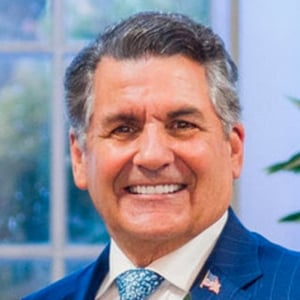
Federal Special Master, US District Court For The District Of Columbia
Julian McCarthy has had a distinguished career in both military and civilian legal service. He graduated from the United States Naval Academy in 1977 and served as a Surface Warfare Officer aboard the USS Dale (CG-19) from 1977 to 1980. Following his military service at sea, he pursued legal studies, earning his Juris Doctor with honors from Duke University School of Law in 1983.
McCarthy began his legal career as a Trial Counsel at the Naval Legal Service Office in Jacksonville, Florida, from 1983 to 1986. He then served as the Staff Judge Advocate at Subic Bay, Republic of the Philippines, from 1986 to 1990. In 1991, he earned a Master of Laws degree with highest honors from The George Washington University Law School. He subsequently served as Executive Assistant to the Navy Judge Advocate General from 1991 to 1992 and as Special Assistant to the Secretary of the Navy from 1992 to 1998. He later commanded the Trial Service Office Southeast from 1998 to 2002, before retiring as a Captain in the United States Navy.
Following his military career, McCarthy continued his service in the legal profession and public sector. He practiced law at Holland & Knight before becoming the Director of Military Affairs, Veterans Services, and Disabled Services for the City of Jacksonville. He later served as the Chief Assistant State Attorney for Florida’s Fourth Judicial Circuit. McCarthy also worked as the Director of Special Programs for the Wounded Warrior Project and served as the Marshal of Florida’s First District Court of Appeal.
Currently, he serves as a Federal Special Master, where he continues his commitment to justice and public service.
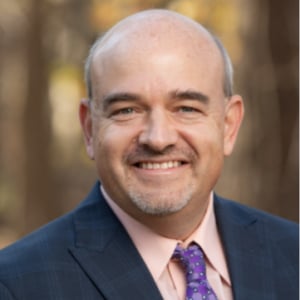
Newton D. Baker-Baker & Hostetler Chair in Law, Moritz College of Law, The Ohio State University
Professor Douglas A. Berman is Newton D. Baker-Baker & Hostetler Chair in Law and Executive Director of the Drug Enforcement and Policy Center, housed in the Moritz College of Law. Berman’s principal teaching and research focus is in the area of criminal law and criminal sentencing, though he also has teaching and practice experience in the fields of legislation and intellectual property. He has taught Criminal Law, Criminal Punishment and Sentencing, Criminal Procedure – Investigation, Marijuana Law, Policy & Reform Seminar, Federal and State Clemency Decision-making, The Death Penalty, Legislation, Introduction to Intellectual Property, Second Amendment Seminar, and the Legislation Clinic.
Professor Berman attended Princeton University and Harvard Law School. In law school, he was an editor and developments office chair of the Harvard Law Review and also served as a teaching assistant for a Harvard University philosophy course. After graduation from law school in 1993, Professor Berman served as a law clerk for Judge Jon O. Newman and then for Judge Guido Calabresi, both on the United States Court of Appeals for the Second Circuit. After clerking, Professor Berman was a litigation associate at the law firm of Paul, Weiss, Rifkind, Wharton, and Garrison in New York City.
Professor Berman is the co-author of two casebooks. Sentencing Law and Policy: Cases, Statutes and Guidelines, published by Aspen Publishers, is now in its fifth edition. Marijuana Law and Policy was released by Carolina Academic Press in 2020. In addition to authoring numerous articles on topics ranging from capital punishment to the federal sentencing guidelines, Professor Berman has served as a managing editor of the Federal Sentencing Reporter for more than twenty five years, and also serves as an editor of the Ohio State Journal of Criminal Law.
Professor Berman is the sole creator and author of the widely-read and widely-cited blog, Sentencing Law and Policy. The blog often receives nearly 50,000 page views per month (and had over 20,000 hits the day of the Supreme Court’s major sentencing decision in United States v. Booker). Professor Berman’s work on the Sentencing Law and Policy blog, which he describes as a form of “scholarship in action,” has been profiled or discussed at length in articles appearing in the Wall Street Journal, Legal Affairs magazine, Lawyers Weekly USA, Legal Times, Columbus Monthly, and in numerous other print and online publications.
In addition, Sentencing Law and Policy has the distinction of being the first blog cited by the U.S. Supreme Court (for a document appearing exclusively on the site), and substantive analysis in particular blog posts has been cited in numerous appellate and district court rulings, in many briefs submitted to federal and state courts around the country, and in hundreds of law review articles.
Professor Berman is a member of the Council on Criminal Justice and frequently is consulted by national and state policymakers, sentencing commissioners, and public policy groups concerning sentencing law and policy reforms. He has testified before the U.S. House of Representatives and before numerous sentencing commissions. He also is frequently contacted by national and local media concerning sentencing and marijuana reform developments.
Professor Berman has appeared on national television, radio and podcast news programs and has been extensively quoted in newspaper articles appearing in nearly every major national paper and many local papers, including The New York Times, The Washington Post, The Wall Street Journal, Legal Times, and in pieces from the Associated Press, Reuters, and Knight-Ridder news services.
Professor Berman sometimes serves as a consultant to lawyers working on important or interesting sentencing cases. In most instances, Professor Berman’s consulting has been on an ad hoc and pro bono basis, and it usually involves a quick review of draft briefs and other court filings and then providing general advice on litigation strategies. On some occasions, however, Professor Berman has been formally retained to play a more sustained role in certain cases, including being retained by law firms to provide consulting service on various cutting-edge federal sentencing issues.
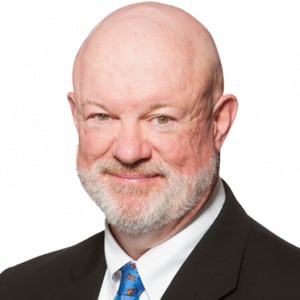
Senior Legal Fellow, the Meese Institute for the Rule of Law, Advancing American Freedom
Paul J. Larkin is a Senior Legal Fellow in the Meese Institute for the Rule of Law at Advancing American Freedom. Paul has held various positions in the federal and state governments throughout his career, such as being an attorney in the Organized Crime and Racketeering Section of the Criminal Division at the U.S. Department of Justice, an Assistant to the Solicitor General in the Office of the Solicitor General at the U.S. Department of Justice, Special Agent-in-Charge and Acting Director of the Criminal Investigation Division at the Environmental Protection Agency, and a member of the Parole Abolition and Sentencing Reform Commission and of the Juvenile Justice Reform Commission in the Office of Virginia Governor George Allen.
He has also worked at Verizon Communications and two law firms in Washington, D.C. His current research is principally in the fields of drug policy, criminal justice policy, and administrative law and policy. He has published numerous articles in law and public policy journals, both in print and online.
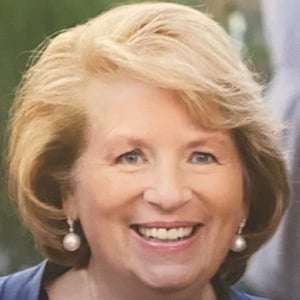
Professor of Psychobiology, Harvard Medical School; Department of Psychiatry, McLean Hospital
Bertha Madras, PhD is a Professor of Psychobiology at Harvard Medical School (Harvard faculty 40 years) She is based at McLean Hospital and cross-appointed at the Massachusetts General Hospital
Scientific Research. Dr. Madras’s translational and multidisciplinary research focuses on the neurobiology of addiction, neuropsychiatric disorders, and drug policy
Authorship. She is author of more than 500 scientific manuscripts, reviews, book chapters, abstracts. She also is co-editor of academic books including “The Cell Biology of Addiction”; “Effects of Drug Abuse on the Human Nervous System”; “Imaging of the Human Brain in Health and Disease”
Intellectual Property. Inventor, co-inventor on 19 issued U.S. patents and 27 issued international patents
Government, other Service
• 2018-present, National Academy of Medicine Opioid Collaborative. Member
• 2024. United Nations Office on Drugs and Crime. Panel on Consequences of Drug Use
• 2017. President’s Commission on Combating Drug Addiction and the Opioid Crisis. Appointed by President Trump as one of six Commission members: Gov. C. Baker (MA); Attorney General P. Bondi (FL); Gov. C. Christie, (Chair, NJ); Gov. R. Cooper (NC), Congressman P. Kennedy (RI), Prof. Madras (MA). She was charged with shepherding, writing major components of Report
• 2016. Vatican Pontifical Academy of Sciences. Panelist on Narcotics; co-author of final report
• 2014-2015. U.S. Department of Justice. Sole expert witness DoJ, on marijuana re-scheduling
• 2015. World Health Organization. Sole author of report commissioned by World Health Organization, “Update of Cannabis and its Medical Use”; co-author of “The Health and Social Effects of Nonmedical Cannabis Use
• 2014. National Football League (NFL). Member, Committee on prescription drugs
• 2006-2008. Deputy Director for Demand Reduction in the White House Office of National Drug Control Policy (ONDCP), Executive Office of the President; a presidential appointment confirmed with unanimous consent (99-0) by U.S. Senate
Educational Outreach
• 2023-2025 HARVARD X. Developer of course for parents on drug prevention
• 2001-. Cold Spring Harbor Laboratories. Developer, international course on Cell Biology of Addiction. Course is offered biannually to present
• 1991-2004. Museum of Science, Boston. Directed production of a museum exhibit, a CD (licensed by Disney) “Changing Your Mind: Drugs in the Brain” and play
• 1995. DEA-NIDA Museum Exhibit. Wrote draft of storyboard for exhibit, 1 Times Square, NYC, NY
• 1991-2005. Addiction biology. Developed, instructor 4th year HMS medical students
Honors, awards
• 2026: Barry Prize, American Academy of Sciences and Letters
• 2025: Asteroid 147703MADRAS named for BK Madras by the International Astronomical Union
• 2024: American Academy of Sciences and Letters, inductee
• Research and public service awards (partial list): NIDA Public Service Award, NIH MERIT Award, CPDD Innovator Award, American Academy of Addiction Psychiatry, Jack H. Mendelson Memorial Research Award, CPDD Fischman Award, Adler Distinguished Service Award, CADCA National Leadership Award, Nils Bejerot Award, others
• 2006: Better World Report designated her brain imaging invention as “one of 25 technology transfer innovations (university to industry) that changed the world”.
Her experiences in neuroscience research, drug addiction, education, government and public service offer a unique perspective at the intersection of science and public policy.
Managing Director, Beacon Global Strategies LLC
From 2011-2013, Mr. Allen served as the Majority Staff Director of the House Permanent Select Committee on Intelligence (HPSCI). Under Chairman Mike Rogers’ (R-MI) direction, the HPSCI restored the process of an annual intelligence authorization bill to fund and give direction to the seventeen elements of the intelligence community, enacting measures for fiscal years 2011, 2012, and 2013. The HPSCI also led the House of Representatives’ consideration of cyber security legislation, passing the Cyber Information Sharing Protection Act (CISPA) with bipartisan majorities in 2012 and 2013.
Prior to joining the HPSCI, he was director for the Bipartisan Policy Center’s successor to the 9/11 Commission, the National Security Preparedness Group, co-chaired by former Congressman Lee Hamilton and former Governor Tom Kean.
Previously, Mr. Allen served in the White House for seven years in a variety of national security policy and legislative roles. At the National Security Council (NSC), he served as Special Assistant to the President and Senior Director for Counter-proliferation Strategy from June 2007 to January 2009 under National Security Advisor Steve Hadley. As Senior Director, he contributed to the development of the U.S. government’s policy on counter-proliferation issues, including on the Iranian, Syrian, and North Korean nuclear files; missile defense; civilian nuclear cooperation including the U.S.-India Civilian Nuclear Cooperation Agreement; U.S. exports controls; bio-defense; and WMD and terrorism.
As the Special Assistant to the President and Senior Director for Legislative Affairs from March 2005 to June 2007, Mr. Allen was the NSC’s chief liaison with the national security committees of Congress and led the confirmation teams of DNI nominees Negroponte and McConnell and CIA Director General Michael Hayden.
From December 2001 to February 2005, Mr. Allen worked in the legislative affairs office of the White House’s Homeland Security Council. As Special Assistant to the President for Legislative Affairs, Mr. Allen was part of team that managed the White House effort to enact the Intelligence Reform and Terrorism Prevention Act of 2004, which created the Office of the Director of National Intelligence.
At the beginning of the Bush Administration, Mr. Allen worked in the Bureau of Legislative Affairs at the Department of State. Mr. Allen received his L.L.M. with distinction in International Law from the Georgetown University Law Center, his J.D. from the University of Alabama (cum laude), and his B.A. from Vanderbilt University.
In addition to his work at the Bipartisan Policy Center, in 2009, Mr. Allen taught National Security Policymaking at the George Washington University Elliott School of International Affairs and served as an advisor for the congressionally-created Commission on WMD and Terrorism co-chaired by Senators Bob Graham and Jim Talent. Mr. Allen was the Intelligence Team Lead for the Romney for President Transition Team.
Mr. Allen is the author of Blinking Red: Crisis and Compromise in American Intelligence After 9/11. (Potomac Books, September 2013).

Executive Director, Foundation for Defense of Democracies (FDD)
Mark Dubowitz is the executive director of the Foundation for Defense of Democracies (FDD), a Washington, D.C.-based nonpartisan policy institute, where he leads projects on Iran, sanctions, countering threat finance, and nonproliferation.
He is an expert on Iran’s global network including the regime's nuclear, terrorist, missile and cyber threats to the United States and other allies, and is widely recognized as one of the key influencers in shaping sanctions policies to counter the threats emanating from Iran and its surrogates.
Mark was featured as one of the key “financial warriors” against Iran by The Wall Street Journal's Jay Solomon in his 2016 book The Iran Wars. Politico magazine featured Mr. Dubowitz as one of Washington’s leading policy experts challenging Iran’s illicit behavior, observing that he is “...constantly thinking up—and promoting—new ways to squeeze the regime...”
Mr. Dubowitz has advised the Obama and Bush administrations and lawmakers on both sides of the aisle and testified more than twenty times before the U.S. Congress and foreign legislatures.
A former venture capitalist and technology executive, Mark heads FDD’s Center on Sanctions and Illicit Finance and is the author or co-author of over twenty studies on economic sanctions and Iran's nuclear program. He is widely published and cited in U.S. and international media. He teaches courses on sanctions and international negotiations at the University of Toronto's Munk School of Global Affairs, where he is a senior fellow.
Mark has a master’s degree in international public policy from Johns Hopkins University's School of Advanced International Studies, and law and MBA degrees from the University of Toronto.
Raised in Toronto, he is a proud American citizen, and has lived in Washington, D.C.

Founder and Executive Director, National Security Institute; Assistant Professor of Law, Antonin Scalia Law School, George Mason University
Jamil N. Jaffer is the Founder and Executive Director of the National Security Institute at the Antonin Scalia Law School at George Mason University where he also serves as an Assistant Professor of Law, Director of the National Security Law and Policy Program, and Director of the Cyber, Intelligence, and National Security LLM Program. Jamil also teaches classes on counterterrorism, intelligence, surveillance, cybersecurity, and other national security matters, as well as a summer course held abroad with U.S. Supreme Court Justice Neil M. Gorsuch. Jamil is also affiliated with Stanford University’s Center for International Security and Cooperation and previously served as a Visiting Fellow at the Hoover Institution from 2016 to 2019.
Jamil is also a Venture Partner with Paladin Capital Group, where he assists the firm with investments across the full range of its themes and theses, including a focus on dual-use national security technologies. Jamil also serves on the board of directors of RangeForce, a cybersecurity training and readiness platform startup and Tozny, a digital identity startup, and on the advisory boards of U.S. Strategic Metals, North America’s largest primary producer of cobalt, a critical mineral used in EV batteries, aerospace, and other national security applications; and Constella Intelligence, a deep and dark web intelligence startup. Jamil also serves as an advisor to Beacon Global Strategies, a strategic advisory firm and Duco, a technology platform startup that connects corporations with geopolitical and international business experts. Jamil is also the managing director of Trigraph Caveat Capital, a private investment vehicle.
Among other things, Jamil currently serves on the Board of Directors for the Greater Washington Board of Trade, the Board of Advisors for the Global Cyber Alliance, and the Advisory Board of the Foundation for the Defense of Democracies’ Center on Cyber and Tech Innovation, the Executive Committee of the Reagan Institute Strategy Group. Jamil is also a Fellow at the Academy for Judaic, Christian, and Islamic Studies, an advisor to the Concordia Summit, and is a member of the Board of Directors for the Center for Intelligence Policy, the Board of Directors of Speech First, and the Executive Committee of the International Law and National Security Practice Group of the Federalist Society.
Immediately prior to his current positions, from 2015-2021, Jamil served as a senior business leader at IronNet Cybersecurity, helping take the company from a bootstrapped first-year technology products startup through two rounds of venture capital fundraising, growing from 40 employees to over 300, and through its listing on New York Stock Exchange. In his role as IronNet's Senior Vice President for Strategy, Partnerships & Corporate Development, Jamil worked directly for the co-CEOs of the company, Gen (ret.) Keith B. Alexander, the former Director of the National Security Agency and Founding Commander of U.S. Cyber Command, and Bill Welch, the former COO of Zscaler and Duo; in that role, Jamil led all of the company’s strategic and technology partnership efforts, including developing go-to-market and technology integration plans with some of the largest cloud platforms and cybersecurity companies in the market, evaluating potential acquisition targets, and developing overall corporate strategy and thought leadership around collective security and collaborative defense in the cyber arena.
Prior to his time at IronNet, Jamil served on the leadership team of the Senate Foreign Relations Committee as Chief Counsel and Senior Advisor under Chairman Bob Corker (R-TN), where he worked on key national security and foreign policy issues, including leading the drafting of the proposed Authorization for the Use of Military Force against ISIS in 2014 and 2015, the AUMF against Syria in 2013, and revisions to the 9/11 AUMF against al Qaeda. Jamil was also the lead architect of the Iran Nuclear Agreement Review Act and two sanctions laws against Russia for its first intervention in Ukraine.
Prior to joining SFRC, Jamil served as Senior Counsel to the House Permanent Select Committee on Intelligence under Chairman Mike Rogers (R-MI) where he led the committee’s oversight of NSA surveillance, NRO intelligence issues, and NGA analytic and collection matters, as well as intelligence community-wide counterterrorism issues. Jamil was also the lead architect of the Cyber Intelligence Sharing and Protection Act, the nation’s first cyber threat intelligence sharing legislation that was signed into law in 2015.
In the Bush Administration, Jamil served in the White House as an Associate Counsel to the President, handling Defense Department, State Department, and intelligence community matters, and serving as one of the White House Counsel’s primary representatives to the National Security Council Deputies Committee.
Prior to the White House, Jamil served on the leadership team of the Justice Department’s National Security Division as Counsel to the Assistant Attorney General for National Security, where he focused on counterterrorism and intelligence matters. At NSD, Jamil helped lead the division’s work on In re: Directives, the first ever two-party litigated matter in the FISA Court and the second case before the FISA Court of Review in its 30-year history. Jamil also led NSD’s efforts on the President’s Comprehensive National Cybersecurity Initiative (CNCI), including the drafting of NSPD-54/HSPD-23, and related classified matters, and advised the National Security Agency (NSA) and U.S. Cyber Command’s predecessor organization, the Joint Function Component Command for Network Warfare (JFCC-NW), on matters related to cyber intelligence collection and offensive cyber activities. For his work on these matters, Jamil was awarded the Assistant Attorney General’s Award for Special Initiative and was among the group of lawyers awarded the Director of National Intelligence’s 2008 Legal Award (Team of the Year – Cyber Legal).
Jamil also served in other positions in the Justice Department, including in the Office of Legal Policy, where he worked on the confirmations of Chief Justice John G. Roberts, Jr. and Justice Samuel A. Alito, Jr. to the United States Supreme Court.
Jamil also served as a lawyer in private practice at Kellogg Huber, a Washington, DC-based litigation boutique, as a policy advisor to Congressman Bob Goodlatte (R-VA), and as a staff member or senior advisor on a number of political campaigns, including two presidential campaigns and a presidential transition team. While in law school, Jamil was a member of the University of Chicago Law Review, managing editor of the Chicago Journal of International Law, and National Symposium Editor of the Harvard Journal of Law & Public Policy. Following law school, Jamil served as a law clerk to Judge Edith H. Jones of the United States Court of Appeals for the Fifth Circuit and, later in his career, as a law clerk to then-Judge Neil M. Gorsuch when he first joined the United States Court of Appeals for the Tenth Circuit as well as a law clerk to Justice Neil Gorsuch when he joined the U.S. Supreme Court.
Jamil has published multiple op-eds and academic articles on national security, foreign policy, cybersecurity, counterterrorism, encryption, and intelligence matters, and is the co-author of a book chapter with former NSA Director Gen. (Ret.) Keith B. Alexander on national security and the press in National Security, Leaks, and the Freedom of the Press: The Pentagon Papers Fifty Years On (2021) and a book chapter with former CIA Director Gen. (ret.) Mike Hayden on ISIS, al Qaeda, and other international terrorist groups in Choosing to Lead: American Foreign Policy for a Disordered World (2015). Jamil has also written book chapters on cybersecurity and surveillance, as well as op-eds and policy papers with former Attorney General Michael B. Mukasey, former National Counterterrorism Center Director Matt Olsen, and Congressman Mike Waltz (R-FL), among others.
Jamil has previously taught graduate-level courses in intelligence law and policy at George Washington University’s Elliott School of International Affairs and the National Intelligence University, served an outside advisor to the Cyberspace Solarium Commission, and has recently testified before committees of the U.S. Senate and House of Representatives on China, cybersecurity, counterterrorism, and other national security matters. Jamil has also recently appeared on a range of national television and radio outlets including CNN, Fox News, Fox Business, MSNBC, Bloomberg, PBS, Voice of America, and National Public Radio, and in various print and online publications, including the Wall Street Journal, New York Times, and the Washington Post on a range of national security matters including cybersecurity, counterterrorism, surveillance, encryption, privacy, and foreign policy issues.
Jamil holds degrees from UCLA (BA, cum laude), the University of Chicago Law School (JD, with honors), and the United States Naval War College (MA, with distinction).
Maurice A. Deane Distinguished Professor of Constitutional Law and Faculty Director of International Programs, Hofstra University School of Law
Professor Ku’s primary research interest is the relationship of international law to constitutional law. He has also conducted academic research on a wide range of topics including international dispute resolution, international criminal law, and China’s relationship with international law. He teaches courses such as U.S. constitutional law, U.S. foreign affairs law, transnational law, and international trade and business law. Since 2014, he has served as the faculty director of international programs, overseeing Hofstra Law’s study abroad, exchange and LL.M. programs. Professor Ku also teaches Constitutional Law in our online degree programs: Master of Laws in American Law and Master of Arts in American Legal Studies. He has also been selected as the John DeWitt Gregory Research Scholar and as a Hofstra Law Research Fellow. He is a member of the American Law Institute.
He is the co-author, with John Yoo, of Taming Globalization: International Law, the U.S. Constitution, and the New World Order (Oxford University Press 2012). He also has published more than 40 law review articles, book chapters and symposia essays. He has given dozens of academic lectures and workshops at major universities and conferences in the United States, Europe and Asia.
He co-founded the leading international law weblog Opinio Juris, which is read daily by thousands worldwide. His essays and op-eds have been published in major news publications such as the Wall Street Journal, the Los Angeles Times, and the NYTimes.com. He has been frequently interviewed for television news programs and quoted in print and electronic media. He has also signed or submitted amicus briefs to national and international courts and served as an expert witness in both domestic and international proceedings.
Before joining the Hofstra Law faculty, Professor Ku served as a law clerk to the Honorable Jerry E. Smith of the U.S. Court of Appeals for the Fifth Circuit and as an Olin Fellow and Lecturer in Law at the University of Virginia Law School. Professor Ku also practiced as an associate at the New York City law firm of Debevoise & Plimpton, specializing in litigation and arbitration arising out of international disputes. He has been a visiting professor at the College of William & Mary Marshall- Wythe School of Law in Williamsburg, Virginia; a Fulbright Distinguished Lecturer in Law at East China University of Political Science and Law in Shanghai, China; and a Taiwan Fellow at National Taiwan University in Taipei, Taiwan. He is a member of the New York Bar and a graduate of Yale College and Yale Law School.
President and General Counsel, Public Interest Legal Foundation
J. Christian Adams is the President and General Counsel of the Public Interest Legal Foundation. He served from 2005 to 2010 in the Voting Section at the United States Department of Justice Voting Section. President Trump appointed Adams to the Presidential Advisory Commission on Election Integrity. President Trump also appointed Adams as a Commissioner to the United States Commission on Civil Rights where he also now serves with a term through 2025. He has been involved in election law lawsuits in 33 states and the territory of Guam. He has represented multiple presidential campaigns in election litigation. He has a law degree from the University of South Carolina School of Law. He is a member of the South Carolina and Virginia Bars.
Associate Justice, Arkansas Supreme Court
Nicholas Bronni was appointed to the Arkansas Supreme Court by Governor Sarah Huckabee Sanders on December 20, 2024, and he began his service on January 1, 2025.
Before being appointed to the bench, Justice Bronni served as the Solicitor General of Arkansas. In that role, he successfully argued two cases in the United States Supreme Court: Delaware v. Pennsylvania, 598 U.S. 115 (2023), an original jurisdiction case concerning unclaimed property; and Rutledge v. PCMA, 592 U.S. 80 (2020), an ERISA preemption case. Justice Bronni also successfully argued numerous cases before federal and state appellate courts, including Arkansas Times v. Waldrip, 37 F.4th 1386 (8th Cir. 2022) (en banc), which upheld Arkansas's law barring state contractors from boycotting Israel; and Arkansas State Conf. NAACP v. Arkansas Bd. of Apportionment, 86 F.4th 1204 (8th Cir. 2023), a landmark case holding that Section 2 of the Voting Rights Act is not privately enforceable. As Solicitor General, Justice Bronni received the National Association of Attorneys General's 2024 Best Supreme Court Brief Award for his multistate amicus brief in Muldrow v. City of St. Louis, Missouri, 601 U.S. 346 (2024).
Justice Bronni received his law degree with magna cum laude honors from the University of Michigan Law School. At Michigan, he was an editor of the Michigan Law Review and was elected to the Order of the Coif. He received his undergraduate degree, summa cum laude, and with special departmental honors from the Elliott School of International Affairs at the George Washington University.
Prior to returning home to Arkansas, Justice Bronni was a Senior Litigation Counsel with the Appellate Litigation Group at the United States Securities and Exchange Commission. He was also an associate with Gibson Dunn and Crutcher LLP in Washington, DC. Justice Bronni clerked for the Honorable Jay S. Bybee of the United States Court of Appeals for the Ninth Circuit.
Attorney
Maya M. Noronha is a civil rights attorney.
As special counsel for external affairs at First Liberty Institute, Maya worked for the largest legal organization in the United States dedicated exclusively to defending religious liberty for all Americans.
Previously, Maya worked at the U.S. Department of Health and Human Services, as acting chief of staff of the Administration for Children and Families; principal advisor to the Commissioner of the Administration on Children, Youth, and Families; and senior advisor to the Director of the Office for Civil Rights and regulatory reform officer. She provided advice on federal civil rights laws that prohibit discrimination on the basis of conscience, religion, race, color, national origin, limited English proficiency, sex, disability, age, and health information in both health care and human services.
In the area of election law, Maya has advised officials elected to or candidates for President, U.S. Senate, U.S. House of Representatives, Governor, state legislature, city council, and magisterial district judge. She practiced law at Baker Hostetler LLP, where she was on the Political Law and Federal Advocacy Teams, advising clients on voting rights, redistricting, election integrity, campaign finance, financial reporting, ethics compliance, as well as conducting trial and appellate litigation. She also has delivered legislative testimony, planned continuing legal education conferences on election law, and published about voting rights and election administration.
In addition to addressing the Federalist Society, she has delivered remarks to the White House Initiative on Asian American Pacific Islanders, United States Senate, Women in Government Relations, Georgetown University, George Mason University School of Law, the Columbus School of Law at the Catholic University of America, and Arizona State University Cronkite School of Journalism.
Maya is in Phi Beta Kappa, a member of the Alpha Sigma Nu Jesuit Honor Society, and a John Carroll Scholar. Forbes Magazine recognized Maya as one of its 30 under 30 in Law and Public Policy.
She serves concurrently on the Federalist Society’s Free Speech & Election Law Executive Committee and the American Bar Association’s Standing Committee on Election Law.
Education
· J.D., Georgetown University Law Center, 2011
· A.B., Georgetown University, 2005
Adjunct Professor of Law; Director, N.Y. Census and Redistricting Institute, New York Law School
Jeff Wice is a Distinguished Adjunct Professor and Senior Fellow at New York Law School where he directs the New York Elections, Census & Redistricting Institute and teaches classes on redistricting, election law, and the census. He is now working on his sixth redistricting cycle. In past years, he served as a redistricting counsel to New York State Legislativbe Leaders and as counsel to three New York City Districting Commissions and to numerous counties and localities across New York and the nation.
During the 2000 census cycle, Professor Wice served as counsel to President Bill Clinton’s members of the U.S. Census Monitoring Board. He is the co-editor/author of the National Conference of State Legislatures' 2020 Redistricting Redbook, a comprehensive handbook on the census and redistricting.
‘’City & State NY’ recognized Professor Wice as one of New York’s “Top 50 Over 50” in 2022 and just last month as a "New York legal trailblazer" for his efforts promoting fair representation and the census. He is a graduate of the George Washington University and Antioch School of Law.
U.S. Attorney, Middle District of Tennessee, U.S. Department of Justice
Braden Boucek was sworn in on December 24, 2025, as the United States Attorney for the Middle District of Tennessee. Prior to becoming United States Attorney, Mr. Boucek served as the senior vice president of litigation at the Southeastern Legal Foundation having previously served as the vice president of legal affairs at the Beacon Center. Mr. Boucek has extensive experience as a prosecutor, starting his career at the Tennessee Attorney General’s Office before serving for two years as an Assistant District Attorney General in Williamson County. He was a federal prosecutor for ten years, first serving as an Assistant United States Attorney in the Western District of Tennessee from 2005 to 2011. From 2011 to 2015, Mr. Boucek was an Assistant United States Attorney in the Middle District of Tennessee, the district he now leads as the United States Attorney.
Founding Partner, Compton Jones Dresher LLP
Paul Compton is a founding partner of Compton Jones Dresher, a law practice based in Birmingham, Alabama that focuses on transactional and regulatory matters for clients in the real estate, financial services and community bank industries. Paul’s practice especially involves affordable housing and tax credit supported community development projects. He is currently a member of the Housing Advisory Council of the Bipartisan Policy Center. He is an adjunct Professor at the University of Alabama School of Law and a member of the Board of Directors of the Alabama Affordable Housing Association.
From 2018 to 2020 Paul served as General Counsel of the United States Department of Housing and Urban Development, Washington, D.C. In that capacity he also served on the Federal Housing Administration Mortgagee Review Board and Mortgage Risk Review Council.
Before Paul’s service at HUD he was a partner and member of the managing board of Bradley Arant Boult Cummings LLP in its Birmingham office.
Paul is a graduate of the University of Virginia School of Law and the University of Alabama. He attended the London School of Economics and Political Science and is a Truman Scholar.

Associate Director, Fair Housing & Community Development Project, Lawyers’ Committee for Civil Rights Under Law
Thomas Silverstein is the Associate Director of the Fair Housing & Community Development Project at the Lawyers’ Committee for Civil Rights Under Law. He oversees the Project’s impact litigation docket, using the Fair Housing Act to foster the development of inclusive communities, expand access to opportunity, and fight displacement. He also provides technical assistance to states, local governments, and public housing authorities seeking to comply with the duty to affirmatively further fair housing. He is a national leader in the provision of legal and policy support to grassroots housing justice organizers. He has written extensively on the intersection of civil rights law and land use law and frequently participates in conference panels and webinars addressing a range of topics in civil rights and housing law and policy.
Prior to serving as Associate Director, Thomas was Counsel in the Fair Housing & Community Development Project. He began his legal career as the Lawyers’ Committee’s 2013-2014 George N. Lindsay Civil Rights Legal Fellow after earning his juris doctorate from the University of Virginia School of Law in 2013.
Senior Adviser, International Security Program, CSIS
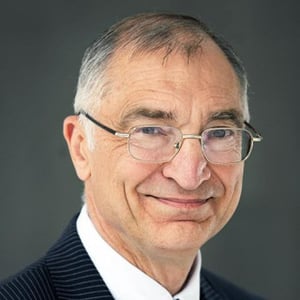
Mark Cancian (Colonel, USMCR, ret.) is a senior adviser with the CSIS International Security Program. He joined CSIS in April 2015 from the Office of Management and Budget, where he spent more than seven years as chief of the Force Structure and Investment Division, working on issues such as Department of Defense budget strategy, war funding, and procurement programs, as well as nuclear weapons development and nonproliferation activities in the Department of Energy. Previously, he worked on force structure and acquisition issues in the Office of the Secretary of Defense and ran research and executive programs at Harvard University’s Kennedy School of Government. In the military, Colonel Cancian spent over three decades in the U.S. Marine Corps, active and reserve, serving as an infantry, artillery, and civil affairs officer and on overseas tours in Vietnam, Desert Storm, and Iraq (twice). Since 2000, he has been an adjunct faculty member at the Johns Hopkins School of Advanced International Studies, where he teaches a course on the connection between policy and analysis. A prolific author, he has published over 40 articles on military operations, acquisition, budgets, and strategy and received numerous writing awards. He graduated with high honors (magna cum laude) from Harvard College and with highest honors (Baker scholar) from Harvard Business School.
Founder and Executive Director, National Security Institute; Assistant Professor of Law, Antonin Scalia Law School, George Mason University
Jamil N. Jaffer is the Founder and Executive Director of the National Security Institute at the Antonin Scalia Law School at George Mason University where he also serves as an Assistant Professor of Law, Director of the National Security Law and Policy Program, and Director of the Cyber, Intelligence, and National Security LLM Program. Jamil also teaches classes on counterterrorism, intelligence, surveillance, cybersecurity, and other national security matters, as well as a summer course held abroad with U.S. Supreme Court Justice Neil M. Gorsuch. Jamil is also affiliated with Stanford University’s Center for International Security and Cooperation and previously served as a Visiting Fellow at the Hoover Institution from 2016 to 2019.
Jamil is also a Venture Partner with Paladin Capital Group, where he assists the firm with investments across the full range of its themes and theses, including a focus on dual-use national security technologies. Jamil also serves on the board of directors of RangeForce, a cybersecurity training and readiness platform startup and Tozny, a digital identity startup, and on the advisory boards of U.S. Strategic Metals, North America’s largest primary producer of cobalt, a critical mineral used in EV batteries, aerospace, and other national security applications; and Constella Intelligence, a deep and dark web intelligence startup. Jamil also serves as an advisor to Beacon Global Strategies, a strategic advisory firm and Duco, a technology platform startup that connects corporations with geopolitical and international business experts. Jamil is also the managing director of Trigraph Caveat Capital, a private investment vehicle.
Among other things, Jamil currently serves on the Board of Directors for the Greater Washington Board of Trade, the Board of Advisors for the Global Cyber Alliance, and the Advisory Board of the Foundation for the Defense of Democracies’ Center on Cyber and Tech Innovation, the Executive Committee of the Reagan Institute Strategy Group. Jamil is also a Fellow at the Academy for Judaic, Christian, and Islamic Studies, an advisor to the Concordia Summit, and is a member of the Board of Directors for the Center for Intelligence Policy, the Board of Directors of Speech First, and the Executive Committee of the International Law and National Security Practice Group of the Federalist Society.
Immediately prior to his current positions, from 2015-2021, Jamil served as a senior business leader at IronNet Cybersecurity, helping take the company from a bootstrapped first-year technology products startup through two rounds of venture capital fundraising, growing from 40 employees to over 300, and through its listing on New York Stock Exchange. In his role as IronNet's Senior Vice President for Strategy, Partnerships & Corporate Development, Jamil worked directly for the co-CEOs of the company, Gen (ret.) Keith B. Alexander, the former Director of the National Security Agency and Founding Commander of U.S. Cyber Command, and Bill Welch, the former COO of Zscaler and Duo; in that role, Jamil led all of the company’s strategic and technology partnership efforts, including developing go-to-market and technology integration plans with some of the largest cloud platforms and cybersecurity companies in the market, evaluating potential acquisition targets, and developing overall corporate strategy and thought leadership around collective security and collaborative defense in the cyber arena.
Prior to his time at IronNet, Jamil served on the leadership team of the Senate Foreign Relations Committee as Chief Counsel and Senior Advisor under Chairman Bob Corker (R-TN), where he worked on key national security and foreign policy issues, including leading the drafting of the proposed Authorization for the Use of Military Force against ISIS in 2014 and 2015, the AUMF against Syria in 2013, and revisions to the 9/11 AUMF against al Qaeda. Jamil was also the lead architect of the Iran Nuclear Agreement Review Act and two sanctions laws against Russia for its first intervention in Ukraine.
Prior to joining SFRC, Jamil served as Senior Counsel to the House Permanent Select Committee on Intelligence under Chairman Mike Rogers (R-MI) where he led the committee’s oversight of NSA surveillance, NRO intelligence issues, and NGA analytic and collection matters, as well as intelligence community-wide counterterrorism issues. Jamil was also the lead architect of the Cyber Intelligence Sharing and Protection Act, the nation’s first cyber threat intelligence sharing legislation that was signed into law in 2015.
In the Bush Administration, Jamil served in the White House as an Associate Counsel to the President, handling Defense Department, State Department, and intelligence community matters, and serving as one of the White House Counsel’s primary representatives to the National Security Council Deputies Committee.
Prior to the White House, Jamil served on the leadership team of the Justice Department’s National Security Division as Counsel to the Assistant Attorney General for National Security, where he focused on counterterrorism and intelligence matters. At NSD, Jamil helped lead the division’s work on In re: Directives, the first ever two-party litigated matter in the FISA Court and the second case before the FISA Court of Review in its 30-year history. Jamil also led NSD’s efforts on the President’s Comprehensive National Cybersecurity Initiative (CNCI), including the drafting of NSPD-54/HSPD-23, and related classified matters, and advised the National Security Agency (NSA) and U.S. Cyber Command’s predecessor organization, the Joint Function Component Command for Network Warfare (JFCC-NW), on matters related to cyber intelligence collection and offensive cyber activities. For his work on these matters, Jamil was awarded the Assistant Attorney General’s Award for Special Initiative and was among the group of lawyers awarded the Director of National Intelligence’s 2008 Legal Award (Team of the Year – Cyber Legal).
Jamil also served in other positions in the Justice Department, including in the Office of Legal Policy, where he worked on the confirmations of Chief Justice John G. Roberts, Jr. and Justice Samuel A. Alito, Jr. to the United States Supreme Court.
Jamil also served as a lawyer in private practice at Kellogg Huber, a Washington, DC-based litigation boutique, as a policy advisor to Congressman Bob Goodlatte (R-VA), and as a staff member or senior advisor on a number of political campaigns, including two presidential campaigns and a presidential transition team. While in law school, Jamil was a member of the University of Chicago Law Review, managing editor of the Chicago Journal of International Law, and National Symposium Editor of the Harvard Journal of Law & Public Policy. Following law school, Jamil served as a law clerk to Judge Edith H. Jones of the United States Court of Appeals for the Fifth Circuit and, later in his career, as a law clerk to then-Judge Neil M. Gorsuch when he first joined the United States Court of Appeals for the Tenth Circuit as well as a law clerk to Justice Neil Gorsuch when he joined the U.S. Supreme Court.
Jamil has published multiple op-eds and academic articles on national security, foreign policy, cybersecurity, counterterrorism, encryption, and intelligence matters, and is the co-author of a book chapter with former NSA Director Gen. (Ret.) Keith B. Alexander on national security and the press in National Security, Leaks, and the Freedom of the Press: The Pentagon Papers Fifty Years On (2021) and a book chapter with former CIA Director Gen. (ret.) Mike Hayden on ISIS, al Qaeda, and other international terrorist groups in Choosing to Lead: American Foreign Policy for a Disordered World (2015). Jamil has also written book chapters on cybersecurity and surveillance, as well as op-eds and policy papers with former Attorney General Michael B. Mukasey, former National Counterterrorism Center Director Matt Olsen, and Congressman Mike Waltz (R-FL), among others.
Jamil has previously taught graduate-level courses in intelligence law and policy at George Washington University’s Elliott School of International Affairs and the National Intelligence University, served an outside advisor to the Cyberspace Solarium Commission, and has recently testified before committees of the U.S. Senate and House of Representatives on China, cybersecurity, counterterrorism, and other national security matters. Jamil has also recently appeared on a range of national television and radio outlets including CNN, Fox News, Fox Business, MSNBC, Bloomberg, PBS, Voice of America, and National Public Radio, and in various print and online publications, including the Wall Street Journal, New York Times, and the Washington Post on a range of national security matters including cybersecurity, counterterrorism, surveillance, encryption, privacy, and foreign policy issues.
Jamil holds degrees from UCLA (BA, cum laude), the University of Chicago Law School (JD, with honors), and the United States Naval War College (MA, with distinction).
Maurice A. Deane Distinguished Professor of Constitutional Law and Faculty Director of International Programs, Hofstra University School of Law
Professor Ku’s primary research interest is the relationship of international law to constitutional law. He has also conducted academic research on a wide range of topics including international dispute resolution, international criminal law, and China’s relationship with international law. He teaches courses such as U.S. constitutional law, U.S. foreign affairs law, transnational law, and international trade and business law. Since 2014, he has served as the faculty director of international programs, overseeing Hofstra Law’s study abroad, exchange and LL.M. programs. Professor Ku also teaches Constitutional Law in our online degree programs: Master of Laws in American Law and Master of Arts in American Legal Studies. He has also been selected as the John DeWitt Gregory Research Scholar and as a Hofstra Law Research Fellow. He is a member of the American Law Institute.
He is the co-author, with John Yoo, of Taming Globalization: International Law, the U.S. Constitution, and the New World Order (Oxford University Press 2012). He also has published more than 40 law review articles, book chapters and symposia essays. He has given dozens of academic lectures and workshops at major universities and conferences in the United States, Europe and Asia.
He co-founded the leading international law weblog Opinio Juris, which is read daily by thousands worldwide. His essays and op-eds have been published in major news publications such as the Wall Street Journal, the Los Angeles Times, and the NYTimes.com. He has been frequently interviewed for television news programs and quoted in print and electronic media. He has also signed or submitted amicus briefs to national and international courts and served as an expert witness in both domestic and international proceedings.
Before joining the Hofstra Law faculty, Professor Ku served as a law clerk to the Honorable Jerry E. Smith of the U.S. Court of Appeals for the Fifth Circuit and as an Olin Fellow and Lecturer in Law at the University of Virginia Law School. Professor Ku also practiced as an associate at the New York City law firm of Debevoise & Plimpton, specializing in litigation and arbitration arising out of international disputes. He has been a visiting professor at the College of William & Mary Marshall- Wythe School of Law in Williamsburg, Virginia; a Fulbright Distinguished Lecturer in Law at East China University of Political Science and Law in Shanghai, China; and a Taiwan Fellow at National Taiwan University in Taipei, Taiwan. He is a member of the New York Bar and a graduate of Yale College and Yale Law School.

Daniel Webster Debate Series: Is It Time for DC Statehood?
The Federalist Society's Georgetown Law Chapter'sDaniel Webster Debate Series presents Daniel Webster Debate Series:Is...
Litigation Update: United States v. Peterson
Robert K. McBride, Michael Williams
In February 2025, the Fifth Circuit issued an opinion in United States v. Peterson, ruling...
Topics
Article III and the Canal Zone District Court: What Does the Constitution Require of Territorial Courts?
With President Donald Trump’s pledge to take back the Panama Canal, it’s worth looking back...
Daniel Webster Debate Series: Does the Fourteenth Amendment Guarantee Birthright Citizenship to All?
Trent McCotter, Ilya Somin
The Federalist Society's Georgetown Law Chapter'sDaniel Webster Debate Series presents Daniel Webster Debate Series:Does...
Political Speech of Retired Admirals & Generals
Andrew Darlington, Michael R. Dimino, Robert Leider, J. Daniel McCarthy
What constitutional protections exist for retired admirals and generals commenting on political candidates, campaigns, and sitting presidents?...
The Law, Policy, and Politics of Rescheduling Cannabis
Douglas A. Berman, Paul James Larkin, Bertha K. Madras
The legal status of cannabis has been a controversial issue ever since the Controlled Substances...
Panel I: Regional Strategy & Competing Conflicts
Michael Allen, Mark Dubowitz, Jamil N. Jaffer, Julian Ku
Over the past two years, a series of regional conflicts has resulted in diplomatic tensions...
Standing and Section 2: Does Section 2 of the Voting Rights Act Provide a Private Right of Action?
J. Christian Adams, Nicholas Bronni, Maya Noronha, Jeffrey M. Wice
In 2021, in Arkansas State Conference NAACP v. Arkansas Board of Apportionment, private litigants sued...
The Evolution of HUD’s Affirmatively Furthering Fair Housing Rules: A Look at the Latest Proposed Regulation
Braden H. Boucek, Paul Compton, Thomas Silverstein
The United States Department of Housing and Urban Development’s Affirmatively Furthering Fair Housing rules have...
Answering Threats to Taiwan Part II: Understanding the Military Dynamics of a US-China Conflict
Mark F. Cancian, Jamil N. Jaffer, Julian Ku
The announcement that the Taiwan President will visit the United States in early April has...