
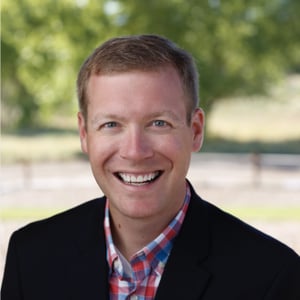
President, Center for American Rights
Daniel Suhr serves as president of the Center for American Rights, where he spends every day on the front lines of the fight to preserve our rights and liberties. The Center's mission is to advance free speech, free enterprise, and parental freedom in education through strategic, precedent-setting litigation.
Daniel formerly worked as policy director for Wisconsin Governor Scott Walker, as chief of staff for Wisconsin Lieutenant Governor Rebecca Kleefisch, and as a law clerk for Judge Diane Sykes of the U.S. Court of Appeals for the Seventh Circuit. He holds a B.A. and J.D. from Marquette University, and master’s degrees from Georgetown and the University of Missouri.
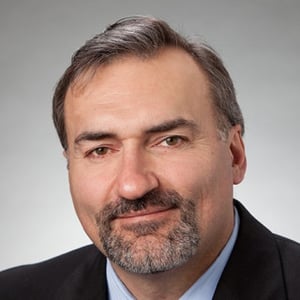
Judge, Waukesha County Circuit Court
Judge Michael J. Aprahamian serves as a judge on the Waukesha County Circuit Court. Prior to taking the bench in 2014, Judge Aprahamian was a partner at Foley & Lardner LLP, where he was a civil trial lawyer and the firm's partner in charge of ethics training. Prior to joining Foley, he clerked for the Honorable Richard D. Cudahy on the United States Court of Appeals for the Seventh Circuit. He received his J.D. from Yale Law School in 1992 and a B.S. from the University of Wisconsin in 1989.
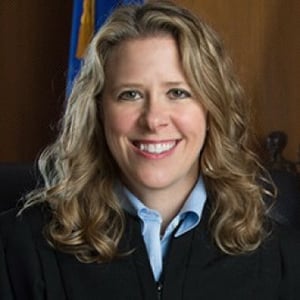
Justice, Wisconsin Supreme Court
Justice Rebecca Grassl Bradley, a Milwaukee native, was elected to the Supreme Court in 2016 after being appointed by Gov. Scott Walker in 2015. She is the first Wisconsin Supreme Court Justice to have served as an intermediate appellate court judge as well as a circuit court judge. Before joining the Supreme Court, Justice Bradley served as a District I Court of Appeals judge (appointed 2015), a Milwaukee County Circuit Court Judge (appointed 2012, elected 2013) and worked as an attorney in private practice (1996-2012), including serving as vice president of legal operations for a global software company.
Justice Bradley graduated from Marquette University in 1993 with an honors B.S. in Business Administration and Business Economics and received her juris doctor from the University of Wisconsin Law School in 1996.
Justice Bradley is a member of the Supreme Court Finance Committee and chairs the Supreme Court Legislative Committee as the Chief Justice's designee. She is a member of the Board of Advisors and past president of the Milwaukee Lawyers Chapter of the Federalist Society; serves on the Wisconsin State Advisory Committee of the U.S. Commission on Civil Rights; and is a member of the Bench and Bar Committee of the Wisconsin State Bar. She previously served on the Board of Governors of the St. Thomas More Lawyers Society; the Wisconsin Juvenile Jury Instructions Committee; the Wisconsin Juvenile Benchbook Committee; and as a member of the Milwaukee Trial Judges Association and the Wisconsin Trial Judges Association. While in private practice, Justice Bradley served as an American Arbitration Association Arbitrator and Chairman of the State Bar Business Law Section.
Justice Bradley's current term expires July 31, 2026.
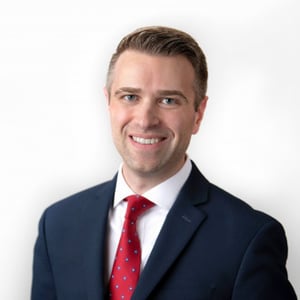
Managing Partner, Cramer Multhauf LLP
Attorney Matthew Fernholz focuses his practice on commercial litigation, trust and fiduciary disputes, business torts, trade secrets, non-compete agreements, defamation, and appellate work. In addition, he has developed one of the preeminent political and election law practices in the State of Wisconsin, and has handled several high-profile matters, from representing candidates for statewide office, successfully challenging the Governor’s emergency powers, arguing before the Wisconsin Elections Commission, and representing the Speaker of the Assembly.
Matthew frequently and successfully tries cases to verdict, and believes a lawyer unwilling to try a case should not take on a client in a litigation matter. In addition to this trial work, he has handled dozens of appeals, and countless dispositive motions.
His work has also been published in law review journals and newspapers alike.
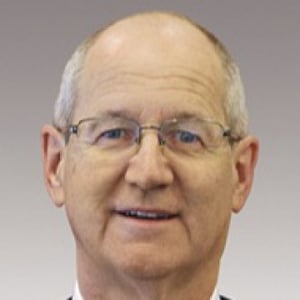
Senior District Judge, United States District Court, Eastern District of Wisconsin
Judge William C. Griesbach is Senior District Judge of the United States District Court for the Eastern District of Wisconsin. Born in Milwaukee, Judge Griesbach received his B.A. from Marquette University and his J.D. from Marquette University Law School. Before joining the bench Judge Griesbach worked as a law clerk for Justice Bruce Beilfuss of the Supreme Court of Wisconsin, a staff attorney for the U.S. Court of Appeals for the Seventh Circuit, in private practice, and as an assistant district attorney for Brown County. In 1995, Judge Griesbach was elected to the Brown County Circuit Court, where he served until he was nominated by President George W. Bush to the Eastern District, and confirmed by the Senate, in 2002. He served as Chief Judge of that court from 2012 to 2019, assuming senior status in 2019.
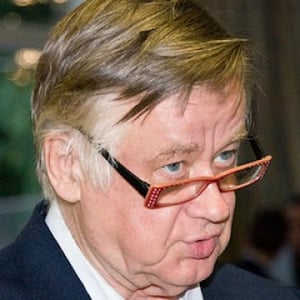
Senior Editor, The American Spectator
Tom Bethell was a senior editor of The American Spectator and author of The Politically Incorrect Guide to Science, The Noblest Triumph: Property and Prosperity Through the Ages, and most recently Questioning Einstein: Is Relativity Necessary? (2009).

President, Columbia University
Lee C. Bollinger became Columbia University’s 19th president in 2002 and is the longest serving Ivy League president. Under his leadership, Columbia stands again at the very top rank of great research universities, distinguished by comprehensive academic excellence, an innovative and sustainable approach to global engagement, two of the largest capital campaigns in the history of higher education, and the institution’s most ambitious campus expansion in over a century.
President Bollinger is Columbia’s first Seth Low Professor of the University, a member of the Columbia Law School faculty, and one of the nation's foremost First Amendment scholars. Each fall semester, he teaches “Freedom of Speech and Press” to Columbia undergraduate students. He has two books coming out in 2021: National Security, Leaks and Freedom of the Press: The Pentagon Papers Fifty Years On, co-edited with Geoffrey R. Stone, which will be published by Oxford University Press; and Regardless of Frontiers: Global Freedom of Expression in a Troubled World, co-edited with Agnès Callamard, which will be published by Columbia University Press.
As president of the University of Michigan, Bollinger led the school’s historic litigation in Grutter v. Bollinger and Gratz v. Bollinger, Supreme Court decisions that upheld and clarified the importance of diversity as a compelling justification for affirmative action in higher education. He speaks and writes frequently about the value of racial, cultural, and socioeconomic diversity to American society through opinion columns, media interviews, and public appearances around the country. Columbia remains one of the most diverse universities among its peer institutions and has seen the number of applicants to Columbia College and the selectivity of admissions at the school reach record levels.
As Columbia’s president, Bollinger conceived and led the University’s most ambitious expansion in over a century with the creation of the Manhattanville campus in West Harlem, the first campus plan in the nation to receive the U.S. Green Building Council’s highest certification for sustainable development. An historic community benefits agreement emerging from the city and state review process for the new campus provides Columbia’s local neighborhoods with decades of investment in the community’s health, education and economic growth. The first two buildings, the Jerome L. Greene Science Center and the Lenfest Center for the Arts, opened in the spring of 2017. The third, the Forum, which hosts conferences, meetings, and symposia, opened in September of 2018.
Bollinger’s commitment to excellence in architecture is evident across Columbia’s campuses, from Renzo Piano’s master plan for Manhattanville, to the recently opened Roy and Diana Vagelos Education Center at Columbia University Irving Medical Center, designed by Diller Scofidio + Renfro, to Rafael Moneo’s design for the Northwest Corner Building on the historic Morningside campus, to the Campbell Sports Center at Baker Field designed by Steven Holl.
Among Bollinger’s signal achievements at Columbia are the development of a network of nine Columbia Global Centers on four continents and the creation of new venues on the University’s home campus supporting global conversations and scholarship, including the World Leaders Forum and the Committee on Global Thought.
From November 1996 to 2002, Bollinger was president of the University of Michigan, where he also served as a law professor and dean of the law school.
He is a fellow of both the American Academy of Arts and Sciences and the American Philosophical Society. He is widely published on legal and constitutional issues involving free speech and press, and his books include: The Free Press Century, Uninhibited, Robust, and Wide-Open: A Free Press for a New Century; Eternally Vigilant: Free Speech in the Modern Era; Images of a Free Press; and The Tolerant Society: Freedom of Speech and Extremist Speech in America.
Bollinger has received the National Humanitarian Award from the National Conference for Community and Justice and the National Equal Justice Award from the NAACP Legal Defense and Educational Fund for his leadership on affirmative action. He also received the Clark Kerr Award, the highest award conferred by the faculty of the University of California, Berkeley, for his service to higher education, especially on matters of freedom of speech and diversity. He is the recipient of multiple honorary degrees from universities in this country and abroad.
Bollinger is a director of Graham Holdings Company (formerly The Washington Post Company) and serves as a member of the Pulitzer Prize Board. From 2007 to 2012, he was director of the Federal Reserve Bank of New York, where he also served as chair from 2010 to 2012.
After graduating from the University of Oregon and Columbia Law School, where he was an Articles Editor of Columbia Law Review, Bollinger served as law clerk for Judge Wilfred Feinberg on the United States Court of Appeals for the Second Circuit and for Chief Justice Warren Burger on the United States Supreme Court. He joined the University of Michigan Law School faculty in 1973.
Bollinger was born in Santa Rosa, California and raised there and in Baker, Oregon. He is married to artist Jean Magnano Bollinger, and they have two children and five grandchildren.

Laurence A. Tisch Professor of Law and Director, Classical Liberal Institute, New York University School of Law; Senior Fellow, The Civitas Institute, University of Texas at Austin
Richard A. Epstein is the inaugural Laurence A. Tisch Professor of Law at NYU School of Law. Prior to his joining the faculty, he was a visiting law professor at NYU from 2007 through 2009. He served as the Peter and Kirstin Bedford Senior Fellow at the Hoover Institution from 2000 to 2024. Since 2024 to the present he is a senior lecturer at the Civitas Institute at the University of Texas—Austin. Epstein is also the James Parker Hall Distinguished Service Professor of Law Emeritus and a senior lecturer at the University of Chicago. His initial law school appointment was at the University of Southern California from 1968 to 1972. Epstein received an LL.D., h.c. from the University of Ghent, 2003. He has been a member of the American Academy of Arts and Sciences since 1985 and was a Senior Fellow of the Center for Clinical Medical Ethics at the University of Chicago Division of Biological Sciences, also from 1983. to 2022 He served as editor of the Journal of Legal Studies from 1981 to 1991, and of the Journal of Law and Economics from 1991-2001. From 2001 to 2010 he was a director of the John M. Olin Program in Law and Economics at the University of Chicago.
His newest book, The Myth of Birthright Citizenship: What the Fourteenth Amendment Really Says was published in 2026 (Encounter Books). Prior to that he has published many books including, The Dubious Morality of the Modern Administrative State (Roman & Littlefield 2020).Earlier he published th Classical Liberal Constitution: The Uncertain Quest for Limited Government (Harvard 2014) iHis previous books include Design for Liberty: Private Property, Public Administration and the Rule of Law (Harvard 2011); The Case Against the Employee Free Choice Act (Hoover 2009); Supreme Neglect: How to Revive the Constitutional Protection of Property Rights (Oxford 2008); Antitrust Decrees in Theory and Practice: Why Less is More (AEI 2007); Overdose: How Excessive Government Regulation Stifles Pharmaceutical Innovation (Yale University Press. 2006); How Progressives Rewrote the Constitution (Cato 2006); Cases and Materials on Torts (Aspen Law & Business; 8th ed. 2004); Skepticism and Freedom: A Modern Case for Classical Liberalism (University of Chicago, 2003); Torts (Aspen Law & Business 1999); Principles for a Free Society: Reconciling Individual Liberty with the Common Good (Perseus Books, 1998): Mortal Peril: Our Inalienable Rights to Health Care (Addison-Wesley, 1997); Simple Rules for a Complex World (Harvard, 1995); Bargaining With the State (Princeton, 1993); Forbidden Grounds: The Case Against Employment Discrimination Laws (Harvard , 1992); Takings: Private Property and the Power of Eminent Domain (Harvard, 1985); and Modern Products Liability Law (Greenwood Press, 1980). He has also edited(with Catherine M. Sharkey) Cases and Materials on the Law of Torts (10th edition 2012).
Professor Epstein has written numerous articles on a wide range of legal and interdisciplinary subjects. He has taught courses in administrative law, antitrust law, civil procedure, communications, constitutional law, contracts, corporations, criminal law, employment discrimination law, environmental law, food and drug law health law and policy, legal history, labor law, property, real estate development and finance, jurisprudence, labor law; land use planning, patents, individual, estate and corporate taxation, Roman Law; torts, and workers' compensation.
Professor Epstein also writes a regular column for Civitas Institute, which also sponsors his podcast, The Libertarian with Charles C.W. Cooke, and Law Talk, with Cooke and John Yoo. He also does a podcast with John Batchelor. And appears regularly on the Freedom File with Judge Andrew Napolitano.
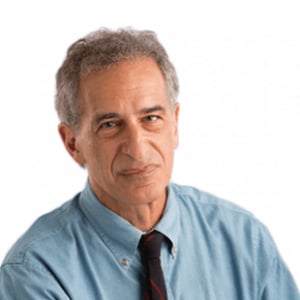
Thomas G. Long Professor of Law, University of Michigan Law School
Bill Miller, the Thomas G. Long Professor of Law, has been a member of the Michigan Law faculty since 1984. His research centers on saga Iceland, from whence the materials studied in his course Bloodfeuds and which provides the sources for his Bloodtaking and Peacemaking: Feud, Law, and Society in Saga Iceland (1990).
He also has written about emotions, mostly unpleasant ones involving self-assessment, and select vices and virtues. Thus his books: Humiliation (1993); The Anatomy of Disgust (1997)—named the best book of 1997 in anthropology/sociology by the Association of American Publishers; The Mystery of Courage (2000); Faking It (2003), which deals with anxieties of role, identity, and posturings of authenticity; Losing It (2011), where he turns a jaundiced eye toward aging and decline; and the latest in the grim series to appear Jan. 2020: Outrageous Fortune: Gloomy Reflections on Luck and Life. The Chicago Tribune named Losing It to its list of best books of the year; Macleans magazine of Canada also listed it in its top 10 nonfiction books of 2011. Eye for an Eye (2006) is an extended treatment of the law of the talion. Audun and the Polar Bear: Luck, Law, and Largesse in a Medieval Tale of Risky Business (2008) offers an expansive interpretation of a superbly crafted short Icelandic tale. "Why is your axe bloody:" A Reading of Njáls Saga is exactly what the subtitle indicates; yet another book on a saga, Hrafnkel or the Ambiguities: Hard Cases, Hard Choices, appeared in 2017. He also has been a visiting professor at Yale, the University of Chicago, the University of Bergen, the University of Tel Aviv, and Harvard, and in 2008, was the Carnegie Centenary Trust Professor at the University of St. Andrews, where he is now also an honorary professor of history.
Professor of Philosophy (emeritus), Bowling Green State University
Jeffrey Paul is a retired professor of philosophy at Bowling Green State University, the Associate Director of the Social Philosophy and Policy Center, and a Research Professor at the Freedom Center.
Jeffrey Paul is a retired professor of philosophy at Bowling Green State University, the Associate Director of the Social Philosophy and Policy Center, and a Research Professor at the Freedom Center. His research and teaching focus on ethics, political philosophy, and law.
Research Interests:
Jeffrey is the co-editor, with Richard A. Epstein, of Labor Law and the Employment Market (Transaction, 1985). He has published essays on ethics and political philosophy in The Monist, Philosophical Review, the Personalist, Pacific Philosophical Quarterly, the Review of Metaphysics, Reason Papers, Orbis, the Journal of Medical Ethics, the History of Political Thought, the Hastings Center Report, and in John Gray and Z.A. Pelczynski’s collection Conceptions of Liberty in Political Theory.
His collection Reading Nozick was published by Rowman and Allanheld in 1981. He is Associate Editor of Social Philosophy & Policy, as well as a coeditor of many collections of essays on moral and political philosophy published by Cambridge University Press.
Jeffrey founded the Social Philosophy and Policy Center at Bowling Green State University with Fred D. Miller, Jr., in 1981. He is presently Associate Director of the Center.
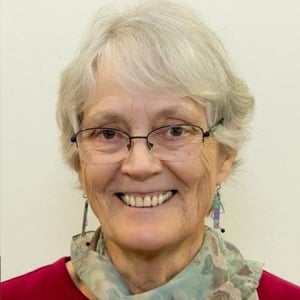
Lohse Chair in Water and Natural Resources & Professor Emerita of Law, The University of Arizona James E. Rogers College of Law
Carol M. Rose is the Ashby Lohse Chair in Water and Natural Resources at the University of Arizona James E. Rogers College of Law and was previously the Gordon Bradford Tweedy Professor of Law and Organization at Yale Law School.
Rose graduated from Antioch College with a B.A. (1962) and received an M.A. from the University of Chicago (1963), a Ph.D. in History from Cornell University (1969) and a J.D. from the University of Chicago Law School (1977).
In 2010, Rose was awarded the Brigham–Kanner Property Rights Prize, awarded by the College of William & Mary School of Law annually to an individual whose work has advanced the cause of private property rights. Rose's notable works include Perspectives on Property Law (Aspen 3d ed. 2014) (with Robert Ellickson and Henry E. Smith) and Property and Persuasion: Essays on the History, Theory, and Rhetoric of Ownership (Westview Press 1994).
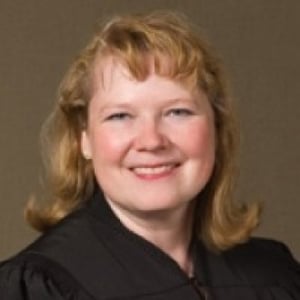
U.S. Court of Appeals, 10th Circuit
Allison Hartwell Eid is a judge on the United States Court of Appeals for the 10th Circuit. She joined the court in 2017 after a nomination from President Donald Trump.
Prior to her service on the Tenth Circuit, Judge Eid was a justice on the Colorado Supreme Court. She was the 95th justice to serve on the court, serving from 2006 to 2017. Before joining the Court, Judge Eid was the Solicitor General of the State of Colorado, serving as the chief legal officer to the Colorado Attorney General and representing Colorado officials and agencies in state and federal court. She was also a tenured Associate Professor of Law at the University of Colorado School of Law, teaching Constitutional Law, Legislation, and Torts, and writing on the topic of constitutional federalism.
Prior to joining the faculty of the University of Colorado School of Law, Judge Eid practiced commercial and appellate litigation with the Denver office of the national law firm of Arnold & Porter. She clerked for the Honorable Clarence Thomas, Associate Justice of the United States Supreme Court, and for Judge Jerry E. Smith of the United States Court of Appeals for the Fifth Circuit in Houston, Texas.
Judge Eid earned her bachelor’s degree in American Studies (With Distinction and Phi Beta Kappa) from Stanford University in 1987. She then served as a Special Assistant and Speechwriter to U.S. Secretary of Education William J. Bennett. In 1991, she graduated with High Honors from The University of Chicago Law School, where she was Articles Editor of The University of Chicago Law Review and was elected to the Order of the Coif. In 2002, President George W. Bush appointed her to serve on the Permanent Committee for the Oliver Wendell Holmes Devise, established by Congress in 1955 to prepare the history of the U.S. Supreme Court. She is a member of the American Law Institute and studied comparative law in London as a Temple Bar Scholar.
Judge Eid grew up in Spokane, Washington. She and her husband Troy, an attorney, have two children.
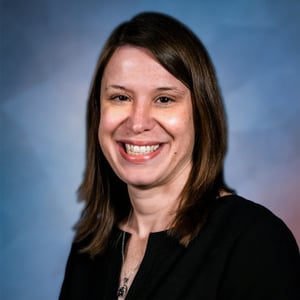
Senior Director of Strategic Partnerships, First Liberty Institute
Lisa Budzynski Ezell is the former Vice President and Director of the Federalist Society’s Lawyers Chapters. In this role, she managed a growing network of over 90 lawyers chapters nationwide, including oversight of leadership recruitment, chapter programming, state conferences, civics education outreach, and young lawyers activities. She holds a Bachelor of Arts degree from Saint Mary’s College in Political Science and History and a Master of Public Policy from George Mason University.
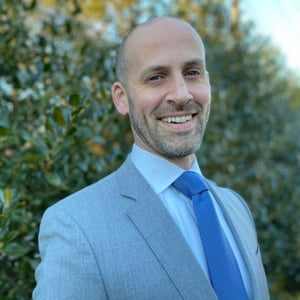
Partner, Lehotsky Keller LLP
The New York Times recognized Scott A. Keller as a “legal heavyweight,” who “is praised by opponents as a formidable advocate.”
Mr. Keller has argued 12 cases before the U.S. Supreme Court and 12 cases before the Texas Supreme Court. He is the only practicing lawyer to have argued at least 10 cases in both courts. Mr. Keller frequently represents parties in high stakes appeals, and he has argued many cases in federal courts of appeals throughout the nation. He has earned individual accolades from Lawdragon 500 Leading Litigators in America, Chambers, Legal 500, The American Lawyer, The National Law Journal, Law360, Super Lawyers, The Best Lawyers in America, and other publications.
Before founding Lehotsky Keller Cohn LLP, Mr. Keller headed Baker Botts LLP’s Supreme Court Practice. He also has significant experience at the highest levels in all three branches of government. Mr. Keller served as the Solicitor General of Texas, the State’s chief appellate litigator. He was U.S. Senator Ted Cruz’s chief counsel on the Senate Judiciary Committee. Mr. Keller was a law clerk for Justice Anthony Kennedy of the Supreme Court of the United States and Chief Judge Alex Kozinski of the U.S. Court of Appeals for the Ninth Circuit. He was also a Bristow Fellow in the U.S. Department of Justice’s Office of the Solicitor General.
Mr. Keller represents clients in cases where public communications strategy is crucial, and he has made numerous media appearances in major outlets such as The New York Times, The Wall Street Journal, BBC, Fox News, NPR, and Politico. As a sought after speaker and writer, Mr. Keller’s articles have appeared in the Stanford Law Review, Virginia Law Review, and Texas Law Review. He has also served as an adjunct professor of constitutional litigation, Supreme Court practice, and federal courts at the University of Texas School of Law.

Sheila M. McDevitt Professor of Law and Faculty Director of the Election Law Center, Florida State University College of Law
Professor Morley joined FSU Law in 2018, and teaches and writes in the areas of election law, constitutional law, remedies, and the federal courts. He is best known for his work on election emergencies and post-election litigation, nationwide and other defendant-oriented injunctions, the jurisdiction of the federal courts and their equitable powers more generally. He has testified before congressional committees, made presentations to election officials for the U.S. Election Assistance Commission and participated in bipartisan blue-ribbon groups to develop election reforms. The governor of Florida also appointed Professor Morley to the Criminal Punishment Code Task Force, to propose potential revisions to the legislature.
The U.S. Supreme Court has cited several of his articles, and he was counsel of record for the successful Petitioner in a landmark campaign finance case. Professor Morley has appeared on C-SPAN, Court TV, Fox News and numerous local news programs, and has been quoted in the Washington Post, Los Angeles Times, Roll Call, Politico, U.S. News and World Report, and a wide range of other national publications. His work has been published in many of the nation’s top law reviews, including the Georgetown Law Journal, Northwestern University Law Review, Boston University Law Review and Emory Law Journal.
Before joining FSU Law, Professor Morley was a Climenko Fellow and Lecturer in Law at Harvard Law School. Prior to his experience in academia, he served in government as special assistant to the General Counsel of the Army at the Pentagon, as well as a law clerk for Judge Gerald B. Tjoflat of the U.S. Court of Appeals for the Eleventh Circuit. During his tenure with the Army General Counsel’s office, he was awarded the Meritorious Civilian Service Award and the Army Staff Lapel Pin. He also worked as an associate at Williams & Connolly LLP and the Supreme Court & Appellate group of Winston & Strawn, LLP, both in Washington, D.C.
Professor Morley earned his J.D. from Yale Law School in 2003, where he was a senior editor on the Yale Law Journal; served on the moot court board; and received the Thurman Arnold Prize for Best Oralist in the Morris Tyler Moot Court of Appeals.
Partner, Pisanelli Bice PLLC
Mr. Smith Jordan Smith is a partner at Pisanelli Bice PLLC, a Las Vegas-based boutique litigation firm, where he practices commercial and appellate litigation. Mr. Smith is the former Deputy Solicitor General of Nevada.
Mr. Smith has argued over 20 times in various state and federal appellate courts on a range of issues, including business disputes, administrative law, bankruptcy, habeas corpus, constitutional issues, and the death penalty. He has published multiple scholarly articles on subjects ranging from gaming law, statutory interpretation, and appellate practice. He has also presented on a variety of issues including nationwide injunctions.
While at the Nevada Attorney General’s Office, Mr. Smith represented the state in many constitutional cases and matters of statewide or national importance.
Mr. Smith has been recognized by his peers as one of Nevada’s leading litigators, including being named Vegas 40 Under 40 and by Best Lawyers as the “Appellate Practice Lawyer of the Year” for Las Vegas.
Congressman, U.S. House of Representatives
First elected in 2016, Congressman Mike Gallagher represents Wisconsin’s 8th District in the U.S. House of Representatives. Mike is a 7th generation Wisconsin native, born and raised in Green Bay.
Mike joined the United States Marine Corps the day he graduated from college and served for seven years on active duty as a Counterintelligence/Human Intelligence Officer and Regional Affairs Officer for the Middle East/North Africa, eventually earning the rank of Captain. He deployed twice to Al Anbar Province, Iraq as a commander of intelligence teams, served on General Petraeus’s Central Command Assessment Team in the Middle East, and worked for three years in the intelligence community, including tours at the National Counterterrorism Center and the Drug Enforcement Agency. Mike also served as the lead Republican staffer for Middle East, North Africa and Counterterrorism on the Senate Foreign Relations Committee. Prior to taking office, Mike worked in the private sector at a global energy and supply chain management company in Green Bay.
After earning his bachelor’s degree from Princeton University, Mike went on to earn a master’s degree in Security Studies from Georgetown University, a second in Strategic Intelligence from National Intelligence University, and his PhD in International Relations from Georgetown.
Mike currently serves on the House Armed Services Committee, where he is a member of the Seapower and Projection Forces, as well as the Readiness Subcommittees. He also serves on the Homeland Security Committee, where he is a member of the Counterterrorism and Intelligence (CTI) and Cybersecurity and Infrastructure Protection (CIP) Subcommittees.

Vice President, Networks, The Federalist Society for Law and Public Policy Studies
Nathan Kaczmarek is Vice President for Networks at the Federalist Society. He began his legal career in Detroit representing nationwide clients in all phases of healthcare litigation and complex medical malpractice claims. He has since served as a Senior Legal and Policy Advisor in the U.S. House of Representatives and as Counsel for the Subcommittee on Regulatory Affairs and Federal Management in the U.S. Senate. Prior to overseeing the Networks, he was Director of the Practice Groups, the Regulatory Transparency Project, and the Article I Initiative for the Federalist Society.
Nathan holds degrees from Hillsdale College and Thomas M. Cooley Law School. He is a Liaison Representative for The Administrative Conference of the United States. He also serves as Vice President of the Associates of St. John Bosco, a Virginia based non-profit dedicated to Catholic high school and college students.
Professor of Political Science and International Affairs, Elliot School of International Affairs, The George Washington University
Henry R. Nau is Professor of Political Science and International Affairs at the Elliott School of International Affairs, The George Washington University. From 1989-2016, he directed the US-Japan- South Korea Legislative Exchange Program, semiannual meetings among Members of the US Congress, Japanese Diet, and South Korean National Assembly. During the academic year 2011-12 he was the W. Glenn Campbell and Rita Ricardo-Campbell National Fellow and the Susan Louise Dyer Peace National Fellow at the Hoover Institution, Stanford University.
Professor Nau holds a B.S. degree in Economics, Politics and Science from the Massachusetts Institute of Technology, and M.A. and Ph.D. degrees from The Johns Hopkins University School of Advanced International Studies. Previously, he taught at Williams College and as Visiting Professor at Johns Hopkins SAIS, Stanford, and Columbia Universities. He is the recipient of grants from, among others, the Council on Foreign Relations, National Science Foundation, Woodrow Wilson International Center for Scholars, Smith- Richardson Foundation, Century Foundation, Japan US Friendship Commission, Rumsfeld Foundation, the Lynde and Harry Bradley Foundation, and the Hoover Institution. From August 1975 to January 1977 he served as a special assistant to the Under Secretary of State for Economic Affairs and from January 1981 to July 1983 as senior staff member and White House sherpa on President Reagan’s National Security Council responsible for G-7 Summits and international economic affairs.
Among numerous publications, he is the author of five single-authored University press books, including Conservative Internationalism: Armed Diplomacy Under Jefferson, Polk, Truman and Reagan (Princeton University Press, 2013; paperback with new preface 2015); Perspectives on International Relations: Power, Institutions, and Ideas (Sage/CQ Press, 5th Edition, 2016); At Home Abroad: Identity and Power in American Foreign Policy (Cornell University Press, 2002); The Myth of America's Decline: Leading the World Economy into the 1990s (Oxford University Press, 1990) and National Politics and International Technology: Nuclear Reactor Development in Western Europe (Johns Hopkins University Press, 1974). His most recent articles and book chapters include “How Restraint Leads to War,” Commentary Magazine, (September 2015; Lead Article on Front Cover); “The ‘Great Expansion:’ The Economic Legacy of Ronald Reagan,” in Reagan’s Legacy in a World Transformed, edited by Jeffrey L. Chidester and Paul Kengor, (Harvard University Press, 2015); and “Ideas have consequences: The Cold War and today,” International Politics, (July 2011).
He is the recipient of the State Department's Superior Honor Award (1977), the Elliott School Harry Harding Teaching Prize (2007), and the Japanese Government's Order of the Rising Sun, Gold Rays with Neck Ribbon (2016). From 1963-65 he served as a Lieutenant in the 82nd Airborne Division at Fort Bragg, N.C.

Professor Emeritus of Law, Antonin Scalia Law School, George Mason University
Jeremy A. Rabkin is a Professor Emeritus of Law at the Antonin Scalia Law School, George Mason University. Before joining the faculty in June 2007, he was for over two decades a professor in the Department of Government at Cornell University. Professor Rabkin serves on the board of directors of the Center for Individual Rights, a public interest law firm based in Washington, D.C. Previously he was a board member of the U.S. Institute of Peace and the board of academic advisors of the American Enterprise Institute.
Professor Rabkin’s books include Law Without Nations? (Princeton University Press, 2005). He authored “If You Need a Friend, Don’t Call a Cosmopolitan,” a chapter in Varieties of Sovereignty and Citizenship (Sigal R. Ben-Porath & Rogers M. Smith eds., University of Pennsylvania Press, 2012). His articles have appeared in major law reviews and political science journals and his journalistic contributions in a range of magazines and newspapers, including the Washington Post and the Wall Street Journal.

Senior Fellow and Director of Constitutional Studies, Manhattan Institute
Ilya Shapiro is a senior fellow and director of constitutional studies at the Manhattan Institute and a contributing editor of City Journal. Previously he was executive director and senior lecturer at the Georgetown Center for the Constitution, and before that a vice president of the Cato Institute.
Shapiro is the author of Lawless: The Miseducation of America’s Elites (2025) and Supreme Disorder: Judicial Nominations and the Politics of America’s Highest Court (2020), coauthor of Religious Liberties for Corporations? (2014), and editor of 11 volumes of the Cato Supreme Court Review (2008-18). He has contributed to a variety of academic, popular, and professional publications, including the Wall Street Journal, Harvard Journal of Law & Public Policy, Washington Post, Los Angeles Times, USA Today, National Review, and Newsweek. He also regularly provides commentary for various media outlets, writes the Shapiro’s Gavel newsletter on Substack, and once appeared on the Colbert Report.
Shapiro has testified many times before Congress and state legislatures and has filed more than 500 amicus curiae “friend of the court” briefs in the Supreme Court. He lectures regularly on behalf of the Federalist Society, is a member of the board of fellows of the Jewish Policy Center, was an inaugural Washington Fellow at the National Review Institute, and has been an adjunct law professor at the George Washington University and University of Mississippi. He is also the chairman of the board of advisers of the Mississippi Justice Institute, a barrister in the Edward Coke Appellate Inn of Court, and a former member of the Virginia Advisory Committee to the U.S. Commission on Civil Rights.
Earlier in his career, Shapiro was a special assistant/adviser to the Multi-National Force in Iraq on rule-of-law issues and practiced at Patton Boggs and Cleary Gottlieb. Before entering private practice, he clerked for Judge E. Grady Jolly of the U.S. Court of Appeals for the Fifth Circuit. He holds an AB from Princeton University, an MSc from the London School of Economics, and a JD from the University of Chicago Law School.
Shareholder, Reinhart Boerner Van Deuren s.c.
Robert Driscoll is a shareholder in Reinhart's Labor and Employment Practice. He is an experienced, accomplished attorney who works to understand his clients' goals and provide them with effective legal and business solutions.
Rob counsels employers to help them avoid disputes with an emphasis on discrimination (including disability discrimination), wage and hour issues and employment contracts of all kinds. Rob's practice also includes all areas of traditional labor law, such as collective bargaining, labor arbitrations, proceedings before the National Labor Relations Board, and advising employers of their rights under the National Labor Relations Act.
He understands that trials can be costly and time-consuming, and clients appreciate that he offers creative options to resolve disputes without litigation. However, when litigation is unavoidable, he's a confident and diligent legal partner, devising effective strategies for prevailing. Rob's litigation experience includes wage and hour claims (both individual and class actions), employment and fair housing discrimination and noncompetition agreements. He also represents clients in appeals.
Prior to joining the firm, Rob was a law clerk for the Hon. Diane S. Sykes, U.S. Court of Appeals for the Seventh Circuit in Milwaukee.
Rob proudly serves on the Board of Directors for GPS Education Partners, an organization that works to validate technical career paths and provide students and their communities pathways to prosperity.
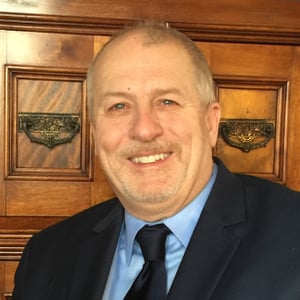
Founder, President, and General Counsel, Wisconsin Institute for Law & Liberty
Rick Esenberg is the founder and current President and General Counsel of the Wisconsin Institute for Law & Liberty, a rapidly expanding law and policy organization headquartered in Milwaukee. Under Rick’s leadership, WILL has grown into one of the more active state-based think tanks and litigation centers in the country. Rick is a frequent litigator in state and federal courts and nationally recognized scholar and commentator on constitutional law, particularly the First Amendment’s guarantees of freedom of speech and religion. He is one of the leading experts on the Wisconsin Constitution and a frequent advocate before the Wisconsin Supreme Court. Rick’s work seeks to advance the rule of law and individual liberty, formed by a robust civil society that forms individual and community character, preserving the wisdom of the past and an openness to the future.
Rick’s commentary has been featured in such outlets as the Wall Street Journal, National Review, Weekly Standard, Real Clear Politics, Milwaukee Journal Sentinel and Washington Examiner. Formerly on the faculty of Marquette University Law School, his scholarship has appeared in such publications as the Harvard Law Review, Harvard Journal of Law & Public Policy, Wake Forest Law Review and William & Mary Bill of Rights Journal. Back when they were a thing, he operated a blog called Shark and Shepherd where he tried to suggest something about the duality of man – “the Jungian thing.”
Rick holds a J.D., magna cum laude, from Harvard Law School, where he was an editor of the Harvard Law Review, and a B.A., summa cum laude, in political science from the University of Wisconsin-Milwaukee. In addition to service on the Marquette Faculty, he was formerly a litigation partner at Foley & Lardner and General Counsel of an international manufacturing firm headquartered in Wisconsin. He lives in Mequon Wisconsin with his wife Karen, golden retrievers Cooper and Riley and more books than he can find places for.
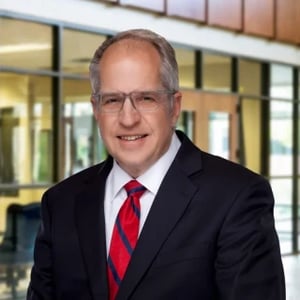
Senior Counsel, First Liberty Institute
Jordan Lorence is Senior Counsel in FLI’s Washington, D.C. office, where he represents First Liberty in strategic efforts promoting religious liberty, and works on important First Amendment projects and litigation, including those at the U.S. Supreme Court.
Lorence has a long career of litigating religious liberty cases since 1984. He has worked for many public interest law firms, including Alliance Defending Freedom, Home School Legal Defense Association, the North Star Legal Center and Concerned Women for America.
He has worked on important religious liberty cases. Lorence worked on school choice cases at the Supreme Court, such as Witters v. Washington Department of Services for the Blind (1986), and Trinity Lutheran (2016), which laid the foundation for First Liberty’s crucial win in Carson v. Makin (2022), requiring Maine to include religious schools in its school choice program.
Lorence argued before the U.S. Supreme Court in Regents of the University of Wisconsin v. Southworth (2000). He represented prolife Christian law students from the University of Wisconsin Law School who objected to the University’s requirement that they pay a mandatory student fee that funded the advocacy of student pro-abortion groups. Other Supreme Court cases Lorence has worked on include NIFLA v. Becerra (2018), protecting prolife pregnancy centers from a California statute requiring them to post signs explaining how pregnant women could obtain state-funded abortions; Masterpiece Cakeshop (2017), involving a Christian cake artist sued by the State of Colorado for declining to design a case celebrating the wedding of a same-sex couple and other cases such as Christian Legal Society v. Martinez (2012), Rosenberger v. University of Virginia (1995), Hurley v. GLIB (1995) and Lamb’s Chapel v. Center Moriches Center Moriches School District (1993).
Churches and other religious groups in New York City obtained the right to rent vacant public schools on weekends to conduct worship services after Lorence’s tenacious 20 years of litigation in Bronx Household of Faith. Lorence won protection for churches facing eviction from discriminatory zoning ordinances in Minnesota in Cornerstone Bible Church v. City of Hastings, Minnesota (1991). He also argued at the New Mexico Supreme Court one of the first cases in the nation defending a Christian wedding photographer charged by the State of New Mexico with discrimination for declining to create photos celebrating the commitment ceremony of a lesbian couple in Elane Photography v. Willock (2013).
Lorence defended home schooling families from intrusive school officials during his time working at Home School Legal Defense Association (HSLDA) in the 1980s and 1990s. HSLDA also tasked Lorence with establishing a sister organization in Canada to protect home schooling families there. He traveled extensively in Canada from British Columbia to Prince Edward Island speaking to families how they could protect their right to home school under relevant Canadian law.
Lorence earned his undergraduate degree in journalism from Stanford University and his law degree from the University of Minnesota, his home state. Lorence was born and raised in Minnesota, where he worked one summer building Mighty Dump trucks at Tonka Toys in Mound, Minnesota. For two years immediately after he graduated from law school, Lorence served as the head administrator for a Minnesota Senate committee.
He speaks extensively on First Amendment and other legal issues. Lorence has spoken at least 75 law schools and many legal conferences. Prominent publications such as the Wall Street Journal, the Washington Post and others have printed his opinion pieces on key legal issues involving religious liberty and freedom of speech. He has appeared on such media outlets as Fox News, CNN, National Public Radio, NBC’s Today Show, BBC radio and many others.
Lorence and his wife Marilyn have been married 40 years. They live in the Washington, D.C. area where they raised their seven children.
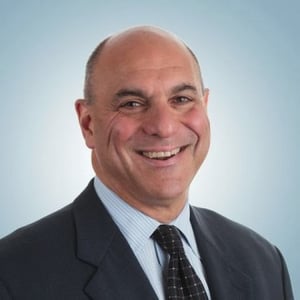
Senior Partner, Pines Bach LLP
Lester Pines is a Senior Partner in the firm.
A Fellow of the American College of Trial Lawyers, he is a respected civil and criminal litigator and appellate advocate. In his over 40 years of practice, he has appeared in trial and appellate courts throughout Wisconsin, in numerous federal district courts, and before the federal 7th Circuit Court of Appeals. After a recent trial, one of Lester’s clients wrote:
"Seeing you in action was like watching an artist create a classic painting from a blank canvas but instead of paint you used facts, figures and, most importantly, words to achieve a masterpiece in the courtroom."
His wide-ranging civil trial practice encompasses commercial claims, employment disputes, constitutional and civil rights matters, personal injury and intellectual property cases. His criminal defense work has involved many high profile cases, especially involving teachers, police officers and other public employees. He is counsel to Madison Teachers Inc., which represents the employees of the Madison Metropolitan School District.
Recently, Lester was featured in a cover story in Isthmus, a Madison weekly newspaper, " Activist Attorney – Lester Pines draws on faith and family in his practice and beyond."
Recent challenges to the constitutionality of newly enacted laws that Lester brought on behalf of his clients include:
Previously, in cases in which he was appointed by former Wisconsin Governor Jim Doyle, Lester defended Wisconsin’s law creating domestic partnerships for same sex couples and stopped an attempt by then Attorney General J.B. Van Hollen to suppress voting in the 2008 Presidential election.
Among the many cases Lester has argued before the Wisconsin Supreme Court, two in particular have shaped Wisconsin law. In 2010 he represented the Zurich American Insurance Company inMiller v. Hanover Insurance, securing the reversal of a $2,000,000 default judgment against his client and achieving a significant change in Wisconsin law regarding relief from such judgments. In an original action in 1996, he successfully argued the case of Thompson v. Craney, which delineated the constitutionally vested powers of the State Superintendent of Public Instruction and protected them from being altered by the Legislature, which the Wisconsin Supreme Court reaffirmed in 2016 in Coyne v. Walker.
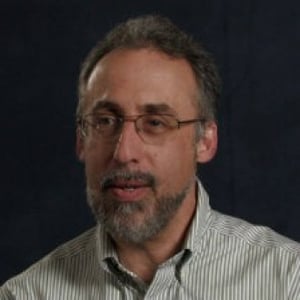
Professor of Political Science, University of Wisconsin - Madison
Howard Schweber joined the department in Fall 1999. He received his PhD in Government from Cornell University and an MA in History from the University of Chicago after spending five years practicing law in Seattle and San Francisco. Schweber teaches courses focusing on constitutional law and legal and political theory. He is the author of "Democracy and Authenticity" (Cambridge, 2012), "The Language of Liberal Constitutionalism" (Cambridge, 2007), "The Creation of American Common Law"(Cambridge, 2004), and "Speech, Conduct, and the First Amendment" (Peter Lang, 2003) as well as articles, essays and book chapters on a variety of related topics. His current areas of research include comparative constitutional law and democratic theories of representation. In addition to his position in the Political Science Department Schweber is a core faculty member of the Legal Studies program. From 2011 to 2013 he was Visiting Professor and the first Vice Provost for Academic Affairs at Nazarbayev University in Kazakhstan, and in 2012 he was the Australian Fulbright Distinguished Chair in American Politics.
Schweber is a regular guest on Wisconsin radio and gives frequent newspaper, radio, and television interviews in the local, national, and international press. He is also a contributing blogger at Huffingtonpost.com and an occasional guest blogger on other sites, and a frequent public speaker both on and off campus. Schweber was previously the faculty advisor and coach for the UW College Mock Trial Team and is currently the advisor for "Sifting and Winnowing," Wisconsin's undergraduate politics and law journal. In 2004 he was the recipient of the William H. Kiekhoffer Award for Distinguished Teaching. He has also twice been selected as the Pi Sigma Alpha Professor of the year, and has received numerous other teaching awards while at Wisconsin. Earlier, while a graduate student at Cornell University, Schweber received the Stephen and Marjorie Russell Award for Outstanding Teaching, the highest award for teaching at any level awarded by the College of Arts and Sciences.
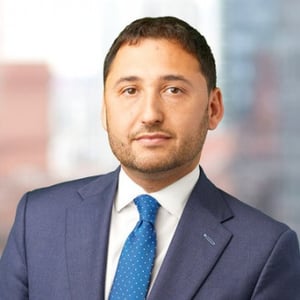
Partner, Troutman Pepper Locke LLP
Misha leads Troutman Peppers' national appellate and Supreme Court practice. Most recently, he successfully obtained orders from the Supreme Court blocking an unconstitutional restriction on places of worship, as well as overturning a lower court order that had blocked several state election laws. He has also argued and prevailed before the Supreme Court in Gill v. Whitford, one of the most significant redistricting cases in decades, as well as Murr v. Wisconsin, a high-stakes regulatory taking case.
Before joining Troutman, Misha served as Solicitor General of the State of Wisconsin. Misha previously served as a law clerk for the Honorable Anthony M. Kennedy of the Supreme Court, Janice Rogers Brown of the D.C. Circuit, and Alex Kozinski of the 9th Circuit. He graduated from Georgetown University Law Center, where he was President of the Federalist Society Chapter.
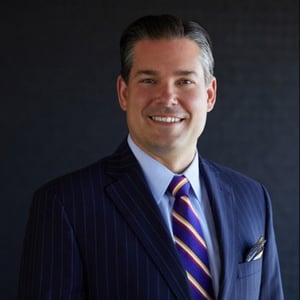
Partner, Graves Garrett Greim LLC
Edward “Eddie” Greim focuses his practice on complex commercial litigation, free speech and election law, and internal investigations and whistleblower claims. He has been recognized for his successful representation of businesses and individuals in commercial litigation while also being named a “go-to” lawyer on policy and constitutional issues.
Eddie was named a Constitutional and Election Law Trailblazer by the National Law Journal in 2020. His free speech and election law practice has included numerous constitutional challenges to election and campaign finance laws; representation of clients in state and federal ethics and campaign finance enforcement actions and investigations; initiative petition drafting and litigation; litigation and advice regarding First Amendment protections for petition circulation; representation of not-for-profit clients before state regulators; litigation of state and federal redistricting issues; and advice on campaign and election law compliance.
Eddie complements his trial work in complex, high-profile commercial and constitutional cases with oral advocacy and briefing in important appeals. Recognized as a Missouri Lawyers Media POWER 30 Appellate Attorney in 2021, he has argued before the Missouri and Kansas supreme courts multiple times, other state appellate courts across the country, and before the Sixth, Seventh, Eighth, and Tenth U.S. Courts of Appeals.
Eddie’s notable work for clients includes:
Recovering substantial compensation and injunctive relief for plaintiffs, in complex multiyear litigation, as lead counsel in the first and only nationwide class action certified against the Internal Revenue Service for violating taxpayer protection statutes when it targeted hundreds of groups based on their political viewpoints.
Successful First Amendment challenge to Missouri’s 2016 campaign finance restrictions.
Successful challenge to a vast, multiyear, secret criminal investigation into Wisconsin political groups and nonprofits, and follow-up challenge to expose role of state ethics board which secretly aided the investigation and was later dissolved by the legislature.
U.S. Supreme Court amicus brief for the National Republican Redistricting Trust in the 2019 Rucho litigation, and federal and state redistricting litigation and advice since 2011.
Challenges under the First Amendment in federal court, and in briefing to the Michigan Supreme Court on state constitutional grounds, to unprecedented emergency powers claimed by Michigan Governor in 2020.
Representation of numerous public officials and private citizens who are subject to “lawfare” attacks based on their political viewpoints or policy objectives.
Oversight of multiple internal investigations.
Eddie received his law degree from Harvard Law School in 2002, where he taught on the Board of Student Advisers, received the Dean’s Award for Leadership, and served as President of the Harvard Catholic Law Students Association. He received two bachelor’s degrees, summa cum laude, in economics and political science from the University of Missouri.
A native of Excelsior Springs, Missouri, Eddie lives in Kansas City with his family. He enjoys Missouri and military history. On many weekends, he can be found with his wife and daughters exploring sites of local interest. He enjoys reading and debating and has given presentations or organized discussions at numerous gatherings, formal and informal, of professional and personal interest.

Professor of Law and Executive Director, Law and Economics Center, Antonin Scalia Law School, George Mason University
Donald Kochan is Professor of Law and Executive Director of the Law & Economics Center (LEC). Professor Kochan is an elected member of the American Law Institute (ALI) and serves as an Adviser to ALI's Restatement of the Law Fourth, Property project. Professor Kochan is a Nonresident Scholar at the Center for the Constitution at Georgetown University Law Center, where he was a Visiting Scholar in residence during Fall 2018. Before joining the Antonin Scalia Law School faculty, he was the Parker S. Kennedy Professor in Law at Chapman University’s Dale E. Fowler School of Law from 2004 to 2020. From 2003 to 2004, Professor Kochan was an Olin Fellow at the University of Virginia School of Law. During 2002-2003, he was a Visiting Assistant Professor of Law at George Mason’s Scalia Law School.
Professor Kochan’s scholarship focuses on areas of property law, constitutional law, administrative law, local government law, natural resources and environmental law, and law & economics. He has published several books and more than 50 scholarly articles and essays in well-regarded law journals. His work has been cited in more than a dozen state and federal court opinions, in more than 75 briefs filed in state and federal courts including more than 25 filed in the U.S. Supreme Court, in dozens of books and treatises, and in more than 800 scholarly articles.
Professor Kochan received his JD from Cornell Law School, where he was a John M. Olin Scholar in Law and Economics and managing editor of the Cornell International Law Journal. During law school, he also served as editor and executive editor of the Harvard Journal of Law & Public Policy symposium issues in 1997 and 1998. He received his BA from Western Michigan University, magna cum laude, with majors in both political science and philosophy, where he studied as the John W. Gill Medallion Scholar and was honored as the Presidential Scholar (awarded to the top graduate in the political science department).
After graduating from law school, Professor Kochan was a law clerk to The Honorable Richard F. Suhrheinrich of the United States Court of Appeals for the Sixth Circuit. Following his clerkship, Professor Kochan was an associate with the firm of Crowell & Moring LLP in Washington, D.C., where he specialized in natural resources & environmental law as well as tort, products, and consumer civil litigation & legislative affairs.

Staff Attorney, Southern Utah Wilderness Alliance
David Garbett is a staff attorney with the Southern Utah Wilderness Alliance in Salt Lake City, Utah. His practice focuses on public lands law, principally as it relates to the Bureau of Land Management. His litigation and administrative work has involved oil and gas leasing and development, air quality issues, wilderness identification and management, rights of way claims, and resource management planning. Mr. Garbett earned his J.D. from Harvard Law School in 2006. He also holds an M.S. in economics from Utah State University and a B.A. in history from Brigham Young University.

Wisconsin Supreme Court Finds Local "User Fees" To Be Unlawful Property Taxes
Daniel Suhr
The difference between a tax and a user fee may seem obvious at first glance:...
Panel I: Path to the Judiciary in Wisconsin
Michael J. Aprahamian, Rebecca Bradley, Matthew M. Fernholz, William C. Griesbach
Although many lawyers spend their careers in front of judges, the process by which a...
Panel I: The Idea of Property [Archive Collection]
Tom Bethell, Lee C. Bollinger, David M. Di Rita, Richard A. Epstein, William Ian Miller, Jeffrey Paul, Carol M. Rose
On March 10-11, 1989, the Federalist Society's University of Michigan student chapter hosted the eighth...
Panel One: Debate on Nationwide Injunctions
Allison H. Eid, Lisa Ezell, Scott Allen Keller, Michael T. Morley, Jordan T. Smith
What is the proper role of state attorneys general and the courts in litigation in...
Founding Principles as Pillars of Our Foreign Policy
Mike Gallagher, Nathan Kaczmarek, Henry Nau, Jeremy A. Rabkin, Ilya Shapiro
What would history have to say about the way in which American foreign policy is...
First Amendment Controversies: Free Speech and Religious Liberty
Robert S. Driscoll, Rick M. Esenberg, Jordan Lorence, Lester A. Pines, Howard Schweber, Misha Tseytlin
This panel debated perspectives from both sides of two important national discussions: the debate over...
New Developments in Wisconsin’s John Doe Investigations
Edward D. Greim
Between 2010 and 2013, a team of Wisconsin state officials assembled by the Milwaukee County...
Public Land Controversy: The States v. The Federal Government - Podcast
Donald J. Kochan, David Garbett
Controversies over jurisdiction and management of public lands are building. Whether grazing rights disputes in...