
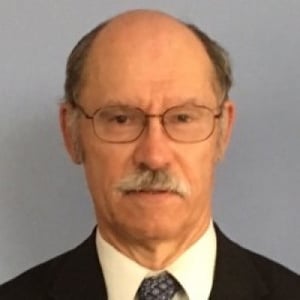
Professorial Lecturer in Law, George Washington University Law School
Theodore C. (Ted) Hirt was an attorney in the Department of Justice's Civil Division from August 1979 to March 2016. He was in its Federal Programs Branch from 1979 to 2008 (trial attorney, senior trial counsel, assistant director), and then in its Office of Immigration Litigation from 2008 to 2016 (trial attorney and senior litigation counsel). Among his responsibilities (September 2001 to March 2016) was being an advisor to the Assistant Attorneys General for the Civil Division, who serve ex officio on the Civil Rules Advisory Committee. Mr. Hirt’s areas of specialization include First Amendment issues, internet and telecommunications law, and electronic discovery. From 1976 to 1979, he was an associate at Fried, Frank, Harris, Shriver & Kampelman. From 1975 to 1976 he was an attorney in the Prehearing Division of the Michigan Court of Appeals.
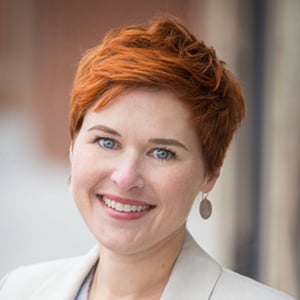
Senior Fellow, American Enterprise Institute
Elizabeth “Beth” Akers is a senior fellow at the American Enterprise Institute (AEI), where she focuses on the economics of higher education. Before joining AEI, she worked as a senior fellow at the Manhattan Institute, a visiting research scholar at the Federal Reserve Board, a fellow at Brookings Institution, and a staff economist at the Council of Economic Advisers under President George W. Bush.
Dr. Akers is the coauthor of Game of Loans: The Rhetoric and Reality of Student Debt (Princeton University Press, 2016) and the coauthor of the chapter “Understanding Changes in the Distribution of Student Loan Debt over Time” in Student Loans and the Dynamics of Debt (Upjohn Institute Press, 2015).
She has testified before Congress, and her writing and research have been published or featured in Bloomberg View, Boston Globe, E21 Manhattan Institute, Education Next, New York Daily News, New York Post, Newsweek, Quartz, Time, The Hill, The New York Times, The Wall Street Journal, The Washington Post, and USA Today, among others. Her broadcast appearances include ABC News, Bloomberg Television, C-SPAN, and CNBC.
Dr. Akers has a PhD in economics from Columbia University and a BS in mathematics and economics from the State University of New York at Albany.
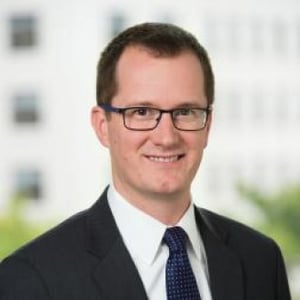
Vice President, Center on Education Data and Policy at the Urban Institute
Matthew M. Chingos directs the Center on Education Data and Policy at the Urban Institute. He leads a team of scholars who undertake policy-relevant research on issues from prekindergarten through postsecondary education and create tools such as Urban’s Education Data Portal.
Chingos is coauthor of Game of Loans: The Rhetoric and Reality of Student Debt and Crossing the Finish Line: Completing College at America’s Public Universities. He has testified before Congress, and his work has been featured in media outlets such as the New York Times, the Washington Post, and NPR.
Before joining Urban, Chingos was a senior fellow at the Brookings Institution. He received a BA in government and economics and a PhD in government from Harvard University.

Senior Fellow, Foundation for Research on Equal Opportunity
Preston Cooper is a senior fellow in higher education policy at the Foundation for Research on Equal Opportunity (FREOPP), where his research focuses on the federal student loan program and the cost and value of college. He is the author of the report Is College Worth It? A Comprehensive Return on Investment Analysis, which calculated net financial returns for nearly 30,000 bachelor's degrees. His writing has appeared in the Wall Street Journal, the New York Times, the Washington Post, and several other national outlets. He is also a regular contributor to Forbes.
Prior to joining FREOPP, Preston studied higher education policy at the American Enterprise Institute and the Manhattan Institute. He lives in Alexandria, Virginia.
Former principal deputy under secretary, U.S. Department of Education
Diane Auer Jones recently retired from a thirty-year career as an educator, scientist, administrator, and public policy official. Although she began her career as a nursing assistant, upon completion of undergraduate and graduate degrees in biology and applied molecular biology, she worked as a molecular biology research and later as the founding director of an EPA-certified analytical chemistry laboratory. Through an adjunct faculty position at the Community College of Baltimore County (CCBC), she realized that working with students was her true passion and she joined the full-time faculty at CCBC. Over the course of her career, her work in higher education also included leadership positions at Princeton University, The Washington Campus and Career Education Corporation. Despite her passion for teaching, after serving as a program director at the National Science Foundation, Diane’s career focus shifted to science and education policy. She subsequently served as a professional staffer and acting staff director for the Research Subcommittee of the House Committee on Science and Technology and as the deputy to the associate director for science at the White House Office of Science and Technology Policy. She was nominated by President George W. Bush, and confirmed by the Senate, to serve as the assistant secretary for post-secondary education at the U.S. Department of Education. She returned to the U.S. Department of Education to conclude her career, serving as the principal deputy undersecretary delegated the duties of undersecretary during the Donald J. Trump administration.

George Mason University Foundation Professor of Law, Antonin Scalia Law School, George Mason University
TODD J. ZYWICKI is George Mason University Foundation Professor of Law at Antonin Scalia Law School at George Mason University and Research Fellow of the George Mason Law and Economics Center. During the Fall 2023 semester he served as the Visiting Scholar in Conservative Thought and Policy for the Bruce Benson Center for the Study of Western Civilization at the University of Colorado-Boulder. From 2020-2021 he was Chair of the Consumer Financial Protection Bureau Taskforce on Federal Consumer Financial Law. In 2021 he was inducted to the American College of Consumer Financial Services Lawyers. He is also a Senior Fellow of the F.A. Hayek Program for the Advanced Study of Politics, Philosophy, and Economics at George Mason University and a former Senior Fellow of the Cato Institute. From 2015-2017 he was Executive Director of the George Mason Law and Economics Center. He served as Co-Editor of the Supreme Court Economic Review from 2006-2017. From 2003-2004, Professor Zywicki served as the Director of the Office of Policy Planning at the Federal Trade Commission. He has also taught at Vanderbilt University Law School, Georgetown University Law Center, Boston College Law School, Mississippi College School of Law, and China University of Political Science and Law.
Professor Zywicki clerked for Judge Jerry E. Smith of the U.S. Court of Appeals for the Fifth Circuit and worked as an associate at Alston & Bird in Atlanta, Georgia, where he practiced bankruptcy and commercial law. He received his J.D. from the University of Virginia, where he was executive editor of the Virginia Tax Review and John M. Olin Scholar in Law and Economics. Professor Zywicki also received an M.A. in Economics from Clemson University and an A.B. cum Laude with high honors in his major from Dartmouth College.
Professor Zywicki is also a Lone Mountain Fellow of the Property and Environment Research Center, a Fellow of the International Centre for Economic Research in Turin, Italy, and a former Senior Fellow of the Goldwater Institute. During the Fall 2008 Semester Professor Zywicki was the Searle Fellow of the George Mason University School of Law and was a 2008-09 W. Glenn Campbell and Rita Ricardo-Campbell National Fellow and the Arch W. Shaw National Fellow at the Hoover Institution on War, Revolution and Peace. He has lectured and consulted with government officials around the world, including Iceland, Italy, Japan, and Guatemala. In 2006 Professor Zywicki served as a Member of the United States Department of Justice Study Group on “Identifying Fraud, Abuse and Errors in the United States Bankruptcy System.”
Professor Zywicki is the author of more than 130 articles in leading law reviews and peer-reviewed economics journals. He is one of the Top 10 most-cited law professors in the field of Commercial Law and one of the Top 25 law professors on Twitter as measured by engagement levels. He is one of the Top 50 Most Downloaded Law Authors at the Social Science Research Network. He has testified multiple times before Congress on issues of consumer bankruptcy law and consumer credit and is a frequent commentator on legal issues in the print and broadcast media, including the Wall Street Journal, New York Times, The Washington Post, The Washington Times, Nightline, The Newshour with Jim Lehrer, Neil Cavuto Show, Fox & Friends, Smerconish, Fox News @ Night with Shannon Bream, Fox Business, CNN, CNBC, Bloomberg News, BBC, The Diane Rehm Show, Lou Dobbs Show, Jerry Doyle Show, and The Laura Ingraham Show.
Professor Zywicki is former Chairman and a current member of the Board of Directors of the Competitive Enterprise Institute, and is a member of the Board of Directors of the Institute for Humane Studies, Bill of Rights Institute, the Executive Committee for the Federalist Society's Financial Institutions and E-Commerce Practice Group, the Board of Trustees of the Foundation for Research on Economics and the Environment. He formerly served on the Governing Board and the Advisory Council for the Financial Services Research Program at George Washington University School of Business. He is currently the Chair of the Academic Advisory Council for the following organizations: The Bill of Rights Institute, the film “We the People in IMAX,” and the McCormick-Tribune Foundation “Freedom Museum” in Chicago, Illinois. He is a member of the Board of Visitors of Ralston College and was a member of the Board of Trustees of Yorktown University. From 2005-2009 he served as an elected Alumni Trustee of the Dartmouth College Board of Trustees.
Senior Policy Advisor, EducationCounsel
Nathan Arnold previously served as Chief of Staff to the Acting Under Secretary and Senior Policy Advisor in the Office of Postsecondary Education at the U.S. Department of Education. In those capacities he directed high-stakes policy initiatives, providing insight and guidance to the Under Secretary and Secretary of Education in the Obama and Trump Administrations. He helped lead the most recent administration transition in the Department, ensuring the continued delivery of Department services to the higher education community and briefing incoming officials on time-sensitive decisions. He oversaw cross-agency teams in developing legislative proposals and new regulations governing over $1 trillion in federal student aid, leading to the creation and implementation of several federal regulations including new income-driven repayment plans, credit standards for parent PLUS and grad PLUS loans, campus debit and prepaid card rules, and provisions governing borrower defense to repayment. He led the Department's interagency task force on proprietary education and oversaw the Department's efforts supporting borrowers attending closed schools following the closure of Corinthian Colleges, Inc. and ITT Technical Institute, among others.
He began his career at the Department in the Office of Legislation and Congressional Affairs, preparing senior Department officials for Congressional hearings and building relationships with legislative staff to advance Department policy. He holds a Bachelor's Degree from the University of Wisconsin-Madison and a Juris Doctor from the University of Virginia.
Senior Vice President, Bipartisan Policy Center
G. William Hoagland is a BPC senior vice president. In this capacity, he helps direct and manage fiscal, health, and economic policy analyses.
Before joining BPC in September 2012, Hoagland served as vice president of public policy for CIGNA Corporation, working with business leaders, trade associations, business coalitions, and interest groups to develop CIGNA policy on health care reform issues at both the federal and state levels.
Prior to joining CIGNA, Hoagland completed 33 years of federal government service, including 25 years on the U.S. Senate staff. From 2003 to 2007, he served as the director of budget and appropriations in the office of Senate Majority Leader Bill Frist. He assisted in evaluating the fiscal impact of major legislation and helped to coordinate budget policy for the Senate leadership.
From 1982 to 2003, Hoagland served as a staff member and director of the Senate Budget Committee, reporting to U.S. Sen. Pete V. Domenici, chairman and ranking member of the committee during this period. He participated in major federal budget negotiations, including the 1985 Gramm-Rudman-Hollings Budget Deficit Reduction Act, the 1990 Omnibus Budget Reconciliation Act, and the historic 1997 Balanced Budget Agreement.
In 1981, he served as the administrator of the Department of Agriculture’s Food and Nutrition Service and as a special assistant to the Secretary of Agriculture. He was one of the first employees of the Congressional Budget Office in 1975, working with its first director, Alice Rivlin.
In both 1997 and 2005, National Journal listed him as one of the “Washington 100 Decision Makers” and referred to him as a “bottom-liner who is not a hard-liner.” Roll Call consistently named Hoagland as one of the top 50 Hill staffers. In 2002, he received the James L. Blum Award for Distinguished Service in Budgeting. The National Association of State Budget Officers honored him in 2004 with its Leadership in Budgeting Award, and in 2006 he was inducted as a fellow in the National Academy of Public Administration.
Hoagland is an affiliate professor of public policy at the George Mason University and a board member of the Committee for a Responsible Federal Budget, the National Academy of Social Insurance, and the National Advisory Committee to the Workplace Flexibility 2010 Commission. In 2009, he was appointed to the Peterson-Pew Commission on Budget Reform examining the overall structure of the budget, authorization, and appropriations process, and was a member of BPC’s Debt Reduction Task Force that published Restoring America’s Future in November 2010. He coordinated BPC’s 2013 report, A Bipartisan Rx for Patient-Centered Care and System-Wide Cost Containment. In April 2015, he co-chaired the National Academy of Social Insurance report, “Addressing Pricing Power in Health Care Markets.”
Hoagland attended the U.S. Merchant Marine Academy and holds degrees from Purdue University and The Pennsylvania State University. His family’s Indiana family farm was recognized as a “Hoosier Homestead” for having remained in the family for over a century.
United States Senator from Oklahoma
Senator Lankford of Oklahoma served four years in the U.S. House of Representatives and was elected to the U.S. Senate to complete an unexpired term on November 4, 2014 and re-elected to a full six-year senate term on November 8, 2016.
As chairman of the Senate Subcommittee on Regulatory Affairs and Federal Management, Lankford fights unnecessary and burdensome regulation and advocates for a more restrained federal government.
Personal faith, local decision-making, and opportunity for every person, regardless of their background, are core values for Senator Lankford. Before his time in Congress, from 1995 to 2009, the Senator served as Director of Student Ministry at the Baptist Convention of Oklahoma and Director of the Falls Creek Youth Camp, the largest youth camp in the United States, with more than 51,000 individuals attending each summer.
Committee Assignments:
Associate Professor of Law, Emory University School of Law
Matthew B. Lawrence is associate professor of law. Lawrence researches and publishes on health care finance, administrative law, and addictions. He has written widely on these subjects with articles published or forthcoming in Columbia Law Review; Florida Law Review; Duke Law Journal; Harvard Law and Policy Review; the Journal of Law, Medicine, and Ethics; New York University Law Review; William & Mary Law Review; and Yale Law Journal, among other journals.
In addition to his teaching and scholarship, Lawrence possesses a wealth of experience in the federal government. He most recently served as a special legal advisor to the US House of Representatives Budget Committee (Majority). Previously, he worked on health care regulatory issues during the Obama and Trump Administrations as a trial attorney in the Department of Justice’s Federal Programs Branch and attorney advisor in the Office of Management and Budget’s Office of General Counsel in the Executive Office of the President. In 2016, he received an individual special commendation award for his defense of Affordable Care Act programs while serving as trial attorney in the US Department of Justice.
Before coming to Emory Law Lawrence was assistant professor of law at Pennsylvania State University (Dickinson Law), where he also held a courtesy appointment as assistant professor at Penn State College of Medicine in the Department of Surgery. He was recognized by the American Society for Law, Medicine, and Ethics as a 2017 Health Law Scholar, and is affiliate faculty at Harvard Law School’s Petrie-Flom Center for Health Law Policy, Bioethics, and Biotechnology, where he was previously a fellow.
Lawrence is a graduate of New York University School of Law and Brown University; and he served as a law clerk to the Honorable Douglas H. Ginsburg on the US Court of Appeals for the DC Circuit.
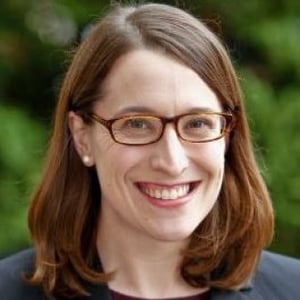
Senior Fellow - Governance Studies, Brookings Institution
Molly Reynolds is a senior fellow in Governance Studies at Brookings. She studies Congress, with an emphasis on how congressional rules and procedure affect domestic policy outcomes.
She is the author of the book, "Exceptions to the Rule: The Politics of Filibuster Limitations in the U.S. Senate," which explores creation, use, and consequences of the budget reconciliation process and other procedures that prevent filibusters in the U.S. Senate. Current research projects include work on oversight in the House of Representatives, congressional reform, and the congressional budget process. She also supervises the maintenance of "Vital Statistics on Congress," Brookings’s long-running resource on the first branch of government.
Reynolds received her Ph.D. in political science and public policy from the University of Michigan and her A.B. in government from Smith College, and previously served as a senior research coordinator in the Governance Studies program at Brookings. In addition, she has served as an instructor at George Mason University.

Senior Fellow and Director of Constitutional Studies, Manhattan Institute
Ilya Shapiro is a senior fellow and director of constitutional studies at the Manhattan Institute and a contributing editor of City Journal. Previously he was executive director and senior lecturer at the Georgetown Center for the Constitution, and before that a vice president of the Cato Institute.
Shapiro is the author of Lawless: The Miseducation of America’s Elites (2025) and Supreme Disorder: Judicial Nominations and the Politics of America’s Highest Court (2020), coauthor of Religious Liberties for Corporations? (2014), and editor of 11 volumes of the Cato Supreme Court Review (2008-18). He has contributed to a variety of academic, popular, and professional publications, including the Wall Street Journal, Harvard Journal of Law & Public Policy, Washington Post, Los Angeles Times, USA Today, National Review, and Newsweek. He also regularly provides commentary for various media outlets, writes the Shapiro’s Gavel newsletter on Substack, and once appeared on the Colbert Report.
Shapiro has testified many times before Congress and state legislatures and has filed more than 500 amicus curiae “friend of the court” briefs in the Supreme Court. He lectures regularly on behalf of the Federalist Society, is a member of the board of fellows of the Jewish Policy Center, was an inaugural Washington Fellow at the National Review Institute, and has been an adjunct law professor at the George Washington University and University of Mississippi. He is also the chairman of the board of advisers of the Mississippi Justice Institute, a barrister in the Edward Coke Appellate Inn of Court, and a former member of the Virginia Advisory Committee to the U.S. Commission on Civil Rights.
Earlier in his career, Shapiro was a special assistant/adviser to the Multi-National Force in Iraq on rule-of-law issues and practiced at Patton Boggs and Cleary Gottlieb. Before entering private practice, he clerked for Judge E. Grady Jolly of the U.S. Court of Appeals for the Fifth Circuit. He holds an AB from Princeton University, an MSc from the London School of Economics, and a JD from the University of Chicago Law School.
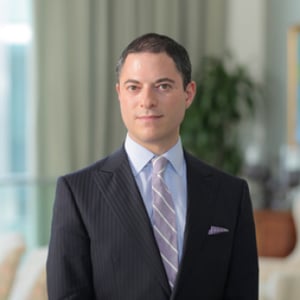
Partner, BakerHostetler, Adjunct Fellow, The Manhattan Institute
Andrew Grossman leads BakerHostetler’s Appellate and Major Motion team. He has appeared before the U.S. Supreme Court, nearly all the federal courts of appeals, as well as some state appellate courts, litigating high-profile and complex commercial, administrative and constitutional issues.
Andrew works with practice groups across BakerHostetler to identify and tackle complex issues, advise on administrative law and strategy, tee up issues for appeal and tackle appeals. He has developed and implemented litigation and administrative strategies for clients in several fields and industries.
In addition to his practice, Andrew advises members of Congress on matters of constitutional and administrative law, having testified more than a dozen times before the House and Senate Judiciary Committees. He has been a frequent legal commentator on radio and television, having appeared on Fox News, CNN, MSNBC, CNBC, NPR and its affiliates, CBN and elsewhere. His legal commentary has also appeared in dozens of magazines and newspapers, including The Wall Street Journal, USA Today, The Washington Post, The Washington Times and many others.
Andrew is a Senior Legal Fellow at the Buckeye Institute, an Adjunct Fellow the Manhattan Institute and a member of the leadership of the Federalist Society. He previously served as an adjunct scholar at the Cato Institute’s Robert A. Levy Center for Constitutional Studies and a legal fellow at the Heritage Foundation’s Meese Center for Legal and Judicial Studies. He clerked for Judge Edith H. Jones on the U.S. Court of Appeals for the Fifth Circuit.
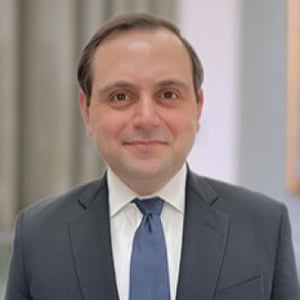
Associate, Baker Hostetler
Sean Sandoloski is a member of BakerHostetler’s Appellate and Major Motions Team. Sean has represented clients at every level of the federal judiciary, as well as in multiple federal agencies and state courts. He has extensive experience in constitutional, administrative, and antitrust law and litigation.
Sean has developed and implemented litigation, administrative, legislative, and communications strategies for clients—presenting holistic solutions for complex problems. He regularly works across groups and offices to tackle high-stakes, fast-moving issues, and advise clients on strategic and regulatory matters. Throughout his career, Sean has worked to cultivate and foster relationships at all levels from the highest offices in government to corporate executives to benefit his clients.
Prior to joining BakerHostetler, Sean served as Special Assistant and Associate Counsel to the President in the Office of White House Counsel, where his primary responsibilities included the selection and confirmation of judicial nominees. There, Sean worked closely with the Department of Justice, a number of federal agencies, and various congressional committees. He also previously served in the Appellate Section of the Department of Justice’s Antitrust Division, representing the United States in the courts of appeals and advising Division leadership on complex issues of federal law. Additionally, he clerked for Judge Steven M. Colloton of the United States Court of Appeals for the Eighth Circuit.

Senior Judge, United States Court of Appeals, District of Columbia Circuit
Circuit Judge Douglas H. Ginsburg was appointed to the United States Court of Appeals for the District of Columbia in 1986. After receiving his B.S. from Cornell University in 1970, and his J.D. from the University of Chicago Law School in 1973, he clerked on the D.C. Circuit and for Justice Thurgood Marshall on the United States Supreme Court. Thereafter, Judge Ginsburg was a professor at the Harvard Law School, the Deputy Assistant and then Assistant Attorney General for the Antitrust Division of the Department of Justice, as well as the Administrator of the Office of Information and Regulatory Affairs in the Office of Management and Budget. Concurrent with his service as a federal judge, Judge Ginsburg has taught at the University of Chicago Law School and the New York University School of Law. Judge Ginsburg is currently a Professor of Law at the George Mason University and a visiting professor at University College London, Faculty of Laws.
Judge Ginsburg is the Chairman of the International Advisory Board of the Global Antitrust Institute at the Law and Economics Center of the George Mason University School of Law. He also serves on the Advisory Boards of: Competition Policy International; the Harvard Journal of Law and Public Policy; the Journal of Competition Law and Economics; the Journal of Law, Economics & Policy; the Supreme Court Economic Review; the University of Chicago Law Review; the New York University Journal of Law and Liberty; and, at University College London, both the Centre for Law, Economics and Society and the Jevons Institute for Competition Law and Economics.
In 2020, Judge Ginsburg was the 11th recipient of the John Sherman Award, presented by the Antitrust Division of the Department of Justice in recognition of the awardee’s Lifetime Contributions to Antitrust Law and Policy.
In 2014, Judge Ginsburg received the Lifetime Achievement Award given annually by the Global Competition Review.
He is the author or co-author of several books and more than 100 articles on competition and regulation, including, most recently, Growing Convergence: The Limited Role of Antitrust in Standard Essential Patent Disputes, in CPI Antitrust Chronicle, Summer 2021, Vol. 1, No. 2.
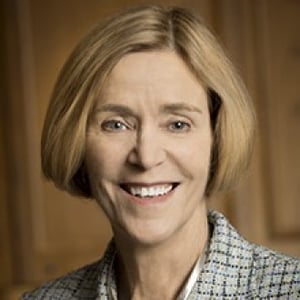
Lafayette S. Foster Professor of Law, Yale Law School
Kate Stith, Lafayette S. Foster Professor of Law at Yale Law School, teaches and writes in the areas of criminal law, criminal procedure, and constitutional law. Prior to joining the faculty at Yale, Professor Stith was an Assistant United States Attorney for the Southern District of New York, where she prosecuted white-collar and organized-crime cases. Professor Stith is serving or has served as an Adviser for the American Law Institute project Model Penal Code Sentencing; on the Committee on Law and Justice of the National Research Council; on the Professional Ethics Committee in the State of Connecticut; as a Commissioner of the Permanent Commission on the Status of Women in Connecticut; as President of the Connecticut Bar Foundation; on the Dartmouth College Board of Trustees; as faculty sponsor and director of the Women's Campaign School at Yale; as Deputy Dean of Yale Law School; and, by appointment of the Chief Justice of the United States, on the Advisory Committee for the Federal Rules of Criminal Procedure. Her book on the federal sentencing guidelines, Fear of Judging (with J.A. Cabranes), was awarded a Certificate of Merit by the ABA in 1999. A graduate of Dartmouth College, the Kennedy School of Government, and Harvard Law School, she clerked for Judge Carl McGowan of the U.S. Court of Appeals for the District of Columbia and for Supreme Court Justice Byron R.White.
Emeritus Professor of Political Economy, Claremont McKenna College
Wm. Craig Stubblebine, Emeritus Professor of Political Economy at the Claremont McKenna College (formerly Claremont Men’s College), is a native of Texas. He holds a B.S. degree from the University of Delaware, and a Ph.D. degree in Economics from the University of Virginia. He is married to the former Carol Ann Wiebe and has two children, Julia and Erik.
Stubblebine taught Economics on the faculty of the University of Virginia from 1961 to 1963, and on the faculty of the University of Delaware from 1963 to 1966. During 1965-66, he was a National Science Foundation Faculty Fellow at the Massachusetts Institute of Technology.
From 1966 to 2003, Stubblebine was a member of the faculties of Claremont McKenna College and Claremont Graduate School. He now is an emeritus professor. He was on leave from Claremont during 1967-68, when he served as a Fulbright Lecturer in Welfare Economics at the University of Turin, Italy; and during 1971-72, when he served as Associate Professor of Economics at Southern Methodist University, and Visiting Scholar in Public Choice and Professor of Economics at Virginia Polytechnic Institute and State University. Stubblebine was appointed Professor of Economics in 1976 and received the Von Tobel Chair of Political Economy in 1979. He was appointed founding Director of the Center for the Study of Law Structures in 1977, serving in that capacity until he became Chairman of the Department of Economics during 1984-87.
Stubblebine has served as President of the Western Tax Association, as President of the Faculty Senate of the Claremont Colleges, and has held various offices at Laws-atWork, including Vice-Chairman. He also has served as a Director and Senior Associate of Public Associates Incorporated, as a Senior Associate of JurEcon, and as a founding Director of the National Tax Limitation Committee. He was a founding director of the YES Fund and a director of Seapointe Savings and Loan. He chaired the national committee which drafted the proposed Federal tax/spending limitation amendment adopted by the U. S. Senate in 1982 and has served as a consultant to various state limitation drafting committees.
Author of articles on property rights and public finance, Stubblebine is a member of several professional societies and has participated in governmental and business consulting activities. With R. T. Smith, he is co-author of Maintaining the Legacy of Proposition 13 (1991). He is an editor of and contributor to Reaganomics: a Mid-Term Report (1983). He has lectured widely, has participated in many economic conferences, and served on a variety of task forces. He has been listed in various “Who’s Who ....” including “Who’s Who in America” and “Who’s Who in Economics”.
President Emeritus, Harvard University
Lawrence H. Summers is President Emeritus of Harvard University. During the past two decades he has served in a series of senior policy positions, including Vice President of development economics and chief economist of the World Bank, Undersecretary of the Treasury for International Affairs, Director of the National Economic Council for the Obama Administration from 2009 to 2011, and Secretary of the Treasury of the United States, from 1999 to 2001.
He received a bachelor of science degree from the Massachusetts Institute of Technology in 1975 and was awarded a Ph.D. from Harvard in 1982. In 1983, he became one of the youngest individuals in recent history to be named as a tenured member of the Harvard University faculty. In 1987 Mr. Summers became the first social scientist ever to receive the annual Alan T. Waterman Award of the National Science Foundation (NSF) and in 1993, he was awarded the John Bates Clark Medal, given every two years to the outstanding American economist under the age of 40.
He is currently the Charles W. Eliot University Professor at Harvard University. He and his wife Elisa New, a professor of English at Harvard, reside in Brookline with their six children.
Ohio House of Representatives, District 27
Representative Tom Brinkman is currently serving his second term as state representative, after serving as a member of the Ohio House for four 2-year terms from 2001 to 2008. He represents the 27th Ohio House District, which includes portions of eastern Hamilton County.
An experienced life insurance salesman and a life-long resident of Cincinnati, Representative Brinkman is a graduate of George Washington University in Washington, D.C. (1979), with a Bachelor of Arts degree in History and Political Science.
Rep. Brinkman has received various awards as a legislator, being recognized as Mt. Lookout Civic Club Man of the Year in 2008 and also as Most Principled Legislator twice. He has also received the Watchdog of the Treasury Award three times.
He lives in Mt. Lookout with his wife, Cathy, and six children.
Justice, Ohio Supreme Court
On November 3, 2020 Judge Jennifer Brunner was elected Justice of the Ohio Supreme Court. Previously she served as a judge of the Tenth District Court of Appeals for 6 years and the Franklin County Common Pleas Court for nearly 5 years. As a trial court judge Brunner founded the county’s adult felony drug court, known as the TIES (Treatment is Essential to Success) Program, now in its seventeenth year of operation. She was elected Ohio’s first woman Secretary of State on November 7, 2006 and held the office for four years. While in that office, she became the first Ohioan to receive the John F. Kennedy Profile in Courage Award from the bipartisan board of the JFK Library and Museum in Boston. Justice Brunner has 17 years of private law practice experience and has provided rule of law technical expertise to the government of the Republic of Serbia, election observation in the Arab Republic of Egypt, and rule of law instruction at the bar association of Sri Lanka through the U.S. state department (USAID), as well as provided remote rule of law and civic participation training through the American Bar Association to the Republic of Kazakhstan. She has gained a deep understanding of the importance of a strong and well-functioning judiciary to preserving peace and growing democracy through the rule of law. A native of Springfield, Ohio, Justice Brunner has been married to Rick Brunner since 1978. They have 3 adult children and 6 grandchildren, 2 dogs and 2 cats and spend time at their home in Columbus and at their farm in Columbiana County in Northeast Ohio.
Judge, United States District Court for the Southern District of Ohio
Judge Matthew R. Byrne was nominated to serve on the United States District Court for the Southern District of Ohio by President Donald J. Trump on June 15, 2026. The nomination was confirmed by the United States Senate on September 15, 2026, and Judge Byrne began his federal judicial service on October 2, 2026.
For nearly six years, beginning in 2021, Judge Byrne served as an elected Judge on Ohio’s Twelfth District Court of Appeals, where he heard civil and criminal appeals from trial courts in eight southwest Ohio counties. Judge Byrne served as the Twelfth District Court of Appeals’ Presiding Judge in 2026 and as its Administrative Judge in 2024 and 2025. In his time at the appeals court, Judge Byrne authored 237 majority opinions and a number of concurring and dissenting opinions.
While at the appeals court, Judge Byrne was appointed to serve as Vice Chairman and Member of the Supreme Court of Ohio’s Commission on the Rules of Practice and Procedure in Ohio Courts (where he also served as chair of the Appellate Rules Committee) and as Member of the Board of Commissioners on Character and Fitness. Chief Justice Sharon L. Kennedy appointed Judge Byrne to serve as a visiting judge on the Supreme Court of Ohio in five cases.
From January 2010 to December 2020, Judge Byrne practiced law at the national law firm of Jackson Lewis P.C. He was a member of the firm's General Employment Litigation Practice Group and the Wage and Hour Practice Group. From 2007 to 2010 he practiced at Taft Stettinius & Hollister LLP. At both firms, Judge Byrne represented clients ranging from small businesses to international corporations in state and federal trial and appellate litigation, including multiple class and collective actions. He also represented clients in arbitration and before numerous administrative agencies, including the Equal Employment Opportunity Commission, the National Labor Relations Board, and the Ohio Civil Rights Commission. Judge Byrne's litigation and administrative agency experience included matters in fourteen states.
Judge Byrne earned his law degree, cum laude, from The Ohio State University Moritz College of Law. During law school he was symposium editor of the Ohio State Law Journal and the winner of the Donald S. Teller Memorial Award for student writing contributing most significantly to the Ohio State Law Journal. During law school he working as an Honors Summer Clerk for the Acting General Counsel of the United States Department of the Treasury.
Prior to law school, Judge Byrne served as a member of the White House Staff in the Office of Presidential Personnel. In that role Judge Byrne was responsible for preparing documents submitted to President George W. Bush concerning his selection and nomination of appointees for high-level federal government positions, and for coordinating with the Offices of White House Counsel, Press Secretary, and Executive Clerk regarding candidate background clearances, press announcements, and the status of appointments/nominations.
Judge Byrne earned his bachelor's degree, magna cum laude, from Xavier University, where he majored in International Affairs (Business) and Political Science.
Judge Byrne has been active in numerous community, civic, and religious organizations. He has been a member of the Federalist Society since law school and he served for five years as the president of the Federalist Society's Cincinnati Lawyers Chapter. At various times he has been a member of the Ohio State Bar Association, the Cincinnati Bar Association, the Butler County Bar Association, the Warren County Bar Association, and the Clermont County Bar Association. He is also a former board member and board president of the Saint Thomas More Lawyers Guild of Greater Cincinnati.
Garwood Visiting Professor and Visiting Fellow, James Madison Pr, Cleveland-Marshall College of Law
David F. Forte is Professor of Law at Cleveland State University, where he was the inaugural holder of the Charles R. Emrick, Jr.- Calfee Halter & Griswold Endowed Chair. This fall, Professor Forte will be the Garwood Visiting Professor at Princeton University in the Department of Politics, and Visiting Fellow at the James Madison Program in American Ideals and Institutions. He holds degrees from Harvard College, Manchester University, England, the University of Toronto and Columbia University.
During the Reagan administration, Professor Forte served as chief counsel to the United States delegation to the United Nations and alternate delegate to the Security Council. He has authored a number of briefs before the United States Supreme Court, and has frequently testified before the United States Congress and consulted with the Department of State on human rights and international affairs issues. His advice was specifically sought on the approval of the Genocide Convention, on world-wide religious persecution, and Islamic extremism. He has appeared and spoken frequently on radio and television, both nationally and internationally. In 2002, the Department of State sponsored a speaking tour for Professor Forte in Amman, Jordan, and he was also a featured speaker to the Meeting of Peoples in Rimini, Italy, a meeting which gathers over 500,000 people from all over Europe. He has also been called to testify before the state legislatures of Ohio, Kansas, and Idaho as well as the New York City Council. He has assisted in drafting a number of pieces of legislation for the Ohio General Assembly dealing with abortion, international trade, and federalism. He has sat as acting judge on the municipal court of Lakewood Ohio and was chairman of Professional Ethics Committee of the Cleveland Bar Association. He has received a number of awards for his public service, including the Cleveland Bar Association’s President’s Award, the Cleveland State University Award for Distinguished Service, the Cleveland State University Distinguished Teaching Award, and the Cleveland-Marshall College of Law Alumni Award for Faculty Excellence. He served as Consultor to the Pontifical Council for the Family under Pope St. John Paul II and Pope Benedict XVI. In 2003, Dr. Forte was a Distinguished Fulbright Chair at the University of Trento and returned there in 2004 as a Visiting Professor. For the academic year, 2008-2009, Professor Forte was Senior Visiting Scholar at the Center for the Study of Religion and the Constitution in at the Witherspoon Institute in Princeton, New Jersey. He was the Robert E. Henderson Constitution Day Lecturer at the Ashbrook Center at Ashland University, and he has given over 300 invited addresses and papers at more than 100 academic institutions. His work has been cited by the U.S. Supreme Court.
Professor Forte was a Bradley Scholar at the Heritage Foundation, and Visiting Scholar at the Liberty Fund. He has been President of the Ohio Association of Scholars, was on the Board of Directors of the Philadelphia Society, and is also adjunct Scholar at the Ashbrook Center. He has been appointed to the Ohio State Advisory Committee to the U.S. Commission on Civil Rights. He has also been a Civil War re-enactor and a Merit Badge Counselor for the Boy Scouts.
He writes and speaks nationally on topics such as constitutional law, religious liberty, Islamic law, the rights of families, and international affairs. He served as book review editor for the American Journal of Jurisprudence and has edited a volume entitled, Natural Law and Contemporary Public Policy, published by Georgetown University Press. His book, Islamic Law Studies: Classical and Contemporary Applications, has been published by Austin & Winfield. He is Senior Editor of The Heritage Guide to the Constitution (2006), 2d edition (2014), published by Regnery & Co, a clause by clause analysis of the Constitution of the United States.
His teaching competencies include Constitutional Law, the First Amendment, Islamic Law, Jurisprudence, Natural Law, International Law, International Human Rights, the Presidency, and Constitutional History.
Ohio State Senate, District 12
Senator Matt Huffman is currently serving his first term in the Ohio Senate, representing the 12th Senate district which includes all of Allen, Champaign, Mercer and Shelby counties, as well as portions of Auglaize, Darke and Logan counties. He previously served four terms in the Ohio House of Representatives, the last two in leadership positions, including being elected by his fellow legislators to serves as the second highest-ranking member, Speaker Pro Tempore.
Born and raised in Lima, Ohio, Senator Huffman has practiced law for the past 30 years in his family’s private practice law firm in downtown Lima. He has been admitted to practice in all of the state and federal courts in Ohio and is an “AV” rated attorney by the Martindale-Hubbell rating service, the highest rating an attorney can receive. He has represented dozens of small businesses in West Central Ohio.
Senator Huffman began his public service on Lima City Council in 1992, serving until 2006, including the final seven years as City Council President. In 2007, he began his service in the Ohio House of Representatives. During his time in the Ohio Legislature, Senator Huffman championed bills to reform the medical delivery system, protect life at all stages and repeal common core. He has always maintained a strong commitment to the preservation of gun rights.
Senator Huffman has been a tireless advocate of removing unnecessary government regulations and fees and lowering taxes for all Ohioans; he defeated an income tax increase while on Lima City Council and supported the reduction of state income taxes on small business owners and the elimination of the Ohio estate tax. While in the Ohio House, he was named a “Guardian of Small Business” and earned three “Watchdog of the Treasury” awards.
Senator Huffman is deeply concerned about our nation’s debt and was a primary sponsor of a resolution in the Ohio House to call for a convention of the states, as authorized by Article V of the U.S. Constitution, to propose a balanced budget amendment to the Constitution. He believes the states must take back the power they have relinquished to the federal government in order for our nation’s debt crisis to be solved.
Senator Huffman is the fifth of nine children born to Lawrence and Shirley Huffman. He graduated from Lima Central Catholic High School in 1978. He then went on to earn his degree in Government from the University of Notre Dame in 1982 and his law degree from the University of Cincinnati School of Law in 1985.
Married for 30 years, Senator Huffman and his wife Sheryl (nee Simoneau) have made their home in Lima, where they have raised four children: Clare, Matthew, Ellen and Sam. In addition to being members of St. Charles Church, he and Sheryl belong to several community organizations including Heartbeat of Lima and the Knights of Columbus. In his free time, he enjoys watching his youngest son, Sam, play collegiate football and referees CYO basketball.
Partner, Shumaker, Loop & Kendrick, LLP
Larry builds on a wide range of experiences – including as an accomplished attorney, a former President of the Ohio Senate, and a legal academic – to help solve his clients’ most challenging legal problems. Larry focuses on complex litigation, including high-stakes appeals.
Larry is a Partner in the firm’s Litigation practice. He focuses his practice on litigation at both the trial and appellate levels and has experience in a variety of matters involving antitrust, fiduciary duties, torts, contracts, securities, and employment law. These range from standard contract disputes to constitutional challenges against federal statutes to defending against complex class actions.
In addition to his litigation practice, Larry served as a member of the Ohio Senate for nearly a decade. His colleagues unanimously elected him to serve as Senate President, the presiding officer of the 33-member chamber, from 2017-2020. During his time in the Senate, Larry successfully sponsored legislation on a wide range of topics, including education, tax law, elections administration, criminal law, and corporate law. These included a comprehensive update to Ohio’s corporate code and limited liability company law, including the sections setting out fiduciary duties for officers and shareholders. Larry also sponsored significant updates to Ohio’s Control Share Acquisition Act (which governs corporate takeovers). In 2018, he received the Ohio State Bar Association’s Lawyer-Legislator Distinguished Service Award.
Larry has also taught courses on Civil Procedure and Legislation as an adjunct law professor at Case Western Reserve University School of Law. He has published legal scholarship on a range of issues including constitutional law, education, law and economics, and securities. He has been cited in roughly 75 law journals throughout the country and by a member of the United States Supreme Court.
Larry began his legal career as a law clerk to Judge Alice M. Batchelder of the United States Court of Appeals for the Sixth Circuit. He has worked at some of the nation’s largest law firms and began his private practice by spending more than five years with Chicago-based Kirkland & Ellis LLP.
From 2018-2020, Larry was a Rodel Fellow at the Aspen Institute, a program designed to bring greater civility to public discourse. He is active in the Federalist Society and is a former board member of the Ohio Legal Assistance Foundation (now known as the Ohio Access to Justice Foundation), the statewide umbrella organization for legal aid.
Senior Advisor, US Policy Metrics and Former U.S. Senator, Texas
Senator Gramm is a Senior Advisor at US Policy Metrics, overseeing our policy advisory team and acting as our Ambassador in Washington DC. Before US Policy Metrics, Senator Gramm was the Vice-Chairman of UBS Investment Bank for 9 years. At UBS he focused on providing strategic economic, political and policy advice to major corporate and institutional clients all around the world. He provided senior leadership on such landmark IPOs as Visa, Bank of China, China Merchants Bank and LGPhillips in Korea. He was instrumental in the follow-on equity offering for the Industrial and Commercial Bank of China and the privatization of Telstra in Australia.
Senator Gramm served six years in the US House and eighteen years in the US Senate. His legislative record includes landmark bills like the Gramm-Latta Budget, which reduced federal spending, rebuilt national defense and mandated the Reagan tax cut and the Gramm-Rudman Act, which placed the first binding constraints on federal spending. As Chairman of the Banking Committee, Senator Gramm steered through legislation modernizing banking, insurance and securities law, which had been languishing in Congress for 60 years. The Gramm-Leach-Bliley Act allowed banks, securities firms and insurance companies to affiliate as part of a financial services holding company. Dodd-Frank did not change Gramm-Leach-Bliley but expanded it by requiring systemically significant non-banks to become financial services holding companies.
Phil Gramm holds a Ph.D. from the University of Georgia in economics, the subject he taught at Texas A&M University for 12 years. He has published numerous articles and books on subjects ranging from monetary theory and policy to private property and the economics of mineral extraction.
He is married to Dr. Wendy Lee Gramm, former Chairman of the U.S. Commodity Futures Trading Commission under Presidents Reagan and Bush. They have two sons, Marshall and Jeff and four grandchildren, Caroline, Will, Joshua and Gilbert.

Judge, United States Court of Appeals, Fifth Circuit
Edith Jones graduated from Alamo Heights High School, where she was a National Merit Scholar. In 1971, she received her B.A. in Economics from Cornell University, graduating with honors. In 1974, she was awarded her J.D. at the University of Texas Law School, where she was a law review editor and received the Order of the Coif.
Judge Jones was the first female partner at Andrews, Kurth, Campbell & Jones (now Hunton Andrews Kurth) where she practiced various types of litigation and bankruptcy cases. Judge Jones went on the federal bench on June 1, 1985.
Judge Jones served as a former member of the National Bankruptcy Review Commission, and as a member of the Judicial Conference Commission on Bankruptcy Rules. Judge Jones served on the White House Fellows Commission. Judge Jones served on the board of the Sam Houston Area Council of the Boy Scouts of America. She has been a member of the Garland Walker Inn of Court in Houston for more than 20 years and its President for at least ten years. Judge Jones is also on the Board of the Calvin Coolidge Presidential Foundation.
Senior Counsel & Director of Research, Better Markets
Before joining Better Markets, Mr. Medina was the Deputy Chief Counsel for the House Financial Services Committee, where he drafted legislation and amendments and wrote reports on major financial regulatory issues considered by the Committee, including financial stability, systemic risk, and financial crises. Before that, he was a Senior Attorney at the Securities and Exchange Commission, an Associate General Counsel at Citigroup, Inc., and an associate at the law firms of Wilmer, Cutler & Pickering and Cravath, Swaine & Moore.
Mr. Medina holds an AB from Brown University and a JD with honors from the University of Chicago Law School.
Managing Parter, Federal Financial Analytics
Associate Professor of Law, Antonin Scalia Law School, George Mason University
Associate Professor of Law J.W. Verret joined the Antonin Scalia Law School, George Mason University faculty in 2008. In 2013, he took leave for two years to serve as the Chief Economist and Senior Counsel for the U.S. House Committee on Financial Services. He received his JD and MA in Public Policy from Harvard Law School and the Harvard Kennedy School of Government, respectively, in 2006. While in law school, Professor Verret served an Olin Fellowship in Law and Economics at the Harvard Program on Corporate Governance under the guidance of Prof. Lucian Bebchuk.
Professor Verret then served as a law clerk for Vice-Chancellor John W. Noble of the Delaware Court of Chancery. Prior to joining the faculty at Scalia Law, Professor Verret was an associate in the SEC Enforcement Defense Practice Group at Skadden, Arps in Washington, D.C. He has written extensively on corporate law topics, including Delaware's Guidance, co-written with Chief Justice Myron T. Steele of the Delaware Supreme Court. His academic work has been featured in the Yale Journal on Regulation, The Business Lawyer, the Delaware Journal of Corporate Law, the Stanford Law Review, the University of Pennsylvania Journal of Business Law, and the Virginia Law and Business Review. Professor Verret was selected by the Northwestern Law School Searle Center on Law, Regulation, and Economic Growth for a 2009-2010 Searle-Kaufmann Research Fellowship.
Professor Verret is also a Senior Scholar at the Mercatus Center Working Group on Financial Markets, where he regularly briefs Congressional staff, members of Congress, SEC Commissioners and other financial regulatory agencies on financial regulation topics. He also directs the Corporate Federalism Initiative, where he obtains research grants for a network of students and faculty scholars who study the division between states and the federal government as sources of corporate law. Professor Verret has been invited to testify before various House and Senate Committees four times during the financial crisis of 2009 regarding all of the central provisions of the Obama Administration's 2009 financial regulatory reform proposals. For a full list of Professor Verret's C-Span appearances, including testimony before the U.S. House of Representatives and the U.S. Senate, see http://www.c-spanvideo.org/jwverret.
Professor Verret has been an invited panelist for various television appearances, including an interview on The NewsHour with Jim Lehrer. Professor Verret has been quoted in various media on financial regulation and corporate law topics, including the New York Times, CNN Money, the CNN Political Ticker, CNBC, ABC News, Investor's Business Daily, ESPN.com, The American Banker, The American Lawyer, The Huffington Post, CBS.com, and AP News. Professor Verret's op-eds have been featured in Forbes, The Chicago Tribune, The Orange County Register, and The Wall Street Journal. Professor Verret is also a regular guest contributor to three of the most noted corporate law and financial regulation law blogs: the Harvard Law School Corporate Governance and Financial Regulation Forum, Deallawyers.com, and The Conglomerate.

Clayton J. and Henry R. Barber Professor of Law, Northwestern University Pritzker School of Law and Co-Chairman, Board of Directors, The Federalist Society
STEVEN GOW CALABRESI is the Clayton J. & Henry R. Barber Professor at Northwestern Pritzker School of Law. He has also co-taught in the Fall semester at Yale Law School from 2013 to the present. Calabresi clerked for Justice Antonin Scalia and Judges Robert H. Bork and Ralph K. Winter. He was a Special Assistant to Attorney General Meese from 1985 to 1987 and worked with Ken Cribb as his deputy in 1987 on the second floor of the West Wing of the Reagan White House. Calabresi has written books on presidential power and comparative constitutional law and the origins of judicial review. He and Gary Lawson are the co-editors of a casebook on U.S. Constitutional Law, and Calabresi is also the co-editor of a casebook on comparative constitutional law. He has written over seventy law review articles since 1990.

Alexander M. Bickel Professor of Public Law, Yale Law School
Degrees from Davidson College, B.A. summa cum laude, 1973; Harvard University, M.A., 1974; Yale Law School, J.D, 1978. Clerked for Edward Weinfeld, 1978-79; Attorney at Shea & Gardner, 1979-82; Law Professor since 1982, tenured at Georgetown and Yale, visiting professor at Stanford, NYU, Toronto, Harvard, Columbia, Penn, Fordham, Vanderbilt. Author of casebooks on legislation and sexuality, gender and law, as well as monographs on statutory interpretation and the rights of sexual and gender minorities. Author of dozens of articles, by one empirical count a top ten most cited law professors.
Judge, United States Court of Appeals, Fifth Circuit
Edith Jones graduated from Alamo Heights High School, where she was a National Merit Scholar. In 1971, she received her B.A. in Economics from Cornell University, graduating with honors. In 1974, she was awarded her J.D. at the University of Texas Law School, where she was a law review editor and received the Order of the Coif.
Judge Jones was the first female partner at Andrews, Kurth, Campbell & Jones (now Hunton Andrews Kurth) where she practiced various types of litigation and bankruptcy cases. Judge Jones went on the federal bench on June 1, 1985.
Judge Jones served as a former member of the National Bankruptcy Review Commission, and as a member of the Judicial Conference Commission on Bankruptcy Rules. Judge Jones served on the White House Fellows Commission. Judge Jones served on the board of the Sam Houston Area Council of the Boy Scouts of America. She has been a member of the Garland Walker Inn of Court in Houston for more than 20 years and its President for at least ten years. Judge Jones is also on the Board of the Calvin Coolidge Presidential Foundation.
Editor, The Weekly Standard
William Kristol is the editor of The Weekly Standard. He is also a regular panelist on Fox News Sunday, a contributor for the Fox News Channel, and a monthly columnist for the Washington Post. Before starting the Weekly Standard in 1995, Mr. Kristol led the Project for the Republican Future, where he helped shape the strategy that produced the 1994 Republican congressional victory. Prior to that, Mr. Kristol served as chief of staff to Vice President Dan Quayle during the first Bush Administration, and to Education Secretary William Bennett under President Reagan. Before coming to Washington in 1985, Mr. Kristol was on the faculty of Harvard University’s Kennedy School of Government and the Department of Political Science at the University of Pennsylvania.
Benjamin Mazur Summer Research Professor of Law Affiliated Faculty, Ford Motor Company Center for Global Citizenship, Northwestern University School of Law
Jide Nzelibe joined Northwestern's faculty as an assistant professor in 2004 became a full Professor in 2008. He served as the Bigelow Teaching Fellow and Lecturer in Law at the University of Chicago before joining Northwestern Law. In addition to his JD from Yale Law School, he also holds an MPA in international relations from Princeton University, where he was awarded a fellowship from the Woodrow Wilson Foundation and a pre-doctoral fellowship from the Ford Foundation. His research and teaching interests include international trade, foreign relations law, public and private international law and contracts.

Executive Vice President, The Federalist Society
Dean Reuter is Executive Vice President at the Federalist Society for Law and Public Policy Studies. He has served in two federal government agency Offices of the Inspector General, as Counsel to the Inspector General and Deputy Inspector General, responsible for policing the use of federal funds granted and contracted through those agencies. As such, he helped conduct and oversee criminal investigations across the country. He is the principal author of the non-fiction book, The Hidden Nazi: The Untold Story of America's Deal with the Devil, and editor of Liberty’s Nemesis: The Unchecked Expansion of the State and Confronting Terror: 9/11 and the Future of American National Security. He was appointed by the President and served as Vice-Chairman of the Board of Directors of the Corporation for National and Community Service, and recently served as an appointee on the U.S. Commission on Presidential Scholars. He is a graduate of Hood College (BA with Honors) and the University of Maryland School of Law.
President Emeritus, Intercollegiate Studies Institute
T. Kenneth Cribb Jr. is the former president of the Intercollegiate Studies Institute. Mr. Cribb was Assistant to the President for Domestic Affairs in the Reagan administration, serving as President Reagan’s top adviser on domestic matters. Earlier in the administration he held the position of Counselor to the Attorney General. He also served as Vice Chairman of the Fulbright Foreign Scholarship Board from 1989 to 1992.
Judge, Contra Costa County Superior Court in California
Judge Haight was appointed to Contra Costa County Superior Court by Governor Pete Wilson in 1993.
Professor of Constitutional Law, Pepperdine University School of Law
One of America's best known scholars and popular commentators on the law, Professor Douglas W. Kmiec holds the endowed chair in constitutional law at Pepperdine Law School. He came to this position after serving several years as dean and St. Thomas More Professor of Law at The Catholic University of America in Washington, D.C., and for nearly two decades, on the law faculty at the University of Notre Dame. As dean at Catholic University, Professor Kmiec did what many said would be impossible; he greatly increased academic quality and student selectivity at the same time he deepened the school's religious commitment. During his tenure, the law school moved into the upper tier of the U.S. News ranking from tier three. At Notre Dame, he was director of Notre Dame's Center on Law & Government, and the founder of its Journal of Law, Ethics & Public Policy. Beyond the university setting, Kmiec served Presidents Ronald Reagan and George Bush during 1985-89 as constitutional legal counsel (Assistant Attorney General, Office of Legal Counsel, U.S. Department of Justice).
A wide-ranging writer and engaging speaker, Professor Kmiec writes a syndicated column for the Catholic News Service, and for several years wrote a regular column in the Chicago Tribune. He is also a frequent contributor to the pages of the Los Angeles Times, Wall Street Journal, and other periodicals. He is the co-author (with legal historian Stephen Presser of Northwestern) of three books on the Constitution -- The American Constitutional Order; Individual Rights and the American Constitution and The History, Structure and Philosophy of the American Constitution. Another recent book, Cease-Fire on the Family (Crisis Books/Notre Dame) attracted scholarly and popular acclaim for proposing realistic ways for families to "end the culture war" by renewing personal virtue and civic responsibility within itself. He has also written The Attorney General's Lawyer (Praeger 1992), and several respected legal treatises.
Professor Kmiec's scholarly research spans legal and non-legal subjects, from the Constitution and the federal system, to land use and the organization of America society. He is a frequent guest on national news programs, such as Nightline, the Newshour, and NPR's Talk of the Nation, analyzing constitutional questions.
A White House Fellow (1982-83), Professor Kmiec is one of a few individuals who has received the Distinguished Service Award from two cabinet departments —the Department of Justice in 1987 and Housing and Urban Development in 1983. In 1988, he was awarded the Edmund J. Randolph Award by the attorney general. He has lectured on the U.S. Constitution in Asia as a Fulbright Distinguished Scholar.
An honors graduate of Northwestern, Professor Kmiec received his law degree from the University of Southern California, where he served on the Law Review and received the Legion Lex Commencement Prize for Legal Writing. He is a member of the bar of the U.S. Supreme Court and the state bars of Illinois and California.
B.A., with honors, Northwestern University, 1973
J.D., University of Southern California, 1976

Justice, Michigan Supreme Court
Stephen Markman was appointed Justice of the Michigan Supreme Court on October 1, 1999. He served as the Chief Justice from 2017-2019. Before his appointment, he served as Judge on the Michigan Court of Appeals from 1995-1999. Prior to this, he practiced law with the firm of Miller, Canfield, Paddock & Stone in Detroit.
From 1989-1993, Justice Markman served as United States Attorney, or federal prosecutor, in Michigan, after having been nominated by President George H. W. Bush and confirmed by the United States Senate. From 1985-1989, he served as Assistant Attorney General of the United States, after having been nominated by President Ronald Reagan and confirmed by the United States Senate. In that position, he headed the Department of Justice’s Office of Legal Policy, which served as the principal policy development office within the Department, and which coordinated the federal judicial selection process. Prior to this, he served for seven years as Chief Counsel of the United States Senate Subcommittee on the Constitution, and as Deputy Chief Counsel of the United States Senate Judiciary Committee.
Justice Markman has authored articles for such publications as the University of Michigan Journal of Law Reform, the Detroit College of Law Review, the Stanford Law Review, the University of Chicago Law Review, the American Criminal Justice Law Review, the Barrister’s Law Journal, the Harvard Journal of Law & Public Policy, and the American University Law Review. He has also served as a contributing editor of National Review magazine, and has authored chapters in such books as “In the Name of Justice: The Aims of the Criminal Law,” “Still the Law of the Land,” and “Originalism: A Quarter Century of Debate.”
Justice Markman has taught constitutional law at Hillsdale College since 1993. He has served on the Board of Directors of the Western Michigan University Thomas M. Cooley Law School. He traveled to Ukraine on two occasions on behalf of the State Department, to provide assistance in the development of that nation’s post-Soviet constitution. He is a Fellow of the Michigan Bar Foundation, a Master of the Bench of the Inns of Court, and a member of the One Hundred Club. He has spoken before hundreds of youth, civic, charitable, and legal groups throughout Michigan and nationally, and has coached Little League baseball and basketball. He lives with his wife Mary Kathleen in Mason, and has two sons, James and Charles.
Justice Markman was re-elected to the Supreme Court in 2000, 2004, and 2012. His present term expires January 1, 2021.

Former President & CEO, The Federalist Society for Law and Public Policy Studies
Eugene B. Meyer, former President and CEO of the Federalist Society, has served as Executive Director, CEO, and/or President of the organization for more than 40 years. He is responsible for shepherding the organization from a small group of law students to a community of 90,000 lawyers, law students, academics, judges, and others interested in the rule of law. The Society now includes a Student Chapter at nearly every ABA-accredited law school in the country and Lawyers Chapters in 220 major cities across the nation. Gene earned his B.A. in history at Yale in 1975 and his M.A. in political science from the London School of Economics in 1976. Gene currently serves on the boards of the U.S. Chess Center, the Holman Foundation, the Sarah Scaife Foundation, and the advisory board of the Adam Smith Society. He holds the title of International Chess Master.
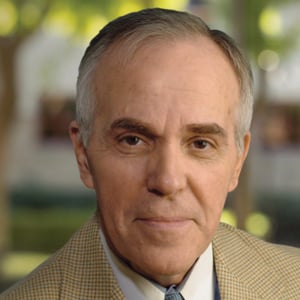
Professor of Government, Claremont Graduate University
Michael Uhlmann has been a professor in the Division of Politics & Economics at Claremont Graduate University since 2002. His research specializations include American presidency, executive–congressional relations, and the federal judiciary—namely, the federal administrative process and national security decision making. In addition to his regular coursework at CGU, Uhlmann teaches in and directs CGU’s Tribal Administration Certificate Program, made possible through a generous grant from the San Manuel Band of Mission Indians.
Uhlmann received his PhD in Government from Claremont Graduate University after receiving his BA in History from Yale University and his LLB from the University of Virginia Law School. Immediately prior to joining the CGU faculty, Uhlmann served as a senior vice president of the Lynde and Harry Bradley Foundation in Milwaukee, Wisconsin. Before that, he was a senior fellow at the Ethics and Public Policy Center in Washington, D.C. He had also served for many years as a partner in the Washington office of Pepper, Hamilton, & Scheetz, a large international law firm, where he specialized in federal antitrust and administrative law. Concurrently held alongside his position at CGU, Uhlmann is an adjunct professor at Claremont McKenna College, teaching a variety of courses in the Department of Government.
In addition to his academic career, private legal practice, and philanthropic work, Uhlmann has had a distinguished career in government, beginning with service as a staff and committee counsel in the U.S. Senate and as assistant general counsel of the Federal Trade Commission. In 1974, following Senate confirmation, he was appointed by President Gerald Ford to be assistant attorney general for Legislative Affairs in the Department of Justice. From 1981 to 1984, he served as special assistant to President Ronald Reagan and associate director of the White House Office of Policy Development. He directed legal and administrative policy for the Reagan presidential transition in 1980–1981 and chaired the Department of Justice transition team for President-Elect George H. W. Bush in 1988–1989.
Uhlmann has written for many leading newspapers and journals of opinion, including National Review, Weekly Standard, Philadelphia Inquirer, Los Angeles Times, Washington Post, First Things, and Claremont Review of Books.
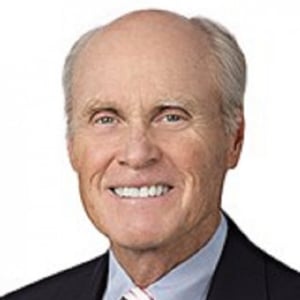
Former United States Assistant Attorney General, Civil Rights Division, United States Department of Justice
William Bradford served as the United States Assistant Attorney General for the Civil Rights Division from 1981 to 1988.
Reynolds was Senior Counsel in BakerBotts Antitrust and Competition division. He graduated with a LL.B. from Vanderbilt University Law School in 1967 where he was Order of the Coif and Editor-in-Chief of the Vanderbilt Law Review. In 1964, he received a B.A. from Yale University.
Reynolds passed away on September 14, 2019, in Seabrook Island, South Carolina at age 77.

Is Congress a Salvageable Institution?
Ted Hirt
A review of Philip A. Wallach, Why Congress (Oxford University Press 2023) Constitutional law...
The Title IV Program: Time for a New Approach to Federal Student Loans?
Elizabeth Akers, Matthew Chingos, Preston Cooper, Diane A. Jones, Todd J. Zywicki, Nathan Arnold
Featuring: Elizabeth Akers, Senior Fellow, American Enterprise Institute Matt Chingos, Vice President, Urban Institute Preston Cooper,...
Can Congress Improve Budget Transparency and Process?
G. William Hoagland, James Lankford, Matthew B. Lawrence, Molly Reynolds, Ilya Shapiro
Some experts argue that the first and most important place for congressional reform is its...
The End of Independent Agencies? Restoring Presidential Control of the Executive Branch
Andrew Grossman, Sean Sandoloski
On the day that President Joe Biden took office, among his first official acts was...
Panel IV: Federal Spending and the Deficit: Is a Constitutional Remedy Necessary? [Archive Collection]
Douglas H. Ginsburg, Kate Stith, William Craig Stubblebine, Lawrence H. Summers
On October 16-17, 1987, the Federalist Society hosted a symposium in celebration of the bicentennial...
Convention of the States
Thomas Brinkman, Jennifer Brunner, Matthew R. Byrne, David F. Forte, Matt Huffman, Larry J. Obhof
Article V of the United States Constitution permits state legislatures to call a constitutional convention...
Financial Services: Explaining the Next Crisis
Phil Gramm, Edith H. Jones, Frank Medina, Karen Shaw Petrou, J.W. Verret
Many observers of the U.S. financial system increasingly believe that the United States will soon...
Showcase Panel III: Term Limits, Entitlement Reform, and Random Assignment of Members of Congress to Committees
Steven G. Calabresi, William N. Eskridge, Edith H. Jones, William Kristol, Jide Okechuku Nzelibe, Dean Reuter
The Constitution does not mention congressional committees anywhere in the text, and Congress’ power to...
Alabama Supreme Court Considers Companion Separation of Powers Challenges
Jim Davis
In 1998, the Alabama Legislature established a program of “Community Services Grants.”1 Criticized by some...
The Meese Department of Justice: Its Accomplishments and Its Relevance Today
T. Kenneth Cribb, Lois Haight Herrington, John S. Herrington, Douglas W. Kmiec, Steve J. Markman, Eugene B. Meyer, Michael Uhlmann, Wm. Bradford Reynolds
In honor of former Attorney General Edwin Meese III, the Federalist Society held an all...