

Senior Fellow, Mises Institute
Alex J. Pollock is a Senior Fellow with the Mises Institute, providing thought and policy leadership on financial issues and the study of financial systems. His work includes cycles of booms and busts, financial crises with their political responses, housing finance, government-sponsored enterprises, risk and uncertainty, central banking, banking and financial regulation, corporate governance, retirement finance, student loans, and the politics of finance.
He previously served as the Principal Deputy Director of the Office of Financial Research in the U.S. Treasury Department 2019-2021. He was a Distinguished Senior Fellow with the R Street Institute 2015-2019 and 2021, and a resident fellow at the American Enterprise Institute, 2004-2015. Among the many aspects of his AEI work, he developed the One Page Mortgage Form to give borrowers in clear form the key information they need in order to know what they are committing themselves to. He was President and CEO of the Federal Home Loan Bank of Chicago from 1991 to 2004. There he invented the Mortgage Partnership Finance program, which successfully created front-end mortgage credit risk sharing beginning in 1997. His decades of banking experience include being a Visiting Scholar at the Federal Reserve Bank of St. Louis, 1991.
Pollock was a director of the CME Group 2004-2019 and of Ascendium Education Group 1989-2019. He is a director and past-chairman of the Great Books Foundation and a past president of the International Union for Housing Finance.
He is the co-author of Surprised Again! - The COVID Crisis and the New Market Bubble (2022), and the author of Finance and Philosophy—Why We’re Always Surprised (2018) and Boom and Bust: Financial Cycles and Human Prosperity (2011), as well as numerous articles and Congressional testimony.
Pollock is a graduate of Williams College, the University of Chicago, and Princeton University.
His work is available on alexjpollock.com.
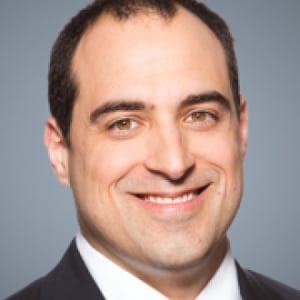
Vice President and Director, Center for Monetary and Financial Alternatives, Cato Institute
Norbert Michel is vice president and director of the Cato Institute’s Center for Monetary and Financial Alternatives, where he specializes on issues pertaining to financial markets and monetary policy. Michel was most recently the Director for Data Analysis at the Heritage Foundation where he edited, and contributed chapters, to two books: The Case Against Dodd–Frank: How the “Consumer Protection” Law Endangers Americans, and Prosperity Unleashed: Smarter Financial Regulation
Michel was previously a tenured professor at Nicholls State University’s College of Business, teaching finance, economics and statistics. Before that, he worked at Heritage as a tax policy analyst in the think tank’s Center for Data Analysis from 2002 to 2005. He previously was with the global energy company Entergy, where he worked on models to help predict bankruptcies of commercial clients.
Michel holds a doctoral degree in financial economics from the University of New Orleans. He received his bachelor of business administration degree in finance and economics from Loyola University. He currently resides in Virginia.

Senior Fellow, Arthur F. Burns Fellow in Financial Policy Studies, American Enterprise Institute
Peter J. Wallison holds the Arthur F. Burns Chair in Financial Policy Studies and is co-director of AEI’s program on Financial Policy Studies. Prior to joining AEI, he practiced banking, corporate and financial law at Gibson, Dunn & Crutcher in Washington, D.C., and New York. Mr. Wallison has held a number of government positions. From June 1981 to January 1985, he was General Counsel of the United States Treasury Department, where he had a significant role in the development of the Reagan Administration's proposals for deregulation in the financial services industry. During 1986 and 1987, Mr. Wallison was White House counsel to President Ronald Reagan, and between 1972 and 1976, he served first as Special Assistant to New York's Gov. Nelson A. Rockefeller and, subsequently, as counsel to Mr. Rockefeller as vice president of the United States.
Mr. Wallison was admitted to practice before the courts of New York and the District of Columbia, and is retired from practice in New York. He continues to be a member of the District of Columbia Bar Association. He received his undergraduate degree from Harvard College in 1963 and law degree from Harvard Law School in 1966.
Mr. Wallison is the author of Ronald Reagan: The Power of Conviction and the Success of His Presidency, published in December 2002 by Westview Press. On campaign finance, he is the author (with Joel Gora) of Better Parties, Better Government, (AEI Press 2009). On financial or regulatory matters, he is the author of Back From the Brink, a proposal for a private deposit insurance system, and co-author of Nationalizing Mortgage Risk: The Growth of Fannie Mae and Freddie Mac; The GAAP Gap: Corporate Disclosure in the Internet Age; Competitive Equity: A Better Way to Organize Mutual Funds; Bad History, Worse Policy: How a False Narrative about the Financial Crisis Led to the Dodd-Frank Act (AEI Press 2013); and Hidden In Plain Sight: What Caused the World’s Worst Financial Crisis and Why it Could Happen Again (Encounter Books 2015). His most recent book is Judicial Fortitude: The Last Chance to Rein in the Administrative State, published by Encounter Books in October 2018.
He testifies frequently before committees of Congress, and is a frequent contributor to the op-ed pages of the Wall Street Journal and other print and online journals. He has also been a speaker at many conferences on financial services, housing, the causes of the financial crisis, the Dodd-Frank Act, accounting, and corporate governance, and was a member of the Shadow Financial Regulatory Committee between 1995 and 2015. He was a member of the SEC Advisory Committee on Improvements to Financial Reporting (2008), co-Chair of the Pew Financial Reform Task Force (2009), and a member of the congressionally- appointed Financial Crisis Inquiry Commission (2009-2011). In May 2011, for his work in financial policy, Mr. Wallison received an honorary doctorate in Humane Letters from the University of Colorado.

George Mason University Foundation Professor of Law, Antonin Scalia Law School, George Mason University
TODD J. ZYWICKI is George Mason University Foundation Professor of Law at Antonin Scalia Law School at George Mason University and Research Fellow of the George Mason Law and Economics Center. During the Fall 2023 semester he served as the Visiting Scholar in Conservative Thought and Policy for the Bruce Benson Center for the Study of Western Civilization at the University of Colorado-Boulder. From 2020-2021 he was Chair of the Consumer Financial Protection Bureau Taskforce on Federal Consumer Financial Law. In 2021 he was inducted to the American College of Consumer Financial Services Lawyers. He is also a Senior Fellow of the F.A. Hayek Program for the Advanced Study of Politics, Philosophy, and Economics at George Mason University and a former Senior Fellow of the Cato Institute. From 2015-2017 he was Executive Director of the George Mason Law and Economics Center. He served as Co-Editor of the Supreme Court Economic Review from 2006-2017. From 2003-2004, Professor Zywicki served as the Director of the Office of Policy Planning at the Federal Trade Commission. He has also taught at Vanderbilt University Law School, Georgetown University Law Center, Boston College Law School, Mississippi College School of Law, and China University of Political Science and Law.
Professor Zywicki clerked for Judge Jerry E. Smith of the U.S. Court of Appeals for the Fifth Circuit and worked as an associate at Alston & Bird in Atlanta, Georgia, where he practiced bankruptcy and commercial law. He received his J.D. from the University of Virginia, where he was executive editor of the Virginia Tax Review and John M. Olin Scholar in Law and Economics. Professor Zywicki also received an M.A. in Economics from Clemson University and an A.B. cum Laude with high honors in his major from Dartmouth College.
Professor Zywicki is also a Lone Mountain Fellow of the Property and Environment Research Center, a Fellow of the International Centre for Economic Research in Turin, Italy, and a former Senior Fellow of the Goldwater Institute. During the Fall 2008 Semester Professor Zywicki was the Searle Fellow of the George Mason University School of Law and was a 2008-09 W. Glenn Campbell and Rita Ricardo-Campbell National Fellow and the Arch W. Shaw National Fellow at the Hoover Institution on War, Revolution and Peace. He has lectured and consulted with government officials around the world, including Iceland, Italy, Japan, and Guatemala. In 2006 Professor Zywicki served as a Member of the United States Department of Justice Study Group on “Identifying Fraud, Abuse and Errors in the United States Bankruptcy System.”
Professor Zywicki is the author of more than 130 articles in leading law reviews and peer-reviewed economics journals. He is one of the Top 10 most-cited law professors in the field of Commercial Law and one of the Top 25 law professors on Twitter as measured by engagement levels. He is one of the Top 50 Most Downloaded Law Authors at the Social Science Research Network. He has testified multiple times before Congress on issues of consumer bankruptcy law and consumer credit and is a frequent commentator on legal issues in the print and broadcast media, including the Wall Street Journal, New York Times, The Washington Post, The Washington Times, Nightline, The Newshour with Jim Lehrer, Neil Cavuto Show, Fox & Friends, Smerconish, Fox News @ Night with Shannon Bream, Fox Business, CNN, CNBC, Bloomberg News, BBC, The Diane Rehm Show, Lou Dobbs Show, Jerry Doyle Show, and The Laura Ingraham Show.
Professor Zywicki is former Chairman and a current member of the Board of Directors of the Competitive Enterprise Institute, and is a member of the Board of Directors of the Institute for Humane Studies, Bill of Rights Institute, the Executive Committee for the Federalist Society's Financial Institutions and E-Commerce Practice Group, the Board of Trustees of the Foundation for Research on Economics and the Environment. He formerly served on the Governing Board and the Advisory Council for the Financial Services Research Program at George Washington University School of Business. He is currently the Chair of the Academic Advisory Council for the following organizations: The Bill of Rights Institute, the film “We the People in IMAX,” and the McCormick-Tribune Foundation “Freedom Museum” in Chicago, Illinois. He is a member of the Board of Visitors of Ralston College and was a member of the Board of Trustees of Yorktown University. From 2005-2009 he served as an elected Alumni Trustee of the Dartmouth College Board of Trustees.

President, Harned Strategies LLC
Karen Harned is President at Harned Strategies LLC. Previously, she served as Executive Director of the National Federation of Independent Business Small Business Legal Center, a post she held from 2002-2022. Prior to joining the Legal Center, Ms. Harned was an attorney at a Washington, D.C. law firm specializing in food and drug law, where she represented several small and large businesses and their respective trade associations before Congress and federal agencies. She also served as Assistant Press Secretary to U.S. Senator Don Nickles of Oklahoma from August of 1989 to March of 1993. Ms. Harned received her B.A. from the University of Oklahoma in 1989 and her J.D. from The George Washington University National Law Center in 1995. She is admitted to practice in the District of Columbia.
As Executive Director of the NFIB Small Business Legal Center, Ms. Harned commented regularly on small business cases before federal and state courts, as well as the U.S. Supreme Court. She has appeared on Fox News, Fox Business, NBC Nightly News, CNN, CNBC and MSNBC, as well as National Public Radio, CBS Radio, and radio outlets across the country. Her opinion editorials and articles regarding healthcare, lawsuit abuse, regulation, and other issues important to small business have been published in newspapers and other publications nationwide.
Ms. Harned has testified before Congress on the small business impact of regulation and the civil justice system. Additionally, she has conducted numerous webinars and legal compliance seminars for small business owners across the country on issues relating to employment law, including unionization and immigration.

Partner, Wiley Rein, LLP
Megan L. Brown is a partner at Wiley Rein LLP. She has significant litigation, appellate and regulatory experience before state and federal courts and agencies.
Ms. Brown helps businesses respond to federal, state and local regulation and investigations raising administrative law, statutory interpretation, and constitutional issues, including the First Amendment.
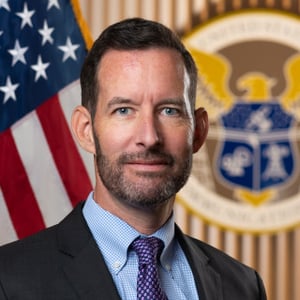
Chief of Staff, Federal Communications Commission (FCC)
Mr. Delacourt is Chief of Staff of the Federal Communications Commission. In this role, he manages the Chairman's policy agenda and strategic initiatives and serves as Chief Operating Officer for the Agency. He has a broad range of experience in telecommunications and technology law and policy spanning both the governmental and private sectors. Scott joined the FCC from Wiley Rein LLP where he served as Partner and Chair of the Wireless Practice Group. He previously served in leadership positions at the FCC, including Deputy Bureau Chief and Chief of Staff of the Wireless Bureau, Senior Counsel in the Office of General Counsel, and Legal Advisor to the Wireless Bureau Chief. Scott received his Law Degree, cum laude, from the University of Michigan Law School, and his Bachelor’s Degree, summa cum laude, from Georgetown University.

Executive Vice President, The Federalist Society
Dean Reuter is Executive Vice President at the Federalist Society for Law and Public Policy Studies. He has served in two federal government agency Offices of the Inspector General, as Counsel to the Inspector General and Deputy Inspector General, responsible for policing the use of federal funds granted and contracted through those agencies. As such, he helped conduct and oversee criminal investigations across the country. He is the principal author of the non-fiction book, The Hidden Nazi: The Untold Story of America's Deal with the Devil, and editor of Liberty’s Nemesis: The Unchecked Expansion of the State and Confronting Terror: 9/11 and the Future of American National Security. He was appointed by the President and served as Vice-Chairman of the Board of Directors of the Corporation for National and Community Service, and recently served as an appointee on the U.S. Commission on Presidential Scholars. He is a graduate of Hood College (BA with Honors) and the University of Maryland School of Law.
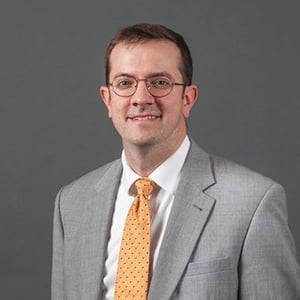
Associate Professor of Law, Antonin Scalia Law School, George Mason University
Associate Professor of Law J.W. Verret joined the Antonin Scalia Law School, George Mason University faculty in 2008. In 2013, he took leave for two years to serve as the Chief Economist and Senior Counsel for the U.S. House Committee on Financial Services. He received his JD and MA in Public Policy from Harvard Law School and the Harvard Kennedy School of Government, respectively, in 2006. While in law school, Professor Verret served an Olin Fellowship in Law and Economics at the Harvard Program on Corporate Governance under the guidance of Prof. Lucian Bebchuk.
Professor Verret then served as a law clerk for Vice-Chancellor John W. Noble of the Delaware Court of Chancery. Prior to joining the faculty at Scalia Law, Professor Verret was an associate in the SEC Enforcement Defense Practice Group at Skadden, Arps in Washington, D.C. He has written extensively on corporate law topics, including Delaware's Guidance, co-written with Chief Justice Myron T. Steele of the Delaware Supreme Court. His academic work has been featured in the Yale Journal on Regulation, The Business Lawyer, the Delaware Journal of Corporate Law, the Stanford Law Review, the University of Pennsylvania Journal of Business Law, and the Virginia Law and Business Review. Professor Verret was selected by the Northwestern Law School Searle Center on Law, Regulation, and Economic Growth for a 2009-2010 Searle-Kaufmann Research Fellowship.
Professor Verret is also a Senior Scholar at the Mercatus Center Working Group on Financial Markets, where he regularly briefs Congressional staff, members of Congress, SEC Commissioners and other financial regulatory agencies on financial regulation topics. He also directs the Corporate Federalism Initiative, where he obtains research grants for a network of students and faculty scholars who study the division between states and the federal government as sources of corporate law. Professor Verret has been invited to testify before various House and Senate Committees four times during the financial crisis of 2009 regarding all of the central provisions of the Obama Administration's 2009 financial regulatory reform proposals. For a full list of Professor Verret's C-Span appearances, including testimony before the U.S. House of Representatives and the U.S. Senate, see http://www.c-spanvideo.org/jwverret.
Professor Verret has been an invited panelist for various television appearances, including an interview on The NewsHour with Jim Lehrer. Professor Verret has been quoted in various media on financial regulation and corporate law topics, including the New York Times, CNN Money, the CNN Political Ticker, CNBC, ABC News, Investor's Business Daily, ESPN.com, The American Banker, The American Lawyer, The Huffington Post, CBS.com, and AP News. Professor Verret's op-eds have been featured in Forbes, The Chicago Tribune, The Orange County Register, and The Wall Street Journal. Professor Verret is also a regular guest contributor to three of the most noted corporate law and financial regulation law blogs: the Harvard Law School Corporate Governance and Financial Regulation Forum, Deallawyers.com, and The Conglomerate.

Retired, Winston & Strawn LLP
Jerry Loeser is of counsel in the Chicago office of Winston & Strawn, and his practice focuses on banking regulation. He has extensive experience in counseling financial services clients on, among other things, bank acquisitions, privacy, financial modernization, the USA PATRIOT Act, Basel II and III, lending limits, capital, trust, affiliate transactions, and Federal Reserve, OCC, FDIC, and CFPB regulations.
Prior to working at large corporate law firms, Jerry was chief regulatory and compliance counsel for Comerica Bank, where he also served as senior vice president and deputy general counsel and as general counsel of its retail bank division. Before that, he served as chief regulatory in-house counsel at Wells Fargo & Co. Jerry began his legal career advising the Board of Governors of the Federal Reserve System in Washington, D.C.
Partner, Davis Polk & Wardwell LLP
Mr. Douglas is a partner in Davis Polk’s Financial Institutions Group, heading the firm’s bank regulatory practice and focusing on bank restructuring and resolutions and other issues arising from the current banking and financial crisis. He has been involved in some of the most difficult and sensitive matters during the crisis, including advising the boards of directors of Indymac and Bank United, counseling Citigroup with respect to FDIC matters, advising various parties on the fallout from the failure of Washington Mutual and advising various private equity firms on proposed investments in troubled or failed banks.
Mr. Douglas was appointed General Counsel of the Federal Deposit Insurance Corporation in 1987 and continued in that capacity through 1989. This was a period of unprecedented stress on the financial system, and he was involved in the major bank failures and restructurings of the late 1980s, participated in the landmark Financial Institutions Regulatory Reform and Restructuring Act of 1989 and assisted in the organization of the Resolution Trust Corporation.
Mr. Douglas is regarded as one of the leading bank insolvency lawyers in the nation.
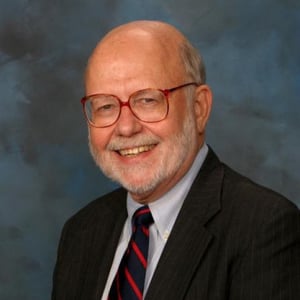
Principal, Ely & Company, Inc.
Bert Ely has specialized in deposit insurance and banking structure issues since 1981. In 1986, he became an early predictor of the S&L crisis and a taxpayer bailout of the FSLIC. In 1991, he was the first person to correctly predict the non-crisis in commercial banking; in 1992, he predicted an eventual taxpayer bailout of the Japanese banking system.
Bert continuously monitors conditions in the banking and S&L industries, monetary policy, and the growing federalization of credit risk. He has helped to draft legislation to enact the cross-guarantee concept for privatizing banking regulation and its related deposit insurance and systemic risks. He has testified on numerous occasions before congressional committees on banking issues and he often speaks on these matters to bankers and others.
Bert first established his consulting practice in 1972. Before that, he was the chief financial officer of a public company, a consultant with Touche, Ross & Company, and an auditor with Ernst & Ernst. He received his MBA from the Harvard Business School in 1968 and his Bachelor's degree in economics in 1964 from Case Western Reserve University.
Senior Fellow, Arthur F. Burns Fellow in Financial Policy Studies, American Enterprise Institute
Peter J. Wallison holds the Arthur F. Burns Chair in Financial Policy Studies and is co-director of AEI’s program on Financial Policy Studies. Prior to joining AEI, he practiced banking, corporate and financial law at Gibson, Dunn & Crutcher in Washington, D.C., and New York. Mr. Wallison has held a number of government positions. From June 1981 to January 1985, he was General Counsel of the United States Treasury Department, where he had a significant role in the development of the Reagan Administration's proposals for deregulation in the financial services industry. During 1986 and 1987, Mr. Wallison was White House counsel to President Ronald Reagan, and between 1972 and 1976, he served first as Special Assistant to New York's Gov. Nelson A. Rockefeller and, subsequently, as counsel to Mr. Rockefeller as vice president of the United States.
Mr. Wallison was admitted to practice before the courts of New York and the District of Columbia, and is retired from practice in New York. He continues to be a member of the District of Columbia Bar Association. He received his undergraduate degree from Harvard College in 1963 and law degree from Harvard Law School in 1966.
Mr. Wallison is the author of Ronald Reagan: The Power of Conviction and the Success of His Presidency, published in December 2002 by Westview Press. On campaign finance, he is the author (with Joel Gora) of Better Parties, Better Government, (AEI Press 2009). On financial or regulatory matters, he is the author of Back From the Brink, a proposal for a private deposit insurance system, and co-author of Nationalizing Mortgage Risk: The Growth of Fannie Mae and Freddie Mac; The GAAP Gap: Corporate Disclosure in the Internet Age; Competitive Equity: A Better Way to Organize Mutual Funds; Bad History, Worse Policy: How a False Narrative about the Financial Crisis Led to the Dodd-Frank Act (AEI Press 2013); and Hidden In Plain Sight: What Caused the World’s Worst Financial Crisis and Why it Could Happen Again (Encounter Books 2015). His most recent book is Judicial Fortitude: The Last Chance to Rein in the Administrative State, published by Encounter Books in October 2018.
He testifies frequently before committees of Congress, and is a frequent contributor to the op-ed pages of the Wall Street Journal and other print and online journals. He has also been a speaker at many conferences on financial services, housing, the causes of the financial crisis, the Dodd-Frank Act, accounting, and corporate governance, and was a member of the Shadow Financial Regulatory Committee between 1995 and 2015. He was a member of the SEC Advisory Committee on Improvements to Financial Reporting (2008), co-Chair of the Pew Financial Reform Task Force (2009), and a member of the congressionally- appointed Financial Crisis Inquiry Commission (2009-2011). In May 2011, for his work in financial policy, Mr. Wallison received an honorary doctorate in Humane Letters from the University of Colorado.
Executive Vice President, The Federalist Society
Dean Reuter is Executive Vice President at the Federalist Society for Law and Public Policy Studies. He has served in two federal government agency Offices of the Inspector General, as Counsel to the Inspector General and Deputy Inspector General, responsible for policing the use of federal funds granted and contracted through those agencies. As such, he helped conduct and oversee criminal investigations across the country. He is the principal author of the non-fiction book, The Hidden Nazi: The Untold Story of America's Deal with the Devil, and editor of Liberty’s Nemesis: The Unchecked Expansion of the State and Confronting Terror: 9/11 and the Future of American National Security. He was appointed by the President and served as Vice-Chairman of the Board of Directors of the Corporation for National and Community Service, and recently served as an appointee on the U.S. Commission on Presidential Scholars. He is a graduate of Hood College (BA with Honors) and the University of Maryland School of Law.
Chief Program Officer, National Community Reinvestment Coalition
David Berenbaum serves as The National Community Reinvestment Coalition’s Chief Program Officer. David is responsible for implementing NCRC’s legislative, research, compliance, community lending, minority business and civil rights programs. He testified in 2007 before the House Financial Services Committee on solutions to the current foreclosure crisis in America and before the Senate Banking Committee hearing on solutions to the current sub-prime mortgage melt-down. His current national public policy and regulatory focus includes initiatives to expand CRA to reach all financial service providers, Home Mortgage Disclosure Act analysis, RESPA reform, enactment of a meaningful national responsible lending bill and related consumer protections. Mr. Berenbaum has achieved a national reputation as a civil rights expert and advocate. He attained national recognition for fair housing and related consumer protection advocacy and has appeared as an expert on numerous national news magazine shows – including Dateline NBC, 48 Hours, The CBS Evening News, Bloomberg, CNBC, CNN and others. Recently, his work documenting fair lending compliance issues by mortgage brokers through mystery shopping in six cities and concerning about appraisal valuation practices was reported on by syndicated real estate columnist Ken Harney in two articles.
Mr. Berenbaum is responsible for coordinating NCRC’s fair housing and fair lending compliance initiatives, which in 2008 will be relaunched under the historic name “National Neighbors" and the establishment of NCRC’s new CDFI, which is a component of it’s National Homeownership Sustainability Fund. David is also one of the founders of NCRC’s Center for Responsible Appraisals and Valuations (CRAV). The CRAV celebrates appraisal best practices in cooperation with it’s stake holders, who include lenders, securitizers, appraisers, real estate professionals and other public and private sector leaders.

President, Cass & Associates, PC
Ronald A. Cass is Dean Emeritus of Boston University School of Law (where he was Dean from 1990-2004), President of Cass & Associates, PC, former Vice-Chairman and Commissioner of the U.S. International Trade Commission, former faculty member at Boston University School of Law and the University of Virginia Law School, and Distinguished Senior Fellow at the C. Boyden Gray Center for the Study of the Administrative State. Dean Cass also sits as an arbitrator for commercial, international, and intellectual property rights disputes, and is a former United States member of the Panel of Conciliators of the International Centre for Settlement of Investment Disputes. He is a member of the Council of the Administrative Conference of the United States and has received seven presidential appointments, spanning Presidents Ronald Reagan to Donald J. Trump.
As a law professor, lecturer, and scholar, Dean Cass has been teaching and writing about a wide array of legal issues on topics such as administrative law and regulation, antitrust, constitutional law, communications, intellectual property, international trade, separation of powers, and legal process. He has published more than 160 scholarly books, chapters, articles, and papers, including a leading casebook on administrative law. Dean Cass has taught judges as well as students in schools of law, economics, business, and public policy and has held academic appointments in the United States, Europe, and Latin America.
In addition to his academic work, Dean Cass has participated in numerous important legal cases as an amicus, consultant, or expert, and has advised businesses, law firms, investment funds, and government agencies on a range of trade, antitrust, intellectual property, and regulatory issues. He has a broad range of affiliations with professional groups, and has received numerous honors, fellowships and awards.
Dean Cass is a graduate of the University of Virginia and the University of Chicago Law School.
Senior Fellow, Mises Institute
Alex J. Pollock is a Senior Fellow with the Mises Institute, providing thought and policy leadership on financial issues and the study of financial systems. His work includes cycles of booms and busts, financial crises with their political responses, housing finance, government-sponsored enterprises, risk and uncertainty, central banking, banking and financial regulation, corporate governance, retirement finance, student loans, and the politics of finance.
He previously served as the Principal Deputy Director of the Office of Financial Research in the U.S. Treasury Department 2019-2021. He was a Distinguished Senior Fellow with the R Street Institute 2015-2019 and 2021, and a resident fellow at the American Enterprise Institute, 2004-2015. Among the many aspects of his AEI work, he developed the One Page Mortgage Form to give borrowers in clear form the key information they need in order to know what they are committing themselves to. He was President and CEO of the Federal Home Loan Bank of Chicago from 1991 to 2004. There he invented the Mortgage Partnership Finance program, which successfully created front-end mortgage credit risk sharing beginning in 1997. His decades of banking experience include being a Visiting Scholar at the Federal Reserve Bank of St. Louis, 1991.
Pollock was a director of the CME Group 2004-2019 and of Ascendium Education Group 1989-2019. He is a director and past-chairman of the Great Books Foundation and a past president of the International Union for Housing Finance.
He is the co-author of Surprised Again! - The COVID Crisis and the New Market Bubble (2022), and the author of Finance and Philosophy—Why We’re Always Surprised (2018) and Boom and Bust: Financial Cycles and Human Prosperity (2011), as well as numerous articles and Congressional testimony.
Pollock is a graduate of Williams College, the University of Chicago, and Princeton University.
His work is available on alexjpollock.com.

Wayne A. Abernathy, Wild Bells
Wayne A. Abernathy is a former U.S. Treasury Assistant Secretary for Financial Institutions under President George W. Bush, receiving the Alexander Hamilton Award in recognition of his service. In that office he was also a member of the Board of Directors of the Securities Investor Protection Corporation. Prior to his work at the Treasury, Mr. Abernathy served as Staff Director of the Senate Banking Committee, under Chairman Phil Gramm.
Following his service at the Treasury, Mr. Abernathy worked for 15 years on the staff of the American Bankers Association, as Executive Vice President for Financial Institutions Policy and Regulatory Affairs.
Previous experience with the Senate Banking Committee includes serving as Staff Director of the Subcommittee on Securities during 1995-1998. From 1989 until 1994, Mr. Abernathy was a Republican economist for the committee. He previously worked as a senior legislative assistant for Senator Gramm during 1987-1989 and as an economist for the Banking Committee’s Subcommittee on International Finance and Monetary Policy during 1981-1986, under Chairman Jake Garn.
Mr. Abernathy earned his bachelor’s degree in International Studies from The Johns Hopkins University in 1978. In 1980, he received a master’s degree in International Studies from the School of Advanced International Studies of The Johns Hopkins University.
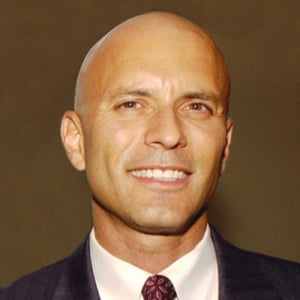
Professor of Law and Public Finance, NSU Florida Shepard Broad College of Law
Tim Canova is a Professor of Law and Public Finance at the NSU Shepard Broad College of Law, with broad experience in law teaching, private practice, and public policy. He teaches Constitutional Law II: First Amendment Law, Corporations, Business Entities, Regulation of Financial Institutions, and a Seminar on Law, Finance, and Markets at Nova. He previously taught at the Chapman University Dale E. Fowler School of Law in Orange, California, where he served as Associate Dean for Academic Affairs and the inaugural Betty Hutton Williams Professor of International Economic Law. He was first granted tenure at the University of New Mexico School of Law and he has taught as a visitor at the University of Arizona and the University of Miami.
Canova's work crosses the disciplines of law, public finance, history, and economics. He has been a leading critic of private central banks, including the Federal Reserve. His work has been published in more than two dozen book chapters and articles in the U.S. and overseas, including in the Oxford University Press, Edward Elgar Publishing, Harvard Law & Policy Review, American Journal of Economics and Sociology, Brooklyn Law Review, Georgetown Journal of Law & Public Policy, and UC Davis Law Review. Canova was an early critic of financial deregulation and the Federal Reserve under Alan Greenspan. In the 1980s, he wrote critically of the federal bailout of Continental Illinois, the nation’s seventh largest commercial bank, and the collapse of the savings & loan industry. In the 1990s, prior to the Asian currency contagion, he argued against the International Monetary Fund’s capital account liberalization program. Throughout the Bush administration, he warned of an impending crisis in the bubble economy. Following the 2008 financial collapse, he lectured and published widely on the causes and consequences of the economic and financial crisis. In 2011, Canova was appointed by Senator Bernie Sanders (I-Vt.) to serve on an Advisory Committee on Federal Reserve Reform with leading economists, including Jeffrey Sachs, Robert Reich, James Galbraith, and Nobel Laureate Joseph Stiglitz.
Canova also writes and advocates in the areas of campaign finance and election reform, a research agenda informed by his 2016 campaign challenging the then chair of the Democratic National Committee for her U.S. House of Representatives seat in a hotly contested election. Canova’s campaign went viral, raising $3.8 million from 209,000 individual donations and setting a record at the time for the highest percentage (76%) of small online donations for any campaign for federal office. The election results were marred by evidence of statistical anomalies, allegations of electronic voting irregularities, and an order by Florida’s 17th Judicial Circuit Court finding that the Broward County Elections Supervisor had illegally destroyed every ballot cast. In 2019, Canova testified to the Florida Advisory Committee of the United States Civil Rights Commission about the systematic electronic disenfranchisement of voters in Florida elections.
Canova received his A.B. degree from Franklin and Marshall College and his J.D. degree, cum laude, from the Georgetown University Law Center. He has a master’s diploma in graduate legal studies from the University of Stockholm where he was a Swedish Institute Visiting Scholar. He previously served as a legislative assistant to the late U.S. Senator Paul E. Tsongas and practiced law in New York City with Gibson, Dunn & Crutcher and Mudge Rose Guthrie Alexander & Ferdon.
Featured Article entitled “Central Bank Independence as Agency Capture: A Review of the Empirical Literature, Banking & Financial Services Policy Report 30:11 (Nov. 2011).
Principal, Ely & Company, Inc.
Bert Ely has specialized in deposit insurance and banking structure issues since 1981. In 1986, he became an early predictor of the S&L crisis and a taxpayer bailout of the FSLIC. In 1991, he was the first person to correctly predict the non-crisis in commercial banking; in 1992, he predicted an eventual taxpayer bailout of the Japanese banking system.
Bert continuously monitors conditions in the banking and S&L industries, monetary policy, and the growing federalization of credit risk. He has helped to draft legislation to enact the cross-guarantee concept for privatizing banking regulation and its related deposit insurance and systemic risks. He has testified on numerous occasions before congressional committees on banking issues and he often speaks on these matters to bankers and others.
Bert first established his consulting practice in 1972. Before that, he was the chief financial officer of a public company, a consultant with Touche, Ross & Company, and an auditor with Ernst & Ernst. He received his MBA from the Harvard Business School in 1968 and his Bachelor's degree in economics in 1964 from Case Western Reserve University.
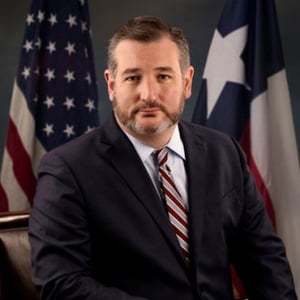
United States Senator, Texas
Ted Cruz represents 28 million Texans in the U.S. Senate as a passionate fighter for limited government and economic growth. He has authored 39 legislative measures signed into law. Recent victories include expanding 529 college savings accounts to allow parents to save for K–12 public, private, and religious education, leading the effort to repeal Obamacare’s individual mandate, imposing sanctions on terrorists who use civilians as human shields, designating North Korea as a state sponsor of terrorism, reauthorizing and reforming NASA, ensuring the availability of additional records to help solve civil rights cold cases, supporting thousands of Texas jobs, and leading the fight to confirm principled constitutionalists to our courts.
Senator Cruz is a graduate of Princeton University and Harvard Law School, a former law clerk to Chief Justice William Rehnquist, and former solicitor general of Texas. He has argued nine cases before the Supreme Court. In November of 2018, he was re-elected to the Senate by the people of Texas.
Chief Political Correspondent and Senior Writer, News.com
Vice President & General Counsel, Google

President, The Free State Foundation
Randolph J. May is Founder and President of The Free State Foundation. The Free State Foundation is an independent, non-profit free market-oriented think tank founded in 2006.
From October 1999-May 2006, May was a Senior Fellow and Director of Communications Policy Studies at The Progress & Freedom Foundation, a Washington, DC-based think tank. Prior to joining PFF, he practiced communications, administrative, and regulatory law as a partner at major national law firms. From 1978 to 1981, May served as Assistant General Counsel and Associate General Counsel at the Federal Communication Commission.
May has held numerous leadership positions in bar associations. He is a past Chair of the American Bar Association’s Section of Administrative Law and Regulatory Practice. He is a Fellow of the National Academy of Public Administration. Mr. May also has served as a Public Member of the Administrative Conference of the United States and currently is a Senior Fellow at ACUS.
Mr. May has published more than two hundred articles and essays on communications, administrative and constitutional law topics. He is author of A Call for a Radical New Communications Policy: Proposals for Free Market Reform, and co-author of #CommActUpdate: A Communications Law Fit for the Digital Age and The Constitutional Foundations of Intellectual Property. Mr. May is editor of two books, Communications Law and Policy in the Digital Age: The Next Five Years and New Directions in Communications Policy. In addition, he is the co-editor of two other books, Net Neutrality or Net Neutering: Should Broadband Internet Services Be Regulated? and Communications Deregulation and FCC Reform. In the past, Mr. May has written regular columns on legal and regulatory affairs for Legal Times and the National Law Journal, leading national legal periodicals.
He received his A.B. from Duke University and his J.D. from Duke Law School, where he serves as a member of the Board of Visitors.

Professor of Law, Southern Illinois University School of Law
Professor Mark F. Schultz joined the faculty in 2003. He teaches and writes primarily in the area of intellectual property.
Professor Schultz is a frequent author and speaker known for his work on the law and economics of the global intellectual property system. In one of his most influential projects, he worked with the Organization for Economic Cooperation and Development (OECD) to construct a groundbreaking global trade secret protection index (the TSPI). The TSPI is influencing policy discussions on this cutting-edge topic in capitals around the world. Other recent projects have included an empirical study that quantified for the first time the backlogs in patent offices worldwide, a report on how patented innovation is meeting global health challenges, and the construction of a new global index of copyright strength.
Professor Schultz is an influential voice in public policy debates regarding intellectual property. He has testified before the U.S. Congress on copyright law at the invitation of the House Judiciary Committee and has briefed the staff of the U.S. Senate Judiciary Committee on trade secret legislation. He speaks frequently around the world about the connection between secure and effective intellectual property rights and flourishing national economies and individual lives, with invitations from the U.S. Patent and Trademark Office, the U.S. Trade Representative, and the U.S. Copyright Office, as well as numerous academic institutions, think tanks, and industry groups. He served as an NGO delegate to the World Intellectual Property Organization (WIPO) for several years during the WIPO Development Agenda talks. He is also one of the organizers of an ongoing multilateral diplomatic dialogue on best practices in national trade secret laws, and is co-founder of the Center for Protection of Intellectual Property (CPIP) at George Mason University in Washington, D.C.
Among the awards and recognition he has received for his scholarship was the School of Law's Outstanding Scholar of the Year award in 2008. He has been a distinguished visiting scholar at the University of Botswana and a visiting professor at DePaul University College of Law.
Professor Schultz graduated with honors from the George Washington University School of Law. Following law school, he was a judicial clerk for the Hon. Daniel M. Friedman of the United States Court of Appeals for the Federal Circuit in Washington, D.C., and the Hon. Eric G. Bruggink of the United States Court of Federal Claims. Prior to joining academia, he practiced law for a decade, serving as outside general counsel to several tech startups and helping technology companies to expand their businesses and commercialize their intellectual property in dozens of countries. He holds a B.A. in International Economics from George Washington University and has done PhD level coursework in development economics at Southern Illinois University.
He is active in leadership roles in local and national organizations. He has served as chair of the Federalist Society's Intellectual Property Practice Group and the AALS Section on Internet and Computer Law. He is an officer of the American Bar Association's International IP Committee of the International Law Section and the American Intellectual Property Law Association’s Trade Secret Law Committee. He currently is chair of the Academic Advisory Board of the Copyright Alliance.
Professor Schultz teaches Copyright Law, Trade Secret Law, Trademark Law, and a senior seminar on Intellectual Property and Global Development. He established and directs both the Specialization in Intellectual Property Law and the IP Semester in Practice Externship Program. He also co-founded a Legal Globalization Class, offered every other year, that takes students to South Africa and Botswana after spending a semester learning about the legal system, culture, history, and politics of southern Africa. The popular course is a once-in-a-lifetime experience that introduces students to leading lawyers, judges, government officials, and human rights advocates, taking them from Cape Town to Johannesburg to Gaborone as well as many popular destinations including game reserves, national parks, the Cape of Good Hope, and the Cradle of Humankind.

Federal Reserve Accountability and the CHOICE Act - Podcast
Alex J. Pollock, Norbert J. Michel
To whom is the Federal Reserve accountable? Does the Fed's insistence on its "independence" mean...
Topics
Reinforcing Glass-Steagall Won't Prevent Another Financial Crisis
Federalist Society member C. Wallace DeWitt writes for the Federalist: Muddled thinking about banking is...
Hidden in Plain Sight: What Really Caused the World’s Worst Financial Crisis and Why It Could Happen Again - Podcast
Peter J. Wallison, Todd J. Zywicki
The 2008 financial crisis—like the Great Depression—was a world-historical event. What caused it will be...
FTC v. Wyndham Worldwide: The Limits FTC “Unfairness” Authority and the Future of Cyber and Data Security Enforcement - Podcast
Karen Harned, Megan L. Brown, Scott D. Delacourt
Between 2008 and 2010, cyber criminals breached the computer networks of Wyndham Hotels & Resorts,...
Litigation Alert: Amgen: A Pyrrhic Victory For Plaintiffs in Securities Class Actions? - Podcast
Dean Reuter, J.W. Verret
On this previously recorded conference call, Prof. J.W. Verret discusses three interrelated dimensions of the...
Changing Landscape: Thrift Holding Companies and Their New Regulator
Julius L. Loeser
The Dodd-Frank Act, effective July 21, 2011, eliminated the Office of Thrift Supervision (“OTS”) and...
Financial Services Reform Update (Conference Call Briefing)
John L. Douglas, Bert Ely, Peter J. Wallison, Dean Reuter
On a conference call briefing held on May 15, 2010, Mr. John L. Douglas, Mr....
Panel II: Reprivatizing Credit Risk: Where Do We Go From Here?
David Berenbaum, Ronald A. Cass, Jeb Hensarling, Alex J. Pollock, John Weicher
After discussing the extent to which credit risk has been nationalized directly or indirectly through...
Panel I: How Did We Get into the Mess We Are in Today?
Wayne A. Abernathy, Timothy Canova, James Carr, Bert Ely, Craig L. Hymowitz
Presentation by Bert Ely of a paper titled: "Bad Rules Produce Bad Outcomes: Underlying Public Policy Causes...
Government--Friend or Foe of E-Commerce? - Transcript
Ted Cruz, Declan McCullagh, Kent Walker, Randolph May, Mark F. Schultz
This panel was presented at the Federalist Society's conference, "Fight The Future? Government Regulation and...