

Partner, Mayer Brown LLP
Marcia Madsen was Chair of the Government Contracts practice and co-chair of the National Security Practice at Mayer Brown. She represented contractors in regulatory, policy, transactional, litigation, and investigative matters involving virtually every federal agency. Her clients included defense contractors, information technology and systems integrators, telecommunications companies, engineering firms, insurers, and manufacturing companies. Ms. Madsen's practice included defense of False Claims Act matters, internal investigations, audits, bid protests, claims and disputes before administrative forums and in the federal courts. She was a former Chair of the American Bar Association Section of Public Contract Law and currently co-chairs the Section’s Procurement Fraud Committee. She also is a member of the Federalist Society Administrative Law and Regulation Executive Committee. In addition, Marcia was a member of the Court of Federal Claims Advisory Council - Emeritus, and a recipient of the Court's Golden Eagle award. She was a Past President of the Board of Contract Appeals Bar Association. She was appointed by the Executive Office of the President to chair the Section 1423 Panel which recommended revision of the acquisition laws. She spoke and wrote frequently on government contracts and litigation topics.
Georgetown University Law Center, LL.M., 1980
American University - Washington College of Law, J.D., 1976
University of Utah, B.A., 1972
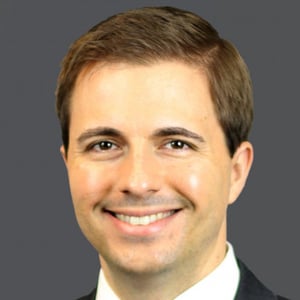
Associate, Mayer Brown
Peter Schmidt is an associate in Mayer Brown's Washington DC office and a member of the Intellectual Property practice. He focuses on the finance, media, and technology industries, advising and representing clients in patent, copyright, and trade secret matters. Peter’s work focuses on cases involving complex technical and financial issues, where he draws on his previous experience both as a software engineer and as a financial consultant for McKinsey and Company. These cases have covered both hardware and software issues in a range of sectors.
Peter has represented clients in a broad range of types and stages of litigation, and has extensive experience in case assessment; complaints and answers; discovery and fact gathering; non-infringement, infringement, invalidity, and validity contentions; claim construction; expert reports; motion practice (including summary judgment and admissibility of evidence); trial; and appeals. He graduated magna cum laude from Harvard Law School and first in his class from Carnegie Mellon University with a degree in Electrical and Computer Engineering; he also holds an MBA from Harvard Business School.
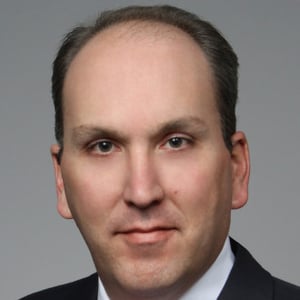
Counsel, Mayer Brown
Luke Levasseur has been representing clients in complex federal litigation for more than 20 years and currently focuses his practice on government contract matters. He represents clients in large contract disputes and bid protests before the US Court of Federal Claims and the Government Accountability Office. He has represented clients in federal and state False Claims Act cases, presenting arguments in federal court and conducting internal investigations for clients. Luke also has experience handling a variety of other federal court litigation for clients, involving such matters as antitrust claims, trademark disputes, and alleged fraud.
Prior to re-joining Mayer Brown in 2006, Luke represented the federal government as an attorney with the Civil Division of the US Department of Justice from 1997-2006. He served as lead counsel for, or had a significant role during the trial and appeal of, several large cases that were part of the Winstar-related litigation, which involved billions of dollars in claims against the government and were based on legislative and regulatory changes in the financial services industry. In those cases, he was responsible for developing and presenting expert opinion testimony from the government’s witnesses, including a Nobel-prize winning economist, and for cross-examining other parties’ experts. Throughout his career, Luke has focused on expert witness issues in complex litigation.
When he was with the Department of Justice, Luke also represented the government in numerous appeals before the US Court of Appeals for the Federal Circuit. He was awarded the John Marshall Award for Outstanding Legal Achievement and a Special Commendation Award for exceptional contributions to the defense of the Winstar cases. Luke continues to be an active part of the Court of Federal Claims bar and served as the President of that Court's Bar Association during 2012.

Partner, Mayer Brown
David Dowd is an experienced litigator at Mayer Brown whose practice has a strong emphasis in government contracting issues and controversies. He advises such clients as those involved in health care, information technology, large military systems, engineering services, and other industries regarding federal procurements and related issues. His counsel in this area includes commercial items, conflicts of interest, cost allowability issues, defective pricing, contract and subcontract negotiations, contract financing, assignments and novations, leasing, prime/sub disputes, preparation of claims, and procurement fraud.
David also handles procurement controversies, as he litigates bid protests and disputes before the Government Accountability Office and the Court of Federal Claims, represents contractors in litigation and arbitrations involving government contracts, and tries federal court litigation focused on contract disputes and alleged fraud.
Health care and insurance companies rely on David for advice regarding federal health care and insurance programs, including FEHBA, Medicare, TRICARE, and FEGLI. He represents these industry clients in bid protest and claim litigation regarding federal health care and insurance programs. In related matters, David counsels biotechnology and pharmaceutical companies on biodefense purchasing opportunities and applications, including research and development.
David has more than 20 years of practice experience, having joined Mayer Brown’s Washington, DC office in 2001 after practicing with two other national law firms.
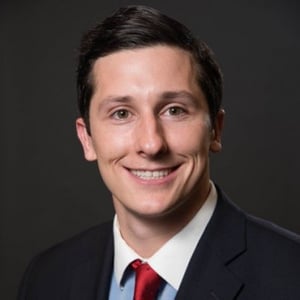
Manager of State Based Initiatives, Right on Crime
Greg Glod is the Manager of State Initiatives for Right on Crime and Senior Policy Analyst at Texas Public Policy Foundation. Based in Austin, Texas, Glod is an attorney who began his legal career as a law clerk for the Honorable Judge Laura S. Kiessling on the Circuit Court for Anne Arundel County, Maryland. He subsequently practiced at a litigation firm in Annapolis, Maryland before joining Right on Crime and the Texas Public Policy Foundation. In 2010, he graduated from The Pennsylvania State University with B.A. degrees in Crime, Law, and Justice and Political Science. In 2013, Glod received his J.D. from the University of Maryland School of Law.

Senior Fellow in Constitutional Jurisprudence, Independence Institute
Professor Robert G. Natelson is a constitutional scholar and author.
Rob’s constitutional scholarship has been cited repeatedly by justices and parties at the U.S. Supreme Court—as well as by federal appeals courts, and at least 18 state supreme courts.
Rob’s research into the Constitution’s original meaning has carried him to libraries throughout the United States and in Britain, including four months at Oxford University. His books and articles span many different parts of the Constitution, including groundbreaking studies of the Necessary and Proper Clause, the Indian Commerce Clause, federalism, Founding-Era interpretation, regulation of elections, and the amendment process of Article V. He created the first-ever online bibliography for 18th century materials used in constitutional research. He is a contributing author to the Encyclopedia of the Supreme Court of the United States (on Magna Carta). He contributed eight essays to the third edition of the Heritage Guide to the Constitution: five on the amendment procedure and one each on the Guarantee Clause, the Postal Clause, and the Recess Appointments Clause.
U.S. Supreme Court justices have relied explicitly on Rob’s research in 41 citations in 13 separate cases.

Senior Litigation Counsel, New Civil Liberties Alliance
Throughout his 40-year career in private law practice in Washington, D.C., Richard Samp has specialized in appellate litigation with a focus on constitutional law. He served as Chief Counsel of the Washington Legal Foundation for more than 30 years. He has participated directly in more than 200 cases before the U.S. Supreme Court. Mr. Samp is a graduate of Harvard College and the University of Michigan Law School and clerked for a federal judge in Detroit.
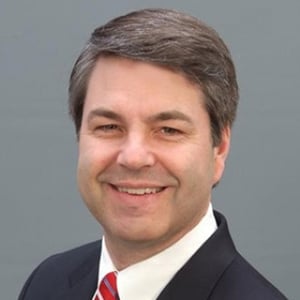
Partner and Co-Chair, Public Policy Group, Shook Hardy & Bacon LLP
Mark Behrens co-chairs Shook's Washington, DC-based Public Policy Practice Group and is a leading national expert on civil justice issues with over thirty years of experience. A substantial part of his practice is working to improve the civil litigation environment through state and federal legislation; in the courts through amicus curiae briefs; through legal scholarship and judicial education; and in the court of public opinion.
Mark is actively involved in civil justice reform efforts at the federal and state levels. He has testified before the U.S. Congress and most state legislatures on behalf of business and civil justice organizations. Mark also has an active amicus brief practice specializing in tort liability and civil justice issues. He has authored or co-authored over 150 amicus briefs in cases before the United States Supreme Court and federal and state appellate courts on behalf of business, civil justice, and defense lawyer organizations. In addition, Mark routinely files comments on behalf of business, civil justice, and defense lawyer organizations regarding potential changes to federal and state court rules. He chairs the International Association of Defense Counsel’s (IADC) Civil Justice Response Committee and serves on the Board of Directors of Lawyers for Civil Justice (LCJ).
Mark is a member of the American Law Institute (ALI). He received his J.D. in 1990 from Vanderbilt University Law School, where he was a member of the Vanderbilt Law Review. He received his B.A. in economics from the University of Wisconsin in 1987.
Staff Attorney, Shook Hardy & Bacon
Sarah works with Shook Hardy & Bacon’s Public Policy Group, whose aim is to improve civil litigation through judicial education, communications and legal scholarship; she also is a member of the Litigation practice group. Since joining the firm, she also has worked on construction industry-related arbitrations.
Before joining Shook, Sarah worked on litigation and administrative appeals for the Civil Beat Law Center in Hawaii, which provides advice and representation to the public and the media to achieve transparency in government. During law school, Sarah was senior research assistant to Andrew F. Popper during his work on the third edition of Administrative Law: A Contemporary Approach.

Why DoD Should Adopt a Multi-Cloud IT Strategy
Marcia G. Madsen, Peter O. Schmidt, Luke P. Levasseur, David F. Dowd
Note from the Editor: This article describes how companies approach cloud based services, and it...
Topics
AT&T/Time Warner Decision: The Triumph of Economic Analysis
On June 12, Judge Richard Leon of the District Court for the District of Columbia...
Topics
The President's Immigration Travel Ban: What Trump v. Hawaii Has to Say About Stating a Claim Under the Establishment Clause
It is little appreciated that the United States Supreme Court’s decision today in Trump v. Hawaii,...
Topics
Travel Ban Correctly Upheld - The President's Role in National Security
It’s no surprise that the Supreme Court allowed Travel Ban 3.0 to remain in place, particularly...
In the Matter of Property Seized from Jean Carlos Herrerra and Fernando Rodriguez
Greg Glod
On May 25, the Iowa Supreme Court issued an opinion in the case In the Matter...
Topics
Docket Watch: In the Matter of Property Seized from Jean Carlos Herrerra and Fernando Rodriguez
On May 25, the Iowa Supreme Court issued an opinion in the case In the...
The Founders Interpret the Constitution: The Division of Federal and State Powers
Robert G. Natelson
Note from the Editor: This article surveys ratification-era statements by defenders of the proposed Constitution...
Jennings v. Rodriguez - Post-Decision SCOTUScast
Richard A. Samp
On February 27, 2018 the Supreme Court decided Jennings v. Rodriguez, a case involving a...
Topics
Supreme Court Refusal to Review the “Net Worth Sweep” Does Not Totally Sweep Away Investors’ Claims
On February 20, the Supreme Court denied the petitions for a writ of certiorari filed...
2017 Civil Justice Update
Mark A. Behrens, Sarah Goggans
This paper reviews key civil justice issues and reforms in 2017. Part I focuses on...