
Partner, Wise Carter Child & Caraway -- Jackson, Miss.
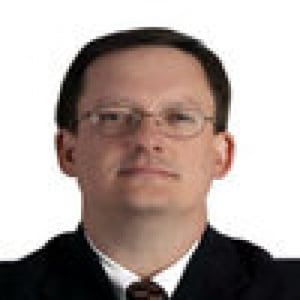
Professor, Cumberland School of Law, Samford University
Michael DeBow joined the Cumberland faculty in 1988. He regularly teaches courses in Property, Business Organizations, Administrative Law, Legislation, and Local Government.
Professor DeBow is a native of Tupelo, Mississippi. He received his bachelor's and master's degrees in economics from the University of Alabama (1976, 1978). He graduated from the Yale Law School in 1980, and is a member of the District of Columbia Bar.
DeBow's career included a stint in private practice in Washington, D.C., followed by a judicial clerkship with Judge Kenneth W. Starr of the U.S. Court of Appeals for the D.C. Circuit in 1983-84. DeBow then served as an attorney-advisor to Federal Trade Commission chairman James C. Miller III (1984-85), and a special assistant to Assistant Attorney General Douglas Ginsburg, in the Antitrust Division of the U.S. Department of Justice (1985-86). He began his teaching career at the University of Georgia business school, where he taught for two years prior to coming to Samford.
From 2000 to 2004, DeBow also acted in a part-time capacity as special assistant for legal policy to Alabama attorney general Bill Pryor. He was a visiting professor of law at George Mason University in 1999. He was a (nonresident) Salvatori Fellow of The Heritage Foundation during 1993-95, and a member of the executive committee of the Association of Private Enterprise Education during 1995-99. DeBow attended summer institutes in quantitative methods for law professors (George Mason Law & Economics Center, 1990), Austrian economics (NYU Department of Economics, 1997), and the study of freedom (Templeton Foundation Freedom Project, 2000). In 2008 he was named an Adjunct Fellow of the Alabama Policy Institute.
Professor DeBow has taught several undergraduate courses at Samford, including one which received a supporting grant from the John Templeton Foundation. Most recently, he taught an undergraduate course in law and economics for the Samford's Brock School of Business. He has also taught public health law for the UAB School of Public Health on several occasions.
DeBow's articles have appeared in such journals as the Texas Law Review, Harvard Journal of Law & Public Policy, Regulation, Policy Review, The Freeman, and the Journal of Law & Politics. He co-edits the Federalist Society's Pre-Law Reading List and its annotated bibliography of conservative and libertarian legal scholarship.
Partner, Wise Carter Child & Caraway -- Jackson, Miss.
Professor, Cumberland School of Law, Samford University
Michael DeBow joined the Cumberland faculty in 1988. He regularly teaches courses in Property, Business Organizations, Administrative Law, Legislation, and Local Government.
Professor DeBow is a native of Tupelo, Mississippi. He received his bachelor's and master's degrees in economics from the University of Alabama (1976, 1978). He graduated from the Yale Law School in 1980, and is a member of the District of Columbia Bar.
DeBow's career included a stint in private practice in Washington, D.C., followed by a judicial clerkship with Judge Kenneth W. Starr of the U.S. Court of Appeals for the D.C. Circuit in 1983-84. DeBow then served as an attorney-advisor to Federal Trade Commission chairman James C. Miller III (1984-85), and a special assistant to Assistant Attorney General Douglas Ginsburg, in the Antitrust Division of the U.S. Department of Justice (1985-86). He began his teaching career at the University of Georgia business school, where he taught for two years prior to coming to Samford.
From 2000 to 2004, DeBow also acted in a part-time capacity as special assistant for legal policy to Alabama attorney general Bill Pryor. He was a visiting professor of law at George Mason University in 1999. He was a (nonresident) Salvatori Fellow of The Heritage Foundation during 1993-95, and a member of the executive committee of the Association of Private Enterprise Education during 1995-99. DeBow attended summer institutes in quantitative methods for law professors (George Mason Law & Economics Center, 1990), Austrian economics (NYU Department of Economics, 1997), and the study of freedom (Templeton Foundation Freedom Project, 2000). In 2008 he was named an Adjunct Fellow of the Alabama Policy Institute.
Professor DeBow has taught several undergraduate courses at Samford, including one which received a supporting grant from the John Templeton Foundation. Most recently, he taught an undergraduate course in law and economics for the Samford's Brock School of Business. He has also taught public health law for the UAB School of Public Health on several occasions.
DeBow's articles have appeared in such journals as the Texas Law Review, Harvard Journal of Law & Public Policy, Regulation, Policy Review, The Freeman, and the Journal of Law & Politics. He co-edits the Federalist Society's Pre-Law Reading List and its annotated bibliography of conservative and libertarian legal scholarship.
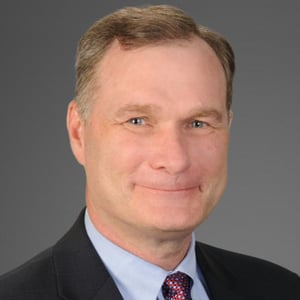
Thomas B. Pahl is the Retired Deputy Director of the CFPB where he served from July 2020 through January 2021. Before his term at the CFPB, Pahl served as Policy Associate Director for Research, Markets, and Regulations beginning in April 2018. Previously, Pahl was the Acting Director of the Bureau of Consumer Protection at the Federal Trade Commission.
From 2013–2016, Tom served as Managing Counsel for the Office of Regulations at the CFPB. He has also held previous roles at the FTC focused on enforcement, rulemaking, and policy on financial services matters, including Assistant Director of the Division of Financial Practices. Pahl received his BA from the College of St. Thomas and his JD from Northwestern University School of Law.
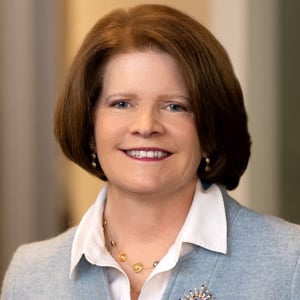
Partner, Antitrust and Competition, Wilson Sonsini Goodrich & Rosati
Maureen Ohlhausen is a partner in the Washington, D.C., office of Wilson Sonsini Goodrich & Rosati, where she advises industry-leading clients on complex antitrust and litigation matters, with a focus on high-profile cases. Sought after for her depth of experience on antitrust and Federal Trade Commission (FTC)-related issues, Maureen is known for her relationships with officials in the U.S. and abroad.
After finishing law school and clerking at the U.S. Court of Appeals for the D.C. Circuit, Maureen joined the FTC in 1997. She held a series of roles at the agency over the next 12 years, rising to the position of Director of the FTC Office of Policy Planning, where she led the agency’s work on e-commerce and headed the FTC’s Internet Access Task Force, which produced an influential report analyzing competition and consumer protection legal issues in the broadband and internet sectors. She then went into private practice at a leading telecommunications law firm, where she headed the FTC practice group.
In 2012, Maureen was confirmed by the Senate as a Commissioner of the FTC and was appointed Acting Chairman in January 2017, a role she held until May 2018. As Acting Chairman, Maureen directed all aspects of the agency’s antitrust work, including merger review, conduct enforcement, and all consumer protection enforcement, with an emphasis on privacy and technology issues. Under her leadership, the FTC won several influential merger challenges in court and reached a number of key digital privacy settlements.
To date, Maureen is the only FTC Commissioner to have received the Robert Pitofsky Lifetime Achievement Award in recognition of her contributions to the FTC.
Following the end of her term at the FTC, and immediately prior to joining Wilson Sonsini, Maureen was chair of the global antitrust and competition practice at Baker Botts, based in that firm’s Washington, D.C., office.
A recognized thought leader, Maureen is a frequent author and speaker, and is often quoted by leading print and broadcast media on antitrust, FTC, and privacy and data security matters. She has published dozens of articles on antitrust, privacy, intellectual property, regulation, FTC litigation, telecommunications, and international law issues in prestigious publications. During her tenure at the FTC and in private practice, she testified more than two dozen times before Congress, including before the Senate Commerce Committee and the House Energy and Commerce Antitrust Sub-Committee. She also testified before the Antitrust Modernization Commission.
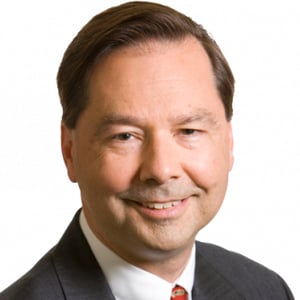
Senior Legal Fellow, Edwin Meese III Institute for the Rule of Law, Advancing American Freedom
Retired
Tom Gede retired in 2023 as a principal in Morgan Lewis Consulting LLC and of counsel to the firm. He currently consults on a variety of legal and policy matters for both public and private clients. Tom has a national reputation and distinguished background in federal Indian law. Prior to retirement, he represented clients in complex governmental matters in litigation, administrative and regulatory proceedings, including high-profile matters involving state governments. A former senior deputy in the California Attorney General’s office, Tom was amicus coordinator and Supreme Court counsel, and argued cases in the US Supreme Court, the California Supreme Court, and numerous state and federal appellate courts.
Tom also served as executive director of the Conference of Western Attorneys General (CWAG), coordinating activities on key legal and policy issues, such as federal Indian law, energy, environmental, public lands, financial services, and telecommunications, for the attorneys general of 18 western states and territories. In 2016, Tom was elected as a Member of the American Law Institute (ALI), and served as an Adviser on the Restatement of the Law Third - The Law of American Indians. Tom also taught federal Indian law as an adjunct law professor at the University of the Pacific - McGeorge School of Law. He served as an assistant editor for and the author of the Indian gaming chapter in CWAG’s American Indian Law Deskbook (2d & 3d eds.). He has been engaged in Indian gaming and Indian law matters for more than three decades, having focused on the gaming compacts with Indian tribes, as well as complex civil and criminal jurisdiction, land, natural resources, water and law enforcement issues in Indian country. He has testified before Congress on American Indian and Native Alaskan issues. In 2012 he was appointed by Speaker John Boehner to serve on the United States Indian Law and Order Commission, where he examined criminal justice issues in Indian country and Alaska, resulting in the issuance of an important report to the President and Congress.

The Case for Partisan Judicial Elections
Diane Brey, Erick Kaardal, John J. Soroko, Frank B. Strickland, Michael B. Wallace, Michael DeBow
Views expressed in this paper are those of the authors only, and do not necessarily represent...
The Case for Partisan Judicial Elections
Diane Brey, Erick Kaardal, John J. Soroko, Frank B. Strickland, Michael B. Wallace, Michael DeBow
Views expressed in this paper are those of the authors only, and do not necessarily...
Ban on Charitable Solicitations Likely Unconstitutional
Thomas B. Pahl, Maureen K. Ohlhausen
The Federal Trade Commission recently has obtained remedies in four cases that ban defendants from...
Voter Fraud in Our Republic
Hans A. Von Spakovsky
Most Americans that I speak with who are aware of America's past history of voter...
Book Review: The Millionaire Next Door by Thomas J. Stanley, Ph.D., & William D. Danko, Ph.D.
John Pickering
The Millionaire Next Door: The Surprising Secrets of America's Wealthyby Thomas J. Stanley, Ph.D., &...
The Coming War Over Encryption Technology
Eric Vance
Encryption technology is at the center of a bitter dispute that promises to hold serious...
Taking Stock of Shareholders' Rights
Joel Friedlander
In several contests for corporate control during the last year, several courts ruling in favor...
The ABA and Criminal Justice Issues
INTRODUCTION In 1996, the Federalist Society for Law and Public Policy Studies launched fifteen legal...
Major Habeas Reform Package Becomes Law
Thomas F. Gede
New deference standard requires federal courts to respect state court legal and constitutional rulings; Act...