
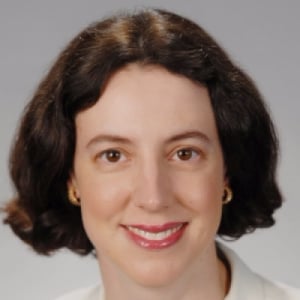
Donald Phillip Rothschild Research Professor, George Washington University Law School
Renée Lettow Lerner is Donald Phillip Rothschild Research Professor of Law at George Washington University Law School.
Professor Lerner works in the fields of U.S. and English legal history, civil and criminal procedure, and comparative law. She advises judges, lawyers, and government officials from the United States and countries in Europe, Latin America, and Asia about the differences between adversarial and nonadversarial legal systems.
She writes extensively about the history of American juries. Her work includes not only scholarly articles, but also online publications intended for a broader audience of legal professionals and the public. In many different settings, she has debated the role of juries with other academics and with lawyers. She has a book forthcoming with Oxford University Press in the Very Short Introduction Series entitled “The Jury.” She is also working on a book about the American civil jury, from the colonial period to the present.
She is the author, with John Langbein and Bruce Smith, of the book History of the Common Law: The Development of Anglo-American Legal Institutions (2009).
Her recent writings include a book review of Amalia D. Kessler’s Inventing American Exceptionalism: The Origins of American Adversarial Legal Culture, 1800-1877, 67 J. Legal Ed. 888 (2018); “How the Creation of Appellate Courts in England and the United States Limited Judicial Comment on Evidence to the Jury,” 40 Journal of the Legal Profession 215 (2016); “The Troublesome Inheritance of Americans in Magna Carta and Trial by Jury,” in Magna Carta and its Modern Legacy 77-98 (Robert Hazell and James Melton eds., Cambridge University Press 2015); and “The Failure of Originalism in Preserving Constitutional Rights to Civil Jury Trial,” 22 William & Mary Bill of Rights Journal 811 (2014).
Professor Lerner received an A.B. summa cum laude in history from Princeton University. She was a Rhodes Scholar at Oxford University, where she studied English legal history. At Yale Law School, she was Articles Editor of the Yale Law Journal. She served as a law clerk to Justice Anthony M. Kennedy of the U.S. Supreme Court and to Judge Stephen F. Williams of the U.S. Court of Appeals for the District of Columbia Circuit. From 2003 to 2005, she served as Deputy Assistant Attorney General in the Office of Legal Counsel at the U.S. Department of Justice.
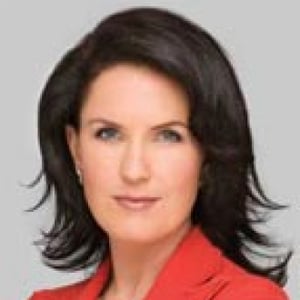
Adjunct Professor of Sexual Violence Law, New England Law | Boston
Wendy Murphy is adjunct professor of sexual violence law at New England Law|Boston where she has taught for fifteen years. Her litigation work specializes in the representation of crime victims, women and children.She has developed and directs several projects in conjunction with the school's Center for Law and Social Responsibility. The Judicial Language Project began in 2005 and involves law students using socio-linguistic research to critique harmful language used in law and society to describe violence against women and children. The Sexual Violence Legal News Project distributes appellate decisions of note to increase understanding among lay audiences and explain the likely impact and real world consequences of a court's ruling. The JD/PhD project is a multidisciplinary program where a JD student is teamed up with a PhD student to work across disciplines and produce a written critique that expresses the scientific and legal value of new research related to interpersonal violence. The team analyzes methodological reliability for the purpose of expediting or preventing its delivery into law, legal policy and human behavior.
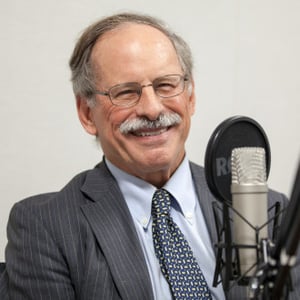
Freelance Journalist and Author
Stuart Taylor, Jr. is a Washington writer focusing on legal and policy issues and a National Journal contributing editor. He occasionally practices law.
Taylor has coauthored three books. All have been acclaimed by commentators across the ideological spectrum. In January 2017, KC Johnson and Taylor authored The Campus Rape Frenzy: The Attack on Due Process at America's Universities. In 2012, Richard Sander and Taylor authored Mismatch: How Affirmative Action Hurts Students It's Intended to Help, and Why Universities Won't Admit It. In 2007, Taylor and Johnson authored Until Proven Innocent: Political Correctness and the Shameful Injustices of the Duke Lacrosse Rape Fraud. Sander and Taylor have also filed amicus briefs in Supreme Court cases involving admissions preferences.
Since 1980, Taylor has done reporting and commentary about issues ranging from the biggest Supreme Court cases to race, voting rights, mindlessly excessive criminal penalties, guilt-presuming campus rape processes, journalistic bias, the death penalty, war powers, gerrymandering, guns, polarization, civil liberties, national security, torture, campaign finance, education, impeachment, and other issues. He has often been called one of the nation's best legal journalists and is known for challenging both liberal and conservative conventional wisdom.
Taylor was a reporter for The New York Times from 1980-1988, covering legal affairs and then the Supreme Court. He wrote commentaries and long features for The American Lawyer, Legal Times and their affiliates from 1989-1997, and for National Journal and Newsweek from 1998 through 2010. He has written (less often) on a freelance basis for numerous publications since 2010. He has written op-eds for The Washington Post, The New York Times, The Wall Street Journal, The Los Angeles Times, USA Today, and The New York Daily News and longer commentaries for RealClearPolitics, The Atlantic, The New Republic, the (late) Weekly Standard, National Review, Slate, The Daily Beast, Harper’s, Reader’s Digest, Time and other magazines. He has been interviewed on all major television and radio networks. He taught “Law and the News Media” at Stanford Law School in 2011 and 2012 and practices law on occasion.
Taylor graduated from Princeton University in 1970 with an A.B. in History. After working as a reporter for the Baltimore Evening Sun and Sun from 1971-1974, he moved to Harvard Law School, was a Harvard Law Review note editor, and graduated in 1977 at the top of his class, with high honors. He also won a Frederick Sheldon Traveling Fellowship and traveled around the world in 1977-1978 while studying freedom of the press in the United Kingdom and Kenya.
Taylor practiced law with Wilmer, Cutler & Pickering, in Washington, D.C., from 1977-1980 before returning to journalism in 1980 by joining the Washington Bureau of The New York Times.
Taylor's journalism honors include the 2009 Northern California Innocence Project Media Award for his work on the Duke lacrosse rape fraud; a 2002 National Headliner Award for best special magazine column on one subject; and a share of The American Lawyer’s National Magazine Award for a March 1990 special issue on the drug war. He was a National Magazine Award finalist in 1993 and 1997 and was nominated by The New York Times for a Pulitzer Prize in 1988.
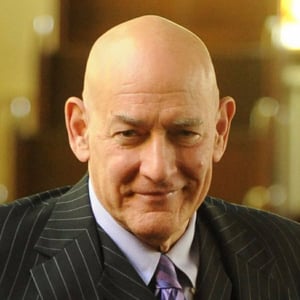
Raoul Berger Professor of Legal History at Northwestern University School of Law
Stephen Presser is a leading American legal historian and expert on shareholder liability for corporate debts. He is frequently an invited witness before committees of the U.S. Senate and House of Representatives on issues of constitutional law. He holds a joint appointment with the J. L. Kellogg Graduate School of Management and also teaches in Northwestern's history department.
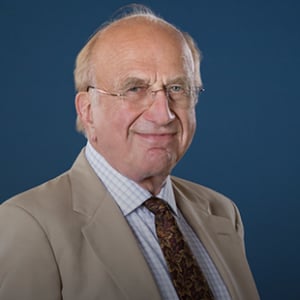
Of Counsel, Sedgwick LLP
David Dorsen is Of Counsel with Sedgwick, LLP. He served as an Assistant US Attorney in New York under Robert M. Morgenthau, and later as Assistant Chief Counsel of the Senate Watergate Committee under Senator Sam Ervin. He has taught at Duke University, North Carolina, Georgetown University Law Center, Washington DC, and George Washington University Law School, Washington DC. His book, Henry Friendly, Greatest Judge of his Era (with Richard A. Posner, 2012), won the Green Bag Award for Exemplary Legal Writing.
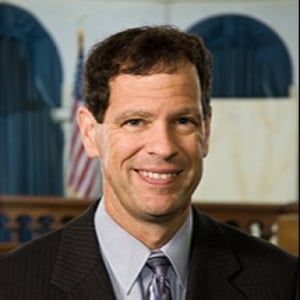
Warren Distinguished Professor of Law, University of San Diego School of Law
Michael D. Ramsey is Warren Distinguished Professor of Law at the University of San Diego School of Law, where he teaches and writes in the areas of Constitutional Law, Foreign Relations Law and International Law. He is the author of The Constitution’s Text in Foreign Affairs (Harvard University Press), co-editor of International Law in the U.S. Supreme Court: Continuity and Change (Cambridge University Press), and co-author of two casebooks, Transnational Law and Practice (2d ed., Aspen) and International Business Transactions: A Problem-Oriented Coursebook (14th ed., West). His scholarly articles have appeared in publications such as the Yale Law Journal, the University of Chicago Law Review, the Georgetown Law Journal and the American Journal of International Law. He received his B.A. magna cum laude from Dartmouth College and his J.D. summa cum laude from Stanford Law School. Prior to teaching, he served as a judicial clerk for Judge J. Clifford Wallace of the United States Court of Appeals for the Ninth Circuit and for Justice Antonin Scalia of the United States Supreme Court, and practiced law with the law firm of Latham & Watkins, where he specialized in international finance and investment. He has taught as a visiting professor at the University of California, San Diego, in the Department of Political Science and at the University of Paris – Sorbonne, in the Department of Comparative Law.
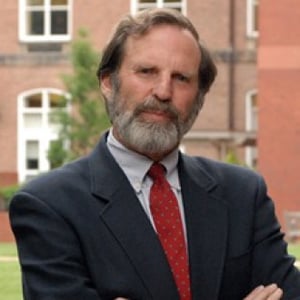
Adjunct Professor, George Washington University Law School
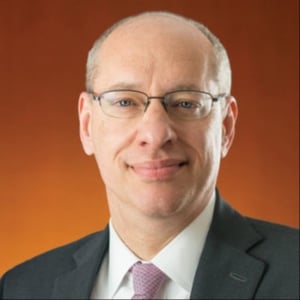
Former Chairman, Federal Trade Commission; Former Partner, Davis Polk & Wardwell
Mr. Leibowitz is a former partner in Davis Polk’s Washington DC and New York offices. His practice focuses on the complex antitrust aspects of mergers and acquisitions, as well as government and private antitrust investigations and litigation. He also provides counsel in the developing area of privacy law and with respect to advocacy involving Congress.
Mr. Leibowitz was Chairman of the Federal Trade Commission from 2009 through 2013, and was noted for his bipartisanship. He served as a Commissioner from 2004 to 2009. While at the FTC, his priorities included health care and high-tech competition.
Global Competition Professor of Law and Policy, George Washington University Law School
Before joining the law school in 1999, William E. Kovacic was the George Mason University Foundation Professor at the George Mason University School of Law. From January 2006 to October 2011, he was a member of the Federal Trade Commission and chaired the agency from March 2008 to March 2009. He was the FTC’s General Counsel from June 2001 to December 2004. In 2011 he received the FTC’s Miles W. Kirkpatrick Award for Lifetime Achievement.
Since August 2013, Professor Kovacic has served as a Non-Executive Director with the United Kingdom’s Competition and Markets Authority. From January 2009 to September 2011, he was Vice-Chair for Outreach for the International Competition Network. He has advised many countries and international organizations on antitrust, consumer protection, government contracts, and the design of regulatory institutions.
At GW, Professor Kovacic has taught antitrust, contracts, and government contracts. He is co-editor (with Ariel Ezrachi) of the Journal of Antitrust Enforcement. His publications since returning to GW in 2011 include “Good Agency Practice and the Implementation of Competition Law” in European Yearbook of International Economic Law (Christoph Hermann ed. 2013); “Antitrust in High-Tech Industries: Improving the Federal Antitrust Joint Venture” in George Mason Law Review (2012); “Behavioral Economics: Implications for Regulatory Agency Behavior” in Journal of Regulatory Economics (2012) (with James Cooper); “Competition Agency Design: What’s on the Menu?” in European Competition Journal (2012) (with David Hyman); “Plus Factors and Agreement in Antitrust Law” in Michigan Law Review (2011) (with Robert Marshall, Leslie Marx & Halbert White); “Ensuring Integrity and Competition and Public Procurement Markets: A Dual Challenge for Good Governance” in The WTO Regime on Government Procurement: Challenge and Reform (Sue Arrowsmith & Robert Anderson, eds. 2011) (with Robert Anderson & Anna Caroline Mueller); “The International Competition Network: Its Past, Current, and Future Role” inMinnesota Journal of International Law (2011) (with Hugh Hollman); “The William Humphrey and Abram Myers Years: The FTC from 1925 to 1929” in Antitrust Law Journal (2011) (with Marc Winerman); Professor Kovacic also is co-author (with Andrew Gavil & Jonathan Baker) of Antitrust Law in Perspective: Cases, Concepts and Problems in Competition Policy (2d ed. 2008) and Antitrust Law & Economics in a Nutshell (5th ed. 2004) (with Ernest Gellhorn & Stephen Calkins).
President and Founder, Bloom Strategic Counsel PLLC
Seth Bloom is the President and Founder of Bloom Strategic Counsel PLLC. Mr. Bloom, the former long-time General Counsel of the U.S. Senate Antitrust Subcommittee, is an attorney with extensive governmental and private sector experience in antitrust and competition law. He possesses substantial experience with the critical regulatory and competition issues facing key industries including telecommunications, media, Internet, and high tech; transportation and aviation; and health care.
Mr. Bloom has represented leading companies in these and other vital industries. These clients have included Comcast, Amazon, Aetna, MillerCoors LLC, Microsoft, Sprint, Masimo, Yelp, the American Association of Independent Music (A2IM), and the American Hotel and Lodging Association. Since founding his firm in 2013, Mr. Bloom has quickly become one of the leading Washington attorneys representing companies in large and complex merger transaction, particularly before Congress. He has represented MillerCoors LCC in connection with the AB InBev/SABMiller merger; Aetna in connection with its proposed merger with Humana; Pfizer in connection with its proposed merger with Allergan; and Comcast in connection with its proposed merger with Time Warner Cable. Beyond his work for major companies involved in mergers and acquisitions, Mr. Bloom has represented Yelp on Internet competition issues, the medical device manufacturer Masimo with respect to its efforts to bring greater competition to hospital purchasing of medical devices; Microsoft on competition, and patent reform issues; Sprint on competition and telecom regulatory issues; and A2IM on copyright reform, music licensing and competition issues, among other matters. In July 2013, Mr. Bloom was named to the Advisory Board of the American Antitrust Institute.
Prior to founding Bloom Strategic Counsel in March 2013, Mr. Bloom spent nearly 14 years working in the U.S. Senate on the Judiciary Committee’s Antitrust Subcommittee. He began as a counsel on the Antitrust Subcommittee staff of Sen. Kohl in 1999, who served as Chairman and Ranking Member of the Subcommittee during Mr. Bloom’s tenure. From 2008 to January 2013, Mr. Bloom served as General Counsel of the Senate Antitrust Subcommittee. In August 2012, Mr. Bloom was named to the “Hill Hot List” by National Law Journal/Legal Times as one of the top 15 lawyers working in Congress.
Mr. Bloom was responsible for numerous critical antitrust and competition issues that came before the Antitrust Subcommittee during his tenure, from the AOL/Time Warner merger in 2000 to the Comcast/NBC Universal merger in 2010 and the proposed AT&T/T-Mobile merger in 2011. Antitrust Subcommittee Chairman Kohl’s opposition to the proposed AT&T/T-Mobile merger was a key factor leading to the merger being blocked by the Justice Department and the FCC. Mr. Bloom was also the senior staffer on several landmark Antitrust Subcommittee investigations, including its 2011 investigation of allegations that Google was engaged in antitrust competitive conduct with respect to Internet search and its 2002-2004 of allegations of anticompetitive conduct in hospital purchasing of medical supplies. During his time on the antitrust subcommittee, Mr. Bloom investigated competitive conditions in numerous key industries, including telecom, high tech, media, aviation, health care, energy, and agriculture.
Mr. Bloom also was the staffer responsible for a number of significant legislative efforts sponsored by Senator Kohl, including the Railroad Antitrust Enforcement Act, the Preserve Affordable Access to Generic Drugs Act, the Discount Pricing Consumer Protection Act, and the No Oil Producing and Exporting Cartels Act (NOPEC). Each of these legislative efforts passed the Senate Judiciary Committee in several different Congresses.
Mr. Bloom has also been frequently been called on to serve as an expert speaker on critical issues of antitrust, competition, telecom, high tech, and health care policy to numerous trade, industry and legal groups, including the American Bar Association Antitrust Section, the American Antitrust Institute, the National Cable and Telecommunications Association, the Georgetown University Law Center, and the conference of Western Attorneys General, among other organizations. He has also been quoted frequently in the press regarding critical antitrust and competition policy issues, including in the Wall Street Journal, Washington Post, CNBC, Reuters, FTC Watch, and National Public Radio.
Prior to beginning his service at the Senate in 1999, Mr. Bloom spent three years as a trial attorney at the Justice Department’s Antitrust Division. During his time at the Justice Department, he investigated numerous corporate mergers, and participated in litigation directed at the enforcement of the antitrust laws. Prior to that, Mr. Bloom spent eleven years as an attorney with Washington, DC law firms, practicing in the area of complex commercial litigation. He holds a J.D. degree from the University of Pennsylvania Law School and a B.A. magna cum laude from the University of Rochester.
Co-Chair of the International Task Force, American Bar Association Section of Antitrust Law
From 1981-83 Mr. Lipsky served as Deputy Assistant Attorney General under William F. Baxter, President Reagan's first chief antitrust enforcement official, who sparked profound antitrust-law changes. In that position Mr. Lipsky supervised Supreme Court litigation in a series of groundbreaking antitrust cases. He also supervised preparation of the 1982 Department of Justice Merger Guidelines, which profoundly altered and have since become the dominant model for antitrust analysis of mergers, acquisitions and other structural transactions throughout the world. He also organized and supervised the Antitrust Division's review of United States v. IBM Corp., which culminated in a joint stipulation of dismissal without prejudice of the marathon case in 1982. He served as co-chair of the Transition Team for the Federal Trade Commission following the election of President Donald Trump, and following his retirement in February, 2017 after fifteen years of partnership at Latham & Watkins, LLP, served as the Acting Director of FTC’s Bureau of Competition until July, 2017.
Mr. Lipsky served as chief antitrust lawyer for The Coca-Cola Company from 1992-2002 and has incomparable experience with antitrust in the US, EU, Canada, Japan and other established antitrust law regimes throughout the world, as well as in new and emerging antitrust law systems in scores of jurisdictions that adopted free-market institutions following the 1991 collapse of the Soviet Union. For several decades he has participated in a variety of efforts to streamline antitrust enforcement around the world, improve the quality of antitrust analysis, harmonize international views on the fundamental objective of antitrust law, and assure that antitrust procedures are accurate, efficient and impartial both in reality and as perceived.
Mr. Lipsky served as the first International Officer of the American Bar Association Section of Antitrust Law from 2001-03. He served on the Editorial Board of Competition Laws Outside the United States (2001), the most ambitious annotated compilation of non-US competition laws yet produced. He has held a variety of senior positions among the officers and governing Council of the Section of Antitrust Law and continues to serve as a co-chair of the Section's International Task Force. He has written, spoken and testified frequently on subjects in antitrust law, economics and policy. He has served as a co-chair of the International Competition Policy Working Group of the US Chamber of Commerce, and participated as a member of the International Competition Policy Expert’s Group that recently published its Report and Recommendations (March 2017) on needed reforms of international antitrust-law enforcement.
Mr. Lipsky is admitted to practice before the US Supreme Court and various federal appellate courts. Mr. Lipsky holds a J.D. (Stanford Law School, 1976) and an M.A. in Economics (Stanford University, 1976).
Richard M. Steuer is an antitrust practitioner, author, teacher, and former Chair of both the ABA Section of Antitrust Law and the New York City Bar Association’s Antitrust Committee. He is Senior Counsel at Mayer Brown LLP in New York City, where his practice includes litigation, mergers & acquisitions, intellectual property licensing, and e-commerce. Mr. Steuer has litigated at all levels of federal and state courts, on behalf of defendants and plaintiffs, in private suits and against government entities. He represents clients in government investigations and regularly advises leading companies on structuring their business practices.
Mr. Steuer served as Chair of the ABA Section of Antitrust Law from 2011-2012. Previously, he served as the Section’s Delegate to the ABA House of Delegates and as Editorial Chair of the Section’s Antitrust magazine. For three years he also served as Chair of the Antitrust Committee of the New York City Bar Association.
Mr. Steuer has written a book and dozens of articles on antitrust law appearing in the Cornell Law Review, University of Pennsylvania Law Review, Columbia Journal of Transnational Law, St. John’s Law Review, Antitrust Law Journal, and others. He lectures frequently, including presentations at workshops conducted by the Federal Trade Commission and Department of Justice, and at programs sponsored by the International Competition Network, the ABA, the American Corporate Counsel Association, PLI, the International Franchise Association, the Conference Board and other organizations. His commentary has appeared in The New York Times and the National Law Journal. He has been quoted in the Wall Street Journal, The New York Times, USA Today, Business Week and other publications, and has appeared on CNN and CNBC television.
Mr. Steuer has taught Antitrust Law as an adjunct associate professor at N.Y.U. School of Law and an adjunct professor at St. John’s School of Law. He also served as a member of the Advisory Board of BNA’s Antitrust & Trade Regulation Report and is listed in the directories of leading competition and antitrust lawyers.
Mr. Steuer is a graduate of Columbia Law School and is admitted to practice in New York State, in the federal district courts of New York, in the Second, Third, Fifth, Tenth and Federal Circuits, and in the United States Supreme Court.
Of Counsel, Sedgwick LLP
David Dorsen is Of Counsel with Sedgwick, LLP. He served as an Assistant US Attorney in New York under Robert M. Morgenthau, and later as Assistant Chief Counsel of the Senate Watergate Committee under Senator Sam Ervin. He has taught at Duke University, North Carolina, Georgetown University Law Center, Washington DC, and George Washington University Law School, Washington DC. His book, Henry Friendly, Greatest Judge of his Era (with Richard A. Posner, 2012), won the Green Bag Award for Exemplary Legal Writing.
Adjunct Professor, George Washington University Law School
Warren Distinguished Professor of Law, University of San Diego School of Law
Michael D. Ramsey is Warren Distinguished Professor of Law at the University of San Diego School of Law, where he teaches and writes in the areas of Constitutional Law, Foreign Relations Law and International Law. He is the author of The Constitution’s Text in Foreign Affairs (Harvard University Press), co-editor of International Law in the U.S. Supreme Court: Continuity and Change (Cambridge University Press), and co-author of two casebooks, Transnational Law and Practice (2d ed., Aspen) and International Business Transactions: A Problem-Oriented Coursebook (14th ed., West). His scholarly articles have appeared in publications such as the Yale Law Journal, the University of Chicago Law Review, the Georgetown Law Journal and the American Journal of International Law. He received his B.A. magna cum laude from Dartmouth College and his J.D. summa cum laude from Stanford Law School. Prior to teaching, he served as a judicial clerk for Judge J. Clifford Wallace of the United States Court of Appeals for the Ninth Circuit and for Justice Antonin Scalia of the United States Supreme Court, and practiced law with the law firm of Latham & Watkins, where he specialized in international finance and investment. He has taught as a visiting professor at the University of California, San Diego, in the Department of Political Science and at the University of Paris – Sorbonne, in the Department of Comparative Law.
Donald Phillip Rothschild Research Professor, George Washington University Law School
Renée Lettow Lerner is Donald Phillip Rothschild Research Professor of Law at George Washington University Law School.
Professor Lerner works in the fields of U.S. and English legal history, civil and criminal procedure, and comparative law. She advises judges, lawyers, and government officials from the United States and countries in Europe, Latin America, and Asia about the differences between adversarial and nonadversarial legal systems.
She writes extensively about the history of American juries. Her work includes not only scholarly articles, but also online publications intended for a broader audience of legal professionals and the public. In many different settings, she has debated the role of juries with other academics and with lawyers. She has a book forthcoming with Oxford University Press in the Very Short Introduction Series entitled “The Jury.” She is also working on a book about the American civil jury, from the colonial period to the present.
She is the author, with John Langbein and Bruce Smith, of the book History of the Common Law: The Development of Anglo-American Legal Institutions (2009).
Her recent writings include a book review of Amalia D. Kessler’s Inventing American Exceptionalism: The Origins of American Adversarial Legal Culture, 1800-1877, 67 J. Legal Ed. 888 (2018); “How the Creation of Appellate Courts in England and the United States Limited Judicial Comment on Evidence to the Jury,” 40 Journal of the Legal Profession 215 (2016); “The Troublesome Inheritance of Americans in Magna Carta and Trial by Jury,” in Magna Carta and its Modern Legacy 77-98 (Robert Hazell and James Melton eds., Cambridge University Press 2015); and “The Failure of Originalism in Preserving Constitutional Rights to Civil Jury Trial,” 22 William & Mary Bill of Rights Journal 811 (2014).
Professor Lerner received an A.B. summa cum laude in history from Princeton University. She was a Rhodes Scholar at Oxford University, where she studied English legal history. At Yale Law School, she was Articles Editor of the Yale Law Journal. She served as a law clerk to Justice Anthony M. Kennedy of the U.S. Supreme Court and to Judge Stephen F. Williams of the U.S. Court of Appeals for the District of Columbia Circuit. From 2003 to 2005, she served as Deputy Assistant Attorney General in the Office of Legal Counsel at the U.S. Department of Justice.
Adjunct Professor of Sexual Violence Law, New England Law | Boston
Wendy Murphy is adjunct professor of sexual violence law at New England Law|Boston where she has taught for fifteen years. Her litigation work specializes in the representation of crime victims, women and children.She has developed and directs several projects in conjunction with the school's Center for Law and Social Responsibility. The Judicial Language Project began in 2005 and involves law students using socio-linguistic research to critique harmful language used in law and society to describe violence against women and children. The Sexual Violence Legal News Project distributes appellate decisions of note to increase understanding among lay audiences and explain the likely impact and real world consequences of a court's ruling. The JD/PhD project is a multidisciplinary program where a JD student is teamed up with a PhD student to work across disciplines and produce a written critique that expresses the scientific and legal value of new research related to interpersonal violence. The team analyzes methodological reliability for the purpose of expediting or preventing its delivery into law, legal policy and human behavior.
Freelance Journalist and Author
Stuart Taylor, Jr. is a Washington writer focusing on legal and policy issues and a National Journal contributing editor. He occasionally practices law.
Taylor has coauthored three books. All have been acclaimed by commentators across the ideological spectrum. In January 2017, KC Johnson and Taylor authored The Campus Rape Frenzy: The Attack on Due Process at America's Universities. In 2012, Richard Sander and Taylor authored Mismatch: How Affirmative Action Hurts Students It's Intended to Help, and Why Universities Won't Admit It. In 2007, Taylor and Johnson authored Until Proven Innocent: Political Correctness and the Shameful Injustices of the Duke Lacrosse Rape Fraud. Sander and Taylor have also filed amicus briefs in Supreme Court cases involving admissions preferences.
Since 1980, Taylor has done reporting and commentary about issues ranging from the biggest Supreme Court cases to race, voting rights, mindlessly excessive criminal penalties, guilt-presuming campus rape processes, journalistic bias, the death penalty, war powers, gerrymandering, guns, polarization, civil liberties, national security, torture, campaign finance, education, impeachment, and other issues. He has often been called one of the nation's best legal journalists and is known for challenging both liberal and conservative conventional wisdom.
Taylor was a reporter for The New York Times from 1980-1988, covering legal affairs and then the Supreme Court. He wrote commentaries and long features for The American Lawyer, Legal Times and their affiliates from 1989-1997, and for National Journal and Newsweek from 1998 through 2010. He has written (less often) on a freelance basis for numerous publications since 2010. He has written op-eds for The Washington Post, The New York Times, The Wall Street Journal, The Los Angeles Times, USA Today, and The New York Daily News and longer commentaries for RealClearPolitics, The Atlantic, The New Republic, the (late) Weekly Standard, National Review, Slate, The Daily Beast, Harper’s, Reader’s Digest, Time and other magazines. He has been interviewed on all major television and radio networks. He taught “Law and the News Media” at Stanford Law School in 2011 and 2012 and practices law on occasion.
Taylor graduated from Princeton University in 1970 with an A.B. in History. After working as a reporter for the Baltimore Evening Sun and Sun from 1971-1974, he moved to Harvard Law School, was a Harvard Law Review note editor, and graduated in 1977 at the top of his class, with high honors. He also won a Frederick Sheldon Traveling Fellowship and traveled around the world in 1977-1978 while studying freedom of the press in the United Kingdom and Kenya.
Taylor practiced law with Wilmer, Cutler & Pickering, in Washington, D.C., from 1977-1980 before returning to journalism in 1980 by joining the Washington Bureau of The New York Times.
Taylor's journalism honors include the 2009 Northern California Innocence Project Media Award for his work on the Duke lacrosse rape fraud; a 2002 National Headliner Award for best special magazine column on one subject; and a share of The American Lawyer’s National Magazine Award for a March 1990 special issue on the drug war. He was a National Magazine Award finalist in 1993 and 1997 and was nominated by The New York Times for a Pulitzer Prize in 1988.
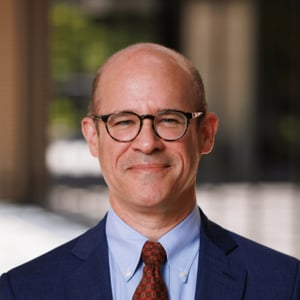
Professor of Law, Stanford Law School
Orin S. Kerr is a Professor of Law at Stanford Law School, where he teaches and writes in the areas of criminal procedure and computer crime law. Kerr earned mechanical engineering degrees from Princeton University and Stanford University before graduating with a J.D. from Harvard Law School. He is a former law clerk to Justice Anthony M. Kennedy at the United States Supreme Court and Judge Leonard I. Garth of the U.S. Court of Appeals for the Third Circuit.
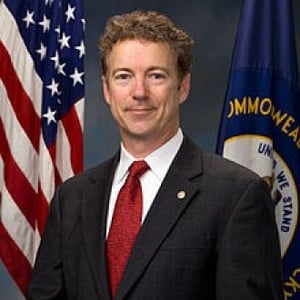
United States Senator, Kentucky
U.S. Senator Rand Paul, M.D. was elected to represent Kentucky in the United States Senate in 2010. He serves on the Senate Foreign Relations Committee, the Health, Education, Labor and Pensions Committee, the Homeland Security and Government Affairs Committee, and the Small Business and Entrepreneurship Committee.
Dr. Paul is the third of five children born to Carol and Ron Paul. He grew up in Lake Jackson, Tex., and attended Baylor University. He graduated from Duke Medical School in 1988. Dr. Paul completed a general surgery internship at Georgia Baptist Medical Center in Atlanta, Ga., and completed his residency in ophthalmology at Duke University Medical Center. Upon completion of his training in 1993, Dr. Paul and Kelley moved to Bowling Green to start their family and begin his ophthalmology practice. Dr. Paul has been married for 25 years to Kelley Ashby Paul of Russellville, Ky., and they have three sons together: William, 22; Duncan, 19; and Robert, 16.

2017 National Lawyers Convention
Administrative Agencies and the Regulatory State
Washington, DCTopics
NLC: Financial Regulation: The Apotheosis of the Administrative State?
Concern with “the regulatory state” often focuses on reforms to formal institutional structures and legal...
Topics
NLC: Has the Administrative State Usurped the Role of the Federal Courts in Innovation Disputes?
In 2011, Congress passed the America Invents Act — the broadest reform of the patent...
Debate: Statutory Authority and Sexual Assault
Renée Lettow Lerner, Wendy Murphy, Stuart S. Taylor
On Wednesday, October 4th at noon in the Moot Court Room the GW Federalist Society...
The Principled Scalia: A Liberal Friend on Scalia’s Liberal Opinions
Stephen B. Presser
A Review of: The Unexpected Scalia: A Conservative Justice’s Liberal Opinions, by David M. Dorsen...
The Unexpected Scalia: A Conservative Justice's Liberal Opinions
David M. Dorsen, Michael D. Ramsey, Alan B. Morrison
Antonin Scalia was one of the most important, outspoken, and controversial Justices in the past...
The Unexpected Scalia: A Conservative Justice's Liberal Opinions
Practice Groups Teleforum
TeleforumDebate: Statutory Authority and Sexual Assault
The Role of Congress with Respect to Executive Agencies
Washington, DCPolitics and Federal Antitrust Enforcement: Strangers or Bedfellows? - Podcast
Jon Leibowitz, William Kovacic, Seth Bloom, Tad Lipsky, Richard M. Steuer
Some antitrust lawyers often say the federal government’s decisions about which mergers to challenge, which...
A Conversation with Senator Rand Paul
George Washington Student Chapter
Washington, WA