
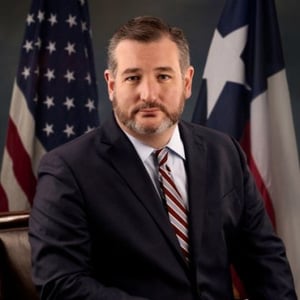
United States Senator, Texas
Ted Cruz represents 28 million Texans in the U.S. Senate as a passionate fighter for limited government and economic growth. He has authored 39 legislative measures signed into law. Recent victories include expanding 529 college savings accounts to allow parents to save for K–12 public, private, and religious education, leading the effort to repeal Obamacare’s individual mandate, imposing sanctions on terrorists who use civilians as human shields, designating North Korea as a state sponsor of terrorism, reauthorizing and reforming NASA, ensuring the availability of additional records to help solve civil rights cold cases, supporting thousands of Texas jobs, and leading the fight to confirm principled constitutionalists to our courts.
Senator Cruz is a graduate of Princeton University and Harvard Law School, a former law clerk to Chief Justice William Rehnquist, and former solicitor general of Texas. He has argued nine cases before the Supreme Court. In November of 2018, he was re-elected to the Senate by the people of Texas.

George C. Dix Professor in Constitutional Law, Northwestern University Pritzker School of Law
John O. McGinnis is a graduate of Harvard College and Harvard Law School where he was an editor of the Harvard Law Review. He also has an MA degree from Balliol College, Oxford, in philosophy and theology. Professor McGinnis clerked on the U.S. Court of Appeals for the District of Columbia. From 1987 to 1991, he was deputy assistant attorney general in the Office of Legal Counsel at the Department of Justice. He is the author of Accelerating Democracy: Transforming Government Through Technology (Princeton 2013) and Originalism and the Good Constitution (Harvard 2013) (with M. Rappaport). He is a past winner of the Paul Bator award given by the Federalist Society to an outstanding academic under 40. He has been listed by the United States on the roster of panelists who may be called upon to decide World Trade Organization Disputes.
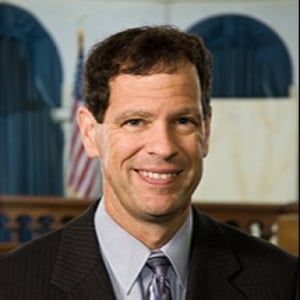
Warren Distinguished Professor of Law, University of San Diego School of Law
Michael D. Ramsey is Warren Distinguished Professor of Law at the University of San Diego School of Law, where he teaches and writes in the areas of Constitutional Law, Foreign Relations Law and International Law. He is the author of The Constitution’s Text in Foreign Affairs (Harvard University Press), co-editor of International Law in the U.S. Supreme Court: Continuity and Change (Cambridge University Press), and co-author of two casebooks, Transnational Law and Practice (2d ed., Aspen) and International Business Transactions: A Problem-Oriented Coursebook (14th ed., West). His scholarly articles have appeared in publications such as the Yale Law Journal, the University of Chicago Law Review, the Georgetown Law Journal and the American Journal of International Law. He received his B.A. magna cum laude from Dartmouth College and his J.D. summa cum laude from Stanford Law School. Prior to teaching, he served as a judicial clerk for Judge J. Clifford Wallace of the United States Court of Appeals for the Ninth Circuit and for Justice Antonin Scalia of the United States Supreme Court, and practiced law with the law firm of Latham & Watkins, where he specialized in international finance and investment. He has taught as a visiting professor at the University of California, San Diego, in the Department of Political Science and at the University of Paris – Sorbonne, in the Department of Comparative Law.
Professor of Law, University of Georgia School of Law
Peter B. "Bo" Rutledge is a full professor whose teaching and research interests include international dispute resolution, arbitration, international business transactions and the Supreme Court.
He is the author of the forthcoming book Arbitration and the Constitution and co-author with Gary Born of the book International Civil Litigation in the United States. His works have been published by Yale University Press, Oxford University Press and Cambridge University Press, and his articles have appeared in a diverse array of journals such as the University of Chicago Law Review, the Vanderbilt Law Review and the Journal of International Arbitration. He also regularly advises parties on matters of international dispute resolution (litigation and arbitration).
In 2008, the Supreme Court appointed Rutledge to brief and argue the case of Irizarry v. United States as amicus curiae in defense of the judgment below. He subsequently won the case, joining the ranks of a select few advocates who have successfully defended a judgment below when the government refused to do so. A former law clerk at the U.S. Supreme Court for Justice Clarence Thomas and the U.S. Court of Appeals for the 4th Circuit for Chief Judge J. Harvie Wilkinson III, Rutledge regularly files briefs and advises lawyers in matters before the Supreme Court and lower courts.
Given his interest in international dispute resolution, Rutledge has taught and spoken at numerous foreign universities. In 2010-11, he was a Fulbright Professor at the Institut für Zivilverfahrensrecht at the University of Vienna Law School. Foreign universities where Rutledge has been invited to speak include Oxford University, Cambridge University, the University of Mainz, Jagellonian University, Stockholm University and the University of Oslo.
An accomplished teacher, he has received teaching awards in the majority of his years in the legal academy, including most recently the 2009 John C. O'Byrne Award for Furthering Faculty-Student Relations.
In addition to his academic and legal work, Rutledge remains active in professional circles. He regularly advises parties on matters of international dispute resolution and has served as an expert in both litigation and arbitration. He is a listed arbitrator with the London Court of International Arbitration and the Vienna International Arbitral Center. He has testified on several occasions before Congress on pending arbitration legislation, has regularly spoken to broadcast and print media, and has given speeches to a range of professional audiences on matters such as international dispute resolution, arbitration and the Supreme Court. He currently serves as part of the American Arbitration Association's delegation to the UNCITRAL Working Group on Arbitration and is a member of the Academic Council of the Institute for Transnational Arbitration.
Before entering the teaching academy, Rutledge practiced at Wilmer Cutler & Pickering (now Wilmer Cutler Pickering Hale and Dorr), where his practice included international dispute resolution and Supreme Court matters, and at Freshfields Bruckhaus Deringer, where his practice concentrated on international arbitration.
He holds a B.A. magna cum laude from Harvard University, an M.Litt. in Applied Ethics from the University of Aberdeen (Scotland) and a J.D. with high honors from the University of Chicago, where he served as executive editor of The University of Chicago Law Review and was inducted into the Order of the Coif.
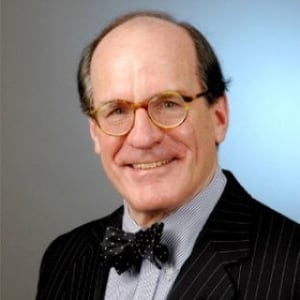
Retired Partner, Sullivan & Cromwell LLP
Upon his resignation as the Legal Adviser of the U.S. Department of State in January 1993, Mr. Williamson rejoined Sullivan & Cromwell's Washington, D.C. office. He originally joined the Firm in 1964 after graduating from New York University School of Law, where he was an editor of the Law Review. He became a partner of the Firm in 1971, moved to its London office in 1976, returned to its New York office in 1979, moved to its Washington, D.C. office in 1988 and became Of Counsel in 2007. In 2018, he retired from the firm.
At Sullivan & Cromwell, Mr. Williamson engaged in a broad and wide-ranging domestic and international financing and transactions practice, as well as advice with respect to corporate governance issues, the United States’ economic sanctions laws, the ethics rules applicable to government officials and the immunities of foreign sovereigns and international organizations.
Mr. Williamson has been an active participant on panels and other forums involving public international law and national security issues, such as the domestic and international bases for the use of force, the role of the United States with respect to the International Criminal Court, the law of the sea and the application of international legal principles in the war against terrorism.
Mr. Williamson is a member of the Council on Foreign Relations and a former member of the Executive Council of the American Society of International Law, the Executive Committees of the Business and Advisory Committee (BIAC) to the OECD and the U.S. Council for International Business, the United States Advisory Board of NTT DoCoMo, Inc. and the Board of Directors of Triton Oil & Gas Limited.
Mr. Williamson has served on the Boards of Regents and Trustees of the University of the South and as chair of the Board of Regents. He is currently a member of the Board of Directors of the American Council of Trustees and Alumni, a higher education watchdog.
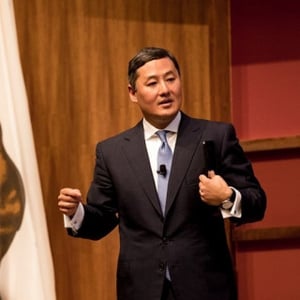
Emanuel S. Heller Professor of Law, University of California at Berkeley; Thomas Smith Senior Research Fellow, Civitas Institute, University of Texas at Austin
John Yoo is the Emanuel Heller Professor of Law at the University of California at Berkeley. He is also the Thomas Smith Senior Research Fellow, Civitas Institute, at the University of Texas at Austin. He is also a Nonresident Senior Fellow at the American Enterprise Institute.
His most recent book, The Politically Incorrect Guide to the Supreme Court, co-authored with Robert Delahunty, was published in 2023. Professor Yoo’s other books include Defender-in-Chief: Trump’s Fight for Presidential Power; Striking Power: How Cyber, Robots, and Space Weapons Change the Rules for War; Point of Attack: Preventive War, International Law, and Global Welfare; and Crisis and Command: A History of Executive Power from George Washington to George Bush.
He is a co-author of volumes 1 and 2 of R. Rossum, G. Tarr, V. Munoz & J. Yoo American Constitution Law (Routledge, 2026), and a co-editor of the eight-volume series on the 250th anniversary of the American Revolution, We Hold These Truths, with Yuval Levin and Adam White of the American Enterprise Institute.
Professor Yoo has published more than 100 articles in academic journals on subjects including national security, constitutional law, international law, and the Supreme Court. He also regularly contributes to the editorial pages of the Wall Street Journal, New York Times, Washington Post, Los Angeles Times, and National Review, among others.
Professor Yoo has served in all three branches of government. He was an official in the U.S. Department of Justice, where he worked on national security and terrorism issues after the 9/11 attacks. He served as general counsel of the U.S. Senate Judiciary Committee. He has been a law clerk for Supreme Court Justice Clarence Thomas and federal appeals Judge Laurence Silberman. He has been a visiting professor at the University of Texas at Austin’s School of Civic Leadership, Seoul National University, the Interdisciplinary Center Herzliya, Keio University, Trento University, the University of Chicago, and the Free University of Amsterdam.
Professor Yoo supervises the Public Law and Policy Program and the California Constitution Center. He also serves on the boards of Founding Forward, the Washington Legal Foundation, the Pacific Legal Foundation, the Ulysses Grant Institute, the Federalist Society’s Separation of Powers and Federalism Division, the Universidad Cientifica del Sur Law School, and the Asia-Pacific Law Institute at Seoul National University. He is a winner of the Federalist Society’s Paul Bator award and the Heritage Foundation’s Edwin Meese III Originalism Lectureship.
Professor Yoo graduated from Yale Law School and summa cum laude from Harvard College.

Laurence A. Tisch Professor of Law and Director, Classical Liberal Institute, New York University School of Law; Director, Classical Liberal Institute, Civitas Institute University of Texas at Austin
Richard A. Epstein is the inaugural Laurence A. Tisch Professor of Law at NYU School of Law. Prior to his joining the faculty, he was a visiting law professor at NYU from 2007 through 2009. He served as the Peter and Kirstin Bedford Senior Fellow at the Hoover Institution from 2000 to 2024. Since 2024 to the present he is a senior lecturer at the Civitas Institute at the University of Texas—Austin. Epstein is also the James Parker Hall Distinguished Service Professor of Law Emeritus and a senior lecturer at the University of Chicago. His initial law school appointment was at the University of Southern California from 1968 to 1972. Epstein received an LL.D., h.c. from the University of Ghent, 2003. He has been a member of the American Academy of Arts and Sciences since 1985 and was a Senior Fellow of the Center for Clinical Medical Ethics at the University of Chicago Division of Biological Sciences, also from 1983. to 2022 He served as editor of the Journal of Legal Studies from 1981 to 1991, and of the Journal of Law and Economics from 1991-2001. From 2001 to 2010 he was a director of the John M. Olin Program in Law and Economics at the University of Chicago.
His newest book, The Myth of Birthright Citizenship: What the Fourteenth Amendment Really Says was published in 2026 (Encounter Books). Prior to that he has published many books including, The Dubious Morality of the Modern Administrative State (Roman & Littlefield 2020).Earlier he published th Classical Liberal Constitution: The Uncertain Quest for Limited Government (Harvard 2014) iHis previous books include Design for Liberty: Private Property, Public Administration and the Rule of Law (Harvard 2011); The Case Against the Employee Free Choice Act (Hoover 2009); Supreme Neglect: How to Revive the Constitutional Protection of Property Rights (Oxford 2008); Antitrust Decrees in Theory and Practice: Why Less is More (AEI 2007); Overdose: How Excessive Government Regulation Stifles Pharmaceutical Innovation (Yale University Press. 2006); How Progressives Rewrote the Constitution (Cato 2006); Cases and Materials on Torts (Aspen Law & Business; 8th ed. 2004); Skepticism and Freedom: A Modern Case for Classical Liberalism (University of Chicago, 2003); Torts (Aspen Law & Business 1999); Principles for a Free Society: Reconciling Individual Liberty with the Common Good (Perseus Books, 1998): Mortal Peril: Our Inalienable Rights to Health Care (Addison-Wesley, 1997); Simple Rules for a Complex World (Harvard, 1995); Bargaining With the State (Princeton, 1993); Forbidden Grounds: The Case Against Employment Discrimination Laws (Harvard , 1992); Takings: Private Property and the Power of Eminent Domain (Harvard, 1985); and Modern Products Liability Law (Greenwood Press, 1980). He has also edited(with Catherine M. Sharkey) Cases and Materials on the Law of Torts (10th edition 2012).
Professor Epstein has written numerous articles on a wide range of legal and interdisciplinary subjects. He has taught courses in administrative law, antitrust law, civil procedure, communications, constitutional law, contracts, corporations, criminal law, employment discrimination law, environmental law, food and drug law health law and policy, legal history, labor law, property, real estate development and finance, jurisprudence, labor law; land use planning, patents, individual, estate and corporate taxation, Roman Law; torts, and workers' compensation.
Professor Epstein also writes a regular column for Civitas Institute, which also sponsors his podcast, The Libertarian with Charles C.W. Cooke, and Law Talk, with Cooke and John Yoo. He also does a podcast with John Batchelor. And appears regularly on the Freedom File with Judge Andrew Napolitano.
Jacob E. Davis and Jacob E. Davis II Chair in Law, Moritz Colleg, The Ohio State University
Professor Shane came to Ohio State in 2003 from Carnegie Mellon University's H. John Heinz III School of Public Policy and Management. He is an internationally recognized scholar in administrative law, with a specialty in separation of powers law, and has co-authored leading casebooks on each subject. He has served on the faculty at the University of Iowa College of Law and was dean at the University of Pittsburgh School of Law.
In addition to his outstanding law teaching and scholarship, Professor Shane has received a National Science Foundation grant for interdisciplinary study related to cyberspace and democracy. At Ohio State, he provides strong leadership in interdisciplinary scholarship and teaching.
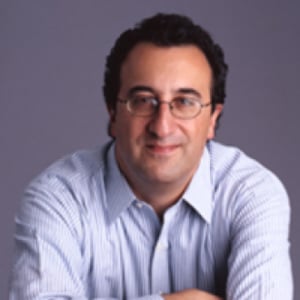
Professor from Practice, Georgetown University Law Center
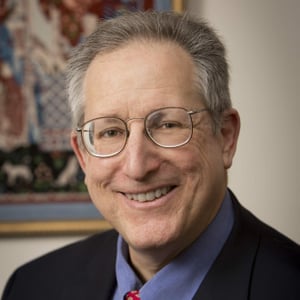
Knight Professor of Constitutional Law and the First Amendment, Yale Law School
Jack M. Balkin is Knight Professor of Constitutional Law and the First Amendment at Yale Law School. He is the founder and director of Yale’s Information Society Project, an interdisciplinary center that studies law and new information technologies. He also directs the Abrams Institute for Freedom of Expression, and the Knight Law and Media Program at Yale. Professor Balkin is a member of the American Academy of Arts and Sciences, and founded and edits the group blog Balkinization (http://balkin.blogspot.com/). He is the author of over 100 articles and the author or editor of eleven books. His scholarship ranges over many different subjects, including constitutional theory, technology and Internet law, freedom of speech, jurisprudence, cultural evolution, the theory of ideology, and musical and legal interpretation. His most recent books are Democracy and Dysfunction (University of Chicago Press, 2019)(with Sanford Levinson); Living Originalism (Harvard, Belknap Press, 2011), and Constitutional Redemption: Political Faith in an Unjust World (Harvard University Press 2011).
Founding Partner, Cooper & Kirk PLLC
Charles J. Cooper is a founding member and the chairman of Cooper & Kirk, PLLC, “one of the Nation’s leading litigation boutiques” (Above The Law 2017). The National Law Journal recently wrote that Mr. Cooper’s “brilliant legal career has so far spanned five decades and thrust Cooper into the spotlight in some of the most historic moments of the country’s modern history.” He has argued nine cases before the United States Supreme Court and scores of appeals before each of the 13 federal courts of appeals and several state supreme courts. He has been lead trial counsel in numerous complex, weeks-long trials in federal courts throughout the country. Named by the National Law Journal as one of the 10 best litigators in Washington D.C., Mr. Cooper’s work has been reported in numerous press accounts, and he has been called a “powerhouse attorney” (Fortune 2015), “a hard-nosed litigator” (Washington Post 2017), and “one of the country’s most in-demand civil litigators and a Washington legal institution unto himself” (The American Spectator 2014).
After graduating from the University of Alabama School of Law in 1977, where he ranked first in his class and served as Editor-in-Chief of the Alabama Law Review, Mr. Cooper began his career as a law clerk to Judge Paul Roney on the Fifth Circuit Court of Appeals and to Justice William H. Rehnquist in 1978–79. He then practiced law in Atlanta for two years before joining the Civil Rights Division of the U.S. Department of Justice, where he served as the Deputy Assistant Attorney General in charge of, among other things, appellate matters. In 1985 President Reagan appointed him to the position of Assistant Attorney General for the Office of Legal Counsel, which is the office responsible for providing legal opinions and advice to the White House, the Attorney General, and Executive Branch departments and agencies on issues covering the full spectrum of federal constitutional, statutory, and regulatory law.
In 1988 he returned to private practice as a litigation partner in the Washington, D.C. office of McGuireWoods. From 1990 until the founding of Cooper & Kirk in 1996, he was a partner at Shaw Pittman (now Pillsbury Winthrop Shaw Pittman), where he headed the firm’s Constitutional and Government Litigation Group.
Mr. Cooper has represented a wide range of public and private clients in highly complex constitutional, civil rights, antitrust, healthcare, banking, intellectual property, elections, campaign finance, administrative, commercial, and government contract cases. He has led trial teams in cases that have won judgments and settlements valued in the billions of dollars and that have established ground-breaking constitutional precedents.
Much of Mr. Cooper’s practice has involved representing high-profile clients in nationally prominent matters, including: the State of Florida in a First Amendment suit brought by the Disney Company concerning its autonomous regulatory authority over its Disney World property; the Commonwealth of Virginia in a suit seeking to enjoin the removal of noncitizens from its voter rolls; 38 members of the Duke Lacrosse team falsely accused of rape by officials of Duke University and the City of Durham; Harper Lee in a copyright dispute with the heirs of Gregory Peck; high-ranking former government officials such as former Attorneys General John Ashcroft, Jeff Sessions, and William Barr, and Ambassador John Bolton; several Governors and United States Senators; over 100 Members of Congress; and many state, territorial, and local government bodies and officials. He has also represented and advised government officials and public figures in connection with sensitive private issues that needed to be, and were, resolved discreetly without becoming matters of public record.
In 1998 Chief Justice Rehnquist appointed Mr. Cooper to the Standing Committee on Rules of Practice and Procedure of the Judicial Conference of the United States, where he served for three terms. He also served as a Public Member, appointed by President George H.W. Bush, of the National Commission on Judicial Discipline and Removal. He is a member of numerous professional associations, including the American Law Institute (since 1993) and the American Academy of Appellate Lawyers (since 1996). He is also an active member of the Federalist Society and the Republican National Lawyers Association, which in 2010 named him Republican Lawyer of the Year and in 2016 honored him with its Edwin Meese III Award.
Mr. Cooper has published scores of articles and spoken extensively on constitutional and legal policy topics. He has appeared before congressional committees on 26 occasions, testifying as an expert on a wide variety of legal issues, including the Chevron doctrine of judicial deference to administrative agencies, the diversity of citizenship jurisdiction of federal courts, statehood bills for Puerto Rico and the District of Columbia, and the impeachment of President Clinton.
Robert S. Stevens Professor of Law, Cornell Law School
Michael C. Dorf, the Robert S. Stevens Professor of Law at Cornell Law School, has been teaching law since 1992. He has authored or co-authored six books and over one hundred scholarly articles and essays for law journals and peer-reviewed science and social science journals. He also frequently writes for non-lawyers. In addition to occasional contributions to The New York Times, USA Today, CNN.com, The Los Angeles Times, and other wide-circulation publications, Professor Dorf has been writing a bi-weekly column since 2000 and publishes a popular blog, Dorf on Law. He received his undergraduate and law degrees from Harvard. After law school, Dorf served as a law clerk for Judge Stephen Reinhardt of the U.S. Court of Appeals for the Ninth Circuit and then for Justice Anthony M. Kennedy of the U.S. Supreme Court. He has worked with several law firms and maintains an active pro bono practice mostly consisting of writing Supreme Court briefs. Before joining the Cornell faculty, Professor Dorf taught at Rutgers-Camden Law School for three years and at Columbia Law School for thirteen years.
Staff Attorney, National Right To Work Legal Defense Foundation
Glenn Taubman is a Staff Attorney for the National Right to Work Legal Defense and Education Foundation (1982 to the present). He was a Law Clerk for Senior Circuit Judge Warren L. Jones, U.S. Court of Appeals for the Fifth and Eleventh Circuits, Jacksonville, Florida, from 1981-82, and a Staff Attorney for the U.S. District Court, Middle District of Florida, Jacksonville, Florida, from 1980-81. His Bar Admissions include: Georgia, 1980; New York, 1981; U.S. Supreme Court, 1983; District of Columbia, 1985. He regularly appears before the National Labor Relations Board and various federal courts, representing individual employees only.
He is the author of "'Neutrality Agreements' and the Destruction of Employees' Section 7 Rights" (2005) and co-author of "Union Discipline and Employee Rights," a monograph published by the National Right to Work Foundation.
A partial listing of his reported cases includes: Lucas v. NLRB, 333 F.3d 927 (9th Cir. 2003);Penrod v. NLRB, 203 F.3d 41 (D.C. Cir. 2000);Production Workers v. NLRB, 161 F.3d 1047 (7th Cir. 1998);Food & Commercial Workers Local 951 v. Mulder, 31 F.3d 365 (6th Cir. 1994);NLRB v. Office Employees Local 2, 902 F.2d 1164 (4th Cir. 1990);Tierney v. City of Toledo, 917 F.2d 927 (6th Cir. 1990);Lowary v. Lexington Local Board of Education, 902 F.2d 422 (6th Cir. 1990);Lowary v. Lexington Local Board of Education, 854 F.2d 131 (6th Cir. 1988);Tierney v. City of Toledo, 824 F.2d 1497 (6th Cir. 1987);Masiello v. US Airways, Inc., 113 F. Supp. 2d 870 (W.D.N.C. 2000);Jordan v. City of Bucyrus, 739 F. Supp. 1124 (1990),further proceedings, 754 F. Supp. 554 (N.D. Ohio 1991);Dana Corp., 341 N.L.R.B. No. 150, 2004 WL 1329345 (June 7, 2004);California Saw & Knife Works, 320 N.L.R.B. 224 (1995),enforced, 133 F.3d 1012 (7th Cir. 1998).
Deputy General Counsel, Local 32 BJ, Service Employees International Union
Brent Garren is a Deputy General Counsel of SEIU Local 32 BJ, the 145,000 member property services local in New York and the eastern seaboard. He worked for the International Ladies’ Garment Workers Union, then UNITE, UNITE HERE and Workers United prior to Local 32 BJ, including serving as General Counsel for UNITE HERE and later Workers United.
Mr. Garren’s career has focused on the National Labor Relations Act. He is an Editor-In-Chief of How to Take a Case Before the NLRB, the leading text on NLRB procedure. He is a member of and past union co-chair of the ABA’s subcommittee on Practice and Procedure under the NLRA, part of the Labor and Employment Law Section. He has spoken about and written on the NLRA, including on remedies, voluntary recognition and NLRB jurisdiction.
He has been involved in international labor solidarity activities, including representing U.S. labor to the International Labor Organization, dealing with protection of home workers and protection of contracted labor.
He was graduated by Wayne State School of Law, summa cum laude.
Counsel, The Judicial Confirmation Network
Wendy Long is legal counsel to the Judicial Confirmation Network. Until March 2005, she was a litigation partner in the New York office of Kirkland & Ellis LLP. Wendy was a law clerk to U.S. Supreme Court Justice Clarence Thomas and to Judge Ralph Winter of the U.S. Court of Appeals for the Second Circuit in New York. She is a graduate of Northwestern University School of Law, cum laude and Order of the Coif, where she was articles editor of the Northwestern University Law Review, and of Dartmouth College. She previously served as a press secretary in the U.S. Senate, for former U.S. Senator Bill Armstrong (R-Colo.) and former U.S. Senator Gordon Humphrey (R-N.H.).
Vice President and Legal Director, Legal Momentum
Founder, President, and General Counsel, Wisconsin Institute for Law & Liberty
Rick Esenberg is the founder and current President and General Counsel of the Wisconsin Institute for Law & Liberty, a rapidly expanding law and policy organization headquartered in Milwaukee. Under Rick’s leadership, WILL has grown into one of the more active state-based think tanks and litigation centers in the country. Rick is a frequent litigator in state and federal courts and nationally recognized scholar and commentator on constitutional law, particularly the First Amendment’s guarantees of freedom of speech and religion. He is one of the leading experts on the Wisconsin Constitution and a frequent advocate before the Wisconsin Supreme Court. Rick’s work seeks to advance the rule of law and individual liberty, formed by a robust civil society that forms individual and community character, preserving the wisdom of the past and an openness to the future.
Rick’s commentary has been featured in such outlets as the Wall Street Journal, National Review, Weekly Standard, Real Clear Politics, Milwaukee Journal Sentinel and Washington Examiner. Formerly on the faculty of Marquette University Law School, his scholarship has appeared in such publications as the Harvard Law Review, Harvard Journal of Law & Public Policy, Wake Forest Law Review and William & Mary Bill of Rights Journal. Back when they were a thing, he operated a blog called Shark and Shepherd where he tried to suggest something about the duality of man – “the Jungian thing.”
Rick holds a J.D., magna cum laude, from Harvard Law School, where he was an editor of the Harvard Law Review, and a B.A., summa cum laude, in political science from the University of Wisconsin-Milwaukee. In addition to service on the Marquette Faculty, he was formerly a litigation partner at Foley & Lardner and General Counsel of an international manufacturing firm headquartered in Wisconsin. He lives in Mequon Wisconsin with his wife Karen, golden retrievers Cooper and Riley and more books than he can find places for.
Director of Litigation and Senior Attorney, Hamilton Lincoln Law Institute
Theodore H. Frank is director at the Hamilton Lincoln Law Institute and the Center for Class Action Fairness. Frank founded and ran CCAF as a non-profit, public interest law firm in 2009.
Frank has won several landmark appeals and tens of millions of dollars for consumers and other plaintiffs through his class action work. Adam Liptak of The New York Times calls Frank “the leading critic of abusive class action settlements” and the American Lawyer Litigation Daily referred to him as “the indefatigable scourge of underwhelming class action settlements.”
Previously, Frank clerked for the Honorable Frank H. Easterbrook on the Seventh Circuit Court of Appeals, and was a litigator at firms in Washington and Los Angeles and a resident fellow at the American Enterprise Institute. Frank is a frequent public speaker and has testified before Congress multiple times on legal issues. He has been profiled by The Wall Street Journal, Forbes, GQ, and the ABA Journal, among other publications.
In 2008, Frank was elected to membership in the American Law Institute. He also serves on the Executive Committee of the Federalist Society Litigation Practice Group. Frank graduated from The University of Chicago Law School in 1994 with high honors and as a member of the Order of the Coif and the Law Review. He is a member of the District of Columbia Bar and the state bars of California and Illinois.
Partner, Skadden, Arps, Slate
John Beisner is the leader of Skadden’s Mass Torts, Insurance and Consumer Litigation Group. He focuses on the defense of purported class actions, mass tort matters and other complex civil litigation in both federal and state courts. He also regularly handles appellate litigations and has appeared in matters before the U.S. Supreme Court. Over the past 25 years, he has defended major U.S. and international corporations in more than 600 purported class actions filed in federal courts and in 40 state courts at both the trial and appellate levels. Those class actions have involved a wide variety of subjects, including antitrust/unfair competition, consumer fraud, RICO, ERISA, employment discrimination, environmental issues, product-related matters and securities. He also has handled numerous matters before the Judicial Panel on multidistrict litigation, as well as proceedings before various federal and state administrative agencies, particularly the National Highway Traffic Safety Administration and the Consumer Product Safety Commission.
Mr. Beisner has advised on numerous high-visibility corporate crisis situations, including congressional hearings, federal agency investigations, state attorneys general inquiries and General Accounting Office reviews. Among others, he represented Merck in its Vioxx litigation. He also negotiated a settlement with state attorneys general regarding the Countrywide Finance/Bank of America mortgage lending practices investigation, resulting in a creative loan modification program intended to help more than 400,000 families maintain ownership of their homes. He was named “Litigator of the Week” by The American Lawyer for his role in this case.
Mr. Beisner is a frequent writer and lecturer on class action and complex litigation issues. In 2013 he received the Burton Award for Legal Achievement, which recognizes excellence in legal scholarship. Mr. Beisner also has been an active participant in litigation reform initiatives before Congress, state legislatures and judicial committees. He has testified numerous times on class action and claims aggregation issues before the U.S. Senate and House Judiciary Committees (particularly with respect to the Class Action Fairness Act of 2005) and before state legislative committees. For his integral role in crafting the Class Action Fairness Act, Mr. Beisner was recognized with the 2011 Research and Policy Award by The U.S. Chamber Institute for Legal Reform.
Mr. Beisner repeatedly has been selected for inclusion, and is in the top tier, inChambers USA: America's Leading Lawyers for Business in the area of products liability, and he also is listed in The Best Lawyers in America, The Legal 500 U.S., Who’s Who Legal and Lawdragon 500 Leading Lawyers in America. Mr. Beisner was profiled in an article by The American Lawyer that named Skadden as a finalist in the products liability section of its Litigation Department of the Year contest (January 2012). He was named one of the 2013 “BTI Client Service All-Stars” by The BTI Consulting Group for providing outstanding client service. He also was named one of Law360’s MVPs of 2011 in the products liability category, which recognizes those who have raised the bar in corporate law throughout the year. Law360 also profiled Mr. Beisner in two articles that named Skadden as a “Product Liability Group Of The Year” and“Class Action Group Of The Year” for 2010.
A list of the numerous published federal and state court decisions in which Mr. Beisner has played a role is available on request.
Partner, Consovoy McCarthy PLLC
Thomas R. McCarthy is a partner at Consovoy McCarthy Park PLLC. Mr. McCarthy assists clients with a wide array of issues in federal district and appellate courts across the country. He frequently represents clients in complex litigation involving diverse legal issues arising under the First Amendment, the Equal Protection Clause, the Commerce Clause, and other provisions of the U.S. Constitution. Mr. McCarthy also represents clients in litigation matters involving numerous federal statutes such as the Administrative Procedure Act, the Federal Arbitration Act, the Sherman Act, the Communications Act, the Voting Rights Act, and the Patent Act. He also represents clients with regulatory matters before the Federal Communications Commission, the Federal Trade Commission, and various other federal agencies.
Mr. McCarthy is a former law clerk to Judge David B. Sentelle of the United States Court of Appeals for the D.C. Circuit, and Judge Frank W. Bullock, Jr. of the United States District Court for the Middle District of North Carolina. Since 2011, McCarthy has been the co-director of the George Mason University School of Law Supreme Court Clinic. He previously taught an advanced constitutional law seminar at Mason Law.
Mr. McCarthy earned his BS from the University of Notre Dame, where he was a Notre Dame Scholar, and his JD magna cum laude from George Mason University School of Law. Mr. McCarthy is a member of the Virginia and District of Columbia bars.

Medellin v. Texas: Presidential Power and International Tribunals
Co-Sponsored by the American Enterprise Institute
Washington, DCThe Advice and Consent of the Senate: Trends, Issues, and Options for Federal Judicial Nominations
Hartford, ConnecticutExecutive Privilege
Richard A. Epstein, Peter M. Shane, Martin S. Lederman, Jack M. Balkin, Charles J. Cooper, Michael C. Dorf
Last month, the House and Senate Judiciary Committees issued five congressional subpoenas directing the production...
Baltimore Chapter Program
Baltimore, MarylandEmployee Free Choice Act Debate
Glenn Taubman, Brent Garren
The U.S. House of Representatives has passed, the U.S. Senate will consider, and the Bush...
Abortion and the Courts
Wendy Long, Jennifer G. Brown
The Supreme Court has upheld the constitutionality of the Partial-Birth Abortion Ban Act, passed by...
A Court Unbound? The Recent Jurisprudence of the Wisconsin Supreme Court
Rick M. Esenberg
Public commentary about the Wisconsin Supreme Court as "activist" began in the wake of the...
Class Action Fairness Act: Two Years Later - Event Audio
Michael D. Hausfeld, Charles E. Stuckey, Theodore "Ted" Frank, John H. Beisner, John J. Stoia
On February 18, 2005 President Bush signed the Class Action Fairness- Act into law. Two...
Bar Watch Bulletin February 10, 2007
Young Lawyers Division Assembly On Saturday morning, the Young Lawyers Division Assembly (YLDA) met to debate...
NSA Surveillance: The Litigation and its Implications
Thomas R. McCarthy
On December 16, 2005, the New York Times reported that President Bush had authorized the...