
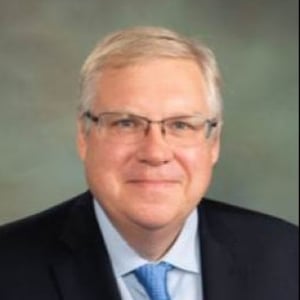
President and General Counsel, Public Interest Legal Foundation
J. Christian Adams is the President and General Counsel of the Public Interest Legal Foundation. He served from 2005 to 2010 in the Voting Section at the United States Department of Justice Voting Section. President Trump appointed Adams to the Presidential Advisory Commission on Election Integrity. President Trump also appointed Adams as a Commissioner to the United States Commission on Civil Rights where he also now serves with a term through 2025. He has been involved in election law lawsuits in 33 states and the territory of Guam. He has represented multiple presidential campaigns in election litigation. He has a law degree from the University of South Carolina School of Law. He is a member of the South Carolina and Virginia Bars.
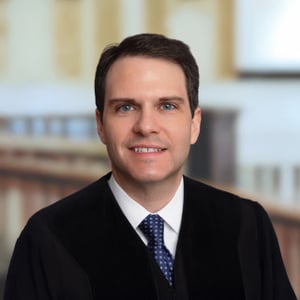
Associate Justice, Arkansas Supreme Court
Nicholas Bronni was appointed to the Arkansas Supreme Court by Governor Sarah Huckabee Sanders on December 20, 2024, and he began his service on January 1, 2025.
Before being appointed to the bench, Justice Bronni served as the Solicitor General of Arkansas. In that role, he successfully argued two cases in the United States Supreme Court: Delaware v. Pennsylvania, 598 U.S. 115 (2023), an original jurisdiction case concerning unclaimed property; and Rutledge v. PCMA, 592 U.S. 80 (2020), an ERISA preemption case. Justice Bronni also successfully argued numerous cases before federal and state appellate courts, including Arkansas Times v. Waldrip, 37 F.4th 1386 (8th Cir. 2022) (en banc), which upheld Arkansas's law barring state contractors from boycotting Israel; and Arkansas State Conf. NAACP v. Arkansas Bd. of Apportionment, 86 F.4th 1204 (8th Cir. 2023), a landmark case holding that Section 2 of the Voting Rights Act is not privately enforceable. As Solicitor General, Justice Bronni received the National Association of Attorneys General's 2024 Best Supreme Court Brief Award for his multistate amicus brief in Muldrow v. City of St. Louis, Missouri, 601 U.S. 346 (2024).
Justice Bronni received his law degree with magna cum laude honors from the University of Michigan Law School. At Michigan, he was an editor of the Michigan Law Review and was elected to the Order of the Coif. He received his undergraduate degree, summa cum laude, and with special departmental honors from the Elliott School of International Affairs at the George Washington University.
Prior to returning home to Arkansas, Justice Bronni was a Senior Litigation Counsel with the Appellate Litigation Group at the United States Securities and Exchange Commission. He was also an associate with Gibson Dunn and Crutcher LLP in Washington, DC. Justice Bronni clerked for the Honorable Jay S. Bybee of the United States Court of Appeals for the Ninth Circuit.
Attorney
Maya M. Noronha is a civil rights attorney.
As special counsel for external affairs at First Liberty Institute, Maya worked for the largest legal organization in the United States dedicated exclusively to defending religious liberty for all Americans.
Previously, Maya worked at the U.S. Department of Health and Human Services, as acting chief of staff of the Administration for Children and Families; principal advisor to the Commissioner of the Administration on Children, Youth, and Families; and senior advisor to the Director of the Office for Civil Rights and regulatory reform officer. She provided advice on federal civil rights laws that prohibit discrimination on the basis of conscience, religion, race, color, national origin, limited English proficiency, sex, disability, age, and health information in both health care and human services.
In the area of election law, Maya has advised officials elected to or candidates for President, U.S. Senate, U.S. House of Representatives, Governor, state legislature, city council, and magisterial district judge. She practiced law at Baker Hostetler LLP, where she was on the Political Law and Federal Advocacy Teams, advising clients on voting rights, redistricting, election integrity, campaign finance, financial reporting, ethics compliance, as well as conducting trial and appellate litigation. She also has delivered legislative testimony, planned continuing legal education conferences on election law, and published about voting rights and election administration.
In addition to addressing the Federalist Society, she has delivered remarks to the White House Initiative on Asian American Pacific Islanders, United States Senate, Women in Government Relations, Georgetown University, George Mason University School of Law, the Columbus School of Law at the Catholic University of America, and Arizona State University Cronkite School of Journalism.
Maya is in Phi Beta Kappa, a member of the Alpha Sigma Nu Jesuit Honor Society, and a John Carroll Scholar. Forbes Magazine recognized Maya as one of its 30 under 30 in Law and Public Policy.
She serves concurrently on the Federalist Society’s Free Speech & Election Law Executive Committee and the American Bar Association’s Standing Committee on Election Law.
Education
· J.D., Georgetown University Law Center, 2011
· A.B., Georgetown University, 2005
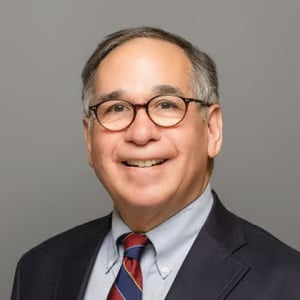
Adjunct Professor of Law; Director, N.Y. Census and Redistricting Institute, New York Law School
Jeff Wice is a Distinguished Adjunct Professor and Senior Fellow at New York Law School where he directs the New York Elections, Census & Redistricting Institute and teaches classes on redistricting, election law, and the census. He is now working on his sixth redistricting cycle. In past years, he served as a redistricting counsel to New York State Legislativbe Leaders and as counsel to three New York City Districting Commissions and to numerous counties and localities across New York and the nation.
During the 2000 census cycle, Professor Wice served as counsel to President Bill Clinton’s members of the U.S. Census Monitoring Board. He is the co-editor/author of the National Conference of State Legislatures' 2020 Redistricting Redbook, a comprehensive handbook on the census and redistricting.
‘’City & State NY’ recognized Professor Wice as one of New York’s “Top 50 Over 50” in 2022 and just last month as a "New York legal trailblazer" for his efforts promoting fair representation and the census. He is a graduate of the George Washington University and Antioch School of Law.

Judge, United States Court of Appeals, Ninth Circuit
Judge Carlos Bea serves as a judge on the United States Court of Appeals for the Ninth Circuit. He received his Bachelor's Degree from Stanford University in 1956 and his J.D. from Stanford Law School in 1958. Judge Bea was born in San Sebastian, Spain, and immigrated with his family to Cuba in 1939. In 1952, he represented Cuba on the Cuban National basketball team in the Helsinki Olympics. Judge Bea became a naturalized citizen of the United States in 1958. He engaged in private practice in San Francisco, principally in the area of civil trials (jury and non-jury), from 1959-75 at Dunne, Phelps & Mills and from 1975-90 at Carlos Bea, A Law Corporation. He taught courses in civil litigation advocacy at Hastings College of Law and Stanford Law School. From 1990 to 2003, Judge Bea served as a judge of the San Francisco Superior Court. He was nominated by President George W. Bush to the United States Court of Appeals for the Ninth Circuit and was confirmed in 2003.
Judge Bea and his wife Louise reside in San Francisco, where they raised their four sons, Sebastian, Alexander, Nicholas, and Dominic.
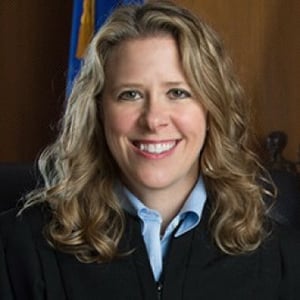
Justice, Wisconsin Supreme Court
Justice Rebecca Grassl Bradley, a Milwaukee native, was elected to the Supreme Court in 2016 after being appointed by Gov. Scott Walker in 2015. She is the first Wisconsin Supreme Court Justice to have served as an intermediate appellate court judge as well as a circuit court judge. Before joining the Supreme Court, Justice Bradley served as a District I Court of Appeals judge (appointed 2015), a Milwaukee County Circuit Court Judge (appointed 2012, elected 2013) and worked as an attorney in private practice (1996-2012), including serving as vice president of legal operations for a global software company.
Justice Bradley graduated from Marquette University in 1993 with an honors B.S. in Business Administration and Business Economics and received her juris doctor from the University of Wisconsin Law School in 1996.
Justice Bradley is a member of the Supreme Court Finance Committee and chairs the Supreme Court Legislative Committee as the Chief Justice's designee. She is a member of the Board of Advisors and past president of the Milwaukee Lawyers Chapter of the Federalist Society; serves on the Wisconsin State Advisory Committee of the U.S. Commission on Civil Rights; and is a member of the Bench and Bar Committee of the Wisconsin State Bar. She previously served on the Board of Governors of the St. Thomas More Lawyers Society; the Wisconsin Juvenile Jury Instructions Committee; the Wisconsin Juvenile Benchbook Committee; and as a member of the Milwaukee Trial Judges Association and the Wisconsin Trial Judges Association. While in private practice, Justice Bradley served as an American Arbitration Association Arbitrator and Chairman of the State Bar Business Law Section.
Justice Bradley's current term expires July 31, 2026.
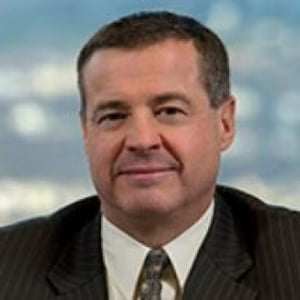
Justice, Supreme Court of Pennsylvania
David N. Wecht is a Pennsylvania Supreme Court justice. Wecht is one of three Democrats elected to the Pennsylvania Supreme Court in November 2015. He was sworn in to office on January 7, 2016, for a term that expires on January 4, 2026.
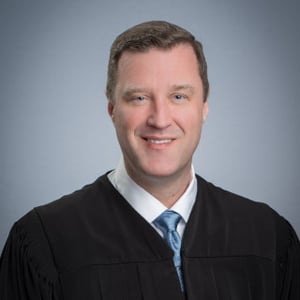
Justice, Texas Supreme Court
Evan Young is a Justice of the Supreme Court of Texas. Governor Greg Abbott, who appointed Young to fill an unexpired term, swore him into office on November 10, 2021. Justice Young was elected to a full term in November 2022.
Young graduated summa cum laude from Duke University in 1999, where he was inducted into Phi Beta Kappa. He was a British Marshall Scholar at Oxford University, where he completed his studies in 2001 and earned a First Class Honours degree in Modern History, focusing on British constitutional history. He earned his law degree from Yale Law School in 2004.
Young then worked as a lawyer in the judicial and executive branches of the federal government. He first served as a law clerk to Judge J. Harvie Wilkinson III of the U.S. Court of Appeals for the Fourth Circuit, and then to Justice Antonin Scalia at the U.S. Supreme Court. In 2006, after his clerkship with Justice Scalia ended, Justice Young became Counsel to the Attorney General at the U.S. Department of Justice, serving in the Office of the Attorney General under Attorneys General Alberto R. Gonzales and Michael B. Mukasey. While on the Attorney General’s staff, he accepted a detail to the U.S. Embassy in Baghdad, Iraq, where he was the Deputy Rule of Law Coordinator. In that position he worked to assist the Iraqi government in its efforts to strengthen its legal regime, including, for example, its courts and prison system.
Young returned to Texas and joined the Austin office of Baker Botts L.L.P. in 2009. His practice focused on trial and appellate litigation. He argued cases before both the Supreme Court of the United States and the Supreme Court of Texas, as well as many federal and state appellate courts. He represented clients across the country before every level of the state and federal judiciary.
Before joining the Texas Supreme Court, Young was appointed in 2017 by Governor Abbott and confirmed by the Texas Senate to serve as a member of the Texas Judicial Council, which is the policy-making body for the Texas Judiciary. In 2015, the Texas Supreme Court appointed him to the Supreme Court Advisory Committee, which assists the Court in drafting the rules that govern litigation in Texas courts. He served on both until his elevation to the bench.
Justice Young is an elected member of the American Law Institute and a member of the Texas Philosophical Society. He has been an adjunct law professor for many years at the University of Texas School of Law, where he has frequently taught the Federal Courts and Religious Liberty courses. He also has been an adjunct professor at the Unversity of Austin (UATX) and at the University of Mississippi School of Law. He served as Chair of the State Bar of Texas Business Law Section, Chair of the National Center for Missing and Exploited Children's Texas Regional Office, and Trustee of the Texas Supreme Court Historical Society.
Justice Young and his wife, Tobi, live in Austin with their daughter.

Topics
Petteway v. Galveston County: The Fifth Circuit Reshapes Section 2 of the Voting Rights Act
In a November en banc decision, the Fifth Circuit reversed decades of jurisprudence and rewrote...
Standing and Section 2: Does Section 2 of the Voting Rights Act Provide a Private Right of Action?
J. Christian Adams, Nicholas Bronni, Maya Noronha, Jeffrey M. Wice
In 2021, in Arkansas State Conference NAACP v. Arkansas Board of Apportionment, private litigants sued...
The Judiciary's Federalist Revival
Carlos T. Bea, Rebecca Bradley, David N. Wecht, Evan A. Young
In recent years, the U.S. Supreme Court has emphasized the federalist nature of our national...