
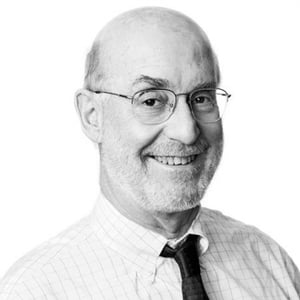
Director, Climate & Clean Air Program, Natural Resources Defense Council
David Doniger has been at the forefront of the battle against air pollution and global climate change since he joined NRDC in 1978. He helped formulate the Montreal Protocol, an international agreement designed to stop the depletion of the earth's ozone layer, as well as several essential amendments to the Clean Air Act. In 1993, he left NRDC to serve on the White House Council on Environmental Quality, followed by key posts at the U.S. Environmental Protection Agency. He rejoined NRDC in 2001 and has since been working to defend the Clean Air Act from assaults in Congress. He is based in Washington, D.C.
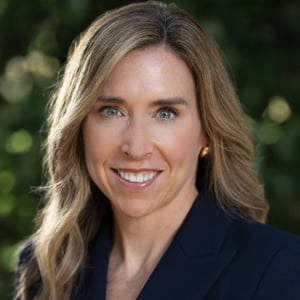
Chief of Staff and Associate Chief Counsel, U.S. Chamber Litigation Center
Stephanie Maloney is chief of staff and associate chief counsel at the U.S. Chamber Litigation Center, the litigation arm of the U.S. Chamber of Commerce. In this capacity, Maloney handles a variety of matters for the Chamber, including environment and energy litigation.
Most recently, Maloney served as Chief of Staff and Counsel in the Environment and Natural Resources Division of the U.S. Department of Justice. In that capacity, she directed litigation strategy, oversaw case briefing, and managed coordination and communication with agency clients in priority cases. And she served as government counsel in cases arising under various environmental and natural resources laws.
Before that, Maloney practiced as an associate in the Appellate and Critical Motions Practice Group at Winston & Strawn LLP. Her work focused on briefing and strategy in complex commercial and appellate litigation at the federal and state level, including merits and amicus curiae briefs to the Supreme Court of the United States.
Maloney served as a law clerk to both the Honorable Edith Brown Clement, of the U.S. Court of Appeals for the Fifth Circuit, and the Honorable Stephen J. Murphy, III, of the U.S. District Court for the Eastern District of Michigan. She graduated cum laude from Notre Dame Law School, where she served as Symposium Editor of the Notre Dame Law Review, and summa cum laude from Loyola University Maryland, where she received a B.A. in Political Science. Maloney also holds a master’s degree in theology from Emory University.
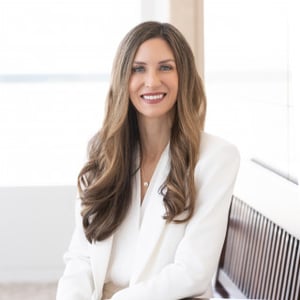
United States District Judge, United States District Court for the Middle District of Florida
In November 2020, the Senate confirmed Kathryn Kimball Mizelle as a United States District Judge for the Middle District of Florida. At age 33, she became the youngest Article III judge in the country. Prior to her confirmation, Judge Mizelle was in private practice at Jones Day, where she focused on complex civil and criminal litigation and appeals. Judge Mizelle previously served at the United States Department of Justice in the Office of the Associate Attorney General, in the Southern Criminal Enforcement Section of the Tax Division, and in the United States Attorney’s Office for the Eastern District of Virginia. Judge Mizelle has also taught as an adjunct professor of law at the University of Florida Levin College of Law and at George Mason University’s Antonin Scalia Law School.
Judge Mizelle earned her B.A., summa cum laude, from Covenant College, and her J.D., summa cum laude, from the University of Florida Levin College of Law. After graduation, Judge Mizelle served as a law clerk at every level of the federal judiciary: at the Supreme Court for Justice Clarence Thomas, at the D.C. Circuit for Judge Gregory G. Katsas, at the Eleventh Circuit for Chief Judge William H. Pryor Jr., and at the Middle District of Florida for Judge James S. Moody Jr.
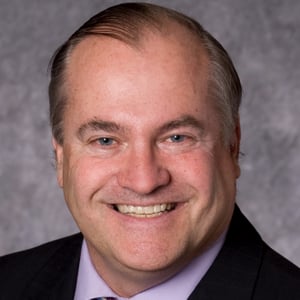
Robert F. Stanton Professor of Law, University of Maryland Carey School of Law
Robert V. Percival is the Robert F. Stanton Professor of Law and the Director of the Environmental Law Program at the University of Maryland School of Law. He received a B.A. summa cum laude from Macalester College, a J.D. from Stanford Law School and an M.A. in economics from Stanford University. At Stanford Percival was named the Nathan Abbott Scholar for graduating first in his law school class. Following graduation, he served as a law clerk for Judge Shirley M. Hufstedler of the U.S. Court of Appeals for the Ninth Circuit and for U.S. Supreme Court Justice Byron R. White. He joined the Maryland faculty in 1987 after serving as a senior attorney for the Environmental Defense Fund. Percival has served as a visiting professor of law at Harvard Law School, Georgetown University Law Center, the China University of Political Science and Law (Beijing), and Comenius University (Bratislava). He is the principal author of a leading environmental law casebook, now in its 9th edition, and the author of several articles about the Supreme Court and presidential authority over executive agencies. Percival wrote one of the first articles on the propriety of consent decrees to effectuate and enforce federal law “The Bounds of Consent: Consent Decrees, Settlements and Federal Environmental Policymaking,” 1987 Univ. Chic. Leg. F. 327 (1987). He also is the author of the first comprehensive analyses of what the papers of the late Justices Thurgood Marshall and Harry Blackmun reveal about the Supreme Court’s handling of environmental cases (“Environmental Law in the Supreme Court: Highlights from the Blackmun Papers,” 35 ELR 10637 (2005), and “Environmental Law in the Supreme Court: Highlights from the Marshall Papers,” 13 ELR 10606 (Oct. 1993)).
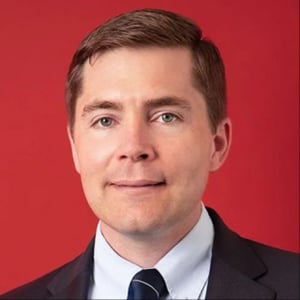
Senior Attorney, Pacific Legal Foundation
Damien Schiff is a senior attorney at Pacific Legal Foundation. He leads its environmental practice group, a unique initiative that draws broadly from PLF’s expertise and success in property rights and separation of powers litigation. Over the years, Damien has represented hundreds of landowners and property rights advocates to defend their liberties against heavy-handed and unwarranted environmental and land-use regulation. His litigation experience includes Sackett v. U.S. Environmental Protection Agency, a groundbreaking decision in which the U.S. Supreme Court upheld the right of landowners to challenge Clean Water Act compliance orders issued by EPA, and Contoski v. Norton, PLF’s successful effort to force the federal government to make good on its promise to delist the bald eagle from the Endangered Species Act.
Besides litigation, Damien has written academic articles on a variety of subjects, including the Endangered Species Act, the Clean Water Act, greenhouse gas torts, the duty to rescue, and international water law. He has appeared on a variety of television and radio programs and has been quoted in The New York Times, The Wall Street Journal, Harper’s Magazine, and The Economist, among other publications.
He obtained his law degree magna cum laude from the University of San Diego School of Law, and his undergraduate degree magna cum laude from Georgetown University. While at USD, he was a research assistant for Professor Bernard Siegan, a leading constitutional theorist and advocate for property rights and economic liberty. Immediately prior to joining PLF, Damien clerked for Judge (and former PLF attorney) Victor Wolski of the United States Court of Federal Claims. Damien credits the mentoring and examples of Professor Siegan and Judge Wolski for his decision to pursue a career in liberty-based public interest litigation.
Damien lives in Sacramento with his wife, two young sons, four chickens, and a cat named Princess. In his off hours he enjoys stamp collecting, Gregorian chant, and martinis—preferably at the same time.
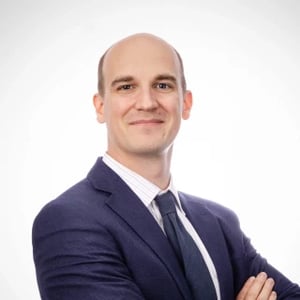
Managing Partner, Boyden Gray PLLC
Michael Buschbacher is the managing partner of Boyden Gray PLLC. He represents public and private companies, trade associations, non-profits, and individuals in high-stakes litigation and administrative proceedings, with a particular focus on environmental and energy matters.
In addition to trial-level work, Mr. Buschbacher maintains an active appellate practice, both as merits counsel and as counsel for amici curiae. He has written amicus briefs quoted by the Seventh and Ninth Circuits. And his Supreme Court advocacy has been cited by The New Yorker, The New York Times, and E&E News. Mr. Buschbacher’s commentary on legal issues has been published in The Wall Street Journal, Newsweek, and The American Conservative.
Before joining the firm, Mr. Buschbacher served at the U.S. Department of Justice as counsel to the Assistant Attorney General for the Environment and Natural Resources Division. There, he advised senior Department leadership, served as the lead attorney on several lawsuits, and helped draft policy memoranda for the Department on the proper scope and procedure for environmental enforcement. Prior to serving in the government, Mr. Buschbacher was an associate in the D.C. office of Sidley Austin.
Mr. Buschbacher is a former clerk to Judge Alice M. Batchelder of the U.S. Court of Appeals for the Sixth Circuit and to Magistrate Judge Paul R. Cherry of the U.S. District Court for the Northern District of Indiana.
Mr. Buschbacher holds a B.A. in Music and Germanic Studies from Indiana University and a J.D., magna cum laude, from Notre Dame Law School.
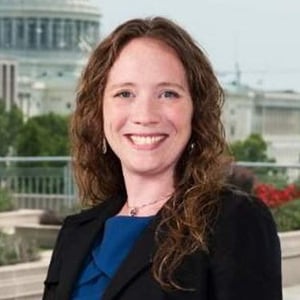
Partner, Luther Strange & Associates
Annie Donaldson Talley is Partner at Luther Strange and Associates. She recently departed the White House after serving as Deputy Assistant to the President and Deputy Counsel to the President. Over the past four years, she provided outside counsel to the Donald J. Trump for President campaign; helped stand up and manage the White House Counsel’s Office; interfaced with agencies across the federal government; and advised the President of the United States, White House Counsel, Chief of Staff and other senior staff across the Executive Office of the President on a broad range of issues from regulatory reform to executive nominations to the day-to-day issues facing the Administration.
Prior to her White House service, Annie Donaldson Talley counseled clients in the non-profit, for-profit, political, and government sectors, as well as high-profile individuals in private practice at Jones Day and Patton Boggs. She provided strategic counseling to clients structuring their affairs to ensure compliance with a web of state and federal laws and represented clients in complex, multi-faceted investigations, leading teams navigating issues of intense public scrutiny.
Annie Donaldson Talley is also a veteran of three presidential campaigns and served in state government. She holds a B.A., summa cum laude, from the University of Alabama and a J.D. from Harvard Law School, where she served on the Harvard Law Review. She lives in Montgomery, Alabama with her husband, Brett.
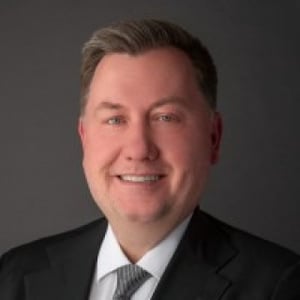
Partner, Sidley Austin LLP
JUSTIN SAVAGE is a global co-leader of the firm’s Environmental, Health, and Safety practice and co-leads the Automotive and Mobility sector team, where he is a leading strategist for companies navigating the intersection of complex regulation, high-stakes litigation, and transformative industry change. For nearly three decades, he has led clients through their most consequential environmental, health, and safety (EH&S) disputes and mobility-sector challenges, earning a reputation as both a trusted counselor and a forceful advocate in the courtroom and the boardroom. A core part of Justin’s practice also focuses on regulatory strategy and market entry, advising emerging technology companies, new market entrants, and established industry leaders on launching new products, technologies, and business models. He regularly counsel clients in emerging fields such as robotics and AI on engaging with regulators, anticipating enforcement and compliance risk, and building defensible regulatory strategies that support growth rather than slow it.
Clients praise Justin as “an excellent litigator… strategically clever and creative… attentive, thoughtful and willing to go above and beyond” (Chambers USA 2025). Chambers USA has ranked him for Band 1 for Environment in District of Columbia (2017–2025) and Band 3 for Transportation: Road (Automotive) in USA—Nationwide (2023–2025).
Justin has won some of the most closely watched EH&S and transportation disputes of the past two decades and guided companies through crises where business continuity, brand reputation, and regulatory survival were on the line. His leadership has been repeatedly recognized: he is a three-time Law360 Environmental “MVP” (2018, 2024, 2025) and a Lawdragon “500 Global Leaders in Crisis Management” (2025-2026). He is the first call for companies facing bet-the-company challenges.
Justin’s clients concentrate in heavily regulated industries, including auto and mobility, aviation, chemicals, data centers, energy, mining, and refining. Justin litigates and counsels across the spectrum of U.S. environmental, transportation, and administrative laws, including the Clean Air Act (Title I, mobile sources, and fuels), incident response, RMP, NHTSA, Clean Water Act, TSCA, CSB investigations, APA claims, FOIA litigation, NEPA, and the Safe Drinking Water Act.
Prior to joining Sidley, Justin served for nearly a decade at the Environmental Enforcement Section of the U.S. Department of Justice, where he led teams in several multi-billion dollar enforcement cases. In his career, Justin has regularly taught on a range of environmental and litigation topics. For several years, Justin served as an instructor at the Justice Department’s National Advocacy Center where he taught hundreds of Assistant U.S. Attorneys and other agency lawyers on topics that included trial advocacy and evidence. Since rejoining private practice, Justin has served eight times as a faculty member for the American Law Institute’s Environmental Litigation program. He also lectured on a range of litigation and trial topics for bar associations and organizations, including serving as an instructor for the FAA on trial advocacy.
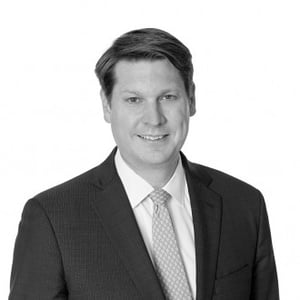
Former Acting Assistant Attorney General, United States Department of Justice; Partner, Winston & Strawn LLP
Jonathan “Jon” Brightbill is a trial and appellate lawyer in Winston’s Washington, D.C. office, and a partner in the firm’s Litigation and White Collar, Regulatory Defense, and Investigations Practices. He represents public and private companies, corporate officers, and other individuals across white collar, regulatory defense, and government and internal investigation matters and rulemaking challenges, as well as complex commercial disputes, citizen suits, and class actions. His commercial litigation experience encompasses business disputes, false advertising, consumer protection and fraud, FCA, and extensive class action defense work; antitrust and unfair competition matters; and intellectual property litigation, such as trademarks, patents, and trade secrets.
Jon served as the Nation’s lead environmental civil and criminal enforcement official and litigator, as Acting Assistant Attorney General for the Environment & Natural Resources Division (“ENRD”) of the U.S. Department of Justice (DOJ). Jon led ENRD’s 425 lawyers, overseeing 6,500 active matters and managing an annual budget of more than $150 million. Jon brings highly experienced executive leadership from among the most senior level of DOJ on white collar and regulatory enforcement, as well as on federal policymaking and rulemaking development and challenges. He speaks with authority on government decision-making processes, and the arguments and perspectives that move regulators and enforcers, best advising and positioning clients to deal with challenges.
Jon argued many of the government’s most significant cases during his time with the DOJ. This included the Navigable Waters Protection Rule and Clean Water Rule Repeal (10th Cir., district courts), the Affordable Clean Energy Rule and Clean Power Plan Repeal (D.C. Cir), defense of EPA actions on pesticide tolerances under FIFRA and the FDCA (9th Cir. en banc), among numerous others. Jon represented the United States in trial courts in both enforcement and defensive cases, including federal enforcement action against Jeffrey Lowe and the Tiger King Park, of Netflix fame, securing a first-of-its-kind injunction for violations of the Endangered Species Act and Animal Welfare Act. Jon directed the litigation and briefing of scores of additional federal cases nationwide, covering all of the major environmental and natural resources statutes, such as the Clean Air Act, the Clean Water Act, FIFRA (pesticides), FDCA (food safety), TSCA (toxics), CERCLA (land remediation), RCRA (waste), National Environmental Policy Act, Federal Land Policy and Management Act, and numerous other land- and resource-management statutes.
Jon has unmatched experience litigating legal and technical issues relating to climate change. He argued in the courts of appeals, including the D.C. Circuit, regarding the most significant climate change regulations by EPA, as well as the preemptive scope of the Clean Air Act. Jon also litigated climate change-related credit and trading schemes and international agreements in district court. During Jon’s time in leadership at ENRD, it successfully defeated one of the most wide-ranging lawsuits regarding climate change to date—obtaining a stay pending interlocutory appeal and dismissal just weeks before a scheduled three-month trial on federal government liability for climate change.
An accomplished trial lawyer, prior to working at DOJ, Jon was a partner in the Washington, D.C. office of another global law firm. He not only represents clients in court, but creatively counsels corporations on balancing business needs and realities with a broad range of litigation risks and compliance obligations. Jon is also an Adjunct Professor at Georgetown University Law Center. He served on the American Bar Association’s E-Discovery Working Group for Bankruptcy Practice, and was a frequent lecturer for District of Columbia Bar Association Continuing Legal Education Programs.
Jon served as an appellate clerk for the Honorable D. Brooks Smith, U.S. Court of Appeals for the Third Circuit, after graduating magna cum laude from the Georgetown University Law Center. He worked in state government as an Executive Policy Specialist for air, waste, land remediation, and radiation matters at the Pennsylvania Department of Environmental Protection.
Managing Partner, Boyden Gray PLLC
Michael Buschbacher is the managing partner of Boyden Gray PLLC. He represents public and private companies, trade associations, non-profits, and individuals in high-stakes litigation and administrative proceedings, with a particular focus on environmental and energy matters.
In addition to trial-level work, Mr. Buschbacher maintains an active appellate practice, both as merits counsel and as counsel for amici curiae. He has written amicus briefs quoted by the Seventh and Ninth Circuits. And his Supreme Court advocacy has been cited by The New Yorker, The New York Times, and E&E News. Mr. Buschbacher’s commentary on legal issues has been published in The Wall Street Journal, Newsweek, and The American Conservative.
Before joining the firm, Mr. Buschbacher served at the U.S. Department of Justice as counsel to the Assistant Attorney General for the Environment and Natural Resources Division. There, he advised senior Department leadership, served as the lead attorney on several lawsuits, and helped draft policy memoranda for the Department on the proper scope and procedure for environmental enforcement. Prior to serving in the government, Mr. Buschbacher was an associate in the D.C. office of Sidley Austin.
Mr. Buschbacher is a former clerk to Judge Alice M. Batchelder of the U.S. Court of Appeals for the Sixth Circuit and to Magistrate Judge Paul R. Cherry of the U.S. District Court for the Northern District of Indiana.
Mr. Buschbacher holds a B.A. in Music and Germanic Studies from Indiana University and a J.D., magna cum laude, from Notre Dame Law School.

Robert A. Schroeder Distinguished Professor of Law, University of Kansas School of Law
Robin Kundis Craig joined the KU Law faculty in July 2024 and serves as the Robert A. Schroeder Distinguished Professor of Law.
Craig specializes in all things water, including the relationships between climate change and water; the water-energy-food nexus; the Clean Water Act; the intersection of water issues and land issues; ocean and coastal law; marine biodiversity and marine protected areas; water law; ecological resilience and the law; climate change adaptation, and the relationships between environmental law and public health. She is the author, co-author, or editor of 12 books, including Re-Envisioning the Anthropocene Ocean (University of Utah Press, 2024, co-edited with Jeffrey M. McCarthy); The End of Sustainability (Kansas University Press 2017, with Melinda Harm Benson); Contemporary Issues in Climate Change Law and Policy (Environmental Law Institute 2016, with Stephen Miller); Comparative Ocean Governance: Place- Based Protections in an Era of Climate Change (Edward Elgar 2012); and The Clean Water Act and the Constitution (Environmental Law Institute 2nd Ed. 2009), as well as textbooks for Environmental Law, Water Law and Toxic Torts. She has also written more than100 law review articles and book chapters in both legal and scientific publications.
In recognition of her work on these topics, Craig was elected to membership in the American Law Institute (2015) and the American College of Environmental Lawyers (2019) and has been appointed to the International Union for the Conservation of Nature’s World Commission on Environmental Law and to the Center for Progressive Reform. She has served on six National Academy of Sciences committees that evaluated Florida Everglades restoration, implementation of the Edwards Aquifer Habitat Conservation Plan and application of the Clean Water Act to the Mississippi River. She has consulted on water quality issues with the government of Victoria, Australia, and the Council on Environmental Cooperation in Montreal, Quebec, Canada, and she was one of 12 marine educators chosen to participate in a 2010 program in the Papahanamokuakea Marine National Monument, spending a week on Midway Atoll. She was also a principal researcher in a four-year grant project on Adaptive Water Governance sponsored by the National Social-Ecological Synthesis Center with money from the National Science Foundation. In 2018, Craig was named a William Evans Visiting Research Fellow at the University of Otago, Dunedin, New Zealand. In 2017, the Rockefeller Foundation awarded her a Bellagio Center Writing Residency fellowship, allowing her to spend four weeks on Lake Como, Italy, working on a new book project on Re-Envisioning the Anthropocene Oceans, and in 2016 she was a Research Fellow at the University of Tasmania, Hobart, Australia.
Craig is an active participant in several national organizations, including the American Bar Association Section on Environment, Energy and Resources (ABA SEER), where she currently serves on the editorial board of Natural Resources & Environment; the Foundation for Natural Resources and Environmental Law, where she co-chairs the Natural Resources Law Teachers Committee; and the Association of American Law Schools (AALS), where she has chaired the Maritime Law Section, the Natural Resources Law Section and the Environmental Law Section. She has also served as a consultant to the Environmental Defense Fund and the River Network’s Nutrient Task Force. Craig serves on the Editorial Boards of Coastal and Ocean Management and Ecology & Society, as a Specialty Chief Editor of Frontiers Climate: Climate Law and Policy and as a Guest Associate Editor for Frontiers Climate: Risk Management on the topic of “Climate Change Adaptation as Risk Management.”
Craig earned her J.D. summa cum laude in 1996 from the Lewis & Clark School of Law in Portland, Oregon, with a Certificate in Environmental Law; her Ph.D. in English/Literature and Science in 1993 from the University of California, Santa Barbara; her M.A. in Writing About Science in 1986 from the Johns Hopkins University; and her B.A. cum laude in English/Writing in 1985 from Pomona College in Claremont, California. While in law school, she worked for the Oregon Department of Justice in its General Counsel Division, Natural Resources Section, representing the state’s environmental and natural resources agencies. After law school, she clerked for Judge Robert E. Jones at the U.S. District Court for the District of Oregon before starting her law teaching career as a Visiting Assistant Professor at the Lewis & Clark School of Law. Before arriving at KU in 2024, Craig held tenure-track positions at the Western New England College School of Law, Indiana University—Indianapolis School of Law (where she first received tenure), the Florida State University School of Law, the University of Utah S.J. Quinney School of Law and USC’s Gould School of Law. She has visited at the Lewis & Clark School of Law, Vermont Law School, the University of Hawaii School of Law and the University of Tasmania Faculty of Law. At Kansas, Craig teaches Environmental Law, Water Law, Ocean & Coastal Law, Toxic Torts and Civil Procedure.

Laurence A. Tisch Professor of Law and Director, Classical Liberal Institute, New York University School of Law; Senior Fellow, The Civitas Institute, University of Texas at Austin
Richard A. Epstein is the inaugural Laurence A. Tisch Professor of Law at NYU School of Law. Prior to his joining the faculty, he was a visiting law professor at NYU from 2007 through 2009. He served as the Peter and Kirstin Bedford Senior Fellow at the Hoover Institution from 2000 to 2024. Since 2024 to the present he is a senior lecturer at the Civitas Institute at the University of Texas—Austin. Epstein is also the James Parker Hall Distinguished Service Professor of Law Emeritus and a senior lecturer at the University of Chicago. His initial law school appointment was at the University of Southern California from 1968 to 1972. Epstein received an LL.D., h.c. from the University of Ghent, 2003. He has been a member of the American Academy of Arts and Sciences since 1985 and was a Senior Fellow of the Center for Clinical Medical Ethics at the University of Chicago Division of Biological Sciences, also from 1983. to 2022 He served as editor of the Journal of Legal Studies from 1981 to 1991, and of the Journal of Law and Economics from 1991-2001. From 2001 to 2010 he was a director of the John M. Olin Program in Law and Economics at the University of Chicago.
His newest book, The Myth of Birthright Citizenship: What the Fourteenth Amendment Really Says was published in 2026 (Encounter Books). Prior to that he has published many books including, The Dubious Morality of the Modern Administrative State (Roman & Littlefield 2020).Earlier he published th Classical Liberal Constitution: The Uncertain Quest for Limited Government (Harvard 2014) iHis previous books include Design for Liberty: Private Property, Public Administration and the Rule of Law (Harvard 2011); The Case Against the Employee Free Choice Act (Hoover 2009); Supreme Neglect: How to Revive the Constitutional Protection of Property Rights (Oxford 2008); Antitrust Decrees in Theory and Practice: Why Less is More (AEI 2007); Overdose: How Excessive Government Regulation Stifles Pharmaceutical Innovation (Yale University Press. 2006); How Progressives Rewrote the Constitution (Cato 2006); Cases and Materials on Torts (Aspen Law & Business; 8th ed. 2004); Skepticism and Freedom: A Modern Case for Classical Liberalism (University of Chicago, 2003); Torts (Aspen Law & Business 1999); Principles for a Free Society: Reconciling Individual Liberty with the Common Good (Perseus Books, 1998): Mortal Peril: Our Inalienable Rights to Health Care (Addison-Wesley, 1997); Simple Rules for a Complex World (Harvard, 1995); Bargaining With the State (Princeton, 1993); Forbidden Grounds: The Case Against Employment Discrimination Laws (Harvard , 1992); Takings: Private Property and the Power of Eminent Domain (Harvard, 1985); and Modern Products Liability Law (Greenwood Press, 1980). He has also edited(with Catherine M. Sharkey) Cases and Materials on the Law of Torts (10th edition 2012).
Professor Epstein has written numerous articles on a wide range of legal and interdisciplinary subjects. He has taught courses in administrative law, antitrust law, civil procedure, communications, constitutional law, contracts, corporations, criminal law, employment discrimination law, environmental law, food and drug law health law and policy, legal history, labor law, property, real estate development and finance, jurisprudence, labor law; land use planning, patents, individual, estate and corporate taxation, Roman Law; torts, and workers' compensation.
Professor Epstein also writes a regular column for Civitas Institute, which also sponsors his podcast, The Libertarian with Charles C.W. Cooke, and Law Talk, with Cooke and John Yoo. He also does a podcast with John Batchelor. And appears regularly on the Freedom File with Judge Andrew Napolitano.
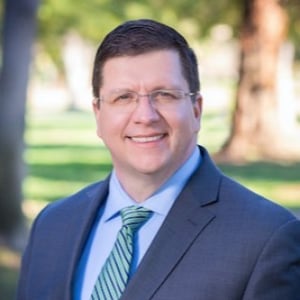
Vice President and Senior Counsel, The Becket Fund for Religious Liberty
Eric Rassbach is Vice President and Senior Counsel at the Becket Fund for Religious Liberty, where he has served since 2003. He has briefed over 90 cases at the United States Supreme Court and has led or been a part of Becket litigation teams in each of Becket’s pathbreaking victories there, including Hosanna-Tabor, Hobby Lobby, Holt v. Hobbs, Zubik v. Burwell, Agudath Israel of America v. Cuomo, and Fulton v. Philadelphia. In 2020, Eric argued Our Lady of Guadalupe School v. Morrissey-Berru to the Supreme Court, garnering a 7-2 win for his Catholic school clients. Eric has also briefed and argued cases in federal appeals courts and state supreme courts across the nation. Eric has also represented clients in appeals to the European Court of Human Rights in Strasbourg, France and in the highest courts of several other countries.
Eric believes passionately in the right of all people to the full measure of religious liberty and has represented members of almost every religious group present in the United States, including Buddhists, Christians, Hindus, Jains, Jews, Muslims, Native Americans, Santeros, and Sikhs, as well as many governmental entities targeted for accommodating religion.
Eric frequently comments on church-state issues in the media, including the New York Times, the Washington Post, the Wall Street Journal, and other major press outlets. He has published legal scholarship in the Harvard Law Review Forum, the Tennessee Law Review, the Illinois Law Review, the Cato Supreme Court Review, and other legal journals, and often speaks to law school audiences.
Before joining Becket, Eric worked at Baker Botts LLP in Houston, where he worked in international project finance. He also served as a law clerk to United States District Court Judge Lee Rosenthal in Houston, Texas.
Eric graduated from Haverford College with a degree in Comparative Literature, is a member of Fitzwilliam College, University of Cambridge, and is a graduate of Harvard Law School. Eric was a 2012-2013 Wasserstein Public Interest Fellow at Harvard Law School. He is Visiting Professor and Executive Director of The Hugh and Hazel Darling Foundation Religious Liberty Clinic at Pepperdine University Caruso School of Law in Malibu, where he leads students in litigating cases in American courts. He is also an Associated Scholar with the Centre for Religious Freedom at Jagiellonian University in Kraków, Poland. Eric is admitted in Texas, DC, California, and Ireland.
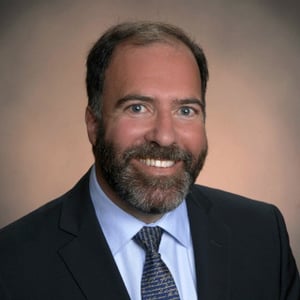
Professor of Law, Widener University Commonwealth Law School

Tazewell Taylor Professor of Law and William H. Cabell Research Professor, William & Mary Law School
Jonathan H. Adler joined the William & Mary law faculty as the Tazwell Taylor Professor of Law and William H. Cabell Research Professor in 2025. Prior to joining the faculty, he was the inaugural Johan Verheij Memorial Professor of Law and the founding Director of the Coleman P. Burke Center for Environmental Law at the Case Western Reserve University School of Law.
Professor Adler is the author or editor of seven books, including Climate Liberalism: Perspectives on Liberty, Property and Pollution (Palgrave, 2023), Marijuana Federalism: Uncle Sam and Mary Jane (Brookings Institution Press, 2020), Business and the Roberts Court (Oxford University Press, 2016) and Rebuilding the Ark: New Perspectives on Endangered Species Act Reform (AEI Press, 2011).
His articles have appeared in publications ranging from the Harvard Environmental Law Review and Yale Journal on Regulation to the Wall Street Journal, New York Times, and Washington Post. He has testified before Congress a dozen times, and his work has been cited in the U.S. Supreme Court. A 2024 study identified Professor Adler as the seventh most cited legal academic in administrative and environmental law from 2019 to 2023.
Professor Adler is a contributing editor to Civitas Outlook and a regular contributor to the popular legal blog, The Volokh Conspiracy. A regular commentator on constitutional and regulatory issues, he has appeared on numerous radio and television programs, ranging from the PBS Newshour and National Public Radio to the Fox News Channel and Entertainment Tonight.
Professor Adler is a senior fellow at the Property & Environment Research Center in Bozeman, Montana. In 2018, Professor Adler was elected to membership in the American Law Institute and helped co-found the organization Checks and Balances. In 2024, Professor Adler was appointed a public member of the Administrative Conference of the United States.
Professor Adler clerked for the Honorable David B. Sentelle on the U.S. Court of Appeals for the District of Columbia Circuit.
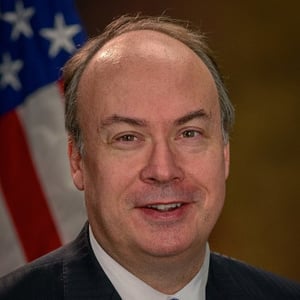
Assistant Attorney General, Environment and Natural Resources Division, U.S. Department of Justice
Jeffrey Bossert Clark was born in Philadelphia, Pennsylvania on April 17, 1967. He is a graduate of Harvard University (A.B. in economics and history, 1989), the University of Delaware (M.A. in urban affairs and public policy, 1993), and the Georgetown University Law Center (J.D., 1995).
Mr. Clark began his career working for the State of Delaware’s Department of Finance, Division of Revenue as an economics analyst in the field of tax policy. During his tenure from 1989 to 1992, he authored several white papers analyzing Delaware revenue sources. Delaware also selected Mr. Clark to submit an economic report and affidavit to the United States Supreme Court in the original jurisdiction case of Delaware v. New York, 507 U.S. 490 (1993).
He entered Georgetown’s law school in 1992 where he earned honors as an articles editor of the Georgetown Law Journal, an Olin Law & Economics Fellow, and a member of the Order of the Coif. From 1995 to 1996, Mr. Clark clerked for Judge Boggs of the U.S. Court of Appeals of the Sixth Circuit. Mr. Clark then joined the law firm of Kirkland & Ellis as an associate from 1996-2001. He worked as an appellate litigator on numerous Supreme Court and other appellate cases and developed expertise in administrative law, statutory interpretation, as well as antitrust, labor, environmental, and telecommunications law.
Mr. Clark went on to serve in ENRD from 2001-2005 as a Deputy Assistant Attorney General selected by Attorney General Ashcroft and Assistant Attorney General Tom Sansonetti. In that capacity, he supervised ENRD’s Appellate and Indian Resources Sections. He reviewed, edited, and contributed to virtually every brief that ENRD filed in the Courts of Appeals, including several cases of exceptional significance that he personally briefed and argued. During his service in the early 2000s, Mr. Clark argued and won numerous cases in multiple U.S. Courts of Appeals and worked on all Supreme Court cases arising out of ENRD’s work.
In 2005, Mr. Clark returned to Kirkland & Ellis LLP as a partner, where he litigated until his return to ENRD in 2018. There he worked on numerous multi-billion-dollar matters and continued to argue many appellate cases. His practice operated at all levels — appellate litigation, trial court litigation, agency proceedings, and regulatory and litigation counseling. He has been named a Super Lawyer for multiple years running, highlighted in the Legal 500, named to the “Legal Who’s Who for Environmental Law” in Corporate Responsibility Magazine, rated A.V. preeminent by Martindale Hubbell, and named a member of the National Association of Distinguished Counsel’s Nation’s One Percent. He also was named one of America’s Top 100 High Stakes Litigators.
President Trump nominated Mr. Clark to be the Assistant Attorney General of the Environment and Natural Resources Division (ENRD) on June 7, 2017. He was confirmed by the U.S. Senate on October 11, 2018 and sworn into office on November 1, 2018, followed by an investiture ceremony on November 15, 2018.

Defend the Constitution, Save the Planet: The Role of Public Interest Groups in Shaping Environmental Law
David D. Doniger, Stephanie Ann Maloney, Kathryn Kimball Mizelle, Robert V. Percival, Damien Michael Schiff
The United States adopted its modern environmental statutes in the 1970s. Among other innovations, Congress...
The Return of Supplemental Environmental Projects
Michael Buschbacher, Annie Donaldson Talley, Justin Savage
On May 5, the United States Department of Justice (DOJ) announced a new "Comprehensive Environmental...
Citizen Suits, Separation of Powers, and the Future of the Supreme Court's Standing Jurisprudence
Jonathan Brightbill, Michael Buschbacher, Robin Kundis Craig, Richard A. Epstein
Internal tensions in the Supreme Court's standing doctrine have led to some unexpected fractures. Last...
Courthouse Steps Decision Teleforum: Roman Catholic Diocese of Brooklyn v. Cuomo
Eric Rassbach
On November 25, 2020, the Supreme Court barred New York Governor Andrew Cuomo from enforcing...
Courthouse Steps Oral Arguments Teleforum: Carney v. Adams
Michael R. Dimino
In Delaware, there is a state constitutional provision that requires the state’s three highest courts...
Conservation without Regulation: Property-Based Environmental Protection
Jonathan H. Adler, Joseph Tomain
Speakers: Prof. Jonathan Adler, Case Western Law Prof. Joseph Tomain, Cincinnati Law University of Cincinnati...
Standing on the Shoulders of Scrap: Friends of the Earth, Inc. v. Laidlaw Environmental Servs., Inc.
Jeffrey Bossert Clark
In a surprising departure from the trend it set in the 90s of increasing the...