
Professor of Law, Stanford University
Fred Smith Jr., JD ’07, is a Professor of Law at Stanford Law School and a leading scholar of the federal courts. His work on abstention, governmental immunities, and the allocation of power between state and federal courts has shaped contemporary debates over federal jurisdiction. This work has recovered histories that field had forgotten, and centered people the field’s doctrines had rendered invisible. He co-authors Federal Courts in Context (with Erwin Chemerinsky, Seth Davis, and Norman Spaulding) and Constitutional Torts, now in its sixth edition (with Sheldon Nahmod, Tom Eaton, Noah Smith-Drelich, and Michael Wells). He is also an important voice in the growing field of posthumous legal interests, where he created the first law school course of its kind.
His scholarship has appeared in the Harvard Law Review, Yale Law Journal, Stanford Law Review, Columbia Law Review, California Law Review, Michigan Law Review, New York University Law Review, and University of Chicago Law Review, among others. He lectures on these subjects across the United States and internationally, including in Istanbul, Shanghai, and Warsaw, and is regularly consulted as an expert by major media outlets, including CNN, CBS News, MSNBC, NPR, Time, The New York Times, and The Washington Post.
Smith clerked for Judge Myron Thompson (M.D. Ala.), Judge Barrington D. Parker Jr. (2d Cir.), and Justice Sonia Sotomayor (U.S. Supreme Court). He has held faculty positions at Berkeley Law and Emory Law and has been a visiting professor at the University of Chicago, Columbia, and Yale. At Emory, he was named Outstanding Professor of the Year in 2019, 2022, and 2023.
Smith serves as Board Chair of Lambda Legal, the nation’s oldest and largest legal organization dedicated to the civil rights of LGBTQ people. He also serves as an Associate Reporter for the American Law Institute’s Restatement of Constitutional Torts.

Solicitor General, Office of the Attorney General
Partner, Jones Day
Stephen Petrany focuses on appellate litigation and critical motions practice. He briefs and argues cases before the U.S. Supreme Court, federal and state appellate courts, trial courts, and regulatory agencies.
Prior to rejoining Jones Day in 2026, Stephen served as the Solicitor General of Georgia, where he led the State's appellate and multistate litigation. In that role he briefed and argued multiple cases in the U.S. Supreme Court, dozens of cases in federal and state courts of appeal, and critical issues in trial courts. Some of the matters he oversaw include challenges to the U.S. president's asserted power over federal contractors and employees, defending against novel Title IX and employment discrimination claims, voter redistricting and elections challenges, campaign finance disclosure violations, and numerous challenges to EPA regulation.
Stephen's pro bono practice includes winning a D.C. Superior Court case to obtain a birth certificate for a minor after the city denied her application, as well as arguing numerous pro bono appeals in federal appellate courts. Stephen also has represented clients in matters involving immigration, asylum, religious liberty, and prisoner petitions.
Professor of Law, Stanford University
Fred Smith Jr., JD ’07, is a Professor of Law at Stanford Law School and a leading scholar of the federal courts. His work on abstention, governmental immunities, and the allocation of power between state and federal courts has shaped contemporary debates over federal jurisdiction. This work has recovered histories that field had forgotten, and centered people the field’s doctrines had rendered invisible. He co-authors Federal Courts in Context (with Erwin Chemerinsky, Seth Davis, and Norman Spaulding) and Constitutional Torts, now in its sixth edition (with Sheldon Nahmod, Tom Eaton, Noah Smith-Drelich, and Michael Wells). He is also an important voice in the growing field of posthumous legal interests, where he created the first law school course of its kind.
His scholarship has appeared in the Harvard Law Review, Yale Law Journal, Stanford Law Review, Columbia Law Review, California Law Review, Michigan Law Review, New York University Law Review, and University of Chicago Law Review, among others. He lectures on these subjects across the United States and internationally, including in Istanbul, Shanghai, and Warsaw, and is regularly consulted as an expert by major media outlets, including CNN, CBS News, MSNBC, NPR, Time, The New York Times, and The Washington Post.
Smith clerked for Judge Myron Thompson (M.D. Ala.), Judge Barrington D. Parker Jr. (2d Cir.), and Justice Sonia Sotomayor (U.S. Supreme Court). He has held faculty positions at Berkeley Law and Emory Law and has been a visiting professor at the University of Chicago, Columbia, and Yale. At Emory, he was named Outstanding Professor of the Year in 2019, 2022, and 2023.
Smith serves as Board Chair of Lambda Legal, the nation’s oldest and largest legal organization dedicated to the civil rights of LGBTQ people. He also serves as an Associate Reporter for the American Law Institute’s Restatement of Constitutional Torts.
Partner, Jones Day
Stephen Petrany focuses on appellate litigation and critical motions practice. He briefs and argues cases before the U.S. Supreme Court, federal and state appellate courts, trial courts, and regulatory agencies.
Prior to rejoining Jones Day in 2026, Stephen served as the Solicitor General of Georgia, where he led the State's appellate and multistate litigation. In that role he briefed and argued multiple cases in the U.S. Supreme Court, dozens of cases in federal and state courts of appeal, and critical issues in trial courts. Some of the matters he oversaw include challenges to the U.S. president's asserted power over federal contractors and employees, defending against novel Title IX and employment discrimination claims, voter redistricting and elections challenges, campaign finance disclosure violations, and numerous challenges to EPA regulation.
Stephen's pro bono practice includes winning a D.C. Superior Court case to obtain a birth certificate for a minor after the city denied her application, as well as arguing numerous pro bono appeals in federal appellate courts. Stephen also has represented clients in matters involving immigration, asylum, religious liberty, and prisoner petitions.
Professor of Law, Stanford University
Fred Smith Jr., JD ’07, is a Professor of Law at Stanford Law School and a leading scholar of the federal courts. His work on abstention, governmental immunities, and the allocation of power between state and federal courts has shaped contemporary debates over federal jurisdiction. This work has recovered histories that field had forgotten, and centered people the field’s doctrines had rendered invisible. He co-authors Federal Courts in Context (with Erwin Chemerinsky, Seth Davis, and Norman Spaulding) and Constitutional Torts, now in its sixth edition (with Sheldon Nahmod, Tom Eaton, Noah Smith-Drelich, and Michael Wells). He is also an important voice in the growing field of posthumous legal interests, where he created the first law school course of its kind.
His scholarship has appeared in the Harvard Law Review, Yale Law Journal, Stanford Law Review, Columbia Law Review, California Law Review, Michigan Law Review, New York University Law Review, and University of Chicago Law Review, among others. He lectures on these subjects across the United States and internationally, including in Istanbul, Shanghai, and Warsaw, and is regularly consulted as an expert by major media outlets, including CNN, CBS News, MSNBC, NPR, Time, The New York Times, and The Washington Post.
Smith clerked for Judge Myron Thompson (M.D. Ala.), Judge Barrington D. Parker Jr. (2d Cir.), and Justice Sonia Sotomayor (U.S. Supreme Court). He has held faculty positions at Berkeley Law and Emory Law and has been a visiting professor at the University of Chicago, Columbia, and Yale. At Emory, he was named Outstanding Professor of the Year in 2019, 2022, and 2023.
Smith serves as Board Chair of Lambda Legal, the nation’s oldest and largest legal organization dedicated to the civil rights of LGBTQ people. He also serves as an Associate Reporter for the American Law Institute’s Restatement of Constitutional Torts.
Professor of Law, Stanford University
Fred Smith Jr., JD ’07, is a Professor of Law at Stanford Law School and a leading scholar of the federal courts. His work on abstention, governmental immunities, and the allocation of power between state and federal courts has shaped contemporary debates over federal jurisdiction. This work has recovered histories that field had forgotten, and centered people the field’s doctrines had rendered invisible. He co-authors Federal Courts in Context (with Erwin Chemerinsky, Seth Davis, and Norman Spaulding) and Constitutional Torts, now in its sixth edition (with Sheldon Nahmod, Tom Eaton, Noah Smith-Drelich, and Michael Wells). He is also an important voice in the growing field of posthumous legal interests, where he created the first law school course of its kind.
His scholarship has appeared in the Harvard Law Review, Yale Law Journal, Stanford Law Review, Columbia Law Review, California Law Review, Michigan Law Review, New York University Law Review, and University of Chicago Law Review, among others. He lectures on these subjects across the United States and internationally, including in Istanbul, Shanghai, and Warsaw, and is regularly consulted as an expert by major media outlets, including CNN, CBS News, MSNBC, NPR, Time, The New York Times, and The Washington Post.
Smith clerked for Judge Myron Thompson (M.D. Ala.), Judge Barrington D. Parker Jr. (2d Cir.), and Justice Sonia Sotomayor (U.S. Supreme Court). He has held faculty positions at Berkeley Law and Emory Law and has been a visiting professor at the University of Chicago, Columbia, and Yale. At Emory, he was named Outstanding Professor of the Year in 2019, 2022, and 2023.
Smith serves as Board Chair of Lambda Legal, the nation’s oldest and largest legal organization dedicated to the civil rights of LGBTQ people. He also serves as an Associate Reporter for the American Law Institute’s Restatement of Constitutional Torts.
Solicitor General, Georgia Attorney General's Office
As Solicitor General, Andrew Pinson oversees the office’s appellate and multi-state litigation in state and federal courts. He also collaborates on all phases of significant litigation with other attorneys at the Department of Law and advises the Attorney General concerning matters of national interest that may have implications for the state of Georgia. He previously served as Deputy Solicitor General, where he was the Solicitor General ‘s primary advisor for multi-state litigation and federal appellate matters, including in cases before the United States Supreme Court. Before joining the Department of Law, Andrew was a part of the Issues and Appeals practice at Jones Day in Atlanta, where he focused on appellate litigation and complex trial litigation. He represented clients in state and federal courts in matters involving constitutional law, statutory interpretation, federal preemption, open records, family law, products liability, criminal law, patent law, jury issues, civil procedure and class actions. Andrew served as a law clerk to Justice Clarence Thomas on the United States Supreme Court, and before that, to then-Chief Judge David Sentelle on the United States Court of Appeals for the District of Columbia. A Georgia native, Andrew received a B.B.A. in Finance summa cum laude from the University of Georgia. He received his J.D. summa cum laude from the University of Georgia School of Law. While at Georgia Law, he served as Executive Articles Editor for the Georgia Law Review. He is currently a member of the Law School’s Young Alumni/Alumnae Council.
Earl Warren Professor of Public Law (Emeritus), UC Berkeley School of Law
Jesse Choper served as law clerk to Chief Justice Earl Warren of the U.S. Supreme Court following graduation from law school. He taught at the Wharton School of the University of Pennsylvania from 1957 to 1960, and at the University of Minnesota Law School from 1961 to 1965. He joined the Berkeley Law faculty in 1965. Choper has been a visiting professor at Harvard Law School, Fordham Law School, University of Milan, Free University in Amsterdam, Autonoma University in Barcelona, University of New South Wales in Sydney, University of Lucerne in Switzerland, and Catholic University of Portugal in Lisbon and Porto. He served as Berkeley Law’s dean from 1982 to 1992.
From 1979 to 1998, Choper was one of the three major lecturers at U.S. Law Week’s Annual Constitutional Law Conference in Washington, D.C. He has delivered 20 titled lectures at major universities throughout the country, including the Cooley Lectures at Michigan, the Stevens Lecture at Cornell, the Baum Lecture at Illinois, and the Lockhart Lecture at Minnesota. He has served on the executive committee of the Association of American Law Schools, and on the executive council of the American Academy of Arts and Sciences (of which he was vice president for more than ten years). He was national president of the Order of the Coif and is a member of the American Law Institute. In 1998 he received the UC Berkeley Distinguished Teaching Award and the Rutter Award for Teaching Distinction at Berkeley Law in 2006. In 2005 the Berkeley Law Alumni Association presented Choper with the Faculty Lifetime Achievement Award and the University of Pennsylvania Law School gave him the James Wilson Award, its highest award for alumni.
Choper’s major publications include the books, Judicial Review and the National Political Process: A Functional Reconsideration of the Role of the Supreme Court, which received the Order of the Coif Triennial Book Award in 1982, and Securing Religious Liberty: Principles for Judicial Interpretation of the Religion Clauses. His recent publications include the thirteenth edition of his Constitutional Law casebooks; the eighth edition of his Corporations casebook; the second edition of The Supreme Court and Its Justices; “The Political Question Doctrine: Suggested Criteria,” in Duke Law Journal (2005); “Wartime Process: A Dialogue on Congressional Power to Remove Issues From the Federal Courts,” in California Law Review (2007) (co-author); and “Who’s Afraid of the Eleventh Amendment? The Limited Impact of the Court’s Sovereign Immunity Rulings,” in Columbia Law Review (2006) (co-author).
Professor of Law, Stanford University
Fred Smith Jr., JD ’07, is a Professor of Law at Stanford Law School and a leading scholar of the federal courts. His work on abstention, governmental immunities, and the allocation of power between state and federal courts has shaped contemporary debates over federal jurisdiction. This work has recovered histories that field had forgotten, and centered people the field’s doctrines had rendered invisible. He co-authors Federal Courts in Context (with Erwin Chemerinsky, Seth Davis, and Norman Spaulding) and Constitutional Torts, now in its sixth edition (with Sheldon Nahmod, Tom Eaton, Noah Smith-Drelich, and Michael Wells). He is also an important voice in the growing field of posthumous legal interests, where he created the first law school course of its kind.
His scholarship has appeared in the Harvard Law Review, Yale Law Journal, Stanford Law Review, Columbia Law Review, California Law Review, Michigan Law Review, New York University Law Review, and University of Chicago Law Review, among others. He lectures on these subjects across the United States and internationally, including in Istanbul, Shanghai, and Warsaw, and is regularly consulted as an expert by major media outlets, including CNN, CBS News, MSNBC, NPR, Time, The New York Times, and The Washington Post.
Smith clerked for Judge Myron Thompson (M.D. Ala.), Judge Barrington D. Parker Jr. (2d Cir.), and Justice Sonia Sotomayor (U.S. Supreme Court). He has held faculty positions at Berkeley Law and Emory Law and has been a visiting professor at the University of Chicago, Columbia, and Yale. At Emory, he was named Outstanding Professor of the Year in 2019, 2022, and 2023.
Smith serves as Board Chair of Lambda Legal, the nation’s oldest and largest legal organization dedicated to the civil rights of LGBTQ people. He also serves as an Associate Reporter for the American Law Institute’s Restatement of Constitutional Torts.
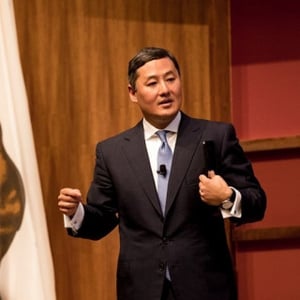
Emanuel S. Heller Professor of Law, University of California at Berkeley; Thomas Smith Senior Research Fellow, Civitas Institute, University of Texas at Austin
John Yoo is the Emanuel Heller Professor of Law at the University of California at Berkeley. He is also the Thomas Smith Senior Research Fellow, Civitas Institute, at the University of Texas at Austin. He is also a Nonresident Senior Fellow at the American Enterprise Institute.
His most recent book, The Politically Incorrect Guide to the Supreme Court, co-authored with Robert Delahunty, was published in 2023. Professor Yoo’s other books include Defender-in-Chief: Trump’s Fight for Presidential Power; Striking Power: How Cyber, Robots, and Space Weapons Change the Rules for War; Point of Attack: Preventive War, International Law, and Global Welfare; and Crisis and Command: A History of Executive Power from George Washington to George Bush.
He is a co-author of volumes 1 and 2 of R. Rossum, G. Tarr, V. Munoz & J. Yoo American Constitution Law (Routledge, 2026), and a co-editor of the eight-volume series on the 250th anniversary of the American Revolution, We Hold These Truths, with Yuval Levin and Adam White of the American Enterprise Institute.
Professor Yoo has published more than 100 articles in academic journals on subjects including national security, constitutional law, international law, and the Supreme Court. He also regularly contributes to the editorial pages of the Wall Street Journal, New York Times, Washington Post, Los Angeles Times, and National Review, among others.
Professor Yoo has served in all three branches of government. He was an official in the U.S. Department of Justice, where he worked on national security and terrorism issues after the 9/11 attacks. He served as general counsel of the U.S. Senate Judiciary Committee. He has been a law clerk for Supreme Court Justice Clarence Thomas and federal appeals Judge Laurence Silberman. He has been a visiting professor at the University of Texas at Austin’s School of Civic Leadership, Seoul National University, the Interdisciplinary Center Herzliya, Keio University, Trento University, the University of Chicago, and the Free University of Amsterdam.
Professor Yoo supervises the Public Law and Policy Program and the California Constitution Center. He also serves on the boards of Founding Forward, the Washington Legal Foundation, the Pacific Legal Foundation, the Ulysses Grant Institute, the Federalist Society’s Separation of Powers and Federalism Division, the Universidad Cientifica del Sur Law School, and the Asia-Pacific Law Institute at Seoul National University. He is a winner of the Federalist Society’s Paul Bator award and the Heritage Foundation’s Edwin Meese III Originalism Lectureship.
Professor Yoo graduated from Yale Law School and summa cum laude from Harvard College.
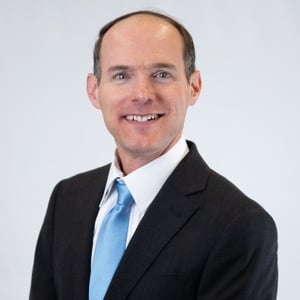
Associate Professor & Director, Constitutional Government Initiative, Wheatley Institute, Brigham Young University
James C. Phillips is the Constitutional Government Initiative Director and an associate professor at BYU’s Wheatley Institute. He is also a fellow with the UC-Berkeley School of Law’s Public Law and Policy Program and an academic affiliate with the D.C.-based law firm Schaerr|Jaffe. His scholarship has been cited by judges around the country, including at the U.S. Supreme Court, and has been covered in various media outlets, including the New York Times Magazine, USA Today, Reuters, CNN, and Fox News. He is a member of the Executive Committee of the Federalist Society's Religious Liberty Practice Group and the J. Reuben Clark Law Society Religious Liberty Committee.
Prior to joining Wheatley, Phillips was associate professor of law at Chapman University’s Fowler School of Law, where he taught Constitutional Law, Religion and the Constitution, Civil Procedure, Family Law, and Professional Responsibility and was named 1L Professor of the Year. Dr. Phillips has taught Administrative Law at BYU’s J. Reuben Clark Law School, where he also helped conceive and design the Corpus of Founding-Era American English. He was also a Non-resident Fellow with Stanford Law School’s Constitutional Law Center.
Dr. Phillips has published dozens of academic articles, primarily in law journals, but also communications, business, and history journals. His longer pieces have been published in, for example, the University of Pennsylvania Law Review, the Southern California Law Review, and the Harvard Journal of Law and Public Policy, and his shorter articles have been published in journals such as the Yale Law Journal Forum and the Duke Law Journal Online. Dr. Phillips has also written op-eds on constitutional issues for Newsweek, The Atlantic, the Los Angeles Times, the Orange County Register, Deseret News, and National Review.
Prior to his university posts, Dr. Phillips practiced law as a Constitutional Law Fellow for the Becket Fund for Religious Liberty and an associate for Kirton | McConkie. He has worked on dozens of cases at the U.S. Supreme Court, as well as cases in federal and state courts throughout the country. He is a member of the bar in Utah and D.C. He clerked for Judge Thomas B. Griffith on the U.S. Court of Appeal for the D.C. Circuit and for Justice Thomas R. Lee on the Utah Supreme Court. Dr. Phillips earned his JD, Order of the Coif, from UC-Berkeley’s School of Law, where he was a member of the California Law Review. He also has a PhD in Jurisprudence & Social Policy from UC-Berkeley, an M.A. in Mass Communication from BYU, and a B.A. in History from Arizona State University.

Senior Fellow and Director of Constitutional Studies, Manhattan Institute
Ilya Shapiro is a senior fellow and director of constitutional studies at the Manhattan Institute and a contributing editor of City Journal. Previously he was executive director and senior lecturer at the Georgetown Center for the Constitution, and before that a vice president of the Cato Institute.
Shapiro is the author of Lawless: The Miseducation of America’s Elites (2025) and Supreme Disorder: Judicial Nominations and the Politics of America’s Highest Court (2020), coauthor of Religious Liberties for Corporations? (2014), and editor of 11 volumes of the Cato Supreme Court Review (2008-18). He has contributed to a variety of academic, popular, and professional publications, including the Wall Street Journal, Harvard Journal of Law & Public Policy, Washington Post, Los Angeles Times, USA Today, National Review, and Newsweek. He also regularly provides commentary for various media outlets, writes the Shapiro’s Gavel newsletter on Substack, and once appeared on the Colbert Report.
Shapiro has testified many times before Congress and state legislatures and has filed more than 500 amicus curiae “friend of the court” briefs in the Supreme Court. He lectures regularly on behalf of the Federalist Society, is a member of the board of fellows of the Jewish Policy Center, was an inaugural Washington Fellow at the National Review Institute, and has been an adjunct law professor at the George Washington University and University of Mississippi. He is also the chairman of the board of advisers of the Mississippi Justice Institute, a barrister in the Edward Coke Appellate Inn of Court, and a former member of the Virginia Advisory Committee to the U.S. Commission on Civil Rights.
Earlier in his career, Shapiro was a special assistant/adviser to the Multi-National Force in Iraq on rule-of-law issues and practiced at Patton Boggs and Cleary Gottlieb. Before entering private practice, he clerked for Judge E. Grady Jolly of the U.S. Court of Appeals for the Fifth Circuit. He holds an AB from Princeton University, an MSc from the London School of Economics, and a JD from the University of Chicago Law School.
Professor of Law, Stanford University
Fred Smith Jr., JD ’07, is a Professor of Law at Stanford Law School and a leading scholar of the federal courts. His work on abstention, governmental immunities, and the allocation of power between state and federal courts has shaped contemporary debates over federal jurisdiction. This work has recovered histories that field had forgotten, and centered people the field’s doctrines had rendered invisible. He co-authors Federal Courts in Context (with Erwin Chemerinsky, Seth Davis, and Norman Spaulding) and Constitutional Torts, now in its sixth edition (with Sheldon Nahmod, Tom Eaton, Noah Smith-Drelich, and Michael Wells). He is also an important voice in the growing field of posthumous legal interests, where he created the first law school course of its kind.
His scholarship has appeared in the Harvard Law Review, Yale Law Journal, Stanford Law Review, Columbia Law Review, California Law Review, Michigan Law Review, New York University Law Review, and University of Chicago Law Review, among others. He lectures on these subjects across the United States and internationally, including in Istanbul, Shanghai, and Warsaw, and is regularly consulted as an expert by major media outlets, including CNN, CBS News, MSNBC, NPR, Time, The New York Times, and The Washington Post.
Smith clerked for Judge Myron Thompson (M.D. Ala.), Judge Barrington D. Parker Jr. (2d Cir.), and Justice Sonia Sotomayor (U.S. Supreme Court). He has held faculty positions at Berkeley Law and Emory Law and has been a visiting professor at the University of Chicago, Columbia, and Yale. At Emory, he was named Outstanding Professor of the Year in 2019, 2022, and 2023.
Smith serves as Board Chair of Lambda Legal, the nation’s oldest and largest legal organization dedicated to the civil rights of LGBTQ people. He also serves as an Associate Reporter for the American Law Institute’s Restatement of Constitutional Torts.
Nicholas Institute for Environmental Policy Solutions
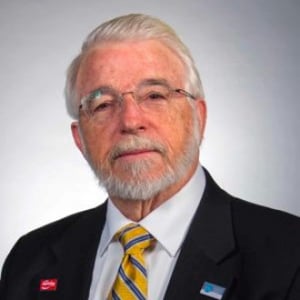
Founder; Chairman Emeritus, Competitive Enterprise Institute
Fred L. Smith, Jr. is the founder and Chairman Emeritus of the Competitive Enterprise Institute. He served as president from 1984 to 2013 and is currently the Director of CEI’s Center for Advancing Capitalism.
His public policy research has covered a wide range of topics, including regulatory reform, free market environmentalism, antitrust law, and international finance and comparative economics. Smith’s current focus is bringing leaders in the business and academic worlds together to defend capitalism and craft narratives that highlight the moral legitimacy of free markets.
His many published works include chapters in the books “Field Guide to Effective Communication” (2004), “Corporate Aftershock: The Public Policy Lessons from the Collapse of Enron and Other Major Corporations” (2003), “Ecology, Liberty, & Property: A Free Market Environmental Reader” (2000), “The Future of Financial Privacy: Private Choices versus Political Rules” (1999), “Environmental Politics: Public Costs, Private Rewards” (1992), and “Steering The Elephant: How Washington Works” (1987). His academic articles have appeared in journals such as Harvard Journal of Law and Economics and Knowledge, Technology, and Policy.
Smith has also written widely for leading newspapers and magazines such as The Wall Street Journal, Washington Post, USA Today, National Journal, Economic Affairs, and Forbes. He has also made hundreds of television and radio appearances on networks such as ABC, CNBC, CNN, Fox News, National Public Radio, and Radio America, among others.
Before founding CEI, Smith served as Director of Government Relations for the Council for a Competitive Economy, as a senior economist for the Association of American Railroads, and for five years as a Senior Policy Analyst at the Environmental Protection Agency. He is currently a member of the Board of Directors of the Competitive Enterprise Institute, the American Conservative Union, and the American Council on Science and Health and a member of the Foundation for Economic Education’s Faculty Network.
Smith graduated with top honors and holds a Bachelors of Science in Theoretical Mathematics and Political Science from Tulane University. He has also done graduate work in mathematics and applied mathematical economics at Harvard, SUNY at Buffalo, and the University of Pennsylvania.
Founder; Chairman Emeritus, Competitive Enterprise Institute
Fred L. Smith, Jr. is the founder and Chairman Emeritus of the Competitive Enterprise Institute. He served as president from 1984 to 2013 and is currently the Director of CEI’s Center for Advancing Capitalism.
His public policy research has covered a wide range of topics, including regulatory reform, free market environmentalism, antitrust law, and international finance and comparative economics. Smith’s current focus is bringing leaders in the business and academic worlds together to defend capitalism and craft narratives that highlight the moral legitimacy of free markets.
His many published works include chapters in the books “Field Guide to Effective Communication” (2004), “Corporate Aftershock: The Public Policy Lessons from the Collapse of Enron and Other Major Corporations” (2003), “Ecology, Liberty, & Property: A Free Market Environmental Reader” (2000), “The Future of Financial Privacy: Private Choices versus Political Rules” (1999), “Environmental Politics: Public Costs, Private Rewards” (1992), and “Steering The Elephant: How Washington Works” (1987). His academic articles have appeared in journals such as Harvard Journal of Law and Economics and Knowledge, Technology, and Policy.
Smith has also written widely for leading newspapers and magazines such as The Wall Street Journal, Washington Post, USA Today, National Journal, Economic Affairs, and Forbes. He has also made hundreds of television and radio appearances on networks such as ABC, CNBC, CNN, Fox News, National Public Radio, and Radio America, among others.
Before founding CEI, Smith served as Director of Government Relations for the Council for a Competitive Economy, as a senior economist for the Association of American Railroads, and for five years as a Senior Policy Analyst at the Environmental Protection Agency. He is currently a member of the Board of Directors of the Competitive Enterprise Institute, the American Conservative Union, and the American Council on Science and Health and a member of the Foundation for Economic Education’s Faculty Network.
Smith graduated with top honors and holds a Bachelors of Science in Theoretical Mathematics and Political Science from Tulane University. He has also done graduate work in mathematics and applied mathematical economics at Harvard, SUNY at Buffalo, and the University of Pennsylvania.
Associate Professor & Director, Constitutional Government Initiative, Wheatley Institute, Brigham Young University
James C. Phillips is the Constitutional Government Initiative Director and an associate professor at BYU’s Wheatley Institute. He is also a fellow with the UC-Berkeley School of Law’s Public Law and Policy Program and an academic affiliate with the D.C.-based law firm Schaerr|Jaffe. His scholarship has been cited by judges around the country, including at the U.S. Supreme Court, and has been covered in various media outlets, including the New York Times Magazine, USA Today, Reuters, CNN, and Fox News. He is a member of the Executive Committee of the Federalist Society's Religious Liberty Practice Group and the J. Reuben Clark Law Society Religious Liberty Committee.
Prior to joining Wheatley, Phillips was associate professor of law at Chapman University’s Fowler School of Law, where he taught Constitutional Law, Religion and the Constitution, Civil Procedure, Family Law, and Professional Responsibility and was named 1L Professor of the Year. Dr. Phillips has taught Administrative Law at BYU’s J. Reuben Clark Law School, where he also helped conceive and design the Corpus of Founding-Era American English. He was also a Non-resident Fellow with Stanford Law School’s Constitutional Law Center.
Dr. Phillips has published dozens of academic articles, primarily in law journals, but also communications, business, and history journals. His longer pieces have been published in, for example, the University of Pennsylvania Law Review, the Southern California Law Review, and the Harvard Journal of Law and Public Policy, and his shorter articles have been published in journals such as the Yale Law Journal Forum and the Duke Law Journal Online. Dr. Phillips has also written op-eds on constitutional issues for Newsweek, The Atlantic, the Los Angeles Times, the Orange County Register, Deseret News, and National Review.
Prior to his university posts, Dr. Phillips practiced law as a Constitutional Law Fellow for the Becket Fund for Religious Liberty and an associate for Kirton | McConkie. He has worked on dozens of cases at the U.S. Supreme Court, as well as cases in federal and state courts throughout the country. He is a member of the bar in Utah and D.C. He clerked for Judge Thomas B. Griffith on the U.S. Court of Appeal for the D.C. Circuit and for Justice Thomas R. Lee on the Utah Supreme Court. Dr. Phillips earned his JD, Order of the Coif, from UC-Berkeley’s School of Law, where he was a member of the California Law Review. He also has a PhD in Jurisprudence & Social Policy from UC-Berkeley, an M.A. in Mass Communication from BYU, and a B.A. in History from Arizona State University.
Senior Fellow and Director of Constitutional Studies, Manhattan Institute
Ilya Shapiro is a senior fellow and director of constitutional studies at the Manhattan Institute and a contributing editor of City Journal. Previously he was executive director and senior lecturer at the Georgetown Center for the Constitution, and before that a vice president of the Cato Institute.
Shapiro is the author of Lawless: The Miseducation of America’s Elites (2025) and Supreme Disorder: Judicial Nominations and the Politics of America’s Highest Court (2020), coauthor of Religious Liberties for Corporations? (2014), and editor of 11 volumes of the Cato Supreme Court Review (2008-18). He has contributed to a variety of academic, popular, and professional publications, including the Wall Street Journal, Harvard Journal of Law & Public Policy, Washington Post, Los Angeles Times, USA Today, National Review, and Newsweek. He also regularly provides commentary for various media outlets, writes the Shapiro’s Gavel newsletter on Substack, and once appeared on the Colbert Report.
Shapiro has testified many times before Congress and state legislatures and has filed more than 500 amicus curiae “friend of the court” briefs in the Supreme Court. He lectures regularly on behalf of the Federalist Society, is a member of the board of fellows of the Jewish Policy Center, was an inaugural Washington Fellow at the National Review Institute, and has been an adjunct law professor at the George Washington University and University of Mississippi. He is also the chairman of the board of advisers of the Mississippi Justice Institute, a barrister in the Edward Coke Appellate Inn of Court, and a former member of the Virginia Advisory Committee to the U.S. Commission on Civil Rights.
Earlier in his career, Shapiro was a special assistant/adviser to the Multi-National Force in Iraq on rule-of-law issues and practiced at Patton Boggs and Cleary Gottlieb. Before entering private practice, he clerked for Judge E. Grady Jolly of the U.S. Court of Appeals for the Fifth Circuit. He holds an AB from Princeton University, an MSc from the London School of Economics, and a JD from the University of Chicago Law School.
Professor of Law, Stanford University
Fred Smith Jr., JD ’07, is a Professor of Law at Stanford Law School and a leading scholar of the federal courts. His work on abstention, governmental immunities, and the allocation of power between state and federal courts has shaped contemporary debates over federal jurisdiction. This work has recovered histories that field had forgotten, and centered people the field’s doctrines had rendered invisible. He co-authors Federal Courts in Context (with Erwin Chemerinsky, Seth Davis, and Norman Spaulding) and Constitutional Torts, now in its sixth edition (with Sheldon Nahmod, Tom Eaton, Noah Smith-Drelich, and Michael Wells). He is also an important voice in the growing field of posthumous legal interests, where he created the first law school course of its kind.
His scholarship has appeared in the Harvard Law Review, Yale Law Journal, Stanford Law Review, Columbia Law Review, California Law Review, Michigan Law Review, New York University Law Review, and University of Chicago Law Review, among others. He lectures on these subjects across the United States and internationally, including in Istanbul, Shanghai, and Warsaw, and is regularly consulted as an expert by major media outlets, including CNN, CBS News, MSNBC, NPR, Time, The New York Times, and The Washington Post.
Smith clerked for Judge Myron Thompson (M.D. Ala.), Judge Barrington D. Parker Jr. (2d Cir.), and Justice Sonia Sotomayor (U.S. Supreme Court). He has held faculty positions at Berkeley Law and Emory Law and has been a visiting professor at the University of Chicago, Columbia, and Yale. At Emory, he was named Outstanding Professor of the Year in 2019, 2022, and 2023.
Smith serves as Board Chair of Lambda Legal, the nation’s oldest and largest legal organization dedicated to the civil rights of LGBTQ people. He also serves as an Associate Reporter for the American Law Institute’s Restatement of Constitutional Torts.

Supreme Court Review/Preview
Atlanta Lawyer Chapter
Atlanta, GASupreme Court Roundup - Atlanta
Atlanta Lawyers Chapter
Atlanta, GAU.S. Supreme Court 2023-24 Term Preview
Atlanta Lawyers Chapter
Atlanta, GA2022 Supreme Court Review
Atlanta Lawyers Chapter
Atlanta, GASupreme Court Term Preview
Atlanta, GASupreme Court Debate
Berkeley, CAThe Impact of Judicial Activism on the Moral Character of Citizens
James C. Phillips, Ilya Shapiro, Fred Smith
On October 28, 2010, the UC Berkeley Student Chapter of the Federalist Society hosted this debate...
The Impact of Judicial Activism on the Moral Character of Citizens
UC Berkeley Student Chapter
Berkeley, CAIs Free-Market Capitalism a Friend or Foe of the Environment?
Campbell Student Chapter
Raleigh, NCCapitalism, Regulation, and the Financial Crisis
California-Davis Student Chapter
Davis, CA