
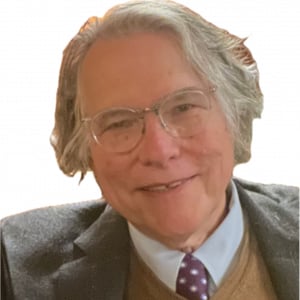
Partner, Earth and Water Law; retired Yale Law School professor (1981-2025), Yangtze River Distinguished Professor, Guangzhou Law School, ChinaDistinguished Adjunct Professor at Antonin Scalia Law School
E. Donald Elliott is a Florence Rogatz Visiting Professor of Law at Yale Law School and a leading academic scholar, as well as practitioner, in the fields of administrative and environmental law. He is “one of the most well-known, well-regarded environmental law professors in the nation,” according to John Cruden, former President of the Environmental Law Institute and Assistant Attorney General, Environment and Natural Resources Division, U.S. Department of Justice during the Obama administration. Elliott has been on the Yale Law faculty since 1981 and currently teaches courses in environmental law, energy law, administrative law and civil procedure. He is also senior of counsel in the Washington D.C. office of Covington & Burling LLP, and co-chair of the firm's Environmental Practice Group. From 2003 until he joined Covington in 2013, he was a partner in Willkie Farr & Gallagher LLP, chairing the firm’s worldwide Environment, Health and Safety Department.
From 1989 to 1991, Elliott served as Assistant Administrator and General Counsel of the U.S. Environmental Protection Agency (EPA). In 1993, he was named to the first endowed chair in environmental law and policy at any major American law school, the Julien and Virginia Cornell Chair in Environmental Law and Litigation at Yale Law School. From 2003-2009, he was a member of the National Academy of Sciences Board on Environmental Studies and Toxicology, which advises the federal government on environmental issues. Elliott also testifies frequently in Congress on environmental issues.
He has served as a consultant on improving the relationship of law and science to the Federal Courts Study Committee, which was chartered by Congress to make recommendations for improving the federal courts, and to the Carnegie Commission for Law, Science and Government. He co-chaired the National Environmental Policy Institute’s Committee on Improving Science at EPA.
Elliott is a Senior Fellow of the Administrative Conference of the United States (ACUS) and an elected member of the American College of Environmental Lawyers and the American Law Institute. He serves on the Board of the Connecticut Fund for the Environment and as chair of its legal committee, as well on the Advisory Board for NYU’s Institute for Policy Integrity. He is a former member of the boards of the Environmental Law Institute, and the Center for Clean Air Policy. He is the author or coauthor of seven books and has published more than 70 articles in professional journals. He was named one of the top 25 environmental attorneys in the United States by the National Law Journal and is highly ranked in Chambers USA: Leading Lawyers for Business; Best Lawyers in America; D.C. Super Lawyers; Who’s Who in American Law; and Who’s Who in the World.
He earned both his B.A., summa cum laude and Phi Beta Kappa, and his J.D. from Yale. Following graduation, he was a law clerk for Gerhard Gesell in the U.S. District Court for the District of Columbia, and for Chief Judge David Bazelon of the U.S. Court of Appeals for the District of Columbia Circuit.
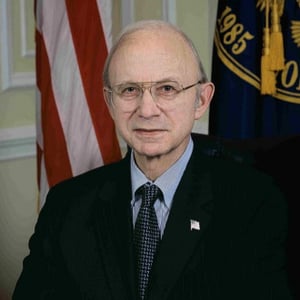
Former Archivist of the United States
Allen Weinstein (September 1, 1937 – June 18, 2015) was an American historian, educator, and federal official who served in several different offices. He was, under the Reagan administration, cofounder of the National Endowment for Democracy in 1983. He served as the Archivist of the United States from February 16, 2005, until his resignation on December 19, 2008. After his resignation, he returned to the International Foundation for Electoral Systems as a senior strategist and was a visiting faculty member at the University of Maryland.
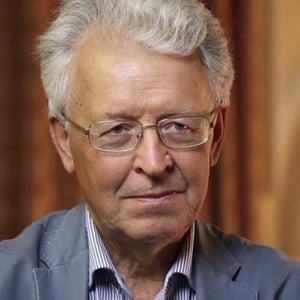
Professor, Department of International Finance, Moscow State Institute for International Relations
Professor, Department of Moscow State Institute of International Finance, doctor of economic sciences, corresponding member of the Academy of Economics and Commerce. He was consultant of the United Nations (1991-1993), member of the Advisory Council to the President of the European Bank for Reconstruction and Development (EBRD) (1993-1996), head of the Department of international monetary relations of the Ministry of Foreign Affairs Russia (2001-11).
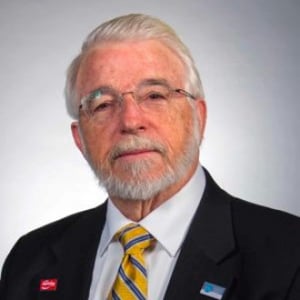
Founder; Chairman Emeritus, Competitive Enterprise Institute
Fred L. Smith, Jr. is the founder and Chairman Emeritus of the Competitive Enterprise Institute. He served as president from 1984 to 2013 and is currently the Director of CEI’s Center for Advancing Capitalism.
His public policy research has covered a wide range of topics, including regulatory reform, free market environmentalism, antitrust law, and international finance and comparative economics. Smith’s current focus is bringing leaders in the business and academic worlds together to defend capitalism and craft narratives that highlight the moral legitimacy of free markets.
His many published works include chapters in the books “Field Guide to Effective Communication” (2004), “Corporate Aftershock: The Public Policy Lessons from the Collapse of Enron and Other Major Corporations” (2003), “Ecology, Liberty, & Property: A Free Market Environmental Reader” (2000), “The Future of Financial Privacy: Private Choices versus Political Rules” (1999), “Environmental Politics: Public Costs, Private Rewards” (1992), and “Steering The Elephant: How Washington Works” (1987). His academic articles have appeared in journals such as Harvard Journal of Law and Economics and Knowledge, Technology, and Policy.
Smith has also written widely for leading newspapers and magazines such as The Wall Street Journal, Washington Post, USA Today, National Journal, Economic Affairs, and Forbes. He has also made hundreds of television and radio appearances on networks such as ABC, CNBC, CNN, Fox News, National Public Radio, and Radio America, among others.
Before founding CEI, Smith served as Director of Government Relations for the Council for a Competitive Economy, as a senior economist for the Association of American Railroads, and for five years as a Senior Policy Analyst at the Environmental Protection Agency. He is currently a member of the Board of Directors of the Competitive Enterprise Institute, the American Conservative Union, and the American Council on Science and Health and a member of the Foundation for Economic Education’s Faculty Network.
Smith graduated with top honors and holds a Bachelors of Science in Theoretical Mathematics and Political Science from Tulane University. He has also done graduate work in mathematics and applied mathematical economics at Harvard, SUNY at Buffalo, and the University of Pennsylvania.
Partner, Earth and Water Law; retired Yale Law School professor (1981-2025), Yangtze River Distinguished Professor, Guangzhou Law School, ChinaDistinguished Adjunct Professor at Antonin Scalia Law School
E. Donald Elliott is a Florence Rogatz Visiting Professor of Law at Yale Law School and a leading academic scholar, as well as practitioner, in the fields of administrative and environmental law. He is “one of the most well-known, well-regarded environmental law professors in the nation,” according to John Cruden, former President of the Environmental Law Institute and Assistant Attorney General, Environment and Natural Resources Division, U.S. Department of Justice during the Obama administration. Elliott has been on the Yale Law faculty since 1981 and currently teaches courses in environmental law, energy law, administrative law and civil procedure. He is also senior of counsel in the Washington D.C. office of Covington & Burling LLP, and co-chair of the firm's Environmental Practice Group. From 2003 until he joined Covington in 2013, he was a partner in Willkie Farr & Gallagher LLP, chairing the firm’s worldwide Environment, Health and Safety Department.
From 1989 to 1991, Elliott served as Assistant Administrator and General Counsel of the U.S. Environmental Protection Agency (EPA). In 1993, he was named to the first endowed chair in environmental law and policy at any major American law school, the Julien and Virginia Cornell Chair in Environmental Law and Litigation at Yale Law School. From 2003-2009, he was a member of the National Academy of Sciences Board on Environmental Studies and Toxicology, which advises the federal government on environmental issues. Elliott also testifies frequently in Congress on environmental issues.
He has served as a consultant on improving the relationship of law and science to the Federal Courts Study Committee, which was chartered by Congress to make recommendations for improving the federal courts, and to the Carnegie Commission for Law, Science and Government. He co-chaired the National Environmental Policy Institute’s Committee on Improving Science at EPA.
Elliott is a Senior Fellow of the Administrative Conference of the United States (ACUS) and an elected member of the American College of Environmental Lawyers and the American Law Institute. He serves on the Board of the Connecticut Fund for the Environment and as chair of its legal committee, as well on the Advisory Board for NYU’s Institute for Policy Integrity. He is a former member of the boards of the Environmental Law Institute, and the Center for Clean Air Policy. He is the author or coauthor of seven books and has published more than 70 articles in professional journals. He was named one of the top 25 environmental attorneys in the United States by the National Law Journal and is highly ranked in Chambers USA: Leading Lawyers for Business; Best Lawyers in America; D.C. Super Lawyers; Who’s Who in American Law; and Who’s Who in the World.
He earned both his B.A., summa cum laude and Phi Beta Kappa, and his J.D. from Yale. Following graduation, he was a law clerk for Gerhard Gesell in the U.S. District Court for the District of Columbia, and for Chief Judge David Bazelon of the U.S. Court of Appeals for the District of Columbia Circuit.
Professor, Department of International Finance, Moscow State Institute for International Relations
Professor, Department of Moscow State Institute of International Finance, doctor of economic sciences, corresponding member of the Academy of Economics and Commerce. He was consultant of the United Nations (1991-1993), member of the Advisory Council to the President of the European Bank for Reconstruction and Development (EBRD) (1993-1996), head of the Department of international monetary relations of the Ministry of Foreign Affairs Russia (2001-11).
Founder; Chairman Emeritus, Competitive Enterprise Institute
Fred L. Smith, Jr. is the founder and Chairman Emeritus of the Competitive Enterprise Institute. He served as president from 1984 to 2013 and is currently the Director of CEI’s Center for Advancing Capitalism.
His public policy research has covered a wide range of topics, including regulatory reform, free market environmentalism, antitrust law, and international finance and comparative economics. Smith’s current focus is bringing leaders in the business and academic worlds together to defend capitalism and craft narratives that highlight the moral legitimacy of free markets.
His many published works include chapters in the books “Field Guide to Effective Communication” (2004), “Corporate Aftershock: The Public Policy Lessons from the Collapse of Enron and Other Major Corporations” (2003), “Ecology, Liberty, & Property: A Free Market Environmental Reader” (2000), “The Future of Financial Privacy: Private Choices versus Political Rules” (1999), “Environmental Politics: Public Costs, Private Rewards” (1992), and “Steering The Elephant: How Washington Works” (1987). His academic articles have appeared in journals such as Harvard Journal of Law and Economics and Knowledge, Technology, and Policy.
Smith has also written widely for leading newspapers and magazines such as The Wall Street Journal, Washington Post, USA Today, National Journal, Economic Affairs, and Forbes. He has also made hundreds of television and radio appearances on networks such as ABC, CNBC, CNN, Fox News, National Public Radio, and Radio America, among others.
Before founding CEI, Smith served as Director of Government Relations for the Council for a Competitive Economy, as a senior economist for the Association of American Railroads, and for five years as a Senior Policy Analyst at the Environmental Protection Agency. He is currently a member of the Board of Directors of the Competitive Enterprise Institute, the American Conservative Union, and the American Council on Science and Health and a member of the Foundation for Economic Education’s Faculty Network.
Smith graduated with top honors and holds a Bachelors of Science in Theoretical Mathematics and Political Science from Tulane University. He has also done graduate work in mathematics and applied mathematical economics at Harvard, SUNY at Buffalo, and the University of Pennsylvania.
Former Archivist of the United States
Allen Weinstein (September 1, 1937 – June 18, 2015) was an American historian, educator, and federal official who served in several different offices. He was, under the Reagan administration, cofounder of the National Endowment for Democracy in 1983. He served as the Archivist of the United States from February 16, 2005, until his resignation on December 19, 2008. After his resignation, he returned to the International Foundation for Electoral Systems as a senior strategist and was a visiting faculty member at the University of Maryland.
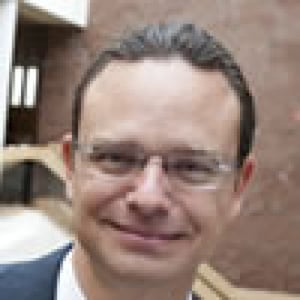
Associate Professor of Law, UMKC School of Law
A struggling Spanish guitar and didgeridoo playing former naval officer, Tim Lynch joined the faculty as an associate professor in summer 2011.
Prior to joining the faculty, Professor Lynch taught as a visiting assistant professor at the Indiana University Maurer School of Law. His scholarship is principally in the areas of international capital markets and international trade. He teaches the courses International Trade Law and Finance, International Business Transactions, Conflicts of Law, and International Environmental Law.
Tim received his JD from Harvard Law School, his MBA from Indiana University’s Kelley School of Business and his BA from the University of Chicago, where he majored in Arabic and Islamic studies and spent much of his time training and captaining the university’s rowing team.
Prior to entering academia, Professor Lynch was an associate attorney at Coudert Brothers in New York largely representing institutions in international investment transactions and development projects. After living in Japan for several years, and then living out of a pickup truck while traveling around North America for a year, he became the executive manager for the Public Works Department of the Emirate of Abu Dhabi, where he managed the construction of several grand-scale public works projects.
When he is not struggling with the guitar or the didge, Professor Lynch devotes far too much time and money learning how to turn wood and playing with his three young boys.
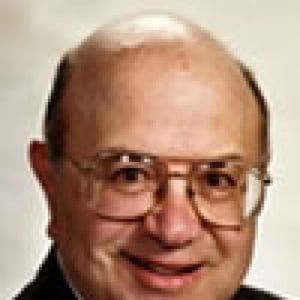
Professor of Economics, Indiana University-Purdue University Indianapolis
Professor Spechler's research field is comparative economic systems. He investigates the economies of different countries (developed capitalist, communist, emerging, and under-developed) and compares them to each other at a point in time, and to themselves over time.
His recent research has been on the transitional economies of the former Soviet bloc. He is currently using these countries to explain why some countries agree to form regional economic trading groups (blocs) and why others resist efforts to integrate their economies with a broader group.
Spechler is the only American economist working full-time on the economies of post-Soviet Central Asia. He has been a consultant for the World Bank, Asian Development Bank, the Global Development Network, USAID, and other U.S. governmental agencies. He is also Book Review Editor for Comparative Economic Studies. His new book The Political Economy of Reform in Central Asia: Uzbekistan and Its Neighbors will be published soon by Routledge (U.K.)
Founder; Chairman Emeritus, Competitive Enterprise Institute
Fred L. Smith, Jr. is the founder and Chairman Emeritus of the Competitive Enterprise Institute. He served as president from 1984 to 2013 and is currently the Director of CEI’s Center for Advancing Capitalism.
His public policy research has covered a wide range of topics, including regulatory reform, free market environmentalism, antitrust law, and international finance and comparative economics. Smith’s current focus is bringing leaders in the business and academic worlds together to defend capitalism and craft narratives that highlight the moral legitimacy of free markets.
His many published works include chapters in the books “Field Guide to Effective Communication” (2004), “Corporate Aftershock: The Public Policy Lessons from the Collapse of Enron and Other Major Corporations” (2003), “Ecology, Liberty, & Property: A Free Market Environmental Reader” (2000), “The Future of Financial Privacy: Private Choices versus Political Rules” (1999), “Environmental Politics: Public Costs, Private Rewards” (1992), and “Steering The Elephant: How Washington Works” (1987). His academic articles have appeared in journals such as Harvard Journal of Law and Economics and Knowledge, Technology, and Policy.
Smith has also written widely for leading newspapers and magazines such as The Wall Street Journal, Washington Post, USA Today, National Journal, Economic Affairs, and Forbes. He has also made hundreds of television and radio appearances on networks such as ABC, CNBC, CNN, Fox News, National Public Radio, and Radio America, among others.
Before founding CEI, Smith served as Director of Government Relations for the Council for a Competitive Economy, as a senior economist for the Association of American Railroads, and for five years as a Senior Policy Analyst at the Environmental Protection Agency. He is currently a member of the Board of Directors of the Competitive Enterprise Institute, the American Conservative Union, and the American Council on Science and Health and a member of the Foundation for Economic Education’s Faculty Network.
Smith graduated with top honors and holds a Bachelors of Science in Theoretical Mathematics and Political Science from Tulane University. He has also done graduate work in mathematics and applied mathematical economics at Harvard, SUNY at Buffalo, and the University of Pennsylvania.
Associate Professor of Law, UMKC School of Law
A struggling Spanish guitar and didgeridoo playing former naval officer, Tim Lynch joined the faculty as an associate professor in summer 2011.
Prior to joining the faculty, Professor Lynch taught as a visiting assistant professor at the Indiana University Maurer School of Law. His scholarship is principally in the areas of international capital markets and international trade. He teaches the courses International Trade Law and Finance, International Business Transactions, Conflicts of Law, and International Environmental Law.
Tim received his JD from Harvard Law School, his MBA from Indiana University’s Kelley School of Business and his BA from the University of Chicago, where he majored in Arabic and Islamic studies and spent much of his time training and captaining the university’s rowing team.
Prior to entering academia, Professor Lynch was an associate attorney at Coudert Brothers in New York largely representing institutions in international investment transactions and development projects. After living in Japan for several years, and then living out of a pickup truck while traveling around North America for a year, he became the executive manager for the Public Works Department of the Emirate of Abu Dhabi, where he managed the construction of several grand-scale public works projects.
When he is not struggling with the guitar or the didge, Professor Lynch devotes far too much time and money learning how to turn wood and playing with his three young boys.
Professor of Economics, Indiana University-Purdue University Indianapolis
Professor Spechler's research field is comparative economic systems. He investigates the economies of different countries (developed capitalist, communist, emerging, and under-developed) and compares them to each other at a point in time, and to themselves over time.
His recent research has been on the transitional economies of the former Soviet bloc. He is currently using these countries to explain why some countries agree to form regional economic trading groups (blocs) and why others resist efforts to integrate their economies with a broader group.
Spechler is the only American economist working full-time on the economies of post-Soviet Central Asia. He has been a consultant for the World Bank, Asian Development Bank, the Global Development Network, USAID, and other U.S. governmental agencies. He is also Book Review Editor for Comparative Economic Studies. His new book The Political Economy of Reform in Central Asia: Uzbekistan and Its Neighbors will be published soon by Routledge (U.K.)
Founder; Chairman Emeritus, Competitive Enterprise Institute
Fred L. Smith, Jr. is the founder and Chairman Emeritus of the Competitive Enterprise Institute. He served as president from 1984 to 2013 and is currently the Director of CEI’s Center for Advancing Capitalism.
His public policy research has covered a wide range of topics, including regulatory reform, free market environmentalism, antitrust law, and international finance and comparative economics. Smith’s current focus is bringing leaders in the business and academic worlds together to defend capitalism and craft narratives that highlight the moral legitimacy of free markets.
His many published works include chapters in the books “Field Guide to Effective Communication” (2004), “Corporate Aftershock: The Public Policy Lessons from the Collapse of Enron and Other Major Corporations” (2003), “Ecology, Liberty, & Property: A Free Market Environmental Reader” (2000), “The Future of Financial Privacy: Private Choices versus Political Rules” (1999), “Environmental Politics: Public Costs, Private Rewards” (1992), and “Steering The Elephant: How Washington Works” (1987). His academic articles have appeared in journals such as Harvard Journal of Law and Economics and Knowledge, Technology, and Policy.
Smith has also written widely for leading newspapers and magazines such as The Wall Street Journal, Washington Post, USA Today, National Journal, Economic Affairs, and Forbes. He has also made hundreds of television and radio appearances on networks such as ABC, CNBC, CNN, Fox News, National Public Radio, and Radio America, among others.
Before founding CEI, Smith served as Director of Government Relations for the Council for a Competitive Economy, as a senior economist for the Association of American Railroads, and for five years as a Senior Policy Analyst at the Environmental Protection Agency. He is currently a member of the Board of Directors of the Competitive Enterprise Institute, the American Conservative Union, and the American Council on Science and Health and a member of the Foundation for Economic Education’s Faculty Network.
Smith graduated with top honors and holds a Bachelors of Science in Theoretical Mathematics and Political Science from Tulane University. He has also done graduate work in mathematics and applied mathematical economics at Harvard, SUNY at Buffalo, and the University of Pennsylvania.
Associate Professor of Law, UMKC School of Law
A struggling Spanish guitar and didgeridoo playing former naval officer, Tim Lynch joined the faculty as an associate professor in summer 2011.
Prior to joining the faculty, Professor Lynch taught as a visiting assistant professor at the Indiana University Maurer School of Law. His scholarship is principally in the areas of international capital markets and international trade. He teaches the courses International Trade Law and Finance, International Business Transactions, Conflicts of Law, and International Environmental Law.
Tim received his JD from Harvard Law School, his MBA from Indiana University’s Kelley School of Business and his BA from the University of Chicago, where he majored in Arabic and Islamic studies and spent much of his time training and captaining the university’s rowing team.
Prior to entering academia, Professor Lynch was an associate attorney at Coudert Brothers in New York largely representing institutions in international investment transactions and development projects. After living in Japan for several years, and then living out of a pickup truck while traveling around North America for a year, he became the executive manager for the Public Works Department of the Emirate of Abu Dhabi, where he managed the construction of several grand-scale public works projects.
When he is not struggling with the guitar or the didge, Professor Lynch devotes far too much time and money learning how to turn wood and playing with his three young boys.
Founder; Chairman Emeritus, Competitive Enterprise Institute
Fred L. Smith, Jr. is the founder and Chairman Emeritus of the Competitive Enterprise Institute. He served as president from 1984 to 2013 and is currently the Director of CEI’s Center for Advancing Capitalism.
His public policy research has covered a wide range of topics, including regulatory reform, free market environmentalism, antitrust law, and international finance and comparative economics. Smith’s current focus is bringing leaders in the business and academic worlds together to defend capitalism and craft narratives that highlight the moral legitimacy of free markets.
His many published works include chapters in the books “Field Guide to Effective Communication” (2004), “Corporate Aftershock: The Public Policy Lessons from the Collapse of Enron and Other Major Corporations” (2003), “Ecology, Liberty, & Property: A Free Market Environmental Reader” (2000), “The Future of Financial Privacy: Private Choices versus Political Rules” (1999), “Environmental Politics: Public Costs, Private Rewards” (1992), and “Steering The Elephant: How Washington Works” (1987). His academic articles have appeared in journals such as Harvard Journal of Law and Economics and Knowledge, Technology, and Policy.
Smith has also written widely for leading newspapers and magazines such as The Wall Street Journal, Washington Post, USA Today, National Journal, Economic Affairs, and Forbes. He has also made hundreds of television and radio appearances on networks such as ABC, CNBC, CNN, Fox News, National Public Radio, and Radio America, among others.
Before founding CEI, Smith served as Director of Government Relations for the Council for a Competitive Economy, as a senior economist for the Association of American Railroads, and for five years as a Senior Policy Analyst at the Environmental Protection Agency. He is currently a member of the Board of Directors of the Competitive Enterprise Institute, the American Conservative Union, and the American Council on Science and Health and a member of the Foundation for Economic Education’s Faculty Network.
Smith graduated with top honors and holds a Bachelors of Science in Theoretical Mathematics and Political Science from Tulane University. He has also done graduate work in mathematics and applied mathematical economics at Harvard, SUNY at Buffalo, and the University of Pennsylvania.
Professor of Economics, Indiana University-Purdue University Indianapolis
Professor Spechler's research field is comparative economic systems. He investigates the economies of different countries (developed capitalist, communist, emerging, and under-developed) and compares them to each other at a point in time, and to themselves over time.
His recent research has been on the transitional economies of the former Soviet bloc. He is currently using these countries to explain why some countries agree to form regional economic trading groups (blocs) and why others resist efforts to integrate their economies with a broader group.
Spechler is the only American economist working full-time on the economies of post-Soviet Central Asia. He has been a consultant for the World Bank, Asian Development Bank, the Global Development Network, USAID, and other U.S. governmental agencies. He is also Book Review Editor for Comparative Economic Studies. His new book The Political Economy of Reform in Central Asia: Uzbekistan and Its Neighbors will be published soon by Routledge (U.K.)
Partner, Earth and Water Law; retired Yale Law School professor (1981-2025), Yangtze River Distinguished Professor, Guangzhou Law School, ChinaDistinguished Adjunct Professor at Antonin Scalia Law School
E. Donald Elliott is a Florence Rogatz Visiting Professor of Law at Yale Law School and a leading academic scholar, as well as practitioner, in the fields of administrative and environmental law. He is “one of the most well-known, well-regarded environmental law professors in the nation,” according to John Cruden, former President of the Environmental Law Institute and Assistant Attorney General, Environment and Natural Resources Division, U.S. Department of Justice during the Obama administration. Elliott has been on the Yale Law faculty since 1981 and currently teaches courses in environmental law, energy law, administrative law and civil procedure. He is also senior of counsel in the Washington D.C. office of Covington & Burling LLP, and co-chair of the firm's Environmental Practice Group. From 2003 until he joined Covington in 2013, he was a partner in Willkie Farr & Gallagher LLP, chairing the firm’s worldwide Environment, Health and Safety Department.
From 1989 to 1991, Elliott served as Assistant Administrator and General Counsel of the U.S. Environmental Protection Agency (EPA). In 1993, he was named to the first endowed chair in environmental law and policy at any major American law school, the Julien and Virginia Cornell Chair in Environmental Law and Litigation at Yale Law School. From 2003-2009, he was a member of the National Academy of Sciences Board on Environmental Studies and Toxicology, which advises the federal government on environmental issues. Elliott also testifies frequently in Congress on environmental issues.
He has served as a consultant on improving the relationship of law and science to the Federal Courts Study Committee, which was chartered by Congress to make recommendations for improving the federal courts, and to the Carnegie Commission for Law, Science and Government. He co-chaired the National Environmental Policy Institute’s Committee on Improving Science at EPA.
Elliott is a Senior Fellow of the Administrative Conference of the United States (ACUS) and an elected member of the American College of Environmental Lawyers and the American Law Institute. He serves on the Board of the Connecticut Fund for the Environment and as chair of its legal committee, as well on the Advisory Board for NYU’s Institute for Policy Integrity. He is a former member of the boards of the Environmental Law Institute, and the Center for Clean Air Policy. He is the author or coauthor of seven books and has published more than 70 articles in professional journals. He was named one of the top 25 environmental attorneys in the United States by the National Law Journal and is highly ranked in Chambers USA: Leading Lawyers for Business; Best Lawyers in America; D.C. Super Lawyers; Who’s Who in American Law; and Who’s Who in the World.
He earned both his B.A., summa cum laude and Phi Beta Kappa, and his J.D. from Yale. Following graduation, he was a law clerk for Gerhard Gesell in the U.S. District Court for the District of Columbia, and for Chief Judge David Bazelon of the U.S. Court of Appeals for the District of Columbia Circuit.
Professor, Department of International Finance, Moscow State Institute for International Relations
Professor, Department of Moscow State Institute of International Finance, doctor of economic sciences, corresponding member of the Academy of Economics and Commerce. He was consultant of the United Nations (1991-1993), member of the Advisory Council to the President of the European Bank for Reconstruction and Development (EBRD) (1993-1996), head of the Department of international monetary relations of the Ministry of Foreign Affairs Russia (2001-11).
Founder; Chairman Emeritus, Competitive Enterprise Institute
Fred L. Smith, Jr. is the founder and Chairman Emeritus of the Competitive Enterprise Institute. He served as president from 1984 to 2013 and is currently the Director of CEI’s Center for Advancing Capitalism.
His public policy research has covered a wide range of topics, including regulatory reform, free market environmentalism, antitrust law, and international finance and comparative economics. Smith’s current focus is bringing leaders in the business and academic worlds together to defend capitalism and craft narratives that highlight the moral legitimacy of free markets.
His many published works include chapters in the books “Field Guide to Effective Communication” (2004), “Corporate Aftershock: The Public Policy Lessons from the Collapse of Enron and Other Major Corporations” (2003), “Ecology, Liberty, & Property: A Free Market Environmental Reader” (2000), “The Future of Financial Privacy: Private Choices versus Political Rules” (1999), “Environmental Politics: Public Costs, Private Rewards” (1992), and “Steering The Elephant: How Washington Works” (1987). His academic articles have appeared in journals such as Harvard Journal of Law and Economics and Knowledge, Technology, and Policy.
Smith has also written widely for leading newspapers and magazines such as The Wall Street Journal, Washington Post, USA Today, National Journal, Economic Affairs, and Forbes. He has also made hundreds of television and radio appearances on networks such as ABC, CNBC, CNN, Fox News, National Public Radio, and Radio America, among others.
Before founding CEI, Smith served as Director of Government Relations for the Council for a Competitive Economy, as a senior economist for the Association of American Railroads, and for five years as a Senior Policy Analyst at the Environmental Protection Agency. He is currently a member of the Board of Directors of the Competitive Enterprise Institute, the American Conservative Union, and the American Council on Science and Health and a member of the Foundation for Economic Education’s Faculty Network.
Smith graduated with top honors and holds a Bachelors of Science in Theoretical Mathematics and Political Science from Tulane University. He has also done graduate work in mathematics and applied mathematical economics at Harvard, SUNY at Buffalo, and the University of Pennsylvania.
Former Archivist of the United States
Allen Weinstein (September 1, 1937 – June 18, 2015) was an American historian, educator, and federal official who served in several different offices. He was, under the Reagan administration, cofounder of the National Endowment for Democracy in 1983. He served as the Archivist of the United States from February 16, 2005, until his resignation on December 19, 2008. After his resignation, he returned to the International Foundation for Electoral Systems as a senior strategist and was a visiting faculty member at the University of Maryland.

Environmental Problems in Eastern Europe: Learning from the United States' Mistakes [Archive Collection]
E. Donald Elliott, Allen Weinstein, Valentin Katasonov, Fred L. Smith
On November 30- December 1, 1990, the Federalist Society hosted its annual National Lawyers Convention...
Environmental Problems in Eastern Europe: Learning from the United States' Mistakes [Archive Collection]
E. Donald Elliott, Valentin Katasonov, Fred L. Smith, Allen Weinstein
On November 30- December 1, 1990, the Federalist Society hosted its annual National Lawyers Convention...
Conservative & Libertarian Legal Scholarship: Environmental Law
[Return to Table of Contents] XII. Environmental Law Topical Overviews RICHARD L. REVESZ, FOUNDATIONS OF...
The Financial Crisis: Will More Governmental Stimulus and Regulation Save Our Economy?
Benjamin Blair, Timothy E. Lynch, Martin Spechler, Fred L. Smith
The Indiana-Bloomington Student Chapter hosted this debate on "The Financial Crisis: Will More Governmental Stimulus...
The Financial Crisis: Will More Governmental Stimulus and Regulation Save Our Economy?
Benjamin Blair, Timothy E. Lynch, Martin Spechler, Fred L. Smith
The Indiana-Bloomington Student Chapter hosted this debate on "The Financial Crisis: Will More Governmental Stimulus...
The Financial Crisis: Will More Governmental Stimulus and Regulation Save Our Economy?
Indiana - Bloomington Student Chapter
Bloomington, INEnvironmental Problems in Eastern Europe: Learning from the United States' Mistakes [Archive Collection]
1990 National Lawyers Convention
New Orleans, LA