
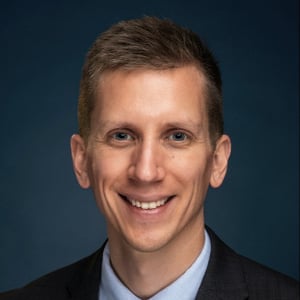
Deputy Counsel, Wisconsin Institute for Law & Liberty
Luke joined WILL from the Wisconsin Department of Justice where he served for nearly four years as a Deputy Solicitor General and Assistant Attorney General.
Berg has argued nine cases before the Wisconsin Supreme Court and four before the Seventh Circuit, including one en banc argument. He graduated from the University of Wisconsin – Madison (B.S.) and New York University (J.D.) and served as a law clerk for Judge Diane Sykes of the United States Court of Appeals for the Seventh Circuit. Prior to joining the Wisconsin DOJ in 2015, Berg worked as an attorney for the Office of the Comptroller of Currency in Washington D.C.
Berg resides in Madison with his wife and three boys.
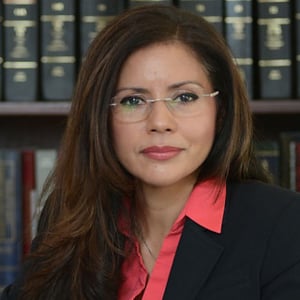
President, General Counsel, and Founder, Child and Parental Rights Campaign, Inc
Vernadette Broyles is the President, General Counsel, and founder of Child and Parental Rights Campaign, Inc. She is an experienced family law litigator and Guardian Ad Litem representing the best interests of children in court, and has been an advocate for student privacy, parental rights, and Title IX protections in public schools. She brings to this role her knowledge and experience in the legislative process and background in science and research. Vernadette graduated with Honors from Yale University with a bachelor of science degree in Biology, and received her law degree from Harvard Law School.
Vernadette has practiced as a commercial litigator and served as a state Prosecutor with the Fulton County, Georgia, District Attorney’s Office. Prior to law school, she worked in neuro-pharmaceutical research. Vernadette was appointed by Governor Sonny Perdue to the State Board of the Georgia Department of Human Services for five years, where she co-chaired the Department of Family and Children Services Committee and gained many insights into state child protective services. She has served on Advisory Boards to the U.S. Department of Justice Violence Against Women program and the Juvenile Justice and Delinquency Prevention program and as a Public Interest Director with the Federal Home Loan Bank of Atlanta. Vernadette has also been featured as a columnist with The Atlanta Journal-Constitution. She and her husband have two children.
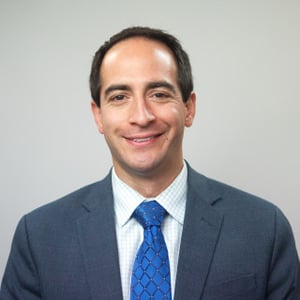
Senior Counsel, Home School Legal Defense Association
William Estrada serves as Senior Counsel for Home School Legal Defense Association. Mr. Estrada served as a legal assistant with HSLDA starting in 2004 while attending Oak Brook School of Law. After he passed the California bar, Mr. Estrada rose to be HSLDA’s director of federal relations. He left in 2018 to work at the US Department of Health and Human Services, where he became a career employee in the Conscience and Religious Freedom Division within the Office for Civil Rights. He is a member of the California Bar, the District of Columbia Bar, and the US Supreme Court bar.
Mr. Estrada previously served the Parental Rights Foundation as their first full-time president from November 2021 to May 2023.
Mr. Estrada and his wife, Rachel, live in Northern Virginia with their two sons, Dominic and Merrick. Mr. Estrada is a man of faith and family. He is a self-proclaimed outdoorsman, foodie, gardener, and a beekeeper.
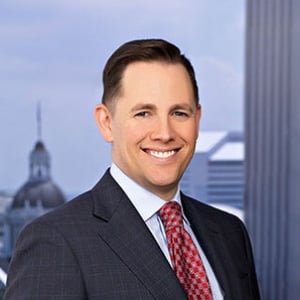
Partner, Shutts & Bowen LLP
Ben Gibson is an attorney in the Tallahassee office of Shutts & Bowen LLP, where he is Vice-Chair of the Appellate practice group. His statewide practice focuses on government, political, and corporate clients representing them in government affairs, appellate, litigation, and administrative matters.
Most recently, Ben was named general counsel to Florida Governor Ron DeSantis’ Transition Team, advising the new administration on legal issues and the appointment of three Florida Supreme Court justices. Before joining Shutts, Ben served as the Deputy General Counsel and an Assistant General Counsel to Florida Governor Rick Scott for nearly five years, where he helped advise the Governor on the appointment of more than 120 judges to Florida’s county, circuit, DCA, and Supreme Courts. His extensive responsibilities included providing legal counsel to the Executive Office of the Governor and overseeing high profile legal issues at executive branch agencies.
Gibson’s government law practice includes serving as counsel to state entities, advising on public records, the Sunshine Law, and ethics issues as well as representing clients before state and federal courts and administrative agencies.
His state and federal election law practice focuses on advising candidates, party organizations, and political committees and representing clients in compliance and enforcement matters. As general counsel to the Republican Party of Florida he led all of the party’s legal efforts during the 2018 election cycle including through three statewide recounts.
With a deep understanding of Florida government and politics, Ben has also worked as an attorney with the Florida House of Representatives helping to author the largest rewrite of Florida’s growth management laws in 25 years. Prior to joining Shutts, Ben founded his own law firm focusing on government and election law.
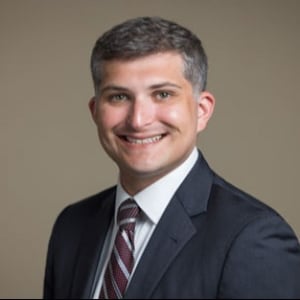
Associate, Consovoy McCarthy PLLC
Mr. Vaseliou assists clients with a variety of litigation and appellate matters that encompass constitutional law, administrative law, and election law.
Before joining the firm, Mr. Vaseliou was a law clerk to Judge Andrew S. Oldham of the U.S. Court of Appeals for the Fifth Circuit and to Judge Richard G. Taranto of the U.S. Court of Appeals for the Federal Circuit. Mr. Vaseliou earned his J.D. magna cum laude from the University of Pennsylvania, where he was selected for the Order of the Coif. Mr. Vaseliou earned his B.S. in Electrical Engineering summa cum laude from the University of Florida. Mr. Vaseliou is a member of the Texas bar.*
*Supervised by principals of the firm who are members of the Virginia bar.
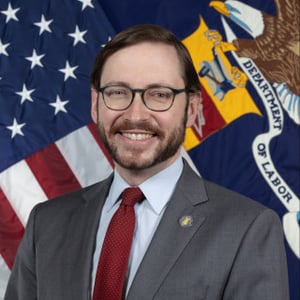
Solicitor, U.S. Department of Labor
Jonathan Berry is Solicitor at the U.S. Department of Labor, in service to President Trump’s agenda to put American workers first. He leads the Department’s lawyers in advising the Secretary and agency leadership on all aspects of law and in representing the Department in court. He was previously managing partner at Boyden Gray PLLC, where he provided strategic counsel and litigated on issues at the intersection of law, politics, and public policy. Earlier, he headed the regulatory office at Labor, and also served at the Department of Justice, in the first Trump Administration. Mr. Berry served as a law clerk to Judge Jerry E. Smith of the United States Court of Appeals for the Fifth Circuit, and to Associate Justice Samuel A. Alito, Jr., of the Supreme Court of the United States.
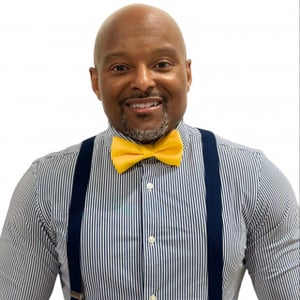
Dean, Delaware Law School
Dean Todd Clark is Dean of Delaware Law School. He joins Delaware Law School after serving as Associate Dean of Academic Affairs & Professor of Law at St. Thomas University Benjamin L. Crump College of Law. Before St. Thomas, Dean Clark was Professor of Law at North Carolina Central University School of Law where he taught Business Associations, Contracts, Corporate Justice, Employment Discrimination, and Hip Hop, Law & Justice. At NCCU, he also served on the ABA Compliance team and was the Director of the Justice in the Practice of Law Certificate Program and the Director of New Initiatives. Before that, Dean Clark was a Lecturer in Law at West Virginia University College of Law, where he taught Legal Writing and Appellate Advocacy.
Dean Clark earned his B.A. in Political Science from Wittenberg University, his M.B.A. from West Virginia University College of Business and Economics, and his J.D. from University of Pittsburgh School of Law. Following his graduation from law school, he practiced law at the law firm of Steptoe & Johnson.
His scholarship includes a book, CORPORATE JUSTICE (Carolina Academic Press), as well as numerous law review articles and other scholarship on social justice, corporate discretion, and sexual harassment. He is currently working on a casebook on Sports Law.

Dean, Widener University Commonwealth Law School
André Douglas Pond Cummings is the incoming Dean of Widener University Commonwealth Law School. Dean cummings currently serves as associate dean for faculty development and the Charles C. Baum distinguished professor of law at the University of Arkansas at Little Rock’s William H. Bowen School of Law. During his time at the Bowen School of Law, cummings served for five years on the university Diversity Counsel and three years on the chancellor’s race and ethnicity advisory committee. Prior to joining the Bowen School of Law, cummings taught at the West Virginia University College of Law and clerked for Associate Chief Justice Christine M. Durham of the Utah Supreme Court and Chief Judge Joseph W. Hatchett of the United States Court of Appeals for the Eleventh Circuit. Dean cummings is a graduate of Brigham Young University and Howard University School of Law.
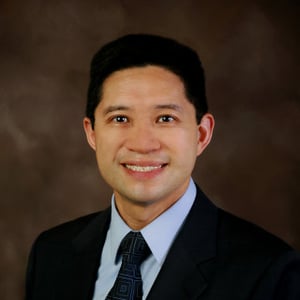
Founder, Original Jurisdiction
David Lat is a lawyer turned writer. He publishes Original Jurisdiction, a newsletter on Substack about law and legal affairs, and he writes for newspapers and magazines, including the New York Times, Washington Post, and Wall Street Journal. Prior to launching Original Jurisdiction, David founded Above the Law, one of the nation's most widely read legal news websites, and Underneath Their Robes, a popular blog about federal judges that he wrote under a pseudonym. He is also the author of a novel set in the world of the federal courts, Supreme Ambitions. Before entering the media world, David worked as a federal prosecutor in Newark, New Jersey; a litigation associate at Wachtell, Lipton, Rosen & Katz, in New York; and a law clerk to Judge Diarmuid F. O’Scannlain of the U.S. Court of Appeals for the Ninth Circuit. David graduated from Harvard College and Yale Law School, where he served as an editor of the Yale Law Journal.
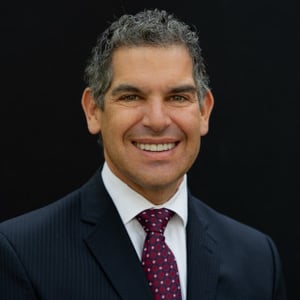
United States District Judge, Eastern District of Pennsylvania
Judge Wolson was nominated to the United States District Court for the Eastern District of Pennsylvania in May 2018 and was confirmed in May 2019. Judge Wolson earned his J.D., cum laude, from Harvard Law School, B.A., magna cum laude, from the University of Pennsylvania. After graduating from law school, he served as a law clerk for Hon. Jan E. DuBois of the U.S. District Court for the Eastern District of Pennsylvania. He then maintained a complex commercial litigation practice, first as an associate with Covington & Burling in Washington, D.C., and then as a partner with Dilworth Paxson in Philadelphia.
Deputy Counsel, Wisconsin Institute for Law & Liberty
Luke joined WILL from the Wisconsin Department of Justice where he served for nearly four years as a Deputy Solicitor General and Assistant Attorney General.
Berg has argued nine cases before the Wisconsin Supreme Court and four before the Seventh Circuit, including one en banc argument. He graduated from the University of Wisconsin – Madison (B.S.) and New York University (J.D.) and served as a law clerk for Judge Diane Sykes of the United States Court of Appeals for the Seventh Circuit. Prior to joining the Wisconsin DOJ in 2015, Berg worked as an attorney for the Office of the Comptroller of Currency in Washington D.C.
Berg resides in Madison with his wife and three boys.
President, General Counsel, and Founder, Child and Parental Rights Campaign, Inc
Vernadette Broyles is the President, General Counsel, and founder of Child and Parental Rights Campaign, Inc. She is an experienced family law litigator and Guardian Ad Litem representing the best interests of children in court, and has been an advocate for student privacy, parental rights, and Title IX protections in public schools. She brings to this role her knowledge and experience in the legislative process and background in science and research. Vernadette graduated with Honors from Yale University with a bachelor of science degree in Biology, and received her law degree from Harvard Law School.
Vernadette has practiced as a commercial litigator and served as a state Prosecutor with the Fulton County, Georgia, District Attorney’s Office. Prior to law school, she worked in neuro-pharmaceutical research. Vernadette was appointed by Governor Sonny Perdue to the State Board of the Georgia Department of Human Services for five years, where she co-chaired the Department of Family and Children Services Committee and gained many insights into state child protective services. She has served on Advisory Boards to the U.S. Department of Justice Violence Against Women program and the Juvenile Justice and Delinquency Prevention program and as a Public Interest Director with the Federal Home Loan Bank of Atlanta. Vernadette has also been featured as a columnist with The Atlanta Journal-Constitution. She and her husband have two children.
Senior Counsel, Home School Legal Defense Association
William Estrada serves as Senior Counsel for Home School Legal Defense Association. Mr. Estrada served as a legal assistant with HSLDA starting in 2004 while attending Oak Brook School of Law. After he passed the California bar, Mr. Estrada rose to be HSLDA’s director of federal relations. He left in 2018 to work at the US Department of Health and Human Services, where he became a career employee in the Conscience and Religious Freedom Division within the Office for Civil Rights. He is a member of the California Bar, the District of Columbia Bar, and the US Supreme Court bar.
Mr. Estrada previously served the Parental Rights Foundation as their first full-time president from November 2021 to May 2023.
Mr. Estrada and his wife, Rachel, live in Northern Virginia with their two sons, Dominic and Merrick. Mr. Estrada is a man of faith and family. He is a self-proclaimed outdoorsman, foodie, gardener, and a beekeeper.
Partner, Shutts & Bowen LLP
Ben Gibson is an attorney in the Tallahassee office of Shutts & Bowen LLP, where he is Vice-Chair of the Appellate practice group. His statewide practice focuses on government, political, and corporate clients representing them in government affairs, appellate, litigation, and administrative matters.
Most recently, Ben was named general counsel to Florida Governor Ron DeSantis’ Transition Team, advising the new administration on legal issues and the appointment of three Florida Supreme Court justices. Before joining Shutts, Ben served as the Deputy General Counsel and an Assistant General Counsel to Florida Governor Rick Scott for nearly five years, where he helped advise the Governor on the appointment of more than 120 judges to Florida’s county, circuit, DCA, and Supreme Courts. His extensive responsibilities included providing legal counsel to the Executive Office of the Governor and overseeing high profile legal issues at executive branch agencies.
Gibson’s government law practice includes serving as counsel to state entities, advising on public records, the Sunshine Law, and ethics issues as well as representing clients before state and federal courts and administrative agencies.
His state and federal election law practice focuses on advising candidates, party organizations, and political committees and representing clients in compliance and enforcement matters. As general counsel to the Republican Party of Florida he led all of the party’s legal efforts during the 2018 election cycle including through three statewide recounts.
With a deep understanding of Florida government and politics, Ben has also worked as an attorney with the Florida House of Representatives helping to author the largest rewrite of Florida’s growth management laws in 25 years. Prior to joining Shutts, Ben founded his own law firm focusing on government and election law.
Associate, Consovoy McCarthy PLLC
Mr. Vaseliou assists clients with a variety of litigation and appellate matters that encompass constitutional law, administrative law, and election law.
Before joining the firm, Mr. Vaseliou was a law clerk to Judge Andrew S. Oldham of the U.S. Court of Appeals for the Fifth Circuit and to Judge Richard G. Taranto of the U.S. Court of Appeals for the Federal Circuit. Mr. Vaseliou earned his J.D. magna cum laude from the University of Pennsylvania, where he was selected for the Order of the Coif. Mr. Vaseliou earned his B.S. in Electrical Engineering summa cum laude from the University of Florida. Mr. Vaseliou is a member of the Texas bar.*
*Supervised by principals of the firm who are members of the Virginia bar.
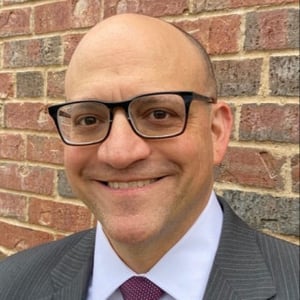
Executive Director & Secretary, American Civil Rights Project
Dan Morenoff is the executive director at the American Civil Rights Project and an adjunct fellow at the Manhattan Institute.
His work focuses on protecting and, where necessary, restoring the primacy of all Americans' shared civil rights against the identitarian alternative.
Before practicing law, Morenoff served on the legislative staff of Sen. Phil Gramm (R-TX). Morenoff holds a B.A. from Columbia College of Columbia University in the City of New York and a J.D. from the University of Chicago Law School. He has also served as an officer or director of several community organizations in Dallas, Texas.
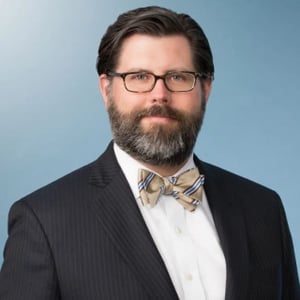
Partner, Faegre Drinker Biddle & Reath LLP
Brian J. Paul is an appellate lawyer and leads law teams in high-stakes commercial litigation. He has briefed and argued everything from weighty abstract constitutional issues to dollars-and-cents business issues and everything in-between, both on appeal and in trial courts around the country. A member of the American Law Institute, recent past-president of the Seventh Circuit Bar Association and top-tier ranked Chambers appellate lawyer, Brian had one client say about him: “Brian is one of the most respected and skilled appellate lawyers, not only in Indianapolis but across the country. He is trusted to deliver timely guidance on complex issues.” Another said: “He is excellent. I enjoyed working with him. He is able to put things into layman’s terms and explains things really well. His written and oral advocacy are short, crisp and to the point.”
Clients hire Brian to digest the complex, and make the complex simple and compelling for busy, generalist judges. In his writing, he strives to cut through jargon and legalese, and distill things down to what’s important. In his oral advocacy, by intense preparation, he strives to be the advocate whom judges trust for the right answers. In the dozens of cases he has argued, Brian has helped clients win on both sides of the “v.” His recent representations include:

Associate, Faegre Drinker
Melinda Hudson represents clients in a broad range of litigation, dispute resolution and regulatory matters. For state and federal trial and appellate courts, she has drafted motions and briefs on threshold issues of justiciability, the merits of federal and state constitutional and statutory claims, and other legal issues. Melinda’s experience also includes taking depositions of plaintiffs and other witnesses, working with expert witnesses, and presenting oral argument to state and federal courts of appeals.
Before joining Faegre Drinker, Melinda served as a deputy attorney general in the Solicitor General Division in the Office of the Indiana Attorney General. She represented the State of Indiana and its officers and agencies in courts including the Indiana Supreme Court, U.S. Court of Appeals for the Seventh Circuit and the Supreme Court of the United States. She drafted critical motions, appellate briefs, and amici curiae briefs led by Indiana and joined by dozens of other states. Melinda also argued as lead counsel in appellate cases before the Seventh Circuit and Indiana Court of Appeals, and prepared the solicitor general of Indiana for oral arguments in state and federal courts, including the U.S. Supreme Court.
Eric Criss is an independent scholar who recently published The Boss of New Orleans: Martin Behrman and Machine Politics in the Crescent City with the LSU Press. He taught advanced public policy at Florida State University, where he earned his PhD in history. Eric earned his MA in Government at John's Hopkins University and BA in Political Science at the University of Florida. Eric began his career with U.S. Senators Don Nickles of Oklahoma and Phil Gramm of Texas at the National Republican Senatorial Committee in Washington, D.C. He later served as staff member or consultant to Fortune 500 corporations, political parties, and presidential, congressional, and gubernatorial campaigns.

Topics
Legal Responses to Anti-Semitism on Campus
September is here. For college students, that means it’s the start of a new school...
Plenary Session 3: A Discussion on the Right: Parental Rights in Education
Washington , DCPlenary Session 3: A Discussion on the Right: Parental Rights in Education
Luke Berg, Vernadette Ramírez Broyles, William Anthony Estrada, Ben J. Gibson, Thomas S. Vaseliou
Next year marks a century since the Supreme Court concluded in Pierce v. Society of...
Racially Discriminatory Corporate Policies: Who's Liable?
Dan Morenoff
Laws banning discrimination have been on the books across America for more than a century...
Indiana Supreme Court Upholds Law Restricting Which Candidates Can Appear on Primary Ballots
Brian J. Paul, Melinda Hudson
Indiana requires candidates on a primary election ballot to demonstrate party affiliation by either (1)...
Integrity or Interference?: Evaluating the Constitutionality of Georgia's Election Integrity Act
Eric Criss
Recent political earthquakes such as the assassination attempt against former president Donald Trump and President...
Topics
Litigation Challenging School Gender Support Policies Hampered by Incorrect Analysis
More than 1,000 public school districts across the country in 38 states and the District...
Topics
21 State AGs Urge ABA to Modify Accreditation Standards To Comply With SFFA
The end of June will mark the one year anniversary of the Supreme Court striking...
Panel III: DEI in the Workplace and on Campus Post-SFFA 3:30 - 4:45 p.m.
2024 Third Circuit Chapters Conference
Philadelphia, PATopics
Alexander v. South Carolina State Conference of the NAACP: New Rules for Partisan Gerrymanders, But Possibly Limited Effect
How do you separate race and political preference when establishing new congressional districts? The federal...