
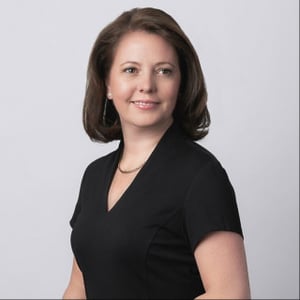
Partner, Wiley Rein, LLP
Megan L. Brown is a partner at Wiley Rein LLP. She has significant litigation, appellate and regulatory experience before state and federal courts and agencies.
Ms. Brown helps businesses respond to federal, state and local regulation and investigations raising administrative law, statutory interpretation, and constitutional issues, including the First Amendment.
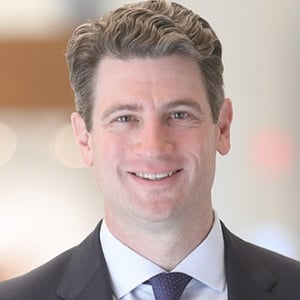
General Counsel and Corporate Secretary, Citigroup
Brent McIntosh joined Citi as General Counsel and Corporate Secretary in October 2021. Brent leads Citi's global legal team, including Citi security and investigative services, and oversees Citi’s independent compliance risk management function.
Brent served as Under Secretary of the Treasury for International Affairs from 2019 to 2021. He led the Treasury Department’s engagement in the G7 and G20, represented the United States on the Financial Stability Board, and managed U.S. participation at the IMF and World Bank. He oversaw Treasury’s international economic and financial policy work, including significant engagements on investment security and regulation of digital currencies. During 2020, he coordinated initiatives to alleviate the COVID-19 pandemic’s economic consequences.
From 2017 to 2019, Brent served as Treasury’s General Counsel, leading the department’s approximately 2,000 lawyers and spearheading its regulatory reform efforts. Prior to that, he was a partner in the law firm of Sullivan & Cromwell, where his practice focused on complex disputes involving financial institutions and multinational corporations.
Brent served in the White House from 2006 until 2009, first as Associate Counsel to the President and then as Deputy Assistant to the President and Deputy Staff Secretary. Before that, he was a Deputy Assistant Attorney General at the Justice Department, where his work focused on national security matters.
A Michigan native, Brent holds an A.B. in economics and political science from the University of Michigan and a J.D. from Yale Law School. Following law school, he was a law clerk to two federal appellate judges, Dennis Jacobs of the Second Circuit and Laurence H. Silberman of the D.C. Circuit. Brent serves on the Board of Directors of the Alexander Hamilton Society, the Board of Advisors for the National Security Institute at George Mason University’s Antonin Scalia Law School, and the Advisory Council of the Official Monetary and Financial Institutions Forum. He is a member of the Council on Foreign Relations, where he previously served as an Adjunct Senior Fellow for International Economics and Finance, as well as the Bretton Woods Committee and the International Institute for Strategic Studies.
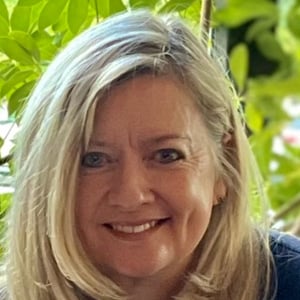
Rebecca Seidel currently resides in Louisville, Kentucky and in 2023 recently joined the state office of Senator Rand Paul, M.D, as Grant Coordinator. In this position, Ms. Seidel tracks grant opportunities, both public and private, that could aid constituents and works to provide support and helpful information to those in need who can benefit.
Prior to moving to Kentucky in 2016 Rebecca Seidel was General Counsel of the Senate Commerce Committee in Washington D.C. In that role, Ms. Seidel handled cybersecurity, privacy, data security, vehicle safety and consumer protections issues. She also oversaw committee investigations and oversight of the executive branch and private sector companies. Prior to joining the Commerce Committee, Ms. Seidel held positions in the Senate, the Executive Branch and in private sector law practice.
Immediately prior to the Commerce Committee, Ms. Seidel was counsel to the Senate Impeachment Trial Committee, formed for the trial of Judge G. Thomas Porteous. Before that Ms. Seidel was Deputy Assistant Attorney General for Legislative Affairs at the Department of Justice. Previously she served as senior counsel on the Senate Judiciary Committee handling legal reform issues including asbestos and class action. Prior to that she started her government career as counsel to then Senator George V. Voinovich.
Ms. Seidel’s time in private law practice was spent in the Boston, Massachusetts area where she was a litigator for five years practicing federal and state civil litigation defense in complex product liability, premises liability, liquor liability, and ERISA cases. She received her undergraduate degree from the University of Notre Dame and her law degree from the University of Dayton.
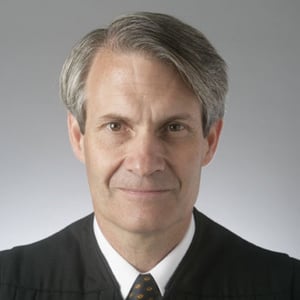
Special Counsel, Hunton Andrews Kurth
After serving on the United State Court of Appeals for the D. C. Circuit from 2005, Judge Griffith stepped down from the bench in 2020. Currently he is a Lecturer on Law at Harvard Law School, a Fellow at the Wheatley Institute at Brigham Young University, and Special Counsel in the Washington, DC office of the law firm of Hunton Andrews Kurth. Most recently, he was a member of President Biden's Commission on the Supreme Court. He is the author of Civic Charity and the Constitution , and the co-author, along with former judges Michael Luttig and Michael McConnell, of Lost, Not Stolen: The Conservative Case that Trump Lost and Biden Won the 2020 Presidential Election. https://lostnotstolen.org/ . Before being appointed to the D. C. Circuit, Judge Griffith was the General Counsel at BYU; Senate Legal Counsel, the non-partisan chief legal officer of the U. S. Senate; and a partner at Wiley, Rein & Fielding. Long active in rule-of-law programs in former communist nations, Judge Griffith is a member of the international advisory board of the CEELI Institute in Prague. He is a graduate of BYU and the University of Virginia School of Law and is a member of the American Law Institute.
Senior Fellow, Manhattan Institute
Peter Huber, who died in 2021, was a senior fellow at the Manhattan Institute, where he wrote on drug development, energy, technology, and the law. He was the author of The Cure in the Code: How 20th Century Law Is Undermining 21st Century Medicine (2013); The Bottomless Well: The Twilight of Fuel, the Virtue of Waste, and Why We Will Never Run Out of Energy (2005), coauthored with Mark P. Mills, which Bill Gates said “is the only book I’ve ever seen that really explains energy, its history and what it will be like going forward”; and Hard Green: Saving the Environment from the Environmentalists (2000), which William F. Buckley, Jr., called “the richest contribution ever made to the greening of the political mind” and which set out a new conservative manifesto on the environment that advocates a return to conservation and environmental policy based on sound science and market economics.
Huber’s other books included Judging Science: Scientific Knowledge and the Federal Courts (1999), Law and Disorder in Cyberspace: Abolish the FCC and Let Common Law Rule the Telecosm (1997), Orwell’s Revenge: The 1984 Palimpsest (1994), Galileo’s Revenge: Junk Science in the Courtroom (1991), and Liability: The Legal Revolution and Its Consequences (1988). He published articles in scholarly journals, such as the Harvard Law Review and Yale Law Journal, and in such publications as Science, Wall Street Journal, Reason, Regulation, and National Review. He appeared on numerous TV and radio programs, including Face the Nation and The NewsHour with Jim Lehrer.
Before joining MI, Huber was an associate professor at MIT. He clerked on the D.C. Circuit Court of Appeals for Ruth Bader Ginsburg and on the U.S. Supreme Court for Sandra Day O’Connor. Huber was a partner at the Washington, D.C., law firm Kellogg, Huber, Hansen and Todd. He held a J.D. from Harvard University and a Ph.D. in mechanical engineering from MIT.

Special Counsel, Irell & Manella LLP
Lindsay Kelly is Special Counsel in the Los Angeles office of Irell & Manella LLP. Ms. Kelly's practice encompasses complex commercial litigation, including patent litigation, at both the trial court and appellate levels, as well as government investigations and white collar criminal defense.
Prior to joining Irell, Ms. Kelly was an Assistant United States Attorney in the Eastern District of Virginia, where she specialized in intellectual property and computer crimes. During her time as a prosecutor, Ms. Kelly served as lead counsel or co-counsel on five trials, including four jury trials, was lead author of several appellate briefs, and argued before the U.S. Court of Appeals for the Fourth Circuit. Ms. Kelly also presented on trademark counterfeiting at training sessions for federal agents and prosecutors, and received awards from the heads of several government agencies and Inspectors General offices.
Previously, Ms. Kelly practiced at Kellogg, Huber, Hansen, Todd, Evans & Figel PLLC in Washington, D.C., where she worked on complex commercial litigation, internal corporate investigations, and matters before the U.S. Supreme Court. At her previous firm, Ms. Kelly served as co-counsel on two trials and was a team member on a large patent infringement jury trial.
Ms. Kelly served as a law clerk to Chief Judge Paul R. Michel of the U.S. Court of Appeals for the Federal Circuit. Prior to law school, Ms. Kelly worked as a strategic management consultant. Ms. Kelly is also a Chartered Financial Analyst (CFA).
Partner, Covington & Burling LLP
Gerald Masoudi is a partner in the firm’s Washington, DC office and co-chair of the Food and Drug practice group.
Before joining Covington in 2009, Mr. Masoudi served as Chief Counsel of the Food and Drug Administration. In that capacity he was responsible for supervising FDA’s involvement in civil and criminal litigation and investigations; providing legal review of warning letters, guidances and regulations; and providing advice to the FDA commissioner and senior leadership on matters relating to the products regulated by FDA. Before joining the FDA, Mr. Masoudi served as Deputy Assistant Attorney General for international, policy and appellate matters in the Antitrust Division at the Department of Justice. He also served as Principal Deputy Chief Counsel for the FDA in 2004 and 2005. Before entering government service, Mr. Masoudi had a decade of experience in private practice in the areas of antitrust, telecommunications, patent law and energy.
Director of the Center for Energy and Environment and Senior Fellow, Competitive Enterprise Institute
Daren Bakst is Director of the Competitive Enterprise Institute’s Center for Energy and Environment and a Senior Fellow. In this role, he manages, develops, and leads the coalition, advocacy, and research activities of the Center, which is one of the most effective advocates for Free Market Environmentalism.
Before joining CEI as Deputy Director in March, 2023, Daren was a Senior Research Fellow in Environmental Policy and Regulation at the Heritage Foundation, where he played a leading role in the launch of the organization’s new energy and environment center, and created and hosted the Heritage Foundation’s energy and environment podcast the “PowerCast.” During his decade at Heritage, Daren wrote about energy and environmental policy, food and agricultural policy (including editing and co-authoring the book Farms and Free Enterprise), regulation, and trade among other topics.
Daren also worked on environmental policy and regulation at the U.S. Chamber of Commerce, where he was a policy counsel and served as the executive to the association’s Government Oversight, Operations & Consumer Affairs committee, which was responsible for issues such as regulatory process reform. Daren has significant state level experience, working for seven years at the Raleigh, N.C.-based John Locke Foundation, one of the largest state-based, free-market think tanks. As director of legal and regulatory studies, his broad portfolio included energy and environmental policy, regulatory reform, and property rights.
Daren has testified numerous times before Congress, regularly submits comments to federal agencies and has appeared in or been quoted by a wide range of media outlets such as The Wall Street Journal, USA Today, The Washington Times, CNN, Fox Business News, Al-Jazeera America, and U.S. News and World Report. He is a member of the Federalist Society’s Environmental Law and Property Rights Executive Committee and serves on the College Level Advisory Board for Constituting America, an organization that informs and educates about the importance of the U.S. Constitution.
Daren, who hails from Florida, received his bachelor’s and master’s degrees from George Washington University. A licensed attorney, he holds a law degree from the University of Miami and a master of laws degree from American University.
Partner, Patton Boggs LLP
Stuart Pape helps clients understand and meet challenges presented by regulations imposed by the U.S. Food and Drug Administration (FDA), U.S. Department of Agriculture (USDA), and similar health and safety regulatory bodies worldwide. He focuses on assisting clients in obtaining approval of new food ingredients, pharmaceuticals, and medical devices; advising on labeling and advertising of regulated products; assisting in enforcement proceedings initiated by regulatory bodies; and lobbying in connection with legislative consideration of statutory changes to the laws governing FDA-regulated products. Mr. Pape is a member of the Patton Boggs Executive Committee.
Mr. Pape regularly appears before the FDA; USDA; the Consumer Product Safety Commission; the U.S. Customs and Border Protection; numerous other federal and state regulatory bodies; and the Congress of the United States. Mr. Pape served in various positions in the Office of the Chief of Counsel at the FDA prior to joining the firm in 1980. He is the former associate chief counsel for food, and from 1978-1979, served as executive assistant to FDA Commissioner Donald Kennedy.
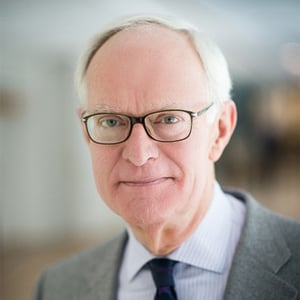
Distinguished Fellow, Hudson Institute
Christopher DeMuth is a distinguished fellow at Hudson Institute. He was president of the American Enterprise Institute for Public Policy Research (AEI) from 1986 to 2008 and was the D.C. Searle Senior Fellow at AEI from 2008 to 2011.
Mr. DeMuth was raised in Kenilworth, Illinois, and attended the Lawrenceville School (1964), Harvard College (A.B. 1968), and the University of Chicago Law School (J.D. 1973). He served as staff assistant to President Richard M. Nixon from 1969 to 1970, working first for Daniel P. Moynihan (then assistant to the President for Urban Affairs) on urban policy matters and then as chairman of the White House Task Force on Environmental Policy. Following law school, he practiced regulatory, antitrust, and general corporate law with Sidley & Austin in Chicago (1973-1976) and was associate general counsel of the Consolidated Rail Corporation (Conrail) in Philadelphia (1976-1977).
From 1977 to 1981, Mr. DeMuth was lecturer in public policy at the Kennedy School of Government at Harvard University, and director of the Harvard Faculty Project on Regulation. There he taught courses on law, economics, and regulatory policy and conducted and sponsored research on health, safety, environmental, and economic regulation.
Returning to Washington in 1981, Mr. DeMuth served as administrator for information and regulatory affairs in the U.S. Office of Management and Budget, and as executive director of the Presidential Task Force on Regulatory Relief during President Ronald Reagan’s first term of office. From 1984 to 1986, he was managing director of Lexecon Inc., a law-and-economics consulting firm; in 1986, he was also publisher and editor-in-chief of Regulation magazine. He was elected president of the American Enterprise Institute in December 1986.
Many of Mr. DeMuth’s articles, lectures, and occasional talks are posted on his website (https://www.ccdemuth.com).
Special Counsel, Hunton Andrews Kurth
After serving on the United State Court of Appeals for the D. C. Circuit from 2005, Judge Griffith stepped down from the bench in 2020. Currently he is a Lecturer on Law at Harvard Law School, a Fellow at the Wheatley Institute at Brigham Young University, and Special Counsel in the Washington, DC office of the law firm of Hunton Andrews Kurth. Most recently, he was a member of President Biden's Commission on the Supreme Court. He is the author of Civic Charity and the Constitution , and the co-author, along with former judges Michael Luttig and Michael McConnell, of Lost, Not Stolen: The Conservative Case that Trump Lost and Biden Won the 2020 Presidential Election. https://lostnotstolen.org/ . Before being appointed to the D. C. Circuit, Judge Griffith was the General Counsel at BYU; Senate Legal Counsel, the non-partisan chief legal officer of the U. S. Senate; and a partner at Wiley, Rein & Fielding. Long active in rule-of-law programs in former communist nations, Judge Griffith is a member of the international advisory board of the CEELI Institute in Prague. He is a graduate of BYU and the University of Virginia School of Law and is a member of the American Law Institute.
Senior Fellow, Manhattan Institute
Peter Huber, who died in 2021, was a senior fellow at the Manhattan Institute, where he wrote on drug development, energy, technology, and the law. He was the author of The Cure in the Code: How 20th Century Law Is Undermining 21st Century Medicine (2013); The Bottomless Well: The Twilight of Fuel, the Virtue of Waste, and Why We Will Never Run Out of Energy (2005), coauthored with Mark P. Mills, which Bill Gates said “is the only book I’ve ever seen that really explains energy, its history and what it will be like going forward”; and Hard Green: Saving the Environment from the Environmentalists (2000), which William F. Buckley, Jr., called “the richest contribution ever made to the greening of the political mind” and which set out a new conservative manifesto on the environment that advocates a return to conservation and environmental policy based on sound science and market economics.
Huber’s other books included Judging Science: Scientific Knowledge and the Federal Courts (1999), Law and Disorder in Cyberspace: Abolish the FCC and Let Common Law Rule the Telecosm (1997), Orwell’s Revenge: The 1984 Palimpsest (1994), Galileo’s Revenge: Junk Science in the Courtroom (1991), and Liability: The Legal Revolution and Its Consequences (1988). He published articles in scholarly journals, such as the Harvard Law Review and Yale Law Journal, and in such publications as Science, Wall Street Journal, Reason, Regulation, and National Review. He appeared on numerous TV and radio programs, including Face the Nation and The NewsHour with Jim Lehrer.
Before joining MI, Huber was an associate professor at MIT. He clerked on the D.C. Circuit Court of Appeals for Ruth Bader Ginsburg and on the U.S. Supreme Court for Sandra Day O’Connor. Huber was a partner at the Washington, D.C., law firm Kellogg, Huber, Hansen and Todd. He held a J.D. from Harvard University and a Ph.D. in mechanical engineering from MIT.
Special Counsel, Irell & Manella LLP
Lindsay Kelly is Special Counsel in the Los Angeles office of Irell & Manella LLP. Ms. Kelly's practice encompasses complex commercial litigation, including patent litigation, at both the trial court and appellate levels, as well as government investigations and white collar criminal defense.
Prior to joining Irell, Ms. Kelly was an Assistant United States Attorney in the Eastern District of Virginia, where she specialized in intellectual property and computer crimes. During her time as a prosecutor, Ms. Kelly served as lead counsel or co-counsel on five trials, including four jury trials, was lead author of several appellate briefs, and argued before the U.S. Court of Appeals for the Fourth Circuit. Ms. Kelly also presented on trademark counterfeiting at training sessions for federal agents and prosecutors, and received awards from the heads of several government agencies and Inspectors General offices.
Previously, Ms. Kelly practiced at Kellogg, Huber, Hansen, Todd, Evans & Figel PLLC in Washington, D.C., where she worked on complex commercial litigation, internal corporate investigations, and matters before the U.S. Supreme Court. At her previous firm, Ms. Kelly served as co-counsel on two trials and was a team member on a large patent infringement jury trial.
Ms. Kelly served as a law clerk to Chief Judge Paul R. Michel of the U.S. Court of Appeals for the Federal Circuit. Prior to law school, Ms. Kelly worked as a strategic management consultant. Ms. Kelly is also a Chartered Financial Analyst (CFA).
Partner, Covington & Burling LLP
Gerald Masoudi is a partner in the firm’s Washington, DC office and co-chair of the Food and Drug practice group.
Before joining Covington in 2009, Mr. Masoudi served as Chief Counsel of the Food and Drug Administration. In that capacity he was responsible for supervising FDA’s involvement in civil and criminal litigation and investigations; providing legal review of warning letters, guidances and regulations; and providing advice to the FDA commissioner and senior leadership on matters relating to the products regulated by FDA. Before joining the FDA, Mr. Masoudi served as Deputy Assistant Attorney General for international, policy and appellate matters in the Antitrust Division at the Department of Justice. He also served as Principal Deputy Chief Counsel for the FDA in 2004 and 2005. Before entering government service, Mr. Masoudi had a decade of experience in private practice in the areas of antitrust, telecommunications, patent law and energy.
Special Counsel, Hunton Andrews Kurth
After serving on the United State Court of Appeals for the D. C. Circuit from 2005, Judge Griffith stepped down from the bench in 2020. Currently he is a Lecturer on Law at Harvard Law School, a Fellow at the Wheatley Institute at Brigham Young University, and Special Counsel in the Washington, DC office of the law firm of Hunton Andrews Kurth. Most recently, he was a member of President Biden's Commission on the Supreme Court. He is the author of Civic Charity and the Constitution , and the co-author, along with former judges Michael Luttig and Michael McConnell, of Lost, Not Stolen: The Conservative Case that Trump Lost and Biden Won the 2020 Presidential Election. https://lostnotstolen.org/ . Before being appointed to the D. C. Circuit, Judge Griffith was the General Counsel at BYU; Senate Legal Counsel, the non-partisan chief legal officer of the U. S. Senate; and a partner at Wiley, Rein & Fielding. Long active in rule-of-law programs in former communist nations, Judge Griffith is a member of the international advisory board of the CEELI Institute in Prague. He is a graduate of BYU and the University of Virginia School of Law and is a member of the American Law Institute.
Senior Fellow, Manhattan Institute
Peter Huber, who died in 2021, was a senior fellow at the Manhattan Institute, where he wrote on drug development, energy, technology, and the law. He was the author of The Cure in the Code: How 20th Century Law Is Undermining 21st Century Medicine (2013); The Bottomless Well: The Twilight of Fuel, the Virtue of Waste, and Why We Will Never Run Out of Energy (2005), coauthored with Mark P. Mills, which Bill Gates said “is the only book I’ve ever seen that really explains energy, its history and what it will be like going forward”; and Hard Green: Saving the Environment from the Environmentalists (2000), which William F. Buckley, Jr., called “the richest contribution ever made to the greening of the political mind” and which set out a new conservative manifesto on the environment that advocates a return to conservation and environmental policy based on sound science and market economics.
Huber’s other books included Judging Science: Scientific Knowledge and the Federal Courts (1999), Law and Disorder in Cyberspace: Abolish the FCC and Let Common Law Rule the Telecosm (1997), Orwell’s Revenge: The 1984 Palimpsest (1994), Galileo’s Revenge: Junk Science in the Courtroom (1991), and Liability: The Legal Revolution and Its Consequences (1988). He published articles in scholarly journals, such as the Harvard Law Review and Yale Law Journal, and in such publications as Science, Wall Street Journal, Reason, Regulation, and National Review. He appeared on numerous TV and radio programs, including Face the Nation and The NewsHour with Jim Lehrer.
Before joining MI, Huber was an associate professor at MIT. He clerked on the D.C. Circuit Court of Appeals for Ruth Bader Ginsburg and on the U.S. Supreme Court for Sandra Day O’Connor. Huber was a partner at the Washington, D.C., law firm Kellogg, Huber, Hansen and Todd. He held a J.D. from Harvard University and a Ph.D. in mechanical engineering from MIT.
Special Counsel, Irell & Manella LLP
Lindsay Kelly is Special Counsel in the Los Angeles office of Irell & Manella LLP. Ms. Kelly's practice encompasses complex commercial litigation, including patent litigation, at both the trial court and appellate levels, as well as government investigations and white collar criminal defense.
Prior to joining Irell, Ms. Kelly was an Assistant United States Attorney in the Eastern District of Virginia, where she specialized in intellectual property and computer crimes. During her time as a prosecutor, Ms. Kelly served as lead counsel or co-counsel on five trials, including four jury trials, was lead author of several appellate briefs, and argued before the U.S. Court of Appeals for the Fourth Circuit. Ms. Kelly also presented on trademark counterfeiting at training sessions for federal agents and prosecutors, and received awards from the heads of several government agencies and Inspectors General offices.
Previously, Ms. Kelly practiced at Kellogg, Huber, Hansen, Todd, Evans & Figel PLLC in Washington, D.C., where she worked on complex commercial litigation, internal corporate investigations, and matters before the U.S. Supreme Court. At her previous firm, Ms. Kelly served as co-counsel on two trials and was a team member on a large patent infringement jury trial.
Ms. Kelly served as a law clerk to Chief Judge Paul R. Michel of the U.S. Court of Appeals for the Federal Circuit. Prior to law school, Ms. Kelly worked as a strategic management consultant. Ms. Kelly is also a Chartered Financial Analyst (CFA).
Partner, Covington & Burling LLP
Gerald Masoudi is a partner in the firm’s Washington, DC office and co-chair of the Food and Drug practice group.
Before joining Covington in 2009, Mr. Masoudi served as Chief Counsel of the Food and Drug Administration. In that capacity he was responsible for supervising FDA’s involvement in civil and criminal litigation and investigations; providing legal review of warning letters, guidances and regulations; and providing advice to the FDA commissioner and senior leadership on matters relating to the products regulated by FDA. Before joining the FDA, Mr. Masoudi served as Deputy Assistant Attorney General for international, policy and appellate matters in the Antitrust Division at the Department of Justice. He also served as Principal Deputy Chief Counsel for the FDA in 2004 and 2005. Before entering government service, Mr. Masoudi had a decade of experience in private practice in the areas of antitrust, telecommunications, patent law and energy.
Director of the Center for Energy and Environment and Senior Fellow, Competitive Enterprise Institute
Daren Bakst is Director of the Competitive Enterprise Institute’s Center for Energy and Environment and a Senior Fellow. In this role, he manages, develops, and leads the coalition, advocacy, and research activities of the Center, which is one of the most effective advocates for Free Market Environmentalism.
Before joining CEI as Deputy Director in March, 2023, Daren was a Senior Research Fellow in Environmental Policy and Regulation at the Heritage Foundation, where he played a leading role in the launch of the organization’s new energy and environment center, and created and hosted the Heritage Foundation’s energy and environment podcast the “PowerCast.” During his decade at Heritage, Daren wrote about energy and environmental policy, food and agricultural policy (including editing and co-authoring the book Farms and Free Enterprise), regulation, and trade among other topics.
Daren also worked on environmental policy and regulation at the U.S. Chamber of Commerce, where he was a policy counsel and served as the executive to the association’s Government Oversight, Operations & Consumer Affairs committee, which was responsible for issues such as regulatory process reform. Daren has significant state level experience, working for seven years at the Raleigh, N.C.-based John Locke Foundation, one of the largest state-based, free-market think tanks. As director of legal and regulatory studies, his broad portfolio included energy and environmental policy, regulatory reform, and property rights.
Daren has testified numerous times before Congress, regularly submits comments to federal agencies and has appeared in or been quoted by a wide range of media outlets such as The Wall Street Journal, USA Today, The Washington Times, CNN, Fox Business News, Al-Jazeera America, and U.S. News and World Report. He is a member of the Federalist Society’s Environmental Law and Property Rights Executive Committee and serves on the College Level Advisory Board for Constituting America, an organization that informs and educates about the importance of the U.S. Constitution.
Daren, who hails from Florida, received his bachelor’s and master’s degrees from George Washington University. A licensed attorney, he holds a law degree from the University of Miami and a master of laws degree from American University.
Partner, Patton Boggs LLP
Stuart Pape helps clients understand and meet challenges presented by regulations imposed by the U.S. Food and Drug Administration (FDA), U.S. Department of Agriculture (USDA), and similar health and safety regulatory bodies worldwide. He focuses on assisting clients in obtaining approval of new food ingredients, pharmaceuticals, and medical devices; advising on labeling and advertising of regulated products; assisting in enforcement proceedings initiated by regulatory bodies; and lobbying in connection with legislative consideration of statutory changes to the laws governing FDA-regulated products. Mr. Pape is a member of the Patton Boggs Executive Committee.
Mr. Pape regularly appears before the FDA; USDA; the Consumer Product Safety Commission; the U.S. Customs and Border Protection; numerous other federal and state regulatory bodies; and the Congress of the United States. Mr. Pape served in various positions in the Office of the Chief of Counsel at the FDA prior to joining the firm in 1980. He is the former associate chief counsel for food, and from 1978-1979, served as executive assistant to FDA Commissioner Donald Kennedy.
Associate Professor of Law, Southwestern Law School
Combining his training in law and medicine, Ryan Abbott has served as a consultant on health care policy and regulation, intellectual property, health care financing, and clinical research design for international organizations, academic institutions and private enterprises including the World Health Organization, World Intellectual Property Organization and University of California, Los Angeles. A licensed physician, attorney, patent agent and acupuncturist, he has considerable experience in the fields of public health, food and drug law, as well as technology transfer and development. Beginning with the Fall 2012 academic year, he brings that expertise to the Southwestern faculty.
After earning both his undergraduate and Master of Traditional Oriental Medicine degrees, summa cum laude, Professor Abbott went on to complete his M.D. degree at the University of California, San Diego School of Medicine, where he received the Weiss Medical Research Scholarship for research in Preventive Medicine. He also pursued his law degree at Yale Law School, where he was Editor and Submissions Editor of Yale Journal of Law and Technology and Yale Journal of Health Policy, Law, and Ethics, and the recipient of the Kirby Simon Fellowship for International Human Rights Work.
Just prior to joining Southwestern, Professor Abbott was a Resident Physician in Internal Medicine at Santa Clara Valley Medical Center, and recently served as Director of Research and Project Management at Nova Worldwide Consulting, a firm specializing in technical assistance and advice to governments and international organizations on the design and implementation of legislation and programs with respect to international trade, industrial development and intellectual property rights, and as Principal Investigator of biomedical research studies at UCLA.
Professor Abbott enjoys sharing his experience with his students. "As someone with a background in both law and medicine, I hope to provide students with a multidisciplinary approach to considering the complex issues they will face as attorneys," Professor Abbott explains. "This will help students to consider client issues from a variety of perspectives. Health care law is an important subject for lawyers; health care spending now makes up more than 18 percent of GDP, and a growing number of attorneys are finding health care related employment."
Professor Abbott has published widely on issues associated with health care law and intellectual property protection in legal, medical and scientific peer-reviewed journals. His current research is in the field of Bioinformatics, focused on the intellectual property implications of innovations related to human biological processes.

Laurence A. Tisch Professor of Law and Director, Classical Liberal Institute, New York University School of Law; Director, Classical Liberal Institute, Civitas Institute University of Texas at Austin
Richard A. Epstein is the Laurence A. Tisch Professor of Law, at New York University, a senior research fellow at the Civitas Institute at the University of Texas Austin, and a senior Lecturer, the University of Chicago. He received an LL.D., h.c . from the University of Ghent, 2003 , and an LLD h.c . from the University of Siegen in 2018 and the Bradley Prize in 2011. He has been a member of the American Academy of Arts and Sciences since 1985. He has edited both the Journal of Legal Studies (1981-1991) and the Journal of Law and Economics (1991-2001). He is also a founder and director of the Classical Liberal Institute at NYU Law School. His most recent book is The Classical Liberal Constitution: The Uncertain Quest for Limited Government (2014). His other books include Takings: Private Property and the Power of Eminent Domain ( 1985); Bargaining with the State (1993); Simple Rules for a Complex World (1995); Principles for a Free Society: Reconciling Individual Liberty and the Common Good (1998); Skepticism and Freedom: A Modern Theory of Classical Liberalism (2003); Design for Liberty: Private Property, Public Administration and the Rule of Law (2011), and most recently, The Myth of Birthright citizenship—and Beyond (2026). He has taught courses in , administrative law, antitrust, constitutional, contracts, environmental law, land use planning; real property, torts and water law. He has written and spoken extensively on a wide range of topics, and is writes a regular column for Defining Ideas.
Dean and CEO, Southwestern Law School
A legal education trailblazer many times over, Susan Westerberg Prager is Southwestern's 11th Dean and Chief Executive Officer, and the first woman in the history of the law school to serve in the post. She joined Southwestern in Fall 2013 following five years as Executive Director and Chief Executive Officer of the Association of American Law Schools (AALS). Dean Prager previously served in several leadership positions in higher education, including 16 years as Dean of UCLA School of Law.
"Southwestern is a remarkable place, with a rich tradition of making a difference in the futures of its students," Dean Prager said. "The law school's innovative and collaborative spirit is part of its DNA. The faculty and countless graduates are committed to helping today's students contribute to the complex and challenging worlds they will occupy as professionals. I feel privileged to have been asked to lead Southwestern Law School at this challenging and exciting time in legal education."
Early in her career, Dean Prager worked for California's senior U.S. Senator and minority whip Thomas Kuchel, Congressman Pete McCloskey, and California Assemblyman John Veneman from Modesto. She went on to complete her J.D. degree at UCLA School of Law, where she served as Editor-in-Chief of theUCLA Law Review.
Dean Prager practiced law in North Carolina and then returned to her alma mater in 1972 as a member of the UCLA law faculty, teaching in the areas of community property, family law, wills and trusts, and historic preservation. When she was named Dean a decade later, she was the first female law dean in the University of California system and one of only two women serving in that capacity in the entire country. She served from 1982 to 1998, the longest tenure of any law dean in UCLA history, and was also the first UCLA graduate to serve in the post.
Dean Prager worked with the UCLA law faculty and university administration to strengthen the intellectual environment and operation of the law school. She cultivated a culture of excellence in both research and teaching, furthered diversity within the student body, and oversaw the appointment of dynamic new faculty and endowed chair holders. She enhanced the curriculum in areas such as international, environmental, public interest, entertainment and corporate law, and spearheaded the expansion of the clinical program. Her legacy includes two major building projects, the Clinical Wing and the Hugh & Hazel Darling Law Library, as well as major advancements in technology, the launch of the law school's first major fundraising efforts, and the successful completion of one of the University of California's first major building project public-private partnerships. Upon her departure from the deanship, the law school established a named faculty chair in her honor.
While at UCLA, Dean Prager became the second woman ever elected as President of the AALS, and also served on the governing boards of the Law School Admission Council and the Council of the American Bar Association Section of Legal Education and Admissions to the Bar.
In 1999, Dean Prager left the legal academy to pursue other opportunities in higher education, serving as Provost of Dartmouth College and as President of Occidental College in Los Angeles. In 2008, she was named Executive Director and Chief Executive Officer of the AALS, the nation's principal representative of America's law schools and the scholarly society of the law teaching profession. As the top administrator of the organization, she worked with the volunteer executive board and faculty committees in evaluating schools for membership and providing programs designed to enhance law deans, faculty and administrators' effectiveness, including the AALS Annual Meeting, the largest gathering of law professors in the world. Under her leadership, the AALS furthered its core values; brought issues of importance to law schools before legislative bodies, courts and administrative agencies; and influenced the debate over the standards for law school accreditation.
Dean Prager was a trustee of Stanford University for 14 years, and has been a member of the Board of Directors of the Pacific Mutual Holding Company (Pacific Life) since 1979, the Access Group (non-profit student loan corporation) and the American Council on Legal Education, and was a member of the California Commission on Campaign Financing and the California Community Colleges Commission on Innovation. An outspoken advocate for intellectual and racial diversity throughout her career, Dean Prager has counseled community groups and legislators and testified before congressional subcommittees in the affirmative action debate.
The recipient of the Los Angeles Mexican American Legal Defense and Education Fund's (MALDEF) 1997 Legal Services Award, Dean Prager was honored with the Los Angeles Israel Cancer Research Fund's Women of Action Award (1996), and the Madrina Award of the UCLA Latino Alumni Association (1998). On the occasion of the conclusion of her tenure as Dean, the UCLA Law Alumni Association presented her with its first Lifetime Achievement Award. She later received The Edward A. Dickson Award, the highest award of the greater UCLA Alumni Association.
Senior Fellow, National Center for Policy Analysis
Senior Fellow at the National Center for Policy Analysis (NCPA) and author of Free To Choose Medicine: Better Drugs Sooner at Lower Cost
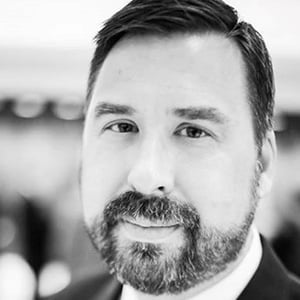
Adjunct Fellow, Competitive Enterprise Institute
Gregory Conko is an Adjunct Fellow at the Competitive Enterprise Institute and Vice President of Programs at DonorsTrust. His research at CEI focuses on health care, food and drug regulation, agriculture and agricultural trade, and nutrition and public health. He also has broad expertise in science and environmental policy and in administrative and regulatory law.
Since 2021, Conko has managed the grants and grantee programs at the donor-advised fund sponsor DonorsTrust, but he continues to research and write on policy matters for the Competitive Enterprise Institute. Before joining DonorsTrust, Conko was Deputy Director of the George Mason University Law & Economics Center, a Senior Fellow and later Executive Director of CEI.
Conko is the author or co-author of numerous books, studies, and articles, and Barron’s called his book, The Frankenfood Myth: How Protest and Politics Threaten the Biotech Revolution, co-authored with Henry I. Miller, one of the 25 best books of 2004. His other writings have appeared in such journals as Nature Biotechnology, Transgenic Research, Health Matrix: Journal of Law & Medicine, and the Cumberland Law Review, and in such newspapers as the Financial Times, The Wall Street Journal, Los Angeles Times, and USA Today.
Conko is a member of the Federalist Society’s Regulatory Transparency Project Working Group on FDA & Health, a member of the American Council on Science and Health’s Board of Scientific and Policy Advisors. He received a JD degree magna cum laude from the George Mason University School of Law and a BA in political science and history from American University. He lives in Virginia with his wife and son.

Cybersecurity: Private Sector Faces Increasing Regulatory Risk From Agency Enforcement and Informal “Guidance” Becoming Standard of Care
TeleforumTopics
When Falsely Shouting "Crime" Pays
Over at the Huffington Post, they're running a gigantic 15-part 58,000 word serial by Steven...
Agency Taxation
Christopher C. DeMuth
In recent years Congress has delegated its taxing and appropriating powers to regulatory agencies under...
Panel III: Innovation and Health Care
Thomas B. Griffith, Peter Huber, Lindsay Kelly, Gerald Masoudi
Given that everyone is getting older and more prone to disease, medical innovation is one...
Panel III: Innovation and Health Care
Thomas B. Griffith, Peter Huber, Lindsay Kelly, Gerald Masoudi
Given that everyone is getting older and more prone to disease, medical innovation is one...
Panel III: Innovation and Health Care
2015 National Student Symposium
Chicago, ILFDA's Proposed Ban of Trans Fat in Processed Food - Podcast
Daren Bakst, Stuart Pape
The Food and Drug Administration (FDA) has taken the first step to effectively ban trans...
FDA's Proposed Ban of Trans Fat in Processed Food
TeleforumFDA Involvement in Off-Label Drug Use
Ryan Abbott, Richard A. Epstein, Susan Prager
On January 13, 2014 the Southwestern Law School Federalist Society student chapter hosted a debate...
Free To Choose Medicine
Bartley J. Madden, Gregory Conko
Note from the Editor: This article is about the Free To Choose Medicine concept....