
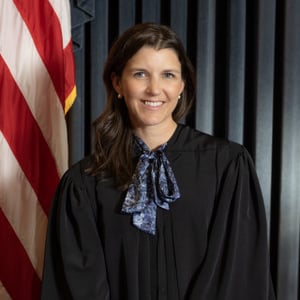
Judge, United States Court of Appeals, Sixth Circuit
The Honorable Whitney Hermandorfer is a judge on the United States Court of Appeals for the Sixth Circuit. She was nominated to the court by President Donald Trump (R) on May 12, 2025, and confirmed by the United States Senate on July 14, 2025.
Prior to her appointment, she worked in the Office of the Tennessee Attorney General as Director of the Strategic Litigation Unit. In that role, Whitney focused on leading constitutional, statutory, and administrative-law challenges to federal agency action, as well as on defending the State in complex matters at the trial and appellate level.
Whitney previously worked at Williams & Connolly LLP in Washington, DC, where she focused on appellate and administrative-law litigation. Whitney clerked for Justice Samuel Alito in the OT 2018 Supreme Court term and for Justice Amy Coney Barrett during her inaugural OT 2020 term. Prior to that, Whitney clerked for then-Judge Kavanaugh on the D.C. Circuit, and Judge Richard Leon on the U.S. District Court for D.C. Whitney is a graduate of Princeton University and George Washington University Law School.
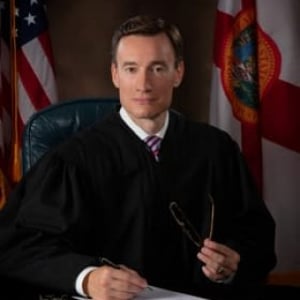
Judge, Florida First District Court of Appeal
Judge Robert “Bobby” E. Long, Jr., was appointed to the First District Court of Appeal on June 10th, 2020, by Governor Ron DeSantis. Prior to joining the Court of Appeal, Judge Long served as a trial court judge on Florida’s Second Judicial Circuit Court. He was appointed to the Circuit Court on June 26th, 2016, by Governor Rick Scott.
Prior to joining the Circuit Court, he was the General Counsel and a Major on the Executive Command Staff at the Leon County Sheriff’s Office. A law enforcement officer and an attorney, he oversaw the operations of the Legal and Professional Service Division at the Sheriff’s Office. In that capacity he ran internal affairs, all law enforcement and corrections professional training, supervised all litigation, managed legislative affairs, handled employment matters, and provided counsel to the Office of the Sheriff. Prior to that, he worked in private practice at a statewide law firm where he handled diverse civil litigation matters.
Judge Long started his legal career as an active duty Judge Advocate with the United States Navy. He is a veteran of the war in Afghanistan. He also served as a Naval Officer in the pacific area of operations. He currently serves as a Commander in the United States Navy Reserves.
As an attorney, his civil and criminal litigation experience ranged from wrongful death to murder. Prior to attending law school, Judge Long worked as a law enforcement officer at the Leon County Sheriff’s Office.
Judge Long has served on the Boards of Directors for the Legal Aid Foundation, the Rotary Club of Tallahassee, and the American Inn of Court. He is a member of the Economic Club of Florida, the American Legion, the Veterans of Foreign Wars, and Leadership Tallahassee.
Judge Long and his wife have four sons. He is a volunteer coach for their baseball, soccer, basketball, and football teams. He and his wife lead children’s Sunday School at their church. He is the Chairman of his sons’ Cub Scout Pack and an Assistant Scoutmaster with their Boy Scout Troop.
Judge Long holds a law degree from the University of Florida, College of Law, and a Bachelor of Science in Finance from the Florida State University, College of Business.
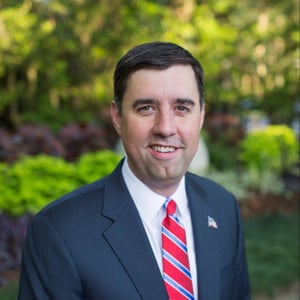
Associate Justice, Alabama Supreme Court
James L. “Jay” Mitchell was elected to the Alabama Supreme Court in 2018.
Prior to serving on the Supreme Court, Justice Mitchell was an accomplished litigation attorney with Maynard, Cooper & Gale, P.C. During his time in private practice, he tried a number of complex cases to verdict, successfully handled appeals, and obtained favorable settlements for clients. He was rated as one of the top litigators in the United States and Alabama, and received the highest possible rating for professional ethics. He also served on Maynard, Cooper & Gale’s executive committee, helping to lead strategic and growth initiatives for the firm.
Justice Mitchell was born in Mobile and grew up in South Alabama and in Homewood. He is a graduate of Homewood High School and received his Bachelor of Arts with honors from Birmingham-Southern College, where he graduated Phi Beta Kappa, served as president of the student body, and played forward on the school’s 1995 national championship basketball team. He holds a Master of Arts from University College in Dublin, Ireland, and received his law degree from the University of Virginia School of Law.
Justice Mitchell has long been active in organizations that benefit the community and enhance the legal profession. In addition to his service with other organizations, he is a member of the Rotary Club of Birmingham and serves on the board of directors at Cornerstone School, an inner city Christian school. He is also a member of the Federalist Society.
Justice Mitchell and his wife, Elizabeth, have been married for 20 years and have four children. They reside in Homewood and are longtime members of Church of the Highlands.
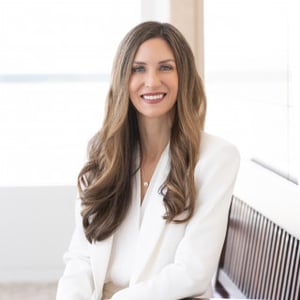
United States District Judge, United States District Court for the Middle District of Florida
In November 2020, the Senate confirmed Kathryn Kimball Mizelle as a United States District Judge for the Middle District of Florida. At age 33, she became the youngest Article III judge in the country. Prior to her confirmation, Judge Mizelle was in private practice at Jones Day, where she focused on complex civil and criminal litigation and appeals. Judge Mizelle previously served at the United States Department of Justice in the Office of the Associate Attorney General, in the Southern Criminal Enforcement Section of the Tax Division, and in the United States Attorney’s Office for the Eastern District of Virginia. Judge Mizelle has also taught as an adjunct professor of law at the University of Florida Levin College of Law and at George Mason University’s Antonin Scalia Law School.
Judge Mizelle earned her B.A., summa cum laude, from Covenant College, and her J.D., summa cum laude, from the University of Florida Levin College of Law. After graduation, Judge Mizelle served as a law clerk at every level of the federal judiciary: at the Supreme Court for Justice Clarence Thomas, at the D.C. Circuit for Judge Gregory G. Katsas, at the Eleventh Circuit for Chief Judge William H. Pryor Jr., and at the Middle District of Florida for Judge James S. Moody Jr.
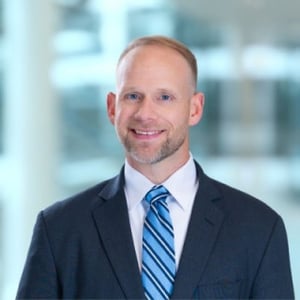
Partner, Holtzman Vogel Baran Torchinsky & Josefiak PLLC
Ed Wenger, a partner at Holtzman Vogel and Florida Bar board certified in appellate law, has successfully handled every stage of litigation, from the initial complaint-drafting stage all the way through United States Supreme Court review. Experienced in skills covering, among other things, state-court administrative hearings to expert-witness cross-examination, Ed has focused the bulk of his career on appellate and constitutional litigation, as well as critical motions practice.
His appellate experience began, first, as a law clerk for the Honorable Edward C. Prado of the United States Court of Appeals for the Fifth Circuit, and it continued as a law clerk for the Honorable Karen LeCraft Henderson of the United States Court of Appeals for the District of Columbia Circuit. He has since served as the Chief Deputy Solicitor General for the State of Florida (the number two appellate litigator for the State) and the General Counsel to the West Virginia Attorney General.
Drawing on the work ethic that once earned him a two-year stint as captain of FIU’s football team, Ed has presented oral argument in state and federal courts throughout the country, submitted scores of briefs in courts throughout the nation (and roughly two dozen with the Supreme Court of the United States), and represented, among others, the Office of Governor Ron DeSantis and Former United States Attorney General Edwin Meese III.
When Ed isn’t writing briefs, he can be found studying political philosophy and American statesmanship at Hillsdale College or boxing for charity (no wins yet, but we’re optimistic)!
Chief Deputy Solicitor General, Office of Florida Attorney General
Daniel Bell serves as Chief Deputy Solicitor General in the Florida Office of the Attorney General. He has also served as General Counsel to the Florida House of Representatives, and took a leave of absence from government service to manage Blake Masters' U.S. Senate campaign in 2020.
Before government service, Mr. Bell was a litigator at Williams & Connolly LLP in Washington, D.C. He graduated from Florida State University with degrees in economics and history and from Stanford Law School, after which he clerked for Judges Alex Kozinski and Paul Watford of the U.S. Court of Appeals for the Ninth Circuit.
Mr, Bell is a Florida native, husband, and father of three girls.
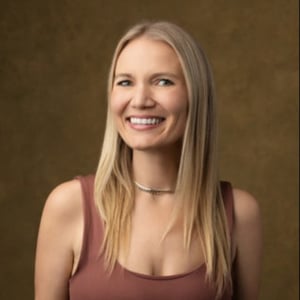
Constitutional Scholarship Director and Senior Legal Analyst, Pacific Legal Foundation
Anastasia Boden is Director of Constitutional Scholarship at Pacific Legal Foundation, where she leads the organization’s Supreme Court commentary and directs scholarly analysis in support of the firm’s litigation. She has represented entrepreneurs and small businesses nationwide in challenges to onerous licensing regimes, anti-competitive titling restrictions, Certificate of Need (“competitor’s veto”) laws, and other forms of unnecessary red tape that block economic opportunity.
Prior to this role, Anastasia developed nearly a dozen constitutional challenges to Certificate of Need laws across the country, helping spur legislative reform in Montana, Pennsylvania, and West Virginia. Her victories include a ruling invalidating Houston’s busking restrictions, multiple appellate decisions expanding access to the courts for civil rights plaintiffs, and the legislative repeal of Virginia’s happy-hour advertising ban.
Her writings on law and liberty have been featured in USA Today, The Washington Post, The Wall Street Journal, the Los Angeles Times, the Chicago Tribune, Forbes, and more, and she has appeared on Headline News, CBS News, Fox News, ReasonTV, Newsmax, and John Stossel. In 2020, she was featured on Libertarian Party presidential candidate Jo Jorgensen’s Supreme Court shortlist.
Anastasia earned her BA with dean’s honors from the University of California, Santa Barbara, and her JD from Georgetown University Law Center, where she was research assistant to Professor Randy E. Barnett—the “intellectual godfather” of the constitutional challenge to Obamacare. She is the co-creator of the podcast Dissed, about infamous Supreme Court dissents. She authors the biweekly newsletter SCOTUS Scoop and the column, “In Dissent” for SCOTUSblog.
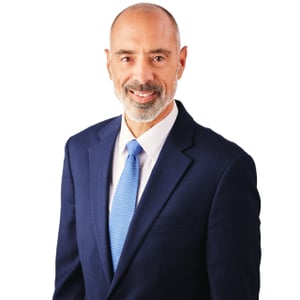
Founding Partner, Lawson Huck Gonzalez, PLLC
Alan Lawson retired from the Florida Supreme Court in late 2022 after a 35-year legal and judicial career, founding the firm with his partners in early 2023.
Earlier in his legal career, Alan practiced as an associate and partner with a major Florida law firm, Steel Hector & Davis, and with the Orange County Attorney’s Office. In these capacities, Alan handled a wide array of case types in state and federal court, and before administrative agencies, including construction, government procurement, eminent domain, contract claims, public utility regulatory proceedings, business disputes, and class action defense, attaining a Martindale-Hubbell “AV” rating. This rating reflects a peer-review ranking at the highest level of professional excellence for legal knowledge, communication skills and ethical standards.
In 2002, Alan was appointed by then-Governor Jeb Bush as a Judge of the Ninth Judicial Circuit and served there for four years, presiding over more than 100 jury trials. Alan was then appointed by Governor Bush to the Fifth District Court of Appeal, where he served for eleven years, including a term as Chief Judge. In 2016, Governor Rick Scott appointed Alan to the Florida Supreme Court, where he served until his retirement from the bench. Throughout his career, Alan received numerous awards and recognitions, and has maintained a reputation for diligence, excellence, skill and professionalism.
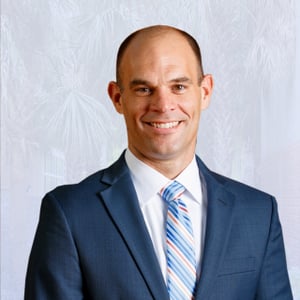
Associate Professor of Law, University of Florida Levin College of Law
Professor Marshfield teaches and writes in the areas of local government law, state constitutional law, and constitutional change. His research has appeared in the University of Pennsylvania Law Review, Northwestern University Law Review, Boston University Law Review and the Michigan Law Review, among others. His state constitutional law research has been cited by the New Jersey Supreme Court, and his research into constitutional change has been cited by leading scholars in law reviews, textbooks, and academic journals. Professor Marshfield has also served as a consultant to foreign officials regarding issues of constitutional revision, and he has advised public policy groups regarding voter awareness and ballot issues.
Before joining the University of Florida, Professor Marshfield taught at the University of Nebraska College of Law, where he twice won Professor of the Year for this teaching. Professor Marshfield also taught at the University of Arkansas School of Law and practiced as a commercial litigator with Latham & Watkins LLP and Saul Ewing LLP. He clerked for Judge Robert B. Kugler, United States District Judge for the District of New Jersey, and Chief Justice James R. Zazzali of the Supreme Court of the State of New Jersey.
Professor Marshfield grew up in Durban, South Africa.
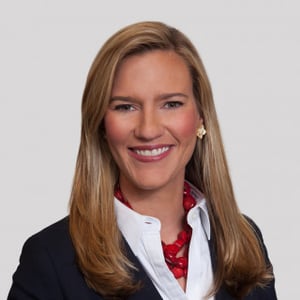
United States District Judge, Middle District of Florida
Judge Moe currently serves as a United States District Judge for the Middle District Of Florida.
At the time then-Governor Rick Scott appointed her to the bench in 2017, Judge Moe was an equity shareholder at Bush Ross, P.A. She was AV-rated by Martindale-Hubbell and was recognized by Best Lawyers in America, Florida Trend: Legal Elite, and Florida Super Lawyers in the field of commercial litigation. As a lawyer, her trial experience included jury and non-jury cases in state and federal court and in arbitration. Her last trial in private practice involved a dispute between the State of Florida and the Seminole Indian Tribe over the Tribe’s Class III gaming compact. While her clients were most often business people engaged in or trying to avoid business disputes, she also handled pro bono cases on behalf of a nun, a convicted murderer serving three life sentences in federal prison, and a participant in the Middle District of Florida’s Intensive Re-Entry Program. She is a past president of the Tampa Bay Chapter of the Federal Bar Association and a past chair of a Florida Bar Grievance Committee.
Prior to entering private practice, she clerked for United States District Judge Virginia M. Hernandez Covington in the Middle District of Florida. During law school, she was editor-in-chief of the law review and interned for Justice Kenneth B. Bell during his service on the Florida Supreme Court and the Honorable Jeffrey Hotham on the Maricopa County Superior Court. She is an honors graduate of the Sandra Day O’Connor College of Law at Arizona State University, Furman University, and Cambridge Christian School (formerly known as Seminole Presbyterian School).
Chief Deputy Solicitor General, Office of Florida Attorney General
Daniel Bell serves as Chief Deputy Solicitor General in the Florida Office of the Attorney General. He has also served as General Counsel to the Florida House of Representatives, and took a leave of absence from government service to manage Blake Masters' U.S. Senate campaign in 2020.
Before government service, Mr. Bell was a litigator at Williams & Connolly LLP in Washington, D.C. He graduated from Florida State University with degrees in economics and history and from Stanford Law School, after which he clerked for Judges Alex Kozinski and Paul Watford of the U.S. Court of Appeals for the Ninth Circuit.
Mr, Bell is a Florida native, husband, and father of three girls.
Constitutional Scholarship Director and Senior Legal Analyst, Pacific Legal Foundation
Anastasia Boden is Director of Constitutional Scholarship at Pacific Legal Foundation, where she leads the organization’s Supreme Court commentary and directs scholarly analysis in support of the firm’s litigation. She has represented entrepreneurs and small businesses nationwide in challenges to onerous licensing regimes, anti-competitive titling restrictions, Certificate of Need (“competitor’s veto”) laws, and other forms of unnecessary red tape that block economic opportunity.
Prior to this role, Anastasia developed nearly a dozen constitutional challenges to Certificate of Need laws across the country, helping spur legislative reform in Montana, Pennsylvania, and West Virginia. Her victories include a ruling invalidating Houston’s busking restrictions, multiple appellate decisions expanding access to the courts for civil rights plaintiffs, and the legislative repeal of Virginia’s happy-hour advertising ban.
Her writings on law and liberty have been featured in USA Today, The Washington Post, The Wall Street Journal, the Los Angeles Times, the Chicago Tribune, Forbes, and more, and she has appeared on Headline News, CBS News, Fox News, ReasonTV, Newsmax, and John Stossel. In 2020, she was featured on Libertarian Party presidential candidate Jo Jorgensen’s Supreme Court shortlist.
Anastasia earned her BA with dean’s honors from the University of California, Santa Barbara, and her JD from Georgetown University Law Center, where she was research assistant to Professor Randy E. Barnett—the “intellectual godfather” of the constitutional challenge to Obamacare. She is the co-creator of the podcast Dissed, about infamous Supreme Court dissents. She authors the biweekly newsletter SCOTUS Scoop and the column, “In Dissent” for SCOTUSblog.
Founding Partner, Lawson Huck Gonzalez, PLLC
Alan Lawson retired from the Florida Supreme Court in late 2022 after a 35-year legal and judicial career, founding the firm with his partners in early 2023.
Earlier in his legal career, Alan practiced as an associate and partner with a major Florida law firm, Steel Hector & Davis, and with the Orange County Attorney’s Office. In these capacities, Alan handled a wide array of case types in state and federal court, and before administrative agencies, including construction, government procurement, eminent domain, contract claims, public utility regulatory proceedings, business disputes, and class action defense, attaining a Martindale-Hubbell “AV” rating. This rating reflects a peer-review ranking at the highest level of professional excellence for legal knowledge, communication skills and ethical standards.
In 2002, Alan was appointed by then-Governor Jeb Bush as a Judge of the Ninth Judicial Circuit and served there for four years, presiding over more than 100 jury trials. Alan was then appointed by Governor Bush to the Fifth District Court of Appeal, where he served for eleven years, including a term as Chief Judge. In 2016, Governor Rick Scott appointed Alan to the Florida Supreme Court, where he served until his retirement from the bench. Throughout his career, Alan received numerous awards and recognitions, and has maintained a reputation for diligence, excellence, skill and professionalism.
Associate Professor of Law, University of Florida Levin College of Law
Professor Marshfield teaches and writes in the areas of local government law, state constitutional law, and constitutional change. His research has appeared in the University of Pennsylvania Law Review, Northwestern University Law Review, Boston University Law Review and the Michigan Law Review, among others. His state constitutional law research has been cited by the New Jersey Supreme Court, and his research into constitutional change has been cited by leading scholars in law reviews, textbooks, and academic journals. Professor Marshfield has also served as a consultant to foreign officials regarding issues of constitutional revision, and he has advised public policy groups regarding voter awareness and ballot issues.
Before joining the University of Florida, Professor Marshfield taught at the University of Nebraska College of Law, where he twice won Professor of the Year for this teaching. Professor Marshfield also taught at the University of Arkansas School of Law and practiced as a commercial litigator with Latham & Watkins LLP and Saul Ewing LLP. He clerked for Judge Robert B. Kugler, United States District Judge for the District of New Jersey, and Chief Justice James R. Zazzali of the Supreme Court of the State of New Jersey.
Professor Marshfield grew up in Durban, South Africa.
United States District Judge, Middle District of Florida
Judge Moe currently serves as a United States District Judge for the Middle District Of Florida.
At the time then-Governor Rick Scott appointed her to the bench in 2017, Judge Moe was an equity shareholder at Bush Ross, P.A. She was AV-rated by Martindale-Hubbell and was recognized by Best Lawyers in America, Florida Trend: Legal Elite, and Florida Super Lawyers in the field of commercial litigation. As a lawyer, her trial experience included jury and non-jury cases in state and federal court and in arbitration. Her last trial in private practice involved a dispute between the State of Florida and the Seminole Indian Tribe over the Tribe’s Class III gaming compact. While her clients were most often business people engaged in or trying to avoid business disputes, she also handled pro bono cases on behalf of a nun, a convicted murderer serving three life sentences in federal prison, and a participant in the Middle District of Florida’s Intensive Re-Entry Program. She is a past president of the Tampa Bay Chapter of the Federal Bar Association and a past chair of a Florida Bar Grievance Committee.
Prior to entering private practice, she clerked for United States District Judge Virginia M. Hernandez Covington in the Middle District of Florida. During law school, she was editor-in-chief of the law review and interned for Justice Kenneth B. Bell during his service on the Florida Supreme Court and the Honorable Jeffrey Hotham on the Maricopa County Superior Court. She is an honors graduate of the Sandra Day O’Connor College of Law at Arizona State University, Furman University, and Cambridge Christian School (formerly known as Seminole Presbyterian School).
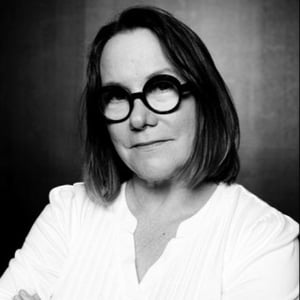
Independent Analyst, None
Allison Hayward most recently served as the Head of Case Selection at the Oversight Board. Previously, she was a Commissioner at the California Fair Political Practices Commission, a Board Member at the Office of Congressional Ethics, and an Assistant Professor of Law at George Mason University School of Law. She also previously worked as Chief of Staff and Counsel in the office of Federal Election Commission Commissioner Bradley A. Smith and practiced election law in California and in Washington DC.
In 1994-1995, Professor Hayward was a judicial clerk for the Honorable Danny J. Boggs, United States Court of Appeal for the Sixth Circuit.
She is a member of the State Bar of California and the District of Columbia Bar.
Independent Analyst, None
Allison Hayward most recently served as the Head of Case Selection at the Oversight Board. Previously, she was a Commissioner at the California Fair Political Practices Commission, a Board Member at the Office of Congressional Ethics, and an Assistant Professor of Law at George Mason University School of Law. She also previously worked as Chief of Staff and Counsel in the office of Federal Election Commission Commissioner Bradley A. Smith and practiced election law in California and in Washington DC.
In 1994-1995, Professor Hayward was a judicial clerk for the Honorable Danny J. Boggs, United States Court of Appeal for the Sixth Circuit.
She is a member of the State Bar of California and the District of Columbia Bar.
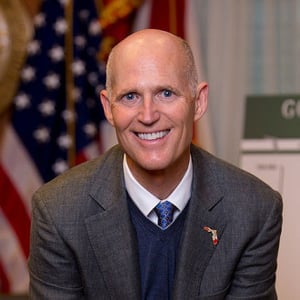
United States Senator, Florida
Rick Scott was elected to the U.S. Senate in 2018 and is currently serving his first term representing the state of Florida. Prior to his election to the U.S. Senate, Rick Scott served two terms as the 45th Governor of Florida, working every day to turn around Florida’s economy and secure the state’s future as the best place for families and businesses to succeed. Rick Scott grew up in public housing in the Midwest as his adoptive father, a World War II veteran and truck driver, and his mother, a store clerk, struggled to financially support their family. After marrying his high school sweetheart, Ann, Rick Scott joined the Navy, where he served active duty as a radar man aboard the USS Glover. He used the G.I. Bill to attend the University of Missouri, Kansas City, and eventually opened his first business – a donut shop. Rick Scott went on to run the world’s largest healthcare company and continues to fight every day so families across the state can have the same opportunities he had to live the American dream.
Rick Scott knows firsthand that a good paying job is one of the most important things for a family, and following Florida’s economic collapse ten years ago, he made the decision to run for governor as a businessman with no political experience. During his term as Governor, he successfully championed more than $10 billion in tax cuts and cut thousands of burdensome regulations that led Florida businesses to create nearly 1.7 million new jobs. Under his leadership, the unemployment rate dropped from 11 percent to 3.3 percent, Florida paid down $10 billion in state debt, and record investments were made in what matters most to Floridians – education, the environment, and public safety.
Rick Scott and his wife, Ann, have been married for 49 years and have two daughters, Allison and Jordan, six grandsons, Auguste, Quinton, Sebastian, Eli, Louie and Jude, and one granddaughter, Zelda Ann.
Independent Analyst, None
Allison Hayward most recently served as the Head of Case Selection at the Oversight Board. Previously, she was a Commissioner at the California Fair Political Practices Commission, a Board Member at the Office of Congressional Ethics, and an Assistant Professor of Law at George Mason University School of Law. She also previously worked as Chief of Staff and Counsel in the office of Federal Election Commission Commissioner Bradley A. Smith and practiced election law in California and in Washington DC.
In 1994-1995, Professor Hayward was a judicial clerk for the Honorable Danny J. Boggs, United States Court of Appeal for the Sixth Circuit.
She is a member of the State Bar of California and the District of Columbia Bar.
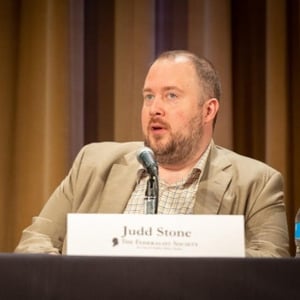
Stone Hilton, Founding Partner
A founding partner of Stone Hilton, Judd Stone is well respected both in Texas and across the nation as an insightful and tenacious appellate litigator. A lifelong Texan, Judd has argued dozens of appeals in both federal and state court, including arguing eight cases before the United States Supreme Court.
Judd began his legal career clerking for United States Supreme Court Justice Antonin Scalia and Fifth Circuit Chief Judge Edith H. Jones. With a J.D. from Northwestern University School of Law where he graduated first in his class, Judd's academic and professional credentials place him among the most distinguished lawyers in the profession. At the helm of countless major legal battles and emergency appeals for the State of Texas, Judd's deep understanding of the law and persuasive advocacy have been instrumental in shaping legal precedents. His tenure as the Solicitor General of Texas is a testament to his expertise and the trust placed in him by high-ranking state officials. Judd's strategic prowess extends beyond the courtroom; his advisory roles have made him a respected figure among policymakers.
His contributions to Stone Hilton and the legal community are characterized by his meticulous approach to cases, his acumen as a counselor, and his unwavering commitment to justice. As a partner at Stone Hilton, Judd continues to apply his formidable talents to advocate for his clients with the utmost dedication and to uphold the pillars of integrity and excellence that the firm stands for.
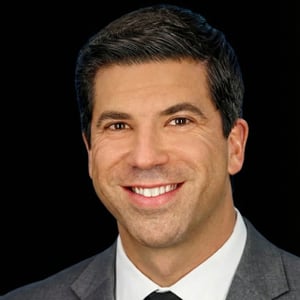
Judge, United States District Court, Southern District of Florida
On April 4, 2019, Judge Altman was confirmed to a seat on the U.S. District Court for the Southern District of Florida. At 36, he became the youngest federal district court judge in the country—and the youngest federal judge ever appointed in the Southern District of Florida.
Judge Altman received a BA from Columbia University, where he played quarterback on the football team and pitched for the baseball team—earning All-Ivy honors. Judge Altman received his JD from the Yale Law School, where he was projects editor of the Yale Law Journal. After law school, the Judge clerked on the 11th Circuit Court of Appeals for the Honorable Stanley Marcus.
Judge Altman then became a federal prosecutor at the U.S. Attorney’s Office in Miami, where he twice received the Director of the Executive Office of U.S. Attorneys’ Award for Superior Performance by a federal prosecutor. In 2013, Judge Altman was named “Federal Prosecutor of the Year” by the Miami-Dade Chiefs of Police and the Law Enforcement Officers’ Charitable Foundation.
In 2014, Judge Altman became a partner at the Miami law firm of Podhurst Orseck, where he represented the victims of airplane crashes and bank fraud conspiracies.

Young Lawyers Special Session: Making Winning Arguments
Whitney D. Hermandorfer, Robert E. Long, Jay Mitchell, Kathryn Kimball Mizelle, Edward Mark Wenger
The state and federal bench has transformed in recent years, with more textualist/originalist judges appointed...
Panel II: Amending the Florida Constitution: Ballot Initiatives and Judicial Review
Daniel Bell, Anastasia P. Boden, Alan Lawson, Jonathan L. Marshfield, Anne-Leigh Gaylord Moe
The citizen-initiative process allows the People of Florida to propose amendments to the state constitution,...
Panel II: Amending the Florida Constitution: Ballot Initiatives and Judicial Review
Daniel Bell, Anastasia P. Boden, Alan Lawson, Jonathan L. Marshfield, Anne-Leigh Gaylord Moe
The citizen-initiative process allows the People of Florida to propose amendments to the state constitution,...
Topics
Artificial Intelligence in the Courtroom: Two Approaches
Hardly a week goes by when there is not a new story of someone getting caught...
A Conversation with Senator Rick Scott
Emerald Coast Lawyers Chapter
Pensacola, FLCourthouse Steps Oral Argument: NetChoice Cases
Allison R. Hayward
Two cases involving NetChoice, a company that represents social media giants like Facebook, Twitter, Google,...
Courthouse Steps Oral Argument: NetChoice Cases
Allison R. Hayward
Two cases involving NetChoice, a company that represents social media giants like Facebook, Twitter, Google,...
Courthouse Steps Oral Argument: NetChoice Cases
Social Media and the First Amendment at the U.S. Supreme Court
New Orleans Lawyers Chapter
New Orleans, LALuncheon & Remarks
2024 Florida Chapters Conference
Kissimmee, FL