

Managing Partner - Washington, D.C., Lewis Brisbois Bisgaard & Smith LLP
Jane Luxton is the Managing Partner of Lewis Brisbois’ Washington, D.C. office, co-chair of the Government Investigations & White Collar Defense Practice, co-chair of the Government Relations Group Leadership, co-chair of the Environmental and Administrative Law Practice, and vice-chair of the Consumer Financial Services Practice. Jane has extensive experience in environmental as well as other federal regulatory, policy, and litigation matters. She advises businesses, associations, and coalitions in navigating all levels of the federal regulatory process, including appellate advocacy.
Recent matters include:
Jane’s knowledge of environmental and administrative law gained key insights from her experience serving in several prominent positions in the U.S. government. From 2007-2009, she served as general counsel of the National Oceanic and Atmospheric Administration, advising the Undersecretary of Commerce for Oceans and Atmosphere on legal and policy issues related to natural resource damages, coastal zone and fisheries management, endangered species and marine mammal protection, and weather and climate change science. In this role, in which she held a top secret/SCI security clearance, Jane was appointed by the President to head the U.S. delegation to the 2008 Western and Central Pacific Fisheries Commission. She also received the U.S. Department of Commerce Gold Medal Award in 2008 and 2009.
Jane’s experience includes “first chair” prosecution of antitrust and other criminal cases at the U.S. Department of Justice and U.S. Attorneys office, Eastern District of Virginia. In private practice, Jane has represented clients in grand jury and other government investigations.
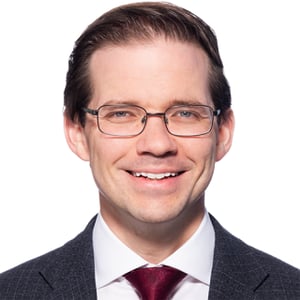
Of Counsel, Covington & Burling LLP
The Honorable Paul J. Ray is currently Of Counsel at Covington & Burling LLP where he advises clients on regulatory opportunities and challenges and helps them formulate and execute advocacy strategies for their regulatory policy priorities before the executive branch and Congress.
During the first Trump Administration, Paul held various senior positions at the Office of Information and Regulatory Affairs (OIRA) within the White House’s Office of Management and Budget, including as acting, and then Senate-confirmed, head of the office. As OIRA Administrator (the "regulations czar"), Paul supervised the review of hundreds of regulations from across the government, drafted numerous executive orders governing the regulatory process, and led the Administration’s regulatory reform effort. As a result of this experience, Paul is well-positioned to help clients understand and achieve regulatory policy priorities in the context of the government’s regulatory agenda and ongoing reform efforts.
Most recently, Paul was also the Director of the Roe Institute for Economic Policy Studies at The Heritage Foundation. In that role, he supervised the formulation of the Foundation’s economic and regulatory policy recommendations and provided technical assistance to congressional committees and staff regarding legislative changes to the regulatory process. In addition to his role at The Heritage Foundation, Paul also served as a Senior Advisor at a strategic advisory firm. Before his time in government, Paul practiced law at a law firm in Washington, specializing in administrative law matters.
Prior to his role at the White House, Paul was Counselor to the Secretary at the U.S. Department of Labor. There he led departmental efforts in high-profile rulemakings and helped formulate the Department’s legal positions and strategy.
Paul served as a law clerk to Supreme Court Justice Samuel Alito and as a law clerk to the Honorable Debra Livingston of the U.S. Court of Appeals for the Second Circuit.
Paul is a thought leader in the conservative legal movement and is a frequent commentator and speaker on regulatory policy and reform matters, including at law schools, professional gatherings, and other venues. He is the Chairman of Innovations in Peacebuilding International and the Regulatory Process Working Group of the Federalist Society’s Regulatory Transparency Project and a public member of the Administrative Conference of the United States. Paul is also an adjunct lecturer at the Hillsdale College School of Government.

Executive in Residence, Wake Forest University School of Business
John Allison is an Executive in Residence at the Wake Forest School of Business. He is a member of the Cato Institute’s Board of Directors and Chairman of the Executive Advisory Council of the Cato Institute’s Center for Monetary and Financial Alternatives. Allison was president and CEO of the Cato Institute from October 2012 to April 2015. Prior to joining Cato, Allison was chairman and CEO of BB&T Corporation, the 10th-largest financial services holding company headquartered in the United States. During his tenure as CEO from 1989 to 2008, BB&T grew from $4.5 billion to $152 billion in assets. He was recognized by theHarvard Business Reviewas one of the top 100 most successful CEOs in the world over the last decade.
Allison has received the Corning Award for Distinguished Leadership, been inducted into the North Carolina Business Hall of Fame, and received the Lifetime Achievement Award from theAmerican Banker. He is the author of The Financial Crisis and the Free Market Cure: Why Pure Capitalism Is the World Economy’s Only Hope and The Leadership Crisis and the Free Market Cure: Why the Future of Business Depends on the Return to Life, Liberty, and the Pursuit of Happiness. In addition, he is a former Distinguished Professor of Practice at Wake Forest University School of Business, and serves on the Board of Visitors at the business schools at Wake Forest, Duke, and the University of North Carolina–Chapel Hill.
Allison is a Phi Beta Kappa graduate of the University of North Carolina–Chapel Hill. He received his master’s degree in management from Duke University and is also a graduate of the Stonier Graduate School of Banking. Allison is the recipient of six honorary doctorate degrees.

Senior Fellow, Domestic Policy Studies, American Enterprise Institute
Howard Husock is a senior fellow in Domestic Policy Studies at the American Enterprise Institute (AEI), where he focuses on municipal government, urban housing policy, civil society, and philanthropy.
Before joining AEI, Mr. Husock was vice president for research and publications at the Manhattan Institute. He has also been a director of case studies in public policy and management at the Harvard Kennedy School, a member of the board of directors of the Corporation for Public Broadcasting, and a journalist and Emmy-winning documentary filmmaker.
Mr. Husock has been widely published in policy journals and the popular press, including in The New York Times and The New York Times Magazine, The Wall Street Journal, The Atlantic, The Hill, New York Post, New York Daily News, The Boston Globe, The Chronicle of Philanthropy, City Journal, Forbes.com, the Journal of Policy Analysis and Management, National Affairs, Reason, The New Republic, Washington Examiner, and The Wilson Quarterly.
His books include the forthcoming “The Poor Side of Town: And Why We Need It” (Encounter Books, September 21, 2021); “Who Killed Civil Society? The Rise of Big Government and Decline of Bourgeois Norms” (Encounter Books, 2019), “Philanthropy Under Fire” (Encounter Broadsides, 2013), and “America’s Trillion-Dollar Housing Mistake: The Failure of American Housing Policy” (Ivan R. Dee, 2003).
Mr. Husock was a mid-career fellow at Princeton University’s Woodrow Wilson School of Public and International Affairs. He holds a BS from Boston University’s School of Public Communication.
Executive in Residence, Wake Forest University School of Business
John Allison is an Executive in Residence at the Wake Forest School of Business. He is a member of the Cato Institute’s Board of Directors and Chairman of the Executive Advisory Council of the Cato Institute’s Center for Monetary and Financial Alternatives. Allison was president and CEO of the Cato Institute from October 2012 to April 2015. Prior to joining Cato, Allison was chairman and CEO of BB&T Corporation, the 10th-largest financial services holding company headquartered in the United States. During his tenure as CEO from 1989 to 2008, BB&T grew from $4.5 billion to $152 billion in assets. He was recognized by theHarvard Business Reviewas one of the top 100 most successful CEOs in the world over the last decade.
Allison has received the Corning Award for Distinguished Leadership, been inducted into the North Carolina Business Hall of Fame, and received the Lifetime Achievement Award from theAmerican Banker. He is the author of The Financial Crisis and the Free Market Cure: Why Pure Capitalism Is the World Economy’s Only Hope and The Leadership Crisis and the Free Market Cure: Why the Future of Business Depends on the Return to Life, Liberty, and the Pursuit of Happiness. In addition, he is a former Distinguished Professor of Practice at Wake Forest University School of Business, and serves on the Board of Visitors at the business schools at Wake Forest, Duke, and the University of North Carolina–Chapel Hill.
Allison is a Phi Beta Kappa graduate of the University of North Carolina–Chapel Hill. He received his master’s degree in management from Duke University and is also a graduate of the Stonier Graduate School of Banking. Allison is the recipient of six honorary doctorate degrees.
Associate Professor of Economics and Law, University of Missouri at Kansas City (UMKC) School of Law

Senior Fellow, Mises Institute
Alex J. Pollock is a Senior Fellow with the Mises Institute, providing thought and policy leadership on financial issues and the study of financial systems. His work includes cycles of booms and busts, financial crises with their political responses, housing finance, government-sponsored enterprises, risk and uncertainty, central banking, banking and financial regulation, corporate governance, retirement finance, student loans, and the politics of finance.
He previously served as the Principal Deputy Director of the Office of Financial Research in the U.S. Treasury Department 2019-2021. He was a Distinguished Senior Fellow with the R Street Institute 2015-2019 and 2021, and a resident fellow at the American Enterprise Institute, 2004-2015. Among the many aspects of his AEI work, he developed the One Page Mortgage Form to give borrowers in clear form the key information they need in order to know what they are committing themselves to. He was President and CEO of the Federal Home Loan Bank of Chicago from 1991 to 2004. There he invented the Mortgage Partnership Finance program, which successfully created front-end mortgage credit risk sharing beginning in 1997. His decades of banking experience include being a Visiting Scholar at the Federal Reserve Bank of St. Louis, 1991.
Pollock was a director of the CME Group 2004-2019 and of Ascendium Education Group 1989-2019. He is a director and past-chairman of the Great Books Foundation and a past president of the International Union for Housing Finance.
He is the co-author of Surprised Again! - The COVID Crisis and the New Market Bubble (2022), and the author of Finance and Philosophy—Why We’re Always Surprised (2018) and Boom and Bust: Financial Cycles and Human Prosperity (2011), as well as numerous articles and Congressional testimony.
Pollock is a graduate of Williams College, the University of Chicago, and Princeton University.
His work is available on alexjpollock.com.
Founder & Chief Executive Officer, Whitebox Advisors

Judge, United States Court of Appeals, Fifth Circuit
Judge Smith was appointed U.S. Circuit Judge for the Fifth Circuit by President Reagan and entered on duty in January 1988. He attended public schools in Lubbock, Texas, and graduated from Yale University, receiving a B.A. in 1969 and a J.D. in 1972.
Judge Smith was a Law Clerk to U.S. District Judge Halbert Woodward, Northern District of Texas, 1972-1973; with the Houston law firm of Fulbright & Jaworski as an Associate, 1973-1981, and as Partner, 1981-1984; and as City Attorney, City of Houston, 1984-1988. He was Chairman, Civil Service Commission, City of Houston, 1982-1984; and a Director, Harris County Housing Authority, 1978-1980.
Judge Smith lives in Houston and is married to Mary Jane Smith and has four children: Ruth Ann, Clark, J.J., and Brandon. He formerly was Chair of the Advisory Committee on Federal Rules of Evidence of the Judicial Conference of the United States. He assists LexisNexis/Matthew Bender & Co. in periodic revisions of several chapters of Moore’s Federal Practice.

Wayne A. Abernathy, Wild Bells
Wayne A. Abernathy is a former U.S. Treasury Assistant Secretary for Financial Institutions under President George W. Bush, receiving the Alexander Hamilton Award in recognition of his service. In that office he was also a member of the Board of Directors of the Securities Investor Protection Corporation. Prior to his work at the Treasury, Mr. Abernathy served as Staff Director of the Senate Banking Committee, under Chairman Phil Gramm.
Following his service at the Treasury, Mr. Abernathy worked for 15 years on the staff of the American Bankers Association, as Executive Vice President for Financial Institutions Policy and Regulatory Affairs.
Previous experience with the Senate Banking Committee includes serving as Staff Director of the Subcommittee on Securities during 1995-1998. From 1989 until 1994, Mr. Abernathy was a Republican economist for the committee. He previously worked as a senior legislative assistant for Senator Gramm during 1987-1989 and as an economist for the Banking Committee’s Subcommittee on International Finance and Monetary Policy during 1981-1986, under Chairman Jake Garn.
Mr. Abernathy earned his bachelor’s degree in International Studies from The Johns Hopkins University in 1978. In 1980, he received a master’s degree in International Studies from the School of Advanced International Studies of The Johns Hopkins University.
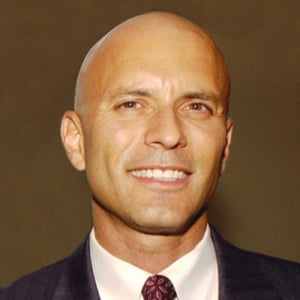
Professor of Law and Public Finance, NSU Florida Shepard Broad College of Law
Tim Canova is a Professor of Law and Public Finance at the NSU Shepard Broad College of Law, with broad experience in law teaching, private practice, and public policy. He teaches Constitutional Law II: First Amendment Law, Corporations, Business Entities, Regulation of Financial Institutions, and a Seminar on Law, Finance, and Markets at Nova. He previously taught at the Chapman University Dale E. Fowler School of Law in Orange, California, where he served as Associate Dean for Academic Affairs and the inaugural Betty Hutton Williams Professor of International Economic Law. He was first granted tenure at the University of New Mexico School of Law and he has taught as a visitor at the University of Arizona and the University of Miami.
Canova's work crosses the disciplines of law, public finance, history, and economics. He has been a leading critic of private central banks, including the Federal Reserve. His work has been published in more than two dozen book chapters and articles in the U.S. and overseas, including in the Oxford University Press, Edward Elgar Publishing, Harvard Law & Policy Review, American Journal of Economics and Sociology, Brooklyn Law Review, Georgetown Journal of Law & Public Policy, and UC Davis Law Review. Canova was an early critic of financial deregulation and the Federal Reserve under Alan Greenspan. In the 1980s, he wrote critically of the federal bailout of Continental Illinois, the nation’s seventh largest commercial bank, and the collapse of the savings & loan industry. In the 1990s, prior to the Asian currency contagion, he argued against the International Monetary Fund’s capital account liberalization program. Throughout the Bush administration, he warned of an impending crisis in the bubble economy. Following the 2008 financial collapse, he lectured and published widely on the causes and consequences of the economic and financial crisis. In 2011, Canova was appointed by Senator Bernie Sanders (I-Vt.) to serve on an Advisory Committee on Federal Reserve Reform with leading economists, including Jeffrey Sachs, Robert Reich, James Galbraith, and Nobel Laureate Joseph Stiglitz.
Canova also writes and advocates in the areas of campaign finance and election reform, a research agenda informed by his 2016 campaign challenging the then chair of the Democratic National Committee for her U.S. House of Representatives seat in a hotly contested election. Canova’s campaign went viral, raising $3.8 million from 209,000 individual donations and setting a record at the time for the highest percentage (76%) of small online donations for any campaign for federal office. The election results were marred by evidence of statistical anomalies, allegations of electronic voting irregularities, and an order by Florida’s 17th Judicial Circuit Court finding that the Broward County Elections Supervisor had illegally destroyed every ballot cast. In 2019, Canova testified to the Florida Advisory Committee of the United States Civil Rights Commission about the systematic electronic disenfranchisement of voters in Florida elections.
Canova received his A.B. degree from Franklin and Marshall College and his J.D. degree, cum laude, from the Georgetown University Law Center. He has a master’s diploma in graduate legal studies from the University of Stockholm where he was a Swedish Institute Visiting Scholar. He previously served as a legislative assistant to the late U.S. Senator Paul E. Tsongas and practiced law in New York City with Gibson, Dunn & Crutcher and Mudge Rose Guthrie Alexander & Ferdon.
Featured Article entitled “Central Bank Independence as Agency Capture: A Review of the Empirical Literature, Banking & Financial Services Policy Report 30:11 (Nov. 2011).

Principal, Ely & Company, Inc.
Bert Ely has specialized in deposit insurance and banking structure issues since 1981. In 1986, he became an early predictor of the S&L crisis and a taxpayer bailout of the FSLIC. In 1991, he was the first person to correctly predict the non-crisis in commercial banking; in 1992, he predicted an eventual taxpayer bailout of the Japanese banking system.
Bert continuously monitors conditions in the banking and S&L industries, monetary policy, and the growing federalization of credit risk. He has helped to draft legislation to enact the cross-guarantee concept for privatizing banking regulation and its related deposit insurance and systemic risks. He has testified on numerous occasions before congressional committees on banking issues and he often speaks on these matters to bankers and others.
Bert first established his consulting practice in 1972. Before that, he was the chief financial officer of a public company, a consultant with Touche, Ross & Company, and an auditor with Ernst & Ernst. He received his MBA from the Harvard Business School in 1968 and his Bachelor's degree in economics in 1964 from Case Western Reserve University.

Senior Judge, United States Court of Appeals, District of Columbia Circuit
Circuit Judge Douglas H. Ginsburg was appointed to the United States Court of Appeals for the District of Columbia in 1986. After receiving his B.S. from Cornell University in 1970, and his J.D. from the University of Chicago Law School in 1973, he clerked on the D.C. Circuit and for Justice Thurgood Marshall on the United States Supreme Court. Thereafter, Judge Ginsburg was a professor at the Harvard Law School, the Deputy Assistant and then Assistant Attorney General for the Antitrust Division of the Department of Justice, as well as the Administrator of the Office of Information and Regulatory Affairs in the Office of Management and Budget. Concurrent with his service as a federal judge, Judge Ginsburg has taught at the University of Chicago Law School and the New York University School of Law. Judge Ginsburg is currently a Professor of Law at the George Mason University and a visiting professor at University College London, Faculty of Laws.
Judge Ginsburg is the Chairman of the International Advisory Board of the Global Antitrust Institute at the Law and Economics Center of the George Mason University School of Law. He also serves on the Advisory Boards of: Competition Policy International; the Harvard Journal of Law and Public Policy; the Journal of Competition Law and Economics; the Journal of Law, Economics & Policy; the Supreme Court Economic Review; the University of Chicago Law Review; the New York University Journal of Law and Liberty; and, at University College London, both the Centre for Law, Economics and Society and the Jevons Institute for Competition Law and Economics.
In 2020, Judge Ginsburg was the 11th recipient of the John Sherman Award, presented by the Antitrust Division of the Department of Justice in recognition of the awardee’s Lifetime Contributions to Antitrust Law and Policy.
In 2014, Judge Ginsburg received the Lifetime Achievement Award given annually by the Global Competition Review.
He is the author or co-author of several books and more than 100 articles on competition and regulation, including, most recently, Growing Convergence: The Limited Role of Antitrust in Standard Essential Patent Disputes, in CPI Antitrust Chronicle, Summer 2021, Vol. 1, No. 2.
Senior Fellow, Mises Institute
Alex J. Pollock is a Senior Fellow with the Mises Institute, providing thought and policy leadership on financial issues and the study of financial systems. His work includes cycles of booms and busts, financial crises with their political responses, housing finance, government-sponsored enterprises, risk and uncertainty, central banking, banking and financial regulation, corporate governance, retirement finance, student loans, and the politics of finance.
He previously served as the Principal Deputy Director of the Office of Financial Research in the U.S. Treasury Department 2019-2021. He was a Distinguished Senior Fellow with the R Street Institute 2015-2019 and 2021, and a resident fellow at the American Enterprise Institute, 2004-2015. Among the many aspects of his AEI work, he developed the One Page Mortgage Form to give borrowers in clear form the key information they need in order to know what they are committing themselves to. He was President and CEO of the Federal Home Loan Bank of Chicago from 1991 to 2004. There he invented the Mortgage Partnership Finance program, which successfully created front-end mortgage credit risk sharing beginning in 1997. His decades of banking experience include being a Visiting Scholar at the Federal Reserve Bank of St. Louis, 1991.
Pollock was a director of the CME Group 2004-2019 and of Ascendium Education Group 1989-2019. He is a director and past-chairman of the Great Books Foundation and a past president of the International Union for Housing Finance.
He is the co-author of Surprised Again! - The COVID Crisis and the New Market Bubble (2022), and the author of Finance and Philosophy—Why We’re Always Surprised (2018) and Boom and Bust: Financial Cycles and Human Prosperity (2011), as well as numerous articles and Congressional testimony.
Pollock is a graduate of Williams College, the University of Chicago, and Princeton University.
His work is available on alexjpollock.com.
Founder & Chief Executive Officer, Whitebox Advisors
President and CEO, National Community Reinvestment Coalition

Senior Fellow, Arthur F. Burns Fellow in Financial Policy Studies, American Enterprise Institute
Peter J. Wallison holds the Arthur F. Burns Chair in Financial Policy Studies and is co-director of AEI’s program on Financial Policy Studies. Prior to joining AEI, he practiced banking, corporate and financial law at Gibson, Dunn & Crutcher in Washington, D.C., and New York. Mr. Wallison has held a number of government positions. From June 1981 to January 1985, he was General Counsel of the United States Treasury Department, where he had a significant role in the development of the Reagan Administration's proposals for deregulation in the financial services industry. During 1986 and 1987, Mr. Wallison was White House counsel to President Ronald Reagan, and between 1972 and 1976, he served first as Special Assistant to New York's Gov. Nelson A. Rockefeller and, subsequently, as counsel to Mr. Rockefeller as vice president of the United States.
Mr. Wallison was admitted to practice before the courts of New York and the District of Columbia, and is retired from practice in New York. He continues to be a member of the District of Columbia Bar Association. He received his undergraduate degree from Harvard College in 1963 and law degree from Harvard Law School in 1966.
Mr. Wallison is the author of Ronald Reagan: The Power of Conviction and the Success of His Presidency, published in December 2002 by Westview Press. On campaign finance, he is the author (with Joel Gora) of Better Parties, Better Government, (AEI Press 2009). On financial or regulatory matters, he is the author of Back From the Brink, a proposal for a private deposit insurance system, and co-author of Nationalizing Mortgage Risk: The Growth of Fannie Mae and Freddie Mac; The GAAP Gap: Corporate Disclosure in the Internet Age; Competitive Equity: A Better Way to Organize Mutual Funds; Bad History, Worse Policy: How a False Narrative about the Financial Crisis Led to the Dodd-Frank Act (AEI Press 2013); and Hidden In Plain Sight: What Caused the World’s Worst Financial Crisis and Why it Could Happen Again (Encounter Books 2015). His most recent book is Judicial Fortitude: The Last Chance to Rein in the Administrative State, published by Encounter Books in October 2018.
He testifies frequently before committees of Congress, and is a frequent contributor to the op-ed pages of the Wall Street Journal and other print and online journals. He has also been a speaker at many conferences on financial services, housing, the causes of the financial crisis, the Dodd-Frank Act, accounting, and corporate governance, and was a member of the Shadow Financial Regulatory Committee between 1995 and 2015. He was a member of the SEC Advisory Committee on Improvements to Financial Reporting (2008), co-Chair of the Pew Financial Reform Task Force (2009), and a member of the congressionally- appointed Financial Crisis Inquiry Commission (2009-2011). In May 2011, for his work in financial policy, Mr. Wallison received an honorary doctorate in Humane Letters from the University of Colorado.

George Mason University Foundation Professor of Law, Antonin Scalia Law School, George Mason University
TODD J. ZYWICKI is George Mason University Foundation Professor of Law at Antonin Scalia Law School at George Mason University and Research Fellow of the George Mason Law and Economics Center. During the Fall 2023 semester he served as the Visiting Scholar in Conservative Thought and Policy for the Bruce Benson Center for the Study of Western Civilization at the University of Colorado-Boulder. From 2020-2021 he was Chair of the Consumer Financial Protection Bureau Taskforce on Federal Consumer Financial Law. In 2021 he was inducted to the American College of Consumer Financial Services Lawyers. He is also a Senior Fellow of the F.A. Hayek Program for the Advanced Study of Politics, Philosophy, and Economics at George Mason University and a former Senior Fellow of the Cato Institute. From 2015-2017 he was Executive Director of the George Mason Law and Economics Center. He served as Co-Editor of the Supreme Court Economic Review from 2006-2017. From 2003-2004, Professor Zywicki served as the Director of the Office of Policy Planning at the Federal Trade Commission. He has also taught at Vanderbilt University Law School, Georgetown University Law Center, Boston College Law School, Mississippi College School of Law, and China University of Political Science and Law.
Professor Zywicki clerked for Judge Jerry E. Smith of the U.S. Court of Appeals for the Fifth Circuit and worked as an associate at Alston & Bird in Atlanta, Georgia, where he practiced bankruptcy and commercial law. He received his J.D. from the University of Virginia, where he was executive editor of the Virginia Tax Review and John M. Olin Scholar in Law and Economics. Professor Zywicki also received an M.A. in Economics from Clemson University and an A.B. cum Laude with high honors in his major from Dartmouth College.
Professor Zywicki is also a Lone Mountain Fellow of the Property and Environment Research Center, a Fellow of the International Centre for Economic Research in Turin, Italy, and a former Senior Fellow of the Goldwater Institute. During the Fall 2008 Semester Professor Zywicki was the Searle Fellow of the George Mason University School of Law and was a 2008-09 W. Glenn Campbell and Rita Ricardo-Campbell National Fellow and the Arch W. Shaw National Fellow at the Hoover Institution on War, Revolution and Peace. He has lectured and consulted with government officials around the world, including Iceland, Italy, Japan, and Guatemala. In 2006 Professor Zywicki served as a Member of the United States Department of Justice Study Group on “Identifying Fraud, Abuse and Errors in the United States Bankruptcy System.”
Professor Zywicki is the author of more than 130 articles in leading law reviews and peer-reviewed economics journals. He is one of the Top 10 most-cited law professors in the field of Commercial Law and one of the Top 25 law professors on Twitter as measured by engagement levels. He is one of the Top 50 Most Downloaded Law Authors at the Social Science Research Network. He has testified multiple times before Congress on issues of consumer bankruptcy law and consumer credit and is a frequent commentator on legal issues in the print and broadcast media, including the Wall Street Journal, New York Times, The Washington Post, The Washington Times, Nightline, The Newshour with Jim Lehrer, Neil Cavuto Show, Fox & Friends, Smerconish, Fox News @ Night with Shannon Bream, Fox Business, CNN, CNBC, Bloomberg News, BBC, The Diane Rehm Show, Lou Dobbs Show, Jerry Doyle Show, and The Laura Ingraham Show.
Professor Zywicki is former Chairman and a current member of the Board of Directors of the Competitive Enterprise Institute, and is a member of the Board of Directors of the Institute for Humane Studies, Bill of Rights Institute, the Executive Committee for the Federalist Society's Financial Institutions and E-Commerce Practice Group, the Board of Trustees of the Foundation for Research on Economics and the Environment. He formerly served on the Governing Board and the Advisory Council for the Financial Services Research Program at George Washington University School of Business. He is currently the Chair of the Academic Advisory Council for the following organizations: The Bill of Rights Institute, the film “We the People in IMAX,” and the McCormick-Tribune Foundation “Freedom Museum” in Chicago, Illinois. He is a member of the Board of Visitors of Ralston College and was a member of the Board of Trustees of Yorktown University. From 2005-2009 he served as an elected Alumni Trustee of the Dartmouth College Board of Trustees.
Principal, Ely & Company, Inc.
Bert Ely has specialized in deposit insurance and banking structure issues since 1981. In 1986, he became an early predictor of the S&L crisis and a taxpayer bailout of the FSLIC. In 1991, he was the first person to correctly predict the non-crisis in commercial banking; in 1992, he predicted an eventual taxpayer bailout of the Japanese banking system.
Bert continuously monitors conditions in the banking and S&L industries, monetary policy, and the growing federalization of credit risk. He has helped to draft legislation to enact the cross-guarantee concept for privatizing banking regulation and its related deposit insurance and systemic risks. He has testified on numerous occasions before congressional committees on banking issues and he often speaks on these matters to bankers and others.
Bert first established his consulting practice in 1972. Before that, he was the chief financial officer of a public company, a consultant with Touche, Ross & Company, and an auditor with Ernst & Ernst. He received his MBA from the Harvard Business School in 1968 and his Bachelor's degree in economics in 1964 from Case Western Reserve University.

Managing Director, Promontory Financial Group, LLC
Bill brings an exceptional blend of experience and insights to his work with clients, having been a banker, California’s Commissioner of Financial Institutions, and a member of the Financial Stability Oversight Council. He works with financial institutions on corporate governance and organizational design, compliance program design and implementation, anti-money laundering programs, senior management reviews, and strategic planning.
Bill’s financial services experience spans the corporate sector, the executive branches of both state and federal government, academia, and think tanks. He earned a reputation as an open, fair, and pragmatic regulator during four years as Commissioner of Financial Institutions in California, leading the agency through a period of economic upheaval both in the state and nationwide. His vast knowledge and understanding of the financial system led to his selection as the state banking supervisors’ representative on the Financial Stability Oversight Council, a federal agency created by the Dodd-Frank Act to foster coordination among financial regulators in order to identify systemic risks to the nation’s financial stability.
Before his appointment to state office, Bill was an independent consultant with Promontory while also serving as a visiting professor of economics and finance for the Graduate School of Management at the University of California-Davis. He worked on a wide array of client engagements at Promontory, in areas that included governance, due diligence, compliance, and strategy.
During nine years with Bank of America, Bill was managing director of Banc of America Securities and senior vice president of strategic policy development and planning for the bank. Earlier, he worked for five years as director of policy analysis for Citicorp.
Bill was J. Edward Lundy Scholar and director of the financial markets project at the American Enterprise Institute for Public Policy Research. He served under President Reagan as senior staff economist and special assistant to the chairman of the Council of Economic Advisors.

The SEC’s ESG Reporting Rule: Understanding the Debate over Climate-Risk Disclosure Requirements
Jane Luxton, Paul J. Ray
In March 2022, the Securities and Exchange Commission proposed a new rule that would establish...
Speech: The U.S. Financial Crisis: Causes and Consequences
John A. Allison, Howard Husock
Many politicians have blamed business for the current recession, leading to additional measures by the...
Financial Services: Re-Privatization of the Financial Sector
John A. Allison, William K. Black, Alex J. Pollock, Andrew J. Redleaf, Jerry E. Smith
Beginning in 2008 the U.S. government began taking unprecedented emergency steps to intervene in the...
Panel I: How Did We Get into the Mess We Are in Today?
Wayne A. Abernathy, Timothy Canova, James Carr, Bert Ely, Craig L. Hymowitz
Presentation by Bert Ely of a paper titled: "Bad Rules Produce Bad Outcomes: Underlying Public Policy Causes...
Financial Services: The Latest in the Financial Services Crises: Government Control v. the Free Market
Bert Ely, Douglas H. Ginsburg, Scott M. Polakoff, Alex J. Pollock, Andrew J. Redleaf, John Taylor, Peter J. Wallison, Todd J. Zywicki
Bankers and other financial services providers are facing unprecedented challenges as problem loans mount, collateral-backed...
Panel I: Subprime Lending
Jennifer E. Bethel, Margaret Burns, Allen Ferrell, Allen Fishbein
Problems in the subprime lending industry have led to widespread calls for substantial new regulations...
International Monetary Policy: The Asian Crisis and Beyond
Ian Vasquez, William Lash, Bert Ely, William Haraf
A Panel Presented on November 12, 1998 at the Federalist Society's 1998 Lawyers Convention by...