
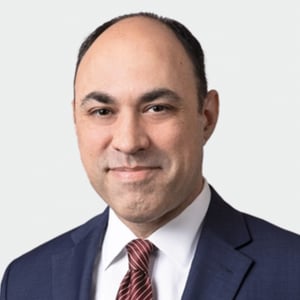
Partner, Baker & Hostetler LLP
Prior to joining BakerHostetler, Allen spent 15 years at the center of the national debate over political regulation. At the FEC, he worked across party lines to restore a key regulatory player to functioning order after years of neglect and partisan gridlock. Those efforts led to the first adoption of a new regulation in over a decade, reform of the commission’s investigations and interagency practices, and more than 150 Statements of Reasons interpreting the Federal Election Campaign Act (FECA). Substantively, Allen prioritized developments at the edges of the FEC’s jurisdiction, particularly those cases where federal election rules conflict with broader principles of corporate, administrative, and constitutional law.
Previously, Allen spent nearly a decade representing organizations across the political spectrum in First Amendment challenges to state and federal laws governing civil society. His practice emphasized motions and appeals, including a dozen arguments before federal appellate and state supreme courts, and appearances before regulatory agencies. In addition to purely campaign finance matters, Allen's cases included the first federal lawsuit in decades addressing the constitutional scope of lobbying laws, litigation establishing the standard for constitutional challenges to FECA under that statute’s specialized review procedures and the successful defense of a state attorney general leading to the invalidation of an FEC regulation.
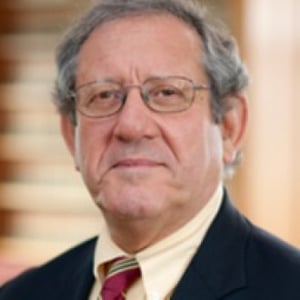
Professor of Law, Brooklyn Law School
Joel Gora has been a professor at Brooklyn Law School since 1978, teaching constitutional law, civil procedure and a number of other related courses. He also served as Associate Dean for Academic Affairs from 1993-1997 and again from 2002 through 2006. He is the author of a number of books and articles dealing with First Amendment and other constitutional law issues. He is also an expert on campaign finance law matters, working in the field as both an advocate and an academic. Prior to joining the Brooklyn Law School faculty, Professor Gora was a law clerk at the United States Court of Appeals for the Second Circuit for two years after he graduated from law school, and then a full-time lawyer with the American Civil Liberties Union for almost ten years. During his ACLU career, he worked on dozens of United States Supreme Court cases, including many landmark rulings. Chief among them was the case of Buckley v. Valeo, the Court’s historic 1976 decision on the relationship between campaign finance restrictions and First Amendment rights. He has worked, on behalf of the ACLU, on almost every one of the important campaign finance cases to come before the Court. He also served for more than 25 years on the board of directors of the New York Civil Liberties Union, and as one of its general counsel. He has served as well on a number of policy committees of the New York City Bar, and was also a member of the board of the Federal Bar Council. Professor Gora received his B.A. from Pomona College and LL.B. from Columbia Law School.
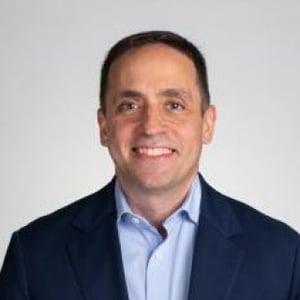
Executive Director, Campaign Legal Center
Adav Noti coordinates all of CLC's operations and programmatic activities, overseeing CLC's efforts to protect elections, advance voter freedom, fix the campaign finance system, ensure fair redistricting, and promote government ethics.
Adav has conducted dozens of constitutional cases in trial and appellate courts and the United States Supreme Court. He also advises Members of Congress and other policymakers on advancing democracy through legislation. Prior to joining CLC, Adav served for more than 10 years in nonpartisan leadership capacities within the Office of General Counsel of the Federal Election Commission, and he served as a Special Assistant United States Attorney for the District of Columbia.
Adav regularly provides expert analysis for television, radio, and print journalism. He has appeared on broadcasts such as The Rachel Maddow Show, Anderson Cooper 360, PBS NewsHour, and National Public Radio's Morning Edition, and he is regularly cited in publications nationwide, including the New York Times, Washington Post, USA Today, Politico, Slate, and Reuters.
Adav is a graduate of New York University School of Law (J.D.), Georgetown University (M.A.L.S.) and the University of Pennsylvania (B.A.). He is admitted to the bars of New York and the District of Columbia.
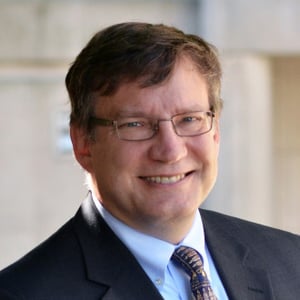
Chairman and Founder, Institute for Free Speech; Josiah H. Blackmore II/Shirley M. Nault Designated Professor of Law, Capital University Law School
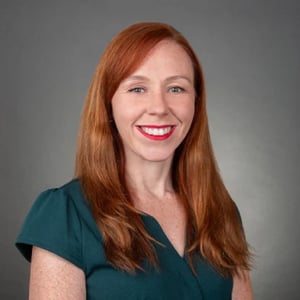
Of Counsel, Dickinson Wright PLLC
Based in Dickinson Wright’s Washington, D.C. office, Lindsey focuses on government affairs and political law. She advises clients on compliance with federal and state rules governing campaign finance, lobbying, ethics, and gift laws. Her practice includes guiding nonprofit organizations—including 501(c)(3), 501(c)(4), 501(c)(6), and 527 groups—on political activity and government engagement in an increasingly complex legal environment.
Lindsey has more than a decade of experience working at the intersection of law, policy, and nonprofit operations. She works with in-house legal, policy, and communications teams and represents clients before state and federal regulatory agencies including the Federal Election Commission. She also helps organizations assess legal and policy risks and respond in ways that align with their goals.
Before joining Dickinson Wright, Lindsey worked in both government and nonprofit legal roles, most recently as a senior attorney for Stand Together and Americans for Prosperity and before that as Counsel to the Republican Commissioners at the Federal Election Commission.
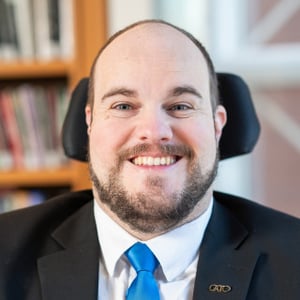
Director, Project on Criminal Justice, Cato Institute
Matthew Cavedon is the Director of the Cato Institute’s Project on Criminal Justice. He focuses on reforming plea-driven mass adjudication, ensuring police accountability, and defending constitutional criminal originalism. Cavedon’s scholarship has been published (or is forthcoming in) publications including the Arizona State Law Journal, Cato Supreme Court Review, Seattle University Law Review, and Georgetown Journal of Law and Public Policy. Formerly a Georgia public defender and fellow at the Institute for Justice, Cavedon has taught law school courses on criminal law and procedure, as well as the First Amendment. Cavedon clerked for a U.S. district court and the Supreme Court of Georgia. He came to Cato following a fellowship at the Emory University Center for the Study of Law and Religion.
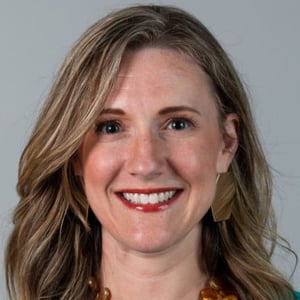
Chief Counsel, Legal Policy, Koch Capabilities, LLC
Sarah Field is Chief Counsel, Legal Policy at Koch Capabilities, LLC, where she develops and scales Koch-wide strategic policy initiatives on a variety of legal, judicial, and regulatory topics.
Sarah specializes in leading initiatives that require rapid vision development, start-up, and scaling expertise. This has included leading criminal justice reform and constitutionally limited government initiatives for the Stand Together community, overseeing the comprehensive portfolio of the Stand Together community’s issue areas, driving Americans for Prosperity’s long-term vision and strategy for addressing the country’s political environment, and leading judicial engagement strategy at Americans for Prosperity.
Before that, Sarah served as Executive Director of the Center for Shared Services, which provided compliance, talent development, and operational support for the Stand Together community. Previously, Sarah held roles at the Charles Koch Foundation, the Federalist Society, and a variety of other nonprofit organizations.
Sarah serves on the board of Americans for Public Safety, an organization dedicated to public safety, justice, and the rule of law.
Sarah received her B.A. from Grove City College, her law degree from Case Western Reserve University School of Law, and is an alumna of the Koch Associate Program.
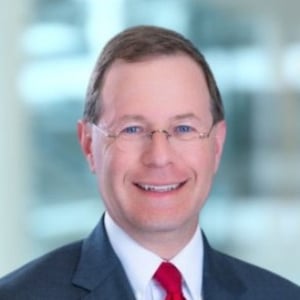
Partner, Holtzman Vogel Baran Torchinsky & Josefiak PLLC
Jason Torchinsky is a partner at Holtzman Vogel Josefiak PLLC, specializing in campaign finance, election law, lobbying disclosure and issue advocacy groups. Politico recently named him one of the “50 Politicos to Watch,” and in 2007, Campaigns and Elections Magazine named him a “Rising Star of Politics.”
In addition to his practice counseling clients on compliance with campaign finance, ethics laws, lobbying disclosure and election laws, Mr. Torchinsky has served as lead counsel in a number of litigation matters. Representative matters in the redistricting area include Louisiana House of Representatives v. Holder (D.D.C.) (Section 5 pre-clearance action), City of Sandy Springs v. Holder (D.D.C.) (Section 5 bailout action), and Fletcher v. Lamone (D. Md.) (challenging Maryland’s Congressional Districting map). In the campaign finance context, he is currently representing clients in Alliance for America’s Future v. State (Nevada Supreme Court) and Van Hollen v. Federal Election Commission (D.D.C.) (Representing intervenor defendants). He has also represented Virginia candidates in recounts and voter registration challenges before various Virginia Circuit Courts.
Mr. Torchinsky frequently lectures on campaign finance redistricting and ethics related subjects and provides commentary to the media on election related matters.
Prior to joining the firm, Mr. Torchinsky was Counsel to the Assistant Attorney General for the Civil Rights Division at the United States Department of Justice. During the 2004 election cycle, he served as Deputy General Counsel to Bush-Cheney ’04 and Deputy General Counsel to the 2005 Presidential Inaugural Committee.
He holds a B.A. in Government and Public Policy from the College of William and Mary and a J.D. from the College of William and Mary School of Law. He is a member of the Virginia Bar, the District of Columbia Bar, the Republican National Lawyers Association and the Federalist Society.
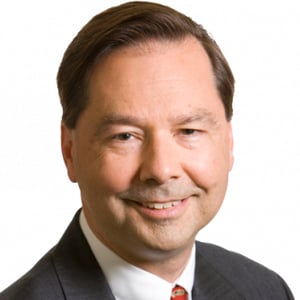
Senior Legal Fellow, Edwin Meese III Institute for the Rule of Law, Advancing American Freedom
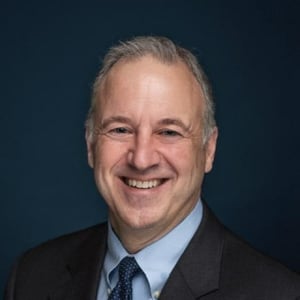
Senior Counsel, Litigation, Defense of Freedom Institute
Don Daugherty is Senior Counsel, Litigation, at the Defense of Freedom Institute for Policy Studies. He previously served as a Senior Counsel at the Institute for Free Speech and the Wisconsin Institute for Law & Liberty. Before that, he was a partner at three of Wisconsin’s largest firms, with nearly 30 years of trial and appellate litigation experience. He has been consistently recognized as among the “Best Lawyers in America,” as well as Wisconsin’s “Super Lawyers.” He received his B.A. from the University of Virginia and his J.D. from Northwestern University Law School. After law school, he served as a clerk to the Honorable Roger J. Miner of the United States Court of Appeals for the Second Circuit.
Don is on the Board of Advisors for the Milwaukee Lawyers’ Chapter of the Federalist Society, and on the Executive Committee of the Federalist Society’s Litigation Practice Group.
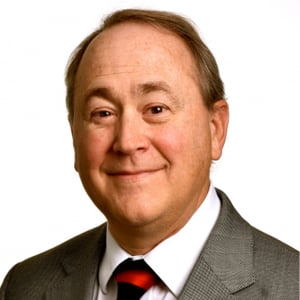
David C. Tryon is the director of litigation at The Buckeye Institute. In this role, he supervises all litigation and outside litigation counsel and actively participates in Buckeye’s cases in both state and federal court.
Immediately prior to joining Buckeye, Tryon served as deputy solicitor general in the West Virginia Attorney General’s office, where he handled both trials and appellate matters, including preparing amicus curiae briefs. Many of the matters either challenged federal laws and regulations that infringed on state’s rights or defended the validity of West Virginia laws against constitutional challenges.
Tryon served as the deputy assistant secretary for policy and development in the Office for Civil Rights in the U.S. Department of Education from 2019-2020. While there, he assisted with developing and implementing new policies and guidance and was responsible for the Civil Rights Data Collection, which covers all primary and secondary schools receiving federal funds.
Nominated as the chief counsel for advocacy at the U.S. Small Business Administration, Tryon was favorably voted out of the Senate Committee on Small Business and Entrepreneurship. In connection with his nomination, he had numerous meetings with small business organizations to learn the concerns and needs of small businesses.
Tryon has had more than 30 years of commercial litigation experience in state and federal courts, including trials and appeals. Several of these cases involved the U.S. Constitution or the Ohio Constitution. In Arnold v. City of Cleveland, he was successful in having the Ohio Supreme Court declare the right to bear arms a fundamental right under the Ohio Constitution.
Tryon has dedicated much of his time to civic affairs. He served on the local school board for four years, two of those as school board president. During his nine years on the Executive Board for the Greater Cleveland Council of the Boy Scouts of America, he organized two major parades, created a personnel committee for leadership training of professional staff, and was involved in restructuring the Council. From 2015 to 2020, he served on the Ohio Advisory Committee to the United States Commission on Civil Rights. He was part of a select group to participate in Leadership Cleveland, Class of 2016. He also led the Cleveland Lawyers Chapter of the Federalist Society for nearly 20 years.
Tryon received a Bachelor of Science Degree (magna cum laude) from Brigham Young University and his Juris Doctorate (cum laude) from the University of Michigan.
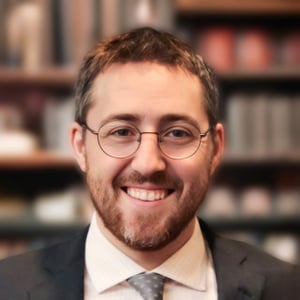
Senior Attorney, Institute for Free Speech
Brett Nolan is a Senior Attorney at the Institute for Free Speech, a public interest law firm that defends the First Amendment rights of those engaged in political speech and advocacy around the country.
Before joining the Institute, Brett served as the Principal Deputy Solicitor General of Kentucky, where he represented the Commonwealth in a wide variety of high-stakes litigation at every level of state and federal court. In that role, Brett led a successful challenge against the Department of Treasury over the constitutionality of a federal law limiting the ability of states to modify their tax codes, and he helped secure a U.S. Supreme Court victory that upheld a state’s constitutional right to defend its interests in federal court.
Prior to that, Brett served as the Deputy General Counsel to the former Governor of Kentucky, where he advised the governor and other executive branch officials on legal and policy issues and represented them in litigation. Brett clerked for Judge John Nalbandian of the U.S. Court of Appeals for the Sixth Circuit and Judge Karen K. Caldwell of the U.S. District Court for the Eastern District of Kentucky. Between clerkships, he worked in private practice. Brett received his law degree from the University of Chicago Law School, where he graduated with High Honors and was an editor of The University of Chicago Law Review.
Senior Attorney, Institute for Free Speech
Brett Nolan is a Senior Attorney at the Institute for Free Speech, a public interest law firm that defends the First Amendment rights of those engaged in political speech and advocacy around the country.
Before joining the Institute, Brett served as the Principal Deputy Solicitor General of Kentucky, where he represented the Commonwealth in a wide variety of high-stakes litigation at every level of state and federal court. In that role, Brett led a successful challenge against the Department of Treasury over the constitutionality of a federal law limiting the ability of states to modify their tax codes, and he helped secure a U.S. Supreme Court victory that upheld a state’s constitutional right to defend its interests in federal court.
Prior to that, Brett served as the Deputy General Counsel to the former Governor of Kentucky, where he advised the governor and other executive branch officials on legal and policy issues and represented them in litigation. Brett clerked for Judge John Nalbandian of the U.S. Court of Appeals for the Sixth Circuit and Judge Karen K. Caldwell of the U.S. District Court for the Eastern District of Kentucky. Between clerkships, he worked in private practice. Brett received his law degree from the University of Chicago Law School, where he graduated with High Honors and was an editor of The University of Chicago Law Review.
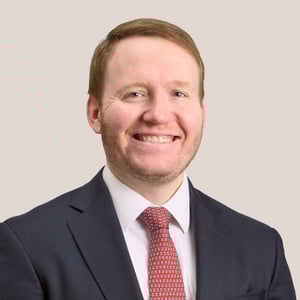
Shareholder, Kirton McConkie
Christopher Bates is co-chair of the firm’s Appellate section and a member of the Litigation and First Amendment and Religious Organizations sections. His practice focuses on appeals and critical motions in complex cases. He has argued dozens of cases in courts across the country, including the Utah Supreme Court, Utah Court of Appeals, and eleven of the thirteen federal circuits. He has also handled a variety of dispositive motions in both state and federal court. Chris’s subject matter experience includes a range of constitutional, regulatory, and commercial issues.
Chris has significant experience in senior positions in both state and federal government. Before joining Kirton McConkie, Chris served as deputy solicitor general for Utah. In that position, he managed complex ligation for the state on a range of topics and routinely appeared in both appellate and trial courts. He also led the state’s amicus efforts in the U.S. Supreme Court and federal courts of appeals. Prior to that, Chris served as senior counsel to the Assistant Attorney General for the Civil Division at the U.S. Department of Justice, where he defended agency rulemakings and other administrative actions against statutory and constitutional challenges.
Earlier in his career, Chris was chief counsel to U.S. Senator Orrin G. Hatch on the Senate Judiciary Committee. In that role, he served as Senator Hatch’s chief legal advisor on intellectual property, antitrust, and criminal law. He led introduction and passage of several key pieces of legislation and staffed the senator at two Supreme Court confirmation hearings. He brings this legislative experience to bear in analyzing complex statutes and building coalitions in multiparty litigation.
Chris began his career by serving as a law clerk to Judge Thomas B. Griffith on the U.S. Court of Appeals for the D.C. Circuit. He was then a litigation associate in Sidley Austin’s Supreme Court and Appellate Practice in Washington, DC. He has also taught college-level courses on constitutional law and legal studies.
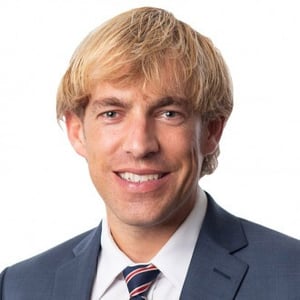
Principal, Spero Law LLC
Christopher Mills is the founder of Spero Law LLC. He was previously a partner at a national law firm and a Constitutional Law Fellow at the Becket Fund for Religious Liberty. He served as a law clerk to Justice Clarence Thomas on the U.S. Supreme Court during October Term 2018. He also clerked for the Honorable David B. Sentelle, then-Chief Judge of the U.S. Court of Appeals for the D.C. Circuit. He has authored briefs and motions in the Supreme Court, courts of appeals, and trial courts, and successfully argued before the D.C. Circuit. He has served as special counsel to South Carolina Governor Henry McMaster, and is an Adjunct Professor at the Charleston School of Law.
A 2012 magna cum laude graduate of Harvard Law School, Christopher was a senior editor of the Harvard Law Review, an editor of the Harvard Journal of Law and Public Policy, and served on the Executive Board of the Harvard Federalist Society. In 2009, he graduated Phi Beta Kappa and summa cum laude with a degree in economics from Furman University.
Christopher lives in Charleston, South Carolina with his wife, children, and golden retriever.
Partner, Baker & Hostetler LLP
Prior to joining BakerHostetler, Allen spent 15 years at the center of the national debate over political regulation. At the FEC, he worked across party lines to restore a key regulatory player to functioning order after years of neglect and partisan gridlock. Those efforts led to the first adoption of a new regulation in over a decade, reform of the commission’s investigations and interagency practices, and more than 150 Statements of Reasons interpreting the Federal Election Campaign Act (FECA). Substantively, Allen prioritized developments at the edges of the FEC’s jurisdiction, particularly those cases where federal election rules conflict with broader principles of corporate, administrative, and constitutional law.
Previously, Allen spent nearly a decade representing organizations across the political spectrum in First Amendment challenges to state and federal laws governing civil society. His practice emphasized motions and appeals, including a dozen arguments before federal appellate and state supreme courts, and appearances before regulatory agencies. In addition to purely campaign finance matters, Allen's cases included the first federal lawsuit in decades addressing the constitutional scope of lobbying laws, litigation establishing the standard for constitutional challenges to FECA under that statute’s specialized review procedures and the successful defense of a state attorney general leading to the invalidation of an FEC regulation.
Professor of Law, Brooklyn Law School
Joel Gora has been a professor at Brooklyn Law School since 1978, teaching constitutional law, civil procedure and a number of other related courses. He also served as Associate Dean for Academic Affairs from 1993-1997 and again from 2002 through 2006. He is the author of a number of books and articles dealing with First Amendment and other constitutional law issues. He is also an expert on campaign finance law matters, working in the field as both an advocate and an academic. Prior to joining the Brooklyn Law School faculty, Professor Gora was a law clerk at the United States Court of Appeals for the Second Circuit for two years after he graduated from law school, and then a full-time lawyer with the American Civil Liberties Union for almost ten years. During his ACLU career, he worked on dozens of United States Supreme Court cases, including many landmark rulings. Chief among them was the case of Buckley v. Valeo, the Court’s historic 1976 decision on the relationship between campaign finance restrictions and First Amendment rights. He has worked, on behalf of the ACLU, on almost every one of the important campaign finance cases to come before the Court. He also served for more than 25 years on the board of directors of the New York Civil Liberties Union, and as one of its general counsel. He has served as well on a number of policy committees of the New York City Bar, and was also a member of the board of the Federal Bar Council. Professor Gora received his B.A. from Pomona College and LL.B. from Columbia Law School.
Executive Director, Campaign Legal Center
Adav Noti coordinates all of CLC's operations and programmatic activities, overseeing CLC's efforts to protect elections, advance voter freedom, fix the campaign finance system, ensure fair redistricting, and promote government ethics.
Adav has conducted dozens of constitutional cases in trial and appellate courts and the United States Supreme Court. He also advises Members of Congress and other policymakers on advancing democracy through legislation. Prior to joining CLC, Adav served for more than 10 years in nonpartisan leadership capacities within the Office of General Counsel of the Federal Election Commission, and he served as a Special Assistant United States Attorney for the District of Columbia.
Adav regularly provides expert analysis for television, radio, and print journalism. He has appeared on broadcasts such as The Rachel Maddow Show, Anderson Cooper 360, PBS NewsHour, and National Public Radio's Morning Edition, and he is regularly cited in publications nationwide, including the New York Times, Washington Post, USA Today, Politico, Slate, and Reuters.
Adav is a graduate of New York University School of Law (J.D.), Georgetown University (M.A.L.S.) and the University of Pennsylvania (B.A.). He is admitted to the bars of New York and the District of Columbia.
Chairman and Founder, Institute for Free Speech; Josiah H. Blackmore II/Shirley M. Nault Designated Professor of Law, Capital University Law School
Of Counsel, Dickinson Wright PLLC
Based in Dickinson Wright’s Washington, D.C. office, Lindsey focuses on government affairs and political law. She advises clients on compliance with federal and state rules governing campaign finance, lobbying, ethics, and gift laws. Her practice includes guiding nonprofit organizations—including 501(c)(3), 501(c)(4), 501(c)(6), and 527 groups—on political activity and government engagement in an increasingly complex legal environment.
Lindsey has more than a decade of experience working at the intersection of law, policy, and nonprofit operations. She works with in-house legal, policy, and communications teams and represents clients before state and federal regulatory agencies including the Federal Election Commission. She also helps organizations assess legal and policy risks and respond in ways that align with their goals.
Before joining Dickinson Wright, Lindsey worked in both government and nonprofit legal roles, most recently as a senior attorney for Stand Together and Americans for Prosperity and before that as Counsel to the Republican Commissioners at the Federal Election Commission.
Senior Attorney, Institute for Free Speech
Brett Nolan is a Senior Attorney at the Institute for Free Speech, a public interest law firm that defends the First Amendment rights of those engaged in political speech and advocacy around the country.
Before joining the Institute, Brett served as the Principal Deputy Solicitor General of Kentucky, where he represented the Commonwealth in a wide variety of high-stakes litigation at every level of state and federal court. In that role, Brett led a successful challenge against the Department of Treasury over the constitutionality of a federal law limiting the ability of states to modify their tax codes, and he helped secure a U.S. Supreme Court victory that upheld a state’s constitutional right to defend its interests in federal court.
Prior to that, Brett served as the Deputy General Counsel to the former Governor of Kentucky, where he advised the governor and other executive branch officials on legal and policy issues and represented them in litigation. Brett clerked for Judge John Nalbandian of the U.S. Court of Appeals for the Sixth Circuit and Judge Karen K. Caldwell of the U.S. District Court for the Eastern District of Kentucky. Between clerkships, he worked in private practice. Brett received his law degree from the University of Chicago Law School, where he graduated with High Honors and was an editor of The University of Chicago Law Review.

Judge, United States Court of Appeals, Eighth Circuit
David Stras became a judge on the United States Court of Appeals for the Eighth Circuit on January 31, 2018. Before serving on the Eighth Circuit, Judge Stras was an Associate Justice of the Minnesota Supreme Court, a position he occupied from July 1, 2010 until his appointment to the Eighth Circuit.
Prior to becoming a judge, Stras was a member of the faculty of the University of Minnesota Law School from 2004 through 2010. He taught and wrote in the areas of federal courts and jurisdiction, constitutional law, criminal law, and law and politics.
Judge Stras received his Bachelor of Arts degree, with highest distinction, in 1995 and his Master of Business Administration in 1999, both from the University of Kansas. He also received his law degree from the University of Kansas School of Law in 1999, where he served as Editor-in-Chief of the Criminal Procedure Edition of the Kansas Law Review.
Following law school, Stras clerked for The Honorable Melvin Brunetti of the United States Court of Appeals for the Ninth Circuit and then for The Honorable J. Michael Luttig of the United States Court of Appeals for the Fourth Circuit.
From 2001 to 2002, he practiced white-collar criminal and appellate litigation with the Washington, D.C., office of Sidley Austin Brown & Wood. Following his year in practice, he clerked for The Honorable Clarence Thomas of the Supreme Court of the United States.

Buckley v. Valeo at 50
Allen J. Dickerson, Joel M. Gora, Adav Noti, Bradley A. Smith, Lindsey Melody Specht
Registration is now CLOSED. Rescheduled to: February 24, 2026. (Original Date: January 27, 2026) Half...
Buckley v. Valeo at 50
The Past and Future of Free Political Speech
Washington, DCCourthouse Steps Decision: Ellingburg v. United States
Matthew P. Cavedon, Sarah Field
Ellingburg v. United States concerned whether forced restitution under the Mandatory Victims Restitution Act of 1996...
Courthouse Steps Decision: Bost v. Illinois State Board of Elections
Jason Torchinsky, Hans A. Von Spakovsky
Bost v. Illinois State Board of Elections involved whether a candidate for federal office has...
Structure Over Spectacle: The Supreme Court's 2024 Term
Donald A. Daugherty, David C. Tryon
After several years of headline-grabbing decisions that reshaped national political debate—from abortion and affirmative action...
Courthouse Steps Oral Argument: NRSC v. FEC
Brett Nolan
In National Republican Senatorial Committee (NRSC) v. Federal Election Commission (FEC) the Court is set to...
Courthouse Steps Oral Argument: NRSC v. FEC
Brett Nolan
In National Republican Senatorial Committee (NRSC) v. Federal Election Commission (FEC) the Court is set to...
Courthouse Steps Oral Argument: NRSC v. FEC
What My Grandparents’ Experiences in the Holocaust Taught Me about the First Amendment
Iowa Lawyer Chapter
Des Moines, IACourthouse Steps Oral Argument: First Choice Women’s Resource Centers, Inc. v. Platkin
Christopher Bates, Christopher E. Mills
In First Choice Women’s Resource Centers, Inc. v. Platkin, the New Jersey Attorney General, Matthew...