
Stephen Cranney has a dual PhD in sociology and demography from the University of Pennsylvania and is a freelance data scientist in the Washington, DC, area.

Thomas M. Siebel Senior Fellow, The Hoover Institution, Stanford University; Gary T. Schwartz Distinguished Professor of Law Emeritus, UCLA School of Law
Eugene Volokh is the Thomas M. Siebel Senior Fellow at the Hoover Institution (Stanford), as well as the Gary T. Schwartz Distinguished Professor of Law Emeritus and Distinguished Research Professor at UCLA School of Law. He recently retired from teaching at UCLA, after 30 years there, and is now focusing on research.
Volokh is the author of the textbooks The First Amendment and Related Statutes (8th ed. 2023), and Academic Legal Writing (5th ed. 2016), as well as over 100 academic law journal articles, mostly on First Amendment law. He is a member of The American Law Institute; the editor-in-chief of the Journal of Free Speech Law; and the creator and coauthor of The Volokh Conspiracy, a leading legal blog founded in 2002 (hosted at the Washington Post from 2014 to 2017 and now at Reason Magazine).
Thomas M. Siebel Senior Fellow, The Hoover Institution, Stanford University; Gary T. Schwartz Distinguished Professor of Law Emeritus, UCLA School of Law
Eugene Volokh is the Thomas M. Siebel Senior Fellow at the Hoover Institution (Stanford), as well as the Gary T. Schwartz Distinguished Professor of Law Emeritus and Distinguished Research Professor at UCLA School of Law. He recently retired from teaching at UCLA, after 30 years there, and is now focusing on research.
Volokh is the author of the textbooks The First Amendment and Related Statutes (8th ed. 2023), and Academic Legal Writing (5th ed. 2016), as well as over 100 academic law journal articles, mostly on First Amendment law. He is a member of The American Law Institute; the editor-in-chief of the Journal of Free Speech Law; and the creator and coauthor of The Volokh Conspiracy, a leading legal blog founded in 2002 (hosted at the Washington Post from 2014 to 2017 and now at Reason Magazine).
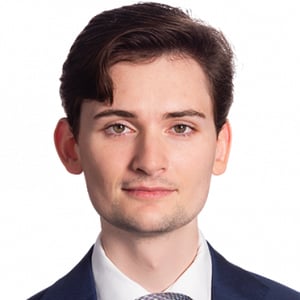
Deputy Assistant Attorney General, Office of Legal Policy, United States Department of Justice
GianCarlo Canaparo serves as Deputy Assistant Attorney General in the Office of Legal Policy at the Department of Justice. There, he oversees the Office's regulatory work and is the Department's liaison to the Office of Information and Regulatory Affairs. He also assists the White House in the process of selecting nominees for federal judgeships and advises Department leadership on policy and legal matters.
Before joining the Department, Canaparo was a senior legal fellow at The Heritage Foundation’s Edwin Meese III Center for Legal and Judicial Studies where he researched constitutional law, administrative law, and civil rights.
Canaparo’s scholarship has appeared in various law reviews including the Harvard Journal of Law and Public Policy, the Notre Dame Law Review, the Georgetown Journal of Law and Public Policy, the Texas Review of Law and Politics, and the Administrative Law Review. His research has been cited by Justice Neil Gorsuch and featured in the Wall Street Journal and Washington Post. His analysis has appeared in Law & Liberty, Civitas, Fox News, The National Review, Law 360, FedSoc Blog, and other outlets.
Canaparo co-hosted The Heritage Foundation’s SCOTUS 101 podcast, which follows the Supreme Court’s arguments and opinions and features interviews with judges, advocates, and scholars.
After graduating Georgetown law, Canaparo spent three years at the law firm of Skadden, Arps, Slate, Meagher & Flom and two years as a federal law clerk. He earned his bachelor’s degree in economics from the University of California at Davis.
Canaparo is a classical pianist.
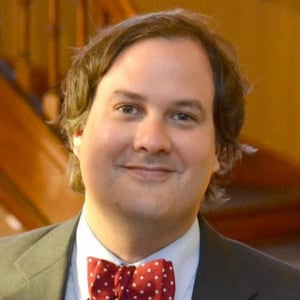
Professor of Law, Elon University
Enrique Armijo, Professor of Law at Elon University School of Law, Affiliate Fellow of the Yale Law School Information Society Project and the UNC-Chapel Hill Center for Information, Technology, and Public Life, and Fellow at the George Washington University Institute for Data, Democracy, and Politics, teaches and researches in the areas of the First Amendment, constitutional law, torts, administrative law, media and internet law, and international freedom of expression. Professor Armijo’s current scholarship addresses the interaction between new technologies and free speech. His scholarly work has recently appeared in the Cato Supreme Court Review, Boston University Law Review, the William and Mary Bill of Rights Journal, the peer-reviewed Communication Law and Policy and Political Science Quarterly, and several other journals. His work has been cited by the Federal Communications Commission, the Federal Election Commission, and other agencies, and in testimony before the U.S. Senate Committee on Governmental Affairs. He also has provided advice on media and internet law reform to governments, stakeholders and NGOs located around the world, including in Africa, Asia and the Middle East. Most recently, he has worked on media and communications reform projects in Myanmar (Burma) for the U.S. Department of State with Annenberg’s Center for Global Communications Studies at the University of Pennsylvania. His commentaries on these and other topics have appeared on NPR's On the Media, Voice of America , WUNC-FM, and Bloomberg Law, and in print in the Charlotte Observer, the Raleigh News and Observer, and several other outlets nationwide.
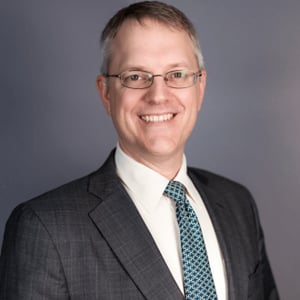
President and General Counsel, New Civil Liberties Alliance
NCLA’s President and General Counsel, Mark Chenoweth, has observed the administrative state up close and personal from perches in all four branches of the federal government. Mark served as the first chief of staff to Congressman Mike Pompeo, as legal counsel to Commissioner Anne Northup at the U.S. Consumer Product Safety Commission, as an attorney advisor in the Office of Legal Policy at the U.S. Department of Justice, and as a law clerk to the Hon. Danny J. Boggs on the U.S. Court of Appeals for the Sixth Circuit.
Mark has worked in several different roles in the private sector as well. He began his legal career in D.C. as a regulatory associate at Wilmer, Cutler & Pickering. He then returned to his home state of Kansas to serve as in-house counsel for Koch Industries. Most recently he spent over four years as general counsel of the Washington Legal Foundation.
Mark is a graduate of Yale College and the University of Chicago Law School, where he co-founded the Institute for Justice Clinic on Entrepreneurship and became a Tony Patiño Fellow. Mark has been widely quoted and/or published in newspapers and websites including the New York Times, San Francisco Chronicle, New Hampshire Union Leader, and Metropolitan Corporate Counsel. He has also had recurring op-eds in the Los Angeles Daily Journal, and at Forbes.com.
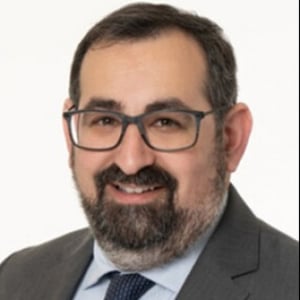
Research Scholar in Law and Executive Director, Center for Academic Freedom and Free Speech, Yale Law School
Joe Cohn is a research scholar in law at Yale Law school and the executive director of the Center for Academic Freedom and Free Speech (CAFFS).
Cohn has served as a staff attorney at the AIDS Law Project of Pennsylvania, a staff attorney for the Court of Appeals for the 3rd Circuit, an adjunct professor of law at the University of Pennsylvania Law School, where he supervised law students representing clients in litigation in state and federal courts, and as the interim legal director for ACLU affiliates in Nevada and Utah.
A majority of Cohn’s career has been dedicated to defending civil liberties on college campuses and free expression in society at large. As the Foundation for Individual Rights and Expression’s (FIRE’s) founding legislative and policy director, from 2012 to 2023, he testified on numerous occasions in legislatures across America and in Congress, drafted legislation on campus free speech, campus due process, and academic freedom that has been enacted in states across the country. Immediately before joining CAFFS, Cohn advocated for open inquiry, viewpoint diversity, and constructive disagreement in higher education as Heterodox Academy’s director of policy.
Cohn writes extensively on civil liberties, with articles published in a wide array of media outlets, including the Wall Street Journal, the Washington Post, Newsweek, the Hill, the New York Daily News, the Chicago Tribune, the Las Vegas Review Journal, the Minnesota Star Tribune, the Chronicle of Higher Education, Inside Higher Ed, and the Volokh Conspiracy.
He earned his bachelor of arts from the University of Nevada at Las Vegas in 2000. He is a 2004 graduate of the University of Pennsylvania Carey School of Law and the Fels Institute of Government Administration, where he earned his J.D. and M.A. in Government Administration.
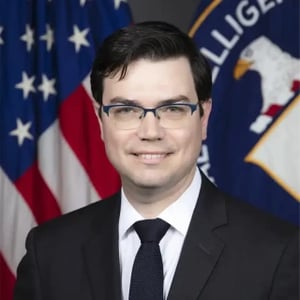
Deputy Director, Central Intelligence Agency
Michael Ellis was sworn in as Deputy Director of the Central Intelligence Agency on February 10, 2025. Deputy Director Ellis has held a variety of senior national security positions, including General Counsel of the National Security Agency and Senior Director for Intelligence Programs at the National Security Council.
Deputy Director Ellis previously served in the White House Counsel's Office, providing legal advice on national security and foreign relations. Prior to the White House, he was General Counsel of the U.S. House of Representatives Permanent Select Committee on Intelligence and served as an intelligence officer in the U.S. Navy Reserve.
Before returning to government, Deputy Director Ellis was the General Counsel of Rumble, a publicly traded video sharing platform and cloud services provider.
Deputy Director Ellis is a graduate of Yale Law School and Dartmouth College. Following law school, he served as a clerk to two federal judges. He is a "Jeopardy!" champion.
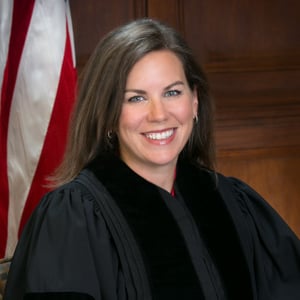
Judge, United States Court of Appeals, Eleventh Circuit
Britt C. Grant is a judge on the U.S. Court of Appeals for the Eleventh Circuit. Judge Grant was appointed to the federal bench in August 2018 after serving as a Justice on the Supreme Court of Georgia. Prior to her judicial appointment, she served as the Solicitor General of Georgia and practiced in the Washington, D.C. office of Kirkland & Ellis. Upon graduation from law school, Judge Grant served as a law clerk to then-Judge Brett M. Kavanaugh of the U.S. Court of Appeals for the District of Columbia Circuit. She earned her J.D., with distinction, from Stanford Law School, where she was the Co-Founder of the Stanford National Security and the Law Society, and the President of the Stanford Law chapter of the Federalist Society. Before enrolling in law school, Judge Grant served in The White House in a variety of domestic policy roles as well as on the staff of Congressman Nathan Deal. Judge Grant earned her B.A., summa cum laude, from Wake Forest University, where she was inducted into Phi Beta Kappa. She now lives in Atlanta, Georgia with her husband and three children.
Professor of Law, Elon University
Enrique Armijo, Professor of Law at Elon University School of Law, Affiliate Fellow of the Yale Law School Information Society Project and the UNC-Chapel Hill Center for Information, Technology, and Public Life, and Fellow at the George Washington University Institute for Data, Democracy, and Politics, teaches and researches in the areas of the First Amendment, constitutional law, torts, administrative law, media and internet law, and international freedom of expression. Professor Armijo’s current scholarship addresses the interaction between new technologies and free speech. His scholarly work has recently appeared in the Cato Supreme Court Review, Boston University Law Review, the William and Mary Bill of Rights Journal, the peer-reviewed Communication Law and Policy and Political Science Quarterly, and several other journals. His work has been cited by the Federal Communications Commission, the Federal Election Commission, and other agencies, and in testimony before the U.S. Senate Committee on Governmental Affairs. He also has provided advice on media and internet law reform to governments, stakeholders and NGOs located around the world, including in Africa, Asia and the Middle East. Most recently, he has worked on media and communications reform projects in Myanmar (Burma) for the U.S. Department of State with Annenberg’s Center for Global Communications Studies at the University of Pennsylvania. His commentaries on these and other topics have appeared on NPR's On the Media, Voice of America , WUNC-FM, and Bloomberg Law, and in print in the Charlotte Observer, the Raleigh News and Observer, and several other outlets nationwide.
President and General Counsel, New Civil Liberties Alliance
NCLA’s President and General Counsel, Mark Chenoweth, has observed the administrative state up close and personal from perches in all four branches of the federal government. Mark served as the first chief of staff to Congressman Mike Pompeo, as legal counsel to Commissioner Anne Northup at the U.S. Consumer Product Safety Commission, as an attorney advisor in the Office of Legal Policy at the U.S. Department of Justice, and as a law clerk to the Hon. Danny J. Boggs on the U.S. Court of Appeals for the Sixth Circuit.
Mark has worked in several different roles in the private sector as well. He began his legal career in D.C. as a regulatory associate at Wilmer, Cutler & Pickering. He then returned to his home state of Kansas to serve as in-house counsel for Koch Industries. Most recently he spent over four years as general counsel of the Washington Legal Foundation.
Mark is a graduate of Yale College and the University of Chicago Law School, where he co-founded the Institute for Justice Clinic on Entrepreneurship and became a Tony Patiño Fellow. Mark has been widely quoted and/or published in newspapers and websites including the New York Times, San Francisco Chronicle, New Hampshire Union Leader, and Metropolitan Corporate Counsel. He has also had recurring op-eds in the Los Angeles Daily Journal, and at Forbes.com.
Research Scholar in Law and Executive Director, Center for Academic Freedom and Free Speech, Yale Law School
Joe Cohn is a research scholar in law at Yale Law school and the executive director of the Center for Academic Freedom and Free Speech (CAFFS).
Cohn has served as a staff attorney at the AIDS Law Project of Pennsylvania, a staff attorney for the Court of Appeals for the 3rd Circuit, an adjunct professor of law at the University of Pennsylvania Law School, where he supervised law students representing clients in litigation in state and federal courts, and as the interim legal director for ACLU affiliates in Nevada and Utah.
A majority of Cohn’s career has been dedicated to defending civil liberties on college campuses and free expression in society at large. As the Foundation for Individual Rights and Expression’s (FIRE’s) founding legislative and policy director, from 2012 to 2023, he testified on numerous occasions in legislatures across America and in Congress, drafted legislation on campus free speech, campus due process, and academic freedom that has been enacted in states across the country. Immediately before joining CAFFS, Cohn advocated for open inquiry, viewpoint diversity, and constructive disagreement in higher education as Heterodox Academy’s director of policy.
Cohn writes extensively on civil liberties, with articles published in a wide array of media outlets, including the Wall Street Journal, the Washington Post, Newsweek, the Hill, the New York Daily News, the Chicago Tribune, the Las Vegas Review Journal, the Minnesota Star Tribune, the Chronicle of Higher Education, Inside Higher Ed, and the Volokh Conspiracy.
He earned his bachelor of arts from the University of Nevada at Las Vegas in 2000. He is a 2004 graduate of the University of Pennsylvania Carey School of Law and the Fels Institute of Government Administration, where he earned his J.D. and M.A. in Government Administration.
Deputy Director, Central Intelligence Agency
Michael Ellis was sworn in as Deputy Director of the Central Intelligence Agency on February 10, 2025. Deputy Director Ellis has held a variety of senior national security positions, including General Counsel of the National Security Agency and Senior Director for Intelligence Programs at the National Security Council.
Deputy Director Ellis previously served in the White House Counsel's Office, providing legal advice on national security and foreign relations. Prior to the White House, he was General Counsel of the U.S. House of Representatives Permanent Select Committee on Intelligence and served as an intelligence officer in the U.S. Navy Reserve.
Before returning to government, Deputy Director Ellis was the General Counsel of Rumble, a publicly traded video sharing platform and cloud services provider.
Deputy Director Ellis is a graduate of Yale Law School and Dartmouth College. Following law school, he served as a clerk to two federal judges. He is a "Jeopardy!" champion.
Judge, United States Court of Appeals, Eleventh Circuit
Britt C. Grant is a judge on the U.S. Court of Appeals for the Eleventh Circuit. Judge Grant was appointed to the federal bench in August 2018 after serving as a Justice on the Supreme Court of Georgia. Prior to her judicial appointment, she served as the Solicitor General of Georgia and practiced in the Washington, D.C. office of Kirkland & Ellis. Upon graduation from law school, Judge Grant served as a law clerk to then-Judge Brett M. Kavanaugh of the U.S. Court of Appeals for the District of Columbia Circuit. She earned her J.D., with distinction, from Stanford Law School, where she was the Co-Founder of the Stanford National Security and the Law Society, and the President of the Stanford Law chapter of the Federalist Society. Before enrolling in law school, Judge Grant served in The White House in a variety of domestic policy roles as well as on the staff of Congressman Nathan Deal. Judge Grant earned her B.A., summa cum laude, from Wake Forest University, where she was inducted into Phi Beta Kappa. She now lives in Atlanta, Georgia with her husband and three children.
Thomas M. Siebel Senior Fellow, The Hoover Institution, Stanford University; Gary T. Schwartz Distinguished Professor of Law Emeritus, UCLA School of Law
Eugene Volokh is the Thomas M. Siebel Senior Fellow at the Hoover Institution (Stanford), as well as the Gary T. Schwartz Distinguished Professor of Law Emeritus and Distinguished Research Professor at UCLA School of Law. He recently retired from teaching at UCLA, after 30 years there, and is now focusing on research.
Volokh is the author of the textbooks The First Amendment and Related Statutes (8th ed. 2023), and Academic Legal Writing (5th ed. 2016), as well as over 100 academic law journal articles, mostly on First Amendment law. He is a member of The American Law Institute; the editor-in-chief of the Journal of Free Speech Law; and the creator and coauthor of The Volokh Conspiracy, a leading legal blog founded in 2002 (hosted at the Washington Post from 2014 to 2017 and now at Reason Magazine).

Topics
Book Review: NOT Accountable, by Philip Howard (Part Two)
In light of the inequities and inefficiencies associated with monopolistic government unionism discussed in Part...
Measuring and Evaluating Public Responses to Religious Rights Rulings
Creighton Roland Meland, Stephen Cranney
The story of Jack Phillips and his cake shop—Masterpiece Cakeshop—is by now familiar. Jack Phillips...
Litigation Update: Volokh et al v. James
Eugene Volokh
In early December, Prof. Eugene Volokh, Rumble Canada, and Locals Technology filed a complaint in...
Litigation Update: Volokh et al v. James
Eugene Volokh
In early December, Prof. Eugene Volokh, Rumble Canada, and Locals Technology filed a complaint in...
Litigation Update: Volokh et al v. James
TeleforumState Court Docket Watch: In the Interest of C.G.
GianCarlo Canaparo
A recent case from the Supreme Court of Wisconsin, In the Interest of C.G.,[1] raised...
Topics
Protecting Kids From Social Media: Time for a Legal Reappraisal?
Future generations will look back at the early 21st century and see an extraordinary experiment:...
Topics
DC Court of Appeals Holds That Judicial Intervention Is Inappropriate In a Religious Schism
The District of Columbia Court of Appeals recently declined to intervene in a religious dispute...
Is Executive Soft Power a Threat to Free Speech?
Enrique Armijo, Mark Chenoweth, Joe Cohn, Michael J. Ellis, Britt C. Grant
There are no federal speech police, but law enforcement is not the only way that...
Is Executive Soft Power a Threat to Free Speech?
Enrique Armijo, Mark Chenoweth, Joe Cohn, Michael J. Ellis, Britt C. Grant
There are no federal speech police, but law enforcement is not the only way that...