
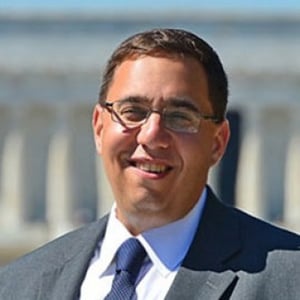
Partner, Consovoy McCarthy Park PLLC
Mr. Consovoy assists clients on a broad range of litigation and appellate issues primarily before the Supreme Court of the United States and federal appellate and district courts, as well as before federal agencies. Mr. Consovoy represents clients in cases involving constitutional issues, interpretation and enforcement of federal statutes, administrative law, civil rights disputes, and a variety of other civil litigation issues. Mr. Consovoy recently argued two cases—Spokeo v. Robbins and Evenwel v. Abbott—before the Supreme Court of the United States.
Mr. Consovoy is a former law clerk to Supreme Court Justice Clarence Thomas, Judge Edith H. Jones of the United States Court of Appeals for the Fifth Circuit, and the 17th Judicial Circuit of Virginia. Mr. Consovoy is a member of the Edward Coke Appellate Inn of Court and was named by Law360 as a “rising star” in appellate law for 2013. Since 2011, Mr. Consovoy has been the co-director of the Supreme Court Clinic at the Antonin Scalia Law School at George Mason University, where he also is the co-director of the Administrative Law Clinic.
Mr. Consovoy earned his B.A. from Monmouth University, and his J.D. magna cum laude from George Mason University School of Law. Mr. Consovoy is a member of the Virginia and District of Columbia bars.
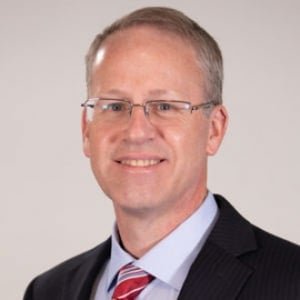
Senior Attorney, DC, Pacific Legal Foundation
Steve Simpson joined PLF in 2019 to head up its Separation of Powers practice group.
Steve’s career in public interest law started at the Institute for Justice in 2001, where he litigated free speech, campaign finance, and economic liberty cases. Among other high-profile cases in which Steve was involved, he was co-counsel in Arizona Free Enterprise Club’s Freedom Club PAC v. Bennett, IJ’s successful Supreme Court challenge to Arizona’s public financing law for political campaigns. He was the lead litigator in SpeechNow.org v. FEC, a joint effort between IJ and the Institute for Free Speech that led to the creation of super PACs. And he was co-counsel in Swedenburg v. Kelly, IJ’s successful Supreme Court challenge to New York’s ban on the interstate shipping of wine.
In 2013, Steve moved into the policy arena as the Ayn Rand Institute’s director of Legal Studies, where he spent five years writing and speaking on a wide variety of legal and cultural issues. From there, he moved back into law as senior litigation counsel at the New Civil Liberties Alliance in Washington, D.C.
Steve has spoken and written on a wide variety of legal and policy issues. He has testified in Congress and briefed congressional staffers. He has been interviewed on scores of television and radio programs, including PBS News Hour, Stossel, and The Rubin Report. His writings have appeared in many publications, including The Wall Street Journal and The Washington Post. In 2014, Steve was a Lincoln Fellow at the Claremont Institute. He is the editor of Defending Free Speech (ARI Press, 2016).
Steve earned his law degree magna cum laude from New York Law School in 1994. Following law school, he clerked for a federal district judge in the Southern District of Florida and spent several years as a litigator at Shearman & Sterling.
When he’s not at work or spending time with his wife and three daughters, Steve can usually be found mucking around in the woods at his cabin on Shenandoah Mountain.
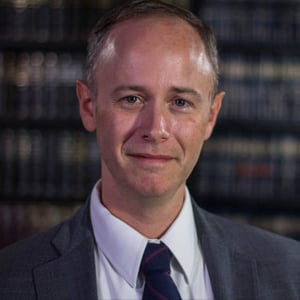
Vice President and Legal Director, National Right to Work Legal Defense and Education Foundation, Inc.
William Messenger is Foundation Vice President and Legal Director. He was a staff attorney for over twenty years and, during that time, represented individuals in numerous cases that sought to expand worker freedom of choice. This includes acting as lead counsel in three cases before the United States Supreme Court. In 2018, Messenger argued Janus v. AFSCME Council 31, where the Supreme Court held it violates the First Amendment for governments and unions to compel individuals to financially support unions and their speech. Originally from Youngstown Ohio, Messenger attended Ohio University as an undergraduate and then the George Washington University School of Law.
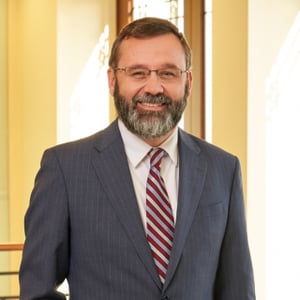
Senior Associate, Alston & Bird LLP
Brian Boone has represented clients before the U.S. Supreme Court, federal and state appellate and trial courts, and arbitration panels in cases involving constitutional law, antitrust, RICO, the False Claims Act, health care, securities and state consumer fraud laws. Brian has argued before federal and state appellate courts in cases involving complex commercial disputes.
In December 2014, Brian and fellow Alston & Bird litigator Nowell Berreth convinced the U.S. Supreme Court to grant review in Dart Cherokee Basin Operating Co., LLC v. Owens, No. 13-719, and then to rule in their clients’ favor on the merits. That victory prompted Law360 to name Nowell and Brian to its weekly list of “Legal Lions.” Brian also recently argued and won a complex appeal before the Second Circuit, securing a $10 million judgment for his clients.
Brian served as a judicial clerk to the Honorable Karen J. Williams of the Fourth Circuit. He graduated with high honors from Emory University School of Law, where he was the Sol I. Golden Scholar. Brian received his undergraduate degree, summa cum laude, in political science and history from King College.
In 2014, 2015 and 2016, Brian was named a North Carolina Super Lawyers “Rising Star” in Litigation.
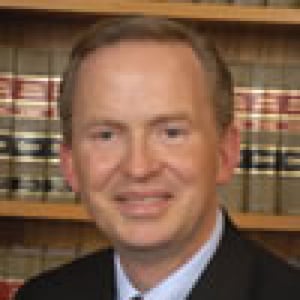
Professorial Lecturer in Law, George Washington University Law School
Randall D. Eliason spent twelve years as an Assistant United States Attorney for the District of Columbia, working in various areas including misdemeanors, grand jury, narcotics, general felonies, and the Violent Crime Unit. For more than eight years, he specialized in white collar crime as a member of the Public Corruption/Government Fraud section. From 1999 to 2001, he served as Chief of that section, supervising a staff of eleven AUSA’s prosecuting white collar cases in federal court.
Professor Eliason is the recipient of numerous awards and commendations from the U.S. Department of Justice, Federal Bureau of Investigation, Washington D.C. Metropolitan Police Department, and other law enforcement agencies. While at the U.S. Attorney’s office, he lectured at the Department of Justice National Advocacy Center in South Carolina and at the Attorney General’s Advocacy Institute in Washington, D.C. He also served as the Professional Responsibility Officer (ethics advisor) for the Criminal Division.
He is a frequent media commentator on issues related to corporate and white collar crime, and has appeared on PBS’s Frontline, NBC’s Nightly News, NPR’s Morning Edition, CNN, MSNBC, and elsewhere. His writings on federal criminal law have been published in law reviews, legal periodicals, and newspapers including the Washington Post and the Chicago Tribune.
Prior to joining the U.S. Attorney's Office, Professor Eliason was in private practice at the Washington, D.C. law firms of Hogan & Hartson and Zuckerman, Spaeder, where his practice involved civil litigation in a wide variety of areas.
He received his J.D. cum laude in 1985 from Harvard Law School, where he served as an editor and as co-chair of the Developments Office of the Harvard Law Review. He received his B.A. summa cum laude from the University of North Dakota in 1982.
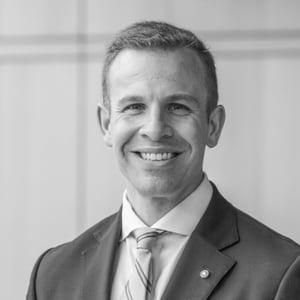
Senior Counsel, Becket Fund for Religious Liberty
William J. Haun is Senior Counsel at the Becket Fund for Religious Liberty and a Nonresident Fellow at the American Enterprise Institute (AEI). At Becket, Will litigates nationwide in defense of religious liberty for all faith traditions, particularly before the U.S. Supreme Court and in other federal and state appellate courts. His litigation includes being a member of the U.S. Supreme Court team that prevailed 9-0 for Catholic Social Services in Fulton v. City of Philadelphia, arguing before multiple federal appellate courts, federal district courts, and the Supreme Court of Texas. At AEI, Will writes and researches on constitutionalism and self-government’s prerequisites, especially the role of religion in securing and preserving freedom.
Before joining Becket and AEI, Will practiced appellate and antitrust law at two international law firms—Shearman & Sterling and Hunton & Williams. He also served as a law clerk to Judge Janice Rogers Brown of the U.S. Court of Appeals for the D.C. Circuit and Judge Claude Hilton of the U.S. District Court for the Eastern District of Virginia. Will often writes on constitutional law issues, including in the Harvard Journal of Law & Public Policy, the Catholic University Law Review, National Affairs, Law & Liberty, National Review Online, the Wall Street Journal, and the Washington Post. He also speaks on these topics, including at the Catholic University of America, Columbus School of Law, Princeton University, the University of Virginia School of Law, and the University of Chicago Law School. He received his J.D. from the Catholic University of America, cum laude, where he was a published member of the Law Review. He received his B.A. from American University in political science, cum laude. He lives in Maryland with his wife and children, where they enjoy sailing, cheering on their favorite baseball teams, and discovering the great traditions of their Catholic faith.

Topics
Massachusetts Stun Gun Laws at SCOTUS
On Monday, in Caetano v. Massachusetts, the Supreme Court issued a per curiam opinion vacating...
Dinner with Will Consovoy
Alexandria, VirginiaTopics
Project Veritas Action v. Conley: Undercover Newsgathering and the First Amendment
On March 4, Project Veritas Action Fund (PVA) filed suit in Massachusetts federal court against Suffolk County District...
Topics
FDA's Amarin settlement fails to establish clear guidelines for speech
It’s a shame that in a nation that prizes free speech, the government routinely censors...
The First Amendment Isn't Enough
Austin, TexasFree Riders or Free Speech? Friedrichs v. California Teachers Association and Compulsory Union Fees in the Public Sector
Cincinnati, OhioHurtful and Demeaning Speech on the University Campus
Dallas, TexasTopics
Without Justice Scalia, "Corruption" Cases May Get Hazier
Stephen Klein writes for Pillar of Law: After the unfortunate passing of Justice Antonin Scalia...
Supreme Court to Consider Honest-Services Fraud: Robert F. McDonnell v. United States
TeleforumTopics
Motives, Perception, and the Right to Assemble
Heffernan v. City of Paterson involves a New Jersey police officer who was demoted after...