
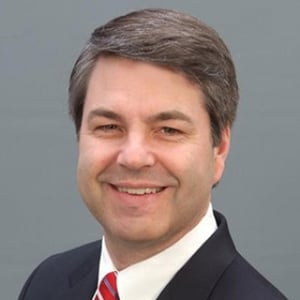
Partner and Co-Chair, Public Policy Group, Shook Hardy & Bacon LLP
Mark Behrens co-chairs Shook's Washington, DC-based Public Policy Practice Group and is a leading national expert on civil justice issues with over thirty years of experience. A substantial part of his practice is working to improve the civil litigation environment through state and federal legislation; in the courts through amicus curiae briefs; through legal scholarship and judicial education; and in the court of public opinion.
Mark is actively involved in civil justice reform efforts at the federal and state levels. He has testified before the U.S. Congress and most state legislatures on behalf of business and civil justice organizations. Mark also has an active amicus brief practice specializing in tort liability and civil justice issues. He has authored or co-authored over 150 amicus briefs in cases before the United States Supreme Court and federal and state appellate courts on behalf of business, civil justice, and defense lawyer organizations. In addition, Mark routinely files comments on behalf of business, civil justice, and defense lawyer organizations regarding potential changes to federal and state court rules. He chairs the International Association of Defense Counsel’s (IADC) Civil Justice Response Committee and serves on the Board of Directors of Lawyers for Civil Justice (LCJ).
Mark is a member of the American Law Institute (ALI). He received his J.D. in 1990 from Vanderbilt University Law School, where he was a member of the Vanderbilt Law Review. He received his B.A. in economics from the University of Wisconsin in 1987.

Chairman of the Securities and Exchange Commission
Paul S. Atkins was sworn into office as the 34th Chairman of the Securities and Exchange Commission on April 21, 2025, after being nominated by President Donald J. Trump on January 20, 2025, and confirmed by the U.S. Senate on April 9, 2025.
Prior to returning to the SEC, Chairman Atkins was most recently chief executive of Patomak Global Partners, a company he founded in 2009. Chairman Atkins helped lead efforts to develop best practices for the digital asset sector. He served as an independent director and non-executive chairman of the board of BATS Global Markets, Inc. from 2012 to 2015.
Chairman Atkins was appointed by President George W. Bush to serve as a Commissioner of the SEC from 2002 to 2008. During his tenure, he advocated for transparency, consistency, and the use of cost-benefit analysis at the agency. Chairman Atkins also represented the SEC at meetings of the President’s Working Group on Financial Markets and the U.S.-EU Transatlantic Economic Council. From 2009 to 2010, he was appointed a member of the Congressional Oversight Panel for the Troubled Asset Relief Program.
Before serving as an SEC Commissioner, Chairman Atkins was a consultant on securities and investment management industry matters, especially regarding issues of strategy, regulatory compliance, risk management, new product development, and organizational control.
From 1990 to 1994, Chairman Atkins served on the staff of two chairmen of the SEC, Richard C. Breeden and Arthur Levitt, ultimately as chief of staff and counselor, respectively. He received the SEC’s 1992 Law and Policy Award for work regarding corporate governance matters.
Chairman Atkins began his career as a lawyer in New York, focusing on a wide range of corporate transactions for U.S. and foreign clients, including public and private securities offerings and mergers and acquisitions. He was resident for 2½ years in his firm's Paris office and admitted as conseil juridique in France.
A member of the New York and Florida bars, Chairman Atkins received his J.D. from Vanderbilt University School of Law in 1983 and was Senior Student Writing Editor of the Vanderbilt Law Review. He received his A.B., Phi Beta Kappa, from Wofford College in 1980.
Originally from Lillington, North Carolina, Chairman Atkins grew up in Tampa, Florida. He and his wife Sarah have three sons.
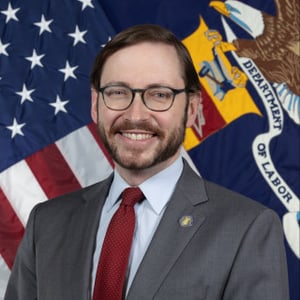
Solicitor, U.S. Department of Labor
Jonathan Berry is Solicitor at the U.S. Department of Labor, in service to President Trump’s agenda to put American workers first. He leads the Department’s lawyers in advising the Secretary and agency leadership on all aspects of law and in representing the Department in court. He was previously managing partner at Boyden Gray PLLC, where he provided strategic counsel and litigated on issues at the intersection of law, politics, and public policy. Earlier, he headed the regulatory office at Labor, and also served at the Department of Justice, in the first Trump Administration. Mr. Berry served as a law clerk to Judge Jerry E. Smith of the United States Court of Appeals for the Fifth Circuit, and to Associate Justice Samuel A. Alito, Jr., of the Supreme Court of the United States.
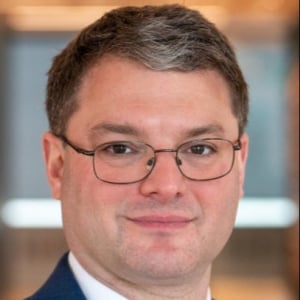
President, Institute for the American Worker
As president and co-founder of I4AW, Vinnie is a trusted source and respected thought leader to labor policy experts across the country—he provides intellectual acuity and policy innovation to the worker freedom message. He served on the U.S. Department of Labor Transition Team for both Trump Administrations (2016-2017 and 2024-2025) and served in the George W. Bush Administration’s Department of Labor (2008-2009). Additionally, he was a presidential appointee to the Federal Service Impasses Panel (2017-2021). He has advised senators and congressmen on a multitude of labor-related issues, and has testified numerous times before Congress and state legislatures. He has also worked as director of labor policy at the Mackinac Center for Public Policy and currently serves as a senior policy advisor. Vernuccio has held advisory roles for a multitude of free market organizations such as the State Policy Network, Competitive Enterprise Institute, and others.
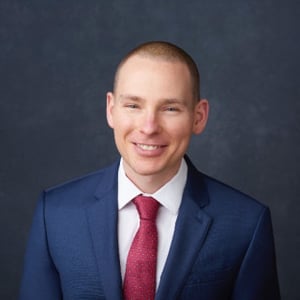
Shareholder & Co-Chair of the Workplace Policy Institute, Littler Mendelson P.C.
Alexander T. MacDonald advises employers on all aspects of the employment and labor landscape, focusing on emerging legislation and regulation. He has extensive experience advising businesses on worker classification, arbitration, the administrative and regulatory process, and the future of work. He frequently writes, publishes, and speaks on these subjects. His work has been cited by scholars and appellate courts. He is a recognized voice for the management perspective.
Alexander is a co-chair of the Workplace Policy Institute (WPI) team. With WPI, he advises employers on legislative, administrative, and regulatory developments at the state and federal level. He advocates for employers in the regulatory and administrative process. He also helps employers protect their businesses by understanding and anticipating cutting-edge legal developments.
Alexander also has extensive experience in traditional labor law. He represents management in all aspects of labor-management relations, including unfair labor practice charges, grievance arbitrations, representation elections, contract negotiations, and related litigation, including litigation in the U.S. courts of appeals.
Before joining Littler, Alexander served as the director, future of work, for a major technology company. He also worked in a national labor and employment law firm and a major public-sector general counsel’s office. He was a law clerk to the senior judges in the District of Columbia Court of Appeals.
He is also a veteran of the U.S. Air Force. He served in Operations Enduring Freedom and Iraqi Freedom. In law school, he graduated first in his class

Judge, United States Court of Appeals, Ninth Circuit
Judge Carlos Bea serves as a judge on the United States Court of Appeals for the Ninth Circuit. He received his Bachelor's Degree from Stanford University in 1956 and his J.D. from Stanford Law School in 1958. Judge Bea was born in San Sebastian, Spain, and immigrated with his family to Cuba in 1939. In 1952, he represented Cuba on the Cuban National basketball team in the Helsinki Olympics. Judge Bea became a naturalized citizen of the United States in 1958. He engaged in private practice in San Francisco, principally in the area of civil trials (jury and non-jury), from 1959-75 at Dunne, Phelps & Mills and from 1975-90 at Carlos Bea, A Law Corporation. He taught courses in civil litigation advocacy at Hastings College of Law and Stanford Law School. From 1990 to 2003, Judge Bea served as a judge of the San Francisco Superior Court. He was nominated by President George W. Bush to the United States Court of Appeals for the Ninth Circuit and was confirmed in 2003.
Judge Bea and his wife Louise reside in San Francisco, where they raised their four sons, Sebastian, Alexander, Nicholas, and Dominic.
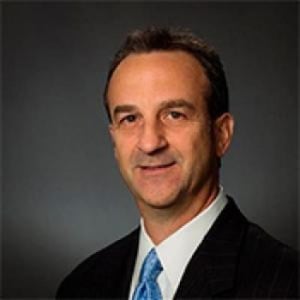
Senior Counsel and Vice President of U.S. Litigation, Alliance Defending Freedom
David A. Cortman, Esq., serves as senior counsel and vice president of U.S. litigation with Alliance Defending Freedom. He joined ADF in 2005 and currently supervises a team of nearly 40 attorneys and legal staff who specialize in constitutional law, focusing on religious freedom, sanctity of life, and marriage and family.
Cortman has successfully litigated over 200 constitutional law cases in both federal and state court at all levels. He has also litigated several U.S. Supreme Court cases, including arguing before the Court in Reed v. Town of Gilbert, which resulted in a 9-0 victory, with the Court holding that the government could not discriminate against religious speech while favoring political speech. He served as lead counsel in Trinity Lutheran Church of Columbia v. Pauley, which was decided in the Church's favor. He has also served as lead or co-counsel in victories at the high court in Conestoga Wood Specialties v. Burwell, successfully challenging the U.S. Department of Health and Human Services abortion pill mandate that forces employers to provide healthcare coverage that includes abortion-inducing drugs in violation of their religious convictions; Town of Greece v. Galloway, successfully defending the freedom of Americans to pray at public meetings.
Cortman earned his J.D. from Regent University School of Law in 1996, graduating magna cum laude. He is a member of the state bar in Georgia, Florida, Arizona, and the District of Columbia, and is admitted to practice in over two dozen federal courts, including the U.S. Supreme Court. He also teaches legal courses on the First Amendment and civil rights litigation.

Senior Director of Strategic Partnerships, First Liberty Institute
Lisa Budzynski Ezell is the former Vice President and Director of the Federalist Society’s Lawyers Chapters. In this role, she managed a growing network of over 90 lawyers chapters nationwide, including oversight of leadership recruitment, chapter programming, state conferences, civics education outreach, and young lawyers activities. She holds a Bachelor of Arts degree from Saint Mary’s College in Political Science and History and a Master of Public Policy from George Mason University.

Fred H. Paulus Professor of Law, Director of the Center for Reli, Willamette University College of Law
Steven K. Green is the Fred H. Paulus Professor of Law and Affiliated Professor of History at Willamette University where he teaches courses in Constitutional Law, First Amendment, Legal History, Jurisprudence, and Criminal Law in the College of Law, and Legal History and American Religious History in the College of Liberal Arts. In addition, Professor Green directs the interdisciplinary Center for Religion, Law and Democracy, one of Willamette’s Centers of Excellence.
Professor Green joined the Willamette faculty in August 2001, after serving for 10 years as legal director and special counsel for Americans United for Separation of Church and State, a Washington, DC, public interest organization that concentrates on First Amendment issues. Professor Green has extensive litigation and appellate experience in First Amendment law involving issues such as school prayer, public funding of religious institutions, public religious displays, religious discrimination, religious free exercise and freedom of speech. He has participated in several cases before the U.S. Supreme Court, including Zelman v. Simmons-Harris (2002), the Cleveland school vouchers case; Mitchell v. Helms (2000), authorizing state-paid computers and educational equipment to religious schools; and Santa Fe Ind. Sch. Dist. v. Doe (2000), striking prayer at public school football games. He regularly submits amicus curiae (friend-of-the-court) briefs at the U.S. Supreme Court, most recently co-authoring two amicus briefs in the 2013-14 term.
In addition, Professor Green has significant legislative experience, having testified before Congress and several state legislatures. He helped draft federal and state laws affecting religious liberty interests, including the Religious Freedom Restoration Act (1993), the Religious Land-Use and Institutionalized Persons Protection Act (2000), and the Oregon Workplace Religious Freedom Act (2009).
Professor Green is a widely sought speaker at national conferences and a prolific author whose writings have been cited by the U.S. Supreme Court and lower courts. He is the author of Inventing a Christian America: The Myth of the Religious Founding (Oxford University Press, 2015), The Bible, the School, and the Constitution: The Clash that Shaped Modern Church-State Doctrine (Oxford, 2012); The Second Disestablishment: Church and State in Nineteenth Century America (Oxford, 2010), co-author of Religious Freedom and the Supreme Court (Baylor, 2008), and a contributor to the Encyclopedia of American Civil Liberties and the Yale Biographical Dictionary of American Law, among others. He is currently writing a new book on church and state in the middle of the twentieth century. Professor Green holds a PhD in American constitutional history and an MA in American religious history from the University of North Carolina, a JD from the University of Texas, and a BA in history and political science, Phi Beta Kappa, from Texas Christian University. He also took post-graduate study at Duke Law and Divinity Schools.
Professor Green serves on the public policy board of Ecumenical Ministries of Oregon. He also serves on the editorial council of the Journal of Church and State and the legal advisory committee of the National Center for Science Education. He previously served on the religious liberty committee of the National Council of Churches and as recorder for the Oregon Law Commission's study of the faith-based initiative in Oregon.
In 2014 and 2006, Professor Green received the Robert L. Misner Award for Excellence in Scholarship, which was established in memory of former College of Law Dean and Professor Robert L. Misner. Professor Green also received the 2003 Professor of the Year Award for Teaching.
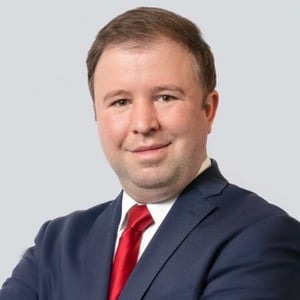
Partner, Wiley Rein LLP
Tom has over 15 years’ experience in private practice and public service at the federal and state levels representing clients in high-stakes appellate and regulatory litigation matters. Tom has argued appeals in the Fourth, Fifth, Ninth, D.C. and Federal Circuits, and the West Virginia Supreme Court of Appeals.
Prior to joining Wiley, Tom was the General Counsel at the Federal Communications Commission (FCC), where he served as the agency’s chief legal officer and briefed dozens of appeals – personally arguing two – in the federal courts of appeals in constitutional and administrative law challenges to the FCC’s orders. Tom managed a team of over 70 attorneys and staff and provided consultation and advice on a wide range of practice areas relating to the FCC’s work, including administrative law, appellate and trial litigation, bankruptcy, ethics, fiscal law, fraud, labor and employment, and public records requests. He has spent his career advising clients on all stages of federal agency rulemaking, adjudication, and litigation, in fields ranging from communications to environmental law to securities to labor and employment. He frequently speaks and writes on legal issues and his articles have appeared in the Wall Street Journal, Washington Post, National Review, Forbes, and Newark Star-Ledger.

2024 Civil Justice Update
Mark A. Behrens
This paper reviews key civil justice issues and changes in 2024. Part I discusses legal reform...
Wong v. NYCERS and ESG Action at the State and Local Level: A Debate on the Right
Paul S. Atkins, Jonathan Berry, Akiva Shapiro, F. Vincent Vernuccio
In Wayne Wong et. al. v. New York City Employees’ Retirement System et. al., four...
Bargaining Rights Gone Wrong: How State Courts Invented a Constitutional Duty to Bargain and How It Harms Individual Workers
Alexander T. MacDonald
Constitutions often give you the right to do things. They give you the right to...
Debate—State Blaine Amendments
Carlos T. Bea, David A. Cortman, Lisa Ezell, Steven Green
The Supreme Court has agreed to hear oral arguments in Trinity Lutheran Church of Columbia, Inc. v....
Legislative Authority to Adjust Judicial Benefits Under the New Jersey Constitution
Thomas M. Johnson
The Federalist Society for Law and Public Policy Studies is an organization of 40,000 lawyers,...