
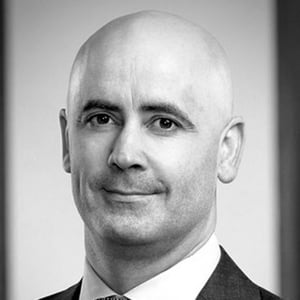
Partner, Cravath, Swaine & Moore LLP
Jeffrey T. Dinwoodie is a member of the Financial Institutions Group at Cravath, Swaine & Moore LLP. Mr. Dinwoodie previously served as Chief Counsel to the Chairman of the Securities and Exchange Commission (SEC) and as Head of the Office of Financial Institutions at the U.S. Department of the Treasury.
Mr. Dinwoodie has broad experience advising financial institutions, companies and investors, as well as government officials, across multiple disciplines. His practice focuses on advising clients on financial regulation and compliance, enforcement and examinations, and M&A and other corporate transactions. Mr. Dinwoodie’s practice also covers policy and regulatory strategy matters. Mr. Dinwoodie’s clients include established institutions, emerging companies and entrepreneurs—and his work spans both traditional finance and innovation‑related and crypto asset issues.
Partner, Davis Polk & Wardwell LLP
Annette L. Nazareth is a Davis Polk partner practicing in the firm’s Financial Institutions Group in the Washington DC office. She advises clients across a broad range of complex regulatory matters and transactions. She also works closely with Davis Polk’s SEC enforcement practice, counseling nonfinancial sector corporations that are subject to government regulatory and enforcement actions.
Ms. Nazareth was a key financial services policymaker for more than a decade. She joined the SEC Staff in 1998 as a Senior Counsel to Chairman Arthur Levitt and then served as Interim Director of the Division of Investment Management. She served as Director of the Division of Market Regulation (now the Division of Trading and Markets) from 1999 to 2005. As Director, she oversaw the regulation of broker-dealers, exchanges, clearing agencies, transfer agents and securities information processors. In 2005, she was appointed an SEC Commissioner. During her tenure at the Commission, she worked on numerous groundbreaking initiatives, including execution quality disclosure rules, implementation of equities decimal pricing, short sale reforms and modernization of the national market system rules. Ms. Nazareth also served as the Commission’s representative on the Financial Stability Forum from 1999 to 2008.
Since leaving the SEC in January 2008, she has served as Rapporteur for the Group of Thirty’s report, The Structure of Financial Supervision: Approaches and Challenges in a Global Marketplace and as Project Director for their report, Enhancing Financial Stability and Resilience: Macroprudential Policy, Tools and Systems for the Future. Earlier in her career, she held a number of senior legal positions at several investment banks.

Partner, Wiley Rein, LLP
Megan L. Brown is a partner at Wiley Rein LLP. She has significant litigation, appellate and regulatory experience before state and federal courts and agencies.
Ms. Brown helps businesses respond to federal, state and local regulation and investigations raising administrative law, statutory interpretation, and constitutional issues, including the First Amendment.
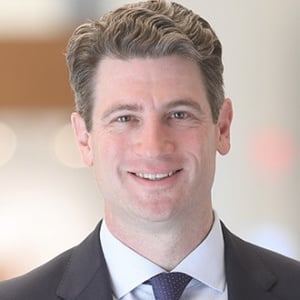
General Counsel and Corporate Secretary, Citigroup
Brent McIntosh joined Citi as General Counsel and Corporate Secretary in October 2021. Brent leads Citi's global legal team, including Citi security and investigative services, and oversees Citi’s independent compliance risk management function.
Brent served as Under Secretary of the Treasury for International Affairs from 2019 to 2021. He led the Treasury Department’s engagement in the G7 and G20, represented the United States on the Financial Stability Board, and managed U.S. participation at the IMF and World Bank. He oversaw Treasury’s international economic and financial policy work, including significant engagements on investment security and regulation of digital currencies. During 2020, he coordinated initiatives to alleviate the COVID-19 pandemic’s economic consequences.
From 2017 to 2019, Brent served as Treasury’s General Counsel, leading the department’s approximately 2,000 lawyers and spearheading its regulatory reform efforts. Prior to that, he was a partner in the law firm of Sullivan & Cromwell, where his practice focused on complex disputes involving financial institutions and multinational corporations.
Brent served in the White House from 2006 until 2009, first as Associate Counsel to the President and then as Deputy Assistant to the President and Deputy Staff Secretary. Before that, he was a Deputy Assistant Attorney General at the Justice Department, where his work focused on national security matters.
A Michigan native, Brent holds an A.B. in economics and political science from the University of Michigan and a J.D. from Yale Law School. Following law school, he was a law clerk to two federal appellate judges, Dennis Jacobs of the Second Circuit and Laurence H. Silberman of the D.C. Circuit. Brent serves on the Board of Directors of the Alexander Hamilton Society, the Board of Advisors for the National Security Institute at George Mason University’s Antonin Scalia Law School, and the Advisory Council of the Official Monetary and Financial Institutions Forum. He is a member of the Council on Foreign Relations, where he previously served as an Adjunct Senior Fellow for International Economics and Finance, as well as the Bretton Woods Committee and the International Institute for Strategic Studies.
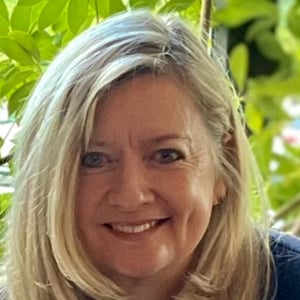
Rebecca Seidel currently resides in Louisville, Kentucky and in 2023 recently joined the state office of Senator Rand Paul, M.D, as Grant Coordinator. In this position, Ms. Seidel tracks grant opportunities, both public and private, that could aid constituents and works to provide support and helpful information to those in need who can benefit.
Prior to moving to Kentucky in 2016 Rebecca Seidel was General Counsel of the Senate Commerce Committee in Washington D.C. In that role, Ms. Seidel handled cybersecurity, privacy, data security, vehicle safety and consumer protections issues. She also oversaw committee investigations and oversight of the executive branch and private sector companies. Prior to joining the Commerce Committee, Ms. Seidel held positions in the Senate, the Executive Branch and in private sector law practice.
Immediately prior to the Commerce Committee, Ms. Seidel was counsel to the Senate Impeachment Trial Committee, formed for the trial of Judge G. Thomas Porteous. Before that Ms. Seidel was Deputy Assistant Attorney General for Legislative Affairs at the Department of Justice. Previously she served as senior counsel on the Senate Judiciary Committee handling legal reform issues including asbestos and class action. Prior to that she started her government career as counsel to then Senator George V. Voinovich.
Ms. Seidel’s time in private law practice was spent in the Boston, Massachusetts area where she was a litigator for five years practicing federal and state civil litigation defense in complex product liability, premises liability, liquor liability, and ERISA cases. She received her undergraduate degree from the University of Notre Dame and her law degree from the University of Dayton.
Partner, Cravath, Swaine & Moore LLP
Jeffrey T. Dinwoodie is a member of the Financial Institutions Group at Cravath, Swaine & Moore LLP. Mr. Dinwoodie previously served as Chief Counsel to the Chairman of the Securities and Exchange Commission (SEC) and as Head of the Office of Financial Institutions at the U.S. Department of the Treasury.
Mr. Dinwoodie has broad experience advising financial institutions, companies and investors, as well as government officials, across multiple disciplines. His practice focuses on advising clients on financial regulation and compliance, enforcement and examinations, and M&A and other corporate transactions. Mr. Dinwoodie’s practice also covers policy and regulatory strategy matters. Mr. Dinwoodie’s clients include established institutions, emerging companies and entrepreneurs—and his work spans both traditional finance and innovation‑related and crypto asset issues.
Partner, Davis Polk & Wardwell LLP
Annette L. Nazareth is a Davis Polk partner practicing in the firm’s Financial Institutions Group in the Washington DC office. She advises clients across a broad range of complex regulatory matters and transactions. She also works closely with Davis Polk’s SEC enforcement practice, counseling nonfinancial sector corporations that are subject to government regulatory and enforcement actions.
Ms. Nazareth was a key financial services policymaker for more than a decade. She joined the SEC Staff in 1998 as a Senior Counsel to Chairman Arthur Levitt and then served as Interim Director of the Division of Investment Management. She served as Director of the Division of Market Regulation (now the Division of Trading and Markets) from 1999 to 2005. As Director, she oversaw the regulation of broker-dealers, exchanges, clearing agencies, transfer agents and securities information processors. In 2005, she was appointed an SEC Commissioner. During her tenure at the Commission, she worked on numerous groundbreaking initiatives, including execution quality disclosure rules, implementation of equities decimal pricing, short sale reforms and modernization of the national market system rules. Ms. Nazareth also served as the Commission’s representative on the Financial Stability Forum from 1999 to 2008.
Since leaving the SEC in January 2008, she has served as Rapporteur for the Group of Thirty’s report, The Structure of Financial Supervision: Approaches and Challenges in a Global Marketplace and as Project Director for their report, Enhancing Financial Stability and Resilience: Macroprudential Policy, Tools and Systems for the Future. Earlier in her career, she held a number of senior legal positions at several investment banks.
Partner, King & Spalding
Drew Hruska focuses on criminal and regulatory litigation and investigations, internal investigations, regulatory compliance and risk advice. A partner in our Special Matters and Investigations practice, Drew represents major financial services and industrial companies, family offices and prominent individuals.
Drew represents a variety of financial services clients, including securities, commercial banking, insurance, insurance brokerage, hedge funds and private equity funds, along with major industrial companies, concerning enforcement and national security investigations by government agencies, including the U.S. Department of Justice, OFAC, SEC, state attorneys general, and many others. Matters under investigation typically involve fraud, money laundering, international sanctions, foreign corrupt practices, banking regulation, false claims, taxation, data privacy and security, antitrust and immigration restrictions.
In addition, Drew consults with numerous multinational companies on a range of criminal, regulatory compliance, and risk issues. Drew speaks Russian and is frequently engaged on financial enforcement issues involving Russia and Eastern Europe. He has also served in independent roles a Monitor appointed by an international organization, an independent legal advisor for the Federal Reserve and Office of the Controller of the Currency, and as a court-appointed Examiner in bankruptcy.
Before joining our firm, Drew served as the Chief Assistant U.S. Attorney for the Eastern District of New York, where he supervised the criminal and civil divisions. He also oversaw the office’s corporate fraud offensive, including investigations of Computer Associates and Symbol Technologies. Drew served as Acting U.S. Attorney for the prosecution of the New York Racing Association on tax conspiracy charges. He also led the criminal investigation of the Staten Island Ferry crash of October 15, 2003, that resulted in a manslaughter conviction for New York City’s Ferry Service Director.
Previously, Drew served as Senior Counsel to U.S. Deputy Attorney General Larry Thompson, and as an Assistant District Attorney in the Manhattan District Attorney’s Office, where he prosecuted major securities, bank and insurance fraud cases as a member of the Frauds Bureau.
Drew is recognized by Chambers, Benchmark Litigation, Legal 500, and Who’s Who Legal. He serves on the World Jewish Congress President’s Security Advisory Committee and on the Dewey Medal Prize Committee for the New York City District Attorneys’ Offices.

Professor of Law, Southern Illinois University School of Law
Professor Mark F. Schultz joined the faculty in 2003. He teaches and writes primarily in the area of intellectual property.
Professor Schultz is a frequent author and speaker known for his work on the law and economics of the global intellectual property system. In one of his most influential projects, he worked with the Organization for Economic Cooperation and Development (OECD) to construct a groundbreaking global trade secret protection index (the TSPI). The TSPI is influencing policy discussions on this cutting-edge topic in capitals around the world. Other recent projects have included an empirical study that quantified for the first time the backlogs in patent offices worldwide, a report on how patented innovation is meeting global health challenges, and the construction of a new global index of copyright strength.
Professor Schultz is an influential voice in public policy debates regarding intellectual property. He has testified before the U.S. Congress on copyright law at the invitation of the House Judiciary Committee and has briefed the staff of the U.S. Senate Judiciary Committee on trade secret legislation. He speaks frequently around the world about the connection between secure and effective intellectual property rights and flourishing national economies and individual lives, with invitations from the U.S. Patent and Trademark Office, the U.S. Trade Representative, and the U.S. Copyright Office, as well as numerous academic institutions, think tanks, and industry groups. He served as an NGO delegate to the World Intellectual Property Organization (WIPO) for several years during the WIPO Development Agenda talks. He is also one of the organizers of an ongoing multilateral diplomatic dialogue on best practices in national trade secret laws, and is co-founder of the Center for Protection of Intellectual Property (CPIP) at George Mason University in Washington, D.C.
Among the awards and recognition he has received for his scholarship was the School of Law's Outstanding Scholar of the Year award in 2008. He has been a distinguished visiting scholar at the University of Botswana and a visiting professor at DePaul University College of Law.
Professor Schultz graduated with honors from the George Washington University School of Law. Following law school, he was a judicial clerk for the Hon. Daniel M. Friedman of the United States Court of Appeals for the Federal Circuit in Washington, D.C., and the Hon. Eric G. Bruggink of the United States Court of Federal Claims. Prior to joining academia, he practiced law for a decade, serving as outside general counsel to several tech startups and helping technology companies to expand their businesses and commercialize their intellectual property in dozens of countries. He holds a B.A. in International Economics from George Washington University and has done PhD level coursework in development economics at Southern Illinois University.
He is active in leadership roles in local and national organizations. He has served as chair of the Federalist Society's Intellectual Property Practice Group and the AALS Section on Internet and Computer Law. He is an officer of the American Bar Association's International IP Committee of the International Law Section and the American Intellectual Property Law Association’s Trade Secret Law Committee. He currently is chair of the Academic Advisory Board of the Copyright Alliance.
Professor Schultz teaches Copyright Law, Trade Secret Law, Trademark Law, and a senior seminar on Intellectual Property and Global Development. He established and directs both the Specialization in Intellectual Property Law and the IP Semester in Practice Externship Program. He also co-founded a Legal Globalization Class, offered every other year, that takes students to South Africa and Botswana after spending a semester learning about the legal system, culture, history, and politics of southern Africa. The popular course is a once-in-a-lifetime experience that introduces students to leading lawyers, judges, government officials, and human rights advocates, taking them from Cape Town to Johannesburg to Gaborone as well as many popular destinations including game reserves, national parks, the Cape of Good Hope, and the Cradle of Humankind.
Visiting Professor of Public and International Affairs, Charles and Marie Robertson Visiting Professor, Princeton School of Public and International Affairs
Martin S. Flaherty is a longtime is Visiting Professor at the Princeton School of Public and International Affairs, where he was Fellow in the Program in Law and Public Affairs. He is also Leitner Family Professor of International Human Rights Law and Founding Co-Director of the Leitner Center for International Law and Justice at Fordham Law School. Professor Flaherty also currently teaches at Columbia Law School and Barnard College. Previously he has taught at China University of Political Science and Law and the National Judges College in Beijing, Sungkyunkwan University in Seoul, Queen’s University Belfast. Professor Flaherty earlier served as a law clerk for Justice Byron R. White of the U.S. Supreme Court and Chief Judge John Gibbons of the U.S. Court of Appeals for the Third Circuit.
Flaherty received a J.D. from Columbia Law School, where he was Book Reviews and Articles Editor of the Columbia Law Review, an M.A. and M.Phil., with distinction, from Yale (in history), and B.A. summa cum laude from Princeton. For the Leitner Center, Human Rights First, and the New York City Bar Association, he has led or participated in human rights missions to Northern Ireland, Turkey, Hong Kong, Mexico, Malaysia, Kenya, Romania and China. Professor Flaherty is currently the President of the American Association of the International Commission of Jurists, https://www.aaicj.org, a member of the Council on Foreign Relations, and a legal expert advisor at the Sixth Committee of the United Nations General Assembly.
Flaherty’s scholarly publications focus upon international human rights, foreign affairs, and constitutional law and history, and appear in such journals as the Columbia Law Review, the Yale Law Journal, the Michigan Law Review, the University of Chicago Law Review, Constitutional Commentary, the Harvard Journal of Law and Policy, and the Harvard Human Rights Journal. He has written, appeared, or been quoted in The New York Times, The Washington Post, The New Yorker, The Boston Globe, The Daily News, Newsday, the PBS Newshour, CNN, MSNBC, and NPR. He is also the author of the Restoring the Global Judiciary: Why the Supreme Court Should Rule in Foreign Affairs (Princeton University Press, 2019).
Harlan Fiske Stone Professor of Constitutional Law, Columbia Law School
A leading administrative and constitutional law scholar, Gillian Metzger ’96 writes and teaches in the areas of administrative law, constitutional law, and federal courts, with an emphasis on federalism and privatization. In 2023-2024, she served as Acting Assistant Attorney General and Deputy Assistant Attorney General in the Office of Legal Counsel in the Department of Justice.
Metzger's recent work covers topics ranging from constitutional attacks on the administrative state to appropriations, administrative law under the Roberts Court, and the role of administrative agencies in a polarized world. In 2015, Metzger won the American Bar Association Administrative Law Section Annual Scholarship Award for “The Constitutional Duty to Supervise,” which examined presidential control and oversight of the modern administrative state. She is a co-editor of Gellhorn & Byse’s Administrative Law: Cases and Comments, 13th ed. (Foundation Press, 2023), a seminal administrative law casebook.
Professor Metzger was recently elected to the American Academy of Arts & Sciences and is a Senior Fellow of the Administrative Conference of the United States. In 2020, she was awarded Columbia University's Faculty Mentorship Award and in 2014, the Law School’s graduating class awarded Metzger the Willis L.M. Reese Prize for Excellence in Teaching, recognizing, among many other accomplishments, her commitment to mentoring new generations of law students.
In 2012, Metzger helped launch Columbia Law School’s Center for Constitutional Governance (CCG)—where she now serves as faculty director—a nonpartisan legal and policy organization devoted to the study of constitutional structure and authority. CCG brings together a diverse group of constitutional scholars to explore policy areas such as health care, civil rights, immigration, financial regulation, and national security.
Metzger also has co-authored and filed numerous amicus briefs in major constitutional and administrative law challenges before the Supreme Court and other courts. Most recently, Metzger filed a brief in Seila Law Center v. CFPB, a separation of powers challenge, and in Kisor v. Wilkie, a case involving judicial deference to agencies. She has also filed briefs in cases involving reproductive rights and the Affordable Care Act, among others.
Previously, Metzger served as vice dean of intellectual life at Columbia Law School. Before joining the Law School, she worked as an attorney with the Brennan Center for Justice. Metzger also clerked for U.S. Supreme Court Justice Ruth Bader Ginsburg ’59 and Judge Patricia M. Wald of the U.S. Circuit Court of Appeals for the District of Columbia. In 2018, Metzger moderated a panel discussion with Justice Ginsburg on impact litigation at Columbia Law School.
C. Ben Dutton Professor of Law, Indiana University Maurer School of Law
Professor Nagy joined the law school faculty in 2006 as the C. Ben Dutton Professor of Business Law. She began her teaching career in 1994 at the University of Cincinnati College of Law, where she served as Interim Dean from 2004-05 and as Associate Dean for Faculty Development from 2002-04. In Spring 2001, she was a Visiting Professor of Law at the University of Illinois College of Law, and was a Visiting Scholar at the University of Canterbury School of Law in Christchurch, New Zealand in Spring 2002.
Professor Nagy teaches and writes in the areas of securities litigation, securities regulation, and corporations. Her scholarship includes articles in the Cornell Law Review, the Notre Dame Law Review, and the Ohio State Law Journal as well as two co-authored books, one on the law of insider trading and a casebook on Securities Litigation and Enforcement. She is a frequent speaker on securities regulation and litigation topics at law schools and professional conferences. She also served as Chair of the AALS Section on Securities Regulation in 2004-05; as Chair of the AALS Standing Committee on Sections and the Annual Meeting in 2007-08; and as a Vice President and Member of the Board of Trustees of the SEC Historical Society from 2008-11.
Prior to teaching, Professor Nagy was an associate with Debevoise & Plimpton in Washington, D.C., specializing in securities enforcement and litigation. She was named interim executive associate dean for academic affairs in August 2013 and executive associate dean in January 2014.
Jacob E. Davis and Jacob E. Davis II Chair in Law, Moritz Colleg, The Ohio State University
Professor Shane came to Ohio State in 2003 from Carnegie Mellon University's H. John Heinz III School of Public Policy and Management. He is an internationally recognized scholar in administrative law, with a specialty in separation of powers law, and has co-authored leading casebooks on each subject. He has served on the faculty at the University of Iowa College of Law and was dean at the University of Pittsburgh School of Law.
In addition to his outstanding law teaching and scholarship, Professor Shane has received a National Science Foundation grant for interdisciplinary study related to cyberspace and democracy. At Ohio State, he provides strong leadership in interdisciplinary scholarship and teaching.
Senior Counsel, YetterColeman LLP
Chris’s practice focuses on complex appeals. He has represented major corporations in a variety of industries—including energy, insurance, and financial services—as well as governmental entities and private parties in litigation against governmental entities in federal and state courts throughout the country and in the U.S. Supreme Court. He has briefed numerous successful appeals and orally argued in federal and state appellate courts. Chris is admitted to practice in Texas, the United States Supreme Court, the United States Courts of Appeals for the Second, Fifth, Ninth, and District of Columbia Circuits, and the United States District Courts of Texas. Chris was a law clerk for the Honorable Will Garwood of the U.S. Court of Appeals for the Fifth Circuit. Before attending law school, he worked as a Latin teacher, for the Republican Party of Texas, and for Texas State Senator Jane Nelson.
Professor of Law, Villanova University Charles Widger School of Law
Tuan Samahon teaches and writes in the areas of federal courts and constitutional law. His articles have been published in the Stanford Law Review, Ohio State Law Journal, Hastings Law Journal, William & Mary Bill of Rights Journal, University of Chicago Legal Forum, Denver Law Review, and Villanova Law Review, among others.
Beyond his scholarship, Tuan is engaged in interpreting and fashioning federal constitutional law. He has testified before the U.S. Senate Judiciary Committee, Subcommittee on the Constitution, and has served as counsel in separation-of-powers and Freedom of Information Act litigation in federal trial and appellate courts. Recently, Tuan prevailed against the CIA in a civil action for the release of the draft fifth volume of its secret history of the 1961 Bay of Pigs operation. In addition to representing others, for a book he is researching, Tuan successfully sued the FBI for the release of agency records detailing high-ranking executive and judicial officers' abuses of power.
Tuan received his B.A. from Brigham Young University and his J.D. from Georgetown University Law Center, where he was an Olin Law and Economics Research Fellow and was co-awarded the Olin Prize in Law and Economics. Prior to entering teaching, he clerked for U.S. District Judge Raymond A. Jackson on the Eastern District of Virginia and for U.S. Circuit Judge Jay S. Bybee on the Ninth Circuit. He also practiced in the Washington, D.C. office of Covington & Burling. Professor Samahon was named "Professor of the Year" by his students at the University of Nevada, Las Vegas. He teaches civil procedure, federal courts, and constitutional law subjects.
During spring 2017, Tuan served as a Fulbright scholar with the law faculty at the University of Zagreb, Croatia.
Chairman of the Securities and Exchange Commission
Paul S. Atkins was sworn into office as the 34th Chairman of the Securities and Exchange Commission on April 21, 2025, after being nominated by President Donald J. Trump on January 20, 2025, and confirmed by the U.S. Senate on April 9, 2025.
Prior to returning to the SEC, Chairman Atkins was most recently chief executive of Patomak Global Partners, a company he founded in 2009. Chairman Atkins helped lead efforts to develop best practices for the digital asset sector. He served as an independent director and non-executive chairman of the board of BATS Global Markets, Inc. from 2012 to 2015.
Chairman Atkins was appointed by President George W. Bush to serve as a Commissioner of the SEC from 2002 to 2008. During his tenure, he advocated for transparency, consistency, and the use of cost-benefit analysis at the agency. Chairman Atkins also represented the SEC at meetings of the President’s Working Group on Financial Markets and the U.S.-EU Transatlantic Economic Council. From 2009 to 2010, he was appointed a member of the Congressional Oversight Panel for the Troubled Asset Relief Program.
Before serving as an SEC Commissioner, Chairman Atkins was a consultant on securities and investment management industry matters, especially regarding issues of strategy, regulatory compliance, risk management, new product development, and organizational control.
From 1990 to 1994, Chairman Atkins served on the staff of two chairmen of the SEC, Richard C. Breeden and Arthur Levitt, ultimately as chief of staff and counselor, respectively. He received the SEC’s 1992 Law and Policy Award for work regarding corporate governance matters.
Chairman Atkins began his career as a lawyer in New York, focusing on a wide range of corporate transactions for U.S. and foreign clients, including public and private securities offerings and mergers and acquisitions. He was resident for 2½ years in his firm's Paris office and admitted as conseil juridique in France.
A member of the New York and Florida bars, Chairman Atkins received his J.D. from Vanderbilt University School of Law in 1983 and was Senior Student Writing Editor of the Vanderbilt Law Review. He received his A.B., Phi Beta Kappa, from Wofford College in 1980.
Originally from Lillington, North Carolina, Chairman Atkins grew up in Tampa, Florida. He and his wife Sarah have three sons.

William D. Warren Professor of Law, UCLA School of Law
Stephen Bainbridge is the William D. Warren Distinguished Professor of Law at UCLA School of Law, where he currently teaches Business Associations, Advanced Corporation Law, and Mergers and Acquisitions. In past years, he has also taught Corporate Finance, Securities Regulation, Unincorporated Business Associations and Catholic Social Thought and the Law. Professor Bainbridge previously taught at the University of Illinois Law School (1988-1996). He has also taught at Harvard Law School as the Joseph Flom Visiting Professor of Law and Business (2000-2001), and as a visiting professor at La Trobe University in Melbourne (2005 and 2007) and at Aoyama Gakuin University in Tokyo (1999).
In 2008, Bainbridge received the UCLA School of Law's Rutter Award for Excellence in Teaching. In 1990, the graduating class of the University of Illinois College of Law voted him "Professor of the Year."
Professor Bainbridge is a prolific scholar, whose work covers a variety of subjects, but with a strong emphasis on the law and economics of public corporations. He has written over 100 law review articles which have appeared in such leading journals as the Harvard Law Review, Virginia Law Review, Northwestern University Law Review, Cornell Law Review, Stanford Law Review, and Vanderbilt Law Review. Bainbridge has also written 19 books, including seven in multiple editions. His most recent books include: Outsourcing the Board: How Board Service Providers Can Improve Corporate Governance (Cambridge University Press, 2018) (with M. Todd Henderson); Business Associations: Cases and Materials on Agency, Partnerships, and Corporations (Foundation Press, 10th ed., 2018) (with Klein and Ramseyer); Mergers and Acquisitions: A Transactional Perspective (Foundation Press, 2017) (with Iman Anabtawi).
According to Gregory Sisk and Brian Leiter’s rankings of law professors by scholarly impact, Professor Bainbridge was the third most-frequently cited scholar in corporate and securities law for the period 2013-2017. According to Hein Online, Bainbridge is the 29th most frequently cited scholar in their database of legal publications over the last 10 years and the 23rd most cited for the period January 2018 through August 2019. In SSRN.com’s ranking of the top 3000 legal authors by all-time downloads, Bainbridge is ranked 10th. By that metric, he is the highest ranked member of the UCLA law school faculty. In SSRN.com’s ranking of the top 3000 legal authors by all-time citations to their work, Bainbridge is ranked 55th. By that metric, he is the second highest ranked member of the UCLA law school faculty.
Professor Bainbridge has been a Salvatori Fellow with the Heritage Foundation, a member of the American Bar Association’s Committee on Corporate Laws, a member of the Editorial Advisory Board of the Journal of Markets and Morality, and Chair of the Executive Committee of the Federalist Society’s Corporations, Securities & Antitrust Practice Group.
In May 2014, Professor Bainbridge was the Cameron Fellow at the University of Auckland Faculty of Law. He was the Francis G. Pileggi Distinguished Lecturer in Law at Widener University School of Law in September 2005, and a Distinguished Visiting Scholar at the University of Maryland School of Law in November 2005.
In 2008, 2011, and 2012, Professor Bainbridge was named by the National Association of Corporate Directors' Directorship magazine to its list of the 100 most influential people in the field of corporate governance.
His blog, ProfessorBainbridge.com, was named by the ABA Journal as one of the Top 100 Law Blogs of 2007, 2008, 2010, 2011, and 2012.

Mary and Daniel Loughran Professor of Law, University of Virginia School of Law
Edmund Kitch joined the faculty in 1982. His scholarly and teaching interests include agency, corporations, securities, antitrust, industrial and intellectual property, economic regulation and legal and economic history.
In law school Kitch was comment editor for the University of Chicago Law Review and a member of the Order of the Coif. After spending one year as an assistant professor at Indiana University, he taught at the University of Chicago from 1965 until 1982. During that time he served as reporter of the Illinois Supreme Court Committee on Pattern Jury Instructions, special assistant to the solicitor general of the United States, and executive director of the Civil Aeronautics Board Committee on Procedural Reform. He also has been a visiting professor of law at Stanford, Michigan, New York University, Brooklyn Law School and Georgetown University. In 1996 he was the Jack N. Pritzker Distinguished Visiting Professor at Northwestern University School of Law.
After he came to Virginia, he became a member of the Committee on Public-Private Sector Interactions in Vaccine Innovation of the Institute of Medicine, National Academy of Sciences (1983-85). He also was a member of UVA's Center for Advanced Studies from 1982-85. He is a member of the American Bar Association and the American Law Institute.
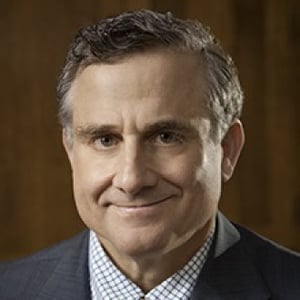
Sam Harris Professor of Corporate Law, Corporate Finance, and Securities Law, Yale Law School
Jonathan R. Macey is Sam Harris Professor of Corporate Law, Corporate Finance, and Securities Law at Yale University, and Professor in the Yale School of Management. From 1991 – 2004, Professor Macey was J. DuPratt White Professor of Law, Director of the John M. Olin Program in Law and Economics at Cornell Law School, and Professor of Law and Business at the Cornell University Johnson Graduate School of Business. Professor Macey earned his B.A. cum laude from Harvard in 1977, and his J.D. from Yale Law School in 1982, where he was Article and Book Review editor of The Yale Law Journal. In 1996, Professor Macey received a Ph.D. honoris causa from the Stockholm School of Economics. Following law school, Professor Macey was law clerk to Judge Henry J. Friendly on the U.S. Court of Appeals for the Second Circuit.
Professor Macey is the author of several books including the two-volume treatise, Macey on Corporation Laws, published in 1998 (Aspen Law & Business), and co-author of two leading casebooks, Corporations: Including Partnerships and Limited Liability Companies (2003 Thomson West), which is in its eighth edition, and Banking Law and Regulation (2002 Aspen Law & Business), which is now in its third edition. He also is the author of over 100 scholarly articles. His recent articles have appeared in the Banking Law Journal, the University of Chicago Law Review, the Stanford Law Review, The Yale Law Journal, the Cornell Law Review, the Journal of Law and Economics, and the Brookings Wharton Papers on Financial Institutions. He has published numerous editorials in such publications as The Wall Street Journal, Forbes, The Los Angeles Times, and The National Law Journal.
Professor Macey has taught at major universities throughout the world, including Bocconi University (Milan), the University of Tokyo; the University of Toronto; the University of Turin, the University of Amsterdam Department of Finance, and the Stockholm School of Economics, Department of Law. He also has been Professor of Law at the University of Chicago (1990) and Visiting Professor of Law at Harvard Law School (1999). Professor Macey is a Senior Research Fellow at the International Centre for Economic Research (ICER) in Turin, Italy. Professor Macey also serves on the Academic Advisory Board (Comitato Scientifico) of the Associazione Disiano Preite for the study of corporate law (per lo studio del diritto dell’impresa). In 1995, Professor Macey was awarded the Paul M. Bator prize for excellence in Teaching, Scholarship and Public Service by the Federalist Society for Law and Public Policy. In 1996, he received a Ph.D., honoris causa from the Stockholm School of Economics. And in 1998, he received the D.P. Jacobs prize for the most significant paper in volume 6 of the Journal of Financial Intermediation for his paper (co-authored with Maureen O’Hara), “The Law & Economics of Best Execution.”
In 1999 Professor Macey was made an honorary Fellow of the Society For Advanced Legal Studies. In 2000, Professor Macey became a member of the Legal Advisory Committee to the Board of Directors of the New York Stock Exchange. In 2001 Professor Macey was appointed a Bertil Daniellson Distinguished Visiting Professor in Banking and Finance at the Stockholm School of Economics. In 2002 Professor Macey was appointed to the Economic Advisory Board of the National Association of Securities Dealers (NASD). In 2004 Professor Macey was awarded a Teaching Award by the Yale Law Women in recognition of his “commitment to excellence in teaching, mentoring and inspiring.” In 2005 Professor Macey became a member of the Board of Editors of Thomson West Publishing Company.
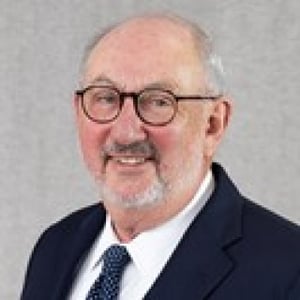
Partner, McGuireWoods LLP
George Terwilliger is co-head of the firm's white collar practice and leads the firm's Strategic Response and Crisis Management practice group. Following his fifteen years of public service in the US Department of Justice, where he began as a law clerk and concluded as Acting Attorney General, George has provided counsel in government and internal investigations, agency enforcement proceedings and in civil and criminal litigation. He has represented many of the nation's and the world's largest corporations, including major financial institutions, energy companies, public institutions as well as leading business and government officials, including members of the US Senate and House as well as cabinet officials. He has also represented lawyers and corporate legal departments in investigations. As a result of both his private sector work and government positions, George is called upon to provide counsel as well as commentary to government officials, Congress and private organizations on national security, homeland defense, terrorism, and other public policy and legal issues. George's work regularly involves providing counsel in the executive suites and boardrooms of major corporations.
In private practice for international law firms, George has represented national and international financial, energy, telecommunications, industrial and healthcare companies. He is a recognized expert in leading credible corporate internal investigations and his experience designing and executing both targeted and global legal compliance reviews has involved work in more than 60 countries around the globe. George is an expert on the Foreign Corrupt Practices Act and regularly provides counsel to companies addressing FCPA issues. No stranger to high stakes litigation and crisis events, George helped lead the Bush-Cheney legal team in the 2000 Florida vote recount, served as special outside counsel to a Senate committee investigating vote fraud allegations, served as counsel to an executive commission on gambling, and has represented many clients in politically charged election law and similar cases. He has guided corporations and individual through high stakes matters of intense public interest. He represented an incumbent president in First Amendment litigation concerning the right to have an inaugural prayer said in a public ceremony.
At the Department of Justice, George served for 10 years as a frontline federal prosecutor, handling hundreds of investigations, trials and appeals, including in white collar and national security cases. President Ronald Reagan appointed him as a U.S. attorney, and he next served as the deputy attorney general and as acting attorney general during the George H.W. Bush administration. As Deputy Attorney General, George ran the Justice Department's operations, overseeing all the nation's federal prosecutors, as well as the FBI and other law enforcement agencies. He also had leadership responsibility in several national and international crises, including a hostage-taking in a federal prison and the federal law enforcement response to domestic unrest in Los Angeles. In several instances, he personally handled negotiations of high-profile criminal and civil matters in the United States and abroad.
Partner, Cravath, Swaine & Moore LLP
Jeffrey T. Dinwoodie is a member of the Financial Institutions Group at Cravath, Swaine & Moore LLP. Mr. Dinwoodie previously served as Chief Counsel to the Chairman of the Securities and Exchange Commission (SEC) and as Head of the Office of Financial Institutions at the U.S. Department of the Treasury.
Mr. Dinwoodie has broad experience advising financial institutions, companies and investors, as well as government officials, across multiple disciplines. His practice focuses on advising clients on financial regulation and compliance, enforcement and examinations, and M&A and other corporate transactions. Mr. Dinwoodie’s practice also covers policy and regulatory strategy matters. Mr. Dinwoodie’s clients include established institutions, emerging companies and entrepreneurs—and his work spans both traditional finance and innovation‑related and crypto asset issues.
Partner, Davis Polk & Wardwell LLP
Annette L. Nazareth is a Davis Polk partner practicing in the firm’s Financial Institutions Group in the Washington DC office. She advises clients across a broad range of complex regulatory matters and transactions. She also works closely with Davis Polk’s SEC enforcement practice, counseling nonfinancial sector corporations that are subject to government regulatory and enforcement actions.
Ms. Nazareth was a key financial services policymaker for more than a decade. She joined the SEC Staff in 1998 as a Senior Counsel to Chairman Arthur Levitt and then served as Interim Director of the Division of Investment Management. She served as Director of the Division of Market Regulation (now the Division of Trading and Markets) from 1999 to 2005. As Director, she oversaw the regulation of broker-dealers, exchanges, clearing agencies, transfer agents and securities information processors. In 2005, she was appointed an SEC Commissioner. During her tenure at the Commission, she worked on numerous groundbreaking initiatives, including execution quality disclosure rules, implementation of equities decimal pricing, short sale reforms and modernization of the national market system rules. Ms. Nazareth also served as the Commission’s representative on the Financial Stability Forum from 1999 to 2008.
Since leaving the SEC in January 2008, she has served as Rapporteur for the Group of Thirty’s report, The Structure of Financial Supervision: Approaches and Challenges in a Global Marketplace and as Project Director for their report, Enhancing Financial Stability and Resilience: Macroprudential Policy, Tools and Systems for the Future. Earlier in her career, she held a number of senior legal positions at several investment banks.
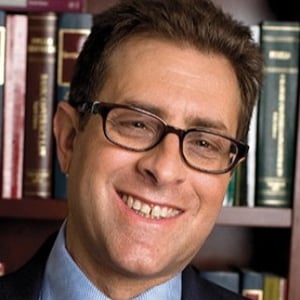
Jacob D. Fuchsberg Professor of Law, New York University School of Law
Professor Friedman is one of the country’s leading authorities on constitutional law and the federal courts. He is a prolific scholar, working at the intersections of law, politics and history. Friedman teaches a wide variety of courses including Constitutional Law, Federal Courts, and Criminal Procedure. He writes extensively about judicial review, constitutional law and theory, federal jurisdiction and judicial behavior. His scholarship appears regularly in the nation’s top law and peer-edited reviews. He is the author of widely-recognized The Will of the People: How Public Opinion Has Influenced the Supreme Court and Shaped the Meaning of the Constitution (Farrar, Strauss & Giroux, 2009), which examines the history of the relationship between popular opinion and the Supreme Court, from 1776 to the present. Along with his co-author Stephen Burbank, Friedman co-edited and contributed to Judicial Independence at the Crossroads: An Interdisciplinary Approach, which questions common assumptions about the nature of judicial independence and how it can be protected. The book has been cited and relied upon countless times by scholars and policymakers alike. Professor Friedman is a frequent contributor to the nation's leading journals, both on-line and print. His work has appeared in The New York Times, Salon, The Los Angeles Times, Politico andThe New Republic, among others.
Professor Friedman is a frequent speaker at events of all sorts. Given the interdisciplinary nature of his work, Professor Friedman regularly appears at conferences in law, political science and history. He is a founder and co-convener of the “roughly biennial” Constitutional Theory Conference. He organizes many multi-disciplinary conferences, including one on Modeling Law, and another – done under the auspices of the American Constitution Society – on Reconstruction: America’s Second Founding. He presents papers regularly at home and abroad. He has been a visiting scholar and lecturer at the Rockefeller Foundation Study and Conference Center in Bellagio, Italy, the Groupe d’Etudes et de Recherches sur law Justice Constitutionnelle Aix-en-Provence, Sciences-Po in Aix-en-Provence, and Hong Kong University.
Professor Friedman regularly serves as a litigator or litigation consultant in a variety of matters in the federal and state courts. He has represented a wide range of clients, both public and private. Notably, he represents both civil liberties claimants and state and local governments. He has been active in the areas of reproductive rights, the jurisdictional allocation of cases between the federal and state courts, and the proper scope of the federal government’s commerce power. He has filed a number of amicus briefs with the U.S. Supreme Court.
Actively engaged in a range of important service activities, at NYU Professor Friedman created the Academic Careers Program and founded and is now co-director of the Furman Academic Program. Both programs are dedicated to preparing young scholars for academic careers. In the past he was extensively involved with the American Judicature Society, was President of the Tennessee Civil Liberties Union, served on the Board of the State and Local Legal Center, and on the steering committee of New York University’s Institute for Law and Society. He recently completed a term as Vice Dean of New York University School of Law.
Professor Friedman graduated from the University of Chicago and received his law degree magna cum laude from Georgetown University Law Center. He clerked for the Honorable Phyllis A. Kravitch of the U.S. Court of Appeals for the 11th Circuit and also worked as a litigation associate at Davis, Polk & Wardwell in Washington D.C. He was a professor at Vanderbilt Law School before joining the NYU faculty in 2000. In 1995 he won the Clarence Darrow Award from the ACLU of Tennessee for his work in defense of civil liberties.
J.D., Georgetown University Law Center, 1982
B.A., University of Chicago, 1978
Adjunct Professor, Fordham University School of Law
Ms. McAvoy is an attorney, a former federal prosecutor and former in-house counsel for financial institutions. She specializes in Anti-Money Laundering and Terrorist Financing issues. She is an adjunct professor at Fordham Law School and heads Fordham’s Adjunct Faculty Committee. Ms. McAvoy has been politically active as well, including having run for the position of Comptroller of the City of New York as Rudy Giuliani’s running mate. She also was on John McCain’s NY Steering Committee and was Co-Chair of NY Women for McCain during his most recent presidential bid.
She obtained a Bachelor of Arts degree from St. John’s University in 1984, where she graduated summa cum laude as valedictorian and was NYS debate champion. Ms. McAvoy received a Juris Doctor degree from Fordham Law School in 1987 where she participated as a member of its National Moot Court team.
Ms. McAvoy began practicing law as a litigation associate at Mudge Rose Guthrie & Ferdon. After that she became an Assistant U.S. Attorney in the EDNY’s Civil and Criminal Divisions, where she received awards from both the U.S. Customs Service and the U.S. Department of Agriculture. She practiced in US District Court, the US Court of Appeals for the 2d Circuit, Surrogate’s Court and US Bankruptcy Court. Civil cases she handled included employment discrimination, forfeitures, medical malpractice, suits brought against government employees, Social Security disability, personal injury and tax cases. The criminal matters she handled included money laundering, bank robbery, mail fraud, illegal weapons sales, insurance fraud, credit card fraud, Food Stamp fraud, counterfeiting and narcotics violations.
After leaving the US Attorney’s Office, Ms. McAvoy became Senior Attorney at Morgan Stanley, where she was in charge of anti-money laundering prevention efforts and the reporting of suspicious activity. She also handled insider trading matters, fraud issues, general securities litigation and criminal matters. She received an award from the U.S. Secret Service for her work and as a member of the Securities Industry Ad Hoc Bank Secrecy Act Group she assisted the U.S. Treasury Department and the Federal Reserve Board in drafting suspicious activity regulations relating to the securities industry.
Ms. McAvoy thereafter joined Citigroup, where she was Senior Legal Counsel for Citigroup Corporate Security and Investigative Services, providing legal advice on fraud issues, corporate security, investigations and anti-money laundering compliance for Citigroup’s businesses, including Citibank, Travelers Insurance, Salomon Smith Barney and Primerica Financial Services.
Since 2000 Ms. McAvoy has been doing private consulting work for the financial industry. She has conducted extensive training for banks, securities firms, the NASD and law enforcement. She has also participated in internal corporate investigations and look-backs at financial institutions, has helped institutions develop appropriate policies and procedures and has acted as an expert consulting witness for law firms. She also continues to teach at Fordham Law School as an adjunct professor and remains active in politics.
Ms. McAvoy has provided legal, political and business commentary on a variety of television networks and on radio. She is a regular commentator on foxnews.com’s Strategy Room and has appeared on various programs on the Fox Cable News Channel including The O’Reilly Factor. She is a legal contributor for the Grinder Show on NY 970 The Apple, a nationally broadcast radio show which also streams live on the internet.

The Department of Labor’s Fiduciary Rulemaking: Impacts, Implications and Related Policy Issues - Podcast
Jeffrey T. Dinwoodie, Annette L. Nazareth
On April 6, 2016, the Department of Labor released its much-anticipated “fiduciary” rulemaking, which will...
The Department of Labor’s Fiduciary Rulemaking: Impacts, Implications and Related Policy Issues
TeleforumCybersecurity: Private Sector Faces Increasing Regulatory Risk From Agency Enforcement and Informal “Guidance” Becoming Standard of Care - Podcast
Megan L. Brown, Brent J. McIntosh, Rebecca Seidel
After Target, Anthem, Sony, and Ashley Madison, cybersecurity is at the top of every company...
Market Regulation: A Look Back, and a Look Forward - Podcast
Jeffrey T. Dinwoodie, Annette L. Nazareth
Over the past several years there has been a heightened interest in the operation and...
International Criminal Discovery
Andrew C. Hruska
I. Introduction While money moves at the speed of light across national boundaries, law enforcement...
Gunn v. Minton - Post-Argument SCOTUScast
Mark F. Schultz
On January 16, 2013, the Supreme Court heard oral argument in Gunn v. Minton. The question...
What’s Right (and Wrong) with the Confirmation Process . . . And Elena Kagan
New York, New YorkPCAOB Debate
Martin Flaherty, Gillian E. Metzger, Donna M. Nagy, Peter M. Shane, Christian J. Ward, Tuan Samahon
This debate will focus on the following questions: Is the Sarbanes-Oxley Act consistent with the...
Corporations: The SEC and the Financial Services Crisis of 2008
Paul S. Atkins, Stephen Bainbridge, Edmund W. Kitch, Jonathan R. Macey, George J. Terwilliger
In September, as both the financial crisis and the presidential campaign were heating up, Senator...
Mandatory Expensing of Stock Options: A Bad Idea Whose Time Has Not Come
Daniel Fisher
The corporate scandals of the last few years have dramatically altered the landscape of corporate...