
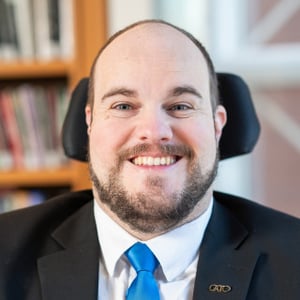
Director, Project on Criminal Justice, Cato Institute
Matthew Cavedon is the Director of the Cato Institute’s Project on Criminal Justice. He focuses on reforming plea-driven mass adjudication, ensuring police accountability, and defending constitutional criminal originalism. Cavedon’s scholarship has been published (or is forthcoming in) publications including the Arizona State Law Journal, Cato Supreme Court Review, Seattle University Law Review, and Georgetown Journal of Law and Public Policy. Formerly a Georgia public defender and fellow at the Institute for Justice, Cavedon has taught law school courses on criminal law and procedure, as well as the First Amendment. Cavedon clerked for a U.S. district court and the Supreme Court of Georgia. He came to Cato following a fellowship at the Emory University Center for the Study of Law and Religion.
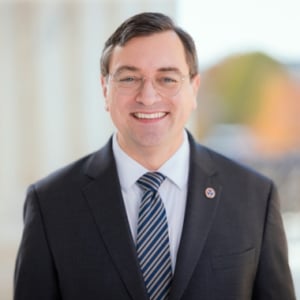
Attorney General of Tennessee
Jonathan Skrmetti was sworn in to an eight-year term as Tennessee’s Attorney General and Reporter on September 1, 2022.
Prior to his current role, General Skrmetti served as Chief Counsel to Governor Bill Lee and as Chief Deputy Attorney General to his predecessor, Tennessee Attorney General Herbert Slatery.
Before working for the State of Tennessee, General Skrmetti was a partner at Butler Snow LLP in Memphis. His legal career began with nearly a decade as a federal prosecutor. He worked at the Civil Rights Division at Main Justice and then at the Memphis U.S. Attorney’s Office and prosecuted sex traffickers, corrupt government officials, and violent white supremacists. In addition, General Skrmetti taught cyberlaw as an adjunct professor at the University of Memphis.
General Skrmetti earned honors degrees from George Washington University, the University of Oxford, and Harvard Law School, where he was editor-in-chief of the Harvard Journal of Law & Public Policy. Following law school, Jonathan clerked for Judge Steven Colloton on the U.S. Court of Appeals for the Eighth Circuit. He lives in Franklin, Tennessee, with his wife and four children.
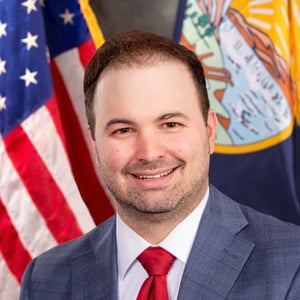
Solicitor General, Montana Attorney General's Office
Christian is currently Solicitor General of Montana, where he serves as the chief litigator and principal legal advisor to Montana Attorney General Austin Knudsen. In that capacity, he manages litigation before the federal district courts, courts of appeal, and the United States Supreme Court, as well as the Montana Supreme Court. He previously served in the Trump Administration as Senior Counsel to the Assistant Secretary for Civil Rights at the U.S. Department of Education. Prior to government service, he was a public interest constitutional litigator at Mountain States Legal Foundation and a fellow at the Institute for Justice. He clerked for Justice Caleb Stegall on the Kansas Supreme Court. He also served as Director of Publications for the Federalist Society's national headquarters.
Christian earned his B.A. in Political Science in 2009 from the University of Pennsylvania before attending the University of Kansas School of Law. Christian is admitted to practice law in Kansas and Montana. A Kansas native, he is a die-hard fan of the Kansas Jayhawks, Kansas City Chiefs, and Kansas City Royals.
Christian is a member of the Federalism & Separation of Powers Practice Group's Executive Committee.
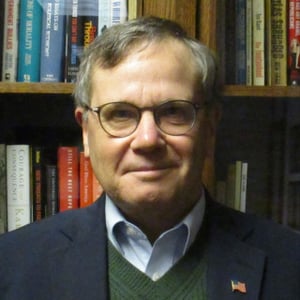
Senior Fellow in Constitutional Jurisprudence, Independence Institute
Professor Robert G. Natelson is a constitutional scholar and author.
Rob’s constitutional scholarship has been cited repeatedly by justices and parties at the U.S. Supreme Court—as well as by federal appeals courts, and at least 18 state supreme courts.
Rob’s research into the Constitution’s original meaning has carried him to libraries throughout the United States and in Britain, including four months at Oxford University. His books and articles span many different parts of the Constitution, including groundbreaking studies of the Necessary and Proper Clause, the Indian Commerce Clause, federalism, Founding-Era interpretation, regulation of elections, and the amendment process of Article V. He created the first-ever online bibliography for 18th century materials used in constitutional research. He is a contributing author to the Encyclopedia of the Supreme Court of the United States (on Magna Carta). He contributed eight essays to the third edition of the Heritage Guide to the Constitution: five on the amendment procedure and one each on the Guarantee Clause, the Postal Clause, and the Recess Appointments Clause.
U.S. Supreme Court justices have relied explicitly on Rob’s research in 41 citations in 13 separate cases.
Manager of State Based Initiatives, Right on Crime
Greg Glod is the Manager of State Initiatives for Right on Crime and Senior Policy Analyst at Texas Public Policy Foundation. Based in Austin, Texas, Glod is an attorney who began his legal career as a law clerk for the Honorable Judge Laura S. Kiessling on the Circuit Court for Anne Arundel County, Maryland. He subsequently practiced at a litigation firm in Annapolis, Maryland before joining Right on Crime and the Texas Public Policy Foundation. In 2010, he graduated from The Pennsylvania State University with B.A. degrees in Crime, Law, and Justice and Political Science. In 2013, Glod received his J.D. from the University of Maryland School of Law.

Professor of Law, Elisabeth Haub School of Law at Pace University
Professor Ben Gershman is one of the original faculty members at Pace Law and has taught as a visiting professor at Cornell Law School and Syracuse Law School. While in private practice he specialized in criminal defense litigation. A former prosecutor with the Manhattan District Attorney’s office for six years, he is the author of numerous articles as well as two books on prosecutorial and judicial ethics. He served for four years with the Special State Prosecutor investigating corruption in the judicial system. He is one of the nation’s leading experts on prosecutorial misconduct. He is active on several Bar Association committees, and is a frequent pro bono litigator. Professor Gershman has taught in the London Law Program, and was named James D. Hopkins Professor for the 2007–2009 academic years.

Party Like It’s 1935?: Gundy v. United States and the Future of the Non-Delegation Doctrine
Matthew P. Cavedon, Jonathan Skrmetti
Note from the Editor: This article discusses Gundy v. United States, a case involving the...
Topics
Liberty Month Revisited: The Freedom to Speak and Participate in Elections
This month we are sharing a selection of paired pieces from The Federalist Society's Liberty...
Violet Dock Port, Inc, LLC v. St. Bernard Port, Harbor & Terminal District
Christian Corrigan
One of this year’s most acclaimed films, Little Pink House, has resurrected old wounds from the...
Topics
Docket Watch: Violet Dock Port, Inc, LLC v. St. Bernard Port, Harbor & Terminal District
One of this year’s most acclaimed films, Little Pink House, has resurrected old wounds from...
Did the Constitution Grant the Federal Government Eminent Domain Power?: Using Eighteenth Century Law to Answer Constitutional Questions
Robert G. Natelson
Note from the Editor: This article asks whether the Constitution granted eminent domain power to...
In the Matter of Property Seized from Jean Carlos Herrerra and Fernando Rodriguez
Greg Glod
On May 25, the Iowa Supreme Court issued an opinion in the case In the Matter...
Topics
Docket Watch: In the Matter of Property Seized from Jean Carlos Herrerra and Fernando Rodriguez
On May 25, the Iowa Supreme Court issued an opinion in the case In the...
Police Tactics and the Fifth Amendment
Pace Student Chapter
White Plains, NYThe Perils of Talking to the Police
Southern Arizona Lawyers Chapter
Topics
Supreme Court Refusal to Review the “Net Worth Sweep” Does Not Totally Sweep Away Investors’ Claims
On February 20, the Supreme Court denied the petitions for a writ of certiorari filed...