
Chief Legal Officer, Paradigm
Executive Vice President, U.S. Chamber Of Commerce
Former Congressman, United States House of Representatives
Bob Goodlatte served in the United States House of Representatives representing Virginia's 6th congressional district for 13 terms.
Goodlatte’s service to the people of the Sixth District began in 1977 when he became District Director for former Congressman Caldwell Butler. He served in this position for two years until 1979, and was responsible for helping folks across the District seeking assistance with or encountering problems from various federal agencies. In 1979, he founded his own private law practice in Roanoke. Later, he was a partner in the law firm of Bird, Kinder and Huffman, working there from 1981 until taking office.
Rep. Goodlatte was first elected to serve as Chairman of the House Judiciary Committee in the 113th Congress. He was the first Judiciary Committee Chairman from Virginia in the last 125 years. Rep. Goodlatte was an active Member of the Judiciary Committee since arriving in Congress, serving in a variety of leadership positions on the Committee including taking the lead on many intellectual property issues. During his time in Congress, Rep. Goodlatte made a name for himself as a leader on Internet and technology issues. He was Co-Chair of the Congressional Internet Caucus and the International Creativity and Theft-Prevention Caucus.
Rep. Goodlatte is a graduate of Washington and Lee University School of Law, and his undergraduate degree in Government was earned at Bates College in Lewiston, Maine.
Author, Cult of the Amateur: How the Internet Is Killing Our Culture
Columnist, The Hill
Merrill Matthews, Ph.D., was for 25 years a resident scholar with the Institute for Policy Innovation. Prior to that he was Vice President of Domestic Policy at the National Center for Policy Analysis. He is a public policy analyst specializing in health care, entitlements and energy issues and is the author of numerous public policy studies. He is past president of the Health Economics Roundtable for the National Association for Business Economics, the largest trade association of business economists.
For nine years Dr. Matthews was executive director of the Washington, DC-based Council for Affordable Health Insurance, a health insurance trade association. While he was executive director, National Journal recognized the Council as one of the most effective health policy organizations in Washington.
Dr. Matthews served for 10 years as a medical ethicist for the University of Texas Southwestern Medical Center’s Institutional Review Board for Human Experimentation. He is the co-author of On the Edge: America Faces the Entitlements Cliff (2019) and has contributed chapters to several books, including Physician Assisted Suicide: Expanding the Debate, The 21st Century Health Care Leader and, in 2009, Stop Paying the Crooks (on Medicare fraud). And for several years he co-authored a column on dental ethics for the Texas Dental Journal.
For several years he also served as chairman on the Texas Advisory Committee of the U.S. Commission on Civil Rights.
He is currently a weekly columnist for The Hill and has been published in numerous journals and newspapers, including the Wall Street Journal, the New York Times, Forbes, USA Today and the Washington Times.
Matthews is a frequent guest host on Point of View radio talk show, which airs nationwide. He was an award-winning political analyst for the USA Radio Network, and for several years had a daily one-minute commentary on Sirius-XM Radio. In 2008 and again in 2014, the BBC featured him in a television program on welfare reform in Great Britain, specifically Wales.
Dr. Matthews received a BBA in Economics from the University of Texas at Arlington, an M.Div. from Southwestern Baptist Theological Seminary, and has a Ph.D. in Humanities from the University of Texas at Dallas. And he is an 8th degree black belt in Tae Kwon Do.
Professor of Law, Antonin Scalia Law School, George Mason University
Adam Mossoff is Professor of Law at Antonin Scalia Law School, George Mason University. He has published extensively on why patents, copyrights, and other intellectual property rights have been—and should be—legally secured to innovators and creators as property rights. His scholarship has been relied on by the United States Supreme Court, by lower federal courts, and by U.S. federal agencies. He has been invited to testify numerous times before the U.S. Senate and the House of Representatives on intellectual property legislation. His writings on intellectual property policy have also appeared in the Wall Street Journal, New York Times, Forbes, Investors Business Daily, and in other media outlets. His journal articles can be downloaded here.
Professor Mossoff is a longstanding member of the Executive Committee of the Intellectual Property Practice Group of the Federalist Society, on which he served as Chairperson from 2016-2018, and he is Chair of the Intellectual Property Working Group of the Regulatory Transparency Project of the Federalist Society. He is a Senior Fellow and Chair of the Forum for Intellectual Property at the Hudson Institute, a Visiting Intellectual Property Fellow at the Heritage Foundation, and a member of the Board of Directors of the Center for Intellectual Property Understanding. He is a member of the Intellectual Property Rights Policy Committee of ANSI and he has served as Chair and Vice-Chair of the Intellectual Property Committee of the IEEE-USA, on which he remains a member in good standing.
States Register of Copyrights, U.S. Copyright Office
Deputy Director General of Patents, World Intellectual Property Organization
Professor of Law, DePaul University College of Law
Joshua D. Sarnoff is a professor of law at DePaul University and a faculty member in and former director of the Center for Intellectual Property Law & Information Technology (CIPLIT®). He teaches patent law, advanced patent law, administrative law, law and climate change, and other intellectual property law courses. He was previously a professor at the Washington College of Law, American University, in the Glushko-Samuelson Intellectual Property Law Clinic, and at the University of Arizona College of Law. In academic year 2014-2015, Professor Sarnoff was a Thomas A. Edison Distinguished Scholar at the United States Patent and Trademark Office. He is a registered patent attorney and a member of the bars of Washington D.C. and California, a former member of the board of governors of the Federal Circuit Bar Association, and a member of the boards of directors and advisory boards of various nonprofit organizations. He has written numerous articles and book chapters on patent law and climate change and has been involved in a wide range of intellectual property legal and policy disputes. He has submitted testimony on domestic patent law reform bills, has filed numerous amicus briefs in the United States Supreme Court and in the U.S. Court of Appeals for the Federal Circuit on important patent law issues, has been a pro bono mediator for the Federal Circuit, and has been a consultant to the United Nations Conference on Trade and Development on international intellectual property, trade and environmental issues. Professor Sarnoff was formerly in the private practice of intellectual property, environmental, and food and drug law in Washington, D.C. He received his BS from MIT and JD from Stanford.
Professor of Law, Southern Illinois University School of Law
Professor Mark F. Schultz joined the faculty in 2003. He teaches and writes primarily in the area of intellectual property.
Professor Schultz is a frequent author and speaker known for his work on the law and economics of the global intellectual property system. In one of his most influential projects, he worked with the Organization for Economic Cooperation and Development (OECD) to construct a groundbreaking global trade secret protection index (the TSPI). The TSPI is influencing policy discussions on this cutting-edge topic in capitals around the world. Other recent projects have included an empirical study that quantified for the first time the backlogs in patent offices worldwide, a report on how patented innovation is meeting global health challenges, and the construction of a new global index of copyright strength.
Professor Schultz is an influential voice in public policy debates regarding intellectual property. He has testified before the U.S. Congress on copyright law at the invitation of the House Judiciary Committee and has briefed the staff of the U.S. Senate Judiciary Committee on trade secret legislation. He speaks frequently around the world about the connection between secure and effective intellectual property rights and flourishing national economies and individual lives, with invitations from the U.S. Patent and Trademark Office, the U.S. Trade Representative, and the U.S. Copyright Office, as well as numerous academic institutions, think tanks, and industry groups. He served as an NGO delegate to the World Intellectual Property Organization (WIPO) for several years during the WIPO Development Agenda talks. He is also one of the organizers of an ongoing multilateral diplomatic dialogue on best practices in national trade secret laws, and is co-founder of the Center for Protection of Intellectual Property (CPIP) at George Mason University in Washington, D.C.
Among the awards and recognition he has received for his scholarship was the School of Law's Outstanding Scholar of the Year award in 2008. He has been a distinguished visiting scholar at the University of Botswana and a visiting professor at DePaul University College of Law.
Professor Schultz graduated with honors from the George Washington University School of Law. Following law school, he was a judicial clerk for the Hon. Daniel M. Friedman of the United States Court of Appeals for the Federal Circuit in Washington, D.C., and the Hon. Eric G. Bruggink of the United States Court of Federal Claims. Prior to joining academia, he practiced law for a decade, serving as outside general counsel to several tech startups and helping technology companies to expand their businesses and commercialize their intellectual property in dozens of countries. He holds a B.A. in International Economics from George Washington University and has done PhD level coursework in development economics at Southern Illinois University.
He is active in leadership roles in local and national organizations. He has served as chair of the Federalist Society's Intellectual Property Practice Group and the AALS Section on Internet and Computer Law. He is an officer of the American Bar Association's International IP Committee of the International Law Section and the American Intellectual Property Law Association’s Trade Secret Law Committee. He currently is chair of the Academic Advisory Board of the Copyright Alliance.
Professor Schultz teaches Copyright Law, Trade Secret Law, Trademark Law, and a senior seminar on Intellectual Property and Global Development. He established and directs both the Specialization in Intellectual Property Law and the IP Semester in Practice Externship Program. He also co-founded a Legal Globalization Class, offered every other year, that takes students to South Africa and Botswana after spending a semester learning about the legal system, culture, history, and politics of southern Africa. The popular course is a once-in-a-lifetime experience that introduces students to leading lawyers, judges, government officials, and human rights advocates, taking them from Cape Town to Johannesburg to Gaborone as well as many popular destinations including game reserves, national parks, the Cape of Good Hope, and the Cradle of Humankind.
Vice President & Senior Counsel, Becket
Luke Goodrich is the author of Free to Believe: The Battle over Religious Liberty in America and vice president and senior counsel at the Becket Fund for Religious Liberty.
While at Becket, Luke has argued and won precedent-setting cases in the Third, Fifth, Seventh, Ninth, and Eleventh Circuits, and has helped Becket win four major Supreme Court cases in the last seven years: including victories for the Little Sisters of the Poor and Hobby Lobby against the contraception mandate, a victory for a Muslim prisoner under the Religious Land Use and Institutionalized Persons Act, and a unanimous victory in the Supreme Court’s first decision ever on the ministerial exception, which The Wall Street Journal called one of “the most important religious liberty cases in a half century.”
He frequently discusses religious freedom on networks such as CNN, Fox News, ABC, and NPR, and in publications like the Wall Street Journal, USA Today, and New York Times magazine. He also serves as an adjunct professor at the University of Utah S.J. Quinney College of Law, where he teaches constitutional law.
Before joining Becket, he clerked for Judge Michael W. McConnell on the U.S. Court of Appeals for the Tenth Circuit and graduated from the University of Chicago Law School with high honors as a member of the Law Review and the Order of the Coif.
Executive Director, Americans United for Separation of Church and State
Vice President for Legal Affairs, Cato Institute
Roger Pilon is the Cato’s Institute’s vice president for legal affairs, the founding director of Cato’s Robert A. Levy Center for Constitutional Studies, the inaugural holder of Cato’s B. Kenneth Simon Chair in Constitutional Studies, and the founding publisher of the Cato Supreme Court Review.
Prior to joining Cato, Pilon held five senior posts in the Reagan administration, including at State and Justice, and was a national fellow at Stanford’s Hoover Institution. In 1989 the Bicentennial Commission presented him with its Benjamin Franklin Award for excellence in writing on the U.S. Constitution. In 2001 Columbia University’s School of General Studies awarded him its Alumni Medal of Distinction. Pilon lectures and debates at universities and law schools across the country and testifies often before Congress.
His writing has appeared in the Wall Street Journal, the Washington Post, the New York Times, the Los Angeles Times, Legal Times, National Law Journal, Harvard Journal of Law and Public Policy, Stanford Law and Policy Review, and elsewhere. He has appeared on ABC’s Nightline, CBS’s 60 Minutes II, Fox News Channel, NPR, CNN, MSNBC, CNBC, C-SPAN, and other media.
Pilon holds a BA from Columbia University, an MA and a PhD from the University of Chicago, and a JD from the George Washington University School of Law.

Executive Vice President, The Federalist Society
Dean Reuter is Executive Vice President at the Federalist Society for Law and Public Policy Studies. He has served in two federal government agency Offices of the Inspector General, as Counsel to the Inspector General and Deputy Inspector General, responsible for policing the use of federal funds granted and contracted through those agencies. As such, he helped conduct and oversee criminal investigations across the country. He is the principal author of the non-fiction book, The Hidden Nazi: The Untold Story of America's Deal with the Devil, and editor of Liberty’s Nemesis: The Unchecked Expansion of the State and Confronting Terror: 9/11 and the Future of American National Security. He was appointed by the President and served as Vice-Chairman of the Board of Directors of the Corporation for National and Community Service, and recently served as an appointee on the U.S. Commission on Presidential Scholars. He is a graduate of Hood College (BA with Honors) and the University of Maryland School of Law.
Director of the Program in Human Rights, Catholic University of America
William L. Saunders is Chair Emeritus of the Religious Liberties Practice Group of the Federalist Society. He is also a religious liberty and human rights scholar as well as director of the Center for Human rights at The Catholic University of America. He is Law Fellow with the Institute for Human Ecology, Professor and Director of the Program in Human Rights in the School of Arts & Sciences and Co-director of the Center for Religious Liberty at the Columbus School of Law. Before joining The Catholic University of America, Mr. Saunders served as Senior Vice President and Senior Counsel with Americans United for Life for ten years. From 1999 to 2009, he was Senior Fellow in Bioethics and Human Rights Counsel at the Family Research Council.
Mr. Saunders attended the University of North Carolina at Chapel Hill on a Morehead scholarship. He obtained his degree in law from the Harvard Law School.
Mr. Saunders was featured in Harvard’s first Guide to Conservative Public Interest Law in 2003 and again in the 2008 edition. He served on Harvard’s Advisory Committee for its 2008 celebration of public interest law. A member of the Supreme Court bar, he has authored numerous legal briefs in state, federal, foreign, and international courts.
Mr. Saunders’ book, Unborn Human Life and Fundamental Rights: Leading Constitutional Cases Under Scrutiny, was published in 2019. His articles and book chapters have been published by the university presses of Harvard, Villanova, Brigham Young, Fordham, Georgetown, Houston, Scranton, and the Catholic University of America, as well as by the Intercollegiate Studies Institute, Freedom House, Greenhaven Press, Rowan & Littlefield, Praeger, St. Augustine’s, and Intervarsity press. He has given lectures and participated in debates at many colleges, universities, and law schools, including Princeton, Harvard, Georgetown, and Notre Dame. He delivered the annual J. Michael Miller Lecture at the University of St. Thomas (on international law) in February 2007, the annual R. Wayne Kraft Memorial Lecture (on bioethics) at DeSales University in February 2004 and the annual James Moore Lecture (on human rights violations in Sudan) at Millikin University in 1999. He has also lectured, and/or has been published, in many foreign countries, including Italy, Germany, Poland, Austria, Spain, Greece, Slovakia, Mexico, Qatar, Malaysia, Romania, the Philippines, Hong Kong, and the United Kingdom.
In addition to speaking and writing frequently on bioethics topics, Mr. Saunders has submitted testimony to the President’s Council on Bioethics, as well as to UNESCO’s Committee on Bioethics, and has briefed Congressional staff and state legislatures. He is a regular columnist for the National Catholic Bioethics Quarterly.
Mr. Saunders has appeared often in the media, including BBC World News, CNN, Fox News, Vatican Radio, and National Public Radio. His articles on issues have appeared in a variety of journals, such as First Things, Human Events, Human Life Review, The Legal Times, Communio, The Family in America: A Journal of Public Policy, Ethics & Medics, and Touchstone.
Mr. Saunders served on the official United States delegation to the UN Special Session on Children in 2001/02. In 2011, he was a speaker at an official briefing at the UN, addressing the topic, why euthanasia is not a human right.
In 2004, he served on the NGO Working Committee in connection with the Doha Intergovernmental Conference for the Family.
Mr. Saunders is Senior Fellow with the Religious Freedom Institute, and Affiliated Scholar with the Pellegrino Center for Clinical Ethics at the Georgetown University School of Medicine. He is President of the Fellowship of Catholic Scholars and a member of the boards of the International Association of Catholic Bioethicists, the International Right to Life Federation, the Institute on Religion and Democracy, and the Society of Catholic Social Scientists.
In 1999, Mr. Saunders founded Sudan Relief and Rescue, Inc., to aid the persecuted church in Sudan. He has worked for and written on behalf of the persecuted church for many years.
Partner, Jenner & Block LLP
Paul M. Smith is a partner in the Firm's Litigation Department. He is a member of the Firm's Policy Committee. He is Chair of the Appellate and Supreme Court Practice and a Co-Chair of the Creative Content, Media and First Amendment, and Election Law and Redistricting Practices. Mr. Smith is AV Peer Review Rated, Martindale-Hubbell's highest peer recognition for ethical standards and legal ability.
Mr. Smith has had an active Supreme Court practice for two decades, including oral arguments in thirteen Supreme Court cases. These arguments have included Crawford v. Marion County Election Board (2008), the Indiana Voter ID case; LULAC v. Perry (2006), and Vieth v. Jubelirer (2003), two congressional redistricting cases; Lawrence v. Texas (2003), involving the constitutionality of the Texas sodomy statute; United States v. American Library Ass'n (2003), involving a First Amendment challenge to the Children's Internet Protection Act and Mathias v. WorldCom (2001), dealing with the Eleventh Amendment immunity of state commissions. His first argument was in Celotex Corp. v. Catrett in 1986. Mr. Smith also worked extensively on several other First Amendment cases in the Supreme Court, involving issues ranging from commercial speech to defamation to "adult" speech on the Internet.
Mr. Smith also represents various clients in trial and appellate cases involving commercial and telecommunications issues, the First Amendment, intellectual property, antitrust, and redistricting and voting rights, among other areas. His recent trial work has included several cases involving congressional redistricting as well as challenges to state video game restrictions under the First Amendment.
Mr. Smith graduated summa cum laude and Phi Beta Kappa from Amherst College in 1976 and received a J.D. from Yale Law School in 1979, where he served as Editor-in-Chief of the Yale Law Journal. The following year, Mr. Smith was a law clerk to Judge James L. Oakes of the United States Court of Appeals for the Second Circuit. From 1980-81, Mr. Smith was a law clerk to Supreme Court Justice Lewis F. Powell, Jr.
Mr. Smith was a member of the Board of Governors of the District of Columbia Bar from 2002-2008. He is a former board member and former Chair of the National Board of Directors of The American Constitution Society, Co-Chair of the Board of Directors of Lambda Legal and a member of the Board of Directors of the Washington Lawyers Committee for Civil Rights and Urban Affairs.
Since 2003, Chambers USA has named him one of the country's leading lawyers in the areas of Appellate Litigation and Media & Entertainment Law. In 2007, 2008, 2009 and 2010 Chambers USA also named him one of the country's leading lawyers in the area of First Amendment Litigation. Mr. Smith was recognized in the 2007, 2008, 2009 and 2010 Editions of Washington DC Super Lawyers for Appellate Law and as one of the Top 100 Lawyers in DC. In 2010, Mr. Smith was named one of the Top 10 lawyers in Washington, DC by Washington DC Super Lawyers and one of "Washington's Top Lawyers" by Washingtonian magazine. Mr. Smith was also named one of the "Decade's Most Influential Lawyers" by The National Law Journal in 2010. The Firm was also selected as 2010 "Copyright Firm of the Year" by Managing Intellectual Property magazine. In 2010, Mr. Smith was awarded the Thurgood Marshall Award from the American Bar Association Section of Individual Rights and Responsibilities.
Mr. Smith is admitted to practice in Maryland, New York and the District of Columbia.
Chancellor's Professor of Law and Political Science, University of California, Irvine School of Law
Professor Richard L. Hasen is Chancellor’s Professor of Law and Political Science at the University of California, Irvine. Hasen is a nationally recognized expert in election law and campaign finance regulation, and is co-author of a leading casebook on election law.
From 2001-2010, he served (with Dan Lowenstein) as founding co-editor of the quarterly peer-reviewed publication, Election Law Journal. He is the author of over 100 articles on election law issues, published in numerous journals including the Harvard Law Review, Stanford Law Review and Supreme Court Review. He was elected to The American Law Institute in 2009 and served as an Adviser on ALI’s law reform project, Principles of Election Law: Resolution of Election Disputes.
Professor Hasen was named one of the 100 most influential lawyers in America by The National Law Journal in 2013, and one of the Top 100 Lawyers in California in 2005 and 2016 by the Los Angeles and San Francisco Daily Journal.
His op-eds and commentaries have appeared in many publications, including The New York Times, The Washington Post, Politico, and Slate. Hasen also writes the often-quoted Election Law Blog, which the ABA Journal named to its “Blawg 100 Hall of Fame” in 2015. His newest book, The Justice of Contradictions: Antonin Scalia and the Politics of Disruption, will be published in 2018 by Yale University Press.
Professor Hasen holds a B.A. degree (with highest honors) from UC Berkeley, and a J.D., M.A., and Ph.D. (Political Science) from UCLA. After law school, Hasen clerked for the Honorable David R. Thompson of the United States Court of Appeals for the Ninth Circuit, and then worked as a civil appellate lawyer at the Encino firm Horvitz and Levy.
From 1994-1997, Hasen taught at the Chicago-Kent College of Law and from 1998-2011 he taught at Loyola Law School, Los Angeles, where he was named the William H. Hannon Distinguished Professor of Law in 2005. He joined the UC Irvine School of Law faculty in July 2011, and is a faculty member of the UC Irvine Jack W. Peltason Center for the Study of Democracy.
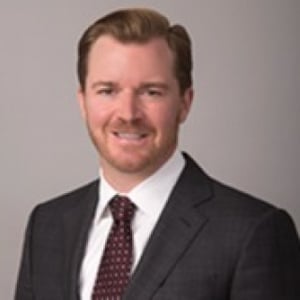
Partner, Gibson, Dunn & Crutcher LLP
Matthew D. McGill is a partner in the Washington, D.C. office of Gibson, Dunn & Crutcher and Co-Chair of the firm’s Judgment and Arbitral Award Enforcement and Betting and Gaming practice groups. He also is a member of the firm’s Appellate and Constitutional Law and Sports Law practice groups.
A three-time “Litigator of the Week” (The AmLaw Litigation Daily) Mr. McGill has been ranked by Chambers USA in Nationwide Appellate Law and recognized by The National Law Journal as a “Litigation Trailblazer” for his pioneering work enforcing judgments against foreign sovereigns. In 2020, he successfully negotiated a $335 million resolution of terrorism claims against the Republic of Sudan arising from the 1998 bombings of the U.S. Embassies in Kenya and Tanzania. Previously, he successfully resolved NML Capital’s multi-billion dollar claims against the Republic of Argentina after what the Financial Times called “the trial of the century in sovereign debt restructuring.” He currently represents clients in public enforcement matters against the governments of the Democratic Republic of Congo, Iran, Pakistan, Spain, and Venezuela.
An accomplished appellate advocate, Mr. McGill has participated in 23 cases before the Supreme Court of the United States, prevailing in 17, including several high-profile triumphs over foreign sovereigns:
Opati v. Republic of Sudan (2020) – Mr. McGill successfully argued before the Supreme Court on behalf of victims of the 1998 bombings of the U.S. Embassies in Kenya and Tanzania and secured a ruling that “unanimously reinstated as much as $4.3 billion in punitive damages awarded against Sudan” (New York Times) setting the stage for the resolution of the Embassy bombing claims and the United States’ delisting of Sudan as a state-sponsor of terrorism.
Puerto Rico v. Franklin California Tax-Free Trust (2016) – Arguing before the Supreme Court on behalf of creditors that found themselves on the leading edge of Puerto Rico’s debt crisis, Mr. McGill successfully defended an injunction invalidating Puerto Rico’s emergency municipal bankruptcy legislation. The ruling protected bondholders against the “chance that the territory could write its own bankruptcy plan” (Wall Street Journal) and ensured that Congress would retain control over Puerto Rico’s fiscal rescue.
Bank Markazi v. Peterson (2016) – In this important separation-of-powers case, Mr. McGill represented victims of the 1983 Beirut Marine Corps Barracks Bombing who hold judgments against Iran. Ruling in favor of the Beirut Marines, the Supreme Court rejected arguments from Iran’s central bank that Congress had impermissibly invaded the province of the Judicial Branch by authorizing victims of terrorism to seize certain central bank assets. The ruling allowed nearly $2 billion to be distributed to Iran’s victims.
Argentina v. NML Capital, Ltd. (2014) – The Supreme Court’s decision in this case confirmed the availability of broad discovery to enforce judgments against foreign sovereigns, empowering creditors to seek information concerning the debtor nation’s assets anywhere in the world.
At the intersection of sports and gaming, Mr. McGill led the effort of the Governor of New Jersey to legalize sports wagering in the Garden State, culminating in the Supreme Court’s “historic decision” (Sports Illustrated) in Murphy v. NCAA that struck down the federal law that had prohibited states other than Nevada from legalizing sports betting. By establishing that the federal government has no power to “dictate[] what a state legislature may and may not do,” this “landmark ruling” (USA Today) safeguards the power of States to govern themselves and cleared the path for States across the country to legalize sports wagering.
Later, when the U.S. government announced in 2019 that it was abandoning its longstanding position that the Wire Act of 1961 prohibits only certain forms of sports wagering, Mr. McGill led the legal challenge to the new government policy. Representing the technology provider for the internet-based operations of the New Hampshire Lottery, Mr. McGill secured a judgment that the Wire Act covered only sports betting, and successfully defended that judgment on appeal. The ruling safeguarded “the entire online gambling industry as well as multi-state lotteries such as Powerball” (Am Law Litigation Daily) from an arbitrary change in government policy. For his work toward legalizing sports wagering and confining the Wire Act to its intended scope, Mr. McGill has been recognized by Law360 as a Sports Law “MVP” and “2020 Sports & Entertainment Trailblazer” by The National Law Journal.
Mr. McGill also maintains an active pro bono practice. He currently represents three adoptive couples in a constitutional challenge to the Indian Child Welfare Act, and he represents persons born in American Samoa in their constitutional challenge to a federal statute that designates them “non-citizen nationals.”
Prior to joining Gibson Dunn, Mr. McGill served as a Bristow Fellow in the Office of the Solicitor General at the U.S. Department of Justice. He clerked for the Hon. Joseph M. McLaughlin of the U.S. Court of Appeals for the Second Circuit and the Hon. John G. Roberts, Jr. of the U.S. Court of Appeals for the D.C. Circuit.
Mr. McGill earned a Bachelor of Arts degree, magna cum laude, from Dartmouth College in 1996. In 2000, he graduated from Stanford Law School, where he was elected to the Order of the Coif.
Mr. McGill is licensed to practice in New York and the District of Columbia and he has been admitted to practice before the Supreme Court of the United States, the United States Courts of Appeals for the First, Second, Third, Fourth, Fifth, Ninth, Tenth, Eleventh, District of Columbia, and Federal Circuits, and the United States District Courts for the District of Columbia and the Southern District of New York.
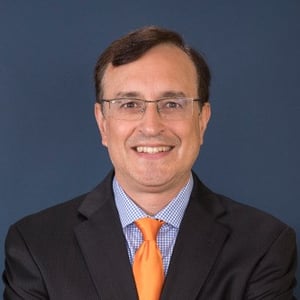
President, Center for Individual Rights
Todd Gaziano is the President of the Center for Individual Rights. Mr. Gaziano received his J.D. in 1988 from the University of Chicago Law School, where he was a John M. Olin Fellow in Law and Economics. He received his B.A. from West Virginia University, summa cum laude in 1985. He was selected as a Truman Scholar from West Virginia while an undergraduate.
Mr. Gaziano’s previous legal work includes service as a law clerk for U.S. Court of Appeals for the Fifth Circuit Judge Edith Jones, as an attorney in the U.S. Department of Justice Office of Legal Counsel, as a chief subcommittee counsel in the U.S. House of Representatives, as a Houston trial attorney, and as a chief corporate legal officer. He also served a six-year term as commissioner on the U.S. Commission on Civil Rights (2008-2013), where he helped conduct oversight and investigations of civil rights agencies.
For most of the last 25 years, Mr. Gaziano was a legal scholar and public interest law leader, promoting individual liberty in the Supreme Court and Congress. From 1997 to 2013, he was the founding director of the Edwin Meese Center for Legal and Judicial Studies at The Heritage Foundation. From 2014 until he joined CIR, he was the Chief of Legal Policy and Strategic Research, and Director of the Center for the Separation of Powers, at Pacific Legal Foundation.
Senior Fellow, National Security Institute, Antonin Scalia School of Law, George Mason University; Retired Professor, Distinguished Fellow and Co-Founder, Center for National Security Law, University of Virginia School of Law (1987-2020)
Robert F. Turner holds both professional and academic doctorates from the University of Virginia School of Law. He co-founded the Center for National Security Law with Professor John Norton Moore in April 1981 and served as its associate director for 39 years, except for two periods of government service in the 1980s and during 1994-95, when he occupied the Charles H. Stockton Chair of International Law at the U.S. Naval War College in Newport, Rhode Island. He retired from UVA in January 2020 and currently serves as a non-resident senior fellow at the GMU National Security Institute. He also served briefly in 2020 as President of the Crime Prevention Research Center—one of the most respected pro-Second Amendment groups in the country—while its founder, Dr. John Lott, was on leave of absence.
A former Army captain and veteran of two tours in Vietnam, Turner served as a research associate and public affairs fellow at Stanford's Hoover Institution on War, Revolution and Peace before spending five years in the mid-1970s as national security adviser to U.S. Senator Robert P. Griffin, a member of the Senate Foreign Relations Committee (where Turner anticipated by seven years the Supreme Court’s landmark INS v. Chadha decision, striking down legislative vetoes). He also served in the executive branch during the Reagan administration as a member of the Senior Executive Service, first in the Pentagon as special assistant to the undersecretary of defense for policy, then in the White House as counsel to the President's Intelligence Oversight Board, and at the State Department as principal deputy and then acting assistant secretary for legislative affairs. In 1986, he became the first president of the congressionally established United States Institute of Peace.
A former three-term chairman of the ABA Standing Committee on Law and National Security (and for many years editor of the ABA National Security Law Report), Turner also chaired the Executive-Congressional Relations Subcommittee of the ABA Section on International Law and Practice and chaired or co-chaired the National Security Law Subcommittee of the Federalist Society’s International and National Security Law Practice Group for several years.
Turner taught undergraduate courses at Virginia on international law, U.S. foreign policy, the Vietnam War and foreign policy and the law in what is now the Woodrow Wilson Department of Politics. In addition, he co-taught National Security Law and advanced national security law seminars on the Indochina War and on war and peace with Moore at the Law School.
The author or editor of 17 books and monographs (including co-editor of the Center's 1,600-page National Security Law & Policy casebook, National Security Law Documents, and Legal Issues in the Struggle Against Terror) and numerous articles in law reviews and other professional journals, Turner has also contributed articles to most of the major U.S. newspapers, including The New York Times and USA Today. In an op-ed published in The International Herald Tribune in September 1990, he and Moore were the first to call for a war-crimes trial for Iraqi dictator Saddam Hussein and for international controls over Iraq's weapons of mass destruction, and the following month he wrote the lead story in The Washington Post Sunday Outlook Section, “Killing Saddam: Would It Be a Crime?,” arguing that Hussein would be a lawful target during Operation Desert Storm. (His reasoning contributed to the modern legal justification for drone strikes targeting specific terrorist leaders.) Three years before the terrorist attacks of September 11, 2001, Turner published an op-ed in USA Today entitled: “In Self-defense, U.S. Has Right to Kill bin Laden.”
In July 2007, he co-authored an article in The Washington Post with former U.S. Marine Corps Commandant General P.X. Kelley, “War Crimes and the White House,” criticizing the use of unlawful “enhanced interrogation techniques” by the Central Intelligence Agency. On the 40th anniversary of the fall of Saigon he authored an article in The Wall Street Journal, “Saigon’s Fall Still Echoes Today,” noting that after the war ended, Hanoi admitted it had made a decision in 1959 to open the Ho Chi Minh Trail and start sending troops, weapons and supplies into South Vietnam to overthrow its government — just as the United States had charged. In 2010 Turner received the first “person of the year” award from SACEI, a major Vietnamese-American human rights organization.
A frequent lecturer and debater, Turner has spoken at more than 100 law schools around the nation and in other fora — taking on as many as four opponents at a time. His debate opponents have included former or future deans of Yale, Stanford, the University of Chicago and Berkeley law schools. Following a 1987 debate against Dean Harlan Cleveland (Rhodes Scholar, U.S. Ambassador to NATO, and Presidential Medal of Freedom recipient) in which Turner defended the legality of U.S. support for the Nicaraguan contras during the Reagan Administration, the host student debating societies awarded Turner the victory by an 85-to-15 percent margin.
Turner has also written and lectured widely on University of Virginia founder and America’s third president Thomas Jefferson. In 2000-2001 he chaired the Jefferson-Hemings Scholars Commission. In his 2012 book Master of the Mountain, Jefferson critic Henry Wiencek described Turner as “Jefferson’s chief scholarly defender."
A former distinguished lecturer at the U.S. Military Academy at West Point, Turner is a member of the Council on Foreign Relations, the Academy of Political Science, the Committee on the Present Danger, The Heterodox Academy, and other professional organizations. He maintained a 4.0 gpa as a graduate student at Stanford in History and Political Science and in the UVA Department of Government and Foreign Affairs and was the first person admitted directly to the UVA academic law doctorate (SJD) program without first being required to earn an LL.M. master’s degree. He was selected for inclusion in Who’s Who in American Law less than two years after graduating from law school and Who’s Who in the World before he reached the age of 40. Turner has testified before more than a dozen different congressional committees on issues of international or constitutional law and other topics.

Former President & CEO, The Federalist Society for Law and Public Policy Studies
Eugene B. Meyer, former President and CEO of the Federalist Society, has served as Executive Director, CEO, and/or President of the organization for more than 40 years. He is responsible for shepherding the organization from a small group of law students to a community of 90,000 lawyers, law students, academics, judges, and others interested in the rule of law. The Society now includes a Student Chapter at nearly every ABA-accredited law school in the country and Lawyers Chapters in 220 major cities across the nation. Gene earned his B.A. in history at Yale in 1975 and his M.A. in political science from the London School of Economics in 1976. Gene currently serves on the boards of the U.S. Chess Center, the Holman Foundation, the Sarah Scaife Foundation, and the advisory board of the Adam Smith Society. He holds the title of International Chess Master.
Vice President & Senior Counsel, Becket
Luke Goodrich is the author of Free to Believe: The Battle over Religious Liberty in America and vice president and senior counsel at the Becket Fund for Religious Liberty.
While at Becket, Luke has argued and won precedent-setting cases in the Third, Fifth, Seventh, Ninth, and Eleventh Circuits, and has helped Becket win four major Supreme Court cases in the last seven years: including victories for the Little Sisters of the Poor and Hobby Lobby against the contraception mandate, a victory for a Muslim prisoner under the Religious Land Use and Institutionalized Persons Act, and a unanimous victory in the Supreme Court’s first decision ever on the ministerial exception, which The Wall Street Journal called one of “the most important religious liberty cases in a half century.”
He frequently discusses religious freedom on networks such as CNN, Fox News, ABC, and NPR, and in publications like the Wall Street Journal, USA Today, and New York Times magazine. He also serves as an adjunct professor at the University of Utah S.J. Quinney College of Law, where he teaches constitutional law.
Before joining Becket, he clerked for Judge Michael W. McConnell on the U.S. Court of Appeals for the Tenth Circuit and graduated from the University of Chicago Law School with high honors as a member of the Law Review and the Order of the Coif.
Executive Director, Americans United for Separation of Church and State
Vice President for Legal Affairs, Cato Institute
Roger Pilon is the Cato’s Institute’s vice president for legal affairs, the founding director of Cato’s Robert A. Levy Center for Constitutional Studies, the inaugural holder of Cato’s B. Kenneth Simon Chair in Constitutional Studies, and the founding publisher of the Cato Supreme Court Review.
Prior to joining Cato, Pilon held five senior posts in the Reagan administration, including at State and Justice, and was a national fellow at Stanford’s Hoover Institution. In 1989 the Bicentennial Commission presented him with its Benjamin Franklin Award for excellence in writing on the U.S. Constitution. In 2001 Columbia University’s School of General Studies awarded him its Alumni Medal of Distinction. Pilon lectures and debates at universities and law schools across the country and testifies often before Congress.
His writing has appeared in the Wall Street Journal, the Washington Post, the New York Times, the Los Angeles Times, Legal Times, National Law Journal, Harvard Journal of Law and Public Policy, Stanford Law and Policy Review, and elsewhere. He has appeared on ABC’s Nightline, CBS’s 60 Minutes II, Fox News Channel, NPR, CNN, MSNBC, CNBC, C-SPAN, and other media.
Pilon holds a BA from Columbia University, an MA and a PhD from the University of Chicago, and a JD from the George Washington University School of Law.
Executive Vice President, The Federalist Society
Dean Reuter is Executive Vice President at the Federalist Society for Law and Public Policy Studies. He has served in two federal government agency Offices of the Inspector General, as Counsel to the Inspector General and Deputy Inspector General, responsible for policing the use of federal funds granted and contracted through those agencies. As such, he helped conduct and oversee criminal investigations across the country. He is the principal author of the non-fiction book, The Hidden Nazi: The Untold Story of America's Deal with the Devil, and editor of Liberty’s Nemesis: The Unchecked Expansion of the State and Confronting Terror: 9/11 and the Future of American National Security. He was appointed by the President and served as Vice-Chairman of the Board of Directors of the Corporation for National and Community Service, and recently served as an appointee on the U.S. Commission on Presidential Scholars. He is a graduate of Hood College (BA with Honors) and the University of Maryland School of Law.
Director of the Program in Human Rights, Catholic University of America
William L. Saunders is Chair Emeritus of the Religious Liberties Practice Group of the Federalist Society. He is also a religious liberty and human rights scholar as well as director of the Center for Human rights at The Catholic University of America. He is Law Fellow with the Institute for Human Ecology, Professor and Director of the Program in Human Rights in the School of Arts & Sciences and Co-director of the Center for Religious Liberty at the Columbus School of Law. Before joining The Catholic University of America, Mr. Saunders served as Senior Vice President and Senior Counsel with Americans United for Life for ten years. From 1999 to 2009, he was Senior Fellow in Bioethics and Human Rights Counsel at the Family Research Council.
Mr. Saunders attended the University of North Carolina at Chapel Hill on a Morehead scholarship. He obtained his degree in law from the Harvard Law School.
Mr. Saunders was featured in Harvard’s first Guide to Conservative Public Interest Law in 2003 and again in the 2008 edition. He served on Harvard’s Advisory Committee for its 2008 celebration of public interest law. A member of the Supreme Court bar, he has authored numerous legal briefs in state, federal, foreign, and international courts.
Mr. Saunders’ book, Unborn Human Life and Fundamental Rights: Leading Constitutional Cases Under Scrutiny, was published in 2019. His articles and book chapters have been published by the university presses of Harvard, Villanova, Brigham Young, Fordham, Georgetown, Houston, Scranton, and the Catholic University of America, as well as by the Intercollegiate Studies Institute, Freedom House, Greenhaven Press, Rowan & Littlefield, Praeger, St. Augustine’s, and Intervarsity press. He has given lectures and participated in debates at many colleges, universities, and law schools, including Princeton, Harvard, Georgetown, and Notre Dame. He delivered the annual J. Michael Miller Lecture at the University of St. Thomas (on international law) in February 2007, the annual R. Wayne Kraft Memorial Lecture (on bioethics) at DeSales University in February 2004 and the annual James Moore Lecture (on human rights violations in Sudan) at Millikin University in 1999. He has also lectured, and/or has been published, in many foreign countries, including Italy, Germany, Poland, Austria, Spain, Greece, Slovakia, Mexico, Qatar, Malaysia, Romania, the Philippines, Hong Kong, and the United Kingdom.
In addition to speaking and writing frequently on bioethics topics, Mr. Saunders has submitted testimony to the President’s Council on Bioethics, as well as to UNESCO’s Committee on Bioethics, and has briefed Congressional staff and state legislatures. He is a regular columnist for the National Catholic Bioethics Quarterly.
Mr. Saunders has appeared often in the media, including BBC World News, CNN, Fox News, Vatican Radio, and National Public Radio. His articles on issues have appeared in a variety of journals, such as First Things, Human Events, Human Life Review, The Legal Times, Communio, The Family in America: A Journal of Public Policy, Ethics & Medics, and Touchstone.
Mr. Saunders served on the official United States delegation to the UN Special Session on Children in 2001/02. In 2011, he was a speaker at an official briefing at the UN, addressing the topic, why euthanasia is not a human right.
In 2004, he served on the NGO Working Committee in connection with the Doha Intergovernmental Conference for the Family.
Mr. Saunders is Senior Fellow with the Religious Freedom Institute, and Affiliated Scholar with the Pellegrino Center for Clinical Ethics at the Georgetown University School of Medicine. He is President of the Fellowship of Catholic Scholars and a member of the boards of the International Association of Catholic Bioethicists, the International Right to Life Federation, the Institute on Religion and Democracy, and the Society of Catholic Social Scientists.
In 1999, Mr. Saunders founded Sudan Relief and Rescue, Inc., to aid the persecuted church in Sudan. He has worked for and written on behalf of the persecuted church for many years.
Partner, Jenner & Block LLP
Paul M. Smith is a partner in the Firm's Litigation Department. He is a member of the Firm's Policy Committee. He is Chair of the Appellate and Supreme Court Practice and a Co-Chair of the Creative Content, Media and First Amendment, and Election Law and Redistricting Practices. Mr. Smith is AV Peer Review Rated, Martindale-Hubbell's highest peer recognition for ethical standards and legal ability.
Mr. Smith has had an active Supreme Court practice for two decades, including oral arguments in thirteen Supreme Court cases. These arguments have included Crawford v. Marion County Election Board (2008), the Indiana Voter ID case; LULAC v. Perry (2006), and Vieth v. Jubelirer (2003), two congressional redistricting cases; Lawrence v. Texas (2003), involving the constitutionality of the Texas sodomy statute; United States v. American Library Ass'n (2003), involving a First Amendment challenge to the Children's Internet Protection Act and Mathias v. WorldCom (2001), dealing with the Eleventh Amendment immunity of state commissions. His first argument was in Celotex Corp. v. Catrett in 1986. Mr. Smith also worked extensively on several other First Amendment cases in the Supreme Court, involving issues ranging from commercial speech to defamation to "adult" speech on the Internet.
Mr. Smith also represents various clients in trial and appellate cases involving commercial and telecommunications issues, the First Amendment, intellectual property, antitrust, and redistricting and voting rights, among other areas. His recent trial work has included several cases involving congressional redistricting as well as challenges to state video game restrictions under the First Amendment.
Mr. Smith graduated summa cum laude and Phi Beta Kappa from Amherst College in 1976 and received a J.D. from Yale Law School in 1979, where he served as Editor-in-Chief of the Yale Law Journal. The following year, Mr. Smith was a law clerk to Judge James L. Oakes of the United States Court of Appeals for the Second Circuit. From 1980-81, Mr. Smith was a law clerk to Supreme Court Justice Lewis F. Powell, Jr.
Mr. Smith was a member of the Board of Governors of the District of Columbia Bar from 2002-2008. He is a former board member and former Chair of the National Board of Directors of The American Constitution Society, Co-Chair of the Board of Directors of Lambda Legal and a member of the Board of Directors of the Washington Lawyers Committee for Civil Rights and Urban Affairs.
Since 2003, Chambers USA has named him one of the country's leading lawyers in the areas of Appellate Litigation and Media & Entertainment Law. In 2007, 2008, 2009 and 2010 Chambers USA also named him one of the country's leading lawyers in the area of First Amendment Litigation. Mr. Smith was recognized in the 2007, 2008, 2009 and 2010 Editions of Washington DC Super Lawyers for Appellate Law and as one of the Top 100 Lawyers in DC. In 2010, Mr. Smith was named one of the Top 10 lawyers in Washington, DC by Washington DC Super Lawyers and one of "Washington's Top Lawyers" by Washingtonian magazine. Mr. Smith was also named one of the "Decade's Most Influential Lawyers" by The National Law Journal in 2010. The Firm was also selected as 2010 "Copyright Firm of the Year" by Managing Intellectual Property magazine. In 2010, Mr. Smith was awarded the Thurgood Marshall Award from the American Bar Association Section of Individual Rights and Responsibilities.
Mr. Smith is admitted to practice in Maryland, New York and the District of Columbia.

The Citizens United v. FEC: Campaign Finance Implications for Colorado
Colorado Lawyers Chapter
Denver, COIntellectual Property's Impact on Jobs and the Global Economy
Institute for Policy Innovation's Fifth Annual World Intellectual Property Day Forum
Washington, DC2009 Annual Report
Eugene B. Meyer
Dear Friends and Supporters:Last year, 2009, turned out to be a very good year for...
Christian Legal Society v. Martínez
Luke Goodrich, Barry W. Lynn, Roger Pilon, Dean Reuter, William L. Saunders, Paul Smith
The Federalist Society's Religious Liberties Practice Group, the Becket Fund for Religious Liberty, and the...
Christian Legal Society v. Martínez
Religious Liberties Practice Group
Washington, DCCitizens United and Its Effect on the Electoral Process
Los AngelesConstitutional Issues in Health Care Reform
Houston, TexasAttorney General Troy King
Antonin Scalia's "Original Meaning" Jurisprudence: Text and Tradition
Cincinnati, OhioProf. Robert Turner
Orange County Lawyers Chapter
Irvine, CA