

Director, GW Regulatory Studies Center & Distinguished Professor of Practice, Trachtenberg School of Public Policy & Public Administration, The George Washington University
Susan Dudley is the Founder and Director of the George Washington University Regulatory Studies Center, established in 2009 to raise awareness of regulations’ effects and improve regulatory policy through research, education, and outreach. She is also a distinguished professor of practice in the Trachtenberg School of Public Policy and Public Administration. She is past-president of the Society for Benefit Cost Analysis, a senior fellow of the Administrative Conference of the United States, and on the Regulatory Transparency Project Regulatory Practice Working Group. Her book, Regulation: A Primer, with Jerry Brito, is available on Amazon.com.
From April 2007 through January 2009, Professor Dudley served as the Presidentially-appointed Administrator of the Office of Information and Regulatory Affairs in the U.S. Office of Management and Budget and was responsible for the review of draft executive branch regulations under Executive Order 12866, the collection of federal-government-wide information under the Paperwork Reduction Act, the development and implementation of government-wide policies in the areas of information policy, privacy, and statistical policy, and international regulatory cooperation efforts.
Prior to OIRA, she directed the Regulatory Studies Program at the Mercatus Center at George Mason University, and taught courses on regulation at the George Mason University School of Law. Earlier in her career, Professor Dudley served as an economist at OIRA, as well as the Environmental Protection Agency and the Commodity Futures Trading Commission. She was also a consultant to government and private clients at Economists Incorporated. She holds a Master of Science degree from the Sloan School of Management at MIT and a Bachelor of Science degree (summa cum laude) in Resource Economics from the University of Massachusetts, Amherst.
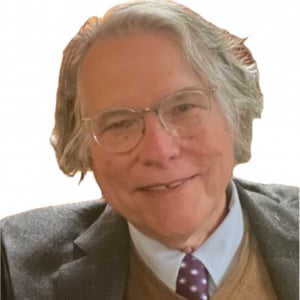
Partner, Earth and Water Law; retired Yale Law School professor (1981-2025), Yangtze River Distinguished Professor, Guangzhou Law School, ChinaDistinguished Adjunct Professor at Antonin Scalia Law School
E. Donald Elliott is a Florence Rogatz Visiting Professor of Law at Yale Law School and a leading academic scholar, as well as practitioner, in the fields of administrative and environmental law. He is “one of the most well-known, well-regarded environmental law professors in the nation,” according to John Cruden, former President of the Environmental Law Institute and Assistant Attorney General, Environment and Natural Resources Division, U.S. Department of Justice during the Obama administration. Elliott has been on the Yale Law faculty since 1981 and currently teaches courses in environmental law, energy law, administrative law and civil procedure. He is also senior of counsel in the Washington D.C. office of Covington & Burling LLP, and co-chair of the firm's Environmental Practice Group. From 2003 until he joined Covington in 2013, he was a partner in Willkie Farr & Gallagher LLP, chairing the firm’s worldwide Environment, Health and Safety Department.
From 1989 to 1991, Elliott served as Assistant Administrator and General Counsel of the U.S. Environmental Protection Agency (EPA). In 1993, he was named to the first endowed chair in environmental law and policy at any major American law school, the Julien and Virginia Cornell Chair in Environmental Law and Litigation at Yale Law School. From 2003-2009, he was a member of the National Academy of Sciences Board on Environmental Studies and Toxicology, which advises the federal government on environmental issues. Elliott also testifies frequently in Congress on environmental issues.
He has served as a consultant on improving the relationship of law and science to the Federal Courts Study Committee, which was chartered by Congress to make recommendations for improving the federal courts, and to the Carnegie Commission for Law, Science and Government. He co-chaired the National Environmental Policy Institute’s Committee on Improving Science at EPA.
Elliott is a Senior Fellow of the Administrative Conference of the United States (ACUS) and an elected member of the American College of Environmental Lawyers and the American Law Institute. He serves on the Board of the Connecticut Fund for the Environment and as chair of its legal committee, as well on the Advisory Board for NYU’s Institute for Policy Integrity. He is a former member of the boards of the Environmental Law Institute, and the Center for Clean Air Policy. He is the author or coauthor of seven books and has published more than 70 articles in professional journals. He was named one of the top 25 environmental attorneys in the United States by the National Law Journal and is highly ranked in Chambers USA: Leading Lawyers for Business; Best Lawyers in America; D.C. Super Lawyers; Who’s Who in American Law; and Who’s Who in the World.
He earned both his B.A., summa cum laude and Phi Beta Kappa, and his J.D. from Yale. Following graduation, he was a law clerk for Gerhard Gesell in the U.S. District Court for the District of Columbia, and for Chief Judge David Bazelon of the U.S. Court of Appeals for the District of Columbia Circuit.

Director, Government Affairs, Natural Resources Defense Council
David Goldston is director of government affairs for NRDC in Washington, D.C. and is responsible for its governmental strategies, bringing together NRDC's interactions with Congress, the administration and the public. He has more than twenty years of experience on Capitol Hill, working mainly on science and environmental policy and served as chief of staff of the House Committee on Science from 2001 through 2006. He has been a visiting lecturer at Princeton and Harvard Universities and a columnist for the journal Nature. In 2008 and 2009, he was project director for the Bipartisan Policy Center report, "Improving the Use of Science in Regulatory Policy" and he has served on several panels at the National Academy of Sciences. David graduated from Cornell University in 1978 with a B.A. in history and completed the course work for a Ph.D. in American history at the University of Pennsylvania.
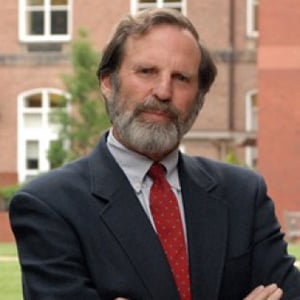
Adjunct Professor, George Washington University Law School

Clayton J. and Henry R. Barber Professor of Law, Northwestern University Pritzker School of Law and Co-Chairman, Board of Directors, The Federalist Society
STEVEN GOW CALABRESI is the Clayton J. & Henry R. Barber Professor at Northwestern Pritzker School of Law. He has also co-taught in the Fall semester at Yale Law School from 2013 to the present. Calabresi clerked for Justice Antonin Scalia and Judges Robert H. Bork and Ralph K. Winter. He was a Special Assistant to Attorney General Meese from 1985 to 1987 and worked with Ken Cribb as his deputy in 1987 on the second floor of the West Wing of the Reagan White House. Calabresi has written books on presidential power and comparative constitutional law and the origins of judicial review. He and Gary Lawson are the co-editors of a casebook on U.S. Constitutional Law, and Calabresi is also the co-editor of a casebook on comparative constitutional law. He has written over seventy law review articles since 1990.

U.S. Court of Appeals, Seventh Circuit
Frank H. Easterbrook is a judge of the United States Court of Appeals for the Seventh Circuit and a Senior Lecturer at the Law School of the University of Chicago. He was Chief Judge from 2006–2013. Before joining the court in 1985, he was the Lee andBrena Freeman Professor of Law at the University of Chicago, where he taught and wrote in antitrust, securities, corporate law, jurisprudence, and criminal procedure. He has published The Economic Structure of Corporate Law (with Daniel R. Fischel) and about 100 scholarly articles. He served as Co-Editor of the Journal of Law and Economics from 1982 to 1991 and as a member of the Judicial Conference’s Standing Committee on Rules of Practice and Procedure from 1991 to 1997. Before joining the faculty of the Law School in 1979, Judge Easterbrook was Deputy Solicitor General of the United States. He holds degrees from Swarthmore College (B.A. with high honors, 1970) and the University of Chicago (J.D. cum laude, 1973), and is a member of the American Academy of Arts and Sciences, the American Law Institute, the Mont Pelerin Society, Phi Beta Kappa, and the Order of the Coif.

Executive Vice President, The Federalist Society
Dean Reuter is Executive Vice President at the Federalist Society for Law and Public Policy Studies. He has served in two federal government agency Offices of the Inspector General, as Counsel to the Inspector General and Deputy Inspector General, responsible for policing the use of federal funds granted and contracted through those agencies. As such, he helped conduct and oversee criminal investigations across the country. He is the principal author of the non-fiction book, The Hidden Nazi: The Untold Story of America's Deal with the Devil, and editor of Liberty’s Nemesis: The Unchecked Expansion of the State and Confronting Terror: 9/11 and the Future of American National Security. He was appointed by the President and served as Vice-Chairman of the Board of Directors of the Corporation for National and Community Service, and recently served as an appointee on the U.S. Commission on Presidential Scholars. He is a graduate of Hood College (BA with Honors) and the University of Maryland School of Law.
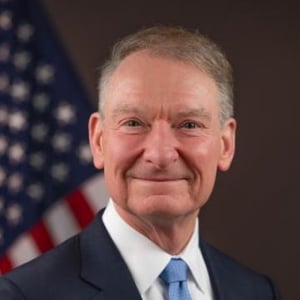
Chairman of the Securities and Exchange Commission
Paul S. Atkins was sworn into office as the 34th Chairman of the Securities and Exchange Commission on April 21, 2025, after being nominated by President Donald J. Trump on January 20, 2025, and confirmed by the U.S. Senate on April 9, 2025.
Prior to returning to the SEC, Chairman Atkins was most recently chief executive of Patomak Global Partners, a company he founded in 2009. Chairman Atkins helped lead efforts to develop best practices for the digital asset sector. He served as an independent director and non-executive chairman of the board of BATS Global Markets, Inc. from 2012 to 2015.
Chairman Atkins was appointed by President George W. Bush to serve as a Commissioner of the SEC from 2002 to 2008. During his tenure, he advocated for transparency, consistency, and the use of cost-benefit analysis at the agency. Chairman Atkins also represented the SEC at meetings of the President’s Working Group on Financial Markets and the U.S.-EU Transatlantic Economic Council. From 2009 to 2010, he was appointed a member of the Congressional Oversight Panel for the Troubled Asset Relief Program.
Before serving as an SEC Commissioner, Chairman Atkins was a consultant on securities and investment management industry matters, especially regarding issues of strategy, regulatory compliance, risk management, new product development, and organizational control.
From 1990 to 1994, Chairman Atkins served on the staff of two chairmen of the SEC, Richard C. Breeden and Arthur Levitt, ultimately as chief of staff and counselor, respectively. He received the SEC’s 1992 Law and Policy Award for work regarding corporate governance matters.
Chairman Atkins began his career as a lawyer in New York, focusing on a wide range of corporate transactions for U.S. and foreign clients, including public and private securities offerings and mergers and acquisitions. He was resident for 2½ years in his firm's Paris office and admitted as conseil juridique in France.
A member of the New York and Florida bars, Chairman Atkins received his J.D. from Vanderbilt University School of Law in 1983 and was Senior Student Writing Editor of the Vanderbilt Law Review. He received his A.B., Phi Beta Kappa, from Wofford College in 1980.
Originally from Lillington, North Carolina, Chairman Atkins grew up in Tampa, Florida. He and his wife Sarah have three sons.
Timothy Flanigan Chief Legal and Compliance Officer, Corporate S, Cancer Treatment Centers of America
Timothy E. Flanigan is the Chief Legal for Cancer Treatment Centers of America (CTCA). With a rich background as a leader and senior legal advisor, he has more than 35 years of experience in public companies, the private practice of law, and in senior levels of government service.
Prior to joining CTCA, Mr. Flanigan served as Senior Vice President and Principal Deputy General Counsel at BlackBerry, Limited where he was responsible for the legal, business affairs and corporate security functions, as well as the company’s global government relations efforts. Previously, he was a senior partner with the international law firm McGuireWoods, LLC, and Senior Vice President and General Counsel at Tyco International, where he helped successfully revitalize that $40 billion enterprise.
Mr. Flanigan served the United States in multiple roles throughout his career, including Senior Law Clerk to the Honorable Warren E. Burger, Chief Justice of the United States. He also served as Deputy Counsel to President George W. Bush, where he coordinated legal strategy throughout the executive branch on anti-terrorism and other issues. He was nominated by President George H.W. Bush and confirmed by the Senate as Assistant Attorney General for the Office of Legal Counsel.
Mr. Flanigan earned his law degree and his MBA from the University of Virginia, and a bachelor’s degree in history from Brigham Young University.

General Counsel & Vice President, Government Affairs, Association of American Publishers
Allan Adler, is the General Counsel and Vice President of Government Affairs at the Association of American Publishers.
Most recently Vice President, Legal and Government Affairs, Adler oversees AAP’s legislative, regulatory and judicial activities on behalf of its 300 member organizations. He serves as the US book publishing industry’s chief representative with Congress, the Administration, federal agencies and international bodies such as the World Intellectual Property Organization and oversees strategies for AAP members’ engagement with those authorities.
“Allan has been a superb advocate for the publishing industry,” said Allen. “He has helped safeguard publishers’ intellectual property during a transformational time in content and technology and has offered AAP member organizations intelligent counsel and sound judgment. This new position recognizes his outstanding service to AAP members and his critical role in shaping publishing’s future.”
For the past two decades, Adler has led advocacy with respect to all major AAP policy decisions related to copyright protection, freedom of expression, digital issues, piracy, privacy rights, product safety and public access to scholarly publications. He has presented testimony in hearings before various Congressional committees and participated in numerous rulemaking and other proceedings before the US Copyright Office. Adler’s efforts ensured that publishing interests were addressed in such Congressional legislation as the America COMPETES Act, the Digital Millennium Copyright Act (DMCA) and the Prioritizing Resources and Organization for Intellectual Property (PRO-IP) Act. Working cooperatively with the library and education communities, he was instrumental in the effort to secure a library and archives exemption in the Sonny Bono Copyright Term Extension Act; a digital distance learning exemption in the Technology, Education And Copyright Harmonization (TEACH) Act; and Senate passage of the proposed Shawn Bentley Orphan Works Act of 2008.
Adler has also led AAP’s collaboration with disabilities advocacy groups to improve availability of accessible content for individuals who are blind, visually impaired or have other print disabilities. This work resulted in the enactment of the Chafee Amendment copyright exception and key provisions in the Individuals with Disabilities Education Improvement Act, as well as Congressional establishment of the Advisory Commission on Accessible Instructional Materials (AIM) for Post-Secondary Students with Disabilities.
Adler worked successfully to amend the Consumer Product Safety Improvement Act to generally exclude ordinary paper-based children’s books from the Act’s lead testing and certification requirements. In addition, he worked with the Federal Trade Commission to develop key guidance addressing the applicability of the Children’s Online Privacy Protection Act to websites and online services provided by educational publishers as part of school curriculum. In defense of the freedoms to publish and read, he was instrumental in the enactment of the Securing the Protection of our Enduring and Established Constitutional Heritage (SPEECH) Act, which restricts US judicial enforcement of “libel tourism” judgments obtained in foreign courts to silence or intimidate American authors and publishers.
Adler has also managed litigation for AAP members including the copyright infringement lawsuits brought against the Google Library Project and Georgia State University as well as the successful challenge to Treasury Department restrictions against US publishers doing business with authors and publishers in foreign countries that are subject to US trade embargoes and sanctions.
Adler joined AAP from Cohn and Marks, the Washington DC communications law firm. His practice focused on government relations concerning telecommunications, technology and information. From 1981 to 1989, he was Legislative Counsel to the American Civil Liberties Union, working on a broad range of issues related to the public right to obtain and disseminate information, national security, privacy and employees’ rights. For 16 years, he was editor of the Litigation Under the Federal Open Government Laws annual handbook, a popular resource for attorneys. His work was honored with the Playboy Foundation First Amendment Award for Book Publishing. Adler also served as staff attorney with the Center for National Security Studies and Staff Director for the Reporters Committee for Freedom of the Press.
A frequent speaker and panelist, Adler has served as a long-time member of the State Department’s Advisory Committee on International Communications and Information Policy.
A native of New York, he received a B.A. in History from Binghamton University, NY and a J.D. from the National Law Center of The George Washington University.

Assistant Professor, George Mason University School of Law
Assistant Professor Christopher M. Newman graduated magna cum laude from the University of Michigan Law School in 1999, where he served as book review editor for the Michigan Law Review and received Michigan's highest law school award, the Henry M. Bates Memorial Scholarship. He also holds a BA in classical liberal arts awarded by St. John's College in Annapolis, Maryland.
Following law school, Professor Newman was a clerk for the Honorable Alex Kozinski of the U.S. Court of Appeals for the Ninth Circuit, with whom he co-published What's So Fair About Fair Use?, 46 J. Copyright Soc'y 513 (1999). From 2000-2007, he was a litigation associate with Irell & Manella LLP in Los Angeles, where he represented clients in disputes involving contracts, business torts, intellectual property, corporate and securities litigation, and appellate matters, as well as pro bono family and criminal law matters. Professor Newman left practice at the beginning of 2007 to serve an Olin/Searle Fellowship in Law at the UCLA School of Law, where he focused on his research and writing in the areas of property theory and intellectual property, and from January 2008 until his arrival at Mason Law served as a research fellow of UCLA's Intellectual Property Project.

Associate Dean for Academic Affairs, Austin E. Owen Research Scholar & Professor of Law, The University of Richmond School of Law
Dean Kristen Jakobsen Osenga teaches and writes in the areas of patent law, antitrust, and legislation and regulation. Some of her recent scholarship focuses on standard development organizations, patent eligible subject matter, patent licensing firms, litigation and remedies for patent infringement, and patent law reform. She has written numerous law review articles on these and other topics, as well as book chapters and op eds on various aspects of patent law. Additionally, she has spoken on these issues at many academic conferences and bar events. Dean Osenga is Chief Policy Counselor for the Inventors Defense Alliance, as well as an active member of the Federal Circuit Bar Association and the American Intellectual Property Law Association.
Dean Osenga received a B.S. degree in Biomedical Engineering from the University of Iowa, an M.S. degree in Electrical Engineering from Southern Illinois University – Carbondale, and a J.D. from the University of Illinois College of Law, where she graduated magna cum laude. After law school, she practiced at the law firm of Finnegan, Henderson, Farabow, Garrett, & Dunner LLP, (now Finnegan) where she did patent prosecution and litigation. She then clerked for the Judge Richard Linn of the U.S. Court of Appeals for the Federal Circuit. After clerking, she entered academia, teaching first at Chicago-Kent College of Law and then at the University of Richmond, where she has been since 2006. She has also been a Visiting Professor at Emory University School of Law and at William & Mary School of Law.

Professor of Law, Southern Illinois University School of Law
Professor Mark F. Schultz joined the faculty in 2003. He teaches and writes primarily in the area of intellectual property.
Professor Schultz is a frequent author and speaker known for his work on the law and economics of the global intellectual property system. In one of his most influential projects, he worked with the Organization for Economic Cooperation and Development (OECD) to construct a groundbreaking global trade secret protection index (the TSPI). The TSPI is influencing policy discussions on this cutting-edge topic in capitals around the world. Other recent projects have included an empirical study that quantified for the first time the backlogs in patent offices worldwide, a report on how patented innovation is meeting global health challenges, and the construction of a new global index of copyright strength.
Professor Schultz is an influential voice in public policy debates regarding intellectual property. He has testified before the U.S. Congress on copyright law at the invitation of the House Judiciary Committee and has briefed the staff of the U.S. Senate Judiciary Committee on trade secret legislation. He speaks frequently around the world about the connection between secure and effective intellectual property rights and flourishing national economies and individual lives, with invitations from the U.S. Patent and Trademark Office, the U.S. Trade Representative, and the U.S. Copyright Office, as well as numerous academic institutions, think tanks, and industry groups. He served as an NGO delegate to the World Intellectual Property Organization (WIPO) for several years during the WIPO Development Agenda talks. He is also one of the organizers of an ongoing multilateral diplomatic dialogue on best practices in national trade secret laws, and is co-founder of the Center for Protection of Intellectual Property (CPIP) at George Mason University in Washington, D.C.
Among the awards and recognition he has received for his scholarship was the School of Law's Outstanding Scholar of the Year award in 2008. He has been a distinguished visiting scholar at the University of Botswana and a visiting professor at DePaul University College of Law.
Professor Schultz graduated with honors from the George Washington University School of Law. Following law school, he was a judicial clerk for the Hon. Daniel M. Friedman of the United States Court of Appeals for the Federal Circuit in Washington, D.C., and the Hon. Eric G. Bruggink of the United States Court of Federal Claims. Prior to joining academia, he practiced law for a decade, serving as outside general counsel to several tech startups and helping technology companies to expand their businesses and commercialize their intellectual property in dozens of countries. He holds a B.A. in International Economics from George Washington University and has done PhD level coursework in development economics at Southern Illinois University.
He is active in leadership roles in local and national organizations. He has served as chair of the Federalist Society's Intellectual Property Practice Group and the AALS Section on Internet and Computer Law. He is an officer of the American Bar Association's International IP Committee of the International Law Section and the American Intellectual Property Law Association’s Trade Secret Law Committee. He currently is chair of the Academic Advisory Board of the Copyright Alliance.
Professor Schultz teaches Copyright Law, Trade Secret Law, Trademark Law, and a senior seminar on Intellectual Property and Global Development. He established and directs both the Specialization in Intellectual Property Law and the IP Semester in Practice Externship Program. He also co-founded a Legal Globalization Class, offered every other year, that takes students to South Africa and Botswana after spending a semester learning about the legal system, culture, history, and politics of southern Africa. The popular course is a once-in-a-lifetime experience that introduces students to leading lawyers, judges, government officials, and human rights advocates, taking them from Cape Town to Johannesburg to Gaborone as well as many popular destinations including game reserves, national parks, the Cape of Good Hope, and the Cradle of Humankind.
Vice President, Legal Affairs, Motion Picture Association of America
Unique background combining 18 years in law, policy, journalism, and politics. Legal expertise in copyright, anti-piracy, trademark, defamation, privacy, media access, and related First Amendment issues, entertainment transactions, as well as general litigation matters. Journalistic and political experience covering Congressional campaigns and Congress. Experience working at motion picture/television studios and networks, trade association, major law firm, newspaper, specialized political publication, and presidential campaign.
Former Adjunct Professor of Law; former Special Counsel to the President; former federal prosecutor, Georgetown Law (ret.)
Bill Otis is a former Adjunct Professor of Law at Georgetown University, a one-time federal prosecutor, and a former Special White House Counsel for President George H. W. Bush. After graduating from Stanford Law School, he started his career in the Criminal Division of the Justice Department, then became chief of appeals for the US Attorney's Office for the Eastern District of Virginia. In the 1980's he served on the Department's "Train the Trainer" team, which taught US Attorneys Offices across the county how to implement the then-new Sentencing Reform Act. He has held several posts in the federal government, including Special Assistant to the Secretary of Energy and Counselor to the head of the Drug Enforcement Administration, in addition to the White House post. He has testified before Congress on issues in criminal procedure, illegal drugs, the US Sentencing Commission, and the death penalty, and has given numerous media interviews on those and other subjects. He currently teaches a seminar at Georgetown Law titled "Conservatism in Law in America" with his wife, Federalist Society co-founder Lee Liberman Otis.
Gary R. Trombley Family White-Collar Crime Research Professor, Stetson University College of Law
A former deputy prosecutor and criminal defense attorney, Professor Ellen S. Podgor teaches in the areas of white collar crime, criminal law and international criminal law. She has previously taught other courses, such as professional responsibility, criminal procedure, law and sexual orientation seminar, and advocacy. She served as Stetson's inaugural Associate Dean of Faculty Development and Electronic Education and also served as a LeRoy Highbaugh Sr. Research Chair. She is the co-author of numerous books including White Collar Crime in a Nutshell,Understanding International Criminal Law, and Mastering Criminal Law. She has authored more than 50 law review articles and essays in the areas of computer crime, international criminal law, lawyer's ethics, criminal discovery, prosecutorial discretion, corporate criminality, and other white collar crime topics. These have been published in journals such as the Hastings Law Journal, Washington & Lee Law Review, Harvard Civil Rights-Civil Liberties Law Review, Yale Law Journal Pocket Part, Washington University Law Review, Fordham Law Review, Cardozo Law Review, U.C. Davis Law Review, American University Law Review, Georgetown Journal of Legal Ethics, American Criminal Law Review, Vanderbilt En Banc, Journal of Criminal Law and Criminology, and many others.
Podgor has been interviewed on National Public Radio and been quoted in newspapers across the country, including the New York Times, Wall Street Journal, Washington Post, LA Times, National Law Journal, Chicago Tribune, andBusiness Week. She is the editor of the highly ranked White Collar Crime Prof Blog. She is the chair of the Advisory Committee of the NACDL White-Collar Criminal Defense College at Stetson.
She has taught at other law schools including Georgia State University College of Law and St. Thomas University College of Law, and been a visiting professor at University of Georgia School of Law, George Washington University Law School and held a visiting endowed chair position at University of Alabama School of Law. She also was a visiting scholar at Yale Law School. Podgor served for six years as a member of the board of directors of the National Association of Criminal Defense Lawyers (NACDL) and presently serves on the board of directors of the International Society for the Reform of Criminal Law (ISRCL) and the board of trustees for the Southeastern Association of Law Schools (SEALS). She is a past chair of the Criminal Justice Section of the Association of American Law Schools (AALS) and is an honorary member of the American Board of Criminal Lawyers. Professor Podgor is a member of the American Law Institute.
In 2010, Podgor received the Robert C. Heeney Award, the highest honor given by the National Association of Criminal Defense Lawyers. She is also the recipient of the Dickerson-Brown Award for Excellence in Faculty Scholarship.
Executive Vice President, The Federalist Society
Dean Reuter is Executive Vice President at the Federalist Society for Law and Public Policy Studies. He has served in two federal government agency Offices of the Inspector General, as Counsel to the Inspector General and Deputy Inspector General, responsible for policing the use of federal funds granted and contracted through those agencies. As such, he helped conduct and oversee criminal investigations across the country. He is the principal author of the non-fiction book, The Hidden Nazi: The Untold Story of America's Deal with the Devil, and editor of Liberty’s Nemesis: The Unchecked Expansion of the State and Confronting Terror: 9/11 and the Future of American National Security. He was appointed by the President and served as Vice-Chairman of the Board of Directors of the Corporation for National and Community Service, and recently served as an appointee on the U.S. Commission on Presidential Scholars. He is a graduate of Hood College (BA with Honors) and the University of Maryland School of Law.
Alex W. Smith Professor of Law, University of Georgia School of Law
Peter A. Appel joined the University of Georgia School of Law faculty in 1997 and teaches in the areas of property, natural resources law and environmental law. In 2011, he was named the Alex W. Smith Professor of Law.
Appel’s research spans three primary areas: the use of law to promote sustainable commerce, wilderness preservation and the courts, and more traditional doctrinal scholarship in environmental and natural resources law. His work has appeared in the Stanford Environmental Law Journal(forthcoming 2010), the Boston College Environmental Affairs Review, the Minnesota Law Review, the Washington University Law Quarterly and the Encyclopedia of the Supreme Court of the United States (Macmillan Reference, 2008). In addition to these articles focusing on the environmental and natural resources areas, Appel has addressed more traditional topics in property law such as the rule against perpetuities (Journal of Legal Education, 2004), Roman law and its relation to American civil procedure (Georgia Journal of International and Comparative Law, 2002) and the role of the entailment in Jane Austen's Pride and Prejudice (Law and Literature Association of Australia Conference, November 2002).
In addition to his teaching at UGA, Appel has also served as an instructor to senior members of federal agencies. He has been invited to train federal wilderness managers at the Arthur Carhart National Wilderness Training Center, a facility in Missoula, Mont., run jointly by all federal agencies responsible for wilderness management. He also taught environmental laws and regulations to employees of the United States Army Corps of Engineers.
Appel developed a practical understanding of environmental issues through his six years of service as an attorney with the Environment and Natural Resources Division of the U.S. Department of Justice. Prior to holding that position, he clerked for Chief Judge Gilbert S. Merritt of the U.S. Court of Appeals for the 6th Circuit.
From 1999 to 2001, Appel served as a Lilly Teaching Fellow at the University of Georgia. The campus-wide program offers support and discussion to a select few UGA professors who show strong promise in both teaching and scholarship. Lilly Fellows also receive funds to develop new instructional programs over their two-year fellowship.
Appel earned his bachelor's and law degrees from Yale University, where he served on the notes editing committee of the Yale Law Journal and was a member of the Yale Law and Policy Review.
Executive Vice President, The Federalist Society
Dean Reuter is Executive Vice President at the Federalist Society for Law and Public Policy Studies. He has served in two federal government agency Offices of the Inspector General, as Counsel to the Inspector General and Deputy Inspector General, responsible for policing the use of federal funds granted and contracted through those agencies. As such, he helped conduct and oversee criminal investigations across the country. He is the principal author of the non-fiction book, The Hidden Nazi: The Untold Story of America's Deal with the Devil, and editor of Liberty’s Nemesis: The Unchecked Expansion of the State and Confronting Terror: 9/11 and the Future of American National Security. He was appointed by the President and served as Vice-Chairman of the Board of Directors of the Corporation for National and Community Service, and recently served as an appointee on the U.S. Commission on Presidential Scholars. He is a graduate of Hood College (BA with Honors) and the University of Maryland School of Law.
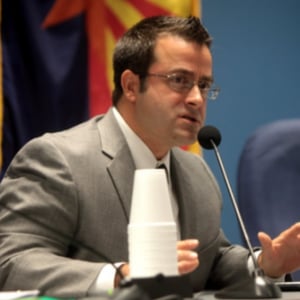
General Counsel, Prospera Group
Dranias serves as NeWay Capital LLC’s General Counsel, handling all corporate legal matters. Prior to this, he was Senior Litigation Counsel with the Government Accountability & Special Litigation Unit of the Arizona Attorney General. He also serves as Policy Advisor and Research Fellow with the Heartland Institute, as an expert and Speaker’s Bureau member with the Federalist Society, a Law and Civil Liberties Speaker for Students for Liberty, a Council of Scholars member with Compact for America Educational Foundation, as well as an Adjunct Instructor teaching Business Ethics and Law at Grand Canyon University.
Previously, Dranias served as President & Executive Director of Compact for America Educational Foundation where he led national efforts to organize the states to propose and ratify a federal Balanced Budget Amendment. Prior to that, Dranias was General Counsel, Policy Development Director and Constitutional Policy Director at the Goldwater Institute. Dranias led the Institute’s successful challenge to Arizona’s system of government campaign financing to the U.S. Supreme Court. Prior to that, he was an attorney with the Institute for Justice for three years and an attorney in private practice in Chicago for eight years, where he served as Young Lawyers Section co-editor of the Chicago Bar Association Record and earned the Oliver Wendell Holmes Award for his service.

Vice President, Edwin Meese III Institute for the Rule of Law, Advancing American Freedom
John G. Malcolm oversees Advancing American Freedom’s work to increase understanding of the Constitution and the rule of law as Vice President of the organization’s Edwin Meese III Institute for the Rule of Law. Malcolm brings to the challenge a wealth of legal expertise and experience in both the public and private sectors.
Prior to joining Advancing American Freedom in 2025, Malcolm was the Vice President of the Institute for Constitutional Government and the Director of the Meese Center for Legal and Judicial Studies at the Heritage Foundation. Prior to joining Heritage in 2012, Malcolm was general counsel at the U.S. Commission on International Religious Freedom, as well as a distinguished practitioner in residence at Pepperdine Law School. From 2004 to 2009, Malcolm was executive vice president and director of worldwide anti-piracy operations for the Motion Picture Association.
Malcolm served as a deputy assistant attorney general in the Department of Justice’s Criminal Division from 2001 to 2004, where he oversaw sections on computer crime and intellectual property, domestic security, child exploitation and obscenity, and special investigations. Immediately prior to that, he was a founding partner in the Atlanta law firm of Malcolm & Schroeder, LLP.
From 1990 to 1997, Malcolm was an assistant U.S. attorney in Atlanta, assigned to the fraud and public corruption section, and also an associate independent counsel, investigating fraud and abuse in the Department of Housing and Urban Development. He was honored with the Director’s Award for Superior Performance for his work in connection with the successful prosecution of Walter Leroy Moody Jr., who assassinated an 11th Circuit judge and the head of the Savannah chapter of the NAACP.
A graduate of Harvard Law School and Columbia College, Malcolm began his career as a law clerk to a federal district court judge and a federal appellate court judge, and as an associate at the Atlanta-based law firm of Sutherland, Asbill & Brennan (new Eversheds Sutherland).
Malcolm, who resides in Washington, D.C., serves on the Board of Trustees of the Washington National Opera and is a Senate-confirmed member of the Board of Directors of the Legal Services Corporation, the largest funder of civil legal aid in the United States.
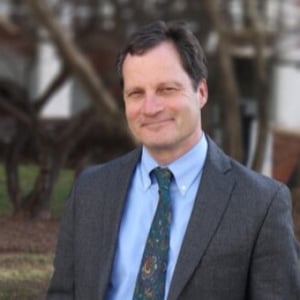
Vice President, Legal & Chief Counsel, Legal, Brady
Jonathan E. Lowy is the Vice President, Legal and Chief Counsel at Brady. Since 1997 Jon has argued in courts across the country to reduce gun violence, providing pro bono legal representation to victims of gun violence in lawsuits to reform dangerous gun industry practices, and assisting governments and public officials in defense of reasonable gun laws. Jon has litigated in over 40 states, successfully arguing several precedent-setting cases in appellate and trial courts establishing gun industry liability and Second Amendment law, obtaining several multi-million dollar settlements, and reforming gun industry practices. Jon has been named one of the 500 Leading Lawyers in America by Lawdragon magazine for the past 10 years, and has published numerous articles on gun litigation and policy including, The Right Not To Be Shot: Public Safety, Private Guns, and the Constellation of Constitutional Liberties in the Georgetown Journal of Law and Policy. He graduated from Harvard College and the University of Virginia School of Law.
Executive Vice President, The Federalist Society
Dean Reuter is Executive Vice President at the Federalist Society for Law and Public Policy Studies. He has served in two federal government agency Offices of the Inspector General, as Counsel to the Inspector General and Deputy Inspector General, responsible for policing the use of federal funds granted and contracted through those agencies. As such, he helped conduct and oversee criminal investigations across the country. He is the principal author of the non-fiction book, The Hidden Nazi: The Untold Story of America's Deal with the Devil, and editor of Liberty’s Nemesis: The Unchecked Expansion of the State and Confronting Terror: 9/11 and the Future of American National Security. He was appointed by the President and served as Vice-Chairman of the Board of Directors of the Corporation for National and Community Service, and recently served as an appointee on the U.S. Commission on Presidential Scholars. He is a graduate of Hood College (BA with Honors) and the University of Maryland School of Law.
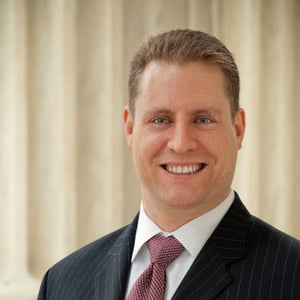
Senior Counsel, Schaerr Jaffe LLP
Ken Klukowski is senior counsel at the law firm Schaerr Jaffe, focusing on constitutional, administrative, and election law, and the federal courts. He has served in politically appointed positions in the U.S. government, including senior counsel in the Civil Division of the U.S. Department of Justice, and prior to that in the White House as special counsel in the Office of Management and Budget. He was also the constitutional rights advisor on the Presidential Transition Team of President Donald J. Trump. In the private sector, he has worked as a senior fellow of the American Constitutional Rights Union, senior counsel at First Liberty Institute, and a legal journalist. He litigates constitutional cases in the U.S. Supreme Court and lower federal courts, and contributes to media coverage of the nation’s highest court and legal issues. Earlier in his career, Klukowski served as special deputy attorney general of Indiana, and worked on faculty at Liberty University School of Law. His academic works have been published by journals such as the Federalist Society’s Harvard Journal of Law & Public Policy, and his columns have appeared in the Wall Street Journal and other national publications. His amicus briefs and nine law review articles have been cited by various federal courts and top legal journals. He has participated in numerous Supreme Court cases, and lectured and debated at 100 law school events nationwide. Klukowski received his bachelor’s degree from the University of Notre Dame, studied history at Arizona State University, earned his law degree from Scalia Law School at George Mason University, and served as a law clerk to Chief Judge Alice Batchelder on the U.S. Court of Appeals for the Sixth Circuit.
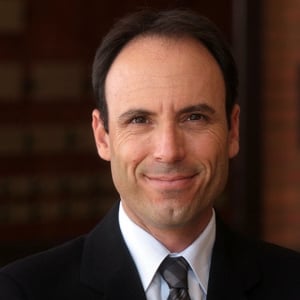
Professor of Law, UCLA School of Law
Executive Vice President, The Federalist Society
Dean Reuter is Executive Vice President at the Federalist Society for Law and Public Policy Studies. He has served in two federal government agency Offices of the Inspector General, as Counsel to the Inspector General and Deputy Inspector General, responsible for policing the use of federal funds granted and contracted through those agencies. As such, he helped conduct and oversee criminal investigations across the country. He is the principal author of the non-fiction book, The Hidden Nazi: The Untold Story of America's Deal with the Devil, and editor of Liberty’s Nemesis: The Unchecked Expansion of the State and Confronting Terror: 9/11 and the Future of American National Security. He was appointed by the President and served as Vice-Chairman of the Board of Directors of the Corporation for National and Community Service, and recently served as an appointee on the U.S. Commission on Presidential Scholars. He is a graduate of Hood College (BA with Honors) and the University of Maryland School of Law.

Partner, Schaerr | Jaffe LLP
Erik Jaffe has been involved in appeals on a broad range of legal issues, including First Amendment challenges to campaign finance reform, Commerce Clause challenges to Health Care Reform and other federal legislation, Equal Protection Clause challenges to affirmative action in education, First Amendment challenges to school vouchers, Fifth Amendment challenges to takings of property, Second Amendment challenges to restrictions on gun ownership, and a wide variety of cases involving patents, copyrights, ERISA, securities fraud, federal preemption, environmental regulation, and other state and federal constitutional and statutory matters. He has represented businesses and non-profit groups, Judges, Senators, former government officials, Nobel Prize winners, and a broad cross-section of private individuals. Mr. Jaffe has been involved in over 120 Supreme Court matters, including filing over 30 cert. petitions, representing half-a-dozen parties on the merits, and filing over 70 amicus briefs at both the cert. and merits stages.
A 1990 graduate of the Columbia University School of Law, Mr. Jaffe was a law clerk to Judge Douglas H. Ginsburg of the United States Court of Appeals for the District of Columbia Circuit from 1990 to 1991. Following that clerkship he spent five years in litigation practice with the Washington, D.C. law firm of Williams & Connolly. In the summer of 1996 he left Williams & Connolly to clerk for Supreme Court Justice Clarence Thomas. At the end of that clerkship he started his own practice, and he was a sole practitioner from 1997 to 2018. He joined the firm of Schaerr | Jaffe LLP in 2018.
Executive Vice President, The Federalist Society
Dean Reuter is Executive Vice President at the Federalist Society for Law and Public Policy Studies. He has served in two federal government agency Offices of the Inspector General, as Counsel to the Inspector General and Deputy Inspector General, responsible for policing the use of federal funds granted and contracted through those agencies. As such, he helped conduct and oversee criminal investigations across the country. He is the principal author of the non-fiction book, The Hidden Nazi: The Untold Story of America's Deal with the Devil, and editor of Liberty’s Nemesis: The Unchecked Expansion of the State and Confronting Terror: 9/11 and the Future of American National Security. He was appointed by the President and served as Vice-Chairman of the Board of Directors of the Corporation for National and Community Service, and recently served as an appointee on the U.S. Commission on Presidential Scholars. He is a graduate of Hood College (BA with Honors) and the University of Maryland School of Law.

Improving the Use of Science for Policy
Administrative Law & Regulation Practice Group Teleforum
TeleforumIs American Justice Blind, Or Blind To A "Prosecutocracy"? - Podcast
Conrad Lord Black, William G. Otis, Ellen S. Podgor, Dean Reuter
Federal convict Conrad Lord Black argued at National Review Online last fall in "Blind Justice" that America's...
Water Access Rights: City of Tombstone v. USA, et al - Podcast
Peter Appel, Dean Reuter, Nicholas C. Dranias
Tombstone, Arizona, calls itself “the town too tough to die," but it’s gone to court...
Judge Robert H. Bork: His Life and Legacy
Gun Control: Assessing Constitutionality and Effectiveness - Podcast
John G. Malcolm, Jonathan Lowy, Dean Reuter
President Obama has proposed, and Congress is currently debating, various gun control measures in reaction...
Too Big to Prosecute?
Gun Control in the Aftermath of Newtown
Chicago, IllinoisControlling Gun Control?: The Seventh Circuit Steps In - Podcast
Kenneth A. Klukowski, Adam Winkler, Dean Reuter
In a recently decided and much publicized Seventh Circuit Court of Appeals case, the court...
Copyright and Commercialization after Kirtsaeng v. John Wiley & Sons
Intellectual Property Practice Group and George Mason University School of Law's Center for Protection of Intellectual Property Teleforum
TeleforumSetting Voter Rules: Arizona v. Inter Tribal Council of Arizona - Podcast
Erik S. Jaffe, Dean Reuter
On March 18, 2013 the Supreme Court heard oral argument in Arizona v. Inter Tribal Council...