

Appellate Counsel, Theodore Cooperstein PLLC
Theodore Cooperstein currently is an appellate attorney in the boutique law firm of Theodore Cooperstein PLLC, available for criminal and civil appeals in both state and federal courts. A former career prosecutor with twenty five years of service in the US Department of Justice, he was an Assistant United States Attorney for the Southern District of Florida and the Southern District of Mississippi, and has served as a Military Intelligence Officer in the Army Reserves from 1989 to 2011, retiring with the rank of Lieutenant Colonel. During the Trump Administration, he was appointed and served as the General Counsel of the U.S. Office of Personnel Management. Prior to joining the Southern District of Florida, Mr. Cooperstein served as a Special Assistant U.S. Attorney in the U.S. Attorney's Office for the District of Maryland. He previously had served as Counsel to the Deputy Attorney General at the Department of Justice, and as Assistant General Counsel in the FBI Office of the General Counsel.
A.B., Dartmouth College; J.D., Stanford University; LL.M., Comparative and International Law, Georgetown University Law Center; Masters of Strategic Studies, U.S. Army War College

Richard and Frances Mallery Professor of Law and Faculty Director, Constitutional Law Center, Stanford Law School
Michael W. McConnell is the Richard and Frances Mallery Professor and Faculty Director of the Constitutional Law Center at Stanford Law School, and a Senior Fellow at the Hoover Institution. From 2002 to 2009, he served as a Circuit Judge on the United States Court of Appeals for the Tenth Circuit. He was nominated by President George W. Bush, a Republican, and confirmed by a Democratic Senate by unanimous consent. McConnell has previously held chaired professorships at the University of Chicago and the University of Utah, and visiting professorships at Harvard and NYU. He teaches courses on constitutional law, constitutional history, First Amendment, and interpretive theory. He has published widely in the fields of constitutional law and theory, especially church and state, equal protection, and separation of powers. His book, “The President Who Would Not Be King: Executive Power Under the Constitution,” was published by Princeton University Press in 2020, based on the Tanner Lectures in Human Values, which he delivered at Princeton in 2019. His latest book, co-authored with Nathan Chapman, “Agreeing to Disagree: How the Establishment Clause Protects Religious Diversity and Freedom of Conscience,” was published by Oxford University Press in mid-2023. McConnell has argued sixteen cases in the United States Supreme Court, most recently Carney v. Adams (2020). defending a provision of the Delaware Constitution requiring political balance on that state’s courts. More recently, he was co-counsel in Gonzalez v. Google. He earned his B.A. from Michigan State University and his J.D. from the University of Chicago, and has received honorary degrees from Notre Dame University and Michigan State. He served as law clerk to Supreme Court Justice William J. Brennan, Jr. and D.C. Circuit Chief Judge J. Skelly Wright. He has been Assistant General Counsel of the Office of Management & Budget, Assistant to the Solicitor General of the Department of Justice, and a member of the President’s Intelligence Oversight Board. He is Senior of Counsel to the law firm Wilson, Sonsini, Goodrich & Rosati, and is co-chair of Meta’s Oversight Review Board.

Professor, University of Minnesota Law School
Ilan Wurman is the Julius E. Davis Professor of Law at the University of Minnesota, where he teaches administrative law and constitutional law. He previously taught at Arizona State University. He writes primarily on the Fourteenth Amendment, administrative law, separation of powers, and constitutionalism. His academic writing has appeared in the Yale Law Journal, the Stanford Law Review, the University of Chicago Law Review, the University of Pennsylvania Law Review, the Virginia Law Review, the Duke Law Journal, the Minnesota Law Review, the Notre Dame Law Review, and the Texas Law Review among other journals.
Professor Wurman is the author of the new book The Constitution of 1789: A New Introduction (Cambridge 2026). His previous books include A Debt Against the Living: An Introduction to Originalism (Cambridge 2017), and The Second Founding: An Introduction to the Fourteenth Amendment (Cambridge 2020). He is also the author of the casebook, Administrative Law Theory and Fundamentals: An Integrated Approach (Foundation Press 3d ed. 2025).
Professor Wurman practices law with the firm Tully Bailey. He has litigated a variety of administrative law and constitutional law cases, including cases involving COVID-19 restrictions, transmission lines, and Appointments Clause challenges. He also devised winning public nuisance theories to force city governments to address the increasingly challenging public camping crises throughout the country.

Executive in Residence, Wake Forest University School of Business
John Allison is an Executive in Residence at the Wake Forest School of Business. He is a member of the Cato Institute’s Board of Directors and Chairman of the Executive Advisory Council of the Cato Institute’s Center for Monetary and Financial Alternatives. Allison was president and CEO of the Cato Institute from October 2012 to April 2015. Prior to joining Cato, Allison was chairman and CEO of BB&T Corporation, the 10th-largest financial services holding company headquartered in the United States. During his tenure as CEO from 1989 to 2008, BB&T grew from $4.5 billion to $152 billion in assets. He was recognized by theHarvard Business Reviewas one of the top 100 most successful CEOs in the world over the last decade.
Allison has received the Corning Award for Distinguished Leadership, been inducted into the North Carolina Business Hall of Fame, and received the Lifetime Achievement Award from theAmerican Banker. He is the author of The Financial Crisis and the Free Market Cure: Why Pure Capitalism Is the World Economy’s Only Hope and The Leadership Crisis and the Free Market Cure: Why the Future of Business Depends on the Return to Life, Liberty, and the Pursuit of Happiness. In addition, he is a former Distinguished Professor of Practice at Wake Forest University School of Business, and serves on the Board of Visitors at the business schools at Wake Forest, Duke, and the University of North Carolina–Chapel Hill.
Allison is a Phi Beta Kappa graduate of the University of North Carolina–Chapel Hill. He received his master’s degree in management from Duke University and is also a graduate of the Stonier Graduate School of Banking. Allison is the recipient of six honorary doctorate degrees.
Sr Corporate Counsel, Cisco Systems, Inc.
Executive in Residence, Wake Forest University School of Business
John Allison is an Executive in Residence at the Wake Forest School of Business. He is a member of the Cato Institute’s Board of Directors and Chairman of the Executive Advisory Council of the Cato Institute’s Center for Monetary and Financial Alternatives. Allison was president and CEO of the Cato Institute from October 2012 to April 2015. Prior to joining Cato, Allison was chairman and CEO of BB&T Corporation, the 10th-largest financial services holding company headquartered in the United States. During his tenure as CEO from 1989 to 2008, BB&T grew from $4.5 billion to $152 billion in assets. He was recognized by theHarvard Business Reviewas one of the top 100 most successful CEOs in the world over the last decade.
Allison has received the Corning Award for Distinguished Leadership, been inducted into the North Carolina Business Hall of Fame, and received the Lifetime Achievement Award from theAmerican Banker. He is the author of The Financial Crisis and the Free Market Cure: Why Pure Capitalism Is the World Economy’s Only Hope and The Leadership Crisis and the Free Market Cure: Why the Future of Business Depends on the Return to Life, Liberty, and the Pursuit of Happiness. In addition, he is a former Distinguished Professor of Practice at Wake Forest University School of Business, and serves on the Board of Visitors at the business schools at Wake Forest, Duke, and the University of North Carolina–Chapel Hill.
Allison is a Phi Beta Kappa graduate of the University of North Carolina–Chapel Hill. He received his master’s degree in management from Duke University and is also a graduate of the Stonier Graduate School of Banking. Allison is the recipient of six honorary doctorate degrees.
Sr Corporate Counsel, Cisco Systems, Inc.

Partner, BakerHostetler, Adjunct Fellow, The Manhattan Institute
Andrew Grossman leads BakerHostetler’s Appellate and Major Motion team. He has appeared before the U.S. Supreme Court, nearly all the federal courts of appeals, as well as some state appellate courts, litigating high-profile and complex commercial, administrative and constitutional issues.
Andrew works with practice groups across BakerHostetler to identify and tackle complex issues, advise on administrative law and strategy, tee up issues for appeal and tackle appeals. He has developed and implemented litigation and administrative strategies for clients in several fields and industries.
In addition to his practice, Andrew advises members of Congress on matters of constitutional and administrative law, having testified more than a dozen times before the House and Senate Judiciary Committees. He has been a frequent legal commentator on radio and television, having appeared on Fox News, CNN, MSNBC, CNBC, NPR and its affiliates, CBN and elsewhere. His legal commentary has also appeared in dozens of magazines and newspapers, including The Wall Street Journal, USA Today, The Washington Post, The Washington Times and many others.
Andrew is a Senior Legal Fellow at the Buckeye Institute, an Adjunct Fellow the Manhattan Institute and a member of the leadership of the Federalist Society. He previously served as an adjunct scholar at the Cato Institute’s Robert A. Levy Center for Constitutional Studies and a legal fellow at the Heritage Foundation’s Meese Center for Legal and Judicial Studies. He clerked for Judge Edith H. Jones on the U.S. Court of Appeals for the Fifth Circuit.
Richard and Frances Mallery Professor of Law and Faculty Director, Constitutional Law Center, Stanford Law School
Michael W. McConnell is the Richard and Frances Mallery Professor and Faculty Director of the Constitutional Law Center at Stanford Law School, and a Senior Fellow at the Hoover Institution. From 2002 to 2009, he served as a Circuit Judge on the United States Court of Appeals for the Tenth Circuit. He was nominated by President George W. Bush, a Republican, and confirmed by a Democratic Senate by unanimous consent. McConnell has previously held chaired professorships at the University of Chicago and the University of Utah, and visiting professorships at Harvard and NYU. He teaches courses on constitutional law, constitutional history, First Amendment, and interpretive theory. He has published widely in the fields of constitutional law and theory, especially church and state, equal protection, and separation of powers. His book, “The President Who Would Not Be King: Executive Power Under the Constitution,” was published by Princeton University Press in 2020, based on the Tanner Lectures in Human Values, which he delivered at Princeton in 2019. His latest book, co-authored with Nathan Chapman, “Agreeing to Disagree: How the Establishment Clause Protects Religious Diversity and Freedom of Conscience,” was published by Oxford University Press in mid-2023. McConnell has argued sixteen cases in the United States Supreme Court, most recently Carney v. Adams (2020). defending a provision of the Delaware Constitution requiring political balance on that state’s courts. More recently, he was co-counsel in Gonzalez v. Google. He earned his B.A. from Michigan State University and his J.D. from the University of Chicago, and has received honorary degrees from Notre Dame University and Michigan State. He served as law clerk to Supreme Court Justice William J. Brennan, Jr. and D.C. Circuit Chief Judge J. Skelly Wright. He has been Assistant General Counsel of the Office of Management & Budget, Assistant to the Solicitor General of the Department of Justice, and a member of the President’s Intelligence Oversight Board. He is Senior of Counsel to the law firm Wilson, Sonsini, Goodrich & Rosati, and is co-chair of Meta’s Oversight Review Board.
Professor, University of Minnesota Law School
Ilan Wurman is the Julius E. Davis Professor of Law at the University of Minnesota, where he teaches administrative law and constitutional law. He previously taught at Arizona State University. He writes primarily on the Fourteenth Amendment, administrative law, separation of powers, and constitutionalism. His academic writing has appeared in the Yale Law Journal, the Stanford Law Review, the University of Chicago Law Review, the University of Pennsylvania Law Review, the Virginia Law Review, the Duke Law Journal, the Minnesota Law Review, the Notre Dame Law Review, and the Texas Law Review among other journals.
Professor Wurman is the author of the new book The Constitution of 1789: A New Introduction (Cambridge 2026). His previous books include A Debt Against the Living: An Introduction to Originalism (Cambridge 2017), and The Second Founding: An Introduction to the Fourteenth Amendment (Cambridge 2020). He is also the author of the casebook, Administrative Law Theory and Fundamentals: An Integrated Approach (Foundation Press 3d ed. 2025).
Professor Wurman practices law with the firm Tully Bailey. He has litigated a variety of administrative law and constitutional law cases, including cases involving COVID-19 restrictions, transmission lines, and Appointments Clause challenges. He also devised winning public nuisance theories to force city governments to address the increasingly challenging public camping crises throughout the country.
Senior Vice President, Public Knowledge
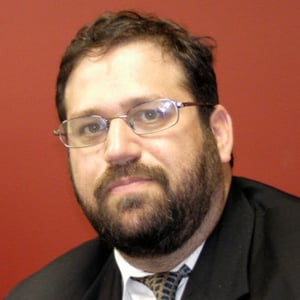
Harold Feld is the Senior Vice President for Public Knowledge, one of the nation’s premier consumer advocacy organizations working at the intersection of copyright, telecommunications and the Internet. Feld is a highly regarded thought leader in the areas of telecommunications and digital consumer protection, and author of The Case for the Digital Platform Act: Market Structure and Regulation of Digital Platforms. He was previously Senior Vice President at the Media Access Project (MAP), a public interest law firm, where he advanced competition policies in media, telecommunications and technology. Prior to joining MAP, Feld was an associate at Covington & Burling, and clerked for the DC Court of Appeals.

President and Founder, International Center for Law & Economics
Geoffrey A. Manne is the president and founder of the International Center for Law and Economics (ICLE), a nonprofit, nonpartisan research center based in Portland, Oregon. He is also a distinguished fellow at Northwestern Law School’s Searle Center on Law, Regulation, & Economic Growth. In April 2017 he was appointed by FCC Chairman Ajit Pai to the FCC’s Broadband Deployment Advisory Committee, and he recently served for two years on the FCC’s Consumer Advisory Committee.
Mr. Manne earned his JD and AB degrees from the University of Chicago and is an expert in the economic analysis of law, specializing in competition, telecommunications, consumer protection, intellectual property, and technology policy.
Prior to founding ICLE, Manne was a law professor at Lewis & Clark Law School. From 2006-2009, he took a leave from teaching to develop Microsoft’s law and economics academic outreach program. Manne has also served as a lecturer in law at the University of Chicago Law School and the University of Virginia School of Law. He practiced antitrust law and appellate litigation at Latham & Watkins, clerked for Hon. Morris S. Arnold on the 8th Circuit Court of Appeals, and worked as a research assistant for Judge Richard Posner. He was also once (very briefly) employed by the FTC.
Mr. Manne’s publications have appeared in numerous journals including the Journal of Competition Law and Economics, the Harvard Journal of Law and Technology, the Supreme Court Economic Review, and the Arizona Law Review, among others. With former FTC Commissioner, Joshua Wright, Manne is the editor of a volume from Cambridge University Press entitled, Competition Policy and Intellectual Property Law Under Uncertainty: Regulating Innovation. Manne has also testified on several occasions before Congress and at the FCC and FTC, and he regularly files written comments and amicus briefs on key antitrust, IP, and telecommunications issues. His analysis is frequently published in popular print and broadcasting outlets such as the Wall Street Journal, Wired, Foreign Affairs, NPR, and Bloomberg, among others.
Manne is a member of the American Law and Economics Association, the Canadian Law and Economics Association, and the Society for Institutional & Organizational Economics. He blogs at Truth on the Market (www.truthonthemarket.com) (of which he is also the co-founder), is a contributor at WIRED, and tweets at @geoffmanne. His scholarly publications are available at http://ssrn.com/author=175541.

Executive Vice President, The Federalist Society
Dean Reuter is Executive Vice President at the Federalist Society for Law and Public Policy Studies. He has served in two federal government agency Offices of the Inspector General, as Counsel to the Inspector General and Deputy Inspector General, responsible for policing the use of federal funds granted and contracted through those agencies. As such, he helped conduct and oversee criminal investigations across the country. He is the principal author of the non-fiction book, The Hidden Nazi: The Untold Story of America's Deal with the Devil, and editor of Liberty’s Nemesis: The Unchecked Expansion of the State and Confronting Terror: 9/11 and the Future of American National Security. He was appointed by the President and served as Vice-Chairman of the Board of Directors of the Corporation for National and Community Service, and recently served as an appointee on the U.S. Commission on Presidential Scholars. He is a graduate of Hood College (BA with Honors) and the University of Maryland School of Law.

Founding Partner, Lodestar Law and Economics PLLC
Josh is the founder of Lodestar Law and Economics, PLLC. On January 1, 2013, the U.S. Senate unanimously confirmed Wright as a Commissioner of the Federal Trade Commission (FTC). He is a leading scholar in antitrust law, economics, intellectual property, regulation, and consumer protection, and has published more than 100 articles and book chapters, co-authored a leading antitrust casebook, and edited several book volumes focusing on these issues. Commentators have recognized Wright as “widely considered his generation’s greatest mind on antitrust law,” and his academic work ranks him as one of the most cited antitrust academics in the world. Wright was also awarded the Paul M. Bator Award by the Federalist Society in 2014 to “an academic who demonstrated excellence in legal scholarship, a commitment to teaching, a concern for students, and who has made a significant public impact.” Wright also served as the Executive Director of the Global Antitrust Institute, the world’s premiere academic institute focused upon antitrust education for judges and regulators and has taught hundreds of judges and thousands of regulators from dozens of countries.
Wright’s practice focuses upon helping clients solve complex competition, consumer protection, and regulatory problems by providing legal and economic analysis, strategic advice and counseling, and economic expert testimony.
Appellate Counsel, Theodore Cooperstein PLLC
Theodore Cooperstein currently is an appellate attorney in the boutique law firm of Theodore Cooperstein PLLC, available for criminal and civil appeals in both state and federal courts. A former career prosecutor with twenty five years of service in the US Department of Justice, he was an Assistant United States Attorney for the Southern District of Florida and the Southern District of Mississippi, and has served as a Military Intelligence Officer in the Army Reserves from 1989 to 2011, retiring with the rank of Lieutenant Colonel. During the Trump Administration, he was appointed and served as the General Counsel of the U.S. Office of Personnel Management. Prior to joining the Southern District of Florida, Mr. Cooperstein served as a Special Assistant U.S. Attorney in the U.S. Attorney's Office for the District of Maryland. He previously had served as Counsel to the Deputy Attorney General at the Department of Justice, and as Assistant General Counsel in the FBI Office of the General Counsel.
A.B., Dartmouth College; J.D., Stanford University; LL.M., Comparative and International Law, Georgetown University Law Center; Masters of Strategic Studies, U.S. Army War College

Courthouse Steps: Marinello v. United States: Destruction Equals Obstruction?
Theodore Cooperstein
The petitioner in this case was convicted on nine counts of tax-related offenses stemming from...
A Debt Against the Living: An Introduction to Originalism
Michael W. McConnell, Ilan Wurman
Thomas Jefferson famously wrote that the earth belongs to the living. His letter to James...
Federalist Society Holiday Reception
Colorado Lawyers Chapter
Denver, COA Debt Against the Living: An Introduction to Originalism
Practice Groups Teleforum
TeleforumRecent Developments in Corporate Mergers
Sponsored by the Corporations, Securities & Antitrust Practice Group
Washington, DCTopics
Live Stream: Recent Developments in Corporate Mergers
The live stream video feed will begin at 12:20 PM Eastern today. In October of...
The Philosophic Fight for the Future of America
John A. Allison, Kevin Hales
“The philosophic fight for the future of America" is how John Allison describes the force...
The Philosophic Fight for the Future of America
John A. Allison, Kevin Hales
“The philosophic fight for the future of America" is how John Allison describes the force...
Courthouse Steps: Rubin v. Islamic Republic of Iran
Andrew Grossman
On December 4th, the Supreme Court heared oral arguments in Rubin v. Islamic Republic of...
Courthouse Steps: Marinello v. United States: Destruction Equals Obstruction?
Criminal Law & Procedure Practice Group Teleforum
Teleforum