
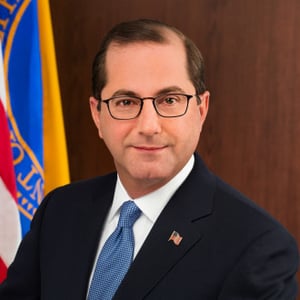
Secretary, U.S. Department of Health & Human Services
Alex M. Azar II was sworn in as the Secretary of Health and Human Services on Jan. 29, 2018. Azar has spent his career working in both the public and private sectors, as an attorney and in senior leadership roles focused on advancing healthcare reform, research and innovation.
From 2001 to 2007, Azar served at the U.S. Department of Health and Human Services – first as its General Counsel (2001–2005) and then as Deputy Secretary. During his time as Deputy Secretary, Azar was involved in improving the department’s operations; advancing its emergency preparedness and response capabilities as well as its global health affairs activities; and helping oversee the rollout of the Medicare Part D prescription drug program.
In 2007, Azar rejoined the private sector as senior vice president for corporate affairs and communications at Eli Lilly and Co. From 2012 to 2017, he served as president of Lilly USA LLC, the company’s largest affiliate.
Azar clerked for U.S. Supreme Court Justice Antonin Scalia prior to practicing law for several years.
Azar graduated summa cum laude with a bachelor’s degree in economics and government from Dartmouth College and earned his law degree from Yale University.
For the past 10 years, Azar has lived in Indiana with his wife and their two children.

Executive Vice President, The Federalist Society
Dean Reuter is Executive Vice President at the Federalist Society for Law and Public Policy Studies. He has served in two federal government agency Offices of the Inspector General, as Counsel to the Inspector General and Deputy Inspector General, responsible for policing the use of federal funds granted and contracted through those agencies. As such, he helped conduct and oversee criminal investigations across the country. He is the principal author of the non-fiction book, The Hidden Nazi: The Untold Story of America's Deal with the Devil, and editor of Liberty’s Nemesis: The Unchecked Expansion of the State and Confronting Terror: 9/11 and the Future of American National Security. He was appointed by the President and served as Vice-Chairman of the Board of Directors of the Corporation for National and Community Service, and recently served as an appointee on the U.S. Commission on Presidential Scholars. He is a graduate of Hood College (BA with Honors) and the University of Maryland School of Law.
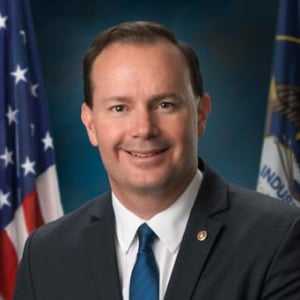
United States Senator, Utah
Elected in 2010 as Utah's 16th Senator, Mike Lee has spent his career defending the basic liberties of Americans and Utahns as a tireless advocate for our founding constitutional principles.
Senator Lee acquired a deep respect for the Constitution early on. His father, Rex Lee, who served as the Solicitor General under President Ronald Reagan, would often discuss varied aspects of judicial and constitutional doctrine around the kitchen table, from Due Process to the uses of Executive Plenary Power. He attended most of his father's arguments before the U.S. Supreme Court, giving him a unique, hands-on experience and understanding of government up close.
Lee graduated from Brigham Young University with a Bachelor of Science in Political Science, and served as BYU's Student Body President in his senior year. He graduated from BYU's Law School in 1997 and went on to serve as law clerk to Judge Dee Benson of the U.S. District Court for the District of Utah, and then with future Supreme Court Justice Judge Samuel A. Alito, Jr. on the U.S. Court of Appeals for the Third Circuit.
Lee spent several years as an attorney with the law firm Sidley & Austin specializing in appellate and Supreme Court litigation, and then served as an Assistant U.S. Attorney in Salt Lake City arguing cases before the U.S. Court of Appeals for the Tenth Circuit.
Lee served the state of Utah as Governor Jon Huntsman's General Counsel and was later honored to reunite with Justice Alito, now on the Supreme Court, for a one-year clerkship. He returned to private practice in 2007.
Throughout his career, Lee earned a reputation as an outstanding practitioner of the law based on his sound judgment, abilities in the courtroom, and thorough understanding of the Constitution.
Today, Lee fights to preserve America's proud founding document in the United States Senate. He advocates efforts to support constitutionally limited government, fiscal responsibility, individual liberty, and economic prosperity.
Lee is a member of the Judiciary Committee, and serves as Chairman of the Antitrust, Competition Policy and Consumer Rights Subcommittee protecting business competition and personal freedom.
He also oversees issues critical to Utah as the Chairman of the Water and Power Subcommittee of the Energy and Natural Resources Committee. He serves on the Commerce Committee and the Joint Economic Committee, as well.
In the 114th Congress, Lee also began his tenure as Chairman of the Senate Steering Committee, where he works with his Republican colleagues in the Senate to introduce bold and innovative solutions to issues facing the American people.
Lee and his wife Sharon live in Alpine, Utah, with their three children. He is a member of The Church of Jesus Christ of Latter-day Saints and served a two-year mission for the Church in the Texas Rio Grande Valley.
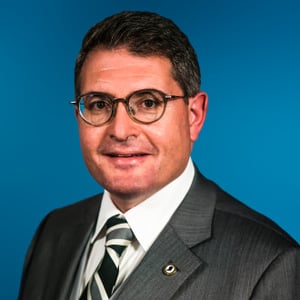
Co-Chairman, The Federalist Society for Law and Public Policy Studies
Leonard is Co-Chairman and former Executive Vice President of the Federalist Society, joining the organization over 25 years ago. Since that time he has been instrumental in helping the organization top 70,000, focusing on the growth of lawyers membership, operations and activities advancing limited, constitutional government. In addition to his work at the Society, Leonard has advised President Trump on judicial selection, assisted with the Gorsuch and Kavanaugh Supreme Court selection and confirmation process, and served as a member of the transition team. He also organized the outside coalition efforts in support of the Roberts and Alito U.S. Supreme Court confirmations. Leonard was appointed by President George W. Bush to three terms to the U.S. Commission on International Religious Freedom as chairman. He was also a U.S. Delegate to the UN Council and UN Commission on Human Rights during the Bush Administration. Leonard was the recipient of the 2009 Bradley Prize, along with the other founders and directors of the Federalist Society, for his work in advancing freedom and the rule of law. He is the coeditor of Presidential Leadership: Rating the Best and the Worst in the White House, as well as the author of opinion editorials in the New York Times,The Wall Street Journal, and Washington Post. Leonard holds degrees from Cornell University and Cornell Law School. He presently resides in Northern Virginia, where he and his wife Sally have raised their seven children.
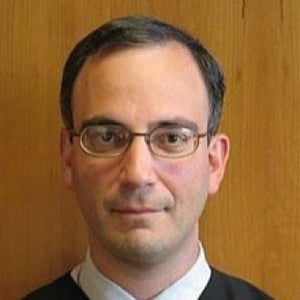
District Court Judge, United States Court of Appeals, 2nd Circuit
Bianco has served as a United States District Court judge for the Eastern District of New York since 2006. Most notably, he presided over several cases involving the MS-13 gang.
Prior to his confirmation to the bench, he spent portions of his career working in government, as both senior counsel/deputy assistant attorney general for the Department of Justice Criminal Division from 2004 to 2006, and as an assistant United States attorney for the Southern District of New York from 1994 to 2003. Bianco also worked in private practice as counsel at Debevoise & Plimpton LLP from 2003 to 2004, and as an associate at Simpson Thacher & Bartlett LLP from 1991 to 1992 and 1993 to 1994.
Bianco clerked for Judge Peter K. Leisure on the District Court for the Southern District of New York from 1992 to 1993. He received his J.D. from Columbia University School of Law in 1991 and his B.A. from Georgetown University in 1988.
Bianco has been a member of the Federalist Society since 2004.
Secretary, U.S. Department of Health & Human Services
Alex M. Azar II was sworn in as the Secretary of Health and Human Services on Jan. 29, 2018. Azar has spent his career working in both the public and private sectors, as an attorney and in senior leadership roles focused on advancing healthcare reform, research and innovation.
From 2001 to 2007, Azar served at the U.S. Department of Health and Human Services – first as its General Counsel (2001–2005) and then as Deputy Secretary. During his time as Deputy Secretary, Azar was involved in improving the department’s operations; advancing its emergency preparedness and response capabilities as well as its global health affairs activities; and helping oversee the rollout of the Medicare Part D prescription drug program.
In 2007, Azar rejoined the private sector as senior vice president for corporate affairs and communications at Eli Lilly and Co. From 2012 to 2017, he served as president of Lilly USA LLC, the company’s largest affiliate.
Azar clerked for U.S. Supreme Court Justice Antonin Scalia prior to practicing law for several years.
Azar graduated summa cum laude with a bachelor’s degree in economics and government from Dartmouth College and earned his law degree from Yale University.
For the past 10 years, Azar has lived in Indiana with his wife and their two children.
Executive Vice President, The Federalist Society
Dean Reuter is Executive Vice President at the Federalist Society for Law and Public Policy Studies. He has served in two federal government agency Offices of the Inspector General, as Counsel to the Inspector General and Deputy Inspector General, responsible for policing the use of federal funds granted and contracted through those agencies. As such, he helped conduct and oversee criminal investigations across the country. He is the principal author of the non-fiction book, The Hidden Nazi: The Untold Story of America's Deal with the Devil, and editor of Liberty’s Nemesis: The Unchecked Expansion of the State and Confronting Terror: 9/11 and the Future of American National Security. He was appointed by the President and served as Vice-Chairman of the Board of Directors of the Corporation for National and Community Service, and recently served as an appointee on the U.S. Commission on Presidential Scholars. He is a graduate of Hood College (BA with Honors) and the University of Maryland School of Law.
Secretary, U.S. Department of Health & Human Services
Alex M. Azar II was sworn in as the Secretary of Health and Human Services on Jan. 29, 2018. Azar has spent his career working in both the public and private sectors, as an attorney and in senior leadership roles focused on advancing healthcare reform, research and innovation.
From 2001 to 2007, Azar served at the U.S. Department of Health and Human Services – first as its General Counsel (2001–2005) and then as Deputy Secretary. During his time as Deputy Secretary, Azar was involved in improving the department’s operations; advancing its emergency preparedness and response capabilities as well as its global health affairs activities; and helping oversee the rollout of the Medicare Part D prescription drug program.
In 2007, Azar rejoined the private sector as senior vice president for corporate affairs and communications at Eli Lilly and Co. From 2012 to 2017, he served as president of Lilly USA LLC, the company’s largest affiliate.
Azar clerked for U.S. Supreme Court Justice Antonin Scalia prior to practicing law for several years.
Azar graduated summa cum laude with a bachelor’s degree in economics and government from Dartmouth College and earned his law degree from Yale University.
For the past 10 years, Azar has lived in Indiana with his wife and their two children.
Executive Vice President, The Federalist Society
Dean Reuter is Executive Vice President at the Federalist Society for Law and Public Policy Studies. He has served in two federal government agency Offices of the Inspector General, as Counsel to the Inspector General and Deputy Inspector General, responsible for policing the use of federal funds granted and contracted through those agencies. As such, he helped conduct and oversee criminal investigations across the country. He is the principal author of the non-fiction book, The Hidden Nazi: The Untold Story of America's Deal with the Devil, and editor of Liberty’s Nemesis: The Unchecked Expansion of the State and Confronting Terror: 9/11 and the Future of American National Security. He was appointed by the President and served as Vice-Chairman of the Board of Directors of the Corporation for National and Community Service, and recently served as an appointee on the U.S. Commission on Presidential Scholars. He is a graduate of Hood College (BA with Honors) and the University of Maryland School of Law.
United States Senator, Utah
Elected in 2010 as Utah's 16th Senator, Mike Lee has spent his career defending the basic liberties of Americans and Utahns as a tireless advocate for our founding constitutional principles.
Senator Lee acquired a deep respect for the Constitution early on. His father, Rex Lee, who served as the Solicitor General under President Ronald Reagan, would often discuss varied aspects of judicial and constitutional doctrine around the kitchen table, from Due Process to the uses of Executive Plenary Power. He attended most of his father's arguments before the U.S. Supreme Court, giving him a unique, hands-on experience and understanding of government up close.
Lee graduated from Brigham Young University with a Bachelor of Science in Political Science, and served as BYU's Student Body President in his senior year. He graduated from BYU's Law School in 1997 and went on to serve as law clerk to Judge Dee Benson of the U.S. District Court for the District of Utah, and then with future Supreme Court Justice Judge Samuel A. Alito, Jr. on the U.S. Court of Appeals for the Third Circuit.
Lee spent several years as an attorney with the law firm Sidley & Austin specializing in appellate and Supreme Court litigation, and then served as an Assistant U.S. Attorney in Salt Lake City arguing cases before the U.S. Court of Appeals for the Tenth Circuit.
Lee served the state of Utah as Governor Jon Huntsman's General Counsel and was later honored to reunite with Justice Alito, now on the Supreme Court, for a one-year clerkship. He returned to private practice in 2007.
Throughout his career, Lee earned a reputation as an outstanding practitioner of the law based on his sound judgment, abilities in the courtroom, and thorough understanding of the Constitution.
Today, Lee fights to preserve America's proud founding document in the United States Senate. He advocates efforts to support constitutionally limited government, fiscal responsibility, individual liberty, and economic prosperity.
Lee is a member of the Judiciary Committee, and serves as Chairman of the Antitrust, Competition Policy and Consumer Rights Subcommittee protecting business competition and personal freedom.
He also oversees issues critical to Utah as the Chairman of the Water and Power Subcommittee of the Energy and Natural Resources Committee. He serves on the Commerce Committee and the Joint Economic Committee, as well.
In the 114th Congress, Lee also began his tenure as Chairman of the Senate Steering Committee, where he works with his Republican colleagues in the Senate to introduce bold and innovative solutions to issues facing the American people.
Lee and his wife Sharon live in Alpine, Utah, with their three children. He is a member of The Church of Jesus Christ of Latter-day Saints and served a two-year mission for the Church in the Texas Rio Grande Valley.
Co-Chairman, The Federalist Society for Law and Public Policy Studies
Leonard is Co-Chairman and former Executive Vice President of the Federalist Society, joining the organization over 25 years ago. Since that time he has been instrumental in helping the organization top 70,000, focusing on the growth of lawyers membership, operations and activities advancing limited, constitutional government. In addition to his work at the Society, Leonard has advised President Trump on judicial selection, assisted with the Gorsuch and Kavanaugh Supreme Court selection and confirmation process, and served as a member of the transition team. He also organized the outside coalition efforts in support of the Roberts and Alito U.S. Supreme Court confirmations. Leonard was appointed by President George W. Bush to three terms to the U.S. Commission on International Religious Freedom as chairman. He was also a U.S. Delegate to the UN Council and UN Commission on Human Rights during the Bush Administration. Leonard was the recipient of the 2009 Bradley Prize, along with the other founders and directors of the Federalist Society, for his work in advancing freedom and the rule of law. He is the coeditor of Presidential Leadership: Rating the Best and the Worst in the White House, as well as the author of opinion editorials in the New York Times,The Wall Street Journal, and Washington Post. Leonard holds degrees from Cornell University and Cornell Law School. He presently resides in Northern Virginia, where he and his wife Sally have raised their seven children.
United States Senator, Utah
Elected in 2010 as Utah's 16th Senator, Mike Lee has spent his career defending the basic liberties of Americans and Utahns as a tireless advocate for our founding constitutional principles.
Senator Lee acquired a deep respect for the Constitution early on. His father, Rex Lee, who served as the Solicitor General under President Ronald Reagan, would often discuss varied aspects of judicial and constitutional doctrine around the kitchen table, from Due Process to the uses of Executive Plenary Power. He attended most of his father's arguments before the U.S. Supreme Court, giving him a unique, hands-on experience and understanding of government up close.
Lee graduated from Brigham Young University with a Bachelor of Science in Political Science, and served as BYU's Student Body President in his senior year. He graduated from BYU's Law School in 1997 and went on to serve as law clerk to Judge Dee Benson of the U.S. District Court for the District of Utah, and then with future Supreme Court Justice Judge Samuel A. Alito, Jr. on the U.S. Court of Appeals for the Third Circuit.
Lee spent several years as an attorney with the law firm Sidley & Austin specializing in appellate and Supreme Court litigation, and then served as an Assistant U.S. Attorney in Salt Lake City arguing cases before the U.S. Court of Appeals for the Tenth Circuit.
Lee served the state of Utah as Governor Jon Huntsman's General Counsel and was later honored to reunite with Justice Alito, now on the Supreme Court, for a one-year clerkship. He returned to private practice in 2007.
Throughout his career, Lee earned a reputation as an outstanding practitioner of the law based on his sound judgment, abilities in the courtroom, and thorough understanding of the Constitution.
Today, Lee fights to preserve America's proud founding document in the United States Senate. He advocates efforts to support constitutionally limited government, fiscal responsibility, individual liberty, and economic prosperity.
Lee is a member of the Judiciary Committee, and serves as Chairman of the Antitrust, Competition Policy and Consumer Rights Subcommittee protecting business competition and personal freedom.
He also oversees issues critical to Utah as the Chairman of the Water and Power Subcommittee of the Energy and Natural Resources Committee. He serves on the Commerce Committee and the Joint Economic Committee, as well.
In the 114th Congress, Lee also began his tenure as Chairman of the Senate Steering Committee, where he works with his Republican colleagues in the Senate to introduce bold and innovative solutions to issues facing the American people.
Lee and his wife Sharon live in Alpine, Utah, with their three children. He is a member of The Church of Jesus Christ of Latter-day Saints and served a two-year mission for the Church in the Texas Rio Grande Valley.
Co-Chairman, The Federalist Society for Law and Public Policy Studies
Leonard is Co-Chairman and former Executive Vice President of the Federalist Society, joining the organization over 25 years ago. Since that time he has been instrumental in helping the organization top 70,000, focusing on the growth of lawyers membership, operations and activities advancing limited, constitutional government. In addition to his work at the Society, Leonard has advised President Trump on judicial selection, assisted with the Gorsuch and Kavanaugh Supreme Court selection and confirmation process, and served as a member of the transition team. He also organized the outside coalition efforts in support of the Roberts and Alito U.S. Supreme Court confirmations. Leonard was appointed by President George W. Bush to three terms to the U.S. Commission on International Religious Freedom as chairman. He was also a U.S. Delegate to the UN Council and UN Commission on Human Rights during the Bush Administration. Leonard was the recipient of the 2009 Bradley Prize, along with the other founders and directors of the Federalist Society, for his work in advancing freedom and the rule of law. He is the coeditor of Presidential Leadership: Rating the Best and the Worst in the White House, as well as the author of opinion editorials in the New York Times,The Wall Street Journal, and Washington Post. Leonard holds degrees from Cornell University and Cornell Law School. He presently resides in Northern Virginia, where he and his wife Sally have raised their seven children.

General Counsel & Parliamentarian, U. S. House of Representatives, Financial Services Committee
Molly Boyl Fromm is the General Counsel and Parliamentarian for the Financial Services Committee in U.S. House of Representatives. Prior to this role she has served the House as the General Counsel and Parliamentarian for the Committee on Science, Space and Technology and as Deputy General Counsel and Parliamentarian for the Oversight and Government Reform Committee.
She received her Bachelor of Arts in Political Science from the University of California, Berkley and her law degree from The Catholic University of America, Columbus School of Law.
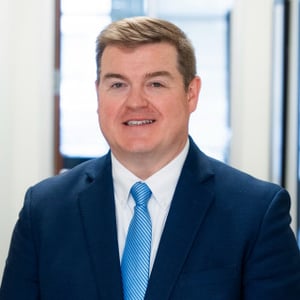
Vice President, Networks, The Federalist Society for Law and Public Policy Studies
Nathan Kaczmarek is Vice President for Networks at the Federalist Society. He began his legal career in Detroit representing nationwide clients in all phases of healthcare litigation and complex medical malpractice claims. He has since served as a Senior Legal and Policy Advisor in the U.S. House of Representatives and as Counsel for the Subcommittee on Regulatory Affairs and Federal Management in the U.S. Senate. Prior to overseeing the Networks, he was Director of the Practice Groups, the Regulatory Transparency Project, and the Article I Initiative for the Federalist Society.
Nathan holds degrees from Hillsdale College and Thomas M. Cooley Law School. He is a Liaison Representative for The Administrative Conference of the United States. He also serves as Vice President of the Associates of St. John Bosco, a Virginia based non-profit dedicated to Catholic high school and college students.

Editor, Modern Age
Daniel McCarthy is the Editor of Modern Age, an American conservative academic quarterly journal. Previously, he was the editor-at-large of The American Conservative from 2010 through 2016. His writing has appeared in The New York Times, USA Today, The Spectator, The National Interest, Reason, Modern Age, and other publications. He has been interviewed on National Public Radio, the BBC, Fox Business, and many other outlets. Outside of journalism, he has worked as internet communications coordinator of the Ron Paul 2008 presidential campaign and senior editor of ISI Books. He is a graduate of Washington University in St. Louis, where he studied classics.
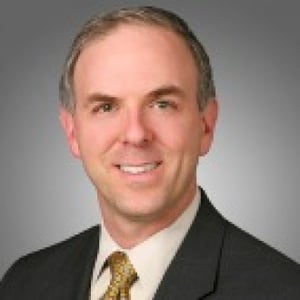
Partner, Akin Gump Strauss Hauer & Feld LLP
Mr. Pomper formerly served as chief international trade counsel to Senate Finance Committee Chairman Max Baucus (D-MT). In that role, he was responsible for advising Chairman Baucus and other members of the Senate Finance Committee on all aspects of the Committee’s international trade and economic agenda.
In his current practice, Mr. Pomper represents companies before Congress, the White House and federal agencies on a diverse set of public policy matters, including market access, investment, international trade disputes, intellectual property, international tax and customs issues.
Mr. Pomper also serves as an adjunct professor teaching international trade policy and politics at George Washington’s Graduate School of Political Management. He was elected 2011 to serve a three-year term as a member of the Steering Committee for the International Law Section of the D.C. Bar. He is an Educational Counselor for the Massachusetts Institute of Technology, for which he interviews students from the Thomas Jefferson High School for Science and Technology in Alexandria, Virginia applying to MIT.
Mr. Pomper is a member of the U.S. patent bar.

Address by Alex Azar
2018 National Lawyers Convention
Washington, DCAddress by Alex Azar
Alex M. Azar, Dean Reuter
On November 16, 2018, Secretary Alex Azar offered an address on the unintended consequences of...
Address by Alex Azar
Alex M. Azar, Dean Reuter
On November 16, 2018, Secretary Alex Azar offered an address on the unintended consequences of...
Opening Address by Mike Lee
2018 National Lawyers Convention
Washington, DC2018 National Lawyers Convention
Good Government through Agency Accountability and Regulatory Transparency
Washington, DCOpening Address by Mike Lee
Mike S. Lee, Leonard A. Leo
On November 15, 2018, Sen. Mike Lee (UT) gave the opening address at the Federalist...
Opening Address by Mike Lee
Mike S. Lee, Leonard A. Leo
On November 15, 2018, Sen. Mike Lee (UT) gave the opening address at the Federalist...
Topics
NLC 2018 Digital Survival Guide
This "Survival Guide" is your one-stop-shop for all things digital at the National Lawyers Convention. Enjoy!...
Judicial Restraint: From Hamilton to Scalia and Beyond
Mineola, NYThe Legislative Branch and Trade
Molly Boyl Fromm, Stephen Claeys, Nathan Kaczmarek, Daniel McCarthy, Brian Arthur Pomper
American trade policy has been the subject of much interest and media attention over the...