
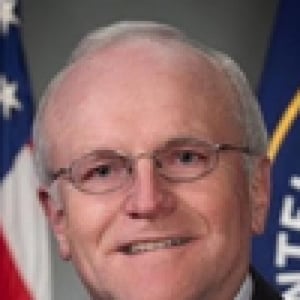
Adjunct Professor, George Washington University
Howard W. Cox is a former federal prosecutor, criminal investigator and Senior Intelligence Service officer. After almost 40 years of federal service, he retired as the Assistant Inspector General for Investigations of the Central Intelligence Agency. In this capacity, Mr. Cox supervised criminal, civil and administrative investigations conducted by the Office of Inspector General (OIG). Prior to his employment with the CIA, Mr. Cox was the Assistant Deputy Chief of the Computer Crime and Intellectual Property Section of the Department of Justice, where he was responsible for supervising criminal prosecutions of federal hacking and identity theft cases. While at the Department of Justice, Mr. Cox received the Attorney General’s Distinguished Service Award.
Prior to his service with the Department of Justice, Mr. Cox served as a manager, attorney and criminal investigator at OIG offices at the US Postal Service, the Department of Defense, and the General Services Administration. He also served as Staff Counsel for the US Senate Permanent Subcommittee on Investigations. Prior to his federal civilian service, Mr. Cox was also a Captain and trial attorney in the US Army’s Judge Advocate General’s Corps. Mr. Cox also served as Law Secretary to the Hon. Sherwin D. Lester, NJ Superior Court.
Mr. Cox is an adjunct professor at George Washington University, where he teaches graduate level courses in computer forensics. He is also an instructor with the Graduate School USA, and the Federal Law Enforcement Training Center, where he teaches courses related to procurement fraud and electronic search and seizure. Mr. Cox received his AB degree from Seton Hall University, South Orange, NJ. He received his law degree from Georgetown University Law Center, Washington, DC.
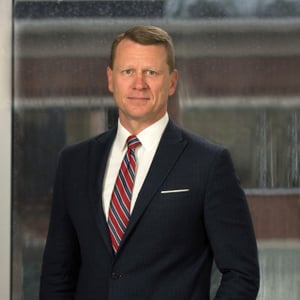
Partner, Phelps Dunbar LLP
Mike Hurst is a partner with Phelps Dunbar LLP where he optimizes his in-depth knowledge of the court system, investigative and prosecutorial agencies, the regulatory arena, and the public policy realm to help clients facing government investigations, enforcement actions, regulatory matters, general litigation and policy issues. Mike currently serves as the General Counsel of the Republican National Committee and as Chairman of the Mississippi Republican Party. He previously served as the U.S. Attorney for the Southern District of Mississippi from 2017-2021, and with over 20 years of experience before judges, juries and policy makers, handling some of the largest and most high-profile cases in Mississippi, he's known for untangling the most complex legal issues.
As U.S. Attorney, Mike was described as a “hard charger,” leading efforts to combat violent crime, human trafficking and public corruption, among many other issues, throughout Mississippi. He almost tripled prosecutions in the U.S. Attorney’s Office over a three-year period, resulting in the most indictments and federal defendants indicted in a one-year period in Mississippi history. He created innovative and national award-winning crime-fighting solutions, like “Project EJECT,” and he established the first statewide, multilevel and multidisciplinary human trafficking body, the Mississippi Human Trafficking Council, to comprehensively and holistically address this criminal scourge.
During his tenure as U.S. Attorney, Mike oversaw some of the biggest cases in Mississippi history: the largest health care fraud scheme (Wade Walters, et. al.), the largest Ponzi scheme (Lamar Adams), the largest False Claims Act health care fraud settlement (Region 8), and the largest nursing home False Claim Act settlement (Hyperion). In addition, as Chief Federal Law Enforcement Officer for the Southern District, Mike coordinated the largest single-state immigration worksite enforcement operation in our nation’s history, involving hundreds of federal law enforcement agents covering seven different locations operated by multiple companies.
Mike’s no show pony – he’s a work horse. Before his tenure as U.S. Attorney, Mike was an Assistant U.S. Attorney for the Southern District of Mississippi for more than eight years. He handled some of the most difficult and complex cases in that office, dealing with white collar crimes, public corruption and financial fraud, including numerous jury trials before almost every federal judge in the Southern District.
He also has experience in the private sector. He has practiced law in Washington, D.C., and has served as a litigator and general counsel for a conservative nonprofit. He also has extensive experience in public policy, having served as the Legislative Director to a U.S. Congressman and as Counsel to the House Judiciary Committee.
Mike has also testified before both the United States Senate and the U.S. House of Representatives on issues ranging from crime to Presidential pardons. He has worked on all sides of the legal, regulatory, investigative, prosecutorial and policy spectrum. The incredible insight gained from this varied experience enables him to find a path forward for clients, no matter how complicated the case.
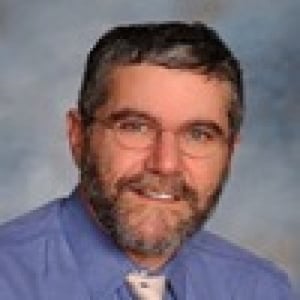
I. Herman Stern Professor of Law
David Post is currently the I. Herman Stern Professor of Law at the Beasley School of Law at Temple University, where he teaches intellectual property law and the law of cyberspace. Professor Post is also an Adjunct Scholar at the Cato Institute, a Fellow at the Institute for Information Law and Policy at New York Law School, and a contributor to the influential Volokh Conspiracy blog. [More detail on Professor Post's research and writings can be found here.]
Trained originally as a physical anthropologist, Professor Post spent two years studying the feeding ecology of yellow baboons in Kenya's Amboseli National Park, and he taught at the Columbia University Department of Anthropology from 1976 through 1981. He then attended Georgetown Law Center, from which he graduated summa cum laude in 1986. After clerking with then-Judge Ruth Bader Ginsburg on the DC Circuit Court of Appeals, he spent 6 years at the Washington D.C. law firm of Wilmer, Cutler & Pickering, practicing in the areas of intellectual property law and high technology commercial transactions. He then clerked again for Justice Ginsburg during her first term on the Supreme Court before joining the faculty of, first, the Georgetown University Law Center (1994-1997) and then the Temple University Law School (1997-present).
Professor Post is the author of Cyberlaw: Problems of Policy and Jurisprudence in the Information Age (3d Edition, West, 2007) (co-authored with Paul Schiff Berman and Patricia Bellia), and In Search of Jefferson's Moose: Notes on the State of Cyberspace (Oxford U. Press, forthcoming 2008), as well as numerous articles on intellectual property, the law of cyberspace, and the application of complexity theory to Internet legal questions that have appeared in the Stanford Law Review, Journal of Legal Studies, Berkeley Technology Law Journal, Esther Dyson's Release 1.0, Journal of Online Law, University of Chicago Legal Forum, Vanderbilt Law Review, Georgetown Law Journal, and numerous other publications. For four years (1994-1998) he wrote a monthly column on law and technology ("Plugging In") for the American Lawyer, and from 1998-2004 he wrote the "On the Horizon" column for InformationWeek (with Bradford Brown). He has appeared as a commentator on the Lehrer News Hour, Court TV's Supreme Court Preview, NPR's All Things Considered, BBC's World, and other television and radio shows, and recently was featured in the PBS documentary The Supreme Court. During 1996-1997 he conducted, along with two colleagues (Professors Larry Lessig and Eugene Volokh) the first Internet-wide e-mail course on "Cyberspace Law for Non-Lawyers" which attracted over 20,000 subscribers. He also sings and plays guitar, piano, banjo, and harmonica in the bands "Bad Dog," "The Dwights," and "The Zen Cohens."
Professor Post's writings can be accessed online via his publications page and personal site (http://www.davidpost.com).
J.D., Georgetown University
Ph.D. (Anthropology), Yale University
B.A., Yale University
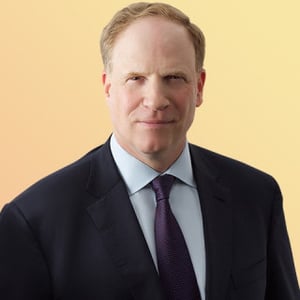
Partner, King & Spalding
Drew Hruska focuses on criminal and regulatory litigation and investigations, internal investigations, regulatory compliance and risk advice. A partner in our Special Matters and Investigations practice, Drew represents major financial services and industrial companies, family offices and prominent individuals.
Drew represents a variety of financial services clients, including securities, commercial banking, insurance, insurance brokerage, hedge funds and private equity funds, along with major industrial companies, concerning enforcement and national security investigations by government agencies, including the U.S. Department of Justice, OFAC, SEC, state attorneys general, and many others. Matters under investigation typically involve fraud, money laundering, international sanctions, foreign corrupt practices, banking regulation, false claims, taxation, data privacy and security, antitrust and immigration restrictions.
In addition, Drew consults with numerous multinational companies on a range of criminal, regulatory compliance, and risk issues. Drew speaks Russian and is frequently engaged on financial enforcement issues involving Russia and Eastern Europe. He has also served in independent roles a Monitor appointed by an international organization, an independent legal advisor for the Federal Reserve and Office of the Controller of the Currency, and as a court-appointed Examiner in bankruptcy.
Before joining our firm, Drew served as the Chief Assistant U.S. Attorney for the Eastern District of New York, where he supervised the criminal and civil divisions. He also oversaw the office’s corporate fraud offensive, including investigations of Computer Associates and Symbol Technologies. Drew served as Acting U.S. Attorney for the prosecution of the New York Racing Association on tax conspiracy charges. He also led the criminal investigation of the Staten Island Ferry crash of October 15, 2003, that resulted in a manslaughter conviction for New York City’s Ferry Service Director.
Previously, Drew served as Senior Counsel to U.S. Deputy Attorney General Larry Thompson, and as an Assistant District Attorney in the Manhattan District Attorney’s Office, where he prosecuted major securities, bank and insurance fraud cases as a member of the Frauds Bureau.
Drew is recognized by Chambers, Benchmark Litigation, Legal 500, and Who’s Who Legal. He serves on the World Jewish Congress President’s Security Advisory Committee and on the Dewey Medal Prize Committee for the New York City District Attorneys’ Offices.

Topics
Amendments to Federal Criminal Rule 41 Address Venue, Not Hacking Powers
A few weeks ago the Supreme Court notified Congress of this year’s proposed amendments to...
StingRay Technology and Reasonable Expectations of Privacy in the Internet of Everything
Howard W. Cox
Note from the Editor: This article discusses cell site simulators, also known as StingRays, and...
Is the Long Arm of the Law Shrinking? Geographic Boundaries for the Approval of Wiretaps and Bugs and the Shifting Jurisdictional Reach of Federal Judges to Authorize Electronic Surveillance
Mike Hurst
Recent court decisions from around the country are raising serious questions as to the potential...
Henderson v. United States - Post-Argument SCOTUScast
David G. Post
On February 24, 2015, the Supreme Court heard oral argument in Henderson v. United States....
International Criminal Discovery
Andrew C. Hruska
I. Introduction While money moves at the speed of light across national boundaries, law enforcement...