
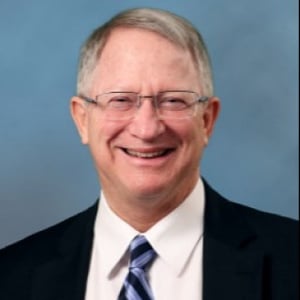
Professor and Chair, University of South Carolina Arnold School of Public Health
Anthony Alberg is an epidemiologist whose research has primarily focused on 1) cancer epidemiology and 2) the health effects of tobacco and tobacco control. Areas of interest in cancer epidemiology include lung cancer, ovarian cancer, and the excess risk of malignancies experienced by those with a personal history of keratinocyte carcinoma (non-melanoma skin cancer). His research on the health effects of tobacco has included the relationship of secondhand smoke exposure to the risk of cancers other than lung cancer; tobacco control research has included topics ranging from determinants of adolescent smoking to the epidemiology of smoking cessation pharmacotherapy use in populations.
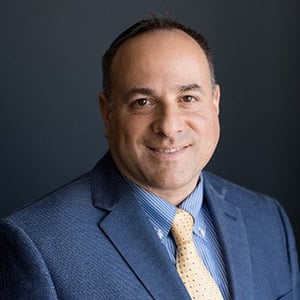
Policy Advisor, Heartland Institute
Jeff Stier is a policy advisor to the Heartland Institute.
He is widely quoted in the media and has written health policy op-eds for The Wall Street Journal, the Los Angeles Times, USA Today, The New York Post, The Washington Examiner, and Foxnews.com. The New York Times, the Associated Press, Reuters, CNN, Fox News, CNBC, MSNBC, NPR and other major outlets have interviewed and quoted Stier on a wide range of topics.
Stier has testified at state and local legislatures throughout the U.S., at FDA scientific hearings and at the Office of Management and Budget. He has also been a voice for freedom at hearings at the United Nations and in Israel’s Knesset. During more than two decades of advancing public health and defending liberty, Stier has been a speaker at CPAC, policy retreats for elected officials and medical and legal conferences.
Stier advises leading investment firms on regulatory and legal risk.
Earlier, Mr. Stier crafted health and environmental policy in the Office of the Mayor during the Giuliani administration in New York City.
Mr. Stier serves on the boards of the non-profit Jewish International Connections and Park City Jewish Collective. While earning his law degree at the Benjamin N. Cardozo School of Law, Mr. Stier served two terms as Editor-In-Chief of the Cardozo Law Forum. Jeff and his canine, BB, served as a Certified Crisis Response Strike Team with NATIONAL Crisis Response Canines, supporting survivors and first-responders.
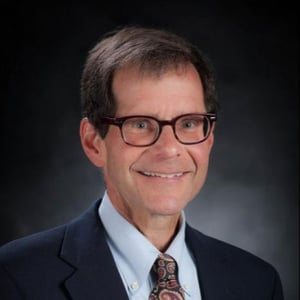
Margaret Schimke Distinguished Professor of Law, University of Idaho College of Law
Professor Seamon joined the University of Idaho in 2004, having previously taught at the University of South Carolina School of Law and Washington and Lee Law School. He currently teaches Administrative Law and Constitutional Law, and serves as Interim Associate Dean for Faculty Affairs. In the past, he has taught courses on civil procedure, criminal procedure, federal courts, and U.S. Supreme Court practice. He also served as the associate dean for administration and students from 2006–2009.
Before he became a law professor, Professor Seamon practiced law for ten years. In 1986, he clerked for Kenneth W. Starr on the U.S. Court of Appeals for the District of Columbia Circuit. From 1987–1990, he worked as an associate at the Washington, D.C. law firm Covington & Burling. From 1990–1996, he served in the U.S. Department of Justice as an assistant to the Solicitor General of the United States. While at the Justice Department, Professor Seamon presented oral argument before the U.S. Supreme Court in fifteen cases. He became a law professor in 1996.
Professor Seamon has written or co-authored four books, the most recent of which are: The Supreme Court Sourcebook (Wolters Kluwer 2013) (co-authored with A. Siegel, J. Thai, and K. Watts); Administrative Law: A Context and Practice Casebook (Carolina Academic Press 2013); and Administrative Law: Examples and Explanations (Wolters Kluwer 4th ed., 2012) (co-authored with W. Funk). Professor Seamon has also written many law review articles on constitutional law and other public law subjects.
Professor Seamon received his J.D. from Duke Law School and holds a B.A. and an M.A. from Johns Hopkins University. He graduated from law school as a member of Order of the Coif and from college as a member of Phi Beta Kappa. He is also an elected member of the American Law Institute.
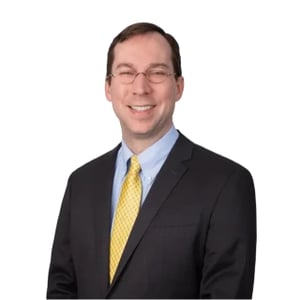
Partner, Thompson Hine LLP
Eric is a partner in the Thompson Hine LLP's Business Litigation practice group and leads the firm’s extensive and multidisciplinary Tobacco Alternatives & Nicotine Products Industry practice. He started with Thompson Hine as a summer associate over 18 years ago and has spent all but two years of his career at the firm.
Eric is an accomplished trial and appellate litigator with extensive experience advising clients and litigating disputes related to actions by government agencies under the Administrative Procedure Act and state law equivalents. His litigation experience encompasses a broad range of matters, including constitutional challenges to state legislation and administrative actions, contract disputes, business torts, employment and non-compete matters, qui tam claims, unfair competition, unfair trade practices and consumer protection claims, insurance claims, and trademark, copyright, trade secret, and patent litigation. He has extensive experience trying claims in jury and bench trials in federal and state courts around the country, as well as in private arbitrations, and has briefed and argued appeals before the Second, Fourth, Fifth, Sixth, Seventh, Ninth, D.C., and Federal Circuits. Eric has conducted jury trials and arbitrations on fraud claims; breach of contract claims, including those arising out of breaches of noncompetition and confidentiality agreements; veil-piercing claims; claims regarding the fiduciary obligations of current and former employees and agents; warranty claims; and age and race discrimination claims.

Tazewell Taylor Professor of Law and William H. Cabell Research Professor, William & Mary Law School
Jonathan H. Adler joined the William & Mary law faculty as the Tazwell Taylor Professor of Law and William H. Cabell Research Professor in 2025. Prior to joining the faculty, he was the inaugural Johan Verheij Memorial Professor of Law and the founding Director of the Coleman P. Burke Center for Environmental Law at the Case Western Reserve University School of Law.
Professor Adler is the author or editor of seven books, including Climate Liberalism: Perspectives on Liberty, Property and Pollution (Palgrave, 2023), Marijuana Federalism: Uncle Sam and Mary Jane (Brookings Institution Press, 2020), Business and the Roberts Court (Oxford University Press, 2016) and Rebuilding the Ark: New Perspectives on Endangered Species Act Reform (AEI Press, 2011).
His articles have appeared in publications ranging from the Harvard Environmental Law Review and Yale Journal on Regulation to the Wall Street Journal, New York Times, and Washington Post. He has testified before Congress a dozen times, and his work has been cited in the U.S. Supreme Court. A 2024 study identified Professor Adler as the seventh most cited legal academic in administrative and environmental law from 2019 to 2023.
Professor Adler is a contributing editor to Civitas Outlook and a regular contributor to the popular legal blog, The Volokh Conspiracy. A regular commentator on constitutional and regulatory issues, he has appeared on numerous radio and television programs, ranging from the PBS Newshour and National Public Radio to the Fox News Channel and Entertainment Tonight.
Professor Adler is a senior fellow at the Property & Environment Research Center in Bozeman, Montana. In 2018, Professor Adler was elected to membership in the American Law Institute and helped co-found the organization Checks and Balances. In 2024, Professor Adler was appointed a public member of the Administrative Conference of the United States.
Professor Adler clerked for the Honorable David B. Sentelle on the U.S. Court of Appeals for the District of Columbia Circuit.

Associate Dean for Research and Intellectual Life, McKnight Presidential Professor in Law, Distinguished McKnight University Professor, Harlan Albert Rogers Professor in Law, Associate Director, Corporate Institute, University of Minnesota Law School
Professor Kristin E. Hickman is the McKnight Presidential Professor in Law, a Distinguished McKnight University Professor, and Harlan Albert Rogers Professor in Law at the University of Minnesota Law School. She also has taught at Harvard Law School and Northwestern University School of Law. Professor Hickman teaches and writes primarily in the areas of administrative law, tax administration, and statutory interpretation. Her articles on these topics have appeared in the Columbia Law Review, Cornell Law Review, Virginia Law Review, Duke Law Journal, and other publications. She also co-authors the Administrative Law Treatise with Richard J. Pierce, Jr., and a casebook on federal administrative law with Pierce and Christopher J. Walker. Her scholarly work has been cited several times in opinions of the United States Supreme Court as well as regularly in lower court judicial opinions and court briefs.
In 2018-19, Professor Hickman served as Special Adviser to the Administrator of the Office of Information and Regulatory Affairs in Washington, D.C. She presently serves as a Senior Fellow, and previously served as a public member and chair of the judicial review committee, for the Administrative Conference of the United States. She also is a Fellow of the American College of Tax Counsel.
Professor Hickman received her B.S. degree in business administration with a concentration in accounting and a secondary major in history from Trinity University in San Antonio, Texas. After practicing for several years as a certified public accountant, Professor Hickman earned her J.D. degree, magna cum laude, from Northwestern University School of Law, where she was awarded the Raoul Berger Prize and the Lowden Wigmore Prize for her scholarly writings. Following law school, Professor Hickman clerked for The Honorable David B. Sentelle of the United States Court of Appeals for the District of Columbia Circuit and practiced law as an associate with the Chicago office of Skadden, Arps, Slate, Meagher & Flom, concentrating on corporate and international tax transactions and matters.

Associate, Covington & Burling LLP
Eli Nachmany is an associate at Covington & Burling LLP in the Washington, DC, office. He clerked for Judge Steven J. Menashi of the U.S. Court of Appeals for the Second Circuit. Eli graduated magna cum laude from Harvard Law School, where he was Editor-in-Chief of the Harvard Journal of Law & Public Policy. Prior to law school, Eli served as the speechwriter to the U.S. Secretary of the Interior and as a domestic policy aide in the White House Office of American Innovation. He graduated summa cum laude from New York University with a B.S. in Sports Management. Eli’s scholarship on administrative law and executive power has appeared in the BYU Law Review, George Mason Law Review, Wake Forest Law Review, and Yale Law Journal Forum.
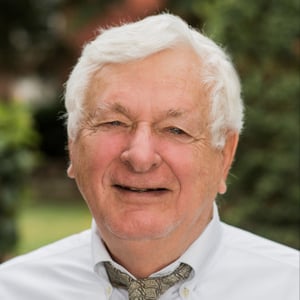
Lyle T. Alverson Professor of Law, George Washington University Law School
Professor Pierce is author of over twenty books and 130 articles on administrative law, government regulation, and the effects of various forms of government intervention on the performance of markets. His books and articles have been cited in hundreds of judicial opinions, including over a dozen opinions of the U.S. Supreme Court.
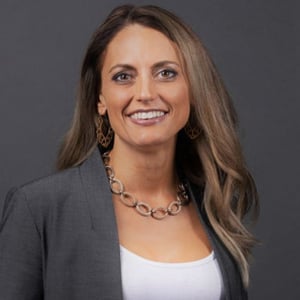
Judge, U.S. Court of Appeals for the Third Circuit
Hon. Jennifer Mascott served as Associate Professor of Law and Director of the Separation of Powers Institute at The Catholic University of America’s Columbus School of Law before her appointment to the federal bench. On July 16, 2025, President Donald J. Trump nominated her to the U.S. Court of Appeals for the Third Circuit (Delaware), and she was confirmed on October 9, 2025.
Prior to her confirmation, Judge Mascott wrote extensively in administrative and constitutional law, statutory interpretation, and the separation of powers. Her scholarship—published in leading journals including the Stanford Law Review, Notre Dame Law Review, and Supreme Court Review—was cited by the U.S. Supreme Court and multiple federal courts. She also contributed Supreme Court commentary for NBC Universal.
Before joining Catholic Law, she was an Assistant Professor and Co-Director of The C. Boyden Gray Center at George Mason University’s Antonin Scalia Law School. In 2022 she became co-author of Beermann, Cass & Diver’s Administrative Law: Cases and Materials (9th ed.). In 2023 she received the Justice Joseph Story Award for excellence in scholarship, teaching, and advancing the rule of law.
Judge Mascott also served as a Council Member of the ABA’s Administrative Law Section and as a Public Member of the Administrative Conference of the United States. She frequently testified before Congress on executive power, regulatory reform, and judicial jurisdiction, and participated in multiple Supreme Court confirmation hearings.
From 2019 to 2021, she took leave from academia to serve as Deputy Assistant Attorney General in the Department of Justice’s Office of Legal Counsel and later as Associate Deputy Attorney General, where she argued federal cases and assisted with Justice Amy Coney Barrett’s confirmation. Earlier in her career, she clerked for Justice Clarence Thomas and for then-Judge Brett M. Kavanaugh on the D.C. Circuit.
Judge Mascott earned her J.D. summa cum laude from the George Washington University Law School and her B.A. from the same institution.
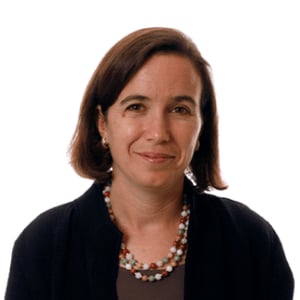
Joseph L. Sax Collegiate Professor of Law and Co-Director of the Environmental and Energy Law Program, University of Michigan Law School

Charles Evans Hughes Professor of Law, Columbia Law School
THOMAS W. MERRILL is the Charles Evans Hughes Professor of Law at Columbia Law School. He previously taught at Northwestern University School of Law and Yale Law School. He has undergraduate degrees from Grinnell College and Oxford University, where he studied as a Rhodes Scholar, and a law degree from the University of Chicago. He clerked on the D.C. Circuit (for Chief Judge David Bazelon) and the U.S. Supreme Court (for Justice Harry Blackmun). From 1987-1990 he served as Deputy Solicitor General, U.S. Department of Justice. Professor Merrill’s writings related to property include Property: Principles and Policies (Foundation Press Second Edition, 2012) (with Henry E. Smith); Property: The Oxford Introductions to U.S. Law (Oxford U. Press, 2010); Property: Takings (Foundation Press, 2002)(with David Dana); and numerous articles, including “The Economics of Public Use” (Cornell Law Review 1986); “The Landscape of Constitutional Property” (Virginia Law Review 2000); and “The Character of the Governmental Action” (Vermont Law Review 2012). He is a member of the American Academy of Arts and Sciences.
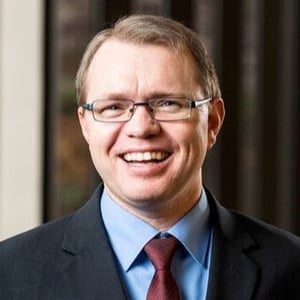
Charles I. Francis Professorship in Law, University of Texas at Austin School of Law
Professor Aaron Nielson lectures and writes in the areas of administrative law, civil procedure, and federal courts. Before joining the faculty, he served as Solicitor General of Texas and represented Texas before the U.S. Supreme Court and the Texas Supreme Court, as well as overseeing all appellate litigation for the State. Earlier in his career, he was a professor at Brigham Young University and an appellate and antitrust partner in the Washington, D.C. office of Kirkland & Ellis LLP. He also clerked for Justice Samuel A. Alito, Jr. of the U.S. Supreme Court, Judge Janice Rogers Brown of the U.S. Court of Appeals for the D.C. Circuit, and Judge Jerry E. Smith of the U.S. Court of Appeals for the Fifth Circuit.
As Solicitor General, Professor Nielson successfully defended against a First Amendment challenge Texas’s law requiring online pornographers to institute age verification. In 2020, the U.S. Supreme Court appointed him to defend the constitutionality of a federal agency. He currently serves as a Senior Fellow of the Administrative Conference of the United States after completing a six-year term as an appointed public member and chair of the Conference’s Administration & Management Committee.
Nielson’s research focuses on administrative law, federal litigation, and the separation of powers. He has published (or soon will publish) in the Harvard Law Review, Columbia Law Review, University of Chicago Law Review, University of Pennsylvania Law Review, Duke Law Journal, Georgetown Law Journal, Cornell Law Review, and Northwestern University Law Review, among others. Nielson has been recognized for teaching for teaching and scholarship and in 2021 received the Federalist Society’s Joseph Story Award, which recognizes a young academic for excellence in legal scholarship, a commitment to teaching, and a concern for students, and who has made a significant public impact in a manner that advances the rule of law in a free society. He is also an elected member of the American Law Institute.
Professor Nielson received his J.D. magna cum laude from Harvard Law School and an LL.M from the University of Cambridge, where he focused his studies on the institutions that regulate global competition and commerce. He received his undergraduate degree summa cum laude from the University of Pennsylvania, majoring in economics and political science.
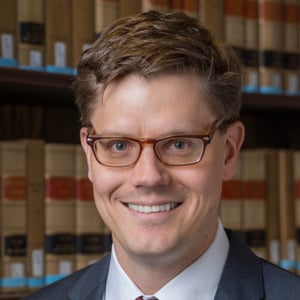
Associate Professor, University of Notre Dame Law School
Jeffrey Pojanowski joined the faculty and community of Notre Dame Law School in 2010. He teaches and writes in the areas of administrative law, jurisprudence, and torts. At present, his scholarship focuses on the legal theory of administrative action, as well as the philosophy and intellectual history of legal reasoning.
Prof. Pojanowski earned his A.B. in Public Policy with highest honors from Princeton University and graduated magna cum laude from Harvard Law School in 2004, where he was Articles Co-Chair for the Harvard Law Review. After law school, he served as a law clerk to then-Judge John Roberts on the United States Court of Appeals for the D.C. Circuit and then to Justice Anthony Kennedy on the Supreme Court of the United States. He then practiced law with Latham & Watkins in Washington, D.C., where he specialized in appellate litigation and administrative-law matters.

Judge, United States Court of Appeals, Sixth Circuit
Judge Readler earned his undergraduate and law degrees from the University of Michigan. After graduating, he served as a law clerk to Judge Alan Norris of the United States Court of Appeals for the Sixth Circuit. Judge Readler then began practicing law in the Columbus office of the international law firm Jones Day, eventually spending ten years as a partner in the firm’s Issues and Appeals Practice Group. While at Jones Day, Judge Readler appeared in state and federal trial and appellate courts around the country, most frequently the Supreme Court of Ohio and the Sixth Circuit. Judge Readler also successfully argued before the United States Supreme Court in McQuiggin v. Perkins on behalf of an inmate claiming actual innocence. His other pro bono representations include representing capital defendants before the Tenth Circuit and the Supreme Court of Ohio, as well as representing defendants sentenced to life in prison before the Sixth Circuit. While at Jones Day, Judge Readler traveled to Nairobi with Lawyers Without Borders to train Kenyan lawyers in prosecuting domestic violence cases, and he was also a recipient of the American Marshall Memorial Fellowship awarded by the German Marshall Fund of the United States. Following his career in private practice, Judge Readler served as Acting Assistant Attorney General for the Civil Division of the United States Department of Justice from 2017 to 2019. In that role, Judge Readler led and supervised over 1,000 lawyers in the Department’s largest litigating division, briefing and arguing several cases on behalf of the United States in federal courts across the country, including high-profile cases significant to the Administration and the Department. In March 2019, Judge Readler was confirmed to serve as a Circuit Judge on the Sixth Circuit. He resides in Columbus.
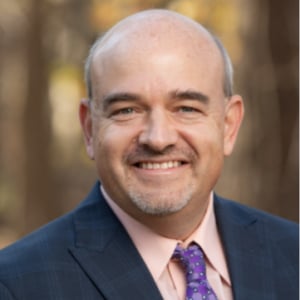
Newton D. Baker-Baker & Hostetler Chair in Law, Moritz College of Law, The Ohio State University
Professor Douglas A. Berman is Newton D. Baker-Baker & Hostetler Chair in Law and Executive Director of the Drug Enforcement and Policy Center, housed in the Moritz College of Law. Berman’s principal teaching and research focus is in the area of criminal law and criminal sentencing, though he also has teaching and practice experience in the fields of legislation and intellectual property. He has taught Criminal Law, Criminal Punishment and Sentencing, Criminal Procedure – Investigation, Marijuana Law, Policy & Reform Seminar, Federal and State Clemency Decision-making, The Death Penalty, Legislation, Introduction to Intellectual Property, Second Amendment Seminar, and the Legislation Clinic.
Professor Berman attended Princeton University and Harvard Law School. In law school, he was an editor and developments office chair of the Harvard Law Review and also served as a teaching assistant for a Harvard University philosophy course. After graduation from law school in 1993, Professor Berman served as a law clerk for Judge Jon O. Newman and then for Judge Guido Calabresi, both on the United States Court of Appeals for the Second Circuit. After clerking, Professor Berman was a litigation associate at the law firm of Paul, Weiss, Rifkind, Wharton, and Garrison in New York City.
Professor Berman is the co-author of two casebooks. Sentencing Law and Policy: Cases, Statutes and Guidelines, published by Aspen Publishers, is now in its fifth edition. Marijuana Law and Policy was released by Carolina Academic Press in 2020. In addition to authoring numerous articles on topics ranging from capital punishment to the federal sentencing guidelines, Professor Berman has served as a managing editor of the Federal Sentencing Reporter for more than twenty five years, and also serves as an editor of the Ohio State Journal of Criminal Law.
Professor Berman is the sole creator and author of the widely-read and widely-cited blog, Sentencing Law and Policy. The blog often receives nearly 50,000 page views per month (and had over 20,000 hits the day of the Supreme Court’s major sentencing decision in United States v. Booker). Professor Berman’s work on the Sentencing Law and Policy blog, which he describes as a form of “scholarship in action,” has been profiled or discussed at length in articles appearing in the Wall Street Journal, Legal Affairs magazine, Lawyers Weekly USA, Legal Times, Columbus Monthly, and in numerous other print and online publications.
In addition, Sentencing Law and Policy has the distinction of being the first blog cited by the U.S. Supreme Court (for a document appearing exclusively on the site), and substantive analysis in particular blog posts has been cited in numerous appellate and district court rulings, in many briefs submitted to federal and state courts around the country, and in hundreds of law review articles.
Professor Berman is a member of the Council on Criminal Justice and frequently is consulted by national and state policymakers, sentencing commissioners, and public policy groups concerning sentencing law and policy reforms. He has testified before the U.S. House of Representatives and before numerous sentencing commissions. He also is frequently contacted by national and local media concerning sentencing and marijuana reform developments.
Professor Berman has appeared on national television, radio and podcast news programs and has been extensively quoted in newspaper articles appearing in nearly every major national paper and many local papers, including The New York Times, The Washington Post, The Wall Street Journal, Legal Times, and in pieces from the Associated Press, Reuters, and Knight-Ridder news services.
Professor Berman sometimes serves as a consultant to lawyers working on important or interesting sentencing cases. In most instances, Professor Berman’s consulting has been on an ad hoc and pro bono basis, and it usually involves a quick review of draft briefs and other court filings and then providing general advice on litigation strategies. On some occasions, however, Professor Berman has been formally retained to play a more sustained role in certain cases, including being retained by law firms to provide consulting service on various cutting-edge federal sentencing issues.
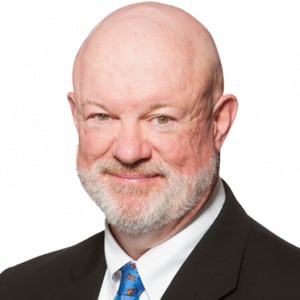
Senior Legal Fellow, the Meese Institute for the Rule of Law, Advancing American Freedom
Paul J. Larkin is a Senior Legal Fellow in the Meese Institute for the Rule of Law at Advancing American Freedom. Paul has held various positions in the federal and state governments throughout his career, such as being an attorney in the Organized Crime and Racketeering Section of the Criminal Division at the U.S. Department of Justice, an Assistant to the Solicitor General in the Office of the Solicitor General at the U.S. Department of Justice, Special Agent-in-Charge and Acting Director of the Criminal Investigation Division at the Environmental Protection Agency, and a member of the Parole Abolition and Sentencing Reform Commission and of the Juvenile Justice Reform Commission in the Office of Virginia Governor George Allen.
He has also worked at Verizon Communications and two law firms in Washington, D.C. His current research is principally in the fields of drug policy, criminal justice policy, and administrative law and policy. He has published numerous articles in law and public policy journals, both in print and online.
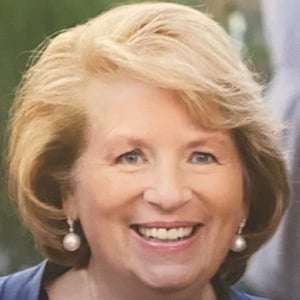
Professor of Psychobiology, Harvard Medical School; Department of Psychiatry, McLean Hospital
Bertha Madras, PhD is a Professor of Psychobiology at Harvard Medical School (Harvard faculty 40 years) She is based at McLean Hospital and cross-appointed at the Massachusetts General Hospital
Scientific Research. Dr. Madras’s translational and multidisciplinary research focuses on the neurobiology of addiction, neuropsychiatric disorders, and drug policy
Authorship. She is author of more than 500 scientific manuscripts, reviews, book chapters, abstracts. She also is co-editor of academic books including “The Cell Biology of Addiction”; “Effects of Drug Abuse on the Human Nervous System”; “Imaging of the Human Brain in Health and Disease”
Intellectual Property. Inventor, co-inventor on 19 issued U.S. patents and 27 issued international patents
Government, other Service
• 2018-present, National Academy of Medicine Opioid Collaborative. Member
• 2024. United Nations Office on Drugs and Crime. Panel on Consequences of Drug Use
• 2017. President’s Commission on Combating Drug Addiction and the Opioid Crisis. Appointed by President Trump as one of six Commission members: Gov. C. Baker (MA); Attorney General P. Bondi (FL); Gov. C. Christie, (Chair, NJ); Gov. R. Cooper (NC), Congressman P. Kennedy (RI), Prof. Madras (MA). She was charged with shepherding, writing major components of Report
• 2016. Vatican Pontifical Academy of Sciences. Panelist on Narcotics; co-author of final report
• 2014-2015. U.S. Department of Justice. Sole expert witness DoJ, on marijuana re-scheduling
• 2015. World Health Organization. Sole author of report commissioned by World Health Organization, “Update of Cannabis and its Medical Use”; co-author of “The Health and Social Effects of Nonmedical Cannabis Use
• 2014. National Football League (NFL). Member, Committee on prescription drugs
• 2006-2008. Deputy Director for Demand Reduction in the White House Office of National Drug Control Policy (ONDCP), Executive Office of the President; a presidential appointment confirmed with unanimous consent (99-0) by U.S. Senate
Educational Outreach
• 2023-2025 HARVARD X. Developer of course for parents on drug prevention
• 2001-. Cold Spring Harbor Laboratories. Developer, international course on Cell Biology of Addiction. Course is offered biannually to present
• 1991-2004. Museum of Science, Boston. Directed production of a museum exhibit, a CD (licensed by Disney) “Changing Your Mind: Drugs in the Brain” and play
• 1995. DEA-NIDA Museum Exhibit. Wrote draft of storyboard for exhibit, 1 Times Square, NYC, NY
• 1991-2005. Addiction biology. Developed, instructor 4th year HMS medical students
Honors, awards
• 2026: Barry Prize, American Academy of Sciences and Letters
• 2025: Asteroid 147703MADRAS named for BK Madras by the International Astronomical Union
• 2024: American Academy of Sciences and Letters, inductee
• Research and public service awards (partial list): NIDA Public Service Award, NIH MERIT Award, CPDD Innovator Award, American Academy of Addiction Psychiatry, Jack H. Mendelson Memorial Research Award, CPDD Fischman Award, Adler Distinguished Service Award, CADCA National Leadership Award, Nils Bejerot Award, others
• 2006: Better World Report designated her brain imaging invention as “one of 25 technology transfer innovations (university to industry) that changed the world”.
Her experiences in neuroscience research, drug addiction, education, government and public service offer a unique perspective at the intersection of science and public policy.
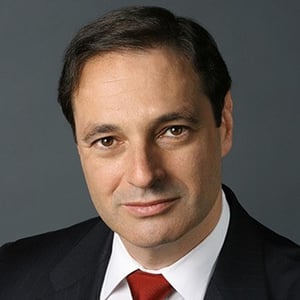
Senior Fellow, Competitive Enterprise Institute
Joel M. Zinberg, M.D., J.D. is a senior fellow with the Competitive Enterprise Institute. He is a native New Yorker who recently completed two years as General Counsel and Senior Economist at the Council of Economic Advisers in the Executive Office of the President. He practiced general and oncologic surgery in New York for nearly 30 years at the Mount Sinai Hospital and Icahn School of Medicine where he is an Associate Clinical Professor of Surgery. He has been involved with health policy issues and the interaction between law and medicine for his entire career. Dr. Zinberg taught for 10 years at the Columbia University Law School as a Lecturer in Law where he created a course on the legal, policy and ethical issues surrounding organ transplantation. He served for many years on the New York State Board of Professional Medical Conduct and on Mount Sinai's Ethics Committee and Institutional Review Board. He is past President and Trustee of the New York County Medical Society. Between 2015 and 2017 he was a Visiting Scholar at the American Enterprise Institute.
Dr. Zinberg has written for publications as varied as the Journal of the American Medical Association, the Bulletin of the American College of Surgeons, the Wall Street Journal, City Journal and law reviews. He is the author of book chapters on legal and policy issues in organ transplantation.
He received his J.D. degree from the Yale Law School, his M.D. from the Columbia University College of Physicians and Surgeons and his B.A. in economics with High Honors, Phi Beta Kappa, from Swarthmore College.
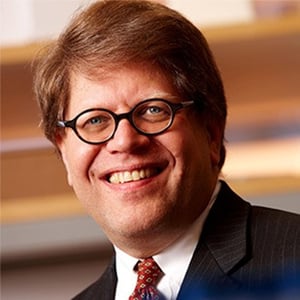
Faculty Fellow, Center for Law, Science & Innovation, Sandra Day O'Connor College of Law, Arizona State University
Dr. Klein is a Faculty Fellow at the Center for Law, Science & Innovation at the Sandra Day O'Connor College of Law at Arizona State University. He is also Principal at Roger D. Klein, MD JD Consulting and Klein & Klein Co., L.P.A. He was formerly Chief Medical Officer at OmniSeq, an oncology focused genomic profiling company that was recently acquired by LabCorp. Previously, Roger was the Medical Director at the Molecular Oncology division at the Cleveland Clinic. He was also the Chair of the Professional Relations Committee at the Association for Molecular Pathology. Prior to joining the Cleveland Clinic, he served as Medical Director of Molecular Oncology at the BloodCenter of Wisconsin where he led the center’s Diagnostic Laboratories’ initiative focused on DNA- and RNA-based testing for evaluation of cancer patients.
Dr. Klein has been an advisor to the Department of Health and Human Services (HHS), the Food and Drug Administration (FDA), the Centers for Medicare and Medicaid Services (CMS), and the Centers for Disease Control and Prevention (CDC). He has participated in and assumed leadership roles in many professional society committees and corporate advisory boards and is a policy advisor to the Heartland Institute.
Dr. Klein is licensed to practice medicine in Ohio, Florida, and Wisconsin. Additionally, he is licensed to practice law in the District of Columbia and Ohio. Roger obtained his Molecular Genetic Pathology certification at Mayo Medical School following completion of his M.D. Yale University School of Medicine. He obtained his J.D. from Yale Law School.
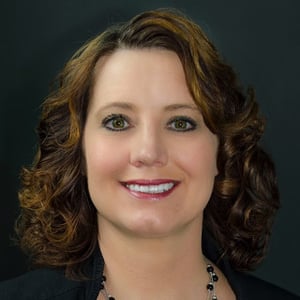
Director, International Center for Food Industry Excellence, Texas Tech University
Dr. Mindy Brashears is the former Under Secretary of Agriculture in Food Safety where she served the USDA as a political appointee from 2019-2021. She is currently the Associate Vice President of Research at Texas Tech University and a Professor of Food Safety and Public Health holding the Roth and Letch family Endowed Chair of Food Safety. She also serves as the Director of the International Center for Food Industry Excellence at Texas Tech University.
She is a fellow of the National Academy of Inventors and has 3 spinoff companies based on her work. She holds a B.S. in food technology from Texas Tech (magna cum laude) and M.S. and Ph.D. degrees in food science from Oklahoma State University. She is married to Dr. Todd Brashears, who is a professor of agricultural education, and has three daughters, Bailey, Reagan (Jimenez) and Presley and one son-in-law, Eli Jimenez. Her research focuses on mitigation strategies in pre-and post-harvest environments and on the emergence of antimicrobial drug resistance in agricultural ecosystems. Her interests are primarily in meat, poultry and vegetable products.
She also has a passion for food security and has led international research teams to numerous places across Latin America and the Caribbean to improve food safety and security in those sectors and to set up sustainable agriculture systems in developing areas. She teaches courses in food microbiology and food safety and offers industry training in food safety and security. She has received multiple awards including the IAFP Laboratorian Award, The AMSA Research and Industry/Extension Award and was named as a Future Icon in the Meat Industry by the National Provisioner Magazine.
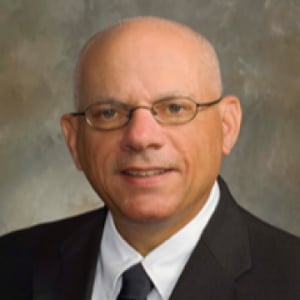
MD
Dr. Ostroff retired from the US Food and Drug Administration (FDA) in early 2019.
During his 7 years at FDA, he served as Deputy Commissioner for Foods and
Veterinary Medicine, where he oversaw the agency’s food and animal health
activities of FDA, including responsibilities in the areas of food safety and
nutrition, food labeling, food and color additives, cosmetics, dietary supplements,
animal drugs and animal feed, and research to support the food and veterinary
medicine mission of FDA. Dr. Ostroff also served as FDA’s Chief Scientist and as
the agency’s Acting Commissioner on two occasions in both the Obama and
Trump administrations.
Before joining the FDA, Dr. Ostroff worked at the Centers for Disease Control and
Prevention (CDC) in Atlanta for more than 20 years on infectious disease
surveillance and outbreak investigations, especially management and
coordination of complex emerging infectious disease threats such as anthrax,
Ebola, West Nile virus, SARS, and avian influenza. He was in the US Public Health
Service Commissioned Corps, attaining the rank of Assistant Surgeon General
(Rear Admiral). He also worked at the Pennsylvania Department of Health as
Director of the Bureau of Epidemiology and the Commonwealth’s Acting Physician
General.
Dr. Ostroff received his undergraduate and medical degrees from the University
of Pennsylvania. He currently holds adjunct professor appointments at Penn
State College of Medicine’s Department of Public Health Sciences and the
University of Pittsburgh School of Public Health’s Department of Epidemiology.

Deputy Secretary of Agriculture, U.S. Department of Agriculture
Judge Stephen Alexander Vaden was appointed as the Deputy Secretary of the U.S. Department of Agriculture on July 7, 2025. Alongside Secretary Brooke L. Rollins, Deputy Secretary Vaden leads the Department’s operations and implements policies that support America’s food and farm systems. A native of Union City, Tennessee, Deputy Secretary Vaden brings expertise in agricultural policy, law, and rural development. Previously, he served as a judge on the U.S. Court of International Trade and as General Counsel of USDA. Throughout Deputy Secretary Vaden’s time as General Counsel, he led successful Supreme Court litigation, advanced regulatory reform, and supported the implementation of the 2018 Farm Bill. He is a graduate of Yale Law School and Vanderbilt University. A public servant with strong agricultural roots, Deputy Secretary Vaden is committed to revitalizing rural America and ensuring an abundant, affordable, and safe U.S. food supply.
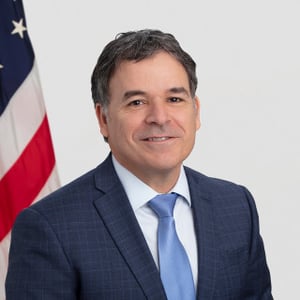
Former Deputy Commissioner for Food Policy and Response, FDA
Frank Yiannas is a former Deputy Commissioner for Food Policy and Response, a position he assumed in December of 2018. In that role he was the principal advisor to the FDA Commissioner in the development and execution of policies related to food safety, including implementation of the FDA Food Safety Modernization Act (FSMA). His leadership role within the Agency covered a broad spectrum of food safety priorities, such as outbreak response, traceback investigations, product recall activities, and supply chain innovation across the full spectrum of FDA-regulated products.
Prior to his time at FDA, Mr. Yiannas held leadership roles with two industry giants: Walmart and the Walt Disney Company. At Walmart, which he joined in 2008 and served for over a decade, Mr. Yiannas was the Vice President for Food Safety. In this role, he led the effort to make Walmart the first U.S. retailer to require suppliers to achieve certification against one of the Global Food Safety Initiative (GFSI) benchmarked food safety schemes.
At Disney, where he worked for 19 years, he was the Director of Safety and Health. During his tenure, Disney received the prestigious Black Pearl Award for corporate excellence in food safety from the International Association for Food Protection. The recipient of numerous awards, in 2007, he received the National Science Foundation’s International Lifetime Achievement Award for Leadership in Food Safety. He is also the recipient of the Collaboration Award by FDA in 2008 and he was named the 2015 Industry Professional Food Safety Hero Award by STOP Foodborne Illness, a consumer advocacy group.
Mr. Yiannas is a past president of the International Association for Food Protection and a past vice-chairman of the Global Food Safety Initiative. He was also an adjunct Professor in the Food Safety Program at Michigan State University, and in 2017 was awarded the MSU Outstanding Faculty Award.
A microbiologist, Mr. Yiannas received a B.S. in microbiology from the University of Central Florida and a Master of Public Health degree from the University of South Florida.
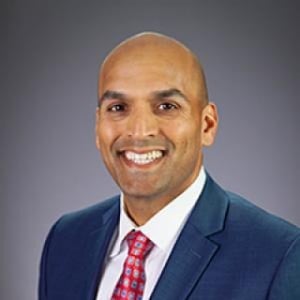
Senior Counsel, Alliance Defending Freedom
Erik Baptist serves as senior counsel at Alliance Defending Freedom, focusing on administrative litigation and regulatory advocacy.
Before joining ADF, Baptist was a partner at Wiley Rein LLP—one of the largest law firms in Washington, D.C.—where he employed his expertise in administrative and environmental law to represent clients on litigation, regulatory, and enforcement matters.
Prior to working at Wiley, Baptist served as a senior executive service appointee at the U.S. Environmental Protection Agency. As the senior deputy general counsel and deputy assistant administrator, he directed EPA’s litigation, implemented groundbreaking rulemakings and policies, represented EPA and defended witnesses in response to congressional inquiries, and collectively helped oversee the work of more than 1,100 EPA lawyers, scientists, and staff.
Baptist began his career in the Trial Department of the international law firm McDermott, Will & Emery LLP. He earned his B.A. from Vanderbilt University and his J.D. from The George Washington University Law School. During law school, Baptist externed for the Honorable Ricardo M. Urbina of the U.S. District Court for the District of Columbia, interned for the Honorable Eric T. Washington of the D.C. Court of Appeals, and served on The George Washington International Law Review.
Baptist is an active member of the D.C. Bar and is admitted to practice before the U.S. Supreme Court and various federal courts of appeal.
Faculty Fellow, Center for Law, Science & Innovation, Sandra Day O'Connor College of Law, Arizona State University
Dr. Klein is a Faculty Fellow at the Center for Law, Science & Innovation at the Sandra Day O'Connor College of Law at Arizona State University. He is also Principal at Roger D. Klein, MD JD Consulting and Klein & Klein Co., L.P.A. He was formerly Chief Medical Officer at OmniSeq, an oncology focused genomic profiling company that was recently acquired by LabCorp. Previously, Roger was the Medical Director at the Molecular Oncology division at the Cleveland Clinic. He was also the Chair of the Professional Relations Committee at the Association for Molecular Pathology. Prior to joining the Cleveland Clinic, he served as Medical Director of Molecular Oncology at the BloodCenter of Wisconsin where he led the center’s Diagnostic Laboratories’ initiative focused on DNA- and RNA-based testing for evaluation of cancer patients.
Dr. Klein has been an advisor to the Department of Health and Human Services (HHS), the Food and Drug Administration (FDA), the Centers for Medicare and Medicaid Services (CMS), and the Centers for Disease Control and Prevention (CDC). He has participated in and assumed leadership roles in many professional society committees and corporate advisory boards and is a policy advisor to the Heartland Institute.
Dr. Klein is licensed to practice medicine in Ohio, Florida, and Wisconsin. Additionally, he is licensed to practice law in the District of Columbia and Ohio. Roger obtained his Molecular Genetic Pathology certification at Mayo Medical School following completion of his M.D. Yale University School of Medicine. He obtained his J.D. from Yale Law School.
Senior Fellow, Competitive Enterprise Institute
Joel M. Zinberg, M.D., J.D. is a senior fellow with the Competitive Enterprise Institute. He is a native New Yorker who recently completed two years as General Counsel and Senior Economist at the Council of Economic Advisers in the Executive Office of the President. He practiced general and oncologic surgery in New York for nearly 30 years at the Mount Sinai Hospital and Icahn School of Medicine where he is an Associate Clinical Professor of Surgery. He has been involved with health policy issues and the interaction between law and medicine for his entire career. Dr. Zinberg taught for 10 years at the Columbia University Law School as a Lecturer in Law where he created a course on the legal, policy and ethical issues surrounding organ transplantation. He served for many years on the New York State Board of Professional Medical Conduct and on Mount Sinai's Ethics Committee and Institutional Review Board. He is past President and Trustee of the New York County Medical Society. Between 2015 and 2017 he was a Visiting Scholar at the American Enterprise Institute.
Dr. Zinberg has written for publications as varied as the Journal of the American Medical Association, the Bulletin of the American College of Surgeons, the Wall Street Journal, City Journal and law reviews. He is the author of book chapters on legal and policy issues in organ transplantation.
He received his J.D. degree from the Yale Law School, his M.D. from the Columbia University College of Physicians and Surgeons and his B.A. in economics with High Honors, Phi Beta Kappa, from Swarthmore College.

Vape Debate at the Supreme Court
Todd Wages, Anthony Alberg, Jeff Stier, Richard Seamon, Eric N. Heyer
In 2021, the FDA denied Todd Wages’ application to sell flavored e-liquids for vapes, claiming...
Courthouse Steps Decision: FDA v. Wages and White Lion Investments, L.L.C.
Jonathan H. Adler, Kristin E. Hickman, Eli Nachmany, Richard J. Pierce
Under the Family Smoking Prevention and Tobacco Control Act, the FDA must approve new tobacco...
Panel I: How We Got Here – The Supreme Court’s “Anti-Administrativist” Turn?
Jenn L. Mascott, Nina A. Mendelson, Thomas W. Merrill, Aaron Nielson, Jeffrey Pojanowski, Chad A. Readler
Featuring: Prof. Jeffrey Pojanowski, Biolchini Family Professor of Law, Notre Dame Law School Prof. Jennifer...
Daniel Webster Debate Series: Should the Court Restore Chevron?
The Federalist Society's Georgetown Law Chapter'sDaniel Webster Debate Series presents Daniel Webster Debate Series:Should the...
The Law, Policy, and Politics of Rescheduling Cannabis
Douglas A. Berman, Paul James Larkin, Bertha K. Madras
The legal status of cannabis has been a controversial issue ever since the Controlled Substances...
Explainer 62 - FDA's Regulation of Laboratory Developed Tests
Joel Zinberg
For many years FDA has claimed the authority to regulate Laboratory Developed Tests, that is...
Explainer Episode 53 - Biologics, Biosimilars, and the Two-fold U.S. Approval Framework’s Possible Impact on Prices
Roger D. Klein
Biosimilars, a category of biologic (medicine derived from a living organism), require approval, at least...
Food Safety: When Regulatory Jurisdictional Battles and Public Safety Collide
Mindy Brashears, Stephen Ostroff, Stephen Alexander Vaden, Frank Yiannas
Food is a necessity for life. It should therefore surprise few that the federal government...
Litigation Update: AHM v. FDA: Challenging the FDA on “Chemical Abortion Drugs"
Erik Baptist, Roger D. Klein
In November 2022, the Alliance Defending Freedom (ADF) filed a federal lawsuit in the U.S....
Explainer Episode 48 - The FDA & the Practice of Medicine: Possible Regulation of Off-Label Prescriptions
Joel Zinberg
On December 29, 2022, President Biden signed the Consolidated Appropriations Act, 2023 into law. This omnibus law...