
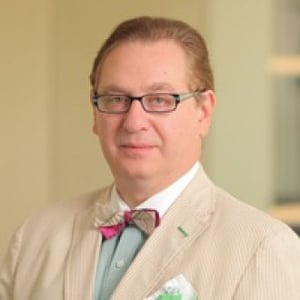
Partner, Baker Hostetler LLP
David Rivkin is a member of the firm's litigation, international and environmental teams and is co-leader of the firm's national appellate practice. He has extensive experience in constitutional, administrative and international law litigation and has been involved in numerous high-profile cases. With his prior experience in the government sector, David draws on a wealth of knowledge when providing compliance advice to companies and handling enforcement proceedings before government agencies on issues arising out of multilateral and unilateral sanctions, the Foreign Corrupt Practices Act (FCPA), anti-boycott issues, bankruptcy and financial fraud matters, and environmental and energy issues.
David has developed and implemented legislative, regulatory and litigation initiatives for two presidential administrations. Over the years, he has published hundreds of articles, op-eds, book reviews and book chapters on a variety of international, legal, constitutional, defense, arms control, foreign policy, environmental and energy issues for various newspapers and magazines, including The Wall Street Journal, The Washington Post, The New York Times, USA Today and The Los Angeles Times, and has been a frequent commentator and guest on TV and radio shows including ABC, CBS, NBC, CNN, Fox News, NPR and PBS.

Partner, Baker & Hostetler LLP
Mark DeLaquil is a first-chair trial and appellate advocate who focuses on complex environmental and regulatory proceedings, First Amendment practice and political law.
Mark has been recognized by Chambers USA for environmental litigation (2015 to 2024) and has been named by Law360 as one of the "Top 5 Environmental Attorneys Under the Age of 40" on two occasions.
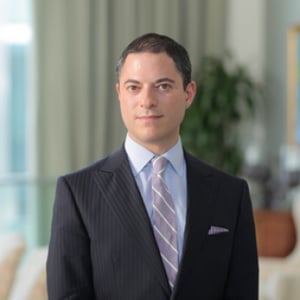
Partner, BakerHostetler, Adjunct Fellow, The Manhattan Institute
Andrew Grossman leads BakerHostetler’s Appellate and Major Motion team. He has appeared before the U.S. Supreme Court, nearly all the federal courts of appeals, as well as some state appellate courts, litigating high-profile and complex commercial, administrative and constitutional issues.
Andrew works with practice groups across BakerHostetler to identify and tackle complex issues, advise on administrative law and strategy, tee up issues for appeal and tackle appeals. He has developed and implemented litigation and administrative strategies for clients in several fields and industries.
In addition to his practice, Andrew advises members of Congress on matters of constitutional and administrative law, having testified more than a dozen times before the House and Senate Judiciary Committees. He has been a frequent legal commentator on radio and television, having appeared on Fox News, CNN, MSNBC, CNBC, NPR and its affiliates, CBN and elsewhere. His legal commentary has also appeared in dozens of magazines and newspapers, including The Wall Street Journal, USA Today, The Washington Post, The Washington Times and many others.
Andrew is a Senior Legal Fellow at the Buckeye Institute, an Adjunct Fellow the Manhattan Institute and a member of the leadership of the Federalist Society. He previously served as an adjunct scholar at the Cato Institute’s Robert A. Levy Center for Constitutional Studies and a legal fellow at the Heritage Foundation’s Meese Center for Legal and Judicial Studies. He clerked for Judge Edith H. Jones on the U.S. Court of Appeals for the Fifth Circuit.
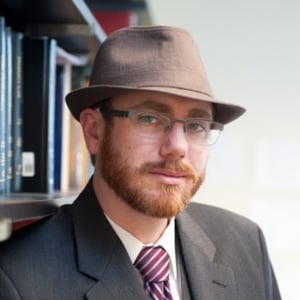
Professor of Law and Associate Dean, Boston College Law School; Nonresident Senior Fellow, American Enterprise Institute, Boston College Law School
Professor Lyons is a Professor and Associate Dean at Boston College Law School. He specializes in telecommunications and tech policy, energy, and administrative law. Before joining the faculty, he practiced at the firm of Munger, Tolles and Olson in Los Angeles. He also clerked for the Judge Cynthia Holcomb Hall of the Ninth Circuit Court of Appeals.
Professor Lyons is also a Nonresident Senior Fellow at the American Enterprise Institute, where he has written over 250 blog posts on tech policy issues, including net neutrality, telecommunications regulation, First Amendment issues with tech regulation, and generative AI.
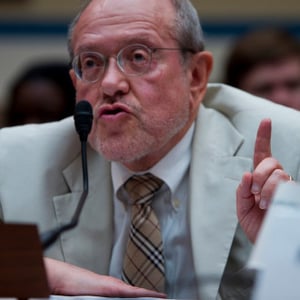
Fellow, The Constitution Project at the Project On Government Oversight
Morton Rosenberg was a senior legal analyst with the Congressional Research Service (CRS) for 35 years specializing in the areas of constitutional law , administrative law and process, congressional practice and procedure, and labor law, and in the problems raised by the interface of Congress and the Executive which involved the scope of congressional oversight and investigative prerogatives, the validity of claims of executive and common law privileges before committees, enforcement of subpoenas, and issues raised by the presidential exercise of temporary and recess appointment. He also served extended details as legal counsel for a special investigative committee and as a legal advisor to the House General Counsel.
Since his retirement from CRS in 2008 he has undertaken a variety of consulting projects and assignments that have tapped into his experience and expertise in constitutional, congressional and administrative law, practice and procedure. This has included an engagement by the Constitution Project to research and write a monograph on congressional investigative oversight in 2009 which was updated and expanded and published in May 2017 entitled "When Congress Comes Calling: A Study on the Principles, Practices. and Pragmatics of Legislative Inquiry." He also served as a consultant to the general counsel of the Public Company Accounting Oversight Board (PCAOB) and its private counsel in the preparation of briefs and for oral argument before the Supreme Court in Free Enterprise Fund v. PCAOB (2010); and in preparing and submitting an amicus brief to the Supreme Court in NLRB v. SW General (2017) which was cited five times by the majority opinion. He is presently of counsel to the law firm Barnett Sivon & Natter, Washington, D.C. and a Constitution Project Fellow.
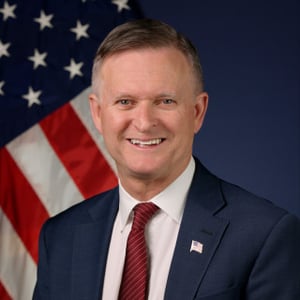
Deputy Secretary of Transportation, US Department of Transportation
Steven G. Bradbury was sworn in as the Deputy Secretary of Transportation on March 13, 2025, following his confirmation by the U.S. Senate on March 11, 2025. In this role, he oversees the Department’s operating administrations and spearheads initiatives to ensure a safe, efficient, and modern transportation system that strengthens economic productivity and global competitiveness. Deputy Secretary Bradbury also assists Secretary Duffy in managing the Department’s activities, including its workforce of over 58,000 employees and an annual budget exceeding $109 billion.
Bradbury previously served as the 23rd General Counsel of the Department of Transportation from 2017 to 2021, as the Acting Deputy Secretary from 2019, and as Acting Secretary of Transportation in 2021. As General Counsel, he was the chief legal officer, advising on all legal matters and ensuring the integrity and compliance of the Department’s policies and programs.
Before rejoining DOT, Bradbury was a Distinguished Fellow at The Heritage Foundation from December 2022 to March 2025. He has extensive experience in the public and private sector, having served as Principal Deputy and Acting Assistant Attorney General at the U.S. Department of Justice and as a partner at Kirkland & Ellis LLP and Dechert LLP. Earlier in his career, he clerked for Justice Clarence Thomas and Judge James L. Buckley.
Bradbury holds a J.D., magna cum laude, from the University of Michigan Law School and a B.A. in English from Stanford University.

Laurence H. Silberman Chair in Constitutional Governance, American Enterprise Institute; Executive Director, Antonin Scalia Law School’s C. Boyden Gray Center for the Study of the Administrative State
Adam J. White is the Laurence H. Silberman Chair in Constitutional Governance and senior fellow at the American Enterprise Institute, where he focuses on the Supreme Court and the administrative state. He also directs the Antonin Scalia Law School’s C. Boyden Gray Center for the Study of the Administrative State.
He writes on regulation and constitutional government for a variety of publications. He practiced law in Washington, D.C., after clerking for the D.C. Circuit's Judge David Sentelle. He also has been chairman of the ABA's Administrative Law Section.
In 2021, he served on the Presidential Commission on the Supreme Court of the United States, where he criticized “Court packing” and other efforts to restructure the Supreme Court.

Does EPA’s Clean Power Plan Proposal Violate the States’ Sovereign Rights?
David B. Rivkin, Mark DeLaquil, Andrew Grossman
Note from the Editor: This article discusses the Environmental Protection Agency’s Clean Power Plan under...
Oneok v. Learjet - Post-Argument SCOTUScast
Daniel Lyons
On January 12, 2015, the Supreme Court heard oral argument in Oneok, Inc. v....
Book Review: America the Vulnerable: Inside the New Threat Matrix of Digital Espionage, Crime, and Warfare
Hartmann Young
America the Vulnerable: Inside the New Threat Matrix of Digital Espionage, Crime, and Warfare By...
"Agency vs. Agency," and Other Problems of Overlapping Jurisdiction
Congress Reforms Vacancies Act to Protect the Senate's Confirmation Prerogative
Morton Rosenberg
The Constitution directs how officials who will exercise substantial authority under the laws are to...