
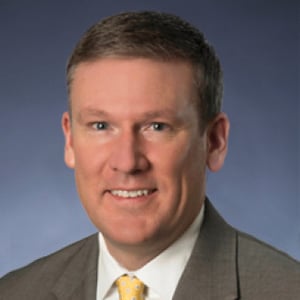
Senior Advisor, Wilkinson Barker Knauer LLP
Mr. Clark is a Senior Advisor at Wilkinson Barker Knauer, LLP. He has extensive experience in energy and utility policy at the federal and state level. He provides clients with analysis and strategic advice on a variety regulatory and public policy matters affecting their businesses. He specializes in working with clients in the energy and telecommunications industries and at the nexus of state and federal jurisdictional issues.
Having been appointed by President Obama, and unanimously confirmed by the U.S. Senate, Mr. Clark served from 2012 to 2016 as a Commissioner of the Federal Energy Regulatory Commission. While at the FERC, Mr. Clark worked on matters that are at the forefront of energy policy, such as: electricity reliability, electricity-natural gas industry coordination, oversight of the nation’s Regional Transmission Organizations, electricity grid cyber and physical security regulations, major enforcement actions, energy infrastructure permitting, the integration of renewables and energy storage, FERC Order 1000 implementation, and wholesale electricity market reforms. From 2001 to 2012 he was a Commissioner of the North Dakota Public Service Commission, including over 5 years as its Chairman. During his tenure at the North Dakota Commission, Mr. Clark oversaw numerous proceedings related to the state’s historic emergence as a leader in American energy production. In 2010, he was selected by his regulatory peers across the nation to serve a term as President of the National Association of Regulatory Utility Commissioners. He also served a three-year term as Chairman of the NARUC Telecommunications Committee. Through his various regulatory positions, he has testified multiple times before Committees of both the US House and US Senate on matters related to energy and telecommunications.
From 1999 to 2000, Mr. Clark was Labor Commissioner of the State of North Dakota and a member of the Cabinet of Gov. Ed Schafer. In 1994 he was one of the youngest people ever elected to the North Dakota legislature, representing a portion of the City of Fargo for two terms in the State House of Representatives. He is a graduate, with honor, from North Dakota State University and holds a master’s degree from the University of North Dakota. In addition to his work at Wilkinson Barker Knauer, LLP, Mr. Clark serves as a non-employee independent director on the Board of Directors of NorthWestern Energy Corporation. Having attained the rank of Eagle Scout in his youth, Mr. Clark has been a long-time volunteer with and supporter of the Boy Scouts of America.
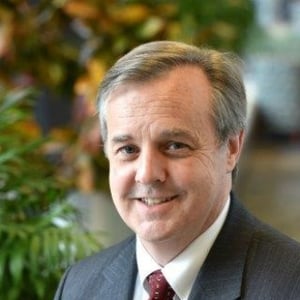
Chief, Federal Regulatory Policy for PSEG
Larry Gasteiger was named chief, federal regulatory policy, Public Service Enterperise Group Incorpoated (PSEG) in October 2016.
Mr. Gasteiger served as Chief of Staff at FERC culminating a noteworthy 19-year tenure at FERC in which he held a variety of leadership roles. He previously served as the Acting Director of the Office of Enforcement from August 2014 to April 2015 after having served as the Deputy Director from 2009 to 2014. Before he joined the Office of Enforcement, Mr. Gasteiger was the Director of the Division of Tariffs and Market Development - East in the Office of Energy Market Regulation. Prior to that, he held several other positions at the Commission, including Deputy Associate General Counsel, Legal Advisor to Chairman Joseph T. Kelliher, and attorney in the FERC’s Solicitor's Office.
Before joining FERC in 1997, Mr. Gasteiger was an attorney in the General Counsel's Office at the Commodity Futures Trading Commission, and from 1989 to 1991 he served as a law clerk for the Honorable Edwin M. Kosik in the United States District Court for the Middle District of Pennsylvania.
Mr. Gasteiger is a graduate of the University of Pennsylvania and the Dickinson School of Law. He is a former Board Member of the Northeast Chapter of the Energy Bar Association and former Board Member and Secretary of the Saint Ambrose School.
Denver Managing Partner, Wilkinson Barker Knauer LLP
Raymond L. Gifford counsels communications, electric and gas utilities, and information technology companies on state and federal aspects of regulation, administrative law, and competition policy. He is an expert in public utilities law, and the law and economics of regulation of network industries. Mr. Gifford’s law and policy work focuses on the convergence of broadband communications and energy, as well as environmental policy as it applies to the electric industry. He represents clients in state and federal courts and agencies, and serves as an expert witness on utility regulation and its history. He is also a Senior Adjunct Fellow at the Silicon Flatirons Center for Law, Technology and Entrepreneurship, and Co-Directs the Institute for Regulatory Law & Economics at University of Colorado Law School.
Mr. Gifford served as Chairman of the Colorado Public Utilities Commission from 1999-2003. Following that, he served as President of The Progress & Freedom Foundation, a Washington DC-based think-tank that studied the digital revolution as it relates to regulation of network industries. He entered the regulatory law world as First Assistant Attorney General in the Colorado Attorney General’s Office. He clerked for the Honorable Richard P. Matsch of the United States District Court for the District of Colorado. Mr. Gifford has authored a number of articles on communications law, public utility regulation and competition policy in network industries. He is a graduate of University of Chicago Law School and St. John’s College in Annapolis, Maryland. He is an elected member of the American Law Institute
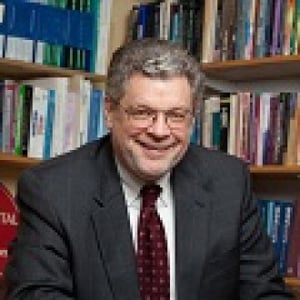
Research Director, Harvard Electricity Policy Group, Raymond Pla, Harvard University
William W. Hogan, Raymond Plank Professor of Global Energy Policy, is research director of the Harvard Electricity Policy Group (HEPG), which is examining alternative strategies for a more competitive electricity market, and a member of the Appointments Committee. Prof. Hogan has been a member of the faculty of Stanford University where he founded the Energy Modeling Forum (EMF), and he is a past president of the International Association for Energy Economics (IAEE). Current research focuses on major energy industry restructuring, network pricing and access issues, market design, and energy policy in nations worldwide. Prof. Hogan received his undergraduate degree from the U.S. Air Force Academy and his PhD from UCLA. Selected papers are available on his Web site, www.whogan.com.
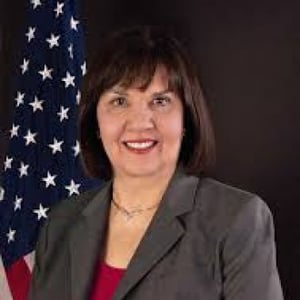
Acting FERC Chairman, Federal Energy Regulatory Commission
Acting Chairman Cheryl A. LaFleur was first nominated by President Barack Obama to the Federal Energy Regulatory Commission in 2010 and was confirmed for a second term by the Senate in 2014. On January 23, 2017 she was appointed Acting Chairman by President Donald Trump. She was previously appointed by President Barack Obama to serve as Acting Chairman of the Commission from November 2013 to July 2014 and as Chairman from July 2014 until April 2015.
Acting Chairman LaFleur is honored to be a member of the Commission at a time when the nation is making substantial changes in its energy supply and infrastructure to meet environmental challenges and improve reliability and security. Since she joined the Commission, her priorities have included reliability and grid security, promoting regional transmission planning, and supporting a clean and diverse power supply. She is a member of the NARUC Committees on Electricity and Critical Infrastructure and was co-chair of the FERC/NARUC Forum on Reliability and the Environment. She is a frequent speaker on energy issues.
Prior to joining the Commission in 2010, Acting Chairman LaFleur had more than 20 years’ experience as a leader in the electric and natural gas industry. She served as executive vice president and acting CEO of National Grid USA, responsible for the delivery of electricity to 3.4 million customers in the Northeast. Her previous positions at National Grid USA and its predecessor New England Electric System included chief operating officer, president of the New England distribution companies and general counsel. She led major efforts to improve reliability and employee safety. Earlier in her career, she was responsible for leading award-winning conservation and demand response programs for customers.
Acting Chairman LaFleur has been a nonprofit board member and leader, including as a trustee of Beth Israel Deaconess Medical Center, Worcester Polytechnic Institute, United Way of Central Massachusetts, and several other organizations. She is also active in a number of women’s energy organizations.
Acting Chairman LaFleur was named Woman of the Year by the Women’s Council on Energy and the Environment in 2015. In 2014, the Northeast Energy and Commerce Association presented her with its Vanguard Award for her long-time leadership in the development of competitive power markets. She received a Bipartisan Congressional Award in 2013 for her work on grid reliability. She has also been honored by the Greater Boston Chamber of Commerce and the YWCA of Central Massachusetts, among others.
Acting Chairman LaFleur began her career as an attorney at Ropes and Gray in Boston. She has a J.D. from Harvard Law School, where she was an editor of the Harvard Law Review, and an A.B. from Princeton University. A native of Massachusetts, she is married to William Kuncik, a retired attorney, and they are the parents of two grown children.
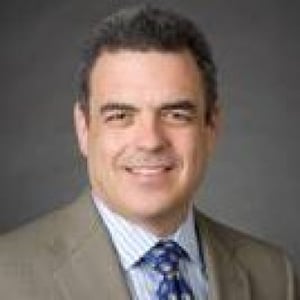
Senior Vice President for Government and Regulatory Affairs, Calpine Corp.
Mr. Steven Schleimer has been Senior Vice President of Government and Regulatory Affairs at Calpine Corp. since January 1, 2014. Mr. Schleimer served as a Vice President of Government and Regulatory Affairs for Calpine’s North Region since 2010. From 2006 to 2010, Mr. Schleimer served as Vice President at Barclays Capital in New York and was responsible for market design and regulatory issues. Prior to that, he had served as Calpine’s Vice President of Market and Regulatory Affairs in the West Region from 2000 to 2006. Mr. Schleimer spent the first 12 years of his career at Pacific Gas and Electric Company. He earned a master’s degree and a bachelor’s degree, with highest honors, in Economics from the University of California at Santa.
Senior Advisor, Wilkinson Barker Knauer LLP
Mr. Clark is a Senior Advisor at Wilkinson Barker Knauer, LLP. He has extensive experience in energy and utility policy at the federal and state level. He provides clients with analysis and strategic advice on a variety regulatory and public policy matters affecting their businesses. He specializes in working with clients in the energy and telecommunications industries and at the nexus of state and federal jurisdictional issues.
Having been appointed by President Obama, and unanimously confirmed by the U.S. Senate, Mr. Clark served from 2012 to 2016 as a Commissioner of the Federal Energy Regulatory Commission. While at the FERC, Mr. Clark worked on matters that are at the forefront of energy policy, such as: electricity reliability, electricity-natural gas industry coordination, oversight of the nation’s Regional Transmission Organizations, electricity grid cyber and physical security regulations, major enforcement actions, energy infrastructure permitting, the integration of renewables and energy storage, FERC Order 1000 implementation, and wholesale electricity market reforms. From 2001 to 2012 he was a Commissioner of the North Dakota Public Service Commission, including over 5 years as its Chairman. During his tenure at the North Dakota Commission, Mr. Clark oversaw numerous proceedings related to the state’s historic emergence as a leader in American energy production. In 2010, he was selected by his regulatory peers across the nation to serve a term as President of the National Association of Regulatory Utility Commissioners. He also served a three-year term as Chairman of the NARUC Telecommunications Committee. Through his various regulatory positions, he has testified multiple times before Committees of both the US House and US Senate on matters related to energy and telecommunications.
From 1999 to 2000, Mr. Clark was Labor Commissioner of the State of North Dakota and a member of the Cabinet of Gov. Ed Schafer. In 1994 he was one of the youngest people ever elected to the North Dakota legislature, representing a portion of the City of Fargo for two terms in the State House of Representatives. He is a graduate, with honor, from North Dakota State University and holds a master’s degree from the University of North Dakota. In addition to his work at Wilkinson Barker Knauer, LLP, Mr. Clark serves as a non-employee independent director on the Board of Directors of NorthWestern Energy Corporation. Having attained the rank of Eagle Scout in his youth, Mr. Clark has been a long-time volunteer with and supporter of the Boy Scouts of America.
Chief, Federal Regulatory Policy for PSEG
Larry Gasteiger was named chief, federal regulatory policy, Public Service Enterperise Group Incorpoated (PSEG) in October 2016.
Mr. Gasteiger served as Chief of Staff at FERC culminating a noteworthy 19-year tenure at FERC in which he held a variety of leadership roles. He previously served as the Acting Director of the Office of Enforcement from August 2014 to April 2015 after having served as the Deputy Director from 2009 to 2014. Before he joined the Office of Enforcement, Mr. Gasteiger was the Director of the Division of Tariffs and Market Development - East in the Office of Energy Market Regulation. Prior to that, he held several other positions at the Commission, including Deputy Associate General Counsel, Legal Advisor to Chairman Joseph T. Kelliher, and attorney in the FERC’s Solicitor's Office.
Before joining FERC in 1997, Mr. Gasteiger was an attorney in the General Counsel's Office at the Commodity Futures Trading Commission, and from 1989 to 1991 he served as a law clerk for the Honorable Edwin M. Kosik in the United States District Court for the Middle District of Pennsylvania.
Mr. Gasteiger is a graduate of the University of Pennsylvania and the Dickinson School of Law. He is a former Board Member of the Northeast Chapter of the Energy Bar Association and former Board Member and Secretary of the Saint Ambrose School.
Denver Managing Partner, Wilkinson Barker Knauer LLP
Raymond L. Gifford counsels communications, electric and gas utilities, and information technology companies on state and federal aspects of regulation, administrative law, and competition policy. He is an expert in public utilities law, and the law and economics of regulation of network industries. Mr. Gifford’s law and policy work focuses on the convergence of broadband communications and energy, as well as environmental policy as it applies to the electric industry. He represents clients in state and federal courts and agencies, and serves as an expert witness on utility regulation and its history. He is also a Senior Adjunct Fellow at the Silicon Flatirons Center for Law, Technology and Entrepreneurship, and Co-Directs the Institute for Regulatory Law & Economics at University of Colorado Law School.
Mr. Gifford served as Chairman of the Colorado Public Utilities Commission from 1999-2003. Following that, he served as President of The Progress & Freedom Foundation, a Washington DC-based think-tank that studied the digital revolution as it relates to regulation of network industries. He entered the regulatory law world as First Assistant Attorney General in the Colorado Attorney General’s Office. He clerked for the Honorable Richard P. Matsch of the United States District Court for the District of Colorado. Mr. Gifford has authored a number of articles on communications law, public utility regulation and competition policy in network industries. He is a graduate of University of Chicago Law School and St. John’s College in Annapolis, Maryland. He is an elected member of the American Law Institute
Research Director, Harvard Electricity Policy Group, Raymond Pla, Harvard University
William W. Hogan, Raymond Plank Professor of Global Energy Policy, is research director of the Harvard Electricity Policy Group (HEPG), which is examining alternative strategies for a more competitive electricity market, and a member of the Appointments Committee. Prof. Hogan has been a member of the faculty of Stanford University where he founded the Energy Modeling Forum (EMF), and he is a past president of the International Association for Energy Economics (IAEE). Current research focuses on major energy industry restructuring, network pricing and access issues, market design, and energy policy in nations worldwide. Prof. Hogan received his undergraduate degree from the U.S. Air Force Academy and his PhD from UCLA. Selected papers are available on his Web site, www.whogan.com.
Acting FERC Chairman, Federal Energy Regulatory Commission
Acting Chairman Cheryl A. LaFleur was first nominated by President Barack Obama to the Federal Energy Regulatory Commission in 2010 and was confirmed for a second term by the Senate in 2014. On January 23, 2017 she was appointed Acting Chairman by President Donald Trump. She was previously appointed by President Barack Obama to serve as Acting Chairman of the Commission from November 2013 to July 2014 and as Chairman from July 2014 until April 2015.
Acting Chairman LaFleur is honored to be a member of the Commission at a time when the nation is making substantial changes in its energy supply and infrastructure to meet environmental challenges and improve reliability and security. Since she joined the Commission, her priorities have included reliability and grid security, promoting regional transmission planning, and supporting a clean and diverse power supply. She is a member of the NARUC Committees on Electricity and Critical Infrastructure and was co-chair of the FERC/NARUC Forum on Reliability and the Environment. She is a frequent speaker on energy issues.
Prior to joining the Commission in 2010, Acting Chairman LaFleur had more than 20 years’ experience as a leader in the electric and natural gas industry. She served as executive vice president and acting CEO of National Grid USA, responsible for the delivery of electricity to 3.4 million customers in the Northeast. Her previous positions at National Grid USA and its predecessor New England Electric System included chief operating officer, president of the New England distribution companies and general counsel. She led major efforts to improve reliability and employee safety. Earlier in her career, she was responsible for leading award-winning conservation and demand response programs for customers.
Acting Chairman LaFleur has been a nonprofit board member and leader, including as a trustee of Beth Israel Deaconess Medical Center, Worcester Polytechnic Institute, United Way of Central Massachusetts, and several other organizations. She is also active in a number of women’s energy organizations.
Acting Chairman LaFleur was named Woman of the Year by the Women’s Council on Energy and the Environment in 2015. In 2014, the Northeast Energy and Commerce Association presented her with its Vanguard Award for her long-time leadership in the development of competitive power markets. She received a Bipartisan Congressional Award in 2013 for her work on grid reliability. She has also been honored by the Greater Boston Chamber of Commerce and the YWCA of Central Massachusetts, among others.
Acting Chairman LaFleur began her career as an attorney at Ropes and Gray in Boston. She has a J.D. from Harvard Law School, where she was an editor of the Harvard Law Review, and an A.B. from Princeton University. A native of Massachusetts, she is married to William Kuncik, a retired attorney, and they are the parents of two grown children.
Senior Vice President for Government and Regulatory Affairs, Calpine Corp.
Mr. Steven Schleimer has been Senior Vice President of Government and Regulatory Affairs at Calpine Corp. since January 1, 2014. Mr. Schleimer served as a Vice President of Government and Regulatory Affairs for Calpine’s North Region since 2010. From 2006 to 2010, Mr. Schleimer served as Vice President at Barclays Capital in New York and was responsible for market design and regulatory issues. Prior to that, he had served as Calpine’s Vice President of Market and Regulatory Affairs in the West Region from 2000 to 2006. Mr. Schleimer spent the first 12 years of his career at Pacific Gas and Electric Company. He earned a master’s degree and a bachelor’s degree, with highest honors, in Economics from the University of California at Santa.
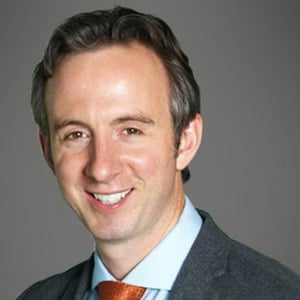
Professor of Law, University of Minnesota Law School
Professor James W. Coleman is a scholar of energy law. He specializes in North American energy infrastructure, transport, and trade. He is also a nonresident senior fellow at the American Enterprise Institute focused on energy policy.
Professor Coleman has testified before Congress on steps to speed up energy infrastructure permits. He also worked with a team of experts as part of Alberta's Royalty Review to revise the Canadian province's management of its vast oil and gas resources.
Before joining Minnesota, Professor Coleman taught at Southern Methodist University's Dedman School of Law, the University of Calgary’s law and business schools, and Harvard Law School. Earlier, he practiced environmental and appellate law at Sidley Austin in Washington, D.C., and clerked for the Honorable Steven M. Colloton of the U.S. Court of Appeals for the Eighth Circuit.
Professor Coleman received two degrees from Harvard University—a J.D. (cum laude) and B.A. in biology (magna cum laude with highest honors in the field). As a result of his undergraduate thesis on butterfly genetics, which required fieldwork in Central Asia, a species of lycaenid butterfly was named after him—Agrodiaetus ripartii colemani.
Professor of Law, University of Minnesota Law School
Professor James W. Coleman is a scholar of energy law. He specializes in North American energy infrastructure, transport, and trade. He is also a nonresident senior fellow at the American Enterprise Institute focused on energy policy.
Professor Coleman has testified before Congress on steps to speed up energy infrastructure permits. He also worked with a team of experts as part of Alberta's Royalty Review to revise the Canadian province's management of its vast oil and gas resources.
Before joining Minnesota, Professor Coleman taught at Southern Methodist University's Dedman School of Law, the University of Calgary’s law and business schools, and Harvard Law School. Earlier, he practiced environmental and appellate law at Sidley Austin in Washington, D.C., and clerked for the Honorable Steven M. Colloton of the U.S. Court of Appeals for the Eighth Circuit.
Professor Coleman received two degrees from Harvard University—a J.D. (cum laude) and B.A. in biology (magna cum laude with highest honors in the field). As a result of his undergraduate thesis on butterfly genetics, which required fieldwork in Central Asia, a species of lycaenid butterfly was named after him—Agrodiaetus ripartii colemani.
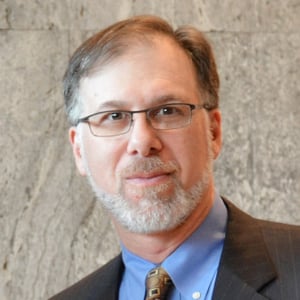
Partner, Schaerr | Jaffe LLP
Erik Jaffe has been involved in appeals on a broad range of legal issues, including First Amendment challenges to campaign finance reform, Commerce Clause challenges to Health Care Reform and other federal legislation, Equal Protection Clause challenges to affirmative action in education, First Amendment challenges to school vouchers, Fifth Amendment challenges to takings of property, Second Amendment challenges to restrictions on gun ownership, and a wide variety of cases involving patents, copyrights, ERISA, securities fraud, federal preemption, environmental regulation, and other state and federal constitutional and statutory matters. He has represented businesses and non-profit groups, Judges, Senators, former government officials, Nobel Prize winners, and a broad cross-section of private individuals. Mr. Jaffe has been involved in over 120 Supreme Court matters, including filing over 30 cert. petitions, representing half-a-dozen parties on the merits, and filing over 70 amicus briefs at both the cert. and merits stages.
A 1990 graduate of the Columbia University School of Law, Mr. Jaffe was a law clerk to Judge Douglas H. Ginsburg of the United States Court of Appeals for the District of Columbia Circuit from 1990 to 1991. Following that clerkship he spent five years in litigation practice with the Washington, D.C. law firm of Williams & Connolly. In the summer of 1996 he left Williams & Connolly to clerk for Supreme Court Justice Clarence Thomas. At the end of that clerkship he started his own practice, and he was a sole practitioner from 1997 to 2018. He joined the firm of Schaerr | Jaffe LLP in 2018.
Senior Advisor, Wilkinson Barker Knauer LLP
Mr. Clark is a Senior Advisor at Wilkinson Barker Knauer, LLP. He has extensive experience in energy and utility policy at the federal and state level. He provides clients with analysis and strategic advice on a variety regulatory and public policy matters affecting their businesses. He specializes in working with clients in the energy and telecommunications industries and at the nexus of state and federal jurisdictional issues.
Having been appointed by President Obama, and unanimously confirmed by the U.S. Senate, Mr. Clark served from 2012 to 2016 as a Commissioner of the Federal Energy Regulatory Commission. While at the FERC, Mr. Clark worked on matters that are at the forefront of energy policy, such as: electricity reliability, electricity-natural gas industry coordination, oversight of the nation’s Regional Transmission Organizations, electricity grid cyber and physical security regulations, major enforcement actions, energy infrastructure permitting, the integration of renewables and energy storage, FERC Order 1000 implementation, and wholesale electricity market reforms. From 2001 to 2012 he was a Commissioner of the North Dakota Public Service Commission, including over 5 years as its Chairman. During his tenure at the North Dakota Commission, Mr. Clark oversaw numerous proceedings related to the state’s historic emergence as a leader in American energy production. In 2010, he was selected by his regulatory peers across the nation to serve a term as President of the National Association of Regulatory Utility Commissioners. He also served a three-year term as Chairman of the NARUC Telecommunications Committee. Through his various regulatory positions, he has testified multiple times before Committees of both the US House and US Senate on matters related to energy and telecommunications.
From 1999 to 2000, Mr. Clark was Labor Commissioner of the State of North Dakota and a member of the Cabinet of Gov. Ed Schafer. In 1994 he was one of the youngest people ever elected to the North Dakota legislature, representing a portion of the City of Fargo for two terms in the State House of Representatives. He is a graduate, with honor, from North Dakota State University and holds a master’s degree from the University of North Dakota. In addition to his work at Wilkinson Barker Knauer, LLP, Mr. Clark serves as a non-employee independent director on the Board of Directors of NorthWestern Energy Corporation. Having attained the rank of Eagle Scout in his youth, Mr. Clark has been a long-time volunteer with and supporter of the Boy Scouts of America.
Chief, Federal Regulatory Policy for PSEG
Larry Gasteiger was named chief, federal regulatory policy, Public Service Enterperise Group Incorpoated (PSEG) in October 2016.
Mr. Gasteiger served as Chief of Staff at FERC culminating a noteworthy 19-year tenure at FERC in which he held a variety of leadership roles. He previously served as the Acting Director of the Office of Enforcement from August 2014 to April 2015 after having served as the Deputy Director from 2009 to 2014. Before he joined the Office of Enforcement, Mr. Gasteiger was the Director of the Division of Tariffs and Market Development - East in the Office of Energy Market Regulation. Prior to that, he held several other positions at the Commission, including Deputy Associate General Counsel, Legal Advisor to Chairman Joseph T. Kelliher, and attorney in the FERC’s Solicitor's Office.
Before joining FERC in 1997, Mr. Gasteiger was an attorney in the General Counsel's Office at the Commodity Futures Trading Commission, and from 1989 to 1991 he served as a law clerk for the Honorable Edwin M. Kosik in the United States District Court for the Middle District of Pennsylvania.
Mr. Gasteiger is a graduate of the University of Pennsylvania and the Dickinson School of Law. He is a former Board Member of the Northeast Chapter of the Energy Bar Association and former Board Member and Secretary of the Saint Ambrose School.
Denver Managing Partner, Wilkinson Barker Knauer LLP
Raymond L. Gifford counsels communications, electric and gas utilities, and information technology companies on state and federal aspects of regulation, administrative law, and competition policy. He is an expert in public utilities law, and the law and economics of regulation of network industries. Mr. Gifford’s law and policy work focuses on the convergence of broadband communications and energy, as well as environmental policy as it applies to the electric industry. He represents clients in state and federal courts and agencies, and serves as an expert witness on utility regulation and its history. He is also a Senior Adjunct Fellow at the Silicon Flatirons Center for Law, Technology and Entrepreneurship, and Co-Directs the Institute for Regulatory Law & Economics at University of Colorado Law School.
Mr. Gifford served as Chairman of the Colorado Public Utilities Commission from 1999-2003. Following that, he served as President of The Progress & Freedom Foundation, a Washington DC-based think-tank that studied the digital revolution as it relates to regulation of network industries. He entered the regulatory law world as First Assistant Attorney General in the Colorado Attorney General’s Office. He clerked for the Honorable Richard P. Matsch of the United States District Court for the District of Colorado. Mr. Gifford has authored a number of articles on communications law, public utility regulation and competition policy in network industries. He is a graduate of University of Chicago Law School and St. John’s College in Annapolis, Maryland. He is an elected member of the American Law Institute
Research Director, Harvard Electricity Policy Group, Raymond Pla, Harvard University
William W. Hogan, Raymond Plank Professor of Global Energy Policy, is research director of the Harvard Electricity Policy Group (HEPG), which is examining alternative strategies for a more competitive electricity market, and a member of the Appointments Committee. Prof. Hogan has been a member of the faculty of Stanford University where he founded the Energy Modeling Forum (EMF), and he is a past president of the International Association for Energy Economics (IAEE). Current research focuses on major energy industry restructuring, network pricing and access issues, market design, and energy policy in nations worldwide. Prof. Hogan received his undergraduate degree from the U.S. Air Force Academy and his PhD from UCLA. Selected papers are available on his Web site, www.whogan.com.
Acting FERC Chairman, Federal Energy Regulatory Commission
Acting Chairman Cheryl A. LaFleur was first nominated by President Barack Obama to the Federal Energy Regulatory Commission in 2010 and was confirmed for a second term by the Senate in 2014. On January 23, 2017 she was appointed Acting Chairman by President Donald Trump. She was previously appointed by President Barack Obama to serve as Acting Chairman of the Commission from November 2013 to July 2014 and as Chairman from July 2014 until April 2015.
Acting Chairman LaFleur is honored to be a member of the Commission at a time when the nation is making substantial changes in its energy supply and infrastructure to meet environmental challenges and improve reliability and security. Since she joined the Commission, her priorities have included reliability and grid security, promoting regional transmission planning, and supporting a clean and diverse power supply. She is a member of the NARUC Committees on Electricity and Critical Infrastructure and was co-chair of the FERC/NARUC Forum on Reliability and the Environment. She is a frequent speaker on energy issues.
Prior to joining the Commission in 2010, Acting Chairman LaFleur had more than 20 years’ experience as a leader in the electric and natural gas industry. She served as executive vice president and acting CEO of National Grid USA, responsible for the delivery of electricity to 3.4 million customers in the Northeast. Her previous positions at National Grid USA and its predecessor New England Electric System included chief operating officer, president of the New England distribution companies and general counsel. She led major efforts to improve reliability and employee safety. Earlier in her career, she was responsible for leading award-winning conservation and demand response programs for customers.
Acting Chairman LaFleur has been a nonprofit board member and leader, including as a trustee of Beth Israel Deaconess Medical Center, Worcester Polytechnic Institute, United Way of Central Massachusetts, and several other organizations. She is also active in a number of women’s energy organizations.
Acting Chairman LaFleur was named Woman of the Year by the Women’s Council on Energy and the Environment in 2015. In 2014, the Northeast Energy and Commerce Association presented her with its Vanguard Award for her long-time leadership in the development of competitive power markets. She received a Bipartisan Congressional Award in 2013 for her work on grid reliability. She has also been honored by the Greater Boston Chamber of Commerce and the YWCA of Central Massachusetts, among others.
Acting Chairman LaFleur began her career as an attorney at Ropes and Gray in Boston. She has a J.D. from Harvard Law School, where she was an editor of the Harvard Law Review, and an A.B. from Princeton University. A native of Massachusetts, she is married to William Kuncik, a retired attorney, and they are the parents of two grown children.
Senior Vice President for Government and Regulatory Affairs, Calpine Corp.
Mr. Steven Schleimer has been Senior Vice President of Government and Regulatory Affairs at Calpine Corp. since January 1, 2014. Mr. Schleimer served as a Vice President of Government and Regulatory Affairs for Calpine’s North Region since 2010. From 2006 to 2010, Mr. Schleimer served as Vice President at Barclays Capital in New York and was responsible for market design and regulatory issues. Prior to that, he had served as Calpine’s Vice President of Market and Regulatory Affairs in the West Region from 2000 to 2006. Mr. Schleimer spent the first 12 years of his career at Pacific Gas and Electric Company. He earned a master’s degree and a bachelor’s degree, with highest honors, in Economics from the University of California at Santa.
Partner, Schaerr | Jaffe LLP
Erik Jaffe has been involved in appeals on a broad range of legal issues, including First Amendment challenges to campaign finance reform, Commerce Clause challenges to Health Care Reform and other federal legislation, Equal Protection Clause challenges to affirmative action in education, First Amendment challenges to school vouchers, Fifth Amendment challenges to takings of property, Second Amendment challenges to restrictions on gun ownership, and a wide variety of cases involving patents, copyrights, ERISA, securities fraud, federal preemption, environmental regulation, and other state and federal constitutional and statutory matters. He has represented businesses and non-profit groups, Judges, Senators, former government officials, Nobel Prize winners, and a broad cross-section of private individuals. Mr. Jaffe has been involved in over 120 Supreme Court matters, including filing over 30 cert. petitions, representing half-a-dozen parties on the merits, and filing over 70 amicus briefs at both the cert. and merits stages.
A 1990 graduate of the Columbia University School of Law, Mr. Jaffe was a law clerk to Judge Douglas H. Ginsburg of the United States Court of Appeals for the District of Columbia Circuit from 1990 to 1991. Following that clerkship he spent five years in litigation practice with the Washington, D.C. law firm of Williams & Connolly. In the summer of 1996 he left Williams & Connolly to clerk for Supreme Court Justice Clarence Thomas. At the end of that clerkship he started his own practice, and he was a sole practitioner from 1997 to 2018. He joined the firm of Schaerr | Jaffe LLP in 2018.

Giving Credit Where Credit is Due: Using Tax Reform to Check the Administrative State
Throughout the 2016 campaign and the first months of his administration, President Trump has repeatedly...
State ‘Around Market’ Action and FERC: The End of Competitive Wholesale Electric Markets?
Anthony T. Clark, Larry Gasteiger, Raymond L. Gifford, William W. Hogan, Cheryl A. LaFleur, Steven Schleimer
For the past two decades, the U.S. has experimented with “market”-based competitive wholesale electric markets. ...
State ‘Around Market’ Action and FERC: The End of Competitive Wholesale Electric Markets?
Anthony T. Clark, Larry Gasteiger, Raymond L. Gifford, William W. Hogan, Cheryl A. LaFleur, Steven Schleimer
For the past two decades, the U.S. has experimented with “market”-based competitive wholesale electric markets. ...
State ‘Around Market’ Action and FERC: The End of Competitive Wholesale Electric Markets?
Telecommunications & Electronic Media and Environmental Law & Property Rights Practice Groups
Washington, DCTopics
10 Controversial Fixes to the Regulatory State
Whether legitimacy, democracy, accountability, non-partisanship, or separation of powers motivates the sentiment, there are a...
Hughes v. Talen Energy Marketing - Post-Argument SCOTUScast
James W. Coleman
On February 24, 2016, the Supreme Court heard oral argument in the consolidated cases Hughes...
Federal Energy Regulatory Commission v. Electric Power Supply Association and EnerNOC v. Electric Power Supply Association - Post-Argument SCOTUScast
James W. Coleman
On October 14, 2015, the Supreme Court heard oral argument in Federal Energy Regulatory Commission v....
Unplugging FERC?: Federal Energy Regulatory Commission v. Electric Power Supply Association - Podcast
Erik S. Jaffe
In a case that could have serious implications about the limits of judicial review, the...
Unplugging FERC?: Federal Energy Regulatory Commission v. Electric Power Supply Association
TeleforumTopics
SCOTUS Orders: 10/19/2015
The Court has issued a new order list, and in addition to one GVR there...