
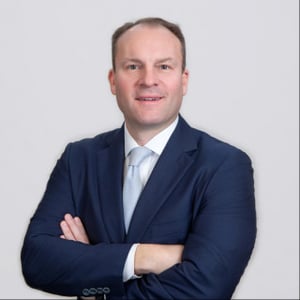
Partner, Wiley Rein LLP
Caleb focuses on advising participants in the political process on compliance with all aspects of political law, including campaign finance, government ethics, and lobbying. His clients include Fortune 50 corporations, trade associations and other business organizations, non-profit and tax exempt 501(c) advocacy organizations, federal officeholders, political candidates and committees, and private individuals. He has particular experience with the Federal Election Campaign Act (FECA), the Lobbying Disclosure Act (LDA), the Foreign Agents Registration Act (FARA), as well as analogous state and local laws regulating campaign finance, government ethics, and lobbying. Caleb frequently represents clients subject to these laws in matters before the Federal Election Commission (FEC), other federal and state administrative agencies, and in federal and state courts.
Chambers USA ranks Caleb in Band 1 as one of the nation’s leading lawyers in Political Law and notes: “In a word, he is exceptional. Caleb is able to quickly distill issues to their essence, is a true expert as well as being creative and pragmatic to consistently provide reliable and ethical advice." In addition, Caleb has appeared as a nationally broadcast commentator on CBS, Fox News, and National Public Radio. He is regularly cited and quoted on political law topics in The New York Times, The Washington Post, ABC News, Bloomberg Government, Time, Politico, The Huffington Post, The Daily Beast, Yahoo News, Salon, Roll Call, The Hill, Law360, The Washington Times, Washington Business Journal, and Washington Examiner.
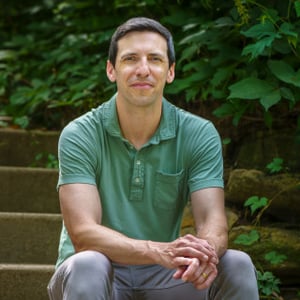
Former Cincinnati City Councilman
P.G. Sittenfeld is a writer based in Cincinnati, Ohio, where he lives with his wife, Sarah, an oncologist, and their three young sons. Sittenfeld’s writing has appeared in America Magazine, The New York Times, The Princeton Alumni Weekly, Slate, and Cincinnati Magazine. Sittenfeld also serves as a storytelling collaborator on narrative projects for CEOs, lawyers, doctors, startup founders, and school administrators. He is a graduate of Princeton University and Oxford University in England, where he was a Marshall Scholar.
Previously, Sittenfeld served for nearly a decade on Cincinnati’s City Council, where he became the city’s highest vote-getter through a record of fostering economic growth and innovation as well as supporting the community’s most marginalized members. He was widely expected to become the city’s next and youngest-ever mayor when he was prosecuted on public corruption charges in 2020, stemming from an FBI sting operation later likened in court to a “prosecutorial Truman Show.”
Following Sittenfeld’s acquittal on four counts and conviction on two counts, Jones Day’s Issues and Appeals group took on his entire appeal pro bono, calling it “the most extreme prosecution based on lawful campaign donations in U.S. history.” A nearly unprecedented bi-partisan group of top White House, DOJ, and Judicial officials spanning the past four decades submitted amicus briefs in support of Sittenfeld’s innocence.
For four-and-a-half months in 2024, Sittenfeld was Inmate Number 18085-509 at the Federal Correctional Institution in Ashland, Kentucky, before the U.S. Sixth Circuit Court of Appeals took the highly unusual step of ordering his early release pending the final outcome of his appeal. In May 2025, Sittenfeld and Jones Day were just days away from submitting a petition for writ of certiorari to the U.S. Supreme Court when Sittenfeld was granted a full and unconditional Presidential pardon.
Concerned about the far-reaching First Amendment implications of his prosecution and wanting to halt similarly misguided cases from being brought against other candidates or donors in the future, Sittenfeld and Jones Day decided to move forward with his appeal - marking the first known instance of an individual receiving a Presidential pardon and still being in a position to and choosing to move forward petitioning the Supreme Court. Sittenfeld regularly gives talks at law schools, faith forums, and in private sector settings on topics ranging from faith and resilience to American politics, personal liberties and government overreach, and the U.S. criminal justice system.

When Politics Becomes a Crime? The First Amendment Questions in Sittenfeld v. United States
Washington-St. Louis Student Chapter
St. Louis, MO