
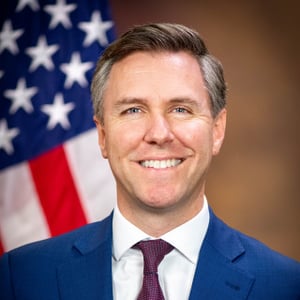
Assistant Attorney General, Civil Division, United States Department of Justice
Brett A. Shumate was sworn in as the Civil Division’s 36th Assistant Attorney General on June 11, 2025. He previously served in the Civil Division from 2017 to 2019 as the Deputy Assistant Attorney General for the Federal Programs Branch. Prior to rejoining the Department, Mr. Shumate was a partner at Jones Day in Washington, D.C.
Mr. Shumate clerked for Judge Edith H. Jones on the United States Court of Appeals for the Fifth Circuit. He graduated from Wake Forest University School of Law and Furman University.

Laurence H. Silberman Chair in Constitutional Governance, American Enterprise Institute; Executive Director, Antonin Scalia Law School’s C. Boyden Gray Center for the Study of the Administrative State
Adam J. White is the Laurence H. Silberman Chair in Constitutional Governance and senior fellow at the American Enterprise Institute, where he focuses on the Supreme Court and the administrative state. He also directs the Antonin Scalia Law School’s C. Boyden Gray Center for the Study of the Administrative State.
He writes on regulation and constitutional government for a variety of publications. He practiced law in Washington, D.C., after clerking for the D.C. Circuit's Judge David Sentelle. He also has been chairman of the ABA's Administrative Law Section.
In 2021, he served on the Presidential Commission on the Supreme Court of the United States, where he criticized “Court packing” and other efforts to restructure the Supreme Court.

Senior Counsel, Uber Technologies, Inc.
Krishna K. Juvvadi is Senior Counsel at Uber Technologies, Inc., where he manages all regulatory matters in the United States. Prior to joining Uber, Mr. Juvvadi was a Partner at the law firm of Sher Leff LLP. While at Sher Leff, Mr. Juvvadi was as senior member of a trial team that won a unianimous jury verdict for $236,000,000 against ExxonMobil on behalf of the State of New Hampshire for statewide groundwater contamination. For his work on that trial, Mr. Juvvadi was awarded the California Lawyer Attorney of the Year and named a Finalist for Public Justice's Trial Lawyer of the Year. Prior to Sher Leff, Mr. Juvvadi was a Trial Attorney with the United States Department of Justice. Mr. Juvvadi received his J.D. from the University of California, Los Angeles School of Law and his B.A. from Northwestern University.

Senior Vice President for Legal Studies, Cato Institute
Clark Neily is senior vice president for legal studies at the Cato Institute. His areas of interest include constitutional law, overcriminalization, civil forfeiture, police accountability, and gun rights. Neily is the author of Terms of Engagement: How Our Courts Should Enforce the Constitution’s Promise of Limited Government. His writing has appeared in the Wall Street Journal, Forbes, and National Review Online, as well as various law reviews, including the Harvard Journal of Law and Public Policy, George Mason Law Review, Georgetown Journal of Law and Public Policy, NYU Journal of Law and Liberty, and Texas Review of Law and Politics. Neily is a frequent guest speaker and lecturer for the Federalist Society, Institute for Humane Studies, and American Constitution Society.
Before joining Cato in 2017, Neily was a senior attorney and constitutional litigator at the Institute for Justice and director of the Institute’s Center for Judicial Engagement. He is also an adjunct professor at the University of Texas School of Law, where he teaches constitutional litigation and public-interest law.
Neily served as co-counsel in District of Columbia v. Heller, the historic case in which the Supreme Court held for the first time that the Second Amendment protects an individual right to own a gun for self-defense.
Neily began his legal career as a law clerk to Judge Royce Lamberth on the U.S. District Court for the District of Columbia. After that he spent four years in the trial department of the Dallas-based firm Thompson & Knight. Neily received his undergraduate and law degrees from the University of Texas, where he was Chief Articles Editor of the Texas Law Review.

Professor of Hospitality Management and Director, Center for Hos, Pennsylvania State University
A member of the Penn State faculty since 2001, his research focuses on strategic management, lodging management and development, real estate valuation, work-life balance in the lodging industry, and hotel branding.
Prior to working at Penn State, O'Neill was an assistant professor, associate professor, and professor at Johnson & Wales University in Providence, Rhode Island, from 1994 to 2001. He was a visiting faculty member at Novgorod State University in Russia in 2000 and an adjunct faculty member at the University of Rhode Island in 1997. He has also worked in industry, notably as a senior associate for Coopers & Lybrand from 1991 to 1994; director of hotel market planning for Holiday Inn Worldwide from 1990 to 1991; manager and senior manager of hotel development planning for Marriott Corporation from 1988 to 1990; consultant and senior consultant for Laventhol & Horwath from 1985 to 1988; and front office manager and housekeeping manager for the Hyatt Corporation from 1984 to 1985.
In addition to his professional and academic roles, O’Neill has been a consultant for dozens of companies, including the Darien Hospitality Group, Hilton Hotels, Marriott International, American Express, Citizens Bank, GMAC Commercial Mortgage, Kaplan Publishing, Prentice Hall, as well as a number of law firms.
O’Neill is the recipient of several awards, including a favorite professor award from Penn State, the Teacher of the Year Award from Johnson & Wales University, and excellence awards from the Marriott and Hyatt Corporations. He has given invited talks throughout the United States and has been quoted or mentioned in numerous media outlets, including The New York Times, USA Today, and Business Week.
He earned a Ph.D. degree in business administration at the University of Rhode Island in 1999, a master’s degree in real estate at New York University in 1994, and a bachelor’s degree in hotel administration at Cornell University in 1984. A licensed real estate appraiser, he holds the Member of the Appraisal Institute (MAI) designation from the Appraisal Institute and the Certified Hospitality Educator (CHE) designation from the American Hotel & Lodging Association. He lives in State College with his wife Alicia and their three children.
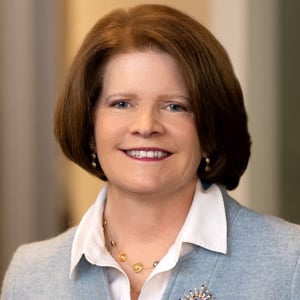
Partner, Antitrust and Competition, Wilson Sonsini Goodrich & Rosati
Maureen Ohlhausen is a partner in the Washington, D.C., office of Wilson Sonsini Goodrich & Rosati, where she advises industry-leading clients on complex antitrust and litigation matters, with a focus on high-profile cases. Sought after for her depth of experience on antitrust and Federal Trade Commission (FTC)-related issues, Maureen is known for her relationships with officials in the U.S. and abroad.
After finishing law school and clerking at the U.S. Court of Appeals for the D.C. Circuit, Maureen joined the FTC in 1997. She held a series of roles at the agency over the next 12 years, rising to the position of Director of the FTC Office of Policy Planning, where she led the agency’s work on e-commerce and headed the FTC’s Internet Access Task Force, which produced an influential report analyzing competition and consumer protection legal issues in the broadband and internet sectors. She then went into private practice at a leading telecommunications law firm, where she headed the FTC practice group.
In 2012, Maureen was confirmed by the Senate as a Commissioner of the FTC and was appointed Acting Chairman in January 2017, a role she held until May 2018. As Acting Chairman, Maureen directed all aspects of the agency’s antitrust work, including merger review, conduct enforcement, and all consumer protection enforcement, with an emphasis on privacy and technology issues. Under her leadership, the FTC won several influential merger challenges in court and reached a number of key digital privacy settlements.
To date, Maureen is the only FTC Commissioner to have received the Robert Pitofsky Lifetime Achievement Award in recognition of her contributions to the FTC.
Following the end of her term at the FTC, and immediately prior to joining Wilson Sonsini, Maureen was chair of the global antitrust and competition practice at Baker Botts, based in that firm’s Washington, D.C., office.
A recognized thought leader, Maureen is a frequent author and speaker, and is often quoted by leading print and broadcast media on antitrust, FTC, and privacy and data security matters. She has published dozens of articles on antitrust, privacy, intellectual property, regulation, FTC litigation, telecommunications, and international law issues in prestigious publications. During her tenure at the FTC and in private practice, she testified more than two dozen times before Congress, including before the Senate Commerce Committee and the House Energy and Commerce Antitrust Sub-Committee. She also testified before the Antitrust Modernization Commission.

Associate General Counsel and Executive Director of Communicatio, Intel Corporation
Peter Pitsch is Associate General Counsel and Executive Director of Communications Policy for Intel Corporation. He manages Intel’s global spectrum and telecom policy team.
Prior to joining Intel, Pitsch was the president of Pitsch Communications from 1989 to 1998 which represented telecommunication’s clients before the FCC and Congress, provided business and regulatory planning, and published and lectured on U.S. regulatory policy.
Pitsch was the Chief of Staff to the Chairman of the FCC from 1987 to 1989 where he advised the Chairman on all issues before the FCC including access reforms, price caps, major tariffs, and broadcasting. Before his move to Chief of Staff. Pitsch was Chief of Office of Plans and Policy. His responsibilities included managing the FCC policy office that provided recommendations on major issues such as access reforms, major tariffs, broadcast regulation, auction and spectrum allocations.
From 1980 to 1981, Pitsch was a staff member of the Reagan Administration Transition Team which developed recommendations for reforming the Federal Trade Comnission with special focus on antitrust issues. He was a senior attorney at Montgomery Ward, Inc. from 1979 to 1981. He provided legal counsel and legislative lobbying of FTC, consumer protection, energy and international trade matters. Prior to that, he worked for three year as an attorney-advisor to Commissioner Calvin Collier at the Federal Trade Commission.
Mr. Pitsch received a B.A. in Economics from the University of Chicago in 1973 and his J.D. from Georgetown University Law Center in 1976. He is a member of the District of Columbia Bar, the Virginia State Bar, and the Federal Communications Bar Association.
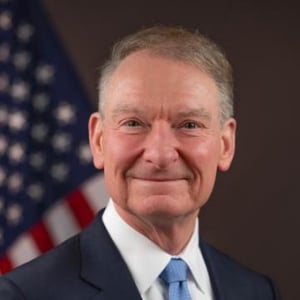
Chairman of the Securities and Exchange Commission
Paul S. Atkins was sworn into office as the 34th Chairman of the Securities and Exchange Commission on April 21, 2025, after being nominated by President Donald J. Trump on January 20, 2025, and confirmed by the U.S. Senate on April 9, 2025.
Prior to returning to the SEC, Chairman Atkins was most recently chief executive of Patomak Global Partners, a company he founded in 2009. Chairman Atkins helped lead efforts to develop best practices for the digital asset sector. He served as an independent director and non-executive chairman of the board of BATS Global Markets, Inc. from 2012 to 2015.
Chairman Atkins was appointed by President George W. Bush to serve as a Commissioner of the SEC from 2002 to 2008. During his tenure, he advocated for transparency, consistency, and the use of cost-benefit analysis at the agency. Chairman Atkins also represented the SEC at meetings of the President’s Working Group on Financial Markets and the U.S.-EU Transatlantic Economic Council. From 2009 to 2010, he was appointed a member of the Congressional Oversight Panel for the Troubled Asset Relief Program.
Before serving as an SEC Commissioner, Chairman Atkins was a consultant on securities and investment management industry matters, especially regarding issues of strategy, regulatory compliance, risk management, new product development, and organizational control.
From 1990 to 1994, Chairman Atkins served on the staff of two chairmen of the SEC, Richard C. Breeden and Arthur Levitt, ultimately as chief of staff and counselor, respectively. He received the SEC’s 1992 Law and Policy Award for work regarding corporate governance matters.
Chairman Atkins began his career as a lawyer in New York, focusing on a wide range of corporate transactions for U.S. and foreign clients, including public and private securities offerings and mergers and acquisitions. He was resident for 2½ years in his firm's Paris office and admitted as conseil juridique in France.
A member of the New York and Florida bars, Chairman Atkins received his J.D. from Vanderbilt University School of Law in 1983 and was Senior Student Writing Editor of the Vanderbilt Law Review. He received his A.B., Phi Beta Kappa, from Wofford College in 1980.
Originally from Lillington, North Carolina, Chairman Atkins grew up in Tampa, Florida. He and his wife Sarah have three sons.

President, Cass & Associates, PC
Ronald A. Cass is Dean Emeritus of Boston University School of Law (where he was Dean from 1990-2004), President of Cass & Associates, PC, former Vice-Chairman and Commissioner of the U.S. International Trade Commission, former faculty member at Boston University School of Law and the University of Virginia Law School, and Distinguished Senior Fellow at the C. Boyden Gray Center for the Study of the Administrative State. Dean Cass also sits as an arbitrator for commercial, international, and intellectual property rights disputes, and is a former United States member of the Panel of Conciliators of the International Centre for Settlement of Investment Disputes. He is a member of the Council of the Administrative Conference of the United States and has received seven presidential appointments, spanning Presidents Ronald Reagan to Donald J. Trump.
As a law professor, lecturer, and scholar, Dean Cass has been teaching and writing about a wide array of legal issues on topics such as administrative law and regulation, antitrust, constitutional law, communications, intellectual property, international trade, separation of powers, and legal process. He has published more than 160 scholarly books, chapters, articles, and papers, including a leading casebook on administrative law. Dean Cass has taught judges as well as students in schools of law, economics, business, and public policy and has held academic appointments in the United States, Europe, and Latin America.
In addition to his academic work, Dean Cass has participated in numerous important legal cases as an amicus, consultant, or expert, and has advised businesses, law firms, investment funds, and government agencies on a range of trade, antitrust, intellectual property, and regulatory issues. He has a broad range of affiliations with professional groups, and has received numerous honors, fellowships and awards.
Dean Cass is a graduate of the University of Virginia and the University of Chicago Law School.
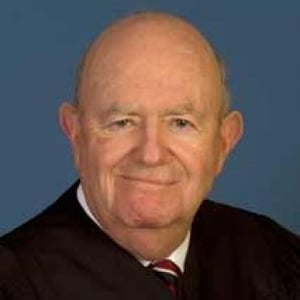
Judge, United States Court of Appeals, District of Columbia Circuit
LAURENCE HIRSCH SILBERMAN, senior circuit judge; recipient of the Presidential Medal of Freedom, June 19, 2008; born in York, PA, October 12, 1935; son of William Silberman and Anna (Hirsch); married to Rosalie G. Gaull on April 28, 1957 (deceased), married Patricia Winn on January 5, 2008; children: Robert Steven Silberman, Katherine DeBoer Fischer, and Anne Gaull Otis; B.A., Dartmouth College, 1957; LL.B., Harvard Law School, 1961; admitted to Hawaii Bar, 1962; District of Columbia Bar, 1973; associate, Moore, Torkildson and Rice, 1961–64; partner (Moore, Silberman and Schulze), Honolulu, 1964–67; attorney, National Labor Relations Board, Office of General Counsel, Appellate Division, 1967–69; Solicitor, Department of Labor, 1969–70; Under Secretary of Labor, 1970–73; partner, Steptoe and Johnson, 1973–74; Deputy Attorney General of the United States, 1974–75; Ambassador to Yugoslavia, 1975–77; President’s Special Envoy on ILO Affairs, 1976; senior fellow, American Enterprise Institute, 1977–78; visiting fellow, 1978–85; managing partner, Morrison and Foerster, 1978–79 and 1983–85; executive vice president, Crocker National Bank, 1979–83; lecturer, University of Hawaii, 1962–63; board of directors, Commission on Present Danger, 1978–85, Institute for Educational Affairs, New York, NY, 1981–85, member: General Advisory Committee on Arms Control and Disarmament, 1981–85; Defense Policy Board, 1981–85; vice chairman, State Department’s Commission on Security and Economic Assistance, 1983–84; American Bar Association (Labor Law Committee, 1965–72, Corporations and Banking Committee, 1973, Law and National Security Advisory Committee, 1981–85); Hawaii Bar Association Ethics Committee, 1965–67; Council on Foreign Relations, 1977–present; Judicial Conference Committee on Court Administration and Case Management, 1994; member, U.S. Foreign Intelligence Surveillance Act Court of Review, 1996–2003; Adjunct Professor of Law (Administrative Law and Labor Law) Georgetown Law Center, 1987–94; 1997; Adjunct Professor of Law, Harvard Law School, 1994-95, Adjunct Professor of Law, New York University Law School, 1995–96; Distinguished Visitor from the Judiciary, Georgetown Law Center, 2003–2019; co-chairman of the President’s Commission on The Intelligence Capabilities of the United States Regarding Weapons of Mass Destruction, 2004–05; appointed to the U.S. Court of Appeals for the District of Columbia Circuit by President Reagan on October 28, 1985.

Chairman and Founder, Institute for Free Speech; Josiah H. Blackmore II/Shirley M. Nault Designated Professor of Law, Capital University Law School
Senior Counsel, Uber Technologies, Inc.
Krishna K. Juvvadi is Senior Counsel at Uber Technologies, Inc., where he manages all regulatory matters in the United States. Prior to joining Uber, Mr. Juvvadi was a Partner at the law firm of Sher Leff LLP. While at Sher Leff, Mr. Juvvadi was as senior member of a trial team that won a unianimous jury verdict for $236,000,000 against ExxonMobil on behalf of the State of New Hampshire for statewide groundwater contamination. For his work on that trial, Mr. Juvvadi was awarded the California Lawyer Attorney of the Year and named a Finalist for Public Justice's Trial Lawyer of the Year. Prior to Sher Leff, Mr. Juvvadi was a Trial Attorney with the United States Department of Justice. Mr. Juvvadi received his J.D. from the University of California, Los Angeles School of Law and his B.A. from Northwestern University.
Senior Vice President for Legal Studies, Cato Institute
Clark Neily is senior vice president for legal studies at the Cato Institute. His areas of interest include constitutional law, overcriminalization, civil forfeiture, police accountability, and gun rights. Neily is the author of Terms of Engagement: How Our Courts Should Enforce the Constitution’s Promise of Limited Government. His writing has appeared in the Wall Street Journal, Forbes, and National Review Online, as well as various law reviews, including the Harvard Journal of Law and Public Policy, George Mason Law Review, Georgetown Journal of Law and Public Policy, NYU Journal of Law and Liberty, and Texas Review of Law and Politics. Neily is a frequent guest speaker and lecturer for the Federalist Society, Institute for Humane Studies, and American Constitution Society.
Before joining Cato in 2017, Neily was a senior attorney and constitutional litigator at the Institute for Justice and director of the Institute’s Center for Judicial Engagement. He is also an adjunct professor at the University of Texas School of Law, where he teaches constitutional litigation and public-interest law.
Neily served as co-counsel in District of Columbia v. Heller, the historic case in which the Supreme Court held for the first time that the Second Amendment protects an individual right to own a gun for self-defense.
Neily began his legal career as a law clerk to Judge Royce Lamberth on the U.S. District Court for the District of Columbia. After that he spent four years in the trial department of the Dallas-based firm Thompson & Knight. Neily received his undergraduate and law degrees from the University of Texas, where he was Chief Articles Editor of the Texas Law Review.
Professor of Hospitality Management and Director, Center for Hos, Pennsylvania State University
A member of the Penn State faculty since 2001, his research focuses on strategic management, lodging management and development, real estate valuation, work-life balance in the lodging industry, and hotel branding.
Prior to working at Penn State, O'Neill was an assistant professor, associate professor, and professor at Johnson & Wales University in Providence, Rhode Island, from 1994 to 2001. He was a visiting faculty member at Novgorod State University in Russia in 2000 and an adjunct faculty member at the University of Rhode Island in 1997. He has also worked in industry, notably as a senior associate for Coopers & Lybrand from 1991 to 1994; director of hotel market planning for Holiday Inn Worldwide from 1990 to 1991; manager and senior manager of hotel development planning for Marriott Corporation from 1988 to 1990; consultant and senior consultant for Laventhol & Horwath from 1985 to 1988; and front office manager and housekeeping manager for the Hyatt Corporation from 1984 to 1985.
In addition to his professional and academic roles, O’Neill has been a consultant for dozens of companies, including the Darien Hospitality Group, Hilton Hotels, Marriott International, American Express, Citizens Bank, GMAC Commercial Mortgage, Kaplan Publishing, Prentice Hall, as well as a number of law firms.
O’Neill is the recipient of several awards, including a favorite professor award from Penn State, the Teacher of the Year Award from Johnson & Wales University, and excellence awards from the Marriott and Hyatt Corporations. He has given invited talks throughout the United States and has been quoted or mentioned in numerous media outlets, including The New York Times, USA Today, and Business Week.
He earned a Ph.D. degree in business administration at the University of Rhode Island in 1999, a master’s degree in real estate at New York University in 1994, and a bachelor’s degree in hotel administration at Cornell University in 1984. A licensed real estate appraiser, he holds the Member of the Appraisal Institute (MAI) designation from the Appraisal Institute and the Certified Hospitality Educator (CHE) designation from the American Hotel & Lodging Association. He lives in State College with his wife Alicia and their three children.
Partner, Antitrust and Competition, Wilson Sonsini Goodrich & Rosati
Maureen Ohlhausen is a partner in the Washington, D.C., office of Wilson Sonsini Goodrich & Rosati, where she advises industry-leading clients on complex antitrust and litigation matters, with a focus on high-profile cases. Sought after for her depth of experience on antitrust and Federal Trade Commission (FTC)-related issues, Maureen is known for her relationships with officials in the U.S. and abroad.
After finishing law school and clerking at the U.S. Court of Appeals for the D.C. Circuit, Maureen joined the FTC in 1997. She held a series of roles at the agency over the next 12 years, rising to the position of Director of the FTC Office of Policy Planning, where she led the agency’s work on e-commerce and headed the FTC’s Internet Access Task Force, which produced an influential report analyzing competition and consumer protection legal issues in the broadband and internet sectors. She then went into private practice at a leading telecommunications law firm, where she headed the FTC practice group.
In 2012, Maureen was confirmed by the Senate as a Commissioner of the FTC and was appointed Acting Chairman in January 2017, a role she held until May 2018. As Acting Chairman, Maureen directed all aspects of the agency’s antitrust work, including merger review, conduct enforcement, and all consumer protection enforcement, with an emphasis on privacy and technology issues. Under her leadership, the FTC won several influential merger challenges in court and reached a number of key digital privacy settlements.
To date, Maureen is the only FTC Commissioner to have received the Robert Pitofsky Lifetime Achievement Award in recognition of her contributions to the FTC.
Following the end of her term at the FTC, and immediately prior to joining Wilson Sonsini, Maureen was chair of the global antitrust and competition practice at Baker Botts, based in that firm’s Washington, D.C., office.
A recognized thought leader, Maureen is a frequent author and speaker, and is often quoted by leading print and broadcast media on antitrust, FTC, and privacy and data security matters. She has published dozens of articles on antitrust, privacy, intellectual property, regulation, FTC litigation, telecommunications, and international law issues in prestigious publications. During her tenure at the FTC and in private practice, she testified more than two dozen times before Congress, including before the Senate Commerce Committee and the House Energy and Commerce Antitrust Sub-Committee. She also testified before the Antitrust Modernization Commission.
Associate General Counsel and Executive Director of Communicatio, Intel Corporation
Peter Pitsch is Associate General Counsel and Executive Director of Communications Policy for Intel Corporation. He manages Intel’s global spectrum and telecom policy team.
Prior to joining Intel, Pitsch was the president of Pitsch Communications from 1989 to 1998 which represented telecommunication’s clients before the FCC and Congress, provided business and regulatory planning, and published and lectured on U.S. regulatory policy.
Pitsch was the Chief of Staff to the Chairman of the FCC from 1987 to 1989 where he advised the Chairman on all issues before the FCC including access reforms, price caps, major tariffs, and broadcasting. Before his move to Chief of Staff. Pitsch was Chief of Office of Plans and Policy. His responsibilities included managing the FCC policy office that provided recommendations on major issues such as access reforms, major tariffs, broadcast regulation, auction and spectrum allocations.
From 1980 to 1981, Pitsch was a staff member of the Reagan Administration Transition Team which developed recommendations for reforming the Federal Trade Comnission with special focus on antitrust issues. He was a senior attorney at Montgomery Ward, Inc. from 1979 to 1981. He provided legal counsel and legislative lobbying of FTC, consumer protection, energy and international trade matters. Prior to that, he worked for three year as an attorney-advisor to Commissioner Calvin Collier at the Federal Trade Commission.
Mr. Pitsch received a B.A. in Economics from the University of Chicago in 1973 and his J.D. from Georgetown University Law Center in 1976. He is a member of the District of Columbia Bar, the Virginia State Bar, and the Federal Communications Bar Association.
Senior Counsel, Uber Technologies, Inc.
Krishna K. Juvvadi is Senior Counsel at Uber Technologies, Inc., where he manages all regulatory matters in the United States. Prior to joining Uber, Mr. Juvvadi was a Partner at the law firm of Sher Leff LLP. While at Sher Leff, Mr. Juvvadi was as senior member of a trial team that won a unianimous jury verdict for $236,000,000 against ExxonMobil on behalf of the State of New Hampshire for statewide groundwater contamination. For his work on that trial, Mr. Juvvadi was awarded the California Lawyer Attorney of the Year and named a Finalist for Public Justice's Trial Lawyer of the Year. Prior to Sher Leff, Mr. Juvvadi was a Trial Attorney with the United States Department of Justice. Mr. Juvvadi received his J.D. from the University of California, Los Angeles School of Law and his B.A. from Northwestern University.
Senior Vice President for Legal Studies, Cato Institute
Clark Neily is senior vice president for legal studies at the Cato Institute. His areas of interest include constitutional law, overcriminalization, civil forfeiture, police accountability, and gun rights. Neily is the author of Terms of Engagement: How Our Courts Should Enforce the Constitution’s Promise of Limited Government. His writing has appeared in the Wall Street Journal, Forbes, and National Review Online, as well as various law reviews, including the Harvard Journal of Law and Public Policy, George Mason Law Review, Georgetown Journal of Law and Public Policy, NYU Journal of Law and Liberty, and Texas Review of Law and Politics. Neily is a frequent guest speaker and lecturer for the Federalist Society, Institute for Humane Studies, and American Constitution Society.
Before joining Cato in 2017, Neily was a senior attorney and constitutional litigator at the Institute for Justice and director of the Institute’s Center for Judicial Engagement. He is also an adjunct professor at the University of Texas School of Law, where he teaches constitutional litigation and public-interest law.
Neily served as co-counsel in District of Columbia v. Heller, the historic case in which the Supreme Court held for the first time that the Second Amendment protects an individual right to own a gun for self-defense.
Neily began his legal career as a law clerk to Judge Royce Lamberth on the U.S. District Court for the District of Columbia. After that he spent four years in the trial department of the Dallas-based firm Thompson & Knight. Neily received his undergraduate and law degrees from the University of Texas, where he was Chief Articles Editor of the Texas Law Review.
Professor of Hospitality Management and Director, Center for Hos, Pennsylvania State University
A member of the Penn State faculty since 2001, his research focuses on strategic management, lodging management and development, real estate valuation, work-life balance in the lodging industry, and hotel branding.
Prior to working at Penn State, O'Neill was an assistant professor, associate professor, and professor at Johnson & Wales University in Providence, Rhode Island, from 1994 to 2001. He was a visiting faculty member at Novgorod State University in Russia in 2000 and an adjunct faculty member at the University of Rhode Island in 1997. He has also worked in industry, notably as a senior associate for Coopers & Lybrand from 1991 to 1994; director of hotel market planning for Holiday Inn Worldwide from 1990 to 1991; manager and senior manager of hotel development planning for Marriott Corporation from 1988 to 1990; consultant and senior consultant for Laventhol & Horwath from 1985 to 1988; and front office manager and housekeeping manager for the Hyatt Corporation from 1984 to 1985.
In addition to his professional and academic roles, O’Neill has been a consultant for dozens of companies, including the Darien Hospitality Group, Hilton Hotels, Marriott International, American Express, Citizens Bank, GMAC Commercial Mortgage, Kaplan Publishing, Prentice Hall, as well as a number of law firms.
O’Neill is the recipient of several awards, including a favorite professor award from Penn State, the Teacher of the Year Award from Johnson & Wales University, and excellence awards from the Marriott and Hyatt Corporations. He has given invited talks throughout the United States and has been quoted or mentioned in numerous media outlets, including The New York Times, USA Today, and Business Week.
He earned a Ph.D. degree in business administration at the University of Rhode Island in 1999, a master’s degree in real estate at New York University in 1994, and a bachelor’s degree in hotel administration at Cornell University in 1984. A licensed real estate appraiser, he holds the Member of the Appraisal Institute (MAI) designation from the Appraisal Institute and the Certified Hospitality Educator (CHE) designation from the American Hotel & Lodging Association. He lives in State College with his wife Alicia and their three children.
Partner, Antitrust and Competition, Wilson Sonsini Goodrich & Rosati
Maureen Ohlhausen is a partner in the Washington, D.C., office of Wilson Sonsini Goodrich & Rosati, where she advises industry-leading clients on complex antitrust and litigation matters, with a focus on high-profile cases. Sought after for her depth of experience on antitrust and Federal Trade Commission (FTC)-related issues, Maureen is known for her relationships with officials in the U.S. and abroad.
After finishing law school and clerking at the U.S. Court of Appeals for the D.C. Circuit, Maureen joined the FTC in 1997. She held a series of roles at the agency over the next 12 years, rising to the position of Director of the FTC Office of Policy Planning, where she led the agency’s work on e-commerce and headed the FTC’s Internet Access Task Force, which produced an influential report analyzing competition and consumer protection legal issues in the broadband and internet sectors. She then went into private practice at a leading telecommunications law firm, where she headed the FTC practice group.
In 2012, Maureen was confirmed by the Senate as a Commissioner of the FTC and was appointed Acting Chairman in January 2017, a role she held until May 2018. As Acting Chairman, Maureen directed all aspects of the agency’s antitrust work, including merger review, conduct enforcement, and all consumer protection enforcement, with an emphasis on privacy and technology issues. Under her leadership, the FTC won several influential merger challenges in court and reached a number of key digital privacy settlements.
To date, Maureen is the only FTC Commissioner to have received the Robert Pitofsky Lifetime Achievement Award in recognition of her contributions to the FTC.
Following the end of her term at the FTC, and immediately prior to joining Wilson Sonsini, Maureen was chair of the global antitrust and competition practice at Baker Botts, based in that firm’s Washington, D.C., office.
A recognized thought leader, Maureen is a frequent author and speaker, and is often quoted by leading print and broadcast media on antitrust, FTC, and privacy and data security matters. She has published dozens of articles on antitrust, privacy, intellectual property, regulation, FTC litigation, telecommunications, and international law issues in prestigious publications. During her tenure at the FTC and in private practice, she testified more than two dozen times before Congress, including before the Senate Commerce Committee and the House Energy and Commerce Antitrust Sub-Committee. She also testified before the Antitrust Modernization Commission.
Associate General Counsel and Executive Director of Communicatio, Intel Corporation
Peter Pitsch is Associate General Counsel and Executive Director of Communications Policy for Intel Corporation. He manages Intel’s global spectrum and telecom policy team.
Prior to joining Intel, Pitsch was the president of Pitsch Communications from 1989 to 1998 which represented telecommunication’s clients before the FCC and Congress, provided business and regulatory planning, and published and lectured on U.S. regulatory policy.
Pitsch was the Chief of Staff to the Chairman of the FCC from 1987 to 1989 where he advised the Chairman on all issues before the FCC including access reforms, price caps, major tariffs, and broadcasting. Before his move to Chief of Staff. Pitsch was Chief of Office of Plans and Policy. His responsibilities included managing the FCC policy office that provided recommendations on major issues such as access reforms, major tariffs, broadcast regulation, auction and spectrum allocations.
From 1980 to 1981, Pitsch was a staff member of the Reagan Administration Transition Team which developed recommendations for reforming the Federal Trade Comnission with special focus on antitrust issues. He was a senior attorney at Montgomery Ward, Inc. from 1979 to 1981. He provided legal counsel and legislative lobbying of FTC, consumer protection, energy and international trade matters. Prior to that, he worked for three year as an attorney-advisor to Commissioner Calvin Collier at the Federal Trade Commission.
Mr. Pitsch received a B.A. in Economics from the University of Chicago in 1973 and his J.D. from Georgetown University Law Center in 1976. He is a member of the District of Columbia Bar, the Virginia State Bar, and the Federal Communications Bar Association.

Net Neutrality Survives D.C. Circuit Challenge: U.S. Telecom Association v. FCC
TeleforumTopics
DC Circuit Upholds FCC's Nearly Open-Ended Power to Regulate Broadband
On June 14, a 2-1 majority of the DC Circuit Court of Appeals gave absolute...
Topics
FCC Enforcement and Merger Review Actions Violate Rule of Law Principles
The rule of law depends upon adherence to a system of binding rules of certain...
Regulatory Barriers to Innovation
Krishna Juvvadi, Clark Neily, John O'Neill, Maureen K. Ohlhausen, Peter Pitsch
American technological innovation has given birth to entire new segments of economic activity. The sharing...
Regulatory Barriers to Innovation
Krishna Juvvadi, Clark Neily, John O'Neill, Maureen K. Ohlhausen, Peter Pitsch
American technological innovation has given birth to entire new segments of economic activity. The sharing...
Regulatory Barriers to Innovation
Fourth Annual Executive Branch Review Conference
Washington, DCWho Wins at Administrative Hopscotch?
Fourth Annual Executive Branch Review Conference
Washington, DCTopics
What 20 Years of Internet Law Teaches Us about Innovation Policy
The Internet and the Digital Revolution gave us an abundance of riches—powerful computers, tablets, and...
Topics
The Administrative State: An Examination of Federal Rulemaking
I was privileged to testify yesterday at a hearing held by the Senate Committee on Homeland Security and...
Topics
President Obama Issues Competition Executive Order
President Obama issued a new executive order on Friday aimed at promoting competitive markets. Competition...