
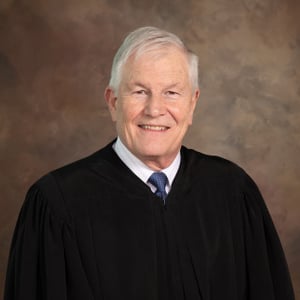
Judge, United States Court of Appeals, Eighth Circuit
Judge William Duane Benton is a federal judge on the United States Court of Appeals for the 8th Circuit. He joined the court in 2004 after being nominated by former President George W. Bush. Prior to his appointment, Judge Benton served as the chief justice of the Missouri Supreme Court. During his service on the court he received his masters of laws from the University of Virginia, completed the senior executives program at Harvard University’s John F Kennedy School of Government, and completed a post-graduate appellate judges course at New York University’s Institute of Judicial Administration.
Prior to serving on the Supreme Court of Missouri, Judge Benton was appointed by then-Governor John Ashcroft as director of the state’s department of revenue. Judge Benton also worked as a judge advocate general for the United States Navy, during which time he received his master’s degree in business administration and accountancy from the University of Memphis.
Judge Benton earned his law degree from Yale Law School and was the managing editor of the Yale Law Journal.
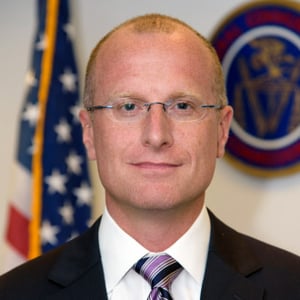
Chairman, Federal Communications Commission
Brendan Carr is the Chairman of the Federal Communications Commission. He previously served as the senior Republican Commissioner and as the FCC’s General Counsel. Nominated by both President Trump and President Biden, Carr has been confirmed unanimously by the Senate three times.
Described by Axios as “the FCC’s 5G crusader,” Carr has led the FCC’s work to modernize its infrastructure rules and accelerate the buildout of high-speed networks. His reforms cut billions of dollars in red tape, enabled the private sector to construct high-speed networks in communities across the country, and extended America’s global leadership in 5G.
Chairman Carr is also focused on expanding America’s skilled workforce—the tower climbers and construction crews needed to build next-gen networks. His jobs initiative promotes community colleges and apprenticeships as a pipeline for good-paying 5G jobs. He is recognizing America’s talented tower crews through a series of “5G Ready” Hard Hat presentations.
Chairman Carr leads a groundbreaking telehealth initiative at the FCC. The Connected Care Pilot Program supports the delivery of high-quality care to low-income Americans and veterans.
Chairman Carr’s time outside of Washington helps inform his approach to the job. He regularly hits the road to hear directly from community members and learn how changes in federal policies could help improve their lives.
Chairman Carr brings nearly 20 years of private and public sector experience in communications and tech policy to his position. Before joining the FCC as a staffer back in 2012, he worked as an attorney at Wiley Rein LLP in the firm’s appellate, litigation, and telecom practices. Previously, Chairman Carr clerked on the U.S. Court of Appeals for the Fourth Circuit for Judge Dennis Shedd. After attending Georgetown University for his undergrad, Chairman Carr earned his J.D. magna cum laude from the Catholic University of America’s Columbus School of Law where he served as an editor of the Catholic University Law Review.
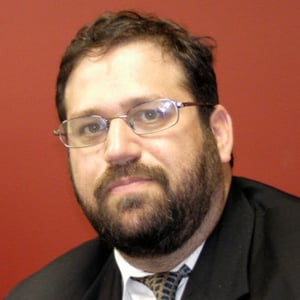
Senior Vice President, Public Knowledge
Harold Feld is the Senior Vice President for Public Knowledge, one of the nation’s premier consumer advocacy organizations working at the intersection of copyright, telecommunications and the Internet. Feld is a highly regarded thought leader in the areas of telecommunications and digital consumer protection, and author of The Case for the Digital Platform Act: Market Structure and Regulation of Digital Platforms. He was previously Senior Vice President at the Media Access Project (MAP), a public interest law firm, where he advanced competition policies in media, telecommunications and technology. Prior to joining MAP, Feld was an associate at Covington & Burling, and clerked for the DC Court of Appeals.
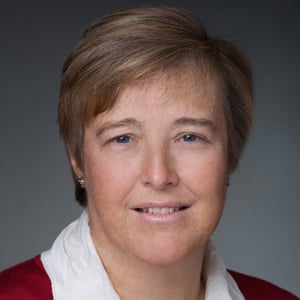
Senior Vice President, Government Affairs, T-Mobile
As Senior Vice President, Government Affairs for T-Mobile, Kathleen O’Brien Ham is the chief public policy advocate for the Un-carrier. Kathleen manages all public policy issues before federal and state governments impacting the company. Her team regularly engages Congress, the FCC, state agencies, and other governmental bodies on a wide range of regulatory and policy issues, including spectrum, consumer, public safety, and competition matters. She has led numerous successful efforts to gain additional radio spectrum for the company, including most recently, the acquisition of 600 MHz frequencies to expand T-Mobile’s coverage and deploy 5G technology. She has also testified before Congress numerous times in support of the company’s public policy positions.
Prior to joining T-Mobile, she worked for fourteen years at the FCC in several top policy positions, including Deputy Chief of the Wireless Telecommunications Bureau. She was the first Chief of the FCC’s Spectrum Auctions Program where she was responsible for the early landmark PCS spectrum auctions. She also served on the FCC’s Spectrum Management Task Force and was involved in the Intergovernmental Advisory Committee that negotiated the reallocation of third generation (3G) wireless spectrum from government to commercial use.
A graduate of Catholic University’s Columbus School of Law, she received her undergraduate degree from the University of Colorado, with a Bachelor of Science in Journalism. For several years, she taught telecommunications as an adjunct professor at Catholic University. She has received numerous industry honors and recognition, most recently being named as one of 50 of the Most Influential Women in Wireless to Watch in 2017 by Global Telecoms Business. The Hill named her as one of the Top Lobbyists in 2016. In 2014 the Competitive Carriers Association celebrated her contributions to the industry with an Outstanding Achievement Award for her work in support of spectrum auction rules that benefit smaller carriers and help promote competition in the wireless ecosystem. And, since 2010 she has been named four times as one of the Most Influential Women in Wireless by FierceWireless.
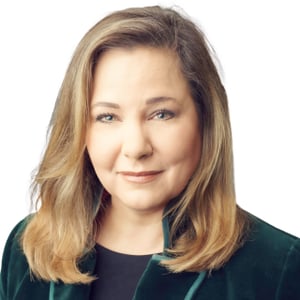
Senior Advisor, Freshfields
Christine is a senior advisor in our antitrust, competition and trade practice with more than 25 years of public and private sector experience at the intersection of law, policy and politics. Based in Washington, DC, she counsels senior executives and boards of directors on how to navigate complex and evolving legal and regulatory regimes to achieve their desired business goals.
Most recently, Christine served as a Commissioner at the Federal Trade Commission (FTC) where she helped shape policies and enforcement actions in the fields of antitrust, consumer privacy and data security and consumer protection. During her tenure, she also testified before the US Congress on several occasions and represented the FTC in bilateral and multilateral discussions abroad.
Before joining the FTC, Christine was a Senior Vice President at Delta Air Lines where she oversaw the carrier’s regulatory and international legal matters. Prior to moving in-house, she was a partner at two international law firms where she worked with clients to achieve regulatory clearance for multi-jurisdictional mergers and to defend businesses in high-stakes investigations.
Her broad sector experience ranges from aircraft and automobiles to veterinary services, video games and virtual reality. She has worked extensively in the highly regulated fields of airlines, healthcare and pharmaceuticals.
After leaving the FTC last year, Christine founded an organization to provide safe housing and comprehensive support services to survivors of human trafficking and sexual exploitation. Freshfields provided pro bono services to the organization including corporate formation. She will continue supporting this organization alongside client practice.
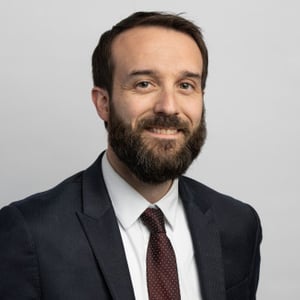
Senior Attorney, Institute for Justice
Sam Gedge is a senior attorney at the Institute for Justice. He joined IJ in June 2015 and litigates cases to promote economic liberty, protect political speech, and secure individuals’ rights to private property.
In 2017, Sam was named IJ’s second Elfie Gallun Fellow for Freedom and the Constitution. The fellowship comes with an emphasis on publishing written materials and speaking to students and others about the vital role the U.S. Constitution plays in protecting our most precious freedoms.
In his time at IJ, Sam has launched cases battling civil forfeiture and overzealous licensing boards, which generated widespread coverage and conversation in media outlets from Wired and The Atlantic to London’s Daily Mail.
Before joining IJ, Sam was an attorney at Wiley Rein LLP, in Washington, D.C., where he focused on litigation and election law. He is a former law clerk to Judge Raymond W. Gruender of the U.S. Court of Appeals for the Eighth Circuit.
Sam received his law degree cum laude from Harvard Law School in 2010.
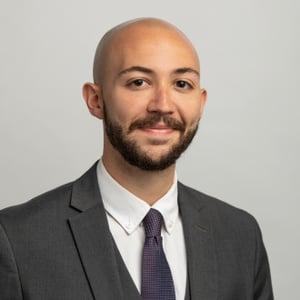
Attorney, Institute for Justice
John Wrench is a Constitutional Law Fellow at the Institute for Justice.
John grew up outside of Ithaca, New York, and received his law degree from the Case Western Reserve University School of Law in 2019. During law school, he served as editor in chief of the Case Western Reserve Journal of International Law and was a member of the Federalist Society. John interned in his law school’s First Amendment Litigation Clinic and was a judicial extern to the Honorable Paul E. Davison in the Southern District of New York. John graduated from Pace University in 2015 with a Bachelor of Arts in Philosophy and Religious Studies.
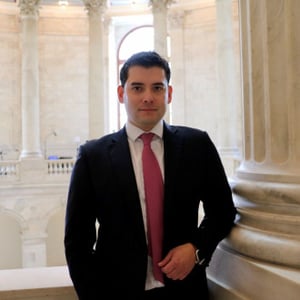
General Counsel, Office of Sen. Marsha Blackburn
Jon Adame serves as General Counsel to Senator Marsha Blackburn, where he advises her on all tech-related issues across her committee assignments (Commerce, Judiciary, Armed Services). He previously worked for her on the House Energy & Commerce Committee. Jon graduated from the University of Colorado School of Law, and received his B.A. from the University of New Mexico.

Senior Vice President, Government Affairs, CTIA
Kelly Cole is responsible for overseeing the CTIA Hill team and advancing the wireless industry’s priorities before Congress.
Most recently, Ms. Cole ran her own consulting firm, Kelly Cole Strategies, and was a consulting counsel for Wiley Rein. She has had a highly successful career in the private sector as well as public service. She served as the Executive Vice President of Government Relations for the National Association of Broadcasters where she led the association’s lobbying efforts. Ms. Cole has also served as Majority Counsel for the U.S. House Energy and Commerce Committee managing communications and Internet issues.
She has a Juris Doctor from Willamette University College of Law, a bachelor of arts in Political, Legal and Economic Analysis from Mills College and spent a year studying law at the London School of Economics. Ms. Cole is a member of the bar in the District of Columbia, Washington state and Oregon.

Chief Economist, The Phoenix Center for Advanced Legal & Economic Public Policy Studies
George S. Ford is the chief economist for the Phoenix Center for Advanced Legal and Economic Public Policy Studies, a nonprofit 501(c)(3) research organization that studies broad public-policy issues related to governance, social and economic conditions, with a particular emphasis on the law and economics of the digital age.
President, Phoenix Center for Advanced Legal and Economic Public Policy Studies
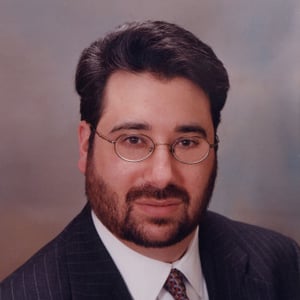
Lawrence J. Spiwak is President of the Phoenix Center for Advanced Legal & Economic Public Policy Studies, a non-profit 501(c)(3) organization that studies broad public-policy issues related to governance, social and economic conditions, with a particular emphasis on the law and economics of the digital age. Mr. Spiwak is a prolific scholar whose work is frequently cited by policymakers, major news media and academic journals around the world, and is in the top 1.3%of authors downloaded on the Social Science Research Network. Mr. Spiwak currently serves as the co-chair of the Federal Communications Bar Association’s (FCBA) committee responsible for overseeing the FEDERAL COMMUNICATIONS LAW JOURNAL and is a member of the program committee of the Telecommunications Policy Research Conference (“TPRC”). Mr. Spiwak is also the recipient of the FCBA’s Distinguished Service Award. Prior to joining the Phoenix Center, Mr. Spiwak was a Senior Attorney with the Competition Division in the FCC’s Office of General Counsel from 1994-1998. While in college, Mr. Spiwak was accepted into the Presidential Stay-In School program where he was responsible for delivering classified and confidential material among senior White House and Reagan Administration officials and received a full FBI security clearance. Mr. Spiwak received his B.A. with Special Honors from the George Washington University and his J.D. from the Benjamin N. Cardozo School of Law. Mr. Spiwak is a member in good standing of the bars of New York, Massachusetts, the District of Columbia, and the U.S. Court of Appeals for the D.C. Circuit.
Senior Fellow, Technology Policy, Cato Institute
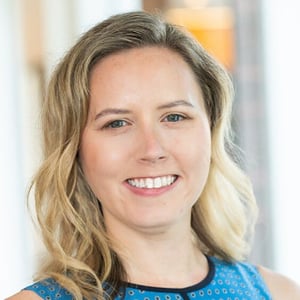
Jennifer’s research focuses on the intersection of emerging technology and law with a particular interest in the interactions between technology and the administrative state. Her work covers topics including judicial deference, liability protection for Internet platforms, autonomous vehicles and other disruptive transportation technologies, the regulation of data privacy, and the benefits of technology and innovation. Her work has appeared in USA Today, the Chicago Tribune, the New York Daily News, the Sacramento Bee, the Washington Times, Real Clear Policy, and U.S. News and World Report. Jennifer has a JD from the University of Alabama School of Law and a BA in political science at Wellesley College.

Senior Legal Fellow, The Future of Free Speech, Vanderbilt University
Ashkhen Kazaryan is a renowned expert in First Amendment law and technology policy, specializing in digital free speech, artificial intelligence, and the intersection of constitutional rights with emerging technologies. As a Senior Legal Fellow at the Future of Free Speech at Vanderbilt University, she leads initiatives to protect free expression and shape policies that uphold the First Amendment in the digital age.
Previously, Ashkhen was the lead for North and Latin America on the content regulation team at Meta, where she also served as the company’s policy lead on Section 230. She has also been a Senior Fellow at Stand Together and the Director of Civil Liberties at TechFreedom, where she worked extensively on platform liability, free speech, and internet governance. She is currently Fellow for the First Amendment at the Freedom Forum.
Ashkhen earned her specialist in law degree summa cum laude from Lomonosov Moscow State University in 2012 and later received a master of law degree from Yale Law School in 2016. During her time at Yale, she contributed as an articles editor for the Yale Journal of Law and Feminism, a senior editor for the Yale Law and Policy Review, and an editor for the Yale Journal of Law and Technology, while also serving as co-chair of the Public Interest Fellowship.
Judge, United States Court of Appeals, Eighth Circuit
Judge William Duane Benton is a federal judge on the United States Court of Appeals for the 8th Circuit. He joined the court in 2004 after being nominated by former President George W. Bush. Prior to his appointment, Judge Benton served as the chief justice of the Missouri Supreme Court. During his service on the court he received his masters of laws from the University of Virginia, completed the senior executives program at Harvard University’s John F Kennedy School of Government, and completed a post-graduate appellate judges course at New York University’s Institute of Judicial Administration.
Prior to serving on the Supreme Court of Missouri, Judge Benton was appointed by then-Governor John Ashcroft as director of the state’s department of revenue. Judge Benton also worked as a judge advocate general for the United States Navy, during which time he received his master’s degree in business administration and accountancy from the University of Memphis.
Judge Benton earned his law degree from Yale Law School and was the managing editor of the Yale Law Journal.
Chairman, Federal Communications Commission
Brendan Carr is the Chairman of the Federal Communications Commission. He previously served as the senior Republican Commissioner and as the FCC’s General Counsel. Nominated by both President Trump and President Biden, Carr has been confirmed unanimously by the Senate three times.
Described by Axios as “the FCC’s 5G crusader,” Carr has led the FCC’s work to modernize its infrastructure rules and accelerate the buildout of high-speed networks. His reforms cut billions of dollars in red tape, enabled the private sector to construct high-speed networks in communities across the country, and extended America’s global leadership in 5G.
Chairman Carr is also focused on expanding America’s skilled workforce—the tower climbers and construction crews needed to build next-gen networks. His jobs initiative promotes community colleges and apprenticeships as a pipeline for good-paying 5G jobs. He is recognizing America’s talented tower crews through a series of “5G Ready” Hard Hat presentations.
Chairman Carr leads a groundbreaking telehealth initiative at the FCC. The Connected Care Pilot Program supports the delivery of high-quality care to low-income Americans and veterans.
Chairman Carr’s time outside of Washington helps inform his approach to the job. He regularly hits the road to hear directly from community members and learn how changes in federal policies could help improve their lives.
Chairman Carr brings nearly 20 years of private and public sector experience in communications and tech policy to his position. Before joining the FCC as a staffer back in 2012, he worked as an attorney at Wiley Rein LLP in the firm’s appellate, litigation, and telecom practices. Previously, Chairman Carr clerked on the U.S. Court of Appeals for the Fourth Circuit for Judge Dennis Shedd. After attending Georgetown University for his undergrad, Chairman Carr earned his J.D. magna cum laude from the Catholic University of America’s Columbus School of Law where he served as an editor of the Catholic University Law Review.
Senior Vice President, Public Knowledge
Harold Feld is the Senior Vice President for Public Knowledge, one of the nation’s premier consumer advocacy organizations working at the intersection of copyright, telecommunications and the Internet. Feld is a highly regarded thought leader in the areas of telecommunications and digital consumer protection, and author of The Case for the Digital Platform Act: Market Structure and Regulation of Digital Platforms. He was previously Senior Vice President at the Media Access Project (MAP), a public interest law firm, where he advanced competition policies in media, telecommunications and technology. Prior to joining MAP, Feld was an associate at Covington & Burling, and clerked for the DC Court of Appeals.
Senior Vice President, Government Affairs, T-Mobile
As Senior Vice President, Government Affairs for T-Mobile, Kathleen O’Brien Ham is the chief public policy advocate for the Un-carrier. Kathleen manages all public policy issues before federal and state governments impacting the company. Her team regularly engages Congress, the FCC, state agencies, and other governmental bodies on a wide range of regulatory and policy issues, including spectrum, consumer, public safety, and competition matters. She has led numerous successful efforts to gain additional radio spectrum for the company, including most recently, the acquisition of 600 MHz frequencies to expand T-Mobile’s coverage and deploy 5G technology. She has also testified before Congress numerous times in support of the company’s public policy positions.
Prior to joining T-Mobile, she worked for fourteen years at the FCC in several top policy positions, including Deputy Chief of the Wireless Telecommunications Bureau. She was the first Chief of the FCC’s Spectrum Auctions Program where she was responsible for the early landmark PCS spectrum auctions. She also served on the FCC’s Spectrum Management Task Force and was involved in the Intergovernmental Advisory Committee that negotiated the reallocation of third generation (3G) wireless spectrum from government to commercial use.
A graduate of Catholic University’s Columbus School of Law, she received her undergraduate degree from the University of Colorado, with a Bachelor of Science in Journalism. For several years, she taught telecommunications as an adjunct professor at Catholic University. She has received numerous industry honors and recognition, most recently being named as one of 50 of the Most Influential Women in Wireless to Watch in 2017 by Global Telecoms Business. The Hill named her as one of the Top Lobbyists in 2016. In 2014 the Competitive Carriers Association celebrated her contributions to the industry with an Outstanding Achievement Award for her work in support of spectrum auction rules that benefit smaller carriers and help promote competition in the wireless ecosystem. And, since 2010 she has been named four times as one of the Most Influential Women in Wireless by FierceWireless.
Senior Advisor, Freshfields
Christine is a senior advisor in our antitrust, competition and trade practice with more than 25 years of public and private sector experience at the intersection of law, policy and politics. Based in Washington, DC, she counsels senior executives and boards of directors on how to navigate complex and evolving legal and regulatory regimes to achieve their desired business goals.
Most recently, Christine served as a Commissioner at the Federal Trade Commission (FTC) where she helped shape policies and enforcement actions in the fields of antitrust, consumer privacy and data security and consumer protection. During her tenure, she also testified before the US Congress on several occasions and represented the FTC in bilateral and multilateral discussions abroad.
Before joining the FTC, Christine was a Senior Vice President at Delta Air Lines where she oversaw the carrier’s regulatory and international legal matters. Prior to moving in-house, she was a partner at two international law firms where she worked with clients to achieve regulatory clearance for multi-jurisdictional mergers and to defend businesses in high-stakes investigations.
Her broad sector experience ranges from aircraft and automobiles to veterinary services, video games and virtual reality. She has worked extensively in the highly regulated fields of airlines, healthcare and pharmaceuticals.
After leaving the FTC last year, Christine founded an organization to provide safe housing and comprehensive support services to survivors of human trafficking and sexual exploitation. Freshfields provided pro bono services to the organization including corporate formation. She will continue supporting this organization alongside client practice.
General Counsel, Office of Sen. Marsha Blackburn
Jon Adame serves as General Counsel to Senator Marsha Blackburn, where he advises her on all tech-related issues across her committee assignments (Commerce, Judiciary, Armed Services). He previously worked for her on the House Energy & Commerce Committee. Jon graduated from the University of Colorado School of Law, and received his B.A. from the University of New Mexico.
Senior Vice President, Government Affairs, CTIA
Kelly Cole is responsible for overseeing the CTIA Hill team and advancing the wireless industry’s priorities before Congress.
Most recently, Ms. Cole ran her own consulting firm, Kelly Cole Strategies, and was a consulting counsel for Wiley Rein. She has had a highly successful career in the private sector as well as public service. She served as the Executive Vice President of Government Relations for the National Association of Broadcasters where she led the association’s lobbying efforts. Ms. Cole has also served as Majority Counsel for the U.S. House Energy and Commerce Committee managing communications and Internet issues.
She has a Juris Doctor from Willamette University College of Law, a bachelor of arts in Political, Legal and Economic Analysis from Mills College and spent a year studying law at the London School of Economics. Ms. Cole is a member of the bar in the District of Columbia, Washington state and Oregon.
Chief Economist, The Phoenix Center for Advanced Legal & Economic Public Policy Studies
George S. Ford is the chief economist for the Phoenix Center for Advanced Legal and Economic Public Policy Studies, a nonprofit 501(c)(3) research organization that studies broad public-policy issues related to governance, social and economic conditions, with a particular emphasis on the law and economics of the digital age.
President, Phoenix Center for Advanced Legal and Economic Public Policy Studies
Lawrence J. Spiwak is President of the Phoenix Center for Advanced Legal & Economic Public Policy Studies, a non-profit 501(c)(3) organization that studies broad public-policy issues related to governance, social and economic conditions, with a particular emphasis on the law and economics of the digital age. Mr. Spiwak is a prolific scholar whose work is frequently cited by policymakers, major news media and academic journals around the world, and is in the top 1.3%of authors downloaded on the Social Science Research Network. Mr. Spiwak currently serves as the co-chair of the Federal Communications Bar Association’s (FCBA) committee responsible for overseeing the FEDERAL COMMUNICATIONS LAW JOURNAL and is a member of the program committee of the Telecommunications Policy Research Conference (“TPRC”). Mr. Spiwak is also the recipient of the FCBA’s Distinguished Service Award. Prior to joining the Phoenix Center, Mr. Spiwak was a Senior Attorney with the Competition Division in the FCC’s Office of General Counsel from 1994-1998. While in college, Mr. Spiwak was accepted into the Presidential Stay-In School program where he was responsible for delivering classified and confidential material among senior White House and Reagan Administration officials and received a full FBI security clearance. Mr. Spiwak received his B.A. with Special Honors from the George Washington University and his J.D. from the Benjamin N. Cardozo School of Law. Mr. Spiwak is a member in good standing of the bars of New York, Massachusetts, the District of Columbia, and the U.S. Court of Appeals for the D.C. Circuit.

Corporations, Securities & Antitrust and Telecommunications & Electronic Media: Regulating Social Media
Duane Benton, Brendan Carr, Harold Feld, Kathleen Ham, Christine S. Wilson
On November 10, 2020, The Federalist Society's Corporations, Securities & Antitrust and Telecommunications & Electronic...
Corporations, Securities & Antitrust and Telecommunications & Electronic Media: Regulating Social Media
2020 National Lawyers Convention
2020 National Lawyers Convention
Regulating Social Media
2020 National Lawyers Convention
The Rule of Law and the Current Crisis
Topics
The House Staff Antitrust Report Will Negatively Affect More Than the Tech Industry
That's Debatable is a new blog initiative bringing together legal and policy experts with differing perspectives...
Topics
Section 230 Legal Issues: The FCC's Authority and the First Amendment
That's Debatable is a new blog initiative bringing together legal and policy experts with differing perspectives...
Open Questions in Lieu v. Federal Election Commission: Due Process, Adverseness, & Article III Standing
Sam Gedge, John Wrench
Note from the Editor: The Federalist Society takes no positions on particular legal and public...
Should the Federal Government Be in the 5G Business?
Jon Adame, Kelly Cole, George Ford, Lawrence J. Spiwak
The Department of Defense (DoD) recently issued a Request for Information about the possibility of...
Should the Federal Government Be in the 5G Business?
TeleforumExplainer Episode 17 – A Big Week for Section 230
Jennifer Huddleston, Ashkhen Kazaryan
In this episode, Jennifer Huddleston and Ashkhen Kazaryan break down the recent news related to...