

Denver Managing Partner, Wilkinson Barker Knauer LLP
Raymond L. Gifford counsels communications, electric and gas utilities, and information technology companies on state and federal aspects of regulation, administrative law, and competition policy. He is an expert in public utilities law, and the law and economics of regulation of network industries. Mr. Gifford’s law and policy work focuses on the convergence of broadband communications and energy, as well as environmental policy as it applies to the electric industry. He represents clients in state and federal courts and agencies, and serves as an expert witness on utility regulation and its history. He is also a Senior Adjunct Fellow at the Silicon Flatirons Center for Law, Technology and Entrepreneurship, and Co-Directs the Institute for Regulatory Law & Economics at University of Colorado Law School.
Mr. Gifford served as Chairman of the Colorado Public Utilities Commission from 1999-2003. Following that, he served as President of The Progress & Freedom Foundation, a Washington DC-based think-tank that studied the digital revolution as it relates to regulation of network industries. He entered the regulatory law world as First Assistant Attorney General in the Colorado Attorney General’s Office. He clerked for the Honorable Richard P. Matsch of the United States District Court for the District of Colorado. Mr. Gifford has authored a number of articles on communications law, public utility regulation and competition policy in network industries. He is a graduate of University of Chicago Law School and St. John’s College in Annapolis, Maryland. He is an elected member of the American Law Institute
Special Adviser, Media and Democracy Reform Initiative, Common Cause
Michael Copps is special adviser for Common Cause's Media and Democracy Reform Initiative.
From 2001-11, he served as a member of the Federal Communications Commission, where his tenure was marked by a consistent embrace of the public interest. As a strong voice in opposition to consolidation in the media, he dissented in the FCC vote on the Comcast-NBC Universal merger. He has been a consistent proponent of localism in programming and diversity in media ownership. Though retired from the Commission, he has maintained a commitment to an inclusive, informative media landscape. In addition to his work at Common Causes, Mr. Copps sits on the boards of Free Press and Public Knowledge.
Before joining the FCC, Mr. Copps served as assistant secretary of commerce for trade development at the Department of Commerce and chief of staff to U.S. Sen. Fritz Hollings from the early 1970s to 1983. He has a Ph.D. in History from the University of North Carolina at Chapel Hill.

Senior Research Fellow, Center for Growth and Opportunity
William Rinehart is a Senior Research Fellow at the Center for Growth and Opportunity at Utah State University.
He specializes in telecommunication, Internet, and data policy, with a focus on emerging technologies and innovation. His work has appeared in The Wall Street Journal, Bloomberg, Wired, Morning Consult, The Hill, Forbes, Reason, Marginal Revolution, Overlawyered, and on BBC Radio and NPR, just to name a few. Rinehart speaks regularly on topics related to tech policy and has been cited in regulatory orders from the FCC as well as Supreme Court petitions.
Rinehart came to the Center from the American Action Forum, where he served as Director of Technology and Innovation Policy. He was also previously a Research Fellow at TechFreedom and the Director of Operations at the International Center for Law & Economics. Additionally, he worked for the Institute for Policy and Civic Engagement as the Research Assistant in Technology and Civic Engagement. Rinehart is currently a Frédéric Bastiat Fellow at the Mercatus Center and previously a Fellow at the Internet Law & Policy Foundry. Additionally, he served on the Federal Communications Commission’s Broadband Deployment Committee and Consumer Advocacy Committee.

Senior Fellow and Director, Center for the Economics of the Internet, Hudson Institute
Harold Furchtgott-Roth is a senior fellow and director of the Center for the Economics of the Internet at Hudson Institute.
Mr. Furchtgott-Roth founded Furchtgott-Roth Economic Enterprises in 2003. He frequently comments on issues related to the communications sector of the economy. From 2001 to 2003, he was a visiting fellow at the American Enterprise Institute where he published A Tough Act to Follow, chronicling the difficulties implementing the Telecommunications Act of 1996.
From 1997 through 2001, Mr. Furchtgott-Roth served as a commissioner of the Federal Communications Commission. In that capacity, he served on the Joint Board on Universal Service. He is one of the few economists to have served as a federal regulatory commissioner, and the only one to have served on the Federal Communications Commission.
Before his appointment to the FCC, he was chief economist for the House Committee on Commerce and a principal staff member on the Telecommunications Act of 1996. Earlier in his career, he was a senior economist with Economists Incorporated and a research analyst with the Center for Naval Analyses.
Mr. Furchtgott-Roth is a member of the Washington Legal Foundation’s Legal Policy Advisory Board. He is the coauthor of three books: Cable TV: Regulation or Competition, with R.W. Crandall; Economics of A Disaster: The Exxon Valdez Oil Spill, with B.M. Owen et al; and International Trade in Computer Software, with S.E. Siwek.

Professor of Law, Michigan State University (currently serving as FCC General Counsel)
Professor Candeub joined the MSU Law faculty in fall 2004. He is also a Fellow with MSU's Institute of Public Utilities. Prior to joining MSU, he served as an advisor at the Federal Communications Commission (FCC). From 1998 to 2000, Professor Candeub was a litigation associate for the Washington D.C. firm of Jones, Day, Reavis & Pogue and also has served as a corporate associate with Cleary, Gottlieb, Steen & Hamilton, also in Washington, D.C. Immediately following law school, he clerked for Chief Judge J. Clifford Wallace, U.S. Court of Appeals for the Ninth Circuit. While in law school, Professor Candeub was an articles editor for the University of Pennsylvania Law Review.
Professor Candeub's scholarly interests focus on the law and regulation of communications, internet, technology. His numerous law review articles and scholarly papers have placed him at the center of legal and policy controversies, and he often writes for popular outlets such as the Wall Street Journal and US News. Federal courts, including the U.S. Supreme Court, have cited and relied upon his work.
He joined the Trump administration in 2019 as Deputy Assistant Secretary of Commerce for Telecommunications and Information and assumed the role of Acting Assistant Secretary. He later joined the Department of Justice as Deputy Associate Attorney General.
Professor Candeub is a senior fellow at the D.C.-based Center of Renewing America.

Senior Fellow and Academic Director, Penn Carey Law School
Gus Hurwitz is a Senior Fellow and the Academic Director of the Center for Technology, Innovation & Competition and the University of Pennsylvania Carey Law School where he is working to develop academic and scholarly programs at the intersecution of law, technology, and policy.
He is also Director of Law & Economics Programs at the International Center for Law & Economics (ICLE), a think tank based in Portland, Oregon, where he directs its law and economics-focused research program and helps to translate academic research into applied policy issues.
Hurwitz's research focuses on the regulation of technology, including administrative and regulatory law, antitrust law, torts and products liability, and media law - alongside cognate fields. Inrecent years he has worked on an AI standardization initiative with Seoul National University, a UNICEF-organized study of broadband deployment to public schools in Rwanda, and a book on conglomerate and ecosystems theories of antitrust.
He has published over 30 articles and book chapters, two books (one on cybersecurity law & policy, one on media regulation in the digital era) and have two more in process, over 100 shorter writings (op-eds, shorter analyses, blog posts, &c), hosted over 100 podcast episodes, and regularly appear or am quoted in popular media (including the NY Times, Wall Street Journal, Washington Post, and Associated Press). His work has been cited by legislators, federal courts of appeals, and federal regulatory agencies.
He was previously a full professor and founding director of the Governance & Technology Center at the University of Nebraska, prior to which he was the inaugural research fellow at the Center for Technology, Innovation & Competition (CTIC). From 2007 to 2010, he was a trial attorney with the U.S. Department of Justice Antitrust Division in the Telecommunications and Media Enforcement Section.
He also is, or has been, affiliated with the Classical Liberal Institute at New York University School of Law, the National Security Institute at George Mason University, and the American Enterprise Institute (AEI).
Before attending law school, Hurwitz worked at Los Alamos National Lab and interned at the Naval Research Lab. During this time his work was recognized by the Federal Laboratory Consortium, Los Alamos National Lab, IEEE & ACM, Corporation for Education Network Initiatives in California, R&D Magazine, and even the Guinness Book of World Records.
A current list of Hurwitz’s publications is available on his website: GusHurwitz.net.

Professor of Law and Associate Dean, Boston College Law School; Nonresident Senior Fellow, American Enterprise Institute, Boston College Law School
Professor Lyons is a Professor and Associate Dean at Boston College Law School. He specializes in telecommunications and tech policy, energy, and administrative law. Before joining the faculty, he practiced at the firm of Munger, Tolles and Olson in Los Angeles. He also clerked for the Judge Cynthia Holcomb Hall of the Ninth Circuit Court of Appeals.
Professor Lyons is also a Nonresident Senior Fellow at the American Enterprise Institute, where he has written over 250 blog posts on tech policy issues, including net neutrality, telecommunications regulation, First Amendment issues with tech regulation, and generative AI.

President and Founder, International Center for Law & Economics
Geoffrey A. Manne is the president and founder of the International Center for Law and Economics (ICLE), a nonprofit, nonpartisan research center based in Portland, Oregon. He is also a distinguished fellow at Northwestern Law School’s Searle Center on Law, Regulation, & Economic Growth. In April 2017 he was appointed by FCC Chairman Ajit Pai to the FCC’s Broadband Deployment Advisory Committee, and he recently served for two years on the FCC’s Consumer Advisory Committee.
Mr. Manne earned his JD and AB degrees from the University of Chicago and is an expert in the economic analysis of law, specializing in competition, telecommunications, consumer protection, intellectual property, and technology policy.
Prior to founding ICLE, Manne was a law professor at Lewis & Clark Law School. From 2006-2009, he took a leave from teaching to develop Microsoft’s law and economics academic outreach program. Manne has also served as a lecturer in law at the University of Chicago Law School and the University of Virginia School of Law. He practiced antitrust law and appellate litigation at Latham & Watkins, clerked for Hon. Morris S. Arnold on the 8th Circuit Court of Appeals, and worked as a research assistant for Judge Richard Posner. He was also once (very briefly) employed by the FTC.
Mr. Manne’s publications have appeared in numerous journals including the Journal of Competition Law and Economics, the Harvard Journal of Law and Technology, the Supreme Court Economic Review, and the Arizona Law Review, among others. With former FTC Commissioner, Joshua Wright, Manne is the editor of a volume from Cambridge University Press entitled, Competition Policy and Intellectual Property Law Under Uncertainty: Regulating Innovation. Manne has also testified on several occasions before Congress and at the FCC and FTC, and he regularly files written comments and amicus briefs on key antitrust, IP, and telecommunications issues. His analysis is frequently published in popular print and broadcasting outlets such as the Wall Street Journal, Wired, Foreign Affairs, NPR, and Bloomberg, among others.
Manne is a member of the American Law and Economics Association, the Canadian Law and Economics Association, and the Society for Institutional & Organizational Economics. He blogs at Truth on the Market (www.truthonthemarket.com) (of which he is also the co-founder), is a contributor at WIRED, and tweets at @geoffmanne. His scholarly publications are available at http://ssrn.com/author=175541.

Class of 1940 Research Professor of Law, Northwestern University School of Law
Jim Speta has been a member of the faculty since 1999. His research interests include telecommunications and Internet policy, antitrust, administrative law, and market organization. He teaches in the Law School and in the Joint Program in Law and Business operated by the Law School and the Kellogg School. A 1991 graduate of the University of Michigan Law School, Speta joined the Northwestern faculty following a one-year visit. He had previously clerked for Judge Harry T. Edwards on the United States Court of Appeals for the D.C. Circuit and practiced appellate, telecommunications, and antitrust law with the Chicago firm of Sidley & Austin.
Professor of Law, Michigan State University (currently serving as FCC General Counsel)
Professor Candeub joined the MSU Law faculty in fall 2004. He is also a Fellow with MSU's Institute of Public Utilities. Prior to joining MSU, he served as an advisor at the Federal Communications Commission (FCC). From 1998 to 2000, Professor Candeub was a litigation associate for the Washington D.C. firm of Jones, Day, Reavis & Pogue and also has served as a corporate associate with Cleary, Gottlieb, Steen & Hamilton, also in Washington, D.C. Immediately following law school, he clerked for Chief Judge J. Clifford Wallace, U.S. Court of Appeals for the Ninth Circuit. While in law school, Professor Candeub was an articles editor for the University of Pennsylvania Law Review.
Professor Candeub's scholarly interests focus on the law and regulation of communications, internet, technology. His numerous law review articles and scholarly papers have placed him at the center of legal and policy controversies, and he often writes for popular outlets such as the Wall Street Journal and US News. Federal courts, including the U.S. Supreme Court, have cited and relied upon his work.
He joined the Trump administration in 2019 as Deputy Assistant Secretary of Commerce for Telecommunications and Information and assumed the role of Acting Assistant Secretary. He later joined the Department of Justice as Deputy Associate Attorney General.
Professor Candeub is a senior fellow at the D.C.-based Center of Renewing America.
Senior Fellow and Academic Director, Penn Carey Law School
Gus Hurwitz is a Senior Fellow and the Academic Director of the Center for Technology, Innovation & Competition and the University of Pennsylvania Carey Law School where he is working to develop academic and scholarly programs at the intersecution of law, technology, and policy.
He is also Director of Law & Economics Programs at the International Center for Law & Economics (ICLE), a think tank based in Portland, Oregon, where he directs its law and economics-focused research program and helps to translate academic research into applied policy issues.
Hurwitz's research focuses on the regulation of technology, including administrative and regulatory law, antitrust law, torts and products liability, and media law - alongside cognate fields. Inrecent years he has worked on an AI standardization initiative with Seoul National University, a UNICEF-organized study of broadband deployment to public schools in Rwanda, and a book on conglomerate and ecosystems theories of antitrust.
He has published over 30 articles and book chapters, two books (one on cybersecurity law & policy, one on media regulation in the digital era) and have two more in process, over 100 shorter writings (op-eds, shorter analyses, blog posts, &c), hosted over 100 podcast episodes, and regularly appear or am quoted in popular media (including the NY Times, Wall Street Journal, Washington Post, and Associated Press). His work has been cited by legislators, federal courts of appeals, and federal regulatory agencies.
He was previously a full professor and founding director of the Governance & Technology Center at the University of Nebraska, prior to which he was the inaugural research fellow at the Center for Technology, Innovation & Competition (CTIC). From 2007 to 2010, he was a trial attorney with the U.S. Department of Justice Antitrust Division in the Telecommunications and Media Enforcement Section.
He also is, or has been, affiliated with the Classical Liberal Institute at New York University School of Law, the National Security Institute at George Mason University, and the American Enterprise Institute (AEI).
Before attending law school, Hurwitz worked at Los Alamos National Lab and interned at the Naval Research Lab. During this time his work was recognized by the Federal Laboratory Consortium, Los Alamos National Lab, IEEE & ACM, Corporation for Education Network Initiatives in California, R&D Magazine, and even the Guinness Book of World Records.
A current list of Hurwitz’s publications is available on his website: GusHurwitz.net.
Professor of Law and Associate Dean, Boston College Law School; Nonresident Senior Fellow, American Enterprise Institute, Boston College Law School
Professor Lyons is a Professor and Associate Dean at Boston College Law School. He specializes in telecommunications and tech policy, energy, and administrative law. Before joining the faculty, he practiced at the firm of Munger, Tolles and Olson in Los Angeles. He also clerked for the Judge Cynthia Holcomb Hall of the Ninth Circuit Court of Appeals.
Professor Lyons is also a Nonresident Senior Fellow at the American Enterprise Institute, where he has written over 250 blog posts on tech policy issues, including net neutrality, telecommunications regulation, First Amendment issues with tech regulation, and generative AI.
President and Founder, International Center for Law & Economics
Geoffrey A. Manne is the president and founder of the International Center for Law and Economics (ICLE), a nonprofit, nonpartisan research center based in Portland, Oregon. He is also a distinguished fellow at Northwestern Law School’s Searle Center on Law, Regulation, & Economic Growth. In April 2017 he was appointed by FCC Chairman Ajit Pai to the FCC’s Broadband Deployment Advisory Committee, and he recently served for two years on the FCC’s Consumer Advisory Committee.
Mr. Manne earned his JD and AB degrees from the University of Chicago and is an expert in the economic analysis of law, specializing in competition, telecommunications, consumer protection, intellectual property, and technology policy.
Prior to founding ICLE, Manne was a law professor at Lewis & Clark Law School. From 2006-2009, he took a leave from teaching to develop Microsoft’s law and economics academic outreach program. Manne has also served as a lecturer in law at the University of Chicago Law School and the University of Virginia School of Law. He practiced antitrust law and appellate litigation at Latham & Watkins, clerked for Hon. Morris S. Arnold on the 8th Circuit Court of Appeals, and worked as a research assistant for Judge Richard Posner. He was also once (very briefly) employed by the FTC.
Mr. Manne’s publications have appeared in numerous journals including the Journal of Competition Law and Economics, the Harvard Journal of Law and Technology, the Supreme Court Economic Review, and the Arizona Law Review, among others. With former FTC Commissioner, Joshua Wright, Manne is the editor of a volume from Cambridge University Press entitled, Competition Policy and Intellectual Property Law Under Uncertainty: Regulating Innovation. Manne has also testified on several occasions before Congress and at the FCC and FTC, and he regularly files written comments and amicus briefs on key antitrust, IP, and telecommunications issues. His analysis is frequently published in popular print and broadcasting outlets such as the Wall Street Journal, Wired, Foreign Affairs, NPR, and Bloomberg, among others.
Manne is a member of the American Law and Economics Association, the Canadian Law and Economics Association, and the Society for Institutional & Organizational Economics. He blogs at Truth on the Market (www.truthonthemarket.com) (of which he is also the co-founder), is a contributor at WIRED, and tweets at @geoffmanne. His scholarly publications are available at http://ssrn.com/author=175541.
Class of 1940 Research Professor of Law, Northwestern University School of Law
Jim Speta has been a member of the faculty since 1999. His research interests include telecommunications and Internet policy, antitrust, administrative law, and market organization. He teaches in the Law School and in the Joint Program in Law and Business operated by the Law School and the Kellogg School. A 1991 graduate of the University of Michigan Law School, Speta joined the Northwestern faculty following a one-year visit. He had previously clerked for Judge Harry T. Edwards on the United States Court of Appeals for the D.C. Circuit and practiced appellate, telecommunications, and antitrust law with the Chicago firm of Sidley & Austin.

Head of U.S. Policy and Strategic Advocacy, Electric Coin Company
Paul Brigner is the Head of U.S. Policy and Strategic Advocacy at the Electric Coin Company. He has served in senior level technology policy and government relations roles for the last eighteen years with another ten years of hands-on technical experience at the beginning his career after serving in the United States Army.
He holds an MBA from the McDonough School of Business at Georgetown University and a JD from the Georgetown University Law Center. He received a Bachelors degree from Stephen F. Austin State University where he was named the Outstanding Computer Science Graduate.

Senior Vice President, Strand Consult
Roslyn Layton, PhD is a leading international expert on technology policy. She is Senior Vice President of Strand Consult, an independent consultancy serving the global mobile telecom industry. She is also a Visiting Researcher at Aalborg University Copenhagen where she earned a doctoral thesis on network neutrality by measuring the outcome of the policy across 53 countries over 5 years. She served on the Presidential Transition Team for the Federal Communications Commission (FCC), and her work was critical to the FCC’s defense for the Restoring Internet Freedom Order. She has testified to the United States Senate and House on multiple topics including spectrum, broadband, mobile mergers, competition, and privacy. She founded the think tank China Tech Threat to study the problems of technology produced by the People’s Republic of China. She serves as the Program Chair for the Telecom Policy Research Conference, the leading interdisciplinary academic gathering. Her recent paper on rural broadband describes the empirical case for policy reform to recover network infrastructure costs from streaming video entertainment providers. She is a Senior Contributor to Forbes.
Partner, Cooley
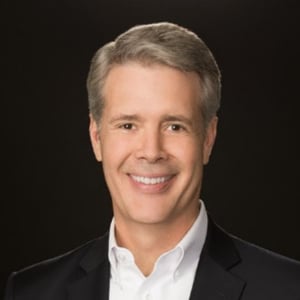
Rob McDowell advises telecommunications, media and technology clients on their most significant regulatory, legal and business matters. As a former commissioner of the Federal Communications Commission (FCC) and a highly regarded industry leader, Rob has been at the forefront of the most complex and groundbreaking issues facing telecommunications.
Mr. McDowell was first appointed to the FCC by President George W. Bush in 2006 and again by President Obama in 2009. He was unanimously confirmed both times by the US Senate. During his tenure, Mr. McDowell led efforts to expand consumer access to spectrum through his work on the two largest wireless auctions in US history at the time, played a key role in the 2009 digital television transition and led efforts to establish the first federal civil rights rule in a generation by creating a ban on racially discriminatory practices in broadcast advertising. He also worked extensively on several large and complex mergers, including Sirius/XM and Comcast/NBC-Universal.
He is an advocate for internet freedom, serving on the US delegation to the 2012 World Conference on International Telecommunications and exposing an international bid to regulate vital aspects of the Internet through multilateral treaty-based organizations. Mr. McDowell authored an op-ed in the Wall Street Journal opposing multilateral internet regulation that led to a resolution passed unanimously in the House and Senate, as well as the ultimate defeat of the international bid at a treaty negation in Dubai later that year.
Prior to the FCC, Mr. McDowell was senior vice president for CompTel, the Competitive Telecommunications Association, where he led advocacy efforts before several government agencies, the White House and Congress.
Mr. McDowell is often called upon for speaking engagements and frequently appears on TV and radio. He has written opinion pieces for many high-profile publications, including the Wall Street Journal and Washington Post.

Founder and President, Salt Point Strategies
David Redl is the Founder and President of Salt Point Strategies, a strategic advising firm focused on the technology and telecom sectors. David is an attorney and former government executive with experience in both the legislative and executive branches of the U.S. government in the telecommunications, media, and technology fields.
David previously served as Assistant Secretary of Commerce for Communications and Information and the Administrator of the National Telecommunications and Information Administration. During his tenure, he led U.S. efforts to ensure American leadership in 5G, to bring broadband to more rural Americans, and to promote a free, open, and secure Internet around the world.
David also represented the United States in international forums, including leading U.S. efforts before the Internet Corporation for Assigned Names and Numbers, the Inter-American Telecommunication Commission, the Organisation for Economic Co-operation and Development, and the International Telecommunication Union.
In the legislative branch, David served as Chief Counsel for Communications and Technology on the majority staff of the U.S. House of Representatives Committee on Energy and Commerce. While at Energy and Commerce, he worked extensively on telecommunications, media, and technology laws, including the successful passage of laws authorizing the first-ever spectrum incentive auction, the creation of the First Responder Network Authority, and reauthorization of the satellite television laws.
Prior to his government service, David started his career as Director of Regulatory Affairs at CTIA, an international trade association of the wireless communications industry.
Mr. Redl received his B.A. in Journalism and his B.A. in Political Science from the Pennsylvania State University and his J.D. from the Catholic University of America with a certificate from the Institute for Communications Law Studies. He is a member of the New York and District of Columbia Bars.

Partner, HWG LLP
Patricia Paoletta is a partner with the law firm of HWG LLP, where she specializes in telecommunications, trade and technology policy. Ms. Paoletta provides advice on regulatory, trade and legislative policy to clients before the FCC, Congress and the Administration. Her clients include providers of content, cloud, mobile broadband, VoIP, international telecommunications, small cells, cognitive radio, public safety and homeland security solutions. She serves on Advisory Boards for several entities engaged in information services, communications and technology.
Ms. Paoletta has accrued considerable experience with telecommunications trade and policy in the public sector. From 1990 to 1995, she was senior advisor to the International Bureau Chief and Office Director at the Federal Communications Commission. In the mid 1990s, Ms. Paoletta served as Director of Telecommunications Trade Policy in the Office of the U.S. Trade Representative, Executive Office of the President, where she worked on the WTO Information Technology Agreement (ITA) and the Basic Telecommunications Agreement. After USTR, Ms. Paoletta served as Majority Counsel to the House Energy and Commerce Committee. She then moved to Level 3 Communications, as Vice President, Government Relations.
Ms. Paoletta is on the Steering Committee of the Transatlantic Roundtable on Telecommunications and Information Technology of the European Institute. She is a member of the USTR Alumni Association, Washington International Trade Association, the Federal Communications Bar Association (FCBA), and Women in Technology. Ms. Paoletta has served on the Board of Advisors for the Inter-American Dialogue's Latin America Telecom Advisor, Co-Chairman of the American Bar Association International Communications Committee, and as a member of the U.S. Chamber of Commerce's Technology Policy Committee.
Ms. Paoletta served as a delegate in 2012 to the ITU-R's Study Group 6 Working Party 6A Meeting and in 2009 and 2010 to the ITU-R's Study Group I Working Party IB Meetings; the 2009 meetings of CITEL (the Committee on International Telecommunications at the Organization of American States) PCC-II; the International Telecommunication Union (ITU) World Telecommunications Standards Assembly (2000); the ITU Internet Protocol Telephony Experts Group and the ITU World Telecommunications Policy Forum in 2001; as Chairman of the National Reliability and Interoperability Council (NRIC) Steering Committee (2000-2001); as Board Member for the Voice on the Net Coalition (2001); as Co-Chairman of the FCBA's Annual Seminar Committee (2009-2011); as a member of the FCBA's Ad Hoc Speakers Committee (2006-2007); as Co-Chairman for the FCBA International Practice Committee (2001-2002 and 2005-2006); and as a Co-Chairman of the FCBA Legislative Practice Committee (1999-2000).

Laurence H. Silberman Chair in Constitutional Governance, American Enterprise Institute; Executive Director, Antonin Scalia Law School’s C. Boyden Gray Center for the Study of the Administrative State
Adam J. White is the Laurence H. Silberman Chair in Constitutional Governance and senior fellow at the American Enterprise Institute, where he focuses on the Supreme Court and the administrative state. He also directs the Antonin Scalia Law School’s C. Boyden Gray Center for the Study of the Administrative State.
He writes on regulation and constitutional government for a variety of publications. He practiced law in Washington, D.C., after clerking for the D.C. Circuit's Judge David Sentelle. He also has been chairman of the ABA's Administrative Law Section.
In 2021, he served on the Presidential Commission on the Supreme Court of the United States, where he criticized “Court packing” and other efforts to restructure the Supreme Court.

Associate, Mayer Brown LLP
Brantley Webb is a Litigation & Dispute Resolution associate and member of the firm’s Supreme Court & Appellate practice in the Washington DC office. Her practice focuses on appellate and complex litigation and spans a range of substantive areas, including administrative law, class actions, and criminal law, and encompasses all phases of litigation, including pre- and post-trial motions practice, depositions, working with experts, and trial strategy. In her appellate practice, she regularly represents clients and briefs cases in the federal courts of appeals and state appellate courts. She has also briefed multiple cases in the U.S. Supreme Court.
Ms. Webb graduated from Yale Law School, where she served as an Articles Editor of the Yale Law Journal, and earned her undergraduate degree, magna cum laude, from Dartmouth College. Before joining Mayer Brown, she clerked for the Honorable Sandra L. Lynch, US Court of Appeals for the First Circuit. Her publications have appeared in the George Mason Law Review, the Yale Law Journal, and Law360.

Member, Eckert Seamans Cherin & Mellott, LLC
Earl Comstock has more than two decades of direct experience with the question of the proper regulatory treatment of broadband Internet access services. He was one of the principal Senate staff responsible for the negotiation and drafting of the Telecommunications Act of 1996 (Pub. L. 104 – 104). During the four years of Congressional debate that led up to the Telecommunications Act, Mr. Comstock served as chief counsel for Senator Ted Stevens (R – AK) and as special counsel for telecommunications on the Senate Committee on Commerce, Science, and Transportation.
In addition to the Telecommunications Act, Mr. Comstock also participated in the negotiation and drafting of the Cable Television Consumer Protection and Competition Act of 1992 (Pub. L. 102 – 385); the Omnibus Budget Reconciliation Act of 1993 (Pub. L. 103 – 66) which created spectrum auctions and commercial mobile services; the Balanced Budget Act of 1997 (Pub. L. 105 – 33) which established the high definition television transition; the Internet Tax Freedom Act (Pub. L. 105 – 277, Division C, Title XI); and the ORBIT Act (Pub. L. 106 – 180), which privatized INTELSAT.
Since leaving Capitol Hill at the end of 1997 Mr. Comstock has been an attorney in private practice and a consultant on telecommunications and Internet policy. He was also President and CEO of COMPTEL, an industry trade organization representing competitive telecommunications and Internet companies, from 2005 to 2007.
With respect to the regulatory treatment of broadband Internet access services, Mr. Comstock testified before the Federal Communications Commission (FCC) during the agency deliberations that led to the Stevens Report; represented EarthLink in the proceedings that led to the Cable Modem Declaratory Ruling and during the legal challenges of that ruling in the U.S. Court of Appeals for the Ninth Circuit and the Supreme Court (National Cable & Telecommunications Assoc. v. Brand X Internet Services, 545 U.S. 967 (2005)); and presently represents Full Service Network and TruConnect in the pending challenge of the FCC’s Open Internet Order in the U.S. Court of Appeals for the District of Columbia Circuit (Case No. 15-1151, which has been consolidated with other challenges under Case No. 15-1063).
Mr. Comstock has recently left the law firm of Eckert Seamans Cherin & Mellott to become general counsel for a start-up company.

Partner, Wilkinson Barker Knauer LLP
Kelly Donohue has worked on media and broadcast matters for over a decade, with a particular emphasis on broadcast law. She routinely files pleadings on behalf of clients in application and rulemaking proceedings, and handles matters relating to new station licensing, renewals, changes in communities of license, ownership and attribution, assignments and transfers, facility changes, EEO compliance, sponsorship identification and contest rules. Prior to joining the firm, Ms. Donohue spent seven years at the Federal Communications Commission, where she served as an Assistant Division Chief in the Audio Division of the FCC’s Media Bureau and as Special Counsel in the Enforcement Bureau, Office of the Bureau Chief.
Ms. Donohue also manages a growing trademark practice, counseling clients on the selection and clearance of trademarks, and preparing, filing and prosecuting federal trademark and service mark applications. She also negotiates trademark licensing, settlement and consent agreements. Ms. Donohue is well-versed in other intellectual property matters as well, and has counseled clients on issues relating to music licensing, fair use principles under copyright law, and DMCA takedown provisions.
More recently, Ms. Donohue has discovered her passion for working with start-ups and tech companies, ranging from app developers to creators of connected devices (i.e. Internet of Things). It is in this space that Ms. Donohue brings together her broad legal experience, creative "can do" thinking and strong communications skills to find innovative, cost-effective solutions to the legal hurdles new companies often face. She has provided both formal and informal guidance to dozens of companies on issues relating to intellectual property, privacy, regulatory compliance, and corporate structure/governance.
Ms. Donohue herself has an entrepreneurial spirit. She began her career as a professional musician and continues to write music and perform regularly with her “kindie” rock band, Here Comes Trouble. She has won numerous awards for her songwriting and vocal arrangements, including placements in the Mid-Atlantic Songwriting Contest and International Songwriting Competition.

Partner, Gibson Dunn & Crutcher LLP
Miguel A. Estrada is a partner in the Washington, D.C. office of Gibson, Dunn & Crutcher.
Mr. Estrada has represented clients before federal and state courts throughout the country in a broad range of matters. He has argued 24 cases before the United States Supreme Court, and briefed many others. He has also argued dozens of appeals in the lower federal courts.
Best Lawyers® recognized Mr. Estrada as a 2020 Lawyer of the Year in Intellectual Property Litigation and as a Lawyer of the Year in Appellate Practice. He has been recognized by Benchmark Litigation as a 2020 U.S. Appellate Litigation “Star”. In 2014, The American Lawyer named Mr. Estrada a “Litigator of the Year,” praising his “brains and tenacity” and noting he is the lawyer to call for “a tough, potentially unwinnable case.” From 2014-2021, Chambers & Partners has named him as one of a handful of attorneys that it ranked in the top tier among the nation’s leading appellate lawyers. Chambers & Partners noted that “clients are impressed by his intellect and ability, with one saying, ‘His papers are just blindingly clear in what they say and devastating in how they marshal the arguments.’” The Atlantic described his oral argument in a 2014 high-profile separation-of-powers case as “one of the most dazzling arguments the marble chamber has heard in many years.”
Mr. Estrada was selected by his peers for inclusion in the 2020 edition of The Best Lawyers in America® in the area of Appellate Law, in addition to previous recognition by the publication in the specialties of Bet-the-Company Litigation, Commercial Litigation and Criminal Defense: White Collar, Intellectual Property Litigation, and Regulatory Enforcement Litigation in the areas of SEC, Telecom, and Energy. In 2017, he was elected as a member of the American Law Institute. In 2021, Mr. Estrada was named among the Lawdragon 500 Leading Lawyers in America. In 2004, Legal Times named him one of the top 12 appellate litigators in the D.C. area, noting that “people who follow appellate practice in Washington have known for several years that Estrada . . . is one of the best around.” Also in 2004, Washingtonian Magazine named him one of the top constitutional law lawyers “who could become one of the legends of the Supreme Court bar.”
Mr. Estrada joined Gibson Dunn in 1997, after serving for five years as Assistant to the Solicitor General of the United States. He previously served as Assistant U.S. Attorney and Deputy Chief of the Appellate Section, U.S. Attorney’s Office, Southern District of New York. In those capacities, Mr. Estrada represented the government in numerous jury trials and in many appeals before the U.S. Court of Appeals for the Second Circuit. Before joining the U.S. Attorney’s Office, Mr. Estrada practiced corporate law in New York with Wachtell, Lipton, Rosen & Katz.
Mr. Estrada is a Trustee of the Supreme Court Historical Society. He was formerly a member of the Board of Visitors of Harvard Law School.
Mr. Estrada served as a law clerk to the Honorable Anthony M. Kennedy in the U.S. Supreme Court from 1988 to 1989 and to the Honorable Amalya L. Kearse in the U.S. Court of Appeals for the Second Circuit from 1986 to 1987. He received a J.D. degree magna cum laude in 1986 from Harvard Law School, where he was editor of the Harvard Law Review. Mr. Estrada graduated with an A.B. degree magna cum laude and Phi Beta Kappa in 1983 from Columbia College, New York. He is fluent in Spanish and proficient in French.
Representative Supreme Court matters include:
In 2011, the Supreme Court appointed Mr. Estrada to brief and argue two criminal cases –Dorsey v. United States and Hill v. United States – in which the Solicitor General declined to defend the judgments of the court of appeals. Mr. Estrada was appointed to argue the position that the Solicitor General had declined to defend.
Mr. Estrada was also part of the team that successfully presented then Governor Bush’s position to the Supreme Court in Bush v. Gore (2000). Other cases that Mr. Estrada handled in the Supreme Court include Granholm v. Heald (2005) (dormant Commerce Clause and Twenty-First Amendment), Vermont Agency of Natural Resources v. United States ex rel. Stevens (2000) (False Claims Act, Article III standing and Eleventh Amendment immunity), Old Chief v. United States (1997) (rules of evidence), United States v. Mezzanatto (1995) (evidence and plea bargaining), United States v. Robertson (1995) (constitutional limits on Congress’s Commerce Clause powers), Citizens Bank of Maryland v. Strumpf (1995) (bankruptcy law), and NOW, Inc. v. Scheidler (1994) (RICO).
Recent Court of Appeals matters include:
In addition, Mr. Estrada is lead appellate counsel to Vivendi S.A. in two securities-fraud appeals from jury verdicts that are currently pending in the Second Circuit, and to the National Association of Broadcasters in a challenge to certain procedures promulgated by the FCC in connection with the upcoming Spectrum Auction. Mr. Estrada also recently presented argument before the D.C. Circuit on behalf of the tobacco industry in a first amendment challenge to certain compelled disclosures that were imposed as part of the government’s long-running civil RICO case against the industry.
Other matters:
Senior Vice President, Strand Consult
Roslyn Layton, PhD is a leading international expert on technology policy. She is Senior Vice President of Strand Consult, an independent consultancy serving the global mobile telecom industry. She is also a Visiting Researcher at Aalborg University Copenhagen where she earned a doctoral thesis on network neutrality by measuring the outcome of the policy across 53 countries over 5 years. She served on the Presidential Transition Team for the Federal Communications Commission (FCC), and her work was critical to the FCC’s defense for the Restoring Internet Freedom Order. She has testified to the United States Senate and House on multiple topics including spectrum, broadband, mobile mergers, competition, and privacy. She founded the think tank China Tech Threat to study the problems of technology produced by the People’s Republic of China. She serves as the Program Chair for the Telecom Policy Research Conference, the leading interdisciplinary academic gathering. Her recent paper on rural broadband describes the empirical case for policy reform to recover network infrastructure costs from streaming video entertainment providers. She is a Senior Contributor to Forbes.

Judge, U.S. Court of Appeals, District of Columbia Circuit
Judge Sentelle was appointed United States Circuit Judge in October 1987, served as Chief Judge from February 11, 2008 until February 11, 2013, and took senior status on February 12, 2013. He is a 1968 graduate of the University of North Carolina Law School. Following law school, he practiced with the firm of Uzzell & DuMont until he became an Assistant U.S. Attorney in Charlotte, N.C. in 1970. From 1974 to 1977, he served as a North Carolina State District Judge but left the bench in 1977 to become a partner with the firm of Tucker, Hicks, Sentelle, Moon & Hodge. In 1985, Judge Sentelle joined the U.S. District Court, Western District of North Carolina, in Asheville, where he served until his appointment to the D.C. Circuit. Judge Sentelle was the Presiding Judge of the Special Division for the Purpose of Appointing Independent Counsels (1992-2006). He also served as the Chair of the U.S. Judicial Conference's Executive Committee (2010-2013). Judge Sentelle served for over 20 years as President of the Edward Bennett Williams Inn of the American Inns of Court.
Laurence H. Silberman Chair in Constitutional Governance, American Enterprise Institute; Executive Director, Antonin Scalia Law School’s C. Boyden Gray Center for the Study of the Administrative State
Adam J. White is the Laurence H. Silberman Chair in Constitutional Governance and senior fellow at the American Enterprise Institute, where he focuses on the Supreme Court and the administrative state. He also directs the Antonin Scalia Law School’s C. Boyden Gray Center for the Study of the Administrative State.
He writes on regulation and constitutional government for a variety of publications. He practiced law in Washington, D.C., after clerking for the D.C. Circuit's Judge David Sentelle. He also has been chairman of the ABA's Administrative Law Section.
In 2021, he served on the Presidential Commission on the Supreme Court of the United States, where he criticized “Court packing” and other efforts to restructure the Supreme Court.
Assistant Attorney General, Civil Division, United States Department of Justice
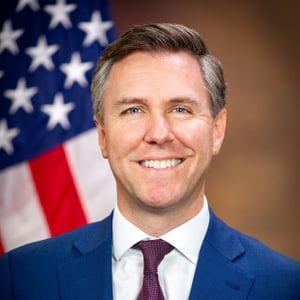
Brett A. Shumate was sworn in as the Civil Division’s 36th Assistant Attorney General on June 11, 2025. He previously served in the Civil Division from 2017 to 2019 as the Deputy Assistant Attorney General for the Federal Programs Branch. Prior to rejoining the Department, Mr. Shumate was a partner at Jones Day in Washington, D.C.
Mr. Shumate clerked for Judge Edith H. Jones on the United States Court of Appeals for the Fifth Circuit. He graduated from Wake Forest University School of Law and Furman University.
Professor of Law, Michigan State University (currently serving as FCC General Counsel)
Professor Candeub joined the MSU Law faculty in fall 2004. He is also a Fellow with MSU's Institute of Public Utilities. Prior to joining MSU, he served as an advisor at the Federal Communications Commission (FCC). From 1998 to 2000, Professor Candeub was a litigation associate for the Washington D.C. firm of Jones, Day, Reavis & Pogue and also has served as a corporate associate with Cleary, Gottlieb, Steen & Hamilton, also in Washington, D.C. Immediately following law school, he clerked for Chief Judge J. Clifford Wallace, U.S. Court of Appeals for the Ninth Circuit. While in law school, Professor Candeub was an articles editor for the University of Pennsylvania Law Review.
Professor Candeub's scholarly interests focus on the law and regulation of communications, internet, technology. His numerous law review articles and scholarly papers have placed him at the center of legal and policy controversies, and he often writes for popular outlets such as the Wall Street Journal and US News. Federal courts, including the U.S. Supreme Court, have cited and relied upon his work.
He joined the Trump administration in 2019 as Deputy Assistant Secretary of Commerce for Telecommunications and Information and assumed the role of Acting Assistant Secretary. He later joined the Department of Justice as Deputy Associate Attorney General.
Professor Candeub is a senior fellow at the D.C.-based Center of Renewing America.
Senior Fellow and Academic Director, Penn Carey Law School
Gus Hurwitz is a Senior Fellow and the Academic Director of the Center for Technology, Innovation & Competition and the University of Pennsylvania Carey Law School where he is working to develop academic and scholarly programs at the intersecution of law, technology, and policy.
He is also Director of Law & Economics Programs at the International Center for Law & Economics (ICLE), a think tank based in Portland, Oregon, where he directs its law and economics-focused research program and helps to translate academic research into applied policy issues.
Hurwitz's research focuses on the regulation of technology, including administrative and regulatory law, antitrust law, torts and products liability, and media law - alongside cognate fields. Inrecent years he has worked on an AI standardization initiative with Seoul National University, a UNICEF-organized study of broadband deployment to public schools in Rwanda, and a book on conglomerate and ecosystems theories of antitrust.
He has published over 30 articles and book chapters, two books (one on cybersecurity law & policy, one on media regulation in the digital era) and have two more in process, over 100 shorter writings (op-eds, shorter analyses, blog posts, &c), hosted over 100 podcast episodes, and regularly appear or am quoted in popular media (including the NY Times, Wall Street Journal, Washington Post, and Associated Press). His work has been cited by legislators, federal courts of appeals, and federal regulatory agencies.
He was previously a full professor and founding director of the Governance & Technology Center at the University of Nebraska, prior to which he was the inaugural research fellow at the Center for Technology, Innovation & Competition (CTIC). From 2007 to 2010, he was a trial attorney with the U.S. Department of Justice Antitrust Division in the Telecommunications and Media Enforcement Section.
He also is, or has been, affiliated with the Classical Liberal Institute at New York University School of Law, the National Security Institute at George Mason University, and the American Enterprise Institute (AEI).
Before attending law school, Hurwitz worked at Los Alamos National Lab and interned at the Naval Research Lab. During this time his work was recognized by the Federal Laboratory Consortium, Los Alamos National Lab, IEEE & ACM, Corporation for Education Network Initiatives in California, R&D Magazine, and even the Guinness Book of World Records.
A current list of Hurwitz’s publications is available on his website: GusHurwitz.net.
Professor of Law and Associate Dean, Boston College Law School; Nonresident Senior Fellow, American Enterprise Institute, Boston College Law School
Professor Lyons is a Professor and Associate Dean at Boston College Law School. He specializes in telecommunications and tech policy, energy, and administrative law. Before joining the faculty, he practiced at the firm of Munger, Tolles and Olson in Los Angeles. He also clerked for the Judge Cynthia Holcomb Hall of the Ninth Circuit Court of Appeals.
Professor Lyons is also a Nonresident Senior Fellow at the American Enterprise Institute, where he has written over 250 blog posts on tech policy issues, including net neutrality, telecommunications regulation, First Amendment issues with tech regulation, and generative AI.
President and Founder, International Center for Law & Economics
Geoffrey A. Manne is the president and founder of the International Center for Law and Economics (ICLE), a nonprofit, nonpartisan research center based in Portland, Oregon. He is also a distinguished fellow at Northwestern Law School’s Searle Center on Law, Regulation, & Economic Growth. In April 2017 he was appointed by FCC Chairman Ajit Pai to the FCC’s Broadband Deployment Advisory Committee, and he recently served for two years on the FCC’s Consumer Advisory Committee.
Mr. Manne earned his JD and AB degrees from the University of Chicago and is an expert in the economic analysis of law, specializing in competition, telecommunications, consumer protection, intellectual property, and technology policy.
Prior to founding ICLE, Manne was a law professor at Lewis & Clark Law School. From 2006-2009, he took a leave from teaching to develop Microsoft’s law and economics academic outreach program. Manne has also served as a lecturer in law at the University of Chicago Law School and the University of Virginia School of Law. He practiced antitrust law and appellate litigation at Latham & Watkins, clerked for Hon. Morris S. Arnold on the 8th Circuit Court of Appeals, and worked as a research assistant for Judge Richard Posner. He was also once (very briefly) employed by the FTC.
Mr. Manne’s publications have appeared in numerous journals including the Journal of Competition Law and Economics, the Harvard Journal of Law and Technology, the Supreme Court Economic Review, and the Arizona Law Review, among others. With former FTC Commissioner, Joshua Wright, Manne is the editor of a volume from Cambridge University Press entitled, Competition Policy and Intellectual Property Law Under Uncertainty: Regulating Innovation. Manne has also testified on several occasions before Congress and at the FCC and FTC, and he regularly files written comments and amicus briefs on key antitrust, IP, and telecommunications issues. His analysis is frequently published in popular print and broadcasting outlets such as the Wall Street Journal, Wired, Foreign Affairs, NPR, and Bloomberg, among others.
Manne is a member of the American Law and Economics Association, the Canadian Law and Economics Association, and the Society for Institutional & Organizational Economics. He blogs at Truth on the Market (www.truthonthemarket.com) (of which he is also the co-founder), is a contributor at WIRED, and tweets at @geoffmanne. His scholarly publications are available at http://ssrn.com/author=175541.
Class of 1940 Research Professor of Law, Northwestern University School of Law
Jim Speta has been a member of the faculty since 1999. His research interests include telecommunications and Internet policy, antitrust, administrative law, and market organization. He teaches in the Law School and in the Joint Program in Law and Business operated by the Law School and the Kellogg School. A 1991 graduate of the University of Michigan Law School, Speta joined the Northwestern faculty following a one-year visit. He had previously clerked for Judge Harry T. Edwards on the United States Court of Appeals for the D.C. Circuit and practiced appellate, telecommunications, and antitrust law with the Chicago firm of Sidley & Austin.
Head of U.S. Policy and Strategic Advocacy, Electric Coin Company
Paul Brigner is the Head of U.S. Policy and Strategic Advocacy at the Electric Coin Company. He has served in senior level technology policy and government relations roles for the last eighteen years with another ten years of hands-on technical experience at the beginning his career after serving in the United States Army.
He holds an MBA from the McDonough School of Business at Georgetown University and a JD from the Georgetown University Law Center. He received a Bachelors degree from Stephen F. Austin State University where he was named the Outstanding Computer Science Graduate.
Senior Vice President, Strand Consult
Roslyn Layton, PhD is a leading international expert on technology policy. She is Senior Vice President of Strand Consult, an independent consultancy serving the global mobile telecom industry. She is also a Visiting Researcher at Aalborg University Copenhagen where she earned a doctoral thesis on network neutrality by measuring the outcome of the policy across 53 countries over 5 years. She served on the Presidential Transition Team for the Federal Communications Commission (FCC), and her work was critical to the FCC’s defense for the Restoring Internet Freedom Order. She has testified to the United States Senate and House on multiple topics including spectrum, broadband, mobile mergers, competition, and privacy. She founded the think tank China Tech Threat to study the problems of technology produced by the People’s Republic of China. She serves as the Program Chair for the Telecom Policy Research Conference, the leading interdisciplinary academic gathering. Her recent paper on rural broadband describes the empirical case for policy reform to recover network infrastructure costs from streaming video entertainment providers. She is a Senior Contributor to Forbes.
Partner, Cooley
Rob McDowell advises telecommunications, media and technology clients on their most significant regulatory, legal and business matters. As a former commissioner of the Federal Communications Commission (FCC) and a highly regarded industry leader, Rob has been at the forefront of the most complex and groundbreaking issues facing telecommunications.
Mr. McDowell was first appointed to the FCC by President George W. Bush in 2006 and again by President Obama in 2009. He was unanimously confirmed both times by the US Senate. During his tenure, Mr. McDowell led efforts to expand consumer access to spectrum through his work on the two largest wireless auctions in US history at the time, played a key role in the 2009 digital television transition and led efforts to establish the first federal civil rights rule in a generation by creating a ban on racially discriminatory practices in broadcast advertising. He also worked extensively on several large and complex mergers, including Sirius/XM and Comcast/NBC-Universal.
He is an advocate for internet freedom, serving on the US delegation to the 2012 World Conference on International Telecommunications and exposing an international bid to regulate vital aspects of the Internet through multilateral treaty-based organizations. Mr. McDowell authored an op-ed in the Wall Street Journal opposing multilateral internet regulation that led to a resolution passed unanimously in the House and Senate, as well as the ultimate defeat of the international bid at a treaty negation in Dubai later that year.
Prior to the FCC, Mr. McDowell was senior vice president for CompTel, the Competitive Telecommunications Association, where he led advocacy efforts before several government agencies, the White House and Congress.
Mr. McDowell is often called upon for speaking engagements and frequently appears on TV and radio. He has written opinion pieces for many high-profile publications, including the Wall Street Journal and Washington Post.
Partner, HWG LLP
Patricia Paoletta is a partner with the law firm of HWG LLP, where she specializes in telecommunications, trade and technology policy. Ms. Paoletta provides advice on regulatory, trade and legislative policy to clients before the FCC, Congress and the Administration. Her clients include providers of content, cloud, mobile broadband, VoIP, international telecommunications, small cells, cognitive radio, public safety and homeland security solutions. She serves on Advisory Boards for several entities engaged in information services, communications and technology.
Ms. Paoletta has accrued considerable experience with telecommunications trade and policy in the public sector. From 1990 to 1995, she was senior advisor to the International Bureau Chief and Office Director at the Federal Communications Commission. In the mid 1990s, Ms. Paoletta served as Director of Telecommunications Trade Policy in the Office of the U.S. Trade Representative, Executive Office of the President, where she worked on the WTO Information Technology Agreement (ITA) and the Basic Telecommunications Agreement. After USTR, Ms. Paoletta served as Majority Counsel to the House Energy and Commerce Committee. She then moved to Level 3 Communications, as Vice President, Government Relations.
Ms. Paoletta is on the Steering Committee of the Transatlantic Roundtable on Telecommunications and Information Technology of the European Institute. She is a member of the USTR Alumni Association, Washington International Trade Association, the Federal Communications Bar Association (FCBA), and Women in Technology. Ms. Paoletta has served on the Board of Advisors for the Inter-American Dialogue's Latin America Telecom Advisor, Co-Chairman of the American Bar Association International Communications Committee, and as a member of the U.S. Chamber of Commerce's Technology Policy Committee.
Ms. Paoletta served as a delegate in 2012 to the ITU-R's Study Group 6 Working Party 6A Meeting and in 2009 and 2010 to the ITU-R's Study Group I Working Party IB Meetings; the 2009 meetings of CITEL (the Committee on International Telecommunications at the Organization of American States) PCC-II; the International Telecommunication Union (ITU) World Telecommunications Standards Assembly (2000); the ITU Internet Protocol Telephony Experts Group and the ITU World Telecommunications Policy Forum in 2001; as Chairman of the National Reliability and Interoperability Council (NRIC) Steering Committee (2000-2001); as Board Member for the Voice on the Net Coalition (2001); as Co-Chairman of the FCBA's Annual Seminar Committee (2009-2011); as a member of the FCBA's Ad Hoc Speakers Committee (2006-2007); as Co-Chairman for the FCBA International Practice Committee (2001-2002 and 2005-2006); and as a Co-Chairman of the FCBA Legislative Practice Committee (1999-2000).
Founder and President, Salt Point Strategies
David Redl is the Founder and President of Salt Point Strategies, a strategic advising firm focused on the technology and telecom sectors. David is an attorney and former government executive with experience in both the legislative and executive branches of the U.S. government in the telecommunications, media, and technology fields.
David previously served as Assistant Secretary of Commerce for Communications and Information and the Administrator of the National Telecommunications and Information Administration. During his tenure, he led U.S. efforts to ensure American leadership in 5G, to bring broadband to more rural Americans, and to promote a free, open, and secure Internet around the world.
David also represented the United States in international forums, including leading U.S. efforts before the Internet Corporation for Assigned Names and Numbers, the Inter-American Telecommunication Commission, the Organisation for Economic Co-operation and Development, and the International Telecommunication Union.
In the legislative branch, David served as Chief Counsel for Communications and Technology on the majority staff of the U.S. House of Representatives Committee on Energy and Commerce. While at Energy and Commerce, he worked extensively on telecommunications, media, and technology laws, including the successful passage of laws authorizing the first-ever spectrum incentive auction, the creation of the First Responder Network Authority, and reauthorization of the satellite television laws.
Prior to his government service, David started his career as Director of Regulatory Affairs at CTIA, an international trade association of the wireless communications industry.
Mr. Redl received his B.A. in Journalism and his B.A. in Political Science from the Pennsylvania State University and his J.D. from the Catholic University of America with a certificate from the Institute for Communications Law Studies. He is a member of the New York and District of Columbia Bars.

Federalism and Municipal Broadband - Podcast
Raymond L. Gifford
On March 17th the United States Court of Appeals for the Sixth Circuit heard oral...
Telecommunications Transactions and the Public Interest - Podcast
Michael J. Copps, William Rinehart, Harold W. Furchtgott-Roth
Mergers and other transactions between large telecommunications companies are always the subject of vigorous public...
Luncheon Debate: RESOLVED: The FCC Does Not Have the Legal Authority to Implement Net Neutrality
Adam Candeub, Justin (Gus) Hurwitz, Daniel Lyons, Geoffrey A. Manne, James A. Speta
The FCC derives its legal authority almost entirely from statutes that predate the Internet--primarily from...
Luncheon Debate: RESOLVED: The FCC Does Not Have the Legal Authority to Implement Net Neutrality
Adam Candeub, Justin (Gus) Hurwitz, Daniel Lyons, Geoffrey A. Manne, James A. Speta
The FCC derives its legal authority almost entirely from statutes that predate the Internet--primarily from...
Luncheon Debate: RESOLVED: The FCC Does Not Have the Legal Authority to Implement Net Neutrality
18th Annual Faculty Conference
New York, NYRegulating a World Wide Web - Podcast
Paul Brigner, Roslyn Layton, Robert M. McDowell, David Redl, Patricia J. Paoletta
Net Neutrality has been the subject of intense policy discussion in recent years, but the...
Regulating a World Wide Web
TeleforumNet Neutrality Goes to Court: U.S. Telecomm Association v. FCC - Podcast
Adam White, Brantley Webb
On Friday, the D.C. Court of Appeals heard U.S. Telecomm Association v. FCC, a challenge to...
Telecommunications: Broadband Re-regulation: The Battle Returns to the Courts
Earl W. Comstock, Kelly A. Donohue, Miguel A. Estrada, Roslyn Layton, Robert Quinn, David B. Sentelle
Panelists will examine the impact of the FCC's Open Internet Order and reclassification of broadband...
Net Neutrality Litigation - Podcast
Adam White, Brett Shumate
After suffering two judicial setbacks, most recently in the D.C. Circuit’s Verizon v. FCC decision...