
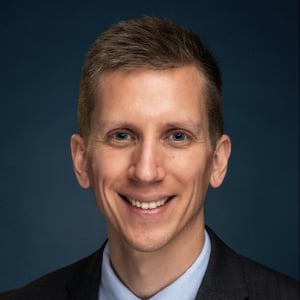
Deputy Counsel, Wisconsin Institute for Law & Liberty
Luke joined WILL from the Wisconsin Department of Justice where he served for nearly four years as a Deputy Solicitor General and Assistant Attorney General.
Berg has argued nine cases before the Wisconsin Supreme Court and four before the Seventh Circuit, including one en banc argument. He graduated from the University of Wisconsin – Madison (B.S.) and New York University (J.D.) and served as a law clerk for Judge Diane Sykes of the United States Court of Appeals for the Seventh Circuit. Prior to joining the Wisconsin DOJ in 2015, Berg worked as an attorney for the Office of the Comptroller of Currency in Washington D.C.
Berg resides in Madison with his wife and three boys.
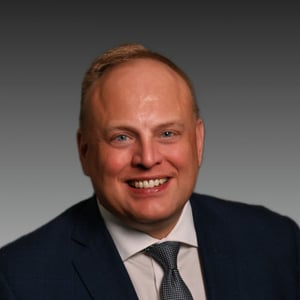
Executive Vice President and Director of Litigation, EdChoice Legal Advocates
Before founding a public interest law firm at EdChoice, Tom Fisher served as Indiana’s first Solicitor General from 2005-2023. Fisher has argued dozens of high-profile cases before both the Indiana Supreme Court and the Seventh Circuit U.S. Court of Appeals and five cases before the U.S. Supreme Court. A two-time recipient of the National Association of Attorneys General Best Brief Award, Fisher is a Fellow of the American Academy of Appellate Lawyers and a Sagamore of the Wabash. Fisher is a graduate of Wabash College and Indiana University Maurer School of Law, where he serves as an Adjunct Professor of Law.
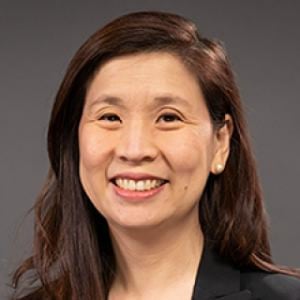
Senior Counsel, Vice President of Advocacy Strategy, Alliance Defending Freedom
Emilie Kao serves as senior counsel and vice president of advocacy strategy for Alliance Defending Freedom, where she is a member of the U.S. Legal Team. In this role, she supports ADF’s legal and legislative objectives through culture shaping initiatives.
Before joining ADF, Kao served as director of the DeVos Center for Religion and Civil Society at the Heritage Foundation. She led a team of experts who provided strategy, research, and policy recommendations on life, marriage, and religious freedom consistent with Constitutional principles. She convened coalitions of strategic partners to support the protection of religious freedom and launched the Promise to America’s Children, a movement dedicated to the protection of children and parental rights.
Kao also served as senior legal counsel at an international human rights law firm, East Asia team leader in the U.S. Department of State’s Office of International Human Rights, and director of international advocacy at the Becket Fund for Religious Liberty. She was an adjunct professor at Antonin Scalia Law School at George Mason University and is co-editor of the “First Principles on International Human Rights” essay series.
She has testified before the U.S. Congress and spoken at the United Nations in Geneva and New York. She has been interviewed and quoted extensively in the media, including The New York Times, The Washington Post, CNN, C-SPAN, and 60 Minutes+.
Kao earned her A.B. cum laude from Harvard University and her J.D. from Harvard Law School. She is a member of the state bars of California and the District of Columbia and is admitted to practice in the U.S. Supreme Court. She speaks Mandarin Chinese.
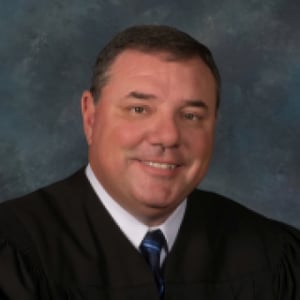
United States District Judge, Southern District of Ohio
Judge Matthew W. McFarland was born in Portsmouth, Scioto County, Ohio, and raised in Wheelersburg. He graduated from Wheelersburg High School in 1985, from Capital University in 1989 with a Bachelor of Arts degree in Political Science, and from the Capital University Law School in 1992, where he was inducted in the Order of the Barristers. He also served as a research assistant for Dean Rodney K. Smith. Judge McFarland first took the bench in 1999 as a Magistrate in the Scioto County Common Pleas Court. He was first elected to the Ohio Fourth District Court of Appeals in 2004 serving fourteen southeast Ohio counties. In 2010 and 2016 he was re-elected, and in 2016 by winning all fourteen counties. As an appellate judge, Judge McFarland authored over 1,000 opinions and made over 2,900 panel votes and served as the Presiding and Administrative Judge for multiple years. He has served as a visiting Judge on the Supreme Court of Ohio on four separate occasions allowing him to sit on each level of the Ohio Judiciary including the trial, appellate, and supreme court bench. The Ohio Chief Justice also appointed him to serve as a Commissioner on the Board of Grievances and Discipline and the Advisory Committee on Court Security and Emergency.
On October 10, 2018, President Donald J. Trump announced his intent to nominate Judge McFarland to a seat on the United States District Court for the Southern District of Ohio after being recommended by the Portman/Brown Bipartisan Federal Judicial Search Commission. The United States Senate received Judge McFarland’s nomination on November 13, 2018. At the sine die adjournment of the 115th Congress on January 3, 2019, the Senate returned Judge McFarland’s nomination to President Trump. President Trump then re-nominated Judge McFarland on January 23, 2019. The Senate Judiciary Committee held Judge McFarland’s confirmation hearing on June 26, 2019, and favorably voted his nomination to the full United States Senate on July 18, 2019. The United States Senate then confirmed Judge McFarland on December 18, 2019, and President Trump signed Judge McFarland’s Commission on December 31, 2019. With Judge McFarland’s confirmation, he is now only the second federal judge to serve the Southern District of Ohio from Scioto County. The first being Judge Albert Thompson, who served from 1898-1910. Judge McFarland succeeded Judge Thomas M. Rose who took senior status on June 30, 2017.
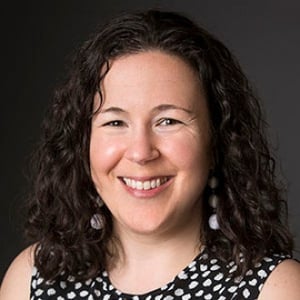
Attorney, Allen Harris Law
Samantha Harris is a nationally recognized attorney advising students and faculty on issues of campus due process, Title IX, free speech, and academic freedom. Drawing on more than 15 years at the Foundation for Individual Rights in Education (FIRE), where she served as Vice President for Policy Research, she guides students, faculty, administrators, and attorneys through complex disciplinary and constitutional issues involving free speech, fair hearings, and faculty-student rights.
A graduate of Princeton University and the University of Pennsylvania Law School (Articles Editor, Journal of Constitutional Law), Samantha clerked for the Hon. Jay C. Waldman in the U.S. District Court for the Eastern District of Pennsylvania and began her legal career at Pepper Hamilton LLP. At FIRE, she led efforts to reform campus policies and defended individuals in high-profile Title IX and free speech disputes.
Now at Allen Harris PLLC, a firm focused on Title IX and campus defense, Samantha represents students and professors in investigations, hearings, appeals, and related litigation. Samantha’s practice emphasizes strategic advocacy in campus disciplinary systems and litigation-ready defense in federal court. Her blend of policy experience, legal skill, and media visibility positions her as a leading resource for issues at the intersection of education law and constitutional rights.

Founder, Chairman, and CEO, Louis D. Brandeis Center for Human Rights Under Law
Hon. Kenneth L. Marcus is an internationally recognized expert in civil and human rights, as well as a leader in the fight against anti-Semitism on and off university campuses. He is the Founder, Chairman, and CEO of The Louis D. Brandeis Center for Human Rights Under Law, the leading civil rights legal organization fighting against anti-Semitism. The New York Times has called him “The Man Who Helped Redefine Campus Anti-Semitism.” He been described, in that paper, as “the single most effective and respected force” to combat anti-Semitism.
During his public service career, Marcus served as Assistant U.S. Secretary of Education for Civil Rights; Staff Director at the U.S. Commission on Civil Rights; and General Deputy Assistant U.S. Secretary of Housing and Urban Development for Fair Housing and Equal Opportunity.
In academia, he serves as Professorial Lecturer in Law at George Washington University. He formerly held the Lillie and Nathan Ackerman Chair in Equality and Justice in America at the City University of New York’s Bernard M. Baruch College, served as Visiting Research Professor of Political Science at Yeshiva University, and was a Board of Visitors member George Mason University and Distinguished Senior Fellow at that university’s law school. He is a member of the editorial board of the Journal of Contemporary Antisemitism and previously served as Associate Editor of the Journal for the Study of Anti-Semitism.
Marcus is also author of The Definition of Anti-Semitism (Oxford University Press) and Jewish Identity and Civil Rights in America (Cambridge University Press). He has published widely in academic journals as well as in more popular venues such as The Wall Street Journal, Washington Post, Newsweek, USA Today, and Politico. He is a graduate of Williams College and the University of California at Berkeley School of Law.
Earlier in his career, he was a litigation partner in two major law firms, where he conducted complex commercial and constitutional litigation. He also serves as Chairman emeritus of the Executive Committee of the Federalist Society for Law & Public Policy Civil Rights Practice Group.

Director of Justice for Student Survivors and Senior Counsel, National Women's Law Center
Shiwali leads federal and state policy development and advocacy, litigation, and education addressing gender-based harassment in schools, including sexual harassment and sexual assault, and safer school climates. Previously, she was at the U.S. Department of Education’s Office for Civil Rights (OCR), where she worked on civil rights policy and legal guidance interpreting Title IX’s anti-discrimination protections, including schools’ responsibilities in responding to sexual harassment, protections for transgender and nonbinary students, and the rights of girls of color. Before joining OCR, Shiwali was an Administrative Judge and investigator at the U.S. Department of Energy, Office of Hearings and Appeals, a Special Assistant United States Attorney in the District of Columbia in the Sex Offense and Domestic Violence Unit, and a law clerk to the Honorable Laura A. Cordero at the Superior Court for the District of Columbia. Prior to law school, Shiwali was a community educator at the District of Columbia Rape Crisis Center, where she conducted workshops and educational presentations for adults and adolescents on sexual assault, domestic and dating abuse, and sexual harassment, and was a trained hotline counselor and hospital advocate.
Shiwali also previously served as the Board President of the Asian/Pacific Islander Domestic Violence Resource Project (DVRP), as Vice President for Community Affairs of the Asian Pacific American Bar Association of the Greater Washington, D.C. Area, Inc. (APABA-DC), and on the Board of Directors of APABA-DC Educational Fund. Shiwali graduated from American University Washington College of Law and Boston University.

Executive Vice President, Chief Legal Officer, Gates Corporation
Matthew R. A. Heiman joined the Company in May 2026 and has served as the Company’s Chief Legal Officer and Corporate Secretary since June 2026. As Chief Legal Officer, Mr. Heiman is responsible for all legal functions for Gates, including securities and corporate governance, M&A, litigation, commercial, regulatory, compliance, patents and trademarks, real estate, employment and labor, sustainability and environmental matters. Prior to joining Gates, Mr. Heiman held senior legal leadership roles at Waystar, where he served as Chief Legal & Administrative Officer from 2023 to 2025 and as General Counsel and Corporate Secretary from 2020 to 2023. Prior to that, he was with Johnson Controls, where he served as Vice President, Corporate Secretary, and Associate General Counsel. Mr. Heiman has been a Senior Fellow for the National Security Institute at George Mason University’s Antonin Scalia School of Law since 2018.

Senior Fellow, Technology Policy, Cato Institute
Jennifer’s research focuses on the intersection of emerging technology and law with a particular interest in the interactions between technology and the administrative state. Her work covers topics including judicial deference, liability protection for Internet platforms, autonomous vehicles and other disruptive transportation technologies, the regulation of data privacy, and the benefits of technology and innovation. Her work has appeared in USA Today, the Chicago Tribune, the New York Daily News, the Sacramento Bee, the Washington Times, Real Clear Policy, and U.S. News and World Report. Jennifer has a JD from the University of Alabama School of Law and a BA in political science at Wellesley College.
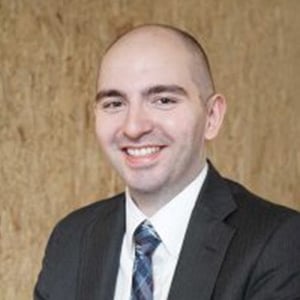
Multistate Policy Director, Common Sense Media
Joseph Jerome serves as Director for Multistate Policy at Common Sense Media, where he focuses on common-sense legislative and policy solutions that support kids’ digital well-being. Joseph has worked at the intersection of law and technology, and has written about AR/VR, the privacy implications of big data, trust deficits in the online sharing economy, and emerging technologies in video games. Previously, he was part of the Privacy & Data Project at the Center for Democracy & Technology, an associate in the cybersecurity and privacy practice at WilmerHale, and counsel at the Future of Privacy Forum. He was a fellow with the Internet Law & Policy Foundry and has taught courses on cybersecurity and privacy compliance. Joseph has a J.D. from the New York University School of Law, where he was an International Law and Human Rights Student Fellow.
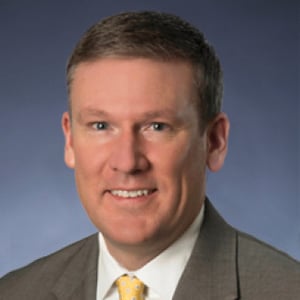
Senior Advisor, Wilkinson Barker Knauer LLP
Mr. Clark is a Senior Advisor at Wilkinson Barker Knauer, LLP. He has extensive experience in energy and utility policy at the federal and state level. He provides clients with analysis and strategic advice on a variety regulatory and public policy matters affecting their businesses. He specializes in working with clients in the energy and telecommunications industries and at the nexus of state and federal jurisdictional issues.
Having been appointed by President Obama, and unanimously confirmed by the U.S. Senate, Mr. Clark served from 2012 to 2016 as a Commissioner of the Federal Energy Regulatory Commission. While at the FERC, Mr. Clark worked on matters that are at the forefront of energy policy, such as: electricity reliability, electricity-natural gas industry coordination, oversight of the nation’s Regional Transmission Organizations, electricity grid cyber and physical security regulations, major enforcement actions, energy infrastructure permitting, the integration of renewables and energy storage, FERC Order 1000 implementation, and wholesale electricity market reforms. From 2001 to 2012 he was a Commissioner of the North Dakota Public Service Commission, including over 5 years as its Chairman. During his tenure at the North Dakota Commission, Mr. Clark oversaw numerous proceedings related to the state’s historic emergence as a leader in American energy production. In 2010, he was selected by his regulatory peers across the nation to serve a term as President of the National Association of Regulatory Utility Commissioners. He also served a three-year term as Chairman of the NARUC Telecommunications Committee. Through his various regulatory positions, he has testified multiple times before Committees of both the US House and US Senate on matters related to energy and telecommunications.
From 1999 to 2000, Mr. Clark was Labor Commissioner of the State of North Dakota and a member of the Cabinet of Gov. Ed Schafer. In 1994 he was one of the youngest people ever elected to the North Dakota legislature, representing a portion of the City of Fargo for two terms in the State House of Representatives. He is a graduate, with honor, from North Dakota State University and holds a master’s degree from the University of North Dakota. In addition to his work at Wilkinson Barker Knauer, LLP, Mr. Clark serves as a non-employee independent director on the Board of Directors of NorthWestern Energy Corporation. Having attained the rank of Eagle Scout in his youth, Mr. Clark has been a long-time volunteer with and supporter of the Boy Scouts of America.

Adam Griffin is a graduate of the University of North Carolina School of Law. During law school, he served as a research assistant to Professor Stephen E. Sachs and UNC Law Dean Martin Brinkley. After law school, Adam spent two years litigating for liberty at the Institute for Justice as an inaugural Law and Liberty Fellow. He then served as a law clerk to Chief Judge Richard E. Myers in the United States District Court for the Eastern District of North Carolina, and previously worked at Pacific Legal Foundation and the Civil Rights Division of the Department of Justice.
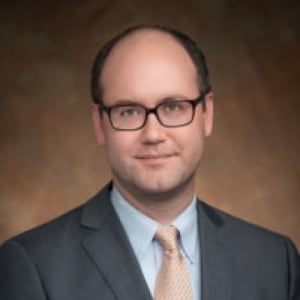
Vice President, Regulatory Affairs, NRG Energy
Travis Kavulla joined NRG after a decade of work as a policy wonk and government regulator. Previously, Travis headed up energy and environmental policy for the R Street Institute, a think tank, and before that was twice elected to public office as a utility commissioner in Montana. Travis has also held leadership roles in national policy circles, including as president of the National Association of Regulatory Utility Commissioners. During his work in public life, Travis has written dozens of articles and speeches on electricity policy and regulation.

Assistant Professor in the Communication, Culture & Technology Program, Georgetown University
Prof. Meg Leta (previously Ambrose) Jones is an Assistant Professor in the Communication, Culture & Technology program at Georgetown University where she researches rules and technological change with a focus on privacy, data protection, and automation in information and communication technologies. She is also an affiliate faculty member of the Science, Technology, and International Affairs program in Georgetown's School of Foreign Service, the Center for Privacy & Technology at Georgetown Law Center, and the Brussels Privacy Hub at Vrije Universiteit Brussel. Dr. Jones's research interests cover issues including comparative information and communication technology law, engineering and information ethics, critical information and data studies, robotics law and policy, and the legal history of technology. She engages with interdisciplinary fields like cyberlaw, science and technology studies, and communication and information policy using comparative, interpretive, legal, and historical methods. Ctrl+Z: The Right to be Forgotten, her first book, is about the social, legal, and technical issues surrounding digital oblivion. Advised by Paul Ohm, Dr. Jones earned a Ph.D. in Technology, Media & Society from the University of Colorado, Engineering and Applied Science (ATLAS). Prior to pursuing a Ph.D., she earned a J.D. from the University of Illinois College of Law in 2008, where she focused on technology and information issues. She has held fellowships and research positions with the NSF funded eCSite project in the University of Colorado Department of Computer Science, the Silicon Flatirons Center at the University of Colorado School of Law, the Harvard Berkman Center for Internet & Society, and CableLabs. Since 2013, Dr. Jones has been teaching and researching in Washington, DC at Georgetown University.
Professor of Law and Journalism, University of Florida
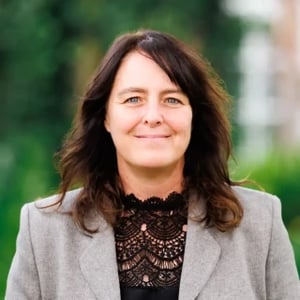
Professor Jane Bambauer is the Brechner Eminent Scholar at the Levin College of Law and at the College of Journalism and Communications. She teaches Torts, First Amendment, Media Law, Criminal Procedure, and Privacy Law.
Professor Bambauer’s research assesses the social costs and benefits of Big Data, AI, and predictive algorithms. Her work analyzes how the regulation of these new information technologies will affect free speech, privacy, law enforcement, health and safety, competitive markets, and government accountability. Professor Bambauer’s research has been featured in over 20 scholarly publications, including the Stanford Law Review, the Michigan Law Review, the California Law Review, and the Journal of Empirical Legal Studies. Her work has also been featured in media outlets, including the Washington Post, the New York Times, Fox News, and Lawfare, where she is a contributing editor.
Professor Bambauer currently serves as the Chair of the National AI Advisory Committee Subcommittee on Law Enforcement, and she has previously served as the deputy director of the Center for Quantum Networks, a multi-institutional engineering research center funded by the National Science Foundation. She holds a B.S. in Mathematics from Yale College and a J.D. from Yale Law School.

Distinguished Senior Fellow and Antonin Scalia Chair in Constitutional Studies, Ethics and Public Policy Center
Edward Whelan is a Distinguished Senior Fellow of the Ethics and Public Policy Center and holds EPPC’s Antonin Scalia Chair in Constitutional Studies. He is the longest-serving President in EPPC’s history, having held that position from March 2004 through January 2021.
Mr. Whelan directs EPPC’s program on The Constitution, the Courts, and the Culture. His areas of expertise include constitutional law and the judicial confirmation process. As a contributor to National Review Online’s Bench Memos blog, he has been a leading commentator on nominations to the Supreme Court and the lower courts and on issues of constitutional law. He has written essays and op-eds for leading newspapers—including the Wall Street Journal, the New York Times, and the Washington Post—opinion journals, and academic symposia and law reviews. The National Law Journal has named Mr. Whelan among its “Champions and Visionaries” in the practice of law in D.C.
Mr. Whelan is co-editor of three volumes of Supreme Court Justice Antonin Scalia’s work: Scalia Speaks: Reflections on Law, Faith, and Life Well Lived (Crown Forum, 2017), a New York Times bestselling collection of speeches by Justice Scalia; On Faith: Lessons from an American Believer (Crown Forum, 2019), a collection of Justice Scalia’s writings on faith and religion; and The Essential Scalia: On the Constitution, the Courts, and the Rule of Law (Crown Forum, 2020), a collection of Justice Scalia’s views on legal issues.
Mr. Whelan, a lawyer and a former law clerk to Justice Scalia, has served in positions of responsibility in all three branches of the federal government. From just before the terrorist attacks of September 11, 2001, until joining EPPC in 2004, Mr. Whelan was the Principal Deputy Assistant Attorney General for the Office of Legal Counsel in the U.S. Department of Justice. In that capacity, he advised the White House Counsel’s Office, the Attorney General and other senior DOJ officials, and departments and agencies throughout the executive branch on difficult and sensitive legal questions. Mr. Whelan previously served on Capitol Hill as General Counsel to the U.S. Senate Committee on the Judiciary. In addition to clerking for Justice Scalia, he was a law clerk to Judge J. Clifford Wallace of the U.S. Court of Appeals for the Ninth Circuit.
In 1981 Mr. Whelan graduated with honors from Harvard College and was inducted into Phi Beta Kappa. He received his J.D. magna cum laude in 1985 from Harvard Law School, where he was a member of the Board of Editors of the Harvard Law Review.
For more on Mr. Whelan’s background, see this interview.

Panel I: Recent Developments on Parental Rights
Luke Berg, Thomas M. Fisher, Emilie Kao, Matthew W. McFarland
Anxiety regarding parental rights in American healthcare and education is at an all time high. ...
Topics
The Biden Administration’s Proposed Changes to Title IX Threaten Parental Rights
The U.S. Department of Education (ED) issued a notice of proposed rulemaking (NPRM) for Title...
Title IX: A Discussion
Samantha Harris, Kenneth L. Marcus, Shiwali Patel
On March 11, 2021, President Joseph R. Biden issued an Executive Order titled “Guaranteeing an...
Deep Dive Episode 147 – The State of State Data Privacy Laws Post-2020 Election
Matthew R. A. Heiman, Jennifer Huddleston, Joseph Jerome
In the absence of federal data privacy legislation, some states have acted to pass their...
Retooling Energy Regulations: Who Decides?
Anthony T. Clark, Adam F. Griffin, Travis Kavulla
On July 16, 2020, the Federal Energy Regulatory Commission (FERC) revised its regulations governing qualifying...
The Right To Be Forgotten
Meg Leta Jones, Jane Bambauer
The “right to be forgotten” refers to the right of individuals to have a company...
Sex and Gender Identity under Title IX: New Guidance for Interpretation - Podcast
Edward Whelan
On Friday, May 13, the Department of Education and the Department of Justice jointly released...