
Partner, Bruning Law Group, LLC
Katie Spohn is a partner at Bruning Law Group in Lincoln, Nebraska. Prior to co-founding Bruning Law Group, Spohn served at the Nebraska Attorney General’s Office for 12 years, with the last 2 years serving as Nebraska’s Deputy Attorney General. In that role, she was tasked with handling the State’s most complex civil litigation cases, specializing in nationally-significant issues of constitutional law. Spohn was an integral part of numerous multi-state challenges to federal regulation and played a critical role in the states’ challenge to the Patient Protection and Affordable Care Act. In September 2014, Spohn led the victory in defending the constitutionality of a law regulating the Keystone XL pipeline before the Nebraska Supreme Court.
Prior to serving as Deputy Attorney General, Spohn was Section Chief for the Agriculture, Environment and Natural Resources Section and Special Counsel to the Attorney General where she gained extensive litigation experience prosecuting environmental violations and defending the constitutionality of state statutes on subjects ranging from a corporate farming prohibition to statutes seeking to protect unborn children.
Spohn earned her B.S. in Agri-Business and J.D. from the University of Nebraska-Lincoln. She is admitted to the Nebraska State Bar; the 8th, 11th and D.C. Circuit Courts of Appeals; and the United States Supreme Court. She lives on a farm outside of Lincoln, Neb., with her husband Scott and three children, Zach, Jacob and Valerie.
Partner, FisherBroyles LLP
Paul Beard II is an environmental and land-use partner with FisherBroyles LLP.
Judge, United States Court of Appeals, Fifth Circuit
Judge Edith Clement sits on the United States Court of Appeals for the Fifth Circuit. Judge Clement worked in a private practice as a maritime attorney in New Orleans, Louisiana, before being appointed in 1991 to the United States District Court for the Eastern District of Louisiana by President George H. W. Bush. In 2001, she was appointed by President George W. Bush to the United States Court of Appeals for the Fifth Circuit. Judge Clement is a member of the Maritime Law Association of the United States, the Federal Bar Association, the American Law Institute, the Federalist Society, the Tulane Law Schools Inn of Court, and the Committee on the Administrative Office of the Judicial Conference of the United States. She is a graduate of the University of Alabama and received her JD from Tulane Law School.
Emeritus Dean and Professor of Law, Lewis & Clark Law School
Professor Huffman joined the law school faculty in 1973, was appointed Acting Dean in 1993 and Dean in 1994, and returned to full time teaching in 2006. Born in Fort Benton, Montana, Jim graduated from Montana State University, the Fletcher School of Law and Diplomacy at Tufts University, and the University of Chicago Law School. He has been a visiting professor at Auckland University in New Zealand, the University of Oregon, the University of Athens in Greece and Universidad Francisco Marroquin in Guatemala. He was also a fellow at the Humane Studies Institute and a Distinguished Bradley Scholar at the Heritage Foundation. Jim serves on the boards of the National Crime Victims Law Institute, the Foundation for Research on Economics and the Environment, the Classroom Law Project, and the Rocky Mountain Mineral Law Foundation. He is a member and former Chair of the Executive Committee of the Environment and Property Rights Practice Group of the Federalist Society. He is a member of the Montana Bar Association and is admitted to practice before the United States Court of Appeals for the Federal Circuit and the United States Supreme Court. He is the author of more than 100 articles and chapters on a wide array of legal topics.
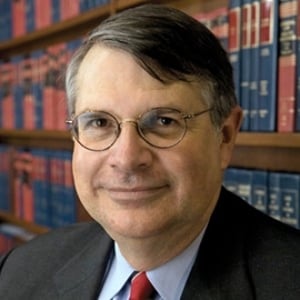
Charles Evans Hughes Professor of Law, Columbia Law School
THOMAS W. MERRILL is the Charles Evans Hughes Professor of Law at Columbia Law School. He previously taught at Northwestern University School of Law and Yale Law School. He has undergraduate degrees from Grinnell College and Oxford University, where he studied as a Rhodes Scholar, and a law degree from the University of Chicago. He clerked on the D.C. Circuit (for Chief Judge David Bazelon) and the U.S. Supreme Court (for Justice Harry Blackmun). From 1987-1990 he served as Deputy Solicitor General, U.S. Department of Justice. Professor Merrill’s writings related to property include Property: Principles and Policies (Foundation Press Second Edition, 2012) (with Henry E. Smith); Property: The Oxford Introductions to U.S. Law (Oxford U. Press, 2010); Property: Takings (Foundation Press, 2002)(with David Dana); and numerous articles, including “The Economics of Public Use” (Cornell Law Review 1986); “The Landscape of Constitutional Property” (Virginia Law Review 2000); and “The Character of the Governmental Action” (Vermont Law Review 2012). He is a member of the American Academy of Arts and Sciences.
H. Bert and Ruth Mack Professor of Real Estate Law, Benjamin N. Cardozo School of Law
Professor Sterk’s publications span a wide variety of areas, ranging from property and land use regulation to trusts and estates, copyright, and the conflict of laws. A member of the American Law Institute, he served as an advisor in the preparation of the Restatement (Third) of Property (Servitudes). He has co–authored casebooks on Trusts and Estates and on Land Use, and he also edits the New York Real Estate Law Reporter, a monthly newsletter published with the assistance of Cardozo students.
The winner of a number of teaching awards at Cardozo, Professor Sterk has taught as a visiting professor at Columbia and at the University of Pennsylvania. While in law school, he served as managing editor of the Columbia Law Review, and he subsequently clerked for Chief Judge Charles D. Breitel of the New York Court of Appeals.
Partner, FisherBroyles LLP
Paul Beard II is an environmental and land-use partner with FisherBroyles LLP.
Judge, United States Court of Appeals, Fifth Circuit
Judge Edith Clement sits on the United States Court of Appeals for the Fifth Circuit. Judge Clement worked in a private practice as a maritime attorney in New Orleans, Louisiana, before being appointed in 1991 to the United States District Court for the Eastern District of Louisiana by President George H. W. Bush. In 2001, she was appointed by President George W. Bush to the United States Court of Appeals for the Fifth Circuit. Judge Clement is a member of the Maritime Law Association of the United States, the Federal Bar Association, the American Law Institute, the Federalist Society, the Tulane Law Schools Inn of Court, and the Committee on the Administrative Office of the Judicial Conference of the United States. She is a graduate of the University of Alabama and received her JD from Tulane Law School.
Emeritus Dean and Professor of Law, Lewis & Clark Law School
Professor Huffman joined the law school faculty in 1973, was appointed Acting Dean in 1993 and Dean in 1994, and returned to full time teaching in 2006. Born in Fort Benton, Montana, Jim graduated from Montana State University, the Fletcher School of Law and Diplomacy at Tufts University, and the University of Chicago Law School. He has been a visiting professor at Auckland University in New Zealand, the University of Oregon, the University of Athens in Greece and Universidad Francisco Marroquin in Guatemala. He was also a fellow at the Humane Studies Institute and a Distinguished Bradley Scholar at the Heritage Foundation. Jim serves on the boards of the National Crime Victims Law Institute, the Foundation for Research on Economics and the Environment, the Classroom Law Project, and the Rocky Mountain Mineral Law Foundation. He is a member and former Chair of the Executive Committee of the Environment and Property Rights Practice Group of the Federalist Society. He is a member of the Montana Bar Association and is admitted to practice before the United States Court of Appeals for the Federal Circuit and the United States Supreme Court. He is the author of more than 100 articles and chapters on a wide array of legal topics.
Charles Evans Hughes Professor of Law, Columbia Law School
THOMAS W. MERRILL is the Charles Evans Hughes Professor of Law at Columbia Law School. He previously taught at Northwestern University School of Law and Yale Law School. He has undergraduate degrees from Grinnell College and Oxford University, where he studied as a Rhodes Scholar, and a law degree from the University of Chicago. He clerked on the D.C. Circuit (for Chief Judge David Bazelon) and the U.S. Supreme Court (for Justice Harry Blackmun). From 1987-1990 he served as Deputy Solicitor General, U.S. Department of Justice. Professor Merrill’s writings related to property include Property: Principles and Policies (Foundation Press Second Edition, 2012) (with Henry E. Smith); Property: The Oxford Introductions to U.S. Law (Oxford U. Press, 2010); Property: Takings (Foundation Press, 2002)(with David Dana); and numerous articles, including “The Economics of Public Use” (Cornell Law Review 1986); “The Landscape of Constitutional Property” (Virginia Law Review 2000); and “The Character of the Governmental Action” (Vermont Law Review 2012). He is a member of the American Academy of Arts and Sciences.
H. Bert and Ruth Mack Professor of Real Estate Law, Benjamin N. Cardozo School of Law
Professor Sterk’s publications span a wide variety of areas, ranging from property and land use regulation to trusts and estates, copyright, and the conflict of laws. A member of the American Law Institute, he served as an advisor in the preparation of the Restatement (Third) of Property (Servitudes). He has co–authored casebooks on Trusts and Estates and on Land Use, and he also edits the New York Real Estate Law Reporter, a monthly newsletter published with the assistance of Cardozo students.
The winner of a number of teaching awards at Cardozo, Professor Sterk has taught as a visiting professor at Columbia and at the University of Pennsylvania. While in law school, he served as managing editor of the Columbia Law Review, and he subsequently clerked for Chief Judge Charles D. Breitel of the New York Court of Appeals.
Partner, Bracewell & Giuliani LLP
Jason Hutt advises energy companies, manufacturers, project developers, investor groups and financial institutions about environmental risks and liabilities associated with regulatory compliance, project development, congressional investigations, internal investigations and corporate transactions. He also assists in the defense of administrative, civil and criminal proceedings involving environmental enforcement agencies at the federal and state levels.
Mr. Hutt counsels clients on current and upcoming regulatory developments at the nexus of environmental and energy policy, with focused attention on natural gas development (including hydraulic fracturing), responses to the Deepwater Horizon incident, and climate change. He is nationally recognized for his work on shale gas issues on behalf of producers, oil field services companies, hedge funds and technology developers.
Mr. Hutt routinely is involved in identifying, evaluating and managing environmental risks and opportunities associated with corporate acquisitions, divestitures and financings, including environmental due diligence, purchase and sale agreement negotiation, and post-closing integration efforts. Within the energy sector, his representative experience includes transactions involving petroleum refineries, liquefied natural gas (LNG) import terminals, renewable energy projects (e.g., wind, biofuels and geothermal), natural gas processing plants, cogeneration facilities, oil and gas wells, pipelines, propane retailers and synfuel facilities.
Representative work in other sectors involves operations and industries such as chemical manufacturers, oil field services, independent tank terminal operators, glass manufacturing, textiles manufacturing, uranium mining, industrial cleaning operations, hazardous waste management facilities, paper and plastic manufacturing facilities, and medical equipment manufacturing facilities.
Mr. Hutt performs environmental risk evaluations and advises on permit strategy and contract negotiation in relation to project development. His most recent work has involved onshore and offshore LNG import terminals, highway expansions, coal-fired power plant siting on tribal lands, utility privatizations at military bases, international undersea pipelines, interstate undersea electric transmission cables and a pump-storage project.
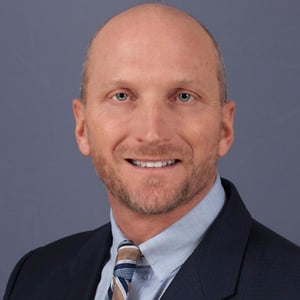
Distinguished Professor of Law, Widener University Delaware Law School
James R. May is Distinguished Professor of Law, and Chief Sustainability Officer, Widener University (USA). He also serves as co-Director of the Environmental Rights Institute and co-Director of the Dignity Rights Project at Widener University Delaware Law School. May is also an Adjunct Professor of Graduate Engineering, and founded and co-chairs a program on marine policy. May is the editor of Principles of Constitutional Environmental Law (American Bar Association), and co-editor of Shale Gas and the Future of Energy (Edward Elgar), Global Environmental Constitutionalism (Cambridge), Environmental Constitutionalism in Context (Edward Elgar), New Frontiers in Environmental Constitutionalism (United National Environment Programme, forthcoming), Implementing Environmental Constitutionalism(Cambridge, forthcoming), Standards of Environmental Constitutionalism (Cambridge, forthcoming), and Human Rights and the Environment: Indivisibility, Dignity and Legality (Edward Elgar, forthcoming). May is also author or co-author of more than 100 articles and book chapters, and numerous amicus briefs to the U.S. Supreme Court and U.S. federal courts of appeal on issues including environmental law, constitutional law, comparative constitutional, international environmental law, environmental rights, and human dignity.
May founded two non-profit environmental organizations (the Mid-Atlantic and the Eastern Environmental Law Centers), and has litigated more than 200 public interest environmental claims, including cases throughout the Mid-Atlantic to restore water and air quality, conserve rare species and habitats, and protect biodiversity.
May is a Member of Faculty to the National Judicial College, and a Fellow of the American College of Environmental Lawyers, for whom he has served as a delegate to Haiti and China. May has also served as a consultant to the U.S. Embassy on legal education in the Philippines, and to the Hungarian Embassy and the Moroccan Human Rights Council on constitutional reform. May is a member of Phi Kappa Phi, serves on numerous boards, and has won numerous awards, including from Pace University, Sierra Club, and the American Canoe Association. He earned his B.S. in Mechanical Engineering from the University of Kansas (Bowman Scholar), J.D. from the University of Kansas (Appellate Advocacy Scholar and national moot court champion), and LL.M. in Environmental Law from Pace University, where he was the Feldshuh Fellow and graduated first in class.
May is a member of the bar in the State of Pennsylvania, several federal courts of appeal, and the U.S. Supreme Court.
Associate Attorney, Sierra Club Environmental Law Program
Craig Segall started at the Sierra Club in 2008 as an environmental law fellow. Before coming to the Club, Craig was a law clerk to the Honorable Marsha S. Berzon of the U.S. Court of Appeals for the Ninth Circuit. He is a graduate of the University of Chicago and of Stanford Law School, where he spent most of his time in the basement working with Stanford's environmental law clinic. When not practicing law, Craig keeps busy outdoors. In recent years, he has barely beaten a 12-year-old to the top of Mount Whitney, accidentally driven transmission-deep into a salt lake, and, on an ill-advised hike in South Africa, provoked a surprisingly aggressive ostrich.
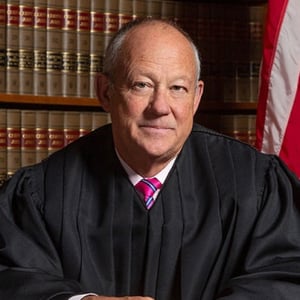
Judge, United States Court of Appeals, Tenth Circuit
Judge Tymkovich, of Denver, Colorado, was nominated to the Tenth Circuit Court of Appeals by President George W. Bush, and confirmed in April 2003. On October 1, 2015 he became Chief Circuit Judge and held this position until October 2022. He was Chair of the US Judicial Conference’s Committee on Judicial Resources from 2011 to 2015. Since 2008 he has been an adjunct professor of law at the University of Colorado School of Law, teaching Election Law. He is a member of the Doyle Inn of Court, the American Law Institute, and the International Society of Barristers. Since he joined the Circuit, Judge Tymkovich has hosted judicial delegations from Russia, Kazakhstan, and Afghanistan, and has also represented the United States in programs at Kiev and Yalta in Ukraine.
Partner, Bracewell & Giuliani LLP
Jason Hutt advises energy companies, manufacturers, project developers, investor groups and financial institutions about environmental risks and liabilities associated with regulatory compliance, project development, congressional investigations, internal investigations and corporate transactions. He also assists in the defense of administrative, civil and criminal proceedings involving environmental enforcement agencies at the federal and state levels.
Mr. Hutt counsels clients on current and upcoming regulatory developments at the nexus of environmental and energy policy, with focused attention on natural gas development (including hydraulic fracturing), responses to the Deepwater Horizon incident, and climate change. He is nationally recognized for his work on shale gas issues on behalf of producers, oil field services companies, hedge funds and technology developers.
Mr. Hutt routinely is involved in identifying, evaluating and managing environmental risks and opportunities associated with corporate acquisitions, divestitures and financings, including environmental due diligence, purchase and sale agreement negotiation, and post-closing integration efforts. Within the energy sector, his representative experience includes transactions involving petroleum refineries, liquefied natural gas (LNG) import terminals, renewable energy projects (e.g., wind, biofuels and geothermal), natural gas processing plants, cogeneration facilities, oil and gas wells, pipelines, propane retailers and synfuel facilities.
Representative work in other sectors involves operations and industries such as chemical manufacturers, oil field services, independent tank terminal operators, glass manufacturing, textiles manufacturing, uranium mining, industrial cleaning operations, hazardous waste management facilities, paper and plastic manufacturing facilities, and medical equipment manufacturing facilities.
Mr. Hutt performs environmental risk evaluations and advises on permit strategy and contract negotiation in relation to project development. His most recent work has involved onshore and offshore LNG import terminals, highway expansions, coal-fired power plant siting on tribal lands, utility privatizations at military bases, international undersea pipelines, interstate undersea electric transmission cables and a pump-storage project.
Distinguished Professor of Law, Widener University Delaware Law School
James R. May is Distinguished Professor of Law, and Chief Sustainability Officer, Widener University (USA). He also serves as co-Director of the Environmental Rights Institute and co-Director of the Dignity Rights Project at Widener University Delaware Law School. May is also an Adjunct Professor of Graduate Engineering, and founded and co-chairs a program on marine policy. May is the editor of Principles of Constitutional Environmental Law (American Bar Association), and co-editor of Shale Gas and the Future of Energy (Edward Elgar), Global Environmental Constitutionalism (Cambridge), Environmental Constitutionalism in Context (Edward Elgar), New Frontiers in Environmental Constitutionalism (United National Environment Programme, forthcoming), Implementing Environmental Constitutionalism(Cambridge, forthcoming), Standards of Environmental Constitutionalism (Cambridge, forthcoming), and Human Rights and the Environment: Indivisibility, Dignity and Legality (Edward Elgar, forthcoming). May is also author or co-author of more than 100 articles and book chapters, and numerous amicus briefs to the U.S. Supreme Court and U.S. federal courts of appeal on issues including environmental law, constitutional law, comparative constitutional, international environmental law, environmental rights, and human dignity.
May founded two non-profit environmental organizations (the Mid-Atlantic and the Eastern Environmental Law Centers), and has litigated more than 200 public interest environmental claims, including cases throughout the Mid-Atlantic to restore water and air quality, conserve rare species and habitats, and protect biodiversity.
May is a Member of Faculty to the National Judicial College, and a Fellow of the American College of Environmental Lawyers, for whom he has served as a delegate to Haiti and China. May has also served as a consultant to the U.S. Embassy on legal education in the Philippines, and to the Hungarian Embassy and the Moroccan Human Rights Council on constitutional reform. May is a member of Phi Kappa Phi, serves on numerous boards, and has won numerous awards, including from Pace University, Sierra Club, and the American Canoe Association. He earned his B.S. in Mechanical Engineering from the University of Kansas (Bowman Scholar), J.D. from the University of Kansas (Appellate Advocacy Scholar and national moot court champion), and LL.M. in Environmental Law from Pace University, where he was the Feldshuh Fellow and graduated first in class.
May is a member of the bar in the State of Pennsylvania, several federal courts of appeal, and the U.S. Supreme Court.
Associate Attorney, Sierra Club Environmental Law Program
Craig Segall started at the Sierra Club in 2008 as an environmental law fellow. Before coming to the Club, Craig was a law clerk to the Honorable Marsha S. Berzon of the U.S. Court of Appeals for the Ninth Circuit. He is a graduate of the University of Chicago and of Stanford Law School, where he spent most of his time in the basement working with Stanford's environmental law clinic. When not practicing law, Craig keeps busy outdoors. In recent years, he has barely beaten a 12-year-old to the top of Mount Whitney, accidentally driven transmission-deep into a salt lake, and, on an ill-advised hike in South Africa, provoked a surprisingly aggressive ostrich.
Judge, United States Court of Appeals, Tenth Circuit
Judge Tymkovich, of Denver, Colorado, was nominated to the Tenth Circuit Court of Appeals by President George W. Bush, and confirmed in April 2003. On October 1, 2015 he became Chief Circuit Judge and held this position until October 2022. He was Chair of the US Judicial Conference’s Committee on Judicial Resources from 2011 to 2015. Since 2008 he has been an adjunct professor of law at the University of Colorado School of Law, teaching Election Law. He is a member of the Doyle Inn of Court, the American Law Institute, and the International Society of Barristers. Since he joined the Circuit, Judge Tymkovich has hosted judicial delegations from Russia, Kazakhstan, and Afghanistan, and has also represented the United States in programs at Kiev and Yalta in Ukraine.
Partner, Bruning Law Group, LLC
Katie Spohn is a partner at Bruning Law Group in Lincoln, Nebraska. Prior to co-founding Bruning Law Group, Spohn served at the Nebraska Attorney General’s Office for 12 years, with the last 2 years serving as Nebraska’s Deputy Attorney General. In that role, she was tasked with handling the State’s most complex civil litigation cases, specializing in nationally-significant issues of constitutional law. Spohn was an integral part of numerous multi-state challenges to federal regulation and played a critical role in the states’ challenge to the Patient Protection and Affordable Care Act. In September 2014, Spohn led the victory in defending the constitutionality of a law regulating the Keystone XL pipeline before the Nebraska Supreme Court.
Prior to serving as Deputy Attorney General, Spohn was Section Chief for the Agriculture, Environment and Natural Resources Section and Special Counsel to the Attorney General where she gained extensive litigation experience prosecuting environmental violations and defending the constitutionality of state statutes on subjects ranging from a corporate farming prohibition to statutes seeking to protect unborn children.
Spohn earned her B.S. in Agri-Business and J.D. from the University of Nebraska-Lincoln. She is admitted to the Nebraska State Bar; the 8th, 11th and D.C. Circuit Courts of Appeals; and the United States Supreme Court. She lives on a farm outside of Lincoln, Neb., with her husband Scott and three children, Zach, Jacob and Valerie.
Partner, FisherBroyles LLP
Paul Beard II is an environmental and land-use partner with FisherBroyles LLP.
Judge, United States Court of Appeals, Fifth Circuit
Judge Edith Clement sits on the United States Court of Appeals for the Fifth Circuit. Judge Clement worked in a private practice as a maritime attorney in New Orleans, Louisiana, before being appointed in 1991 to the United States District Court for the Eastern District of Louisiana by President George H. W. Bush. In 2001, she was appointed by President George W. Bush to the United States Court of Appeals for the Fifth Circuit. Judge Clement is a member of the Maritime Law Association of the United States, the Federal Bar Association, the American Law Institute, the Federalist Society, the Tulane Law Schools Inn of Court, and the Committee on the Administrative Office of the Judicial Conference of the United States. She is a graduate of the University of Alabama and received her JD from Tulane Law School.
Emeritus Dean and Professor of Law, Lewis & Clark Law School
Professor Huffman joined the law school faculty in 1973, was appointed Acting Dean in 1993 and Dean in 1994, and returned to full time teaching in 2006. Born in Fort Benton, Montana, Jim graduated from Montana State University, the Fletcher School of Law and Diplomacy at Tufts University, and the University of Chicago Law School. He has been a visiting professor at Auckland University in New Zealand, the University of Oregon, the University of Athens in Greece and Universidad Francisco Marroquin in Guatemala. He was also a fellow at the Humane Studies Institute and a Distinguished Bradley Scholar at the Heritage Foundation. Jim serves on the boards of the National Crime Victims Law Institute, the Foundation for Research on Economics and the Environment, the Classroom Law Project, and the Rocky Mountain Mineral Law Foundation. He is a member and former Chair of the Executive Committee of the Environment and Property Rights Practice Group of the Federalist Society. He is a member of the Montana Bar Association and is admitted to practice before the United States Court of Appeals for the Federal Circuit and the United States Supreme Court. He is the author of more than 100 articles and chapters on a wide array of legal topics.
Charles Evans Hughes Professor of Law, Columbia Law School
THOMAS W. MERRILL is the Charles Evans Hughes Professor of Law at Columbia Law School. He previously taught at Northwestern University School of Law and Yale Law School. He has undergraduate degrees from Grinnell College and Oxford University, where he studied as a Rhodes Scholar, and a law degree from the University of Chicago. He clerked on the D.C. Circuit (for Chief Judge David Bazelon) and the U.S. Supreme Court (for Justice Harry Blackmun). From 1987-1990 he served as Deputy Solicitor General, U.S. Department of Justice. Professor Merrill’s writings related to property include Property: Principles and Policies (Foundation Press Second Edition, 2012) (with Henry E. Smith); Property: The Oxford Introductions to U.S. Law (Oxford U. Press, 2010); Property: Takings (Foundation Press, 2002)(with David Dana); and numerous articles, including “The Economics of Public Use” (Cornell Law Review 1986); “The Landscape of Constitutional Property” (Virginia Law Review 2000); and “The Character of the Governmental Action” (Vermont Law Review 2012). He is a member of the American Academy of Arts and Sciences.
H. Bert and Ruth Mack Professor of Real Estate Law, Benjamin N. Cardozo School of Law
Professor Sterk’s publications span a wide variety of areas, ranging from property and land use regulation to trusts and estates, copyright, and the conflict of laws. A member of the American Law Institute, he served as an advisor in the preparation of the Restatement (Third) of Property (Servitudes). He has co–authored casebooks on Trusts and Estates and on Land Use, and he also edits the New York Real Estate Law Reporter, a monthly newsletter published with the assistance of Cardozo students.
The winner of a number of teaching awards at Cardozo, Professor Sterk has taught as a visiting professor at Columbia and at the University of Pennsylvania. While in law school, he served as managing editor of the Columbia Law Review, and he subsequently clerked for Chief Judge Charles D. Breitel of the New York Court of Appeals.
Partner, Bracewell & Giuliani LLP
Jason Hutt advises energy companies, manufacturers, project developers, investor groups and financial institutions about environmental risks and liabilities associated with regulatory compliance, project development, congressional investigations, internal investigations and corporate transactions. He also assists in the defense of administrative, civil and criminal proceedings involving environmental enforcement agencies at the federal and state levels.
Mr. Hutt counsels clients on current and upcoming regulatory developments at the nexus of environmental and energy policy, with focused attention on natural gas development (including hydraulic fracturing), responses to the Deepwater Horizon incident, and climate change. He is nationally recognized for his work on shale gas issues on behalf of producers, oil field services companies, hedge funds and technology developers.
Mr. Hutt routinely is involved in identifying, evaluating and managing environmental risks and opportunities associated with corporate acquisitions, divestitures and financings, including environmental due diligence, purchase and sale agreement negotiation, and post-closing integration efforts. Within the energy sector, his representative experience includes transactions involving petroleum refineries, liquefied natural gas (LNG) import terminals, renewable energy projects (e.g., wind, biofuels and geothermal), natural gas processing plants, cogeneration facilities, oil and gas wells, pipelines, propane retailers and synfuel facilities.
Representative work in other sectors involves operations and industries such as chemical manufacturers, oil field services, independent tank terminal operators, glass manufacturing, textiles manufacturing, uranium mining, industrial cleaning operations, hazardous waste management facilities, paper and plastic manufacturing facilities, and medical equipment manufacturing facilities.
Mr. Hutt performs environmental risk evaluations and advises on permit strategy and contract negotiation in relation to project development. His most recent work has involved onshore and offshore LNG import terminals, highway expansions, coal-fired power plant siting on tribal lands, utility privatizations at military bases, international undersea pipelines, interstate undersea electric transmission cables and a pump-storage project.
Distinguished Professor of Law, Widener University Delaware Law School
James R. May is Distinguished Professor of Law, and Chief Sustainability Officer, Widener University (USA). He also serves as co-Director of the Environmental Rights Institute and co-Director of the Dignity Rights Project at Widener University Delaware Law School. May is also an Adjunct Professor of Graduate Engineering, and founded and co-chairs a program on marine policy. May is the editor of Principles of Constitutional Environmental Law (American Bar Association), and co-editor of Shale Gas and the Future of Energy (Edward Elgar), Global Environmental Constitutionalism (Cambridge), Environmental Constitutionalism in Context (Edward Elgar), New Frontiers in Environmental Constitutionalism (United National Environment Programme, forthcoming), Implementing Environmental Constitutionalism(Cambridge, forthcoming), Standards of Environmental Constitutionalism (Cambridge, forthcoming), and Human Rights and the Environment: Indivisibility, Dignity and Legality (Edward Elgar, forthcoming). May is also author or co-author of more than 100 articles and book chapters, and numerous amicus briefs to the U.S. Supreme Court and U.S. federal courts of appeal on issues including environmental law, constitutional law, comparative constitutional, international environmental law, environmental rights, and human dignity.
May founded two non-profit environmental organizations (the Mid-Atlantic and the Eastern Environmental Law Centers), and has litigated more than 200 public interest environmental claims, including cases throughout the Mid-Atlantic to restore water and air quality, conserve rare species and habitats, and protect biodiversity.
May is a Member of Faculty to the National Judicial College, and a Fellow of the American College of Environmental Lawyers, for whom he has served as a delegate to Haiti and China. May has also served as a consultant to the U.S. Embassy on legal education in the Philippines, and to the Hungarian Embassy and the Moroccan Human Rights Council on constitutional reform. May is a member of Phi Kappa Phi, serves on numerous boards, and has won numerous awards, including from Pace University, Sierra Club, and the American Canoe Association. He earned his B.S. in Mechanical Engineering from the University of Kansas (Bowman Scholar), J.D. from the University of Kansas (Appellate Advocacy Scholar and national moot court champion), and LL.M. in Environmental Law from Pace University, where he was the Feldshuh Fellow and graduated first in class.
May is a member of the bar in the State of Pennsylvania, several federal courts of appeal, and the U.S. Supreme Court.
Associate Attorney, Sierra Club Environmental Law Program
Craig Segall started at the Sierra Club in 2008 as an environmental law fellow. Before coming to the Club, Craig was a law clerk to the Honorable Marsha S. Berzon of the U.S. Court of Appeals for the Ninth Circuit. He is a graduate of the University of Chicago and of Stanford Law School, where he spent most of his time in the basement working with Stanford's environmental law clinic. When not practicing law, Craig keeps busy outdoors. In recent years, he has barely beaten a 12-year-old to the top of Mount Whitney, accidentally driven transmission-deep into a salt lake, and, on an ill-advised hike in South Africa, provoked a surprisingly aggressive ostrich.
Judge, United States Court of Appeals, Tenth Circuit
Judge Tymkovich, of Denver, Colorado, was nominated to the Tenth Circuit Court of Appeals by President George W. Bush, and confirmed in April 2003. On October 1, 2015 he became Chief Circuit Judge and held this position until October 2022. He was Chair of the US Judicial Conference’s Committee on Judicial Resources from 2011 to 2015. Since 2008 he has been an adjunct professor of law at the University of Colorado School of Law, teaching Election Law. He is a member of the Doyle Inn of Court, the American Law Institute, and the International Society of Barristers. Since he joined the Circuit, Judge Tymkovich has hosted judicial delegations from Russia, Kazakhstan, and Afghanistan, and has also represented the United States in programs at Kiev and Yalta in Ukraine.
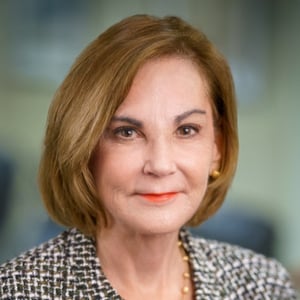
Partner, Marzulla Law
Ms. Marzulla served as an Attorney-Advisor and as a trial lawyer prosecuting employment violations in the Civil Rights Division at the U.S. Department of Justice. Later, Nancie joined the law firm of Verner, Liipfert (now DLA Piper), where she litigated complex airline and other civil matters. In 1991, She founded Defenders of Property Rights, where she was involved in high profile takings cases in the Supreme Court, federal courts of appeal, and trial courts. Ms. Marzulla also worked at the International Labor Organization in Geneva, Switzerland doing comparative legal research.
Nancie G. Marzulla is a founding partner of Marzulla Law, ranked as one of the nation’s “Best Law Firms,” and a “Tier One” environmental litigation firm by the U.S. News and World Report. Nancie’s litigation practice concentrates on water rights, takings, and contract claims in the U.S. Court of Federal Claims. She also has extensive experience in handling matters involving property, water, environmental law, Indian tribal claims, development, and natural resources in trial courts, courts of appeal, the Supreme Court, and in international tribunals. Nancie also represents corporate clients in enforcement or permitting disputes with federal regulatory agencies.
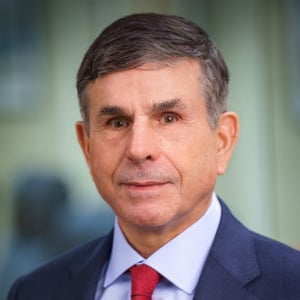
Partner, Marzulla Law
Roger J. Marzulla is one of the nation’s leading environmental, water, and property lawyers. As Assistant Attorney General in charge of the U.S. Justice Department’s Environment and Natural Resources Division, Roger learned first hand the operations and litigation styles of his client agencies: EPA, Interior Department, Bureau of Reclamation, Fish and Wildlife Service, National Marine Fisheries Service, Department of Transportation, Department of Commerce. In 1997, he co-founded Marzulla Law, where he brings to bear more than 35 years of expertise representing companies and individuals in industries as diverse as land and project development, aerospace, chemicals, oil and gas, mining, timber, manufacturing, computers, agriculture and water service.
Roger began his legal career as a trial lawyer in San Jose, California, after graduating magna cum laude from the University of Santa Clara School of Law. As a partner in Matthews & Marzulla he represented developers, title and construction companies, shopping centers, apartment owners and lenders in litigation throughout California. In 1981 he moved to Denver to become President of Mountain States Legal Foundation, litigating environmental and natural resource cases across the West.
In 1983 Roger joined the Justice Department as Special Litigation Counsel. He was subsequently promoted to Deputy Assistant Attorney General and, in 1987, was confirmed by the Senate as Assistant Attorney General in charge of the Environment and Natural Resources Division. At the Justice Department, Roger helped create litigation strategies for government programs as diverse as Superfund, the Clean Air Act, off-shore oil leasing, environmental crimes, federal facility clean-up, wetlands, endangered species and hazardous waste enforcement, as well as Presidential Order EO 12,630 (Government Interference with Private Property Rights).
In 1989 Roger returned to private law practice, successively heading the environmental law practices of the Powell, Goldstein and Akin, Gump law firms.
Since 1997, as a partner in Marzulla Law, Roger has continued to represent corporate and business clients in a wide array of environmental and property issues in courts across the country, frequently in litigation against the United States. He also assists clients in attaining compliance with environmental, health and safety regulation, and in avoiding risks in transactions.

Keystone XL in the Nebraska Supreme Court - Podcast
Katie Spohn, J Ward
On January 9, 2015, the Nebraska Supreme Court held that the law dictating the potential...
Keystone XL in the Nebraska Supreme Court
TeleforumEngage Volume 14, Issue 3
Administrative Law & Regulation Free To Choose Medicine by Gregory Conko & Bartley J. Madden ...
Environmental Law: New Directions in Takings Law
Paul J. Beard, Edith Brown Clement, James L. Huffman, Thomas W. Merrill, Stewart E. Sterk
This past year, the Supreme Court decided three important regulatory takings cases, including Arkansas Game &...
Environmental Law: New Directions in Takings Law
Paul J. Beard, Edith Brown Clement, James L. Huffman, Thomas W. Merrill, Stewart E. Sterk
This past year, the Supreme Court decided three important regulatory takings cases, including Arkansas Game &...
Environmental Law: New Directions in Takings Law
2013 National Lawyers Convention
Washington, DCEnvironmental Law: Federalism and the Energy Revolution: Can State and Federal Regulators Adapt to Innovations?
Jason B. Hutt, James R. May, Craig Segall, Timothy M. Tymkovich
The Environmental Law & Property Rights Practice Group hosted this panel on "Federalism and the...
Environmental Law: Federalism and the Energy Revolution: Can State and Federal Regulators Adapt to Innovations?
Jason B. Hutt, James R. May, Craig Segall, Timothy M. Tymkovich
The Environmental Law & Property Rights Practice Group hosted this panel on "Federalism and the...
Environmental Law: Federalism and the Energy Revolution: Can State and Federal Regulators Adapt to Innovations?
2012 National Lawyers Convention
Washington, DCIs the Grass Really Greener on the Other Side? Environmental Regulations and Takings