
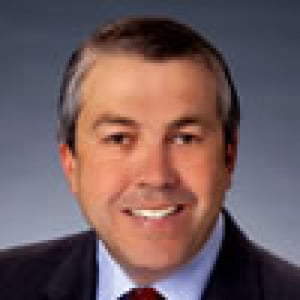
Denver Managing Partner, Wilkinson Barker Knauer LLP
Raymond L. Gifford counsels communications, electric and gas utilities, and information technology companies on state and federal aspects of regulation, administrative law, and competition policy. He is an expert in public utilities law, and the law and economics of regulation of network industries. Mr. Gifford’s law and policy work focuses on the convergence of broadband communications and energy, as well as environmental policy as it applies to the electric industry. He represents clients in state and federal courts and agencies, and serves as an expert witness on utility regulation and its history. He is also a Senior Adjunct Fellow at the Silicon Flatirons Center for Law, Technology and Entrepreneurship, and Co-Directs the Institute for Regulatory Law & Economics at University of Colorado Law School.
Mr. Gifford served as Chairman of the Colorado Public Utilities Commission from 1999-2003. Following that, he served as President of The Progress & Freedom Foundation, a Washington DC-based think-tank that studied the digital revolution as it relates to regulation of network industries. He entered the regulatory law world as First Assistant Attorney General in the Colorado Attorney General’s Office. He clerked for the Honorable Richard P. Matsch of the United States District Court for the District of Colorado. Mr. Gifford has authored a number of articles on communications law, public utility regulation and competition policy in network industries. He is a graduate of University of Chicago Law School and St. John’s College in Annapolis, Maryland. He is an elected member of the American Law Institute
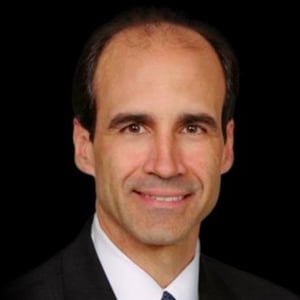
Under Secretary of Energy, United States Department of Energy
The Honorable Mark Wesley Menezes, Under Secretary of Energy serves as the Department’s principal advisor on energy policy and on a wide array of existing and emerging energy technologies. The Under Secretary is responsible for driving transformative energy policy, and technology solutions through coordinated planning, management and performance of the Department’s energy programs.
Prior to being confirmed as Under Secretary of Energy, Mr. Menezes was an executive with Berkshire Hathaway Energy in its Washington, D.C. office. Before joining BHE, Mr. Menezes was a partner at Hunton & Williams LLP, where he headed the Regulated Markets and Energy Infrastructure practice group. Prior to Hunton, he served as Chief Counsel, Energy and Environment, U.S. House of Representatives Committee on Energy and Commerce, serving as chief negotiator for the House Majority in the enactment of the Energy Policy Act of 2005. Before his service with House Energy & Commerce, he was Vice President with Central and South West, and upon its merger with American Electric Power, served as Vice President and Associate General Counsel for federal and state legislative and regulatory affairs.
Mr. Menezes has been named in National Journal’s “Hill 100”—top Congressional staff for his work on both energy and environmental matters. He has been frequent guest speaker and lecturer before numerous associations and civic groups, including legal education seminars where he has been called on to address the nation’s energy and environmental policies, utility restructuring, telecommunications, ethics, merger and acquisition practices, and regulatory and legislative processes. He has co-authored numerous articles, a practice manual, and been quoted in the New York Times, Law360, Oil and Gas Journal, Politico as well as interviewed by E&ETV. He’s been listed Best Lawyers in America 2013–2016, Corporate Counsel’s Top Lawyers 2006–2011, Washington Post’s Top Lawyers 2008–2016, and DC Super Lawyers 2012–2016.
Mr. Menezes is a graduate of Louisiana State University receiving both his undergraduate and juris doctor degree. Until joining the government he was a charter member of the Advisory Council, Louisiana State University Law John P. Laborde Energy Law Center, and served on the Board of Directors of the Congressional Chorus & American Youth Chorus.
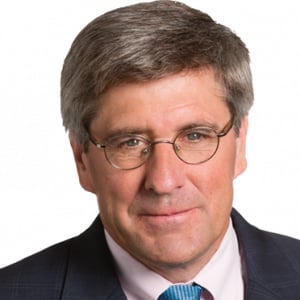
Distinguished Visiting Fellow, Project for Economic Growth, Institute for Economic Freedom and Opportunity
Stephen Moore, who formerly wrote on the economy and public policy for The Wall Street Journal, is the Distinguished Visiting Fellow, Project for Economic Growth, at The Heritage Foundation. Mr. Moore, who also was a member of The Journal’s editorial board, returned to Heritage in January 2014 -- about 25 years after his tenure as the leading conservative think tank’s Grover M. Hermann Fellow in Budgetary Affairs from 1984 to 1987.
As Distinguished Visiting Fellow at Heritage, Mr. Moore focuses on advancing public policies that increase the rate of economic growth to help the United States retain its position as the global economic superpower. He also works on budget, fiscal and monetary policy and showcases states that get fiscal houses in order.
"One of the projects I’m going to be working on is how President Obama has discredited liberal ideas more than anyone,” Mr. Moore said in an interview with The Foundry upon his return to Heritage. “Everything he’s done has been such a massive failure — from the [economic] stimulus to health-care reform to bailouts to green energy.
Mr. Moore’s early career was shaped by three people who had a profound influence on him: Julian Simon, the late Cato Institute scholar; Edwin J. Feulner, a co-founder of Heritage; and Art Laffer, the economist best known for the Laffer curve.
“What makes them so great is they were willing to take on the conventional wisdom. They were subject to a lot of criticism for doing that,” Mr. Moore told The Foundry. “Those are the real change-makers.”
Mr. Moore calls his creation of the Club for Growth the defining moment of his career. The organization, which he left in 2004, helps elect conservative members of Congress (including Heritage President Jim DeMint when he first ran for Senate).
Mr. Moore next founded the Free Enterprise Fund before joining The Wall Street Journal. As senior economics writer for the newspaper’s editorial board, he covered Washington policy debates and state issues.
“Because I’ve been a consumer of think tank material and policy research, I think I have a pretty good sense of what reporters want and how to get it to them in the way they want it,” Mr. Moore said. “Being timely — and not just offering opinion but giving them the facts and data is really critical.”
Mr. Moore, who grew up in New Trier Township, Ill., received a bachelor of arts degree from University of Illinois at Urbana-Champaign. He holds a master’s of arts in economics from George Mason University.
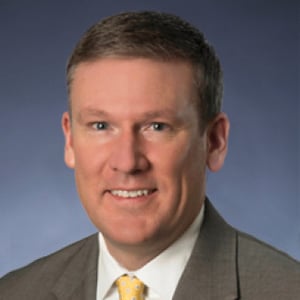
Senior Advisor, Wilkinson Barker Knauer LLP
Mr. Clark is a Senior Advisor at Wilkinson Barker Knauer, LLP. He has extensive experience in energy and utility policy at the federal and state level. He provides clients with analysis and strategic advice on a variety regulatory and public policy matters affecting their businesses. He specializes in working with clients in the energy and telecommunications industries and at the nexus of state and federal jurisdictional issues.
Having been appointed by President Obama, and unanimously confirmed by the U.S. Senate, Mr. Clark served from 2012 to 2016 as a Commissioner of the Federal Energy Regulatory Commission. While at the FERC, Mr. Clark worked on matters that are at the forefront of energy policy, such as: electricity reliability, electricity-natural gas industry coordination, oversight of the nation’s Regional Transmission Organizations, electricity grid cyber and physical security regulations, major enforcement actions, energy infrastructure permitting, the integration of renewables and energy storage, FERC Order 1000 implementation, and wholesale electricity market reforms. From 2001 to 2012 he was a Commissioner of the North Dakota Public Service Commission, including over 5 years as its Chairman. During his tenure at the North Dakota Commission, Mr. Clark oversaw numerous proceedings related to the state’s historic emergence as a leader in American energy production. In 2010, he was selected by his regulatory peers across the nation to serve a term as President of the National Association of Regulatory Utility Commissioners. He also served a three-year term as Chairman of the NARUC Telecommunications Committee. Through his various regulatory positions, he has testified multiple times before Committees of both the US House and US Senate on matters related to energy and telecommunications.
From 1999 to 2000, Mr. Clark was Labor Commissioner of the State of North Dakota and a member of the Cabinet of Gov. Ed Schafer. In 1994 he was one of the youngest people ever elected to the North Dakota legislature, representing a portion of the City of Fargo for two terms in the State House of Representatives. He is a graduate, with honor, from North Dakota State University and holds a master’s degree from the University of North Dakota. In addition to his work at Wilkinson Barker Knauer, LLP, Mr. Clark serves as a non-employee independent director on the Board of Directors of NorthWestern Energy Corporation. Having attained the rank of Eagle Scout in his youth, Mr. Clark has been a long-time volunteer with and supporter of the Boy Scouts of America.
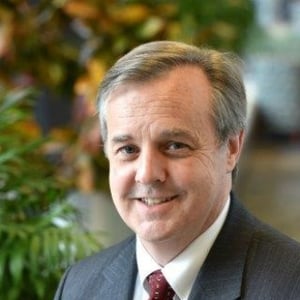
Chief, Federal Regulatory Policy for PSEG
Larry Gasteiger was named chief, federal regulatory policy, Public Service Enterperise Group Incorpoated (PSEG) in October 2016.
Mr. Gasteiger served as Chief of Staff at FERC culminating a noteworthy 19-year tenure at FERC in which he held a variety of leadership roles. He previously served as the Acting Director of the Office of Enforcement from August 2014 to April 2015 after having served as the Deputy Director from 2009 to 2014. Before he joined the Office of Enforcement, Mr. Gasteiger was the Director of the Division of Tariffs and Market Development - East in the Office of Energy Market Regulation. Prior to that, he held several other positions at the Commission, including Deputy Associate General Counsel, Legal Advisor to Chairman Joseph T. Kelliher, and attorney in the FERC’s Solicitor's Office.
Before joining FERC in 1997, Mr. Gasteiger was an attorney in the General Counsel's Office at the Commodity Futures Trading Commission, and from 1989 to 1991 he served as a law clerk for the Honorable Edwin M. Kosik in the United States District Court for the Middle District of Pennsylvania.
Mr. Gasteiger is a graduate of the University of Pennsylvania and the Dickinson School of Law. He is a former Board Member of the Northeast Chapter of the Energy Bar Association and former Board Member and Secretary of the Saint Ambrose School.
Denver Managing Partner, Wilkinson Barker Knauer LLP
Raymond L. Gifford counsels communications, electric and gas utilities, and information technology companies on state and federal aspects of regulation, administrative law, and competition policy. He is an expert in public utilities law, and the law and economics of regulation of network industries. Mr. Gifford’s law and policy work focuses on the convergence of broadband communications and energy, as well as environmental policy as it applies to the electric industry. He represents clients in state and federal courts and agencies, and serves as an expert witness on utility regulation and its history. He is also a Senior Adjunct Fellow at the Silicon Flatirons Center for Law, Technology and Entrepreneurship, and Co-Directs the Institute for Regulatory Law & Economics at University of Colorado Law School.
Mr. Gifford served as Chairman of the Colorado Public Utilities Commission from 1999-2003. Following that, he served as President of The Progress & Freedom Foundation, a Washington DC-based think-tank that studied the digital revolution as it relates to regulation of network industries. He entered the regulatory law world as First Assistant Attorney General in the Colorado Attorney General’s Office. He clerked for the Honorable Richard P. Matsch of the United States District Court for the District of Colorado. Mr. Gifford has authored a number of articles on communications law, public utility regulation and competition policy in network industries. He is a graduate of University of Chicago Law School and St. John’s College in Annapolis, Maryland. He is an elected member of the American Law Institute
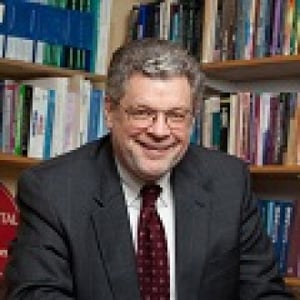
Research Director, Harvard Electricity Policy Group, Raymond Pla, Harvard University
William W. Hogan, Raymond Plank Professor of Global Energy Policy, is research director of the Harvard Electricity Policy Group (HEPG), which is examining alternative strategies for a more competitive electricity market, and a member of the Appointments Committee. Prof. Hogan has been a member of the faculty of Stanford University where he founded the Energy Modeling Forum (EMF), and he is a past president of the International Association for Energy Economics (IAEE). Current research focuses on major energy industry restructuring, network pricing and access issues, market design, and energy policy in nations worldwide. Prof. Hogan received his undergraduate degree from the U.S. Air Force Academy and his PhD from UCLA. Selected papers are available on his Web site, www.whogan.com.
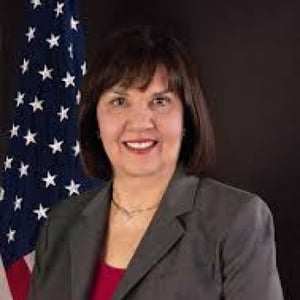
Acting FERC Chairman, Federal Energy Regulatory Commission
Acting Chairman Cheryl A. LaFleur was first nominated by President Barack Obama to the Federal Energy Regulatory Commission in 2010 and was confirmed for a second term by the Senate in 2014. On January 23, 2017 she was appointed Acting Chairman by President Donald Trump. She was previously appointed by President Barack Obama to serve as Acting Chairman of the Commission from November 2013 to July 2014 and as Chairman from July 2014 until April 2015.
Acting Chairman LaFleur is honored to be a member of the Commission at a time when the nation is making substantial changes in its energy supply and infrastructure to meet environmental challenges and improve reliability and security. Since she joined the Commission, her priorities have included reliability and grid security, promoting regional transmission planning, and supporting a clean and diverse power supply. She is a member of the NARUC Committees on Electricity and Critical Infrastructure and was co-chair of the FERC/NARUC Forum on Reliability and the Environment. She is a frequent speaker on energy issues.
Prior to joining the Commission in 2010, Acting Chairman LaFleur had more than 20 years’ experience as a leader in the electric and natural gas industry. She served as executive vice president and acting CEO of National Grid USA, responsible for the delivery of electricity to 3.4 million customers in the Northeast. Her previous positions at National Grid USA and its predecessor New England Electric System included chief operating officer, president of the New England distribution companies and general counsel. She led major efforts to improve reliability and employee safety. Earlier in her career, she was responsible for leading award-winning conservation and demand response programs for customers.
Acting Chairman LaFleur has been a nonprofit board member and leader, including as a trustee of Beth Israel Deaconess Medical Center, Worcester Polytechnic Institute, United Way of Central Massachusetts, and several other organizations. She is also active in a number of women’s energy organizations.
Acting Chairman LaFleur was named Woman of the Year by the Women’s Council on Energy and the Environment in 2015. In 2014, the Northeast Energy and Commerce Association presented her with its Vanguard Award for her long-time leadership in the development of competitive power markets. She received a Bipartisan Congressional Award in 2013 for her work on grid reliability. She has also been honored by the Greater Boston Chamber of Commerce and the YWCA of Central Massachusetts, among others.
Acting Chairman LaFleur began her career as an attorney at Ropes and Gray in Boston. She has a J.D. from Harvard Law School, where she was an editor of the Harvard Law Review, and an A.B. from Princeton University. A native of Massachusetts, she is married to William Kuncik, a retired attorney, and they are the parents of two grown children.
Senior Vice President for Government and Regulatory Affairs, Calpine Corp.
Mr. Steven Schleimer has been Senior Vice President of Government and Regulatory Affairs at Calpine Corp. since January 1, 2014. Mr. Schleimer served as a Vice President of Government and Regulatory Affairs for Calpine’s North Region since 2010. From 2006 to 2010, Mr. Schleimer served as Vice President at Barclays Capital in New York and was responsible for market design and regulatory issues. Prior to that, he had served as Calpine’s Vice President of Market and Regulatory Affairs in the West Region from 2000 to 2006. Mr. Schleimer spent the first 12 years of his career at Pacific Gas and Electric Company. He earned a master’s degree and a bachelor’s degree, with highest honors, in Economics from the University of California at Santa.
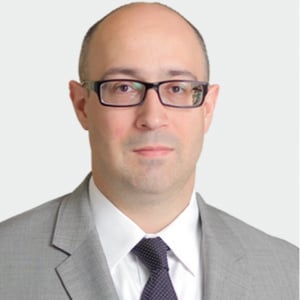
Partner, Baker & Hostetler LLP
Mark DeLaquil is a first-chair trial and appellate advocate who focuses on complex environmental and regulatory proceedings, First Amendment practice and political law.
Mark has been recognized by Chambers USA for environmental litigation (2015 to 2024) and has been named by Law360 as one of the "Top 5 Environmental Attorneys Under the Age of 40" on two occasions.
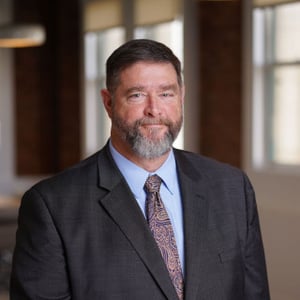
Partner, Briscoe Prows Kao Ivester & Bazel LLP
Tony Francois is experienced in Water and Real Property Law, Land Use and Zoning, Environmental Regulation, Natural Resources Development, Agricultural Law, and Constitutional Law. He has represented homeowners, builders, farmers and ranchers, trade associations, and water districts in administrative, civil, and criminal proceedings before state and federal administrative agencies and state and federal trial and appellate courts. He is a member of the California State Bar and the Northern, Eastern, and Central Districts of California and the Districts of New Mexico and North Dakota, and has litigated cases in federal courts in California, Oregon, Washington, Idaho, Montana, Nevada, Arizona, New Mexico, Colorado, North and South Dakota, Minnesota, Massachusetts, Maryland, South Carolina, and the District of Columbia, as well as the Sixth, Eighth, Ninth, and Tenth Circuit Courts of Appeals. He has appeared before the Supreme Courts of California, Idaho, Nevada, and the United States.
Prior to attending law school, he served as an infantry officer in the United States Army, and was stationed in the former West Germany during the fall of the Berlin Wall.
Tony was an Attorney at Pacific Legal Foundation from 2012 to 2021. He was a lobbyist for 10 years, first with California Farm Bureau Federation from 2003 to 2007, and then with KP Public Affairs from 2007 to 2012. He was an attorney at McQuaid, Bedford & Van Zandt in San Francisco from 1999 – 2003.
Professor of Environmental Practice and Director, California Env, UC Davis School of Law
Richard M. Frank is a Professor of Environmental Practice and Director of the California Environmental Law and Policy Center (CELPC). Formerly the executive director of the Center for Law, Energy, & the Environment (CLEE) at UC Berkeley School of Law, Frank returned to UC Davis School of Law in January 2010. In addition to leading the CELPC, he teaches classroom courses in the environmental law curriculum.
Before coming to CLEE and UC Berkeley, Professor Frank practiced law with federal and state agencies for 32 years, most of that time with the California Department of Justice. Immediately before joining Berkeley Law, he served as California's Chief Deputy Attorney General for Legal Affairs.
In 2006, Governor Schwarzenegger appointed Frank to the Delta Vision Task Force, an advisory body asked to develop policy recommendations for the Governor and Legislature, addressing environmental problems confronting the California Delta. He served in that capacity in 2007-08. In May 2009, the Chair of the California Air Resources Board appointed Frank Vice Chair of the Economic Allocation & Advisory Committee, an advisory body formed to assist the Air Resources Board in implementing California's landmark Global Warming Solutions Act (AB 32).

Professor of Law and Executive Director, Law and Economics Center, Antonin Scalia Law School, George Mason University
Donald Kochan is Professor of Law and Executive Director of the Law & Economics Center (LEC). Professor Kochan is an elected member of the American Law Institute (ALI) and serves as an Adviser to ALI's Restatement of the Law Fourth, Property project. Professor Kochan is a Nonresident Scholar at the Center for the Constitution at Georgetown University Law Center, where he was a Visiting Scholar in residence during Fall 2018. Before joining the Antonin Scalia Law School faculty, he was the Parker S. Kennedy Professor in Law at Chapman University’s Dale E. Fowler School of Law from 2004 to 2020. From 2003 to 2004, Professor Kochan was an Olin Fellow at the University of Virginia School of Law. During 2002-2003, he was a Visiting Assistant Professor of Law at George Mason’s Scalia Law School.
Professor Kochan’s scholarship focuses on areas of property law, constitutional law, administrative law, local government law, natural resources and environmental law, and law & economics. He has published several books and more than 50 scholarly articles and essays in well-regarded law journals. His work has been cited in more than a dozen state and federal court opinions, in more than 75 briefs filed in state and federal courts including more than 25 filed in the U.S. Supreme Court, in dozens of books and treatises, and in more than 800 scholarly articles.
Professor Kochan received his JD from Cornell Law School, where he was a John M. Olin Scholar in Law and Economics and managing editor of the Cornell International Law Journal. During law school, he also served as editor and executive editor of the Harvard Journal of Law & Public Policy symposium issues in 1997 and 1998. He received his BA from Western Michigan University, magna cum laude, with majors in both political science and philosophy, where he studied as the John W. Gill Medallion Scholar and was honored as the Presidential Scholar (awarded to the top graduate in the political science department).
After graduating from law school, Professor Kochan was a law clerk to The Honorable Richard F. Suhrheinrich of the United States Court of Appeals for the Sixth Circuit. Following his clerkship, Professor Kochan was an associate with the firm of Crowell & Moring LLP in Washington, D.C., where he specialized in natural resources & environmental law as well as tort, products, and consumer civil litigation & legislative affairs.

Judge, Arizona Court of Appeals, Division One
The Honorable Jennifer M. Perkins began service on the Arizona Court of Appeals, Division One, on October 30, 2017. At the time of her appointment by Governor Douglas Ducey, Judge Perkins was Assistant Solicitor General for the State of Arizona.
Judge Perkins was born in Portales, New Mexico, and primarily raised in Albuquerque. She attended the prestigious Albuquerque Academy from 1988-1995, before moving to Washington D.C. to attend the Elliott School of International Affairs at the George Washington University as a National Merit Scholar. Therafter, she relocated again to Dallas, Texas, and earned her juris doctor from the SMU Dedman School of Law, graduating cum laude in 2002.
Judge Perkins started her career at the law firm of Browning & Peifer (now Peifer, Hanson, Mullins, and Baker) in Albuquerque, New Mexico. While there, she litigated complex commercial matters including class action plaintiff and defense work, and assisted with employment and contract litigation. In 2003, the judge accompanied the Honorable James O. Browning in transitioning to the federal district court bench, serving as his first law clerk.
After her clerkship, Judge Perkins moved to Arizona to work for the Institute for Justice, Arizona Chapter, a public interest law firm. She spent five years with IJ-AZ litigating civil rights cases in Arizona and across the country. In 2009, the judge became Disciplinary Counsel for the Arizona Commission on Judicial Conduct, where she reviewed and prosecuted ethics complaints against state court judges throughout Arizona. After five years serving the state in this capacity, Judge Perkins entered private practice by joining an appellate law firm in Phoenix. While there, she worked on state and federal appeals involving a wide range of legal subjects, including complex business disputes, property rights, judicial ethics, and personal injury matters.
In January 2015, Judge Perkins joined the Office of the Arizona Attorney General to serve as the first Assistant Solicitor General; in that capacity, she was responsible for oversight of Attorney General Opinions and served as ethics counsel to the entire office. In addition to these two primary roles, the judge assisted on a variety of matters including trial and appellate litigation of election-related matters; federal appellate litigation with the Federalism Unit; state criminal appeals; and drafting amicus briefs on behalf of Arizona in state and federal courts.
Associate Professor, University of Denver Sturm College of Law
Professor Justin Pidot graduated with high honors from Wesleyan University before attending Stanford Law School, where he graduated with distinction and was editor in chief of the Stanford Environmental Law Journal. Professor Pidot clerked for Judge Judith W. Rogers of the U.S. Court of Appeals for the District of Columbia Circuit. Prior to joining the University of Denver faculty, he was an appellate litigator at the Environment and Natural Resources Division of the U.S. Department of Justice, where he presented argument in more than a dozen federal appellate cases and acted as the staff attorney on two cases before the United States Supreme Court. Professor Pidot also completed a fellowship at the Georgetown Environmental Law & Policy Institute.
Professor Pidot’s scholarship and teaching focus on environmental law, natural resources law, and federal courts.
United States Court of Appeals, 9th Circuit
Milan Smith was confirmed on May 16, 2006 to the Ninth Circuit, which hears appeals from the federal district courts of Alaska, Arizona, California, Guam, Hawaii, Idaho, Montana, Nevada, Oregon, and Washington.
Judge Smith has a distinguished record as a practicing attorney in the public and private sectors. In his private practice, Judge Smith was well recognized for his expertise in real estate law. He represented major corporations, such as Honeywell International and Toyota Motor sales USA, Inc., and a wide range of public clients, such as the Palos Verdes Unified School District, the Los Angeles State Business Authority, and non-profit organizations such as Marymount College. Judge Smith also has extensive experience in the areas of tax law, corporate law and environmental law.
In 1988, Judge Smith was appointed by Governor George Deukmejian to the California Fair Employment and Housing Commission. This Commission hears cases of alleged housing and employment discrimination and determines whether and how much recovery to award to claimants. Mr. Smith participated in dozens of such cases on such topics as racial discrimination and sexual harassment.
Judge Smith’s litigation experience encompassed not only real estate matters, but also contract, family law, tax, and administrative cases. He also had a thriving transactional practice.
Judge Smith graduated from Brigham Young University in 1966, where he received his degree cum laude. In 1969, Judge Smith received his Juris Doctor degree from the University of Chicago Law School

Executive Vice President, The Federalist Society
Dean Reuter is Executive Vice President at the Federalist Society for Law and Public Policy Studies. He has served in two federal government agency Offices of the Inspector General, as Counsel to the Inspector General and Deputy Inspector General, responsible for policing the use of federal funds granted and contracted through those agencies. As such, he helped conduct and oversee criminal investigations across the country. He is the principal author of the non-fiction book, The Hidden Nazi: The Untold Story of America's Deal with the Devil, and editor of Liberty’s Nemesis: The Unchecked Expansion of the State and Confronting Terror: 9/11 and the Future of American National Security. He was appointed by the President and served as Vice-Chairman of the Board of Directors of the Corporation for National and Community Service, and recently served as an appointee on the U.S. Commission on Presidential Scholars. He is a graduate of Hood College (BA with Honors) and the University of Maryland School of Law.
Partner, Bracewell & Giuliani LLP
Jason Hutt advises energy companies, manufacturers, project developers, investor groups and financial institutions about environmental risks and liabilities associated with regulatory compliance, project development, congressional investigations, internal investigations and corporate transactions. He also assists in the defense of administrative, civil and criminal proceedings involving environmental enforcement agencies at the federal and state levels.
Mr. Hutt counsels clients on current and upcoming regulatory developments at the nexus of environmental and energy policy, with focused attention on natural gas development (including hydraulic fracturing), responses to the Deepwater Horizon incident, and climate change. He is nationally recognized for his work on shale gas issues on behalf of producers, oil field services companies, hedge funds and technology developers.
Mr. Hutt routinely is involved in identifying, evaluating and managing environmental risks and opportunities associated with corporate acquisitions, divestitures and financings, including environmental due diligence, purchase and sale agreement negotiation, and post-closing integration efforts. Within the energy sector, his representative experience includes transactions involving petroleum refineries, liquefied natural gas (LNG) import terminals, renewable energy projects (e.g., wind, biofuels and geothermal), natural gas processing plants, cogeneration facilities, oil and gas wells, pipelines, propane retailers and synfuel facilities.
Representative work in other sectors involves operations and industries such as chemical manufacturers, oil field services, independent tank terminal operators, glass manufacturing, textiles manufacturing, uranium mining, industrial cleaning operations, hazardous waste management facilities, paper and plastic manufacturing facilities, and medical equipment manufacturing facilities.
Mr. Hutt performs environmental risk evaluations and advises on permit strategy and contract negotiation in relation to project development. His most recent work has involved onshore and offshore LNG import terminals, highway expansions, coal-fired power plant siting on tribal lands, utility privatizations at military bases, international undersea pipelines, interstate undersea electric transmission cables and a pump-storage project.
Distinguished Professor of Law, Widener University Delaware Law School
James R. May is Distinguished Professor of Law, and Chief Sustainability Officer, Widener University (USA). He also serves as co-Director of the Environmental Rights Institute and co-Director of the Dignity Rights Project at Widener University Delaware Law School. May is also an Adjunct Professor of Graduate Engineering, and founded and co-chairs a program on marine policy. May is the editor of Principles of Constitutional Environmental Law (American Bar Association), and co-editor of Shale Gas and the Future of Energy (Edward Elgar), Global Environmental Constitutionalism (Cambridge), Environmental Constitutionalism in Context (Edward Elgar), New Frontiers in Environmental Constitutionalism (United National Environment Programme, forthcoming), Implementing Environmental Constitutionalism(Cambridge, forthcoming), Standards of Environmental Constitutionalism (Cambridge, forthcoming), and Human Rights and the Environment: Indivisibility, Dignity and Legality (Edward Elgar, forthcoming). May is also author or co-author of more than 100 articles and book chapters, and numerous amicus briefs to the U.S. Supreme Court and U.S. federal courts of appeal on issues including environmental law, constitutional law, comparative constitutional, international environmental law, environmental rights, and human dignity.
May founded two non-profit environmental organizations (the Mid-Atlantic and the Eastern Environmental Law Centers), and has litigated more than 200 public interest environmental claims, including cases throughout the Mid-Atlantic to restore water and air quality, conserve rare species and habitats, and protect biodiversity.
May is a Member of Faculty to the National Judicial College, and a Fellow of the American College of Environmental Lawyers, for whom he has served as a delegate to Haiti and China. May has also served as a consultant to the U.S. Embassy on legal education in the Philippines, and to the Hungarian Embassy and the Moroccan Human Rights Council on constitutional reform. May is a member of Phi Kappa Phi, serves on numerous boards, and has won numerous awards, including from Pace University, Sierra Club, and the American Canoe Association. He earned his B.S. in Mechanical Engineering from the University of Kansas (Bowman Scholar), J.D. from the University of Kansas (Appellate Advocacy Scholar and national moot court champion), and LL.M. in Environmental Law from Pace University, where he was the Feldshuh Fellow and graduated first in class.
May is a member of the bar in the State of Pennsylvania, several federal courts of appeal, and the U.S. Supreme Court.
Associate Attorney, Sierra Club Environmental Law Program
Craig Segall started at the Sierra Club in 2008 as an environmental law fellow. Before coming to the Club, Craig was a law clerk to the Honorable Marsha S. Berzon of the U.S. Court of Appeals for the Ninth Circuit. He is a graduate of the University of Chicago and of Stanford Law School, where he spent most of his time in the basement working with Stanford's environmental law clinic. When not practicing law, Craig keeps busy outdoors. In recent years, he has barely beaten a 12-year-old to the top of Mount Whitney, accidentally driven transmission-deep into a salt lake, and, on an ill-advised hike in South Africa, provoked a surprisingly aggressive ostrich.

Judge, United States Court of Appeals, Tenth Circuit
Judge Tymkovich, of Denver, Colorado, was nominated to the Tenth Circuit Court of Appeals by President George W. Bush, and confirmed in April 2003. On October 1, 2015 he became Chief Circuit Judge and held this position until October 2022. He was Chair of the US Judicial Conference’s Committee on Judicial Resources from 2011 to 2015. Since 2008 he has been an adjunct professor of law at the University of Colorado School of Law, teaching Election Law. He is a member of the Doyle Inn of Court, the American Law Institute, and the International Society of Barristers. Since he joined the Circuit, Judge Tymkovich has hosted judicial delegations from Russia, Kazakhstan, and Afghanistan, and has also represented the United States in programs at Kiev and Yalta in Ukraine.
Director of Regulatory and State Affairs, Institute for Energy Research
Daniel Simmons is Director of State Affairs at the Institute for Energy Research. He oversees energy research and outreach at the state level. Before joining IER, Simmons served as the Director of the Natural Resources Task Force at the American Legislative Exchange Council (ALEC). ALEC’s Natural Resources Task Force promotes policy innovations through markets, property rights, and the rule of law in energy, environment, natural resources, and agricultural policy areas.
Prior to working for ALEC, Simmons was a Research Fellow at the Mercatus Center at George Mason University. He analyzed proposed federal regulations and wrote comments to federal agencies during the rulemaking process. He also drafted law review articles based on a current regulatory and legal issues.
Previous to working at the Mercatus Center, Simmons served as Legislative Staff for the Committee on Resources in the U.S. House of Representatives where he handled endangered species and forestry issues.
Simmons holds a B.A. in Economics from Utah State University and a J.D. from George Mason University School of Law. He is a member of the Virginia State Bar.
Professor of Law and Director of the Natural Resources Law Cente, University of Colorado Law School
Professor Mark Squillace is the Director of the Natural Resources Law Center at the University of Colorado Law School. Before coming to Colorado, Professor Squillace taught at the University of Toledo College of Law where he was the Charles Fornoff Professor of Law and Values. Prior to Toledo, Mark taught at the University of Wyoming College of Law where he served a three-year term as the Winston S. Howard Professor of Law. He is a former Fulbright scholar and the author or co-author of numerous articles and books on natural resources and environmental law. In 2000, Professor Squillace took a leave from law teaching to serve as Special Assistant to the Solicitor at the U.S. Department of the Interior. In that capacity he worked directly with the Secretary of the Interior, Bruce Babbitt, on variety of legal and policy issues.
Executive Vice President, The Federalist Society
Dean Reuter is Executive Vice President at the Federalist Society for Law and Public Policy Studies. He has served in two federal government agency Offices of the Inspector General, as Counsel to the Inspector General and Deputy Inspector General, responsible for policing the use of federal funds granted and contracted through those agencies. As such, he helped conduct and oversee criminal investigations across the country. He is the principal author of the non-fiction book, The Hidden Nazi: The Untold Story of America's Deal with the Devil, and editor of Liberty’s Nemesis: The Unchecked Expansion of the State and Confronting Terror: 9/11 and the Future of American National Security. He was appointed by the President and served as Vice-Chairman of the Board of Directors of the Corporation for National and Community Service, and recently served as an appointee on the U.S. Commission on Presidential Scholars. He is a graduate of Hood College (BA with Honors) and the University of Maryland School of Law.
Senior Fellow, Pacific Research Institute
Tom Tanton is a Senior Fellow with the Pacific Research Institute as well as the Principal of T2 & Associates, a firm providing consulting services to the energy and technology industries. Mr. Tanton has over 35 years experience in the energy, economy, and environmental fields.
T2 & Associates are active in the area of energy and interconnected infrastructures, analyzing and providing advice on their impacts on energy prices, environmental quality, and regional economic development. Principals and associates of T2 & Associates have well over a half-century of experience in technology and legislative interface, having been central to many of the critical legislative changes that enabled technology choice and economic development at the state and federal level.
Mr. Tanton’s previous employment includes serving as Vice President and Senior Fellow with the Institute for Energy Research, from 2002 to 2006, and General Manager for EPRI, the Electric Power Research Institute, from 2000 to 2003.
Mr. Tanton has a wealth of experience in energy-related issues in the state of California and nationally. Prior to 2000, Mr. Tanton was the principal policy advisor with the California Energy Commission (CEC) where he was responsible for designing and implementing legislation including electric restructuring, gasoline and natural gas supply and pricing, energy facility siting, environmental issues, technology development, and transportation.
In 1998, Mr. Tanton also served as a team member of the California Governor's Office task force on critical infrastructure security. He was also the lead advisor on energy and infrastructure to California's task force on 21st Century development in 1999.
He has made presentations to a number of commissions and boards in California and nationally, including the California Energy and Public Utilities Commissions. He has also testified before several state legislatures and Congress and provided expert testimony in power plant sitting cases.
Counsel, Environmental Defense Fund
James T. B. Tripp has served as Counsel for Environmental Defense Fund since 1973 and as General Counsel since 1983. Mr. Tripp is responsible for the review of all Environmental Defense Fund legal action initiatives and has been admitted to the New York State Bar, the Southern and Eastern Districts of New York, several U.S. courts of appeal and the United States Supreme Court.
Through Environmental Defense Fund’s Living Cities program, he works on a wide range of land use, transportation, water resources, solid waste, ecosystem restoration and energy issues in the NY metropolitan region. His expertise led to his appointment to the New York State Department of Transportation's Advisory Panel on Transportation Policy for 2025 (2004), New York Governor George Pataki's Greenhouse Gas Task Force (2001-2002), and to Governor Pataki's Superfund Work Group (1999-2000).
Mr. Tripp helped to design a Transfer of Development Rights (TDR) program in the Long Island Pine Barrens, and has also been extensively involved in land conservation and smart growth efforts in the Highlands ecosystem, which stretches from eastern Pennsylvania through New Jersey and New York into western Connecticut.
Through EDF’s Land Water and Wildlife program, he has also been engaged in state and federal efforts to restore the Mississippi River Delta in south Louisiana and bottomland hardwood resources in the lower Mississippi Basin for more than 30 years. He served on former Louisiana Governor Michael Foster's Commission on the Future of Coastal Louisiana, and has served on the Louisiana Governor's Commission on Coastal Restoration and Conservation.
Chairs the board of New Partners for Community Revitalization and the Long Island Pine Barrens Clearinghouse Advisory Board. Formerly, he has chaired the Highlands Coalition Board and the New York City Water Board. He is a member of the Civitas Board, and also serves on the Boards of the Tri-State (New York, New Jersey, & Connecticut) Transportation Campaign, the Pinelands Preservation Alliance, and the Coalition to Restore Coastal Louisiana.
Author or co-author of numerous articles on wetland preservation, groundwater quality, solid waste, design of rights transfer systems, Cuba environmental law and NEPA reform. Recipient, Robert C. Stover Environmental Advocate Award, given by New York State Bar Association (1986).
Assistant US attorney, Southern District of New York (1968- 1973); summer volunteer, lawyers Committee for Civil Rights Under Law (1967, 1968); associate, Hale, Russell & Stentzel (1966-1968).
Professor of Law, George Mason University School of Law
With his work in regulatory takings and other aspects of property law, professor of law Steven Eagle plays an important role in the ongoing dialogue among American legal scholars, lawyers, and judges on the proper interpretation of property rights in the Constitution. He is the author of a leading property treatise and scholarly and popular articles and teaches in programs for judges and the practicing bar.
Professor Eagle came to George Mason in 1987 and also has taught at the law schools of Vanderbilt University, the University of Toledo, and Pace University. He earned his B.B.A. from the City College of New York (1965) and his J.D. from Yale Law School (1970). Professor Eagle teaches the first-year course, Property, Land Use Planning, and an advanced constitutional law seminar on property rights.
Professor of Law, Fordham University School of Law
Professor Johnson is currently a Professor of Law at Fordham University School of Law, and teaches in the areas of Contracts, Environmental Law, and Gun Control/Gun Rights. He was previously Professor of Legal Studies in Business at Franklin and Marshall College (1988-93), Of Counsel at Kirkpatrick and Lockhard (1990-93), Vice President and Co-owner Westar Environmental Corporation (1988-90), and an Associate at Morgan, Lewis and Bockius (1985-88).
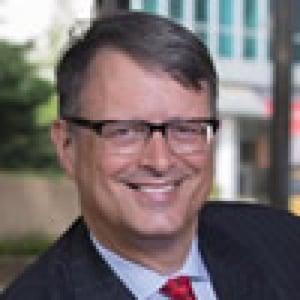
Andrew P. Morriss is Dean and Anthony G. Buzbee Dean's Endowed Chairholder at Texas A&M School of Law and a member of the Board of Advisors for the Center on Culture and Civil Society at the Independent Institute. He is also a Research Fellow at the Center for Labor and Employment Law at New York University; Senior Fellow at the Property & Environment Research Center; Senior Scholar at the Mercatus Center at George Mason University; and a regular Visiting Professor at Universidad Francisco Marroquín, in Guatemala. Prior to coming to the University of Illinois, he served as Galen J. Roush Professor of Business Law and Regulation at Case Western Reserve University.
He received his A.B. degree from Princeton University, his J.D. and a masters degree in public affairs from the University of Texas at Austin, and his Ph.D. (economics) from the Massachusetts Institute of Technology. After law school he clerked for U.S. District Judge Barefoot Sanders in the Northern District of Texas and worked for two years at Texas Rural Legal Aid in Hereford and Plainview, Texas.
Professor Morriss is the author or coauthor of more than forty book chapters and scholarly articles, and he is the co-editor of Cross-Border Human Resources, Labor and Employment Issues: Proceedings of the New York University 54th Annual Conference on Labor (with Samuel Estreicher); Property Stories (with Gerald Korngold); and The Common Law and the Environment (with Roger Meiners). He is the author of the book, Regulation by Litigation (with Bruce Yandle and Andrew Dorchak), and he also regularly writes for The Freeman: Ideas on Liberty and Books & Culture: A Christian Review.
Professor Morriss was recently named one of the Reporters for the Restatement of Employment Law by the American Law Institute (ALI), Senior Fellow for the Institute for Energy Research, and a Reporter for the Restatement of Employment Law by the American Law Institute.

The Department of Energy’s Actions to Save Nuclear and Coal
Raymond L. Gifford, Mark W. Menezes, Stephen Moore
Last month, Bloomberg News revealed a leaked memorandum from the Department of Energy purporting to...
State ‘Around Market’ Action and FERC: The End of Competitive Wholesale Electric Markets?
Anthony T. Clark, Larry Gasteiger, Raymond L. Gifford, William W. Hogan, Cheryl A. LaFleur, Steven Schleimer
For the past two decades, the U.S. has experimented with “market”-based competitive wholesale electric markets. ...
The Clean Power Plan: The EPA & Climate Change Policy
Mark DeLaquil
What is the origin of the Clean Power Plan, and is it lawful? Mark DeLaquil...
Federalism, the Environment, Land Use, and Energy Independence
Tony Francois, Richard Frank, Donald J. Kochan, Jennifer Perkins, Justin Pidot, Milan D. Smith
Some states have criticized Washington overreach on a number of energy and environmental issues, from...
Sagebrush Rebel – Reagan’s Environmental Legacy - Podcast
Dean Reuter
In his new book, Sagebrush Rebel: Reagan's Battle with Environmental Extremists and Why It Matters...
Environmental Law: Federalism and the Energy Revolution: Can State and Federal Regulators Adapt to Innovations?
Jason B. Hutt, James R. May, Craig Segall, Timothy M. Tymkovich
The Environmental Law & Property Rights Practice Group hosted this panel on "Federalism and the...
The Keystone Pipeline - Podcast
Daniel R. Simmons, Mark Squillace, Dean Reuter
The Keystone Pipeline is designed to transport petroleum products from Northeast Alberta, Canada, to as...
Should Vehicle Fuel Emissions Standard Be More Strict? Why and How?
Thomas Tanton, James T.B Tripp, Steven J. Eagle
On September 15, 2009, following the administration’s announcement in May of a new regulation limiting...
Are Markets Friends or Foes of the Environment?
Nicholas Johnson, Andrew P. Morriss
The Fordham Student Chapter hosted this event at Fordham University School of Law on February...