
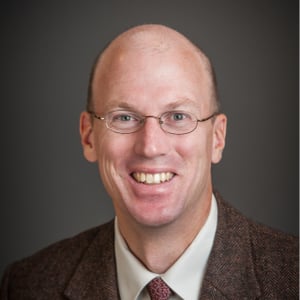
Professor of Law, Villanova University
Todd Aagaard joined the Villanova Law School faculty in 2008. He served as vice dean of the Law School from 2015 to 2019. His scholarship focuses on environmental law, energy law, and administrative law. His publications include Energy-Environment Policy Alignments, 90 Wash. L. Rev. 1517 (2015); Environmental Law Outside the Canon, 89 Ind. L.J. 1239 (2014); Environmental Harms, Use Conflicts, and Neutral Baselines in Environmental Law, 60 Duke L.J. 1505 (2011); Environmental Law as a Legal Field: An Inquiry in Legal Taxonomy, 95 Cornell L. Rev. 221 (2010); and Factual Premises of Statutory Interpretation in Agency Review Cases, 77 Geo. Wash. L. Rev. (2009). In addition, he is a co-author of Practicing Environmental Law, a practice-based environmental law casebook published in 2017 by Foundation Press.
Aagaard received his BA with honors from Pomona College, his MS from the University of Michigan School of Natural Resources and the Environment, and his JD magna cum laude from the University of Michigan Law School. While at Michigan, he was the editor-in-chief of the Michigan Law Review and an executive editor of the Michigan Journal of Race & Law. Following completion of his JD and MS degrees, he clerked for Second Circuit Judge Guido Calabresi, before joining the Environment and Natural Resources Division of the U.S. Department of Justice as an attorney in the Appellate Section. At the Justice Department, he briefed and argued civil and criminal cases in federal courts of appeals in the areas of environmental law, natural resources law, Indian law and administrative law.

Judge, United States Court of Appeals, Third Circuit
Judge Hardiman was appointed to the United States Court of Appeals for the Third Circuit on January 9, 2007 and was confirmed by the Senate (95-0) on March 15, 2007. Prior to becoming an appellate judge, Judge Hardiman served as a trial judge on the United States District Court for the Western District of Pennsylvania as of November 1, 2003. In 2008, Chief Justice John Roberts appointed Judge Hardiman to the Information Technology Committee of the Judicial Conference of the United States. Judge Hardiman was appointed Chairman of the IT Committee in 2013 and served in that capacity until September 2021. In 2021 he was appointed by the Director of the Administrative Office of the United States Courts to serve as Chair of the Judiciary IT Security Task Force, which completed its work in fall 2023. Chief Justice Roberts appointed Judge Hardiman to the Board of the Federal Judicial Center to serve from March 2020 until March 2024. As part of his work with the Center, Judge Hardiman now serves as Editor in Chief for the Manual for Complex Civil Litigation, Fifth.
Before entering judicial service, Judge Hardiman handled a wide variety of litigation matters in state and federal trial and appellate courts as a partner at Reed Smith LLP (1999-2003), a partner at Titus & McConomy LLP (1996-1999), and as an associate with its predecessor firm, Cindrich & Titus (1992-1996). Judge Hardiman began his legal career as an associate in the Washington, D.C. office of Skadden, Arps, Slate, Meagher & Flom (1990-1992).
A 1987 honors graduate of the University of Notre Dame, Judge Hardiman received his law degree in 1990 from the Georgetown University Law Center, where he served as a Notes and Comments Editor on the Georgetown Law Journal. In 2012, Judge Hardiman was elected as a member of the American Law Institute and was elected to its Council in 2019 and its Executive Committee in 2025. Judge Hardiman regularly teaches a seminar on Advanced Constitutional Law at Duquesne University School of Law and a one-week course entitled “Constitutional Law: the First and Second Amendments” at Georgetown University Law Center.
A native of Waltham, Massachusetts, Judge Hardiman has chambers in Pittsburgh, Pennsylvania. He and his wife Lori married in 1992 and have three children.
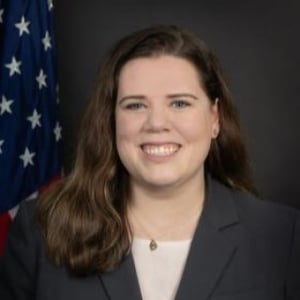
Commissioner, Federal Energy Regulatory Commission
Lindsay S. See joined the Federal Energy Regulatory Commission as a Commissioner in June 2024. Before her current role, Commissioner See served as the Solicitor General of West Virginia, where she managed appellate and high-stakes litigation for the State. With a particular focus on energy and administrative law, her work included leading multi-state and multi-interest coalitions on a variety of national issues. She argued twice before the U.S. Supreme Court, filed multi-state comments in dozens of agency rulemakings, and routinely appeared before the Supreme Court of Appeals of West Virginia and the federal courts of appeals.
Commissioner See previously practiced appellate and administrative law for several years with Gibson, Dunn & Crutcher in Washington, D.C. She graduated magna cum laude from Harvard Law School and clerked for the Hon. Thomas B. Griffith on the U.S. Court of Appeals for the D.C. Circuit. Originally from Michigan, See now considers herself both a proud Michigander and Mountaineer.
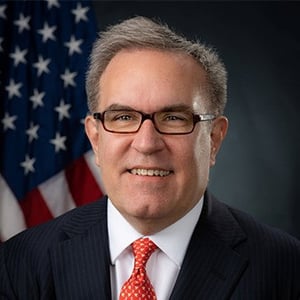
Holland & Hart, Partner
On February 28, 2019, the U.S. Senate confirmed Andrew Wheeler as the fifteenth Administrator of the Environmental Protection Agency. President Donald J. Trump had announced his appointment as the Acting EPA Administrator on July 5, 2018. Mr. Wheeler had previously been confirmed by the U.S. Senate as the EPA Deputy Administrator on April 12, 2018.
Mr. Wheeler has dedicated his career to advancing sound environmental policies. He began his career during the George H. W. Bush Administration as a Special Assistant in EPA’s Pollution Prevention and Toxics office.
He was a Principal and the team leader of the Energy and Environment Practice Group at FaegreBD Consulting, as well as Counsel at Faegre Baker Daniels law firm, where he practiced since 2009. He also served as the Co-chair of the Energy and Natural Resources Industry team across the entire firm.
Prior to his work with the firm, Mr. Wheeler served for six years as the Majority Staff Director and Chief Counsel, as well as the Minority Staff Director, of the Senate Committee on Environment and Public Works. Before his time at the full Senate EPW Committee, Mr. Wheeler served in a similar capacity for six years for the Subcommittee on Clean Air, Climate Change, Wetlands and Nuclear Safety.
Mr. Wheeler is the past Chairman of the National Energy Resource Organization (NERO) and a Stennis Fellow. Mr. Wheeler is also an Eagle Scout.
Mr. Wheeler is from Fairfield, Ohio. He completed his law degree at Washington University in St. Louis, his MBA at George Mason University, and his undergraduate work at Case Western Reserve University in English and Biology.

Director of the Center for Energy and Environment and Senior Fellow, Competitive Enterprise Institute
Daren Bakst is Director of the Competitive Enterprise Institute’s Center for Energy and Environment and a Senior Fellow. In this role, he manages, develops, and leads the coalition, advocacy, and research activities of the Center, which is one of the most effective advocates for Free Market Environmentalism.
Before joining CEI as Deputy Director in March, 2023, Daren was a Senior Research Fellow in Environmental Policy and Regulation at the Heritage Foundation, where he played a leading role in the launch of the organization’s new energy and environment center, and created and hosted the Heritage Foundation’s energy and environment podcast the “PowerCast.” During his decade at Heritage, Daren wrote about energy and environmental policy, food and agricultural policy (including editing and co-authoring the book Farms and Free Enterprise), regulation, and trade among other topics.
Daren also worked on environmental policy and regulation at the U.S. Chamber of Commerce, where he was a policy counsel and served as the executive to the association’s Government Oversight, Operations & Consumer Affairs committee, which was responsible for issues such as regulatory process reform. Daren has significant state level experience, working for seven years at the Raleigh, N.C.-based John Locke Foundation, one of the largest state-based, free-market think tanks. As director of legal and regulatory studies, his broad portfolio included energy and environmental policy, regulatory reform, and property rights.
Daren has testified numerous times before Congress, regularly submits comments to federal agencies and has appeared in or been quoted by a wide range of media outlets such as The Wall Street Journal, USA Today, The Washington Times, CNN, Fox Business News, Al-Jazeera America, and U.S. News and World Report. He is a member of the Federalist Society’s Environmental Law and Property Rights Executive Committee and serves on the College Level Advisory Board for Constituting America, an organization that informs and educates about the importance of the U.S. Constitution.
Daren, who hails from Florida, received his bachelor’s and master’s degrees from George Washington University. A licensed attorney, he holds a law degree from the University of Miami and a master of laws degree from American University.
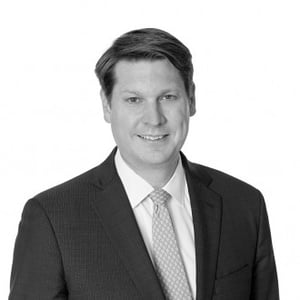
Former Acting Assistant Attorney General, United States Department of Justice; Partner, Winston & Strawn LLP
Jonathan “Jon” Brightbill is a trial and appellate lawyer in Winston’s Washington, D.C. office, and a partner in the firm’s Litigation and White Collar, Regulatory Defense, and Investigations Practices. He represents public and private companies, corporate officers, and other individuals across white collar, regulatory defense, and government and internal investigation matters and rulemaking challenges, as well as complex commercial disputes, citizen suits, and class actions. His commercial litigation experience encompasses business disputes, false advertising, consumer protection and fraud, FCA, and extensive class action defense work; antitrust and unfair competition matters; and intellectual property litigation, such as trademarks, patents, and trade secrets.
Jon served as the Nation’s lead environmental civil and criminal enforcement official and litigator, as Acting Assistant Attorney General for the Environment & Natural Resources Division (“ENRD”) of the U.S. Department of Justice (DOJ). Jon led ENRD’s 425 lawyers, overseeing 6,500 active matters and managing an annual budget of more than $150 million. Jon brings highly experienced executive leadership from among the most senior level of DOJ on white collar and regulatory enforcement, as well as on federal policymaking and rulemaking development and challenges. He speaks with authority on government decision-making processes, and the arguments and perspectives that move regulators and enforcers, best advising and positioning clients to deal with challenges.
Jon argued many of the government’s most significant cases during his time with the DOJ. This included the Navigable Waters Protection Rule and Clean Water Rule Repeal (10th Cir., district courts), the Affordable Clean Energy Rule and Clean Power Plan Repeal (D.C. Cir), defense of EPA actions on pesticide tolerances under FIFRA and the FDCA (9th Cir. en banc), among numerous others. Jon represented the United States in trial courts in both enforcement and defensive cases, including federal enforcement action against Jeffrey Lowe and the Tiger King Park, of Netflix fame, securing a first-of-its-kind injunction for violations of the Endangered Species Act and Animal Welfare Act. Jon directed the litigation and briefing of scores of additional federal cases nationwide, covering all of the major environmental and natural resources statutes, such as the Clean Air Act, the Clean Water Act, FIFRA (pesticides), FDCA (food safety), TSCA (toxics), CERCLA (land remediation), RCRA (waste), National Environmental Policy Act, Federal Land Policy and Management Act, and numerous other land- and resource-management statutes.
Jon has unmatched experience litigating legal and technical issues relating to climate change. He argued in the courts of appeals, including the D.C. Circuit, regarding the most significant climate change regulations by EPA, as well as the preemptive scope of the Clean Air Act. Jon also litigated climate change-related credit and trading schemes and international agreements in district court. During Jon’s time in leadership at ENRD, it successfully defeated one of the most wide-ranging lawsuits regarding climate change to date—obtaining a stay pending interlocutory appeal and dismissal just weeks before a scheduled three-month trial on federal government liability for climate change.
An accomplished trial lawyer, prior to working at DOJ, Jon was a partner in the Washington, D.C. office of another global law firm. He not only represents clients in court, but creatively counsels corporations on balancing business needs and realities with a broad range of litigation risks and compliance obligations. Jon is also an Adjunct Professor at Georgetown University Law Center. He served on the American Bar Association’s E-Discovery Working Group for Bankruptcy Practice, and was a frequent lecturer for District of Columbia Bar Association Continuing Legal Education Programs.
Jon served as an appellate clerk for the Honorable D. Brooks Smith, U.S. Court of Appeals for the Third Circuit, after graduating magna cum laude from the Georgetown University Law Center. He worked in state government as an Executive Policy Specialist for air, waste, land remediation, and radiation matters at the Pennsylvania Department of Environmental Protection.
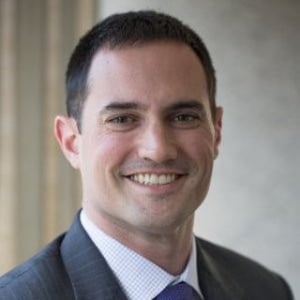
Vice President, Government Relations, PBF Energy
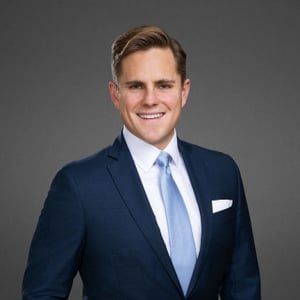
Deputy General Counsel, U.S. Environmental Protection Agency
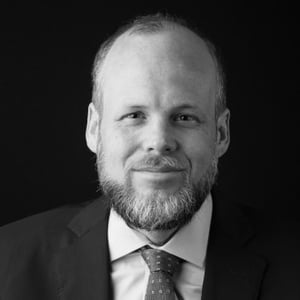
Founder, CGCN Law, PLLC
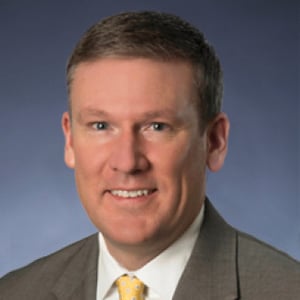
Senior Advisor, Wilkinson Barker Knauer LLP
Mr. Clark is a Senior Advisor at Wilkinson Barker Knauer, LLP. He has extensive experience in energy and utility policy at the federal and state level. He provides clients with analysis and strategic advice on a variety regulatory and public policy matters affecting their businesses. He specializes in working with clients in the energy and telecommunications industries and at the nexus of state and federal jurisdictional issues.
Having been appointed by President Obama, and unanimously confirmed by the U.S. Senate, Mr. Clark served from 2012 to 2016 as a Commissioner of the Federal Energy Regulatory Commission. While at the FERC, Mr. Clark worked on matters that are at the forefront of energy policy, such as: electricity reliability, electricity-natural gas industry coordination, oversight of the nation’s Regional Transmission Organizations, electricity grid cyber and physical security regulations, major enforcement actions, energy infrastructure permitting, the integration of renewables and energy storage, FERC Order 1000 implementation, and wholesale electricity market reforms. From 2001 to 2012 he was a Commissioner of the North Dakota Public Service Commission, including over 5 years as its Chairman. During his tenure at the North Dakota Commission, Mr. Clark oversaw numerous proceedings related to the state’s historic emergence as a leader in American energy production. In 2010, he was selected by his regulatory peers across the nation to serve a term as President of the National Association of Regulatory Utility Commissioners. He also served a three-year term as Chairman of the NARUC Telecommunications Committee. Through his various regulatory positions, he has testified multiple times before Committees of both the US House and US Senate on matters related to energy and telecommunications.
From 1999 to 2000, Mr. Clark was Labor Commissioner of the State of North Dakota and a member of the Cabinet of Gov. Ed Schafer. In 1994 he was one of the youngest people ever elected to the North Dakota legislature, representing a portion of the City of Fargo for two terms in the State House of Representatives. He is a graduate, with honor, from North Dakota State University and holds a master’s degree from the University of North Dakota. In addition to his work at Wilkinson Barker Knauer, LLP, Mr. Clark serves as a non-employee independent director on the Board of Directors of NorthWestern Energy Corporation. Having attained the rank of Eagle Scout in his youth, Mr. Clark has been a long-time volunteer with and supporter of the Boy Scouts of America.

Adam Griffin is a graduate of the University of North Carolina School of Law. During law school, he served as a research assistant to Professor Stephen E. Sachs and UNC Law Dean Martin Brinkley. After law school, Adam spent two years litigating for liberty at the Institute for Justice as an inaugural Law and Liberty Fellow. He then served as a law clerk to Chief Judge Richard E. Myers in the United States District Court for the Eastern District of North Carolina, and previously worked at Pacific Legal Foundation and the Civil Rights Division of the Department of Justice.
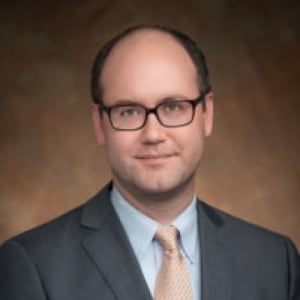
Vice President, Regulatory Affairs, NRG Energy
Travis Kavulla joined NRG after a decade of work as a policy wonk and government regulator. Previously, Travis headed up energy and environmental policy for the R Street Institute, a think tank, and before that was twice elected to public office as a utility commissioner in Montana. Travis has also held leadership roles in national policy circles, including as president of the National Association of Regulatory Utility Commissioners. During his work in public life, Travis has written dozens of articles and speeches on electricity policy and regulation.

Professor of Law and Executive Director, Law and Economics Center, Antonin Scalia Law School, George Mason University
Donald Kochan is Professor of Law and Executive Director of the Law & Economics Center (LEC). Professor Kochan is an elected member of the American Law Institute (ALI) and serves as an Adviser to ALI's Restatement of the Law Fourth, Property project. Professor Kochan is a Nonresident Scholar at the Center for the Constitution at Georgetown University Law Center, where he was a Visiting Scholar in residence during Fall 2018. Before joining the Antonin Scalia Law School faculty, he was the Parker S. Kennedy Professor in Law at Chapman University’s Dale E. Fowler School of Law from 2004 to 2020. From 2003 to 2004, Professor Kochan was an Olin Fellow at the University of Virginia School of Law. During 2002-2003, he was a Visiting Assistant Professor of Law at George Mason’s Scalia Law School.
Professor Kochan’s scholarship focuses on areas of property law, constitutional law, administrative law, local government law, natural resources and environmental law, and law & economics. He has published several books and more than 50 scholarly articles and essays in well-regarded law journals. His work has been cited in more than a dozen state and federal court opinions, in more than 75 briefs filed in state and federal courts including more than 25 filed in the U.S. Supreme Court, in dozens of books and treatises, and in more than 800 scholarly articles.
Professor Kochan received his JD from Cornell Law School, where he was a John M. Olin Scholar in Law and Economics and managing editor of the Cornell International Law Journal. During law school, he also served as editor and executive editor of the Harvard Journal of Law & Public Policy symposium issues in 1997 and 1998. He received his BA from Western Michigan University, magna cum laude, with majors in both political science and philosophy, where he studied as the John W. Gill Medallion Scholar and was honored as the Presidential Scholar (awarded to the top graduate in the political science department).
After graduating from law school, Professor Kochan was a law clerk to The Honorable Richard F. Suhrheinrich of the United States Court of Appeals for the Sixth Circuit. Following his clerkship, Professor Kochan was an associate with the firm of Crowell & Moring LLP in Washington, D.C., where he specialized in natural resources & environmental law as well as tort, products, and consumer civil litigation & legislative affairs.
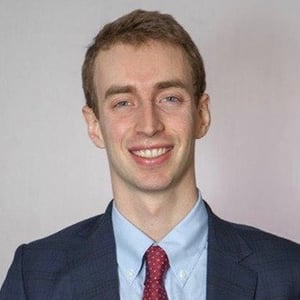
Partner, Boyden Gray PLLC
Jimmy Conde is partner at Boyden Gray PLLC, specializing in energy, environmental, and administrative law, with particular expertise in the Clean Air Act. He has protected clients against agency overreach in cutting-edge and complex legal proceedings, including challenges to EPA, DOE, DOT, and California rules seeking to compel electrification of motor vehicles, the FCC’s universal service fund, Department of Labor Wage & Hour Division rules, and HHS rules interfering with the practice of medicine and sound insurance practices. His written commentary has been published and referenced in the Wall Street Journal, the Washington Examiner, Concurrences (an antitrust publication), and Newsweek, among others.
Mr. Conde began his legal career as an associate with Boyden Gray PLLC. He clerked for Judge Douglas H. Ginsburg in the U.S. Court of Appeals for the D.C. Circuit and Judge David J. Porter in the U.S. Court of Appeals for the Third Circuit.
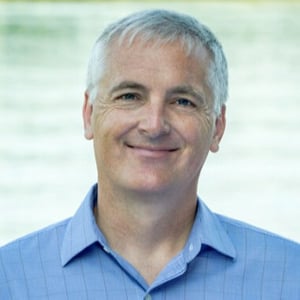
Partner, Donahue & Goldberg LLP
Sean H. Donahue's practice is focused on appellate litigation, including environmental cases in federal and state appellate courts, legal counseling, and helping clients communicate effectively to courts, agencies, and other audiences. He is a member of the bars of the District of Columbia and the State of California.
A 1992 graduate of University of Chicago Law School, Sean served as law clerk to Ruth Bader Ginsburg, then of the U.S. Court of Appeals for the D.C. Circuit, and to Justice John Paul Stevens. He entered private practice at Jenner & Block's Washington office, where he worked on civil matters including in telecommunications and First Amendment law. He then spent four years at the Department of Justice, Environmental and Natural Resources Division, Appellate Section, briefing and arguing cases in the United States Courts of Appeals, and state supreme courts concerning federal environmental and natural resources law, federal property law, takings, and Indian law.
Sean has argued approximately 50 cases in federal and state appellate courts. Since first establishing his own practice in 2002, he has represented environmental and public health organization parties in numerous major environmental and clean energy cases in the Supreme Court and the courts of appeals. His current practice includes representation of public interest organizations, governmental bodies, and private entities in environmental, energy, natural resources, and other cases. Sean has taught courses in environmental law, civil procedure, constitutional law and other subjects at Washington & Lee University School of Law, Iowa College of Law, and Georgetown University Law Center, and currently teaches climate change law and policy as a lecturer at Stanford Law School. He has given presentations at law schools including Berkeley, Columbia, Fordham, Harvard, Duke, Georgetown, Maryland, NYU, Northwestern, Stanford, University of Chicago, University of Florida, Vermont Law School, and Washington & Lee.
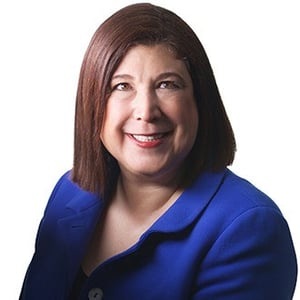
Partner, King & Spalding, LLP
Jacqueline Glassman specializes in motor vehicle and consumer safety, vehicle fuel economy and other transportation issues. She works with companies to resolve enforcement problems, find business opportunities in emerging initiatives and build healthy relations with regulators. Jacqueline frequently works with crisis management teams to find solutions that build consumer confidence and minimize corporate pain. As a partner in King & Spalding's Government Advocacy practice, Jacqueline helps lead the Automotive and Transportation Initiative.
Jacqueline's career has spanned corporate, government and private practice.
While in-house at a major automaker, Jacqueline developed the instinct for finding solutions to legal problems while advancing business objectives. As Chief Counsel at the National Highway Traffic Safety Administration, Jacqueline spearheaded the reform of the vehicle fuel efficiency program. She also oversaw scores of rule-making and enforcement actions, including the initial implementation of the TREAD Act. As NHTSA's Acting Administrator, Jacqueline worked with the White House and congressional staff to develop policy and legislation impacting the auto industry.
Jacqueline has worked with companies to create credit opportunities for frontier technologies in fuel efficiency and safety. She is actively involved with numerous companies developing and implementing automated technology for motor vehicles. Jacqueline has negotiated Consent Orders and helped companies pilot their implementation. Jacqueline frequently works hand-in-glove with litigators, engineers, crisis management firms, congressional relations staff and corporate executives. Jacqueline counsels clients on compliance, government relations, litigation strategy and building robust corporate safety programs.

Distinguished McKnight University Professor, University of Minnesota Law School
Professor Alexandra B. Klass teaches and writes in the areas of energy law, environmental law, natural resources law, tort law, and property law. Her recent scholarly work, published in many of the nation’s leading law journals, addresses regulatory challenges to integrating more renewable energy into the nation’s electric transmission grid, oil and gas transportation infrastructure, and eminent domain issues surrounding interstate electric transmission lines and oil and gas pipelines. She is a co-author of The Practice and Policy of Environmental Law (Foundation Press, 3d ed. 2014) and a co-author of Energy Law and Policy (West Academic Publishing 2015). Professor Klass was named the Stanley V. Kinyon Teacher of the Year for 2009-2010, and she served as Associate Dean for Academic Affairs from 2010-2012. She was a Visiting Professor of Law at Harvard Law School in 2015. She is a Distinguished McKnight University Professor and in prior years was the Julius E. Davis Professor of Law and the Solly Robins Distinguished Research Fellow.
Prior to her teaching career, Professor Klass was a partner at Dorsey & Whitney LLP in Minneapolis, where she specialized in environmental law, natural resources, and land use cases. During her years in private practice from 1993-2004, she handled cases in federal and state trial and appellate courts involving contaminated property, wetlands, environmental review, mining, environmental rights, zoning, eminent domain, and environmental torts. She continues to represent clients pro bono in cases involving environmental, natural resources, and energy law matters. She clerked for the Honorable Barbara B. Crabb, Chief Judge of the U.S. District Court for the Western District of Wisconsin from 1992-1993.
Professor Klass has served in leadership positions in state and national bar organizations. She is currently on the Board of Directors of the Minnesota Center for Environmental Advocacy. She was a member of the Governing Council of the Environmental and Natural Resources Section of the Minnesota State Bar Association from 2005-2013, was a member of the Board of Directors of the Minnesota Chapter of the Federal Bar Association from 2001-2011, and served as co-chair of the Environmental Law Section of the Hennepin County Bar Association from 2000-2006. She is a Member Scholar at the Center for Progressive Reform, and a Resident Fellow at the University of Minnesota’s Institute on the Environment.

Professor of Law, Antonin Scalia Law School, George Mason University
ILYA SOMIN is Professor of Law at George Mason University and the B. Kenneth Simon Chair in Constitutional Studies at the Cato Institute. His research focuses on constitutional law, property law, democratic theory, federalism, and migration rights. He is the author of Free to Move: Foot Voting, Migration, and Political Freedom (Oxford University Press, revised and expanded edition, 2022), Democracy and Political Ignorance: Why Smaller Government is Smarter (Stanford University Press, revised and expanded second edition, 2016), and The Grasping Hand: Kelo v. City of New London and the Limits of Eminent Domain (University of Chicago Press, 2015, rev. paperback ed., 2016), coauthor of A Conspiracy Against Obamacare: The Volokh Conspiracy and the Health Care Case (Palgrave Macmillan, 2013), and co-editor of Eminent Domain: A Comparative Perspective (Cambridge University Press, 2017). Democracy and Political Ignorance has been translated into Italian and Japanese.
Somin’s work has appeared in numerous scholarly journals, including the Yale Law Journal, Stanford Law Review, Northwestern University Law Review, Georgetown Law Journal, Critical Review, and others. Somin has also published articles in a variety of popular press outlets, including the New York Times, Washington Post, Wall Street Journal, Los Angeles Times, CNN, NBC, The Atlantic, USA Today, Boston Globe, US News and World Report, South China Morning Post, National Law Journal and Reason. He has been quoted or interviewed by the New York Times, Washington Post, Wall Street Journal, Time, Newsweek, The Economist, the Christian Science Monitor, the Financial Times, The Guardian, the Associated Press, CBS, MSNBC, NPR, BBC, Reuters, the Canadian Broadcasting Corporation, the Australian Broadcasting Corporation, Radio Free Europe/Radio Liberty, Al Jazeera, and the Voice of America, among other media.
Somin’s writings have been cited in decisions by the United States Supreme Court, multiple state supreme courts and lower federal courts, and the Supreme Court of Israel. He is co-counsel for the plaintiffs in VOS Selections, Inc. v. Trump, a case challenging the constitutionality of President Trump’s “Liberation Day” tariffs. Somin has testified on the use of drones for targeted killing in the War on Terror before the US Senate Judiciary Subcommittee on the Constitution, Civil Rights, and Human Rights. In 2009, he testified on property rights issues at the United States Senate Judiciary Committee confirmation hearings for Supreme Court Justice Sonia Sotomayor. Somin writes regularly for the popular Volokh Conspiracy law and politics blog, now affiliated with Reason magazine (previously affiliated with the Washington Post from 2014 to 2017). From 2006 to 2013, he served as Co-Editor of the Supreme Court Economic Review, one of the country’s top-rated law and economics journals.
Somin has served as a visiting professor at the University of Pennsylvania Law School. He has also been a visiting professor or scholar at the Georgetown University Law Center, the University of Hamburg, Germany, the University of Torcuato Di Tella in Buenos Aires, Argentina, Uriel Reichman University in Israel, and Zhengzhou University in China. He is a University Affiliate of the Schar School of Policy and Government at George Mason University, and an affiliated faculty member of the George Mason University Institute for Immigration Research. Before joining the faculty at George Mason, Somin was the John M. Olin Fellow in Law at Northwestern University Law School in 2002-2003. In 2001-2002, he clerked for the Hon. Judge Jerry E. Smith of the U.S. Court of Appeals for the Fifth Circuit. Professor Somin earned his B.A., Summa Cum Laude, at Amherst College, M.A. in Political Science from Harvard University, and J.D. from Yale Law School.
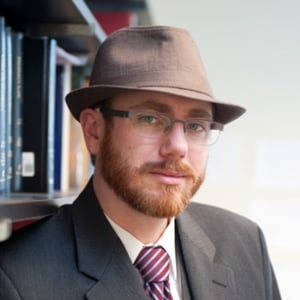
Professor of Law and Associate Dean, Boston College Law School; Nonresident Senior Fellow, American Enterprise Institute, Boston College Law School
Professor Lyons is a Professor and Associate Dean at Boston College Law School. He specializes in telecommunications and tech policy, energy, and administrative law. Before joining the faculty, he practiced at the firm of Munger, Tolles and Olson in Los Angeles. He also clerked for the Judge Cynthia Holcomb Hall of the Ninth Circuit Court of Appeals.
Professor Lyons is also a Nonresident Senior Fellow at the American Enterprise Institute, where he has written over 250 blog posts on tech policy issues, including net neutrality, telecommunications regulation, First Amendment issues with tech regulation, and generative AI.

Environmental Law & Property Rights: Environmental Law in a Post-Chevron World— How Should Congress, Agencies, and States Respond?
Todd Aagaard, Thomas M. Hardiman, Lindsay See, Andrew Wheeler
This year, in a pair of decisions known as Loper Bright, the Supreme Court overruled...
Analyzing the EPA’s Proposed Renewable Fuel Standard Rule
Daren Bakst, Jonathan Brightbill, Brendan Williams
On December 30, 2022, the Environmental Protection Agency (EPA) published an updated rule on the...
Environmental Law in the Supreme Court: Highlights from the October 2020 Term
Garrett Kral
The Supreme Court decided nine important environmental law cases during its October 2020 term. This...
Courthouse Steps Oral Argument Teleforum: HollyFrontier Cheyenne Refining v. Renewable Fuels Association
Justin Schwab
On April 27, 2021, the Supreme Court will hear oral argument in the case of HollyFrontier...
Retooling Energy Regulations: Who Decides?
Anthony T. Clark, Adam F. Griffin, Travis Kavulla
On July 16, 2020, the Federal Energy Regulatory Commission (FERC) revised its regulations governing qualifying...
Municipality Lawsuit on Climate Change and Public Nuisance: Litigation Update
Donald J. Kochan
Should climate change responsibility be assessed in the courts or by the elected policymaking branches? ...
EPA’s CAFE: What's on the Menu for Fuel Economy and Greenhouse Gas Standards?
James Conde, Sean H. Donahue, Jacqueline Glassman
EPA Administrator Scott Pruitt and Secretary of Transportation Elaine Chao are proposing to roll back...
Pipeline Takings: When Can Your Property Be Taken? - Podcast
Alexandra Klass, Ilya Somin
The use of eminent domain to condemn property for pipelines has become an increasingly controversial...
Topics
Can a federal agency regulate fracking on federal lands?
This week, the District Court of Wyoming held that the answer is “no.” In doing...
Oneok v. Learjet - Post-Argument SCOTUScast
Daniel Lyons
On January 12, 2015, the Supreme Court heard oral argument in Oneok, Inc. v....