Note from the Editor: The Federalist Society takes no positions on particular legal and public policy matters. Any expressions of opinion are those of the author. We welcome responses to the views presented here. To join the debate, please email us at info@fedsoc.org.
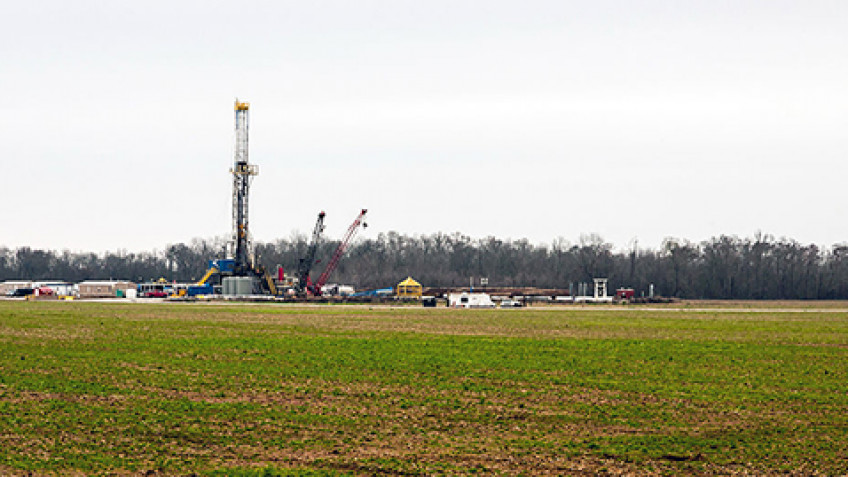
This week, the District Court of Wyoming held that the answer is “no.” In doing so, the court acknowledged that its role was not to determine “whether hydraulic fracturing [i.e. fracking] is good or bad for the environment” but whether Congress has authorized the agency to regulate.
Historically, federal agencies contended that they lacked any statutory authority to regulate fracking. This changed in 1997, when environmentalists sued EPA, citing fears that fracking could contaminate underground drinking water sources. The Eleventh Circuit agreed with the environmentalists, ruling that EPA had authority to regulate fracking to protect these sources under the Safe Drinking Water Act. Congress responded by enacting the Energy Policy Act of 2005, which expressly exempted fracking from EPA regulation under the Safe Drinking Water Act.
The current concerns a recently adopted regulation by BLM to regulate hydraulic fracturing on lands in which the federal government owns an interest, in order to protect underground sources of drinking water. Several western states, industry groups, and an Indian tribe challenged the regulation, contending that it was unnecessary and duplicative of existing state regulations and that, in light of Congress’ adoption of the Energy Policy Act of 2005, BLM has no statutory authority to regulate fracking.
BLM responded that it has near limitless authority to regulate activities occurring on lands in which the federal government owns an interest, under a number of general federal land use statutes. Relying on Chevron deference, BLM argued that it had wide latitude to interpret these broad delegations and that the Energy Policy Act’s restrictions on what a different federal agency could do under a different statute are irrelevant.
The court rejected BLM’s argument. Citing FDA v. Brown & Williamson Tobacco, Corp., the court concluded that “it makes no sense to interpret the more general authority granted by [the land use statutes] as providing the BLM authority to regulate fracking when Congress has directly spoken to the ‘topic at hand’” in the Energy Policy Act. “If agency regulation is prohibited by a statute specifically directed at a particular activity, it cannot be reasonably concluded that Congress intended regulation of the same activity would be authorized under a more general statute administered by a different agency.”
It’s a near certainty that this decision will be appealed to the Tenth Circuit, so this won’t be the last word on the issue. The case raises a host of key administrative law questions and could give some insight into whether the Supreme Court’s recent skepticism of Chevron deference is seeping its way into the lower courts.