
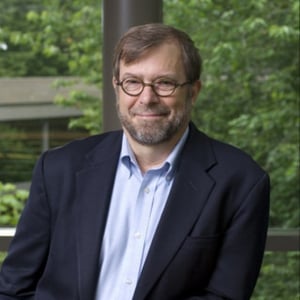
Lewis & Clark Distinguished Professor of Law Emeritus, Lewis & Clark Law School
Professor Funk is the author of American Constitutional Structure and a co-author of one of the leading administrative law casebooks, Administrative Procedure and Practice: Problems and Cases, as well as Administrative Law: Examples & Explanations and the Federal Administrative Procedure Sourcebook. Together with Professor Craig Johnston, Professor Funk is also a co-author of Legal Protection of the Environment, an environmental law casebook. In 2004-05, Funk was a Senior Fulbright Scholar at the University of Heidelberg, where he taught both American constitutional law and environmental law. Funk has published numerous articles on administrative and environmental issues, including in such publications as the Duke Law Journal, the Harvard Journal on Legislation, the Yale Journal on Regulation, the Administrative Law Review, and the U.C.L.A Journal of Environmental Law and Policy. He has chaired both the Administrative Law and Natural Resources Law Sections of the American Association of Law Schools. Funk is also active in the American Bar Association, where he recently served on the ABA’s President’s Task Force on Preemption of State Tort Law and where he is a Fellow of the Administrative Law and Regulatory Practice Section, which he formerly chaired and on whose Council he served. Professor Funk is also a Center for Progressive Reform Scholar, a member of the American Law Institute, and a Fellow of the American Bar Foundation. He has been admitted to practice in New York, the District of Columbia, and before the U.S. Supreme Court.
Before coming to the law school to teach, Professor Funk was an assistant general counsel at the U.S. Department of Energy and earned a special citation for exceptional performance from the Secretary of Energy. Prior to that Funk served as the principal staff member of the Legislation Subcommittee of the U.S. House of Representatives Permanent Select Committee on Intelligence, where he was instrumental in the drafting of the Foreign Intelligence Surveillance Act. Before joining the House Committee, Funk was a staff attorney in the Office of Legal Counsel of the U.S. Department of Justice, where he received a special commendation for outstanding service. Immediately after law school he clerked for Judge James Oakes of the U.S. Court of Appeals, Second Circuit.
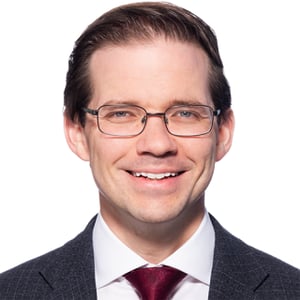
Of Counsel, Covington & Burling LLP
The Honorable Paul J. Ray is currently Of Counsel at Covington & Burling LLP where he advises clients on regulatory opportunities and challenges and helps them formulate and execute advocacy strategies for their regulatory policy priorities before the executive branch and Congress.
During the first Trump Administration, Paul held various senior positions at the Office of Information and Regulatory Affairs (OIRA) within the White House’s Office of Management and Budget, including as acting, and then Senate-confirmed, head of the office. As OIRA Administrator (the "regulations czar"), Paul supervised the review of hundreds of regulations from across the government, drafted numerous executive orders governing the regulatory process, and led the Administration’s regulatory reform effort. As a result of this experience, Paul is well-positioned to help clients understand and achieve regulatory policy priorities in the context of the government’s regulatory agenda and ongoing reform efforts.
Most recently, Paul was also the Director of the Roe Institute for Economic Policy Studies at The Heritage Foundation. In that role, he supervised the formulation of the Foundation’s economic and regulatory policy recommendations and provided technical assistance to congressional committees and staff regarding legislative changes to the regulatory process. In addition to his role at The Heritage Foundation, Paul also served as a Senior Advisor at a strategic advisory firm. Before his time in government, Paul practiced law at a law firm in Washington, specializing in administrative law matters.
Prior to his role at the White House, Paul was Counselor to the Secretary at the U.S. Department of Labor. There he led departmental efforts in high-profile rulemakings and helped formulate the Department’s legal positions and strategy.
Paul served as a law clerk to Supreme Court Justice Samuel Alito and as a law clerk to the Honorable Debra Livingston of the U.S. Court of Appeals for the Second Circuit.
Paul is a thought leader in the conservative legal movement and is a frequent commentator and speaker on regulatory policy and reform matters, including at law schools, professional gatherings, and other venues. He is the Chairman of Innovations in Peacebuilding International and the Regulatory Process Working Group of the Federalist Society’s Regulatory Transparency Project and a public member of the Administrative Conference of the United States. Paul is also an adjunct lecturer at the Hillsdale College School of Government.
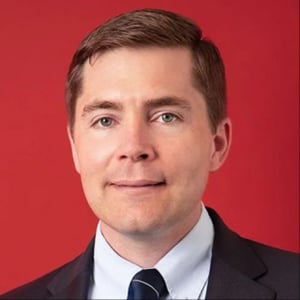
Senior Attorney, Pacific Legal Foundation
Damien Schiff is a senior attorney at Pacific Legal Foundation. He leads its environmental practice group, a unique initiative that draws broadly from PLF’s expertise and success in property rights and separation of powers litigation. Over the years, Damien has represented hundreds of landowners and property rights advocates to defend their liberties against heavy-handed and unwarranted environmental and land-use regulation. His litigation experience includes Sackett v. U.S. Environmental Protection Agency, a groundbreaking decision in which the U.S. Supreme Court upheld the right of landowners to challenge Clean Water Act compliance orders issued by EPA, and Contoski v. Norton, PLF’s successful effort to force the federal government to make good on its promise to delist the bald eagle from the Endangered Species Act.
Besides litigation, Damien has written academic articles on a variety of subjects, including the Endangered Species Act, the Clean Water Act, greenhouse gas torts, the duty to rescue, and international water law. He has appeared on a variety of television and radio programs and has been quoted in The New York Times, The Wall Street Journal, Harper’s Magazine, and The Economist, among other publications.
He obtained his law degree magna cum laude from the University of San Diego School of Law, and his undergraduate degree magna cum laude from Georgetown University. While at USD, he was a research assistant for Professor Bernard Siegan, a leading constitutional theorist and advocate for property rights and economic liberty. Immediately prior to joining PLF, Damien clerked for Judge (and former PLF attorney) Victor Wolski of the United States Court of Federal Claims. Damien credits the mentoring and examples of Professor Siegan and Judge Wolski for his decision to pursue a career in liberty-based public interest litigation.
Damien lives in Sacramento with his wife, two young sons, four chickens, and a cat named Princess. In his off hours he enjoys stamp collecting, Gregorian chant, and martinis—preferably at the same time.
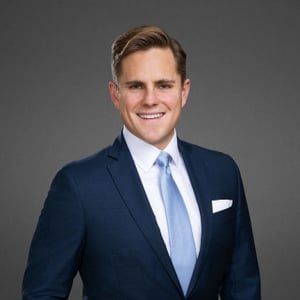
Deputy General Counsel, U.S. Environmental Protection Agency
Director, ENRD, Pacific Legal Foundation
Mark Miller is the Director of the Environment and Natural Resources practice group at Pacific Legal Foundation, where he leads the firm’s efforts to protect individuals and small businesses from government overreach in matters involving land and water, and its efforts to encourage America to better harness its abundant natural resources, including energy resources, minerals, timber, and grazing lands. Mark first joined PLF in 2014.
A seasoned appellate specialist, Mark has litigated several high-profile cases for PLF, including Weyerhaeuser v. United States Fish & Wildlife Service, U.S. Army Corps of Engineers v. Hawkes Co., and United States v. Robertson, all of them unanimous Supreme Court of the United States wins for property owners fighting federal overreach via the Clean Water Act and Endangered Species Act.
In 2020, Mark left PLF to serve as General Counsel and later Chief of Staff for then-South-Dakota Governor Kristi Noem. As Noem’s longest-serving chief of staff, he worked behind the scenes to advance limited government, cut red tape, defend individual rights, and promote free-market principles. In 2023, he returned home to PLF.
A frequent commentator and public speaker, Mark regularly appears in print, on radio and TV, and before legislative committees across the country. His commentary and work has been featured in The Wall Street Journal, CBS News, The View, CBN, and Fox News. He is a regular guest each Thursday morning on SiriusXM’s POTUS channel, offering insight on Supreme Court cases and trends.
Mark earned both his undergraduate and law degrees with honors from the University of Florida. He clerked for U.S. District Judge Henry Lee Adams, Jr., and Florida state appellate Judge Emerson R. Thompson, Jr.—two mentors who deepened his commitment to the Bill of Rights, especially the Fourth, Fifth, and Fourteenth Amendments.
Mark serves on the Board of Trustees for the University of Florida College of Law, and he is a member of the boards of directors for both Americans United for Life, the nation’s oldest pro-life non-profit law firm, and Farm of the Child USA, a nonprofit that supports an orphanage and school for children in need in Honduras called La Finca del Niño.
Partner, Mayer Brown LLP
An experienced appellate lawyer, Tim Bishop has argued five cases and briefed more than 60 before the US Supreme Court and has successfully handled dozens of appeals in federal and state appellate courts. He also represents clients in dispositive dismissal, summary judgment, and class certification motions in federal and state trial courts. Tim is co-author of the leading treatise, Supreme Court Practice(9th ed., 2007), a contributor to Federal Appellate Practice (2008), and a prolific author and speaker in the areas of appellate practice, environmental law, and securities law.
Tim has substantial experience in environmental and land use litigation (especially under the Clean Water Act, Endangered Species Act, Clean Air Act, federal and state Takings Clauses, and nuisance law), securities and antitrust litigation, class certification, federal and state tax controversies, labor and employment law, and constitutional appeals and litigation. In the securities area, he has submitted successful party or amicus briefs in most of the Supreme Court’s recent cases, including Dabit, Dura, Tellabs, Billing, Stoneridge, andAmchem, as well as in leading lower-court cases such as In re IPO Securities Litigation and Newton. He has broad experience in defeating class certification in complex litigation.
In the environmental law area Tim has been ranked as a top practitioner by Chambers, Best Lawyers in America, Euromoney's Best of the Best USA, and other publications, which have called him "the go-to guy if you have a serious environmental issue on appeal - he is excellent at spotting issues and is a great appellate advocate" (Chambers 2009). Tim is ranked Band 1 in Chambers USA 2012 in Environmental Law ("sources unanimously consider Bishop to be an exceptionally strong appellate lawyer") and Legal 500 2012 comments, "Bishop is 'superb and provides exemplary service.'" Tim successfully argued Solid Waste Agency of Northern Cook County in the Supreme Court, in which the Court struck down the Corps of Engineer’s "migratory bird rule." One leading environmental law professor and practitioner has written that Tim is "industry’s leading Supreme Court lawyer in environmental cases."
Since 1995, Tim has been a partner in Mayer Brown LLP’s 60-strong Supreme Court and Appellate Litigation Practice (which "stands head and shoulders above its competitors," according to Chambers USA 2008). Previously, he served as Law Clerk to US Supreme Court Justice William J. Brennan, Jr., and to Judge James L. Oakes, US Court of Appeals for the Second Circuit, and was Staff Counsel and Skadden Fellow with the American Civil Liberties Union. Recently, Tim was named one of Benchmark’s 2013 Appellate Illinois Litigation Stars.Chambers USA (2007) notes Tim’s “high visibility” and “incredible reputation for appellate law,” and he has been described in theLawdragon 500 as "a high court superstar" and a "top advocate" (2006).
Professor of Law, University of California Hastings College of the Law in San Francisco
Professor Dave Owen teaches courses in environmental, natural resources, water, land use, and administrative law. His interest in the subject area began when he was about six years old and his parents denied him access to all television except for PBS wildlife specials. He then became inordinately interested in poachers. He went on to study geology in college, primarily because the labs were outside, and became an environmental consultant. During one hot summer day of hazardous waste site sampling, while sweating miserably in a Tyvek suit and inhaling aniline fumes, he decided graduate school sounded like a nice idea. So he became an environmental lawyer. He went to Berkeley Law, where he served as editor-in-chief of Ecology Law Quarterly and was selected for the Order of the Coif.
Professor Owen went on to clerk at federal district court and then work for a small law firm in San Francisco, where his practice focused primarily on water law. He worked on Colorado River allocation, Sacramento-San Joaquin Delta litigation, and federal state disputes over the proposed Yucca Mountain nuclear waste repository, among other matters. In 2007, he began teaching at the University of Maine School of Law. He joined the Hastings faculty in 2015.
His research focuses primarily on water resource management, and some recent projects have addressed taxation of water consumption, the roles of federal regional offices, stream protection under the Clean Water Act, policies to expedite dam removals and hydropower upgrades, and the intersection of groundwater use regulation and the takings clause. Four of his articles have been recognized by his peers as among the top environmental law articles of their respective years; another article has won the Morrison Prize as the top sustainability law article of its year, and he has presented three articles at the Harvard Stanford-Yale Junior Faculty Forum. He also contributes frequently to the Environmental Law Prof Blog.
Former Comptroller of Public Accounts, State of Texas
The Hon. Susan Combs served as the Comptroller of Public Accounts for the State of Texas from 2007 to 2015.
Associate Professor, University of Denver Sturm College of Law
Professor Justin Pidot graduated with high honors from Wesleyan University before attending Stanford Law School, where he graduated with distinction and was editor in chief of the Stanford Environmental Law Journal. Professor Pidot clerked for Judge Judith W. Rogers of the U.S. Court of Appeals for the District of Columbia Circuit. Prior to joining the University of Denver faculty, he was an appellate litigator at the Environment and Natural Resources Division of the U.S. Department of Justice, where he presented argument in more than a dozen federal appellate cases and acted as the staff attorney on two cases before the United States Supreme Court. Professor Pidot also completed a fellowship at the Georgetown Environmental Law & Policy Institute.
Professor Pidot’s scholarship and teaching focus on environmental law, natural resources law, and federal courts.
Senior Fellow, Competitive Enterprise Institute
William Yeatman is CEI's senior fellow specializing in environmental policy and energy markets.
His commentary has been widely featured in newspapers from coast to coast and also on nationwide television and radio.Yeatman has twice testified before congress and numerous times before state legislatures.
Prior to joining CEI, he was a Peace Corps volunteer in the Kyrgyz Republic, where he taught entrepreneurship and small business management to rural women. Before that, he ran a homeless shelter in Denver, Colorado.
He holds a Masters in International Administration from the Denver University Graduate School of International Studies and a Bachelor's in Environmental Sciences from the University of Virginia

Partner, Baker Hostetler LLP
David Rivkin is a member of the firm's litigation, international and environmental teams and is co-leader of the firm's national appellate practice. He has extensive experience in constitutional, administrative and international law litigation and has been involved in numerous high-profile cases. With his prior experience in the government sector, David draws on a wealth of knowledge when providing compliance advice to companies and handling enforcement proceedings before government agencies on issues arising out of multilateral and unilateral sanctions, the Foreign Corrupt Practices Act (FCPA), anti-boycott issues, bankruptcy and financial fraud matters, and environmental and energy issues.
David has developed and implemented legislative, regulatory and litigation initiatives for two presidential administrations. Over the years, he has published hundreds of articles, op-eds, book reviews and book chapters on a variety of international, legal, constitutional, defense, arms control, foreign policy, environmental and energy issues for various newspapers and magazines, including The Wall Street Journal, The Washington Post, The New York Times, USA Today and The Los Angeles Times, and has been a frequent commentator and guest on TV and radio shows including ABC, CBS, NBC, CNN, Fox News, NPR and PBS.
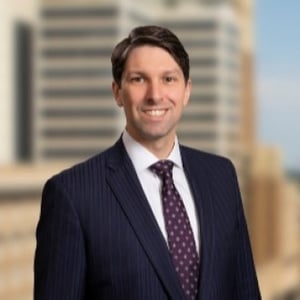
Shareholder and Director, GableGotwals
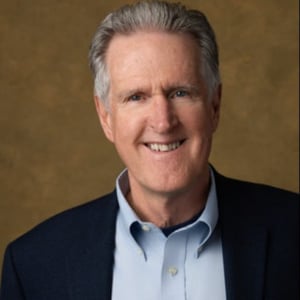
Senior Legal Counsel, Pacific Legal Foundation
Before becoming an attorney, James had been a productive member of society working as an exploration geologist in the late 1970s throughout the southwestern United States. However, after several years of dealing with irrational government bureaucrats and environmental policies untethered from reality, James decided that what the world needs is more lawyers — if they are willing to fight for rationality in regulatory regimes, property rights, and liberty.
James attended the University of Arizona College of Law in Tucson, where he served as an editor for the Law Review and received a J.D. degree in 1983. He had previously received a Masters degree in geological sciences from Brown University and an undergraduate degree from Hamilton College in New York. James received the Professional Achievement Award from the University of Arizona Alumni Association in 2018.
James has worked with Pacific Legal Foundation since 1983, litigating cases from Alaska to Florida. He is a member of the Federalist Society’s Environmental Law and Property Rights Practice Group’s Executive Committee, a member of the American College of Real Estate Lawyers, and an honorary member of Owners Counsel of America, an organization comprised of eminent domain attorneys who represent property owners. The Owners Counsel awarded James its Crystal Eagle award in 2013. In 2022, James was awarded the Brigham-Kanner Property Rights Prize at the William & Mary College of Law. The prize is awarded annually to an individual whose work has advanced the cause of property rights and has contributed to the overall awareness of the important role property rights occupy in the broader scheme of individual liberty.
In 2001, James successfully argued a major property rights case, Palazzolo v. Rhode Island, before the United States Supreme Court, a case which affirmed that rights in regulated property do not disappear when land is bought and sold. He has written extensively on all aspects of property rights and environmental law and frequently speaks on these subjects throughout the nation.
When James is not suing the government he enjoys skiing faster than he should, bicycling, hiking, swimming, and spending quality time with his wife, family, and grandchild.
Mr. Burling’s book Nowhere to Live: The Hidden Story of America’s Housing Crisis is available now on Amazon.
James is a member of the bar only in the states of Alaska and California.
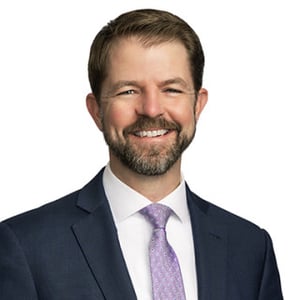
Partner, Baker Botts LLP
Drawing from two decades of experience in senior government, in-house corporate, and private law firm roles, Jeff Wood helps clients with federal enforcement, compliance, litigation, permitting, and policy challenges primarily in the energy and environmental fields.
Prior to joining Baker Botts, Mr. Wood served for almost two years as the Acting Assistant Attorney General (AAG) for the Justice Department's Environment and Natural Resources Division (ENRD). In that capacity, Mr. Wood led ENRD and its more than 600 attorneys and staff representing EPA, Departments of the Interior, Energy, and Defense, and other agencies in civil and criminal enforcement and defensive environmental, energy, and natural resources litigation.
As the top official in ENRD, Mr. Wood managed a complex organization with an annual budget exceeding $200 million and a docket of more than 6,000 cases and matters. E&E News noted that “Wood maintains a strong relationship with ENRD's career staff” (Greenwire, Oct. 31, 2018). He previously served on the staff of the United States Senate Committee on Environment and Public Works.
At the Justice Department, Mr. Wood oversaw the Division's civil and criminal enforcement programs and was responsible for developing legal strategies and approving briefs in key cases including filings before the Supreme Court and Courts of Appeals in coordination with the Office of Solicitor General. In this role, Mr. Wood held the highest level security clearance and worked closely with top leadership at DOJ, EPA, the Interior Department, USDA, the Energy Department, Transportation Department, FERC, NRC and across the Executive Branch, including the White House.
With many years of both private law firm and in-house legal experience, Mr. Wood has handled complex environmental enforcement, regulatory, policy, and litigation matters for electric utilities, energy companies, maritime companies, mining companies, real estate developers, financial institutions, industrial companies and manufacturers, business coalitions, associations, small businesses, and individual property owners. Drawing from his experiences in-house, Mr. Wood brings a common-sense, cost-effective, client-focused approach to his work every day.
With a strong national reputation, Mr. Wood is a frequent speaker on environmental law and policy matters, with recent speeches and presentations at the Environmental Law Institute, Harvard Law School, Vanderbilt Law School, American University Law School, American Bar Association Environmental Law Conferences, the Texas Environmental SuperConference, Air Force Judge Advocate General School's Advanced Environmental Law Course, Baker Institute's Center for Energy Studies (Rice University), and many other venues. He frequently appears in national news to share insights on significant environmental law and policy issues, including recent quotes in the New York Times, Washington Post, Wall Street Journal, Bloomberg, Law360, and E&E News, among others.

Topics
Executive Action Review: The First 100 Days of Trump’s Environmental Policy
We are now more than 100 days into the second Donald Trump administration, and the...
Regulation and Red Tape: Sackett v. EPA: A Tale of Wetland Regulations
William Funk, Paul J. Ray, Damien Michael Schiff
At what point can Americans go to court to defend themselves against agency enforcement action?...
Environmental Law in the Supreme Court: Highlights from the October 2020 Term
Garrett Kral
The Supreme Court decided nine important environmental law cases during its October 2020 term. This...
A Shy Frog, the Administrative State, and Judicial Review of Agency Decision-Making: A Preview of Weyerhaeuser v. United States Fish & Wildlife Service
Mark Miller
Note from the Editor: This article previews one of the first cases of the Supreme...
Weyerhaeuser v. U.S. Fish and Wildlife Service
Timothy Bishop, Dave Owen
Does the Endangered Species Act authorize FWS to designate as “critical habitat” for an endangered...
“Sue-and-Settle” and the Endangered Species Act - Podcast
Susan Combs, Justin Pidot, William Yeatman
Endangered Species Act listing settlements between the Environmental Protection Agency and private parties have not...
Do Sue and Settle Practices Undermine Congressional Intent for Cooperative Federalism on Environmental Matters?
David B. Rivkin, Adam Carl Doverspike
Note from the Editor: This article is about whether sue and settle practices undermine congressional...
Rebuilding the Ark: New Perspectives on Endangered Species Act Reform, Edited by Jonathan H. Adler
James S. Burling
In 2005, Congressman Richard Pombo engineered the passage of the most sweeping reform of the...
Commerce Clause Challenges to the Listing of Intrastate, Noncommercial Species Under the Endangered Species Act
Robert P. Fowler, Jeffrey H. Wood, Thomas L. Casey
In the early 1970s, Congress considered a series of bills aimed at instituting a federal...