
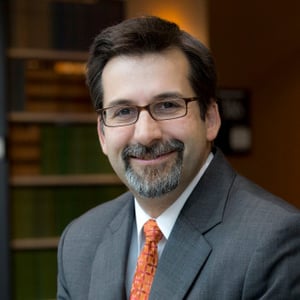
Dean and Anthony B. Buzbee Endowed Dean's Chair, Texas A&M University School of Law
A graduate of Princeton University's Woodrow Wilson School of Public and International Affairs and Yale Law School, Robert B. Ahdieh served as law clerk to Judge James R. Browning of the US Court of Appeals for the Ninth Circuit before his selection for the Honor's Program in the Civil Division of the US Department of Justice.
While still in law school, Ahdieh published what remains one of the seminal treatments of the constitutional transformation of post-Soviet Russia: "Russia's Constitutional Revolution—Legal Consciousness and the Transition to Democracy." Ahdieh's work has also appeared in the Boston University Law Review, Michigan Law Review, theMinnesota Law Review, the NYU Law Review, and the Southern California Law Review, among other journals.
Ahdieh’s scholarly interests revolve around questions of regulatory and institutional design, especially in the financial arena. His particular focus has been on various non-traditional regulatory structures and modes of regulation, including those grounded in dynamics of coordination. Though relatively less studied in the legal literature, the framework of coordination holds significant promise both in helping us theorize existing regulatory patterns and in defining new regulatory constructs for the future.
Ahdieh has explored regulatory and institutional design in a variety of transactional areas, including corporate and securities law, international trade and finance, and contracts. Within these, his work has emphasized two particular patterns of coordination. The first—intersystemic governance—draws on domestic regimes of federalism and transnational regimes of global governance and subsidiarity to highlight the potential benefits of complex systems of overlapping jurisdiction. The second draws on the dynamics at work in so-called “coordination games” to highlight distinct occasions for potential regulatory intervention, as well as various non-traditional regulatory forms, in our modern economic, social, and political order.
During the 2007–2008 academic year, Ahdieh was a visiting professor and the Microsoft/LAPA Fellow at Princeton University's Program in Law and Public Affairs. In Spring 2014, he served as Douglas McK. Brown Visiting Chair in Law, University of British Columbia. He has also visited at Columbia and Georgetown law schools, as well as numerous law schools overseas.
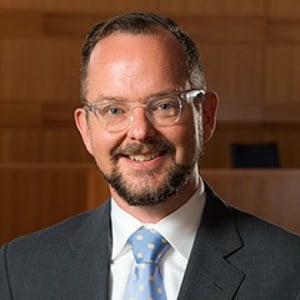
T.J. Maloney Chair in Business Law, Fordham University School of Law
Professor Griffith is an expert in corporate and financial regulatory law. He writes and speaks on corporate law, political economy, and the constitutional rights of corporations and other business associations. In addition to his academic writing, he has authored or contributed to many amicus briefs, including: Iowa v SEC, NCPPR v SEC, AFBR v SEC, and In re Tesla.
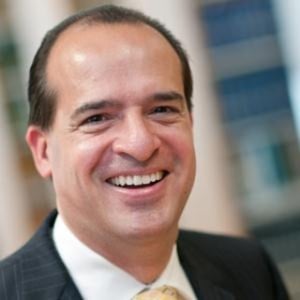
Professor of Law and Rouse Chairholder, Antonin Scalia Law School, George Mason University
Professor Miller holds an Allison and Dorothy Rouse Chair in Law at the Antonin Scalia Law School. An elected member of the American Law Institute and a research member of the European Corporate Governance Institute, Professor Miller is also a Fellow and the Co-Director of the Program on Organizations, Business and Markets at the Classical Liberal Institute at the New York University Law School, an Adjunct Fellow at the Manhattan Institute, and an Affiliated Scholar at the James Wilson Institute on Natural Rights and the American Founding. Prior to joining George Mason University in 2025, Professor Miller was the F. Arnold Daum Chair in Corporate Finance and Law and a Professor of Law at the University of Iowa College of Law, where he had also served as the Associate Dean for Faculty Development.
Professor Miller’s research concerns corporate and securities law, the economic analysis of law, and the philosophy of law. He is particularly interested in applying economic concepts and methods to understand provisions in contracts between sophisticated commercial parties. He has written on material adverse effect clauses under Delaware law, the fiduciary duties of corporate directors, director oversight liability, the history and development of Delaware corporate law, and much more. His articles and working papers are available on his SSRN page.
Professor Miller has been cited by federal and state courts in the United States, including the Delaware Supreme Court and the Delaware Court of Chancery, as well as by the Commercial Court of the United Kingdom and the Ontario Superior Court of Justice (Commercial List) in Canada. Additionally, he is a member of the Committee on Mergers, Acquisitions & Corporate Control Contests and a former chair of the Corporation Law Committee of the New York City Bar Association.
Earlier in his career, Professor Miller was a Professor of Law at the Villanova University School of Law and the Associate Director of the Matthew J. Ryan Center for the Study of Free Institutions and the Public Good at Villanova University. He has been a Visiting Professor of Law at the University of Pennsylvania Law School, a Visiting Assistant Professor of Law at the Cardozo Law School, and an Olin Fellow in Law and Economics at the Columbia Law School.
Before entering academia, Professor Miller was an associate with Wachtell, Lipton, Rosen & Katz. He earned his J.D. from the Yale Law School where he was a Senior Editor of the Yale Law Journal and an Olin Fellow in Law, Economics and Public Policy. He earned his M.A. and M.Phil. degrees in philosophy from Columbia University, where he held a Mellon Fellowship in the Humanities from the Woodrow Wilson National Fellowship Foundation and a Western Civilization Fellowship from the Intercollegiate Studies Institute. He earned his B.A. in philosophy and mathematics from Columbia College.
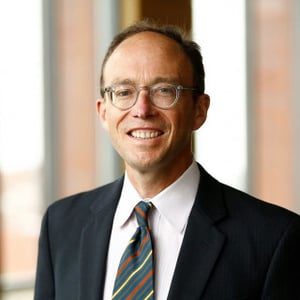
Professor of Legal Studies & Business Ethics, The Wharton School, The University of Pennsylvania
David Zaring’s scholarship addresses administrative and regulatory law from an international perspective. Professor Zaring comes to the business school from the Washington & Lee University School of Law. At Washington & Lee, he was an assistant professor and Alumni Faculty Fellow from 2005 to 2007. He had previously served as Acting Assistant Professor in the Lawyering Program at New York University School of Law from 2002 to 2005, and as a visiting professor at Vanderbilt Law School in the fall of 2007. After graduating magna cum laude from Harvard Law School, Professor Zaring clerked for Chief Judge William Matthew Byrne Jr. of the U.S. District Court for the Central District of California and then for Judge Judith Rogers on the US. Court of Appeals for the D.C. Circuit. He served as a trial attorney for the U.S. Department of Justice in the Federal Programs Branch of the Civil Division and as a special assistant to the General Counsel in the U.S. Department of Housing and Urban Development before entering the academy.
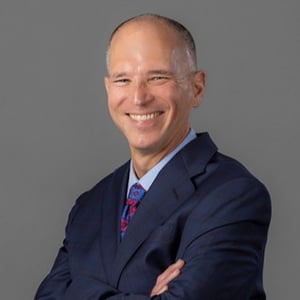
George Mason University Foundation Professor of Law, Antonin Scalia Law School, George Mason University
TODD J. ZYWICKI is George Mason University Foundation Professor of Law at Antonin Scalia Law School at George Mason University and Research Fellow of the George Mason Law and Economics Center. During the Fall 2023 semester he served as the Visiting Scholar in Conservative Thought and Policy for the Bruce Benson Center for the Study of Western Civilization at the University of Colorado-Boulder. From 2020-2021 he was Chair of the Consumer Financial Protection Bureau Taskforce on Federal Consumer Financial Law. In 2021 he was inducted to the American College of Consumer Financial Services Lawyers. He is also a Senior Fellow of the F.A. Hayek Program for the Advanced Study of Politics, Philosophy, and Economics at George Mason University and a former Senior Fellow of the Cato Institute. From 2015-2017 he was Executive Director of the George Mason Law and Economics Center. He served as Co-Editor of the Supreme Court Economic Review from 2006-2017. From 2003-2004, Professor Zywicki served as the Director of the Office of Policy Planning at the Federal Trade Commission. He has also taught at Vanderbilt University Law School, Georgetown University Law Center, Boston College Law School, Mississippi College School of Law, and China University of Political Science and Law.
Professor Zywicki clerked for Judge Jerry E. Smith of the U.S. Court of Appeals for the Fifth Circuit and worked as an associate at Alston & Bird in Atlanta, Georgia, where he practiced bankruptcy and commercial law. He received his J.D. from the University of Virginia, where he was executive editor of the Virginia Tax Review and John M. Olin Scholar in Law and Economics. Professor Zywicki also received an M.A. in Economics from Clemson University and an A.B. cum Laude with high honors in his major from Dartmouth College.
Professor Zywicki is also a Lone Mountain Fellow of the Property and Environment Research Center, a Fellow of the International Centre for Economic Research in Turin, Italy, and a former Senior Fellow of the Goldwater Institute. During the Fall 2008 Semester Professor Zywicki was the Searle Fellow of the George Mason University School of Law and was a 2008-09 W. Glenn Campbell and Rita Ricardo-Campbell National Fellow and the Arch W. Shaw National Fellow at the Hoover Institution on War, Revolution and Peace. He has lectured and consulted with government officials around the world, including Iceland, Italy, Japan, and Guatemala. In 2006 Professor Zywicki served as a Member of the United States Department of Justice Study Group on “Identifying Fraud, Abuse and Errors in the United States Bankruptcy System.”
Professor Zywicki is the author of more than 130 articles in leading law reviews and peer-reviewed economics journals. He is one of the Top 10 most-cited law professors in the field of Commercial Law and one of the Top 25 law professors on Twitter as measured by engagement levels. He is one of the Top 50 Most Downloaded Law Authors at the Social Science Research Network. He has testified multiple times before Congress on issues of consumer bankruptcy law and consumer credit and is a frequent commentator on legal issues in the print and broadcast media, including the Wall Street Journal, New York Times, The Washington Post, The Washington Times, Nightline, The Newshour with Jim Lehrer, Neil Cavuto Show, Fox & Friends, Smerconish, Fox News @ Night with Shannon Bream, Fox Business, CNN, CNBC, Bloomberg News, BBC, The Diane Rehm Show, Lou Dobbs Show, Jerry Doyle Show, and The Laura Ingraham Show.
Professor Zywicki is former Chairman and a current member of the Board of Directors of the Competitive Enterprise Institute, and is a member of the Board of Directors of the Institute for Humane Studies, Bill of Rights Institute, the Executive Committee for the Federalist Society's Financial Institutions and E-Commerce Practice Group, the Board of Trustees of the Foundation for Research on Economics and the Environment. He formerly served on the Governing Board and the Advisory Council for the Financial Services Research Program at George Washington University School of Business. He is currently the Chair of the Academic Advisory Council for the following organizations: The Bill of Rights Institute, the film “We the People in IMAX,” and the McCormick-Tribune Foundation “Freedom Museum” in Chicago, Illinois. He is a member of the Board of Visitors of Ralston College and was a member of the Board of Trustees of Yorktown University. From 2005-2009 he served as an elected Alumni Trustee of the Dartmouth College Board of Trustees.
Dean and Anthony B. Buzbee Endowed Dean's Chair, Texas A&M University School of Law
A graduate of Princeton University's Woodrow Wilson School of Public and International Affairs and Yale Law School, Robert B. Ahdieh served as law clerk to Judge James R. Browning of the US Court of Appeals for the Ninth Circuit before his selection for the Honor's Program in the Civil Division of the US Department of Justice.
While still in law school, Ahdieh published what remains one of the seminal treatments of the constitutional transformation of post-Soviet Russia: "Russia's Constitutional Revolution—Legal Consciousness and the Transition to Democracy." Ahdieh's work has also appeared in the Boston University Law Review, Michigan Law Review, theMinnesota Law Review, the NYU Law Review, and the Southern California Law Review, among other journals.
Ahdieh’s scholarly interests revolve around questions of regulatory and institutional design, especially in the financial arena. His particular focus has been on various non-traditional regulatory structures and modes of regulation, including those grounded in dynamics of coordination. Though relatively less studied in the legal literature, the framework of coordination holds significant promise both in helping us theorize existing regulatory patterns and in defining new regulatory constructs for the future.
Ahdieh has explored regulatory and institutional design in a variety of transactional areas, including corporate and securities law, international trade and finance, and contracts. Within these, his work has emphasized two particular patterns of coordination. The first—intersystemic governance—draws on domestic regimes of federalism and transnational regimes of global governance and subsidiarity to highlight the potential benefits of complex systems of overlapping jurisdiction. The second draws on the dynamics at work in so-called “coordination games” to highlight distinct occasions for potential regulatory intervention, as well as various non-traditional regulatory forms, in our modern economic, social, and political order.
During the 2007–2008 academic year, Ahdieh was a visiting professor and the Microsoft/LAPA Fellow at Princeton University's Program in Law and Public Affairs. In Spring 2014, he served as Douglas McK. Brown Visiting Chair in Law, University of British Columbia. He has also visited at Columbia and Georgetown law schools, as well as numerous law schools overseas.
T.J. Maloney Chair in Business Law, Fordham University School of Law
Professor Griffith is an expert in corporate and financial regulatory law. He writes and speaks on corporate law, political economy, and the constitutional rights of corporations and other business associations. In addition to his academic writing, he has authored or contributed to many amicus briefs, including: Iowa v SEC, NCPPR v SEC, AFBR v SEC, and In re Tesla.
Professor of Law and Rouse Chairholder, Antonin Scalia Law School, George Mason University
Professor Miller holds an Allison and Dorothy Rouse Chair in Law at the Antonin Scalia Law School. An elected member of the American Law Institute and a research member of the European Corporate Governance Institute, Professor Miller is also a Fellow and the Co-Director of the Program on Organizations, Business and Markets at the Classical Liberal Institute at the New York University Law School, an Adjunct Fellow at the Manhattan Institute, and an Affiliated Scholar at the James Wilson Institute on Natural Rights and the American Founding. Prior to joining George Mason University in 2025, Professor Miller was the F. Arnold Daum Chair in Corporate Finance and Law and a Professor of Law at the University of Iowa College of Law, where he had also served as the Associate Dean for Faculty Development.
Professor Miller’s research concerns corporate and securities law, the economic analysis of law, and the philosophy of law. He is particularly interested in applying economic concepts and methods to understand provisions in contracts between sophisticated commercial parties. He has written on material adverse effect clauses under Delaware law, the fiduciary duties of corporate directors, director oversight liability, the history and development of Delaware corporate law, and much more. His articles and working papers are available on his SSRN page.
Professor Miller has been cited by federal and state courts in the United States, including the Delaware Supreme Court and the Delaware Court of Chancery, as well as by the Commercial Court of the United Kingdom and the Ontario Superior Court of Justice (Commercial List) in Canada. Additionally, he is a member of the Committee on Mergers, Acquisitions & Corporate Control Contests and a former chair of the Corporation Law Committee of the New York City Bar Association.
Earlier in his career, Professor Miller was a Professor of Law at the Villanova University School of Law and the Associate Director of the Matthew J. Ryan Center for the Study of Free Institutions and the Public Good at Villanova University. He has been a Visiting Professor of Law at the University of Pennsylvania Law School, a Visiting Assistant Professor of Law at the Cardozo Law School, and an Olin Fellow in Law and Economics at the Columbia Law School.
Before entering academia, Professor Miller was an associate with Wachtell, Lipton, Rosen & Katz. He earned his J.D. from the Yale Law School where he was a Senior Editor of the Yale Law Journal and an Olin Fellow in Law, Economics and Public Policy. He earned his M.A. and M.Phil. degrees in philosophy from Columbia University, where he held a Mellon Fellowship in the Humanities from the Woodrow Wilson National Fellowship Foundation and a Western Civilization Fellowship from the Intercollegiate Studies Institute. He earned his B.A. in philosophy and mathematics from Columbia College.
Professor of Legal Studies & Business Ethics, The Wharton School, The University of Pennsylvania
David Zaring’s scholarship addresses administrative and regulatory law from an international perspective. Professor Zaring comes to the business school from the Washington & Lee University School of Law. At Washington & Lee, he was an assistant professor and Alumni Faculty Fellow from 2005 to 2007. He had previously served as Acting Assistant Professor in the Lawyering Program at New York University School of Law from 2002 to 2005, and as a visiting professor at Vanderbilt Law School in the fall of 2007. After graduating magna cum laude from Harvard Law School, Professor Zaring clerked for Chief Judge William Matthew Byrne Jr. of the U.S. District Court for the Central District of California and then for Judge Judith Rogers on the US. Court of Appeals for the D.C. Circuit. He served as a trial attorney for the U.S. Department of Justice in the Federal Programs Branch of the Civil Division and as a special assistant to the General Counsel in the U.S. Department of Housing and Urban Development before entering the academy.
George Mason University Foundation Professor of Law, Antonin Scalia Law School, George Mason University
TODD J. ZYWICKI is George Mason University Foundation Professor of Law at Antonin Scalia Law School at George Mason University and Research Fellow of the George Mason Law and Economics Center. During the Fall 2023 semester he served as the Visiting Scholar in Conservative Thought and Policy for the Bruce Benson Center for the Study of Western Civilization at the University of Colorado-Boulder. From 2020-2021 he was Chair of the Consumer Financial Protection Bureau Taskforce on Federal Consumer Financial Law. In 2021 he was inducted to the American College of Consumer Financial Services Lawyers. He is also a Senior Fellow of the F.A. Hayek Program for the Advanced Study of Politics, Philosophy, and Economics at George Mason University and a former Senior Fellow of the Cato Institute. From 2015-2017 he was Executive Director of the George Mason Law and Economics Center. He served as Co-Editor of the Supreme Court Economic Review from 2006-2017. From 2003-2004, Professor Zywicki served as the Director of the Office of Policy Planning at the Federal Trade Commission. He has also taught at Vanderbilt University Law School, Georgetown University Law Center, Boston College Law School, Mississippi College School of Law, and China University of Political Science and Law.
Professor Zywicki clerked for Judge Jerry E. Smith of the U.S. Court of Appeals for the Fifth Circuit and worked as an associate at Alston & Bird in Atlanta, Georgia, where he practiced bankruptcy and commercial law. He received his J.D. from the University of Virginia, where he was executive editor of the Virginia Tax Review and John M. Olin Scholar in Law and Economics. Professor Zywicki also received an M.A. in Economics from Clemson University and an A.B. cum Laude with high honors in his major from Dartmouth College.
Professor Zywicki is also a Lone Mountain Fellow of the Property and Environment Research Center, a Fellow of the International Centre for Economic Research in Turin, Italy, and a former Senior Fellow of the Goldwater Institute. During the Fall 2008 Semester Professor Zywicki was the Searle Fellow of the George Mason University School of Law and was a 2008-09 W. Glenn Campbell and Rita Ricardo-Campbell National Fellow and the Arch W. Shaw National Fellow at the Hoover Institution on War, Revolution and Peace. He has lectured and consulted with government officials around the world, including Iceland, Italy, Japan, and Guatemala. In 2006 Professor Zywicki served as a Member of the United States Department of Justice Study Group on “Identifying Fraud, Abuse and Errors in the United States Bankruptcy System.”
Professor Zywicki is the author of more than 130 articles in leading law reviews and peer-reviewed economics journals. He is one of the Top 10 most-cited law professors in the field of Commercial Law and one of the Top 25 law professors on Twitter as measured by engagement levels. He is one of the Top 50 Most Downloaded Law Authors at the Social Science Research Network. He has testified multiple times before Congress on issues of consumer bankruptcy law and consumer credit and is a frequent commentator on legal issues in the print and broadcast media, including the Wall Street Journal, New York Times, The Washington Post, The Washington Times, Nightline, The Newshour with Jim Lehrer, Neil Cavuto Show, Fox & Friends, Smerconish, Fox News @ Night with Shannon Bream, Fox Business, CNN, CNBC, Bloomberg News, BBC, The Diane Rehm Show, Lou Dobbs Show, Jerry Doyle Show, and The Laura Ingraham Show.
Professor Zywicki is former Chairman and a current member of the Board of Directors of the Competitive Enterprise Institute, and is a member of the Board of Directors of the Institute for Humane Studies, Bill of Rights Institute, the Executive Committee for the Federalist Society's Financial Institutions and E-Commerce Practice Group, the Board of Trustees of the Foundation for Research on Economics and the Environment. He formerly served on the Governing Board and the Advisory Council for the Financial Services Research Program at George Washington University School of Business. He is currently the Chair of the Academic Advisory Council for the following organizations: The Bill of Rights Institute, the film “We the People in IMAX,” and the McCormick-Tribune Foundation “Freedom Museum” in Chicago, Illinois. He is a member of the Board of Visitors of Ralston College and was a member of the Board of Trustees of Yorktown University. From 2005-2009 he served as an elected Alumni Trustee of the Dartmouth College Board of Trustees.
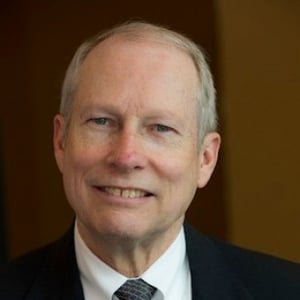
L. Q. C. Lamar Professor of Law, Emory University School of Law
Thomas C. Arthur holds degrees from Yale Law School and Duke University, where he was an Angier B. Duke Scholar and a member of Phi Beta Kappa. Before coming to Emory, he practiced law for eleven years with the Washington, DC office of Kirkland & Ellis. In 1982, he left his law firm partnership to join the Emory Law faculty.
Arthur teaches antitrust, civil procedure, and administrative law, and he has been active on the executive committee of the Antitrust Section of the Association of American Law Schools. His articles in the California and Tulane law reviews have been credited with the founding of a new, "statutory" school of antitrust analysis. His 1991 Emory Law Journal article (co-authored with Professor Richard D. Freer) provoked a nationally noted debate over an important new statute governing the jurisdiction of federal courts. A major antitrust article, "The Costly Quest for Perfect Competition: Kodak and Nonstructural Market Power," was published in the New York University Law Review (vol. 69, April 1994).
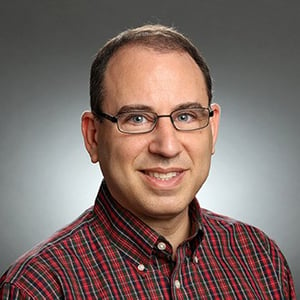
Professor of Law and Co-Director, High Tech Law Institute, Santa Clara University School of Law
Eric Goldman is a Professor of Law, and Co-Director of the High Tech Law Institute, at Santa Clara University School of Law. Before he became a full-time academic in 2002, he practiced Internet law for 8 years in the Silicon Valley. His research and teaching focuses on Internet, IP and advertising law topics, and he blogs on these topics at the Technology & Marketing Law Blog [http://blog.ericgoldman.org]. Managing IP magazine has twice named him to a shortlist of North American “IP Thought Leaders,” and he has been named an “IP Vanguard” by the California State Bar’s IP Section.

Jamie Dodge is the founding director of Emory’s Institute for Complex Litigation and Mass Claims. Before teaching, Professor Dodge was in private practice with Paul Hastings and later Gibson Dunn, representing clients at any stage of the litigation process. After practicing privately, she held numerous faculty positions at Harvard Law School, the University of Georgia, and the Perking University School of Transnational Law before going to Emory. Her scholarship focuses on how the structure of procedural regimes, from aggregate litigation to alternative dispute resolution models, affects the exercise of rights and enforcement of substantive law. Her work has been published in many law review journals including Harvard Law Review, Virginia Law Review, and Notre Dame Law Review. Professor Dodge graduated with a law degree from Harvard University, and received her bachelors at Dartmouth College.

Associate Professor of Law at Georgetown, Maria J. Glover specializes in civil procedure, complex litigation, and the interplay between private litigation and public regulation. She was a Climenko Fellow and Lecturer on Law at Harvard Law School before coming to Georgetown in 2012. Before teaching, she clerked for Judge J. Harvie Wilkinson III of the United States Court of Appeals for the Fourth Circuit and practiced in the Supreme Court Appellate practice group at Mayer Brown LLP in Washington, DC. She is a graduate of Vanderbilt Law School. She was the recipient of the Cecil D. Branstetter Litigation and Dispute Resolution Program Award.
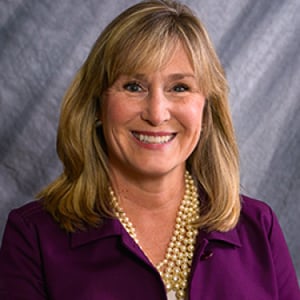
Mary Nold Larimore’s primary practice concentration is in litigation, focusing on product liability litigation, the defense of pharmaceutical and drug and device manufacturers, chemical companies, toxic tort litigation and commercial litigation. Ms. Larimore has served as national, regional and local counsel in drug, device and chemical exposure litigation, as well as expert witness counsel. She regularly addresses scientific, epidemiologic and complex medical issues in multi-jurisdictional litigation. She is the first woman from Indiana to be a Fellow in the American College of Trial Lawyers, served as Chair of the Supreme Court Committee on Rules of Practice and Procedure, and two five-year terms by appointment of the Chief Justice. She was selected to be in The Best Lawyers® in America from 2007-2018 and in Indiana Super Lawyers from 2004-2017. Ms. Larimore received a juris doctorate from Indiana University Maurer School of Law.
Jamie Dodge is the founding director of Emory’s Institute for Complex Litigation and Mass Claims. Before teaching, Professor Dodge was in private practice with Paul Hastings and later Gibson Dunn, representing clients at any stage of the litigation process. After practicing privately, she held numerous faculty positions at Harvard Law School, the University of Georgia, and the Perking University School of Transnational Law before going to Emory. Her scholarship focuses on how the structure of procedural regimes, from aggregate litigation to alternative dispute resolution models, affects the exercise of rights and enforcement of substantive law. Her work has been published in many law review journals including Harvard Law Review, Virginia Law Review, and Notre Dame Law Review. Professor Dodge graduated with a law degree from Harvard University, and received her bachelors at Dartmouth College.
Associate Professor of Law at Georgetown, Maria J. Glover specializes in civil procedure, complex litigation, and the interplay between private litigation and public regulation. She was a Climenko Fellow and Lecturer on Law at Harvard Law School before coming to Georgetown in 2012. Before teaching, she clerked for Judge J. Harvie Wilkinson III of the United States Court of Appeals for the Fourth Circuit and practiced in the Supreme Court Appellate practice group at Mayer Brown LLP in Washington, DC. She is a graduate of Vanderbilt Law School. She was the recipient of the Cecil D. Branstetter Litigation and Dispute Resolution Program Award.
Mary Nold Larimore’s primary practice concentration is in litigation, focusing on product liability litigation, the defense of pharmaceutical and drug and device manufacturers, chemical companies, toxic tort litigation and commercial litigation. Ms. Larimore has served as national, regional and local counsel in drug, device and chemical exposure litigation, as well as expert witness counsel. She regularly addresses scientific, epidemiologic and complex medical issues in multi-jurisdictional litigation. She is the first woman from Indiana to be a Fellow in the American College of Trial Lawyers, served as Chair of the Supreme Court Committee on Rules of Practice and Procedure, and two five-year terms by appointment of the Chief Justice. She was selected to be in The Best Lawyers® in America from 2007-2018 and in Indiana Super Lawyers from 2004-2017. Ms. Larimore received a juris doctorate from Indiana University Maurer School of Law.
L. Q. C. Lamar Professor of Law, Emory University School of Law
Thomas C. Arthur holds degrees from Yale Law School and Duke University, where he was an Angier B. Duke Scholar and a member of Phi Beta Kappa. Before coming to Emory, he practiced law for eleven years with the Washington, DC office of Kirkland & Ellis. In 1982, he left his law firm partnership to join the Emory Law faculty.
Arthur teaches antitrust, civil procedure, and administrative law, and he has been active on the executive committee of the Antitrust Section of the Association of American Law Schools. His articles in the California and Tulane law reviews have been credited with the founding of a new, "statutory" school of antitrust analysis. His 1991 Emory Law Journal article (co-authored with Professor Richard D. Freer) provoked a nationally noted debate over an important new statute governing the jurisdiction of federal courts. A major antitrust article, "The Costly Quest for Perfect Competition: Kodak and Nonstructural Market Power," was published in the New York University Law Review (vol. 69, April 1994).
Professor of Law and Co-Director, High Tech Law Institute, Santa Clara University School of Law
Eric Goldman is a Professor of Law, and Co-Director of the High Tech Law Institute, at Santa Clara University School of Law. Before he became a full-time academic in 2002, he practiced Internet law for 8 years in the Silicon Valley. His research and teaching focuses on Internet, IP and advertising law topics, and he blogs on these topics at the Technology & Marketing Law Blog [http://blog.ericgoldman.org]. Managing IP magazine has twice named him to a shortlist of North American “IP Thought Leaders,” and he has been named an “IP Vanguard” by the California State Bar’s IP Section.
Dean and Anthony B. Buzbee Endowed Dean's Chair, Texas A&M University School of Law
A graduate of Princeton University's Woodrow Wilson School of Public and International Affairs and Yale Law School, Robert B. Ahdieh served as law clerk to Judge James R. Browning of the US Court of Appeals for the Ninth Circuit before his selection for the Honor's Program in the Civil Division of the US Department of Justice.
While still in law school, Ahdieh published what remains one of the seminal treatments of the constitutional transformation of post-Soviet Russia: "Russia's Constitutional Revolution—Legal Consciousness and the Transition to Democracy." Ahdieh's work has also appeared in the Boston University Law Review, Michigan Law Review, theMinnesota Law Review, the NYU Law Review, and the Southern California Law Review, among other journals.
Ahdieh’s scholarly interests revolve around questions of regulatory and institutional design, especially in the financial arena. His particular focus has been on various non-traditional regulatory structures and modes of regulation, including those grounded in dynamics of coordination. Though relatively less studied in the legal literature, the framework of coordination holds significant promise both in helping us theorize existing regulatory patterns and in defining new regulatory constructs for the future.
Ahdieh has explored regulatory and institutional design in a variety of transactional areas, including corporate and securities law, international trade and finance, and contracts. Within these, his work has emphasized two particular patterns of coordination. The first—intersystemic governance—draws on domestic regimes of federalism and transnational regimes of global governance and subsidiarity to highlight the potential benefits of complex systems of overlapping jurisdiction. The second draws on the dynamics at work in so-called “coordination games” to highlight distinct occasions for potential regulatory intervention, as well as various non-traditional regulatory forms, in our modern economic, social, and political order.
During the 2007–2008 academic year, Ahdieh was a visiting professor and the Microsoft/LAPA Fellow at Princeton University's Program in Law and Public Affairs. In Spring 2014, he served as Douglas McK. Brown Visiting Chair in Law, University of British Columbia. He has also visited at Columbia and Georgetown law schools, as well as numerous law schools overseas.
T.J. Maloney Chair in Business Law, Fordham University School of Law
Professor Griffith is an expert in corporate and financial regulatory law. He writes and speaks on corporate law, political economy, and the constitutional rights of corporations and other business associations. In addition to his academic writing, he has authored or contributed to many amicus briefs, including: Iowa v SEC, NCPPR v SEC, AFBR v SEC, and In re Tesla.
Professor of Law and Rouse Chairholder, Antonin Scalia Law School, George Mason University
Professor Miller holds an Allison and Dorothy Rouse Chair in Law at the Antonin Scalia Law School. An elected member of the American Law Institute and a research member of the European Corporate Governance Institute, Professor Miller is also a Fellow and the Co-Director of the Program on Organizations, Business and Markets at the Classical Liberal Institute at the New York University Law School, an Adjunct Fellow at the Manhattan Institute, and an Affiliated Scholar at the James Wilson Institute on Natural Rights and the American Founding. Prior to joining George Mason University in 2025, Professor Miller was the F. Arnold Daum Chair in Corporate Finance and Law and a Professor of Law at the University of Iowa College of Law, where he had also served as the Associate Dean for Faculty Development.
Professor Miller’s research concerns corporate and securities law, the economic analysis of law, and the philosophy of law. He is particularly interested in applying economic concepts and methods to understand provisions in contracts between sophisticated commercial parties. He has written on material adverse effect clauses under Delaware law, the fiduciary duties of corporate directors, director oversight liability, the history and development of Delaware corporate law, and much more. His articles and working papers are available on his SSRN page.
Professor Miller has been cited by federal and state courts in the United States, including the Delaware Supreme Court and the Delaware Court of Chancery, as well as by the Commercial Court of the United Kingdom and the Ontario Superior Court of Justice (Commercial List) in Canada. Additionally, he is a member of the Committee on Mergers, Acquisitions & Corporate Control Contests and a former chair of the Corporation Law Committee of the New York City Bar Association.
Earlier in his career, Professor Miller was a Professor of Law at the Villanova University School of Law and the Associate Director of the Matthew J. Ryan Center for the Study of Free Institutions and the Public Good at Villanova University. He has been a Visiting Professor of Law at the University of Pennsylvania Law School, a Visiting Assistant Professor of Law at the Cardozo Law School, and an Olin Fellow in Law and Economics at the Columbia Law School.
Before entering academia, Professor Miller was an associate with Wachtell, Lipton, Rosen & Katz. He earned his J.D. from the Yale Law School where he was a Senior Editor of the Yale Law Journal and an Olin Fellow in Law, Economics and Public Policy. He earned his M.A. and M.Phil. degrees in philosophy from Columbia University, where he held a Mellon Fellowship in the Humanities from the Woodrow Wilson National Fellowship Foundation and a Western Civilization Fellowship from the Intercollegiate Studies Institute. He earned his B.A. in philosophy and mathematics from Columbia College.
Professor of Legal Studies & Business Ethics, The Wharton School, The University of Pennsylvania
David Zaring’s scholarship addresses administrative and regulatory law from an international perspective. Professor Zaring comes to the business school from the Washington & Lee University School of Law. At Washington & Lee, he was an assistant professor and Alumni Faculty Fellow from 2005 to 2007. He had previously served as Acting Assistant Professor in the Lawyering Program at New York University School of Law from 2002 to 2005, and as a visiting professor at Vanderbilt Law School in the fall of 2007. After graduating magna cum laude from Harvard Law School, Professor Zaring clerked for Chief Judge William Matthew Byrne Jr. of the U.S. District Court for the Central District of California and then for Judge Judith Rogers on the US. Court of Appeals for the D.C. Circuit. He served as a trial attorney for the U.S. Department of Justice in the Federal Programs Branch of the Civil Division and as a special assistant to the General Counsel in the U.S. Department of Housing and Urban Development before entering the academy.
George Mason University Foundation Professor of Law, Antonin Scalia Law School, George Mason University
TODD J. ZYWICKI is George Mason University Foundation Professor of Law at Antonin Scalia Law School at George Mason University and Research Fellow of the George Mason Law and Economics Center. During the Fall 2023 semester he served as the Visiting Scholar in Conservative Thought and Policy for the Bruce Benson Center for the Study of Western Civilization at the University of Colorado-Boulder. From 2020-2021 he was Chair of the Consumer Financial Protection Bureau Taskforce on Federal Consumer Financial Law. In 2021 he was inducted to the American College of Consumer Financial Services Lawyers. He is also a Senior Fellow of the F.A. Hayek Program for the Advanced Study of Politics, Philosophy, and Economics at George Mason University and a former Senior Fellow of the Cato Institute. From 2015-2017 he was Executive Director of the George Mason Law and Economics Center. He served as Co-Editor of the Supreme Court Economic Review from 2006-2017. From 2003-2004, Professor Zywicki served as the Director of the Office of Policy Planning at the Federal Trade Commission. He has also taught at Vanderbilt University Law School, Georgetown University Law Center, Boston College Law School, Mississippi College School of Law, and China University of Political Science and Law.
Professor Zywicki clerked for Judge Jerry E. Smith of the U.S. Court of Appeals for the Fifth Circuit and worked as an associate at Alston & Bird in Atlanta, Georgia, where he practiced bankruptcy and commercial law. He received his J.D. from the University of Virginia, where he was executive editor of the Virginia Tax Review and John M. Olin Scholar in Law and Economics. Professor Zywicki also received an M.A. in Economics from Clemson University and an A.B. cum Laude with high honors in his major from Dartmouth College.
Professor Zywicki is also a Lone Mountain Fellow of the Property and Environment Research Center, a Fellow of the International Centre for Economic Research in Turin, Italy, and a former Senior Fellow of the Goldwater Institute. During the Fall 2008 Semester Professor Zywicki was the Searle Fellow of the George Mason University School of Law and was a 2008-09 W. Glenn Campbell and Rita Ricardo-Campbell National Fellow and the Arch W. Shaw National Fellow at the Hoover Institution on War, Revolution and Peace. He has lectured and consulted with government officials around the world, including Iceland, Italy, Japan, and Guatemala. In 2006 Professor Zywicki served as a Member of the United States Department of Justice Study Group on “Identifying Fraud, Abuse and Errors in the United States Bankruptcy System.”
Professor Zywicki is the author of more than 130 articles in leading law reviews and peer-reviewed economics journals. He is one of the Top 10 most-cited law professors in the field of Commercial Law and one of the Top 25 law professors on Twitter as measured by engagement levels. He is one of the Top 50 Most Downloaded Law Authors at the Social Science Research Network. He has testified multiple times before Congress on issues of consumer bankruptcy law and consumer credit and is a frequent commentator on legal issues in the print and broadcast media, including the Wall Street Journal, New York Times, The Washington Post, The Washington Times, Nightline, The Newshour with Jim Lehrer, Neil Cavuto Show, Fox & Friends, Smerconish, Fox News @ Night with Shannon Bream, Fox Business, CNN, CNBC, Bloomberg News, BBC, The Diane Rehm Show, Lou Dobbs Show, Jerry Doyle Show, and The Laura Ingraham Show.
Professor Zywicki is former Chairman and a current member of the Board of Directors of the Competitive Enterprise Institute, and is a member of the Board of Directors of the Institute for Humane Studies, Bill of Rights Institute, the Executive Committee for the Federalist Society's Financial Institutions and E-Commerce Practice Group, the Board of Trustees of the Foundation for Research on Economics and the Environment. He formerly served on the Governing Board and the Advisory Council for the Financial Services Research Program at George Washington University School of Business. He is currently the Chair of the Academic Advisory Council for the following organizations: The Bill of Rights Institute, the film “We the People in IMAX,” and the McCormick-Tribune Foundation “Freedom Museum” in Chicago, Illinois. He is a member of the Board of Visitors of Ralston College and was a member of the Board of Trustees of Yorktown University. From 2005-2009 he served as an elected Alumni Trustee of the Dartmouth College Board of Trustees.
Jamie Dodge is the founding director of Emory’s Institute for Complex Litigation and Mass Claims. Before teaching, Professor Dodge was in private practice with Paul Hastings and later Gibson Dunn, representing clients at any stage of the litigation process. After practicing privately, she held numerous faculty positions at Harvard Law School, the University of Georgia, and the Perking University School of Transnational Law before going to Emory. Her scholarship focuses on how the structure of procedural regimes, from aggregate litigation to alternative dispute resolution models, affects the exercise of rights and enforcement of substantive law. Her work has been published in many law review journals including Harvard Law Review, Virginia Law Review, and Notre Dame Law Review. Professor Dodge graduated with a law degree from Harvard University, and received her bachelors at Dartmouth College.
Associate Professor of Law at Georgetown, Maria J. Glover specializes in civil procedure, complex litigation, and the interplay between private litigation and public regulation. She was a Climenko Fellow and Lecturer on Law at Harvard Law School before coming to Georgetown in 2012. Before teaching, she clerked for Judge J. Harvie Wilkinson III of the United States Court of Appeals for the Fourth Circuit and practiced in the Supreme Court Appellate practice group at Mayer Brown LLP in Washington, DC. She is a graduate of Vanderbilt Law School. She was the recipient of the Cecil D. Branstetter Litigation and Dispute Resolution Program Award.
Mary Nold Larimore’s primary practice concentration is in litigation, focusing on product liability litigation, the defense of pharmaceutical and drug and device manufacturers, chemical companies, toxic tort litigation and commercial litigation. Ms. Larimore has served as national, regional and local counsel in drug, device and chemical exposure litigation, as well as expert witness counsel. She regularly addresses scientific, epidemiologic and complex medical issues in multi-jurisdictional litigation. She is the first woman from Indiana to be a Fellow in the American College of Trial Lawyers, served as Chair of the Supreme Court Committee on Rules of Practice and Procedure, and two five-year terms by appointment of the Chief Justice. She was selected to be in The Best Lawyers® in America from 2007-2018 and in Indiana Super Lawyers from 2004-2017. Ms. Larimore received a juris doctorate from Indiana University Maurer School of Law.

Topics
Have Russia and Syria Killed the Law of War?
Last weekend's UN Resolution on Syria is the latest attempt by “the international community" to...
Financial Crisis and Regulatory Frameworks
Robert B. Ahdieh, Sean J. Griffith, Robert T. Miller, David Zaring, Todd J. Zywicki
With January 2018 marking roughly a decade after the start of the most recent financial...
Financial Crisis and Regulatory Frameworks
Robert B. Ahdieh, Sean J. Griffith, Robert T. Miller, David Zaring, Todd J. Zywicki
With January 2018 marking roughly a decade after the start of the most recent financial...
Social Media Content Control
Thomas Carlton Arthur, Eric Goldman
In two recently filed lawsuits conservative organizations have complained that Google has restricted their access...
Social Media Content Control
Telecommunications & Electronic Media and Free Speech Practice Groups Teleforum
TeleforumFinancial Crisis and Regulatory Frameworks
20th Annual Federalist Society Faculty Conference
San Diego, CAGeneral Reform Ideas and Pending Legislation
Jaime Dodge, Maria J. Glover, Mary Nold Larimore, Francis E. McGovern, Kate Comerford Todd
Multidistrict litigation (“MDL”) accounts for nearly half of all civil cases in federal courts. Although...
General Reform Ideas and Pending Legislation
Jaime Dodge, Maria J. Glover, Mary Nold Larimore, Francis E. McGovern, Kate Comerford Todd
Multidistrict litigation (“MDL”) accounts for nearly half of all civil cases in federal courts. Although...
Topics
Multidistrict Litigation (MDL) Conference Livestream
Tune into the Livestream during the event from 9:15 AM to 3:15 PM Eastern Time...
General Reform Ideas and Pending Legislation
Multidistrict Litigation (MDL) Conference
Washington, DC