
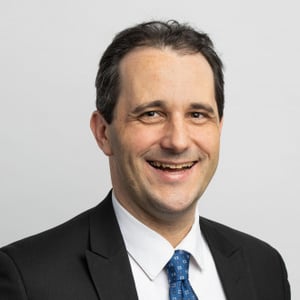
Director, Center for Judicial Engagement, Institute for Justice
Anthony Sanders is the Director of the Center for Judicial Engagement (CJE) at the Institute for Justice and a senior attorney. He joined IJ in 2010. As CJE’s director, he educates the public about the proper role of judges in enforcing constitutional limits on the size and scope of government. As a senior attorney he litigates cutting-edge constitutional cases protecting economic liberty, private property, freedom of speech and other individual liberties in both federal and state courts across the country.
One area of Anthony’s expertise is on using state constitutions to protect individual rights. He is the author of the book, published by University of Michigan Press, Baby Ninth Amendments: How Americans Embraced Unenumerated Rights and Why It Matters. He has also written several law review articles on state constitutional law, unenumerated rights, judicial review, economic liberty, property rights, international law, and other subjects. His work has appeared in publications such as the Iowa Law Review, Minnesota Law Review, American University Law Review, and Rutgers Law Review, and he has published opinion pieces in leading media outlets across the country. Further, he frequently speaks to various audiences on these matters and others, including judicial engagement, free speech, civil forfeiture, and the continuing importance of Magna Carta. Additionally, he hosts the weekly Short Circuit podcast, which often records live in front of law student audiences.
Anthony has litigated several cases in various state courts on state constitutional protections, as well as in federal courts on matters such as economic liberty, free speech, administrative law, and fines and fees abuse. Prior to joining IJ, Anthony served as a law clerk to Justice W. William Leaphart on the Montana Supreme Court. Anthony also worked for several years in private practice in Chicago where he was an active member of the Chicago Bar Association and chaired its Civil Rights Committee.
Anthony received his law degree cum laude from the University of Minnesota Law School in 2004, where he served as an articles submission editor for the Minnesota Law Review. He received his undergraduate degree from Hamline University in St. Paul, Minnesota, and his master’s degree from the University of Wisconsin-Madison. A dual U.S. and U.K. citizen, Anthony grew up on the islands of Vashon in Washington State, and Alderney in the British Channel Islands.

University Professor and Hugh & Hazel Darling Chair in Law, Pepperdine University School of Law
Ed Larson holds the Hugh and Hazel Darling Chair in Law and is University Professor of History at Pepperdine University. Originally from Ohio with a PhD in the history of science from the University of Wisconsin-Madison and law degree from Harvard, Larson has lectured on all seven continents and taught at Stanford Law School, University of Melbourne, Leiden University, and the University of Georgia, where he chaired the History Department. Prior to become a professor, Larson practiced law in Seattle and served as counsel for the U.S. House of Representatives in Washington, D.C.
Recipient of the Pulitzer Prize in History and numerous other awards for writing and teaching, Larson is the author or co-author of fourteen books and over one hundred published articles. His latest book, The Return of George Washington: Uniting the States, 1783-1789, was a New York Times Bestseller and resulted in Larson being invited to deliver the 2016 Supreme Court Historical Society lecture in Washington, give the annual Gaines Lecture at Mount Vernon, and serve as a featured presenter for the Library of Congress's Faculty 36 Madison Council event. His other books, which has been translated into over twenty languages, include An Empire of Ice: Scott, Shackleton, and the Heroic Age of Antarctic Science; A Magnificent Catastrophe: The Tumultuous Election of 1800, America's First Presidential Campaign; Evolution's Workshop: God and Science in the Galapagos Islands; and the Pulitzer Prize winning Summer for the Gods: The Scopes Trial and America's Continuing Debate Over Science and Religion. Larson's latest articles have appeared in such varied publications as Nature, Atlantic Monthly, Science, Scientific American, Time, Wall Street Journal, American History, The Guardian, and dozens of academic journals.
A popular lecturer, Larson has taught short courses at universities in China, Europe, and South America; been a featured speaker at book festivals and the Chautauqua Institute; and given addresses at over 80 American universities. He was a resident scholar at the Rockefeller Foundation's Bellagio Study Center; held the Fulbright Program's John Adams Chair in American Studies; participated in the National Science Foundation's Antarctic Writers and Artists Program; and served as an inaugural Fellow at the Library for the Study of George Washington at Mount Vernon. A panelist on the National Institutes of Health's Study Section for Ethical, Legal, and Social Issues of the Human Genome Project, Larson often comments on issues of bioethics and science policy. He is interviewed frequently for broadcast, print, cable, and internet media, including The Daily Show, The Today Show, and multiple appearances on PSB, BBC, the History Channel, C-SPAN, CNN, Fox News, MNBC, and NPR. Larson lives in Malibu with his wife and two children. He enjoys hiking with friends, traveling with his family, and working in his garden overlooking the Pacific Ocean.

Which Rights Are We Mediating?
Anthony Sanders
A review of How Rights Went Wrong: Why Our Obsession With Rights Is Tearing America...
Lame-Duck Lawmaking & the 20th Amendment
Edward J. Larson
What is the origin of the term “lame-duck?” Edward J. Larson, Professor and Hugh &...
8th Annual William French Smith Lecture & Dinner
Los Angeles, California