
President, Precursor LLC and Chairman, NetCompetition.org
Partner, Wilson Sonsini Goodrich & Rosati PC
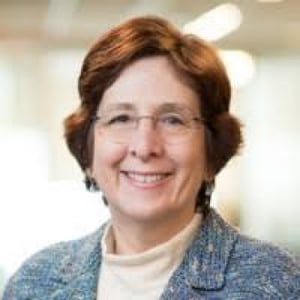
Susan Creighton is co-chair of the firm's antitrust practice. Susan's practice focuses on merger review, government conduct investigations, and antitrust litigation and counseling. Representative matters include serving as lead outside counsel for Google in the Federal Trade Commission's search investigation of the company, and representing Netflix in connection with the Justice Department's investigation of the proposed Comcast/TWC merger.
Susan was named "Lawyer of the Year" by Global Competition Review in 2013, and was one of The National Law Journal's "Outstanding Women Lawyers" in 2015. She has testified before the Antitrust Modernization Commission, the Federal Trade Commission, and the Senate on antitrust-related issues. She also has written a number of widely cited articles, including on issues related to mergers, intellectual property, and unilateral conduct.
From 2003 through the end of 2005, Susan served at the Federal Trade Commission as Director of the Bureau of Competition. From 2001 to 2003, she served as Deputy Director of the Bureau. Prior to joining the FTC, Susan wrote the white paper for Netscape that is credited with triggering the Department of Justice's investigation and eventual suit against Microsoft for illegal monopolization.
Susan has served in a variety of leadership roles within the firm, including on the board of directors.
Prior to joining the firm, she was a law clerk to U.S. Supreme Court Justice Sandra Day O'Connor. She also served as a law clerk to Federal District Judge Pamela Ann Rymer.
Vice President of Legal Services Outsourcing, CPA Global
President and Founder, International Center for Law & Economics
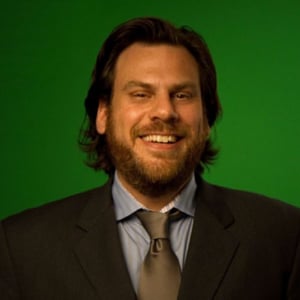
Geoffrey A. Manne is the president and founder of the International Center for Law and Economics (ICLE), a nonprofit, nonpartisan research center based in Portland, Oregon. He is also a distinguished fellow at Northwestern Law School’s Searle Center on Law, Regulation, & Economic Growth. In April 2017 he was appointed by FCC Chairman Ajit Pai to the FCC’s Broadband Deployment Advisory Committee, and he recently served for two years on the FCC’s Consumer Advisory Committee.
Mr. Manne earned his JD and AB degrees from the University of Chicago and is an expert in the economic analysis of law, specializing in competition, telecommunications, consumer protection, intellectual property, and technology policy.
Prior to founding ICLE, Manne was a law professor at Lewis & Clark Law School. From 2006-2009, he took a leave from teaching to develop Microsoft’s law and economics academic outreach program. Manne has also served as a lecturer in law at the University of Chicago Law School and the University of Virginia School of Law. He practiced antitrust law and appellate litigation at Latham & Watkins, clerked for Hon. Morris S. Arnold on the 8th Circuit Court of Appeals, and worked as a research assistant for Judge Richard Posner. He was also once (very briefly) employed by the FTC.
Mr. Manne’s publications have appeared in numerous journals including the Journal of Competition Law and Economics, the Harvard Journal of Law and Technology, the Supreme Court Economic Review, and the Arizona Law Review, among others. With former FTC Commissioner, Joshua Wright, Manne is the editor of a volume from Cambridge University Press entitled, Competition Policy and Intellectual Property Law Under Uncertainty: Regulating Innovation. Manne has also testified on several occasions before Congress and at the FCC and FTC, and he regularly files written comments and amicus briefs on key antitrust, IP, and telecommunications issues. His analysis is frequently published in popular print and broadcasting outlets such as the Wall Street Journal, Wired, Foreign Affairs, NPR, and Bloomberg, among others.
Manne is a member of the American Law and Economics Association, the Canadian Law and Economics Association, and the Society for Institutional & Organizational Economics. He blogs at Truth on the Market (www.truthonthemarket.com) (of which he is also the co-founder), is a contributor at WIRED, and tweets at @geoffmanne. His scholarly publications are available at http://ssrn.com/author=175541.
Partner, Rule Garza Howley LLP
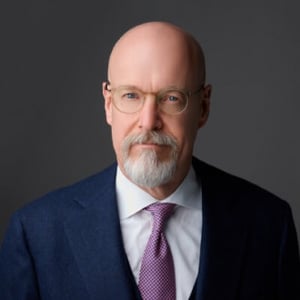
Rick began his career in the 1980s in the Antitrust Division of the U.S. Department of Justice, becoming the Assistant Attorney General in charge of the Division from 1986-89 – the youngest person ever to be confirmed by the Senate to that position. Over the last 30+ years since leaving the Division, Rick has led the antitrust practices at several leading D.C. and New York firms including Covington & Burling and Paul, Weiss.
During his time in private practice, Rick has represented major multi-national companies and executives in virtually every industry – from, among others, agricultural and animal health (Monsanto, Elanco) to energy (ExxonMobil) to defense contractors (Northrop Grumman, United Technologies) to professional sports (NFL, NBA, MLB) to technology platforms (Microsoft, Nuance) to pharmaceutical manufacturers (Eli Lilly, Pfizer) to health insurers (Cigna). (For a complete list of industry experience, click here.)
Rick has represented his clients before the Antitrust Division, the Federal Trade Commission, State Attorneys General and major foreign antitrust regulators in connection with many of the most notable merger investigations, including Exxon’s merger with Mobil, US Airways’ merger with American Airlines, and Cigna’s acquisition of Express Scripts. At the same time, Rick has represented clients in some of most prominent government investigations of the last quarter century, including leading the team that settled the Government’s monopolization case against Microsoft and defending international companies and executives in major antitrust criminal investigations.
For four decades, Rick has been at the forefront of antitrust law and is uniquely capable of advising clients on the antitrust regulatory environment affecting the way they do business globally. As agencies and rules have evolved, he has helped clients to understand the dynamic legal framework, to assess the legal risk and rewards associated with a range of competitive strategies, and to work with government bodies to take advantage of, and ensure appropriate compliance with, the regulations governing the clients’ chosen strategy.

Laurence A. Tisch Professor of Law and Director, Classical Liberal Institute, New York University School of Law; Senior Fellow, The Civitas Institute, University of Texas at Austin
Richard A. Epstein is the inaugural Laurence A. Tisch Professor of Law at NYU School of Law. Prior to his joining the faculty, he was a visiting law professor at NYU from 2007 through 2009. He served as the Peter and Kirstin Bedford Senior Fellow at the Hoover Institution from 2000 to 2024. Since 2024 to the present he is a senior lecturer at the Civitas Institute at the University of Texas—Austin. Epstein is also the James Parker Hall Distinguished Service Professor of Law Emeritus and a senior lecturer at the University of Chicago. His initial law school appointment was at the University of Southern California from 1968 to 1972. Epstein received an LL.D., h.c. from the University of Ghent, 2003. He has been a member of the American Academy of Arts and Sciences since 1985 and was a Senior Fellow of the Center for Clinical Medical Ethics at the University of Chicago Division of Biological Sciences, also from 1983. to 2022 He served as editor of the Journal of Legal Studies from 1981 to 1991, and of the Journal of Law and Economics from 1991-2001. From 2001 to 2010 he was a director of the John M. Olin Program in Law and Economics at the University of Chicago.
His newest book, The Myth of Birthright Citizenship: What the Fourteenth Amendment Really Says was published in 2026 (Encounter Books). Prior to that he has published many books including, The Dubious Morality of the Modern Administrative State (Roman & Littlefield 2020).Earlier he published th Classical Liberal Constitution: The Uncertain Quest for Limited Government (Harvard 2014) iHis previous books include Design for Liberty: Private Property, Public Administration and the Rule of Law (Harvard 2011); The Case Against the Employee Free Choice Act (Hoover 2009); Supreme Neglect: How to Revive the Constitutional Protection of Property Rights (Oxford 2008); Antitrust Decrees in Theory and Practice: Why Less is More (AEI 2007); Overdose: How Excessive Government Regulation Stifles Pharmaceutical Innovation (Yale University Press. 2006); How Progressives Rewrote the Constitution (Cato 2006); Cases and Materials on Torts (Aspen Law & Business; 8th ed. 2004); Skepticism and Freedom: A Modern Case for Classical Liberalism (University of Chicago, 2003); Torts (Aspen Law & Business 1999); Principles for a Free Society: Reconciling Individual Liberty with the Common Good (Perseus Books, 1998): Mortal Peril: Our Inalienable Rights to Health Care (Addison-Wesley, 1997); Simple Rules for a Complex World (Harvard, 1995); Bargaining With the State (Princeton, 1993); Forbidden Grounds: The Case Against Employment Discrimination Laws (Harvard , 1992); Takings: Private Property and the Power of Eminent Domain (Harvard, 1985); and Modern Products Liability Law (Greenwood Press, 1980). He has also edited(with Catherine M. Sharkey) Cases and Materials on the Law of Torts (10th edition 2012).
Professor Epstein has written numerous articles on a wide range of legal and interdisciplinary subjects. He has taught courses in administrative law, antitrust law, civil procedure, communications, constitutional law, contracts, corporations, criminal law, employment discrimination law, environmental law, food and drug law health law and policy, legal history, labor law, property, real estate development and finance, jurisprudence, labor law; land use planning, patents, individual, estate and corporate taxation, Roman Law; torts, and workers' compensation.
Professor Epstein also writes a regular column for Civitas Institute, which also sponsors his podcast, The Libertarian with Charles C.W. Cooke, and Law Talk, with Cooke and John Yoo. He also does a podcast with John Batchelor. And appears regularly on the Freedom File with Judge Andrew Napolitano.
Stevenson Bernard Professor, George Washington University Law School
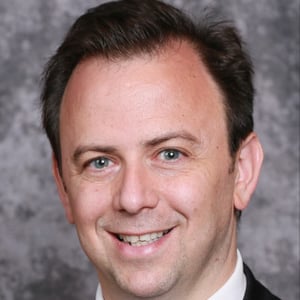
The Honorable F. Scott Kieff is the Stevenson Bernard Professor at George Washington University Law School and a Visiting Fellow at Stanford University’s Hoover Institution.
He served as Commissioner of the U.S. International Trade Commission from 2013-2017. He also served during the Bush, Obama, and Trump Administrations in the part-time leadership of the national security defense-intelligence community.
He was previously a professor of law and medicine at Washington University in Saint Louis and a Senior Fellow at Hoover. A former law clerk to U.S. Circuit Judge Giles S. Rich, he is a graduate of Penn Law School and MIT, where he studied molecular biology and microeconomics. He was elected to the European Academy of Sciences and Arts in 2012 and the Academia Europaea in 2024.
His private sector work through Kieff Strategies LLC (www.kieffstrategies.com) provides neutral services including mediation and compliance, and expert services including crisis management, advising, and testimony.
Senior Staff Attorney, Electronic Frontier Foundation

Professor of Law, Antonin Scalia Law School, George Mason University
Adam Mossoff is Professor of Law at Antonin Scalia Law School, George Mason University. He has published extensively on why patents, copyrights, and other intellectual property rights have been—and should be—legally secured to innovators and creators as property rights. His scholarship has been relied on by the United States Supreme Court, by lower federal courts, and by U.S. federal agencies. He has been invited to testify numerous times before the U.S. Senate and the House of Representatives on intellectual property legislation. His writings on intellectual property policy have also appeared in the Wall Street Journal, New York Times, Forbes, Investors Business Daily, and in other media outlets. His journal articles can be downloaded here.
Professor Mossoff is a longstanding member of the Executive Committee of the Intellectual Property Practice Group of the Federalist Society, on which he served as Chairperson from 2016-2018, and he is Chair of the Intellectual Property Working Group of the Regulatory Transparency Project of the Federalist Society. He is a Senior Fellow and Chair of the Forum for Intellectual Property at the Hudson Institute, a Visiting Intellectual Property Fellow at the Heritage Foundation, and a member of the Board of Directors of the Center for Intellectual Property Understanding. He is a member of the Intellectual Property Rights Policy Committee of ANSI and he has served as Chair and Vice-Chair of the Intellectual Property Committee of the IEEE-USA, on which he remains a member in good standing.
William H. Neukom Professor of Law, Stanford University Law School
Mark Lemley is the William H. Neukom Professor of Law at Stanford Law School, the Director of the Stanford Program in Law, Science and Technology, and the Director of Stanford's LLM Program in Law, Science and Technology. He teaches intellectual property, computer and Internet law, patent law, and antitrust. He is the author of seven books (most in multiple editions) and 123 articles on these and related subjects, including the two-volume treatise IP and Antitrust. His works have been cited more than 130 times by courts, including seven United States Supreme Court opinions, and over 9,000 times in books and law review articles. His articles have been reprinted throughout the world, and translated into Chinese, Japanese, Korean, Spanish, Italian, and Danish. He has taught intellectual property law to federal and state judges at numerous Federal Judicial Center and ABA programs, has testified seven times before Congress and numerous times before the California legislature, the Federal Trade Commission and the Antitrust Modernization Commission on patent, trade secret, antitrust and constitutional law matters, and has filed numerous amicus briefs before the U.S. Supreme Court, the California Supreme Court, and the federal circuit courts of appeals.
Mark is a founding partner of Durie Tangri LLP. He litigates and counsels clients in all areas of intellectual property, antitrust, and Internet law. He has argued six Federal appellate cases and numerous district court cases, and represented clients including Comcast, Genentech, Google, Grokster, Hummer Winblad, Impax, Intel, NetFlix, Palm, TiVo, and the University of Colorado Foundation in over 80 cases in two decades as as lawyer.
Mark is the founder and a board member of Lex Machina, Inc., a startup company providing data and analytics around IP disputes to law firms, companies, courts, and policy-makers.
Mark has been named California Lawyer's Attorney of the Year (2005), Best Lawyers’ San Francisco IP Lawyer of the Year (2010), and a Young Global Leader by the Davos World Economic Forum (2007). In 2009 he received the California State Bar’s inaugural IP Vanguard award. In 2002 he was chosen Boalt's Young Alumnus of the Year. He has been recognized as one of the top 50 litigators in the country under 45 by the American Lawyer (2007), one of the 100 most influential lawyers in the nation by the National Law Journal (2006), one of the 10 most admired attorneys in IP (2010) by IP360, one of the 25 most influential people in IP (2010) by the American Lawyer, one of the top intellectual property lawyers in California (2003, 2007, 2009, 2010), and one of the 100 most influential lawyers in California (2004, 2005, 2006, 2008, 2009, 2011) by the Daily Journal, among other honors.
After graduating from law school, Mark clerked for Judge Dorothy Nelson on the United States Court of Appeals for the Ninth Circuit, and has practiced law in Silicon Valley with Brown & Bain and with Fish & Richardson and in San Francisco with Keker & Van Nest. Until January 2000, he was the Marrs McLean Professor of Law at the University of Texas School of Law, and until June 2004 he was the Elizabeth Josslyn Boalt Professor of Law at the Boalt Hall School of Law, University of California at Berkeley.
Vilas Research Fellow & Professor of Law, University of Wisconsin Law School
Shubha Ghosh has taught in the fields of intellectual property, business organizations, tort law, antitrust, property, and law & economics since Fall 1996. He is the author of over fifty articles and book chapters. He is the co-author of two intellectual property casebooks: Intellectual Property: Private Rights, The Public Interest, and the Regulation of Creative Activity (Thomson West 2007) and Intellectual Property in Business Organizations (Lexis-Nexis 2006).

Associate Justice, Supreme Court of the United States
Associate Justice Brett Kavanaugh was born in Washington, D.C., on February 12, 1965. He married Ashley Estes in 2004, and they have two daughters - Margaret and Liza. He received a B.A. from Yale College in 1987 and a J.D. from Yale Law School in 1990. He served as a law clerk for Judge Walter Stapleton of the U.S. Court of Appeals for the Third Circuit from 1990-1991, for Judge Alex Kozinski of the U.S. Court of Appeals for the Ninth Circuit from 1991-1992, and for Justice Anthony M. Kennedy of the U.S. Supreme Court during the 1993 Term. In 1992-1993, he was an attorney in the Office of the Solicitor General of the United States. From 1994 to 1997 and for a period in 1998, he was Associate Counsel in the Office of Independent Counsel. He was a partner at a Washington, D.C., law firm from 1997 to 1998 and again from 1999 to 2001. From 2001 to 2003, he was Associate Counsel and then Senior Associate Counsel to President George W. Bush. From 2003 to 2006, he was Assistant to the President and Staff Secretary for President Bush. He was appointed a Judge of the United States Court of Appeals for the District of Columbia Circuit in 2006. President Donald J. Trump nominated him as an Associate Justice of the Supreme Court, and he took his seat on October 6, 2018.
Stevenson Bernard Professor, George Washington University Law School
The Honorable F. Scott Kieff is the Stevenson Bernard Professor at George Washington University Law School and a Visiting Fellow at Stanford University’s Hoover Institution.
He served as Commissioner of the U.S. International Trade Commission from 2013-2017. He also served during the Bush, Obama, and Trump Administrations in the part-time leadership of the national security defense-intelligence community.
He was previously a professor of law and medicine at Washington University in Saint Louis and a Senior Fellow at Hoover. A former law clerk to U.S. Circuit Judge Giles S. Rich, he is a graduate of Penn Law School and MIT, where he studied molecular biology and microeconomics. He was elected to the European Academy of Sciences and Arts in 2012 and the Academia Europaea in 2024.
His private sector work through Kieff Strategies LLC (www.kieffstrategies.com) provides neutral services including mediation and compliance, and expert services including crisis management, advising, and testimony.
Professor of Law, Antonin Scalia Law School, George Mason University
Adam Mossoff is Professor of Law at Antonin Scalia Law School, George Mason University. He has published extensively on why patents, copyrights, and other intellectual property rights have been—and should be—legally secured to innovators and creators as property rights. His scholarship has been relied on by the United States Supreme Court, by lower federal courts, and by U.S. federal agencies. He has been invited to testify numerous times before the U.S. Senate and the House of Representatives on intellectual property legislation. His writings on intellectual property policy have also appeared in the Wall Street Journal, New York Times, Forbes, Investors Business Daily, and in other media outlets. His journal articles can be downloaded here.
Professor Mossoff is a longstanding member of the Executive Committee of the Intellectual Property Practice Group of the Federalist Society, on which he served as Chairperson from 2016-2018, and he is Chair of the Intellectual Property Working Group of the Regulatory Transparency Project of the Federalist Society. He is a Senior Fellow and Chair of the Forum for Intellectual Property at the Hudson Institute, a Visiting Intellectual Property Fellow at the Heritage Foundation, and a member of the Board of Directors of the Center for Intellectual Property Understanding. He is a member of the Intellectual Property Rights Policy Committee of ANSI and he has served as Chair and Vice-Chair of the Intellectual Property Committee of the IEEE-USA, on which he remains a member in good standing.
CoFounder, RightsClick
Steven’s extensive background in IP law and policy began as an attorney for the U.S. Senate Judiciary Committee, after which, he served as senior counsel for Policy and International Affairs at the U.S. Copyright Office and then as Chief Intellectual Property Counsel for the Global Intellectual Property Center of the U.S. Chamber of Commerce. Before co-founding RightsClick, he started the IP consultancy Sentinel Worldwide, and teaches copyright law at George Washington University Law School.
Vilas Research Fellow & Professor of Law, University of Wisconsin Law School
Shubha Ghosh has taught in the fields of intellectual property, business organizations, tort law, antitrust, property, and law & economics since Fall 1996. He is the author of over fifty articles and book chapters. He is the co-author of two intellectual property casebooks: Intellectual Property: Private Rights, The Public Interest, and the Regulation of Creative Activity (Thomson West 2007) and Intellectual Property in Business Organizations (Lexis-Nexis 2006).
Professor of Law, Antonin Scalia Law School, George Mason University
Adam Mossoff is Professor of Law at Antonin Scalia Law School, George Mason University. He has published extensively on why patents, copyrights, and other intellectual property rights have been—and should be—legally secured to innovators and creators as property rights. His scholarship has been relied on by the United States Supreme Court, by lower federal courts, and by U.S. federal agencies. He has been invited to testify numerous times before the U.S. Senate and the House of Representatives on intellectual property legislation. His writings on intellectual property policy have also appeared in the Wall Street Journal, New York Times, Forbes, Investors Business Daily, and in other media outlets. His journal articles can be downloaded here.
Professor Mossoff is a longstanding member of the Executive Committee of the Intellectual Property Practice Group of the Federalist Society, on which he served as Chairperson from 2016-2018, and he is Chair of the Intellectual Property Working Group of the Regulatory Transparency Project of the Federalist Society. He is a Senior Fellow and Chair of the Forum for Intellectual Property at the Hudson Institute, a Visiting Intellectual Property Fellow at the Heritage Foundation, and a member of the Board of Directors of the Center for Intellectual Property Understanding. He is a member of the Intellectual Property Rights Policy Committee of ANSI and he has served as Chair and Vice-Chair of the Intellectual Property Committee of the IEEE-USA, on which he remains a member in good standing.
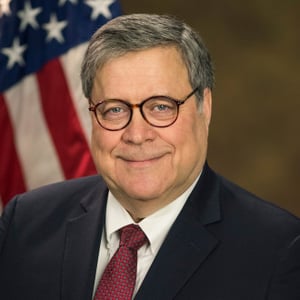
Former United States Attorney General
William P. Barr was born on May 23, 1950 in New York City. Mr. Barr received his A.B. in government from Columbia University in 1971 and his M.A. in government and Chinese studies in 1973. From 1973 to 1977, he served in the Central Intelligence Agency before receiving his J.D. with highest honors from George Washington University Law School in 1977.
In 1978, Mr. Barr served as a law clerk under Judge Malcolm Wilkey of the U.S. Court of Appeals for the District of Columbia Circuit. Following his clerkship, Mr. Barr joined the Washington, D.C. office of the law firm of Shaw, Pittman, Potts & Trowbridge as an associate. He left the firm to work in the White House under President Ronald Reagan from 1982 to 1983 on the domestic policy staff, then returned to the law firm and became a partner in 1985.
Under President George H.W. Bush, Mr. Barr served as the Deputy Attorney General from 1990 to 1991; the Assistant Attorney General of the Office of Legal Counsel from 1989 to 1990; and the 77th Attorney General of the United States from 1991 to 1993. While serving at the Department, Mr. Barr helped create programs and strategies to reduce violent crime and was responsible for establishing new enforcement policies in a number of areas including financial institutions, civil rights, and antitrust merger guidelines. Mr. Barr also led the Department’s response to the Savings & Loan crisis; oversaw the investigation of the Pan Am 103 bombing; directed the successful response to the Talladega prison uprising and hostage taking; and coordinated counter-terrorism activities during the First Gulf War.
From 1994 to 2000, Mr. Barr served as Executive Vice President and General Counsel for GTE Corporation. Mr. Barr then served as Executive Vice President and General Counsel of Verizon from 2000 to 2008. At both GTE and Verizon, Mr. Barr led the legal, regulatory, and government affairs activities of the companies.
After retiring from Verizon in 2008, Mr. Barr advised major corporations on government enforcement matters, as well as regulatory litigation. Mr. Barr served as Of Counsel at Kirkland & Ellis LLP in 2009 and rejoined the firm in 2017.
President Donald Trump announced his intention to nominate Mr. Barr on December 7, 2018, and he was confirmed as the 85th Attorney General of the United States by the U.S. Senate on February 14, 2019. U.S. Supreme Court Chief Justice John Roberts administered the oath of office. Mr. Barr joins John Crittenden (1841 and 1850-1853) as one of only two people in U.S. history to serve twice as Attorney General.

David McIntosh is a leader for the principles of limited constitutional government and individual freedom. He is president of the Club for Growth, the leading advocate for economic liberty.
Former Congressman David McIntosh represented Indiana's 2nd Congressional District in the United States Congress from 1995-2001. As a Freshman, David chaired the Subcommittee on Regulatory Relief. He passed the Congressional Review Act and held extensive oversight and field hearings to build a record of public support for regulatory relief initiatives in energy, biotechnology, pharmaceutical, healthcare, transportation and technology sectors. Another issue that he championed was the elimination of the marriage penalty in the Federal Tax Code.
David served during the Reagan administration as special assistant to Attorney General Edwin Meese III, and as special assistant to President Reagan for Domestic Affairs. During the first Bush administration, he served as executive director of the President's Council on Competitiveness and assistant to the Vice President. The Competitiveness Council coordinated the cost/benefit review of major regulations and promoted legal reform measures.
David is a co-founder of the Federalist Society for Law and Public Policy and serves on the Board of Directors. He remains active with several free market and conservative think tanks and grassroots organizations. David has also had stints at the Hudson Institute and as a Professor of Economics at Ball State School of Business.
Prior to the Club for Growth, David was a partner at Mayer Brown, LLP in Washington, DC.
David graduated from the University of Chicago Law School in 1983, and Yale University, BA, cum laude, in 1980. He and his wife, Ruthie, are the proud parents of Ellie age 17 and Davey age 13.
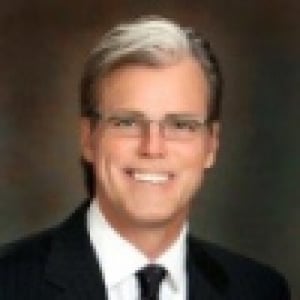
Vice President for Global Public Policy, Amazon.com
Paul Misener is Amazon.com’s Vice President for Global Public Policy, and has served in this position for 13 years.
Both an engineer (B.S., Electrical Engineering and Computer Science, Princeton University, 1985) and lawyer (J.D., George Mason University, 1993; Distinguished Alumni Award, 2001), he is responsible for formulating and representing the company’s public policy positions worldwide, as well as for managing policy specialists in Asia, Europe, and the Americas.
Formerly a partner in the law firm of Wiley, Rein & Fielding, Paul also served as Senior Legal Advisor to a Commissioner of the U.S. Federal Communications Commission. Prior to this government service, he was Intel Corporation’s Manager of Telecommunications and Computer Technology Policy, and leader of the computer industry’s Internet Access Coalition.
In the late 1980s, Paul was a policy specialist for the U.S. Department of Commerce’s National Telecommunications and Information Administration, where he was a U.S. delegate to several conferences of the International Telecommunication Union. Prior to that, he designed radio communications systems.
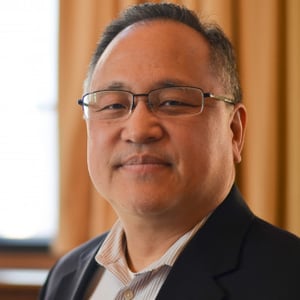
John H. Chestnut Professor of Law, Communication, and Computer & Information Science; Founding Director, Center for Technology, Innovation and Competition, University of Pennsylvania Law School
Christopher S. Yoo is the John H. Chestnut Professor of Law and a Professor at the Annenberg School for Communication and in the Computer & Information Science Department of School of Engineering and Applied Science at the University of Pennsylvania, where he is also the Founding Director of the Center for Technology, Innovation and Competition. He is the author of over one hundred scholarly works and has taught at over a dozen universities around the world. Professor Yoo received his A.B. from Harvard, his M.B.A. from UCLA, and his J.D. from Northwestern University. Before entering the academy, Professor Yoo clerked for Justice Anthony M. Kennedy of the Supreme Court of the United States and practiced law with the predecessor firm to Hogan Lovells under the supervision of now-Chief Justice John G. Roberts, Jr. Before joining the University of Pennsylvania, he taught for eight years at the Vanderbilt Law School. He is frequently called to testify before the U.S. Congress, Federal Trade Commission, Department of Justice Antitrust Division, Federal Communications Commission, foreign governments, and international organizations.

Is Google Monopolizing Something, and If So, What?
Scott Cleland, Susan Creighton, Montgomery N. Kosma, Geoffrey A. Manne, Charles "Rick" Rule
Last June, Christine Varney, then a lawyer in private practice, now President Obama's nominee to...
Quanta: Patent Rights in the Supreme Court
Richard A. Epstein, F. Scott Kieff, Fred von Lohmann, Adam Mossoff, Mark Lemley
LG Electronics owned a patent for a microprocessor chip, which it licensed to Intel, but...
Intellectual Property: American Exceptionalism or International Harmonization?
Shubha Ghosh, Brett M. Kavanaugh, F. Scott Kieff, Adam Mossoff, Steven M. Tepp
The Federalist Society's Intellectual Property Practice Group presented this panel discussion at the 2007 Annual...
Are Patents "Private Property" Under the Fifth Amendment? - Event Audio
Michael A. Gollin, Dean A. Monco, Loren A. Smith, Shubha Ghosh, Adam Mossoff
The modern regulatory state affects all forms of property rights, from land to chattels to...
Net Neutrality: Battle of the Titans
William P. Barr, David M. McIntosh, Paul Misener, Christopher S. Yoo
The Federalist Society's Telecommunications Practice Group presented this panel discussion at the 2006 Annual National...
Supreme Court on eBay
Kenneth Godlewski, Tom Corrado, Eric Sophir
In eBay, Inc. v. MercExchange, LLC, the Supreme Court rendered a highly anticipated decision holding...
Volume 2 Issue 1 - Dear Reader
We are pleased to present the Spring 2001 issue of Class Action Watch. A number...