

Judge, United States Court of Appeals, Eleventh Circuit
On March 20, 2018, Judge Elizabeth L. Branch (Lisa) was sworn in as a United States Circuit Judge for the Eleventh Circuit.
Judge Branch attended and graduated from Davidson College in North Carolina (B.A., cum laude, 1990), and Emory University School of Law (J.D., with distinction, 1994).
After graduating from law school, Judge Branch served as a federal law clerk to The Honorable J. Owen Forrester of the U.S. District Court for the Northern District of Georgia from 1994 to 1996. Following her clerkship, Judge Branch joined the litigation department of Smith, Gambrell & Russell, LLP in Atlanta as an associate and then a partner.
From 2004 to 2008, Judge Branch was a senior official in the Administration of President George W. Bush in Washington, D.C. She served first as the Associate General Counsel for Rules and Legislation at the U.S. Department of Homeland Security and then as the Counselor to the Administrator of the Office of Information and Regulatory Affairs at the U. S. Office of Management and Budget.
She returned to Smith Gambrell in 2008 as a litigation partner. Judge Branch then was appointed to the Court of Appeals of Georgia by Governor Nathan Deal, taking office on September 4, 2012, where she served until March 19, 2018.
Judge Branch is a member of the Board of Advisors of the Atlanta Lawyers Chapter for the Federalist Society for Law and Public Policy Studies.

Senior Editor, National Review
Historian Richard Brookhiser is a senior editor of National Review, a senior fellow at the National Review Institute, and the author of several books, including Founders’ Son, Right Time, Right Place, George Washington on Leadership, What Would the Founders Do?, Gentleman Revolutionary, Rules of Civility, America’s First Dynasty, Alexander Hamilton, American, Founding Father: Rediscovering George Washington, Way of the WASP, and The Outside Story.

Clayton J. and Henry R. Barber Professor of Law, Northwestern University Pritzker School of Law and Co-Chairman, Board of Directors, The Federalist Society
STEVEN GOW CALABRESI is the Clayton J. & Henry R. Barber Professor at Northwestern Pritzker School of Law. He has also co-taught in the Fall semester at Yale Law School from 2013 to the present. Calabresi clerked for Justice Antonin Scalia and Judges Robert H. Bork and Ralph K. Winter. He was a Special Assistant to Attorney General Meese from 1985 to 1987 and worked with Ken Cribb as his deputy in 1987 on the second floor of the West Wing of the Reagan White House. Calabresi has written books on presidential power and comparative constitutional law and the origins of judicial review. He and Gary Lawson are the co-editors of a casebook on U.S. Constitutional Law, and Calabresi is also the co-editor of a casebook on comparative constitutional law. He has written over seventy law review articles since 1990.
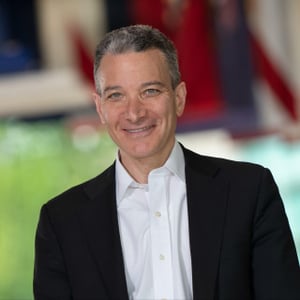
Professor of Law, The George Washington University Law School; CEO Emeritus, National Constitution Center
Jeffrey Rosen is the CEO Emeritus of the National Constitution Center, a professor of law at the George Washington University Law School, a senior fellow at the Foundation for Individual Rights and Expression (FIRE), and a contributing editor of The Atlantic. Host of "The Blessings of Liberty" podcast, he was previously the legal affairs editor of The New Republic and a staff writer for the New Yorker.
Rosen is the author of the New York Times bestsellers The Pursuit of Happiness and Conversations with RBG. His new book is The Pursuit of Liberty: How Hamilton vs. Jefferson Ignited the Lasting Battle Over Power in America.
Rosen is a graduate of Harvard College; Oxford University, where he was a Marshall Scholar; and Yale Law School. He is an elected member of the American Philosophical Society and the American Law Institute. In 2024, the French government recognized him as a Chevalier in the Ordre des Arts et des Lettres.
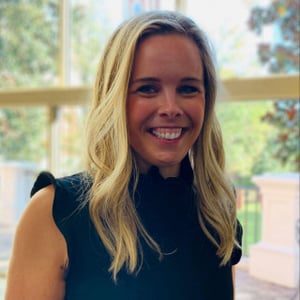
Senior Litigation Counsel, New Civil Liberties Alliance
Margaret Harker litigates for a public interest law firm. She has significant experience in government investigations and litigation, having served in the three branches of our government. Previously, she led complex Congressional investigations for the House Committee on Oversight and Government Reform—including the only government-wide investigation into federal agencies’ strategy (or lack thereof) to counter Chinese Communist Party political warfare against America.
Prior to her time on Capitol Hill, Harker served in the U.S. Department of Justice. She was an Assistant United States Attorney in both the Eastern District of Tennessee and the Eastern District of Virginia. She was a Trial Attorney in the National Security Division, Counterintelligence and Export Control Section, with an emphasis on the administration and enforcement of the Foreign Agents Registration Act.
Harker clerked for the Honorable Henry E. Hudson, U.S. District Court for the Eastern District of Virginia and the Honorable Randolph A. Beales, Court of Appeals of Virginia.
Earlier in her career, she studied in Beijing, China, and worked at the U.S. Chamber of Commerce’s China Center.
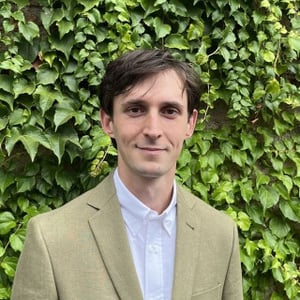
Writer and Editor, Tablet Magazine
Park MacDougald is Editor and Senior Writer at The Scroll, Tablet’s daily afternoon newsletter, a fellow at the Manhattan Institute, and a former recipient of the Novak Fellowship from The Fund for American Studies. His writing has appeared in Tablet, City Journal, New York Magazine, The Washington Examiner, and UnHerd.

Fellow, National Security Institute, Antonin Scalia Law School, George Mason University
Vince Vitkowsky chaired the Executive Committee of the Federalist Society’s International and National Security Law and Policy Practice Group for over a decade. He is also a Fellow at the National Security Institute of George Mason University Law School. Vince spent 45 years in private practice, primarily in AmLaw 100/200 firms and their spin-offs. His practice included domestic and international commercial arbitration and litigation, as well as cyber risks and liabilities. Vince's current focus is on national security policy, artificial intelligence, cybersecurity, and counterterrorism. He has often written and spoken on national security and other public policy issues. Among other affiliations, Vince has been an Adjunct Fellow at the Center for Law and Counterterrorism of the Foundation for the Defense of Democracies, a member of the Executive Committee of the American Branch of the International Law Association, and Co-Chair of the Committee on Interventions and Trial Observations of the International Bar Association’s Human Rights Institute. He received his B.A. from Northwestern University and his J.D. from Cornell Law School.
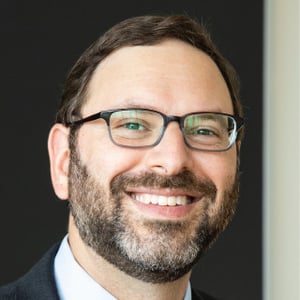
Antonin Scalia Professor of Law, Harvard Law School
Stephen E. Sachs is the Antonin Scalia Professor of Law at Harvard Law School, where he teaches civil procedure, conflict of laws, and seminars on constitutional law. His research focuses on the law and theory of constitutional interpretation, the jurisdiction of state and federal courts, the history of procedure and private law, and the role of the general common law in the U.S. legal system.
Sachs has authored numerous articles, essays, and book chapters. He is an elected member of the American Law Institute, an adviser to the ALI’s project on the Restatement of the Law (Third), Conflict of Laws, a former member of the Judicial Conference’s Advisory Committee on Appellate Rules, and a founding member of the Academic Freedom Alliance.
In 2020, Sachs received the Federalist Society’s Joseph Story Award, which recognizes a young academic who has demonstrated excellence in legal scholarship, a commitment to teaching, a concern for students, and who has made a significant public impact in a manner that advances the rule of law in a free society.
Sachs previously taught at Duke University School of Law and as a visiting professor at the University of Chicago Law School. Before entering academia, he practiced in the Washington, D.C., litigation group of Mayer Brown LLP, and he clerked for Chief Justice John G. Roberts Jr. as well as for Judge Stephen F. Williams of the U.S. Court of Appeals for the D.C. Circuit.
Sachs received his J.D. from Yale Law School, where he was executive editor of the Yale Law Journal and served both as executive editor and articles editor of the Yale Law & Policy Review. A Rhodes Scholar, he graduated from Oxford University with a first-class BA (Hons) degree in philosophy, politics, and economics. He received his A.B. degree summa cum laude in history from Harvard University, earning the Sophia Freund Prize.
Sachs is a licensed attorney in Massachusetts and the District of Columbia, and he is authorized to practice before the D.C. Circuit, the Second Circuit, the Seventh Circuit, and the Supreme Court of the United States.

Partner, Clement & Murphy, PLLC
Paul served as the 43rd Solicitor General of the United States from June 2005 until June 2008. Before his confirmation as Solicitor General, he served as Acting Solicitor General for nearly a year and as Principal Deputy Solicitor General for over three years.
Paul has argued over 100 cases before the United States Supreme Court, including McConnell v. FEC, Tennessee v. Lane, United States v. Booker, MGM v. Grokster, Hobby Lobby v. Burwell, Epic Systems Corp. v. Lewis, Rucho v. Common Cause, Facebook v. Duguid, and TransUnion v. Ramirez. Paul has argued more Supreme Court cases since 2000 than any lawyer in or out of government. He has also argued many important cases in the lower courts, including Walker v. Cheney, United States v. Moussaoui and NFL v. Brady.
Paul’s practice focuses on appellate matters, constitutional litigation and strategic counseling. He represents a broad array of clients in the Supreme Court and in federal and state appellate courts. Last year, for example, he successfully argued Supreme Court cases involving significant issues of energy regulation, statutory interpretation, state sovereign immunity and Article III standing, and successfully argued a trademark appeal in the Fourth Circuit, and a constitutional appeal before the en banc Eleventh Circuit.
Paul focuses on high-stakes appeals. In recent years, he successfully defended a $1.2 billion jury verdict for clients in a Tenth Circuit case, while securing the reversal of an over $2 billion jury verdict for another client in the Seventh Circuit and the approval of a nearly $1 billion dollar class action settlement in the Third Circuit. He has initiated major administrative law challenges and constitutional litigation against the federal government, such as the successful challenge to the HHS drug-pricing rule and threatened challenges that led to the withdrawal of the Treasury Department’s proposed cryptocurrency regulations. He also counsels clients on a variety of strategic legal questions, whether arising from pending legislation, government inquiries or ongoing litigation.
Paul has undertaken substantial pro bono engagements in the Supreme Court, such as twice successfully representing the defendant in Bond v. United States and successfully representing the Omaha Tribe in Nebraska v. Parker, the guardian ad litem in Adoptive Couple v. Baby Girl, the defendant in Sekhar v. United States, a high school football coach in Kennedy v. Bremerton, and the Little Sisters of the Poor. Paul’s pro bono representation also precipitated the federal government’s confession of error in United States v. Rojas.
Following law school, Paul clerked for Judge Laurence H. Silberman of the U.S. Court of Appeals for the D.C. Circuit and for Associate Justice Antonin Scalia of the U.S. Supreme Court. After his clerkships, he went on to serve as Chief Counsel of the U.S. Senate Subcommittee on the Constitution, Federalism and Property Rights.
Paul is a Distinguished Lecturer in Law at the Georgetown University Law Center, where he has taught in various capacities since 1998. He also serves as a Senior Fellow of the Law Center’s Supreme Court Institute. He is the Justice Joseph Story Distinguished Practitioner in Residence at the Gray Center at Scalia Law School.
Edward B. Shils Professor of Law and Professor of Political Science; Director, Penn Program on Regulation, University of Pennsylvania Law School
Cary Coglianese is the Edward B. Shils Professor of Law and Professor of Political Science at the University of Pennsylvania, where he currently serves as the director of the Penn Program on Regulation and has served as the law school’s Deputy Dean for Academic Affairs. He specializes in the study of regulation and regulatory processes, with an emphasis on the empirical evaluation of alternative regulatory strategies and the role of public participation, negotiation, and business-government relations in policy making. His most recent books include: Achieving Regulatory Excellence; Does Regulation Kill Jobs?; Regulatory Breakdown: The Crisis of Confidence in U.S. Regulation; Import Safety: Regulatory Governance in the Global Economy; and Regulation and Regulatory Processes.
Prior to joining Penn Law, Coglianese spent a dozen years on the faculty at Harvard University’s John F. Kennedy School of Government. He also has taught as a visiting law professor at Stanford and Vanderbilt, founded the Law & Society Association’s international collaborative research network on regulatory governance, served as a founding editor of the peer-reviewed journal Regulation & Governance, and created and now advises the daily production of The Regulatory Review. The chair of the Administrative Conference of the United States' committee on rulemaking, he has led a National Science Foundation initiative on e-rulemaking, served on the ABA’s task force on improving Regulations.Gov, and chaired a task force on transparency and public participation in the regulatory process that offered a blueprint to the Obama Administration on open government. He is a co-chair of the American Bar Association’s administrative law section committee on e-government, past co-chair of the section's committee on rulemaking, and a past member of the section's Council. He currently serves as a member of a committee of the National Academies of Sciences, Engineering, and Medicine studying performance-based safety regulation and of an Aspen Institute dialogue on energy policy governance. He has served as a consultant to the Administrative Conference of the United States, Environment Canada, the Organization for Economic Cooperation and Development, the U.S. Department of Commerce, the U.S. Department of Transportation, and the U.S. Environmental Protection Agency.
Maurice and Hilda Friedman Professor of Law, Columbia Law School; CEO, New Civil Liberties Alliance
Philip Hamburger is the Maurice and Hilda Friedman Professor of Law at Columbia Law School, and Chief Executive Officer at the New Civil Liberties Alliance. Before coming to Columbia, he was the John P. Wilson Professor at the University of Chicago Law School.
He writes on constitutional law and its history—with particular emphasis on religious liberty, freedom of speech and the press, judicial office, administrative power, and unconstitutional conditions.
His books are Separation of Church and State (Harvard 2002), Law and Judicial Duty (Harvard 2008), Is Administrative Law Unlawful? (Chicago 2014), The Administrative Threat (Encounter 2017), and Liberal Suppression: Section 501(c)(3) and the Taxation of Speech (Chicago 2018). A forthcoming book is Purchasing Submission: Conditions, Power, and Freedom (Harvard 2021).
He is a member of the American Academy of Arts and Sciences, and he has served on the board of directors of the American Society for Legal History. He has twice received the Sutherland Prize for the most significant contribution to English legal history, and has been awarded the Henry Paolucci - Walter Bagehot Book Award, the Hayek Book Prize, and the Bradley Prize.

United States District Judge, United States District Court for the Middle District of Florida
In November 2020, the Senate confirmed Kathryn Kimball Mizelle as a United States District Judge for the Middle District of Florida. At age 33, she became the youngest Article III judge in the country. Prior to her confirmation, Judge Mizelle was in private practice at Jones Day, where she focused on complex civil and criminal litigation and appeals. Judge Mizelle previously served at the United States Department of Justice in the Office of the Associate Attorney General, in the Southern Criminal Enforcement Section of the Tax Division, and in the United States Attorney’s Office for the Eastern District of Virginia. Judge Mizelle has also taught as an adjunct professor of law at the University of Florida Levin College of Law and at George Mason University’s Antonin Scalia Law School.
Judge Mizelle earned her B.A., summa cum laude, from Covenant College, and her J.D., summa cum laude, from the University of Florida Levin College of Law. After graduation, Judge Mizelle served as a law clerk at every level of the federal judiciary: at the Supreme Court for Justice Clarence Thomas, at the D.C. Circuit for Judge Gregory G. Katsas, at the Eleventh Circuit for Chief Judge William H. Pryor Jr., and at the Middle District of Florida for Judge James S. Moody Jr.

Judge, United States Court of Appeals, District of Columbia Circuit
Judge Rao was appointed to the United States Court of Appeals for the District of Columbia Circuit in March 2019. She graduated from Yale College in 1995 and the University of Chicago Law School in 1999. Following graduation, she served as a law clerk to Judge J. Harvie Wilkinson III of the U.S. Court of Appeals for the Fourth Circuit and, in the 2001 October Term, as law clerk to Justice Clarence Thomas of the U.S. Supreme Court. Between her clerkships, Judge Rao served as counsel for nominations and constitutional law to the U.S. Senate Committee on the Judiciary. In 2002, she joined the international arbitration group of Clifford Chance LLP in London, England. From 2005-2006, she served as Special Assistant and Associate White House Counsel to President George W. Bush. From 2006 to 2017, Judge Rao was a professor at the Antonin Scalia Law School at George Mason University, where she taught constitutional law, legislation and statutory interpretation, and the history and foundations of the administrative state. In 2014, she founded the Center for the Study of the Administrative State, a non-profit Center that promotes academic scholarship and public policy debates about administrative law. In July 2017, she was appointed to serve as the Administrator of the Office of Information and Regulatory Affairs in the Office of Management and Budget. She served in this position until her appointment to the D.C. Circuit.
Senior Fellow, Platte Institute
Laura Ebke, Ph.D. is the Platte Institute’s Senior Fellow, assisting policymakers and the public as the Nebraska Legislature implements the new Occupational Board Reform Act. The Act is Nebraska’s first comprehensive review of the state’s job licensing laws, and is a law Laura sponsored as a Nebraska state senator.
Laura is a lifelong Nebraskan, growing up in Fairbury and graduating from the Class of 1980. She has resided in Crete for 26 years.
Laura holds a Ph.D. in Political Science from the University of Nebraska. In addition to serving as the chair of the Nebraska Legislature’s Judiciary Committee, she served for 12 years on the Crete Public Schools Board of Education.
As a lifetime member of the Girl Scouts, Laura has volunteered for the organization for over 20 years, including as a board member and Vice President of Homestead Council Girl Scouts. She is also a merit badge counselor for Cornhusker Council Boy Scouts.
She is married to her high school sweetheart, Russ Ebke, a U.S. Navy veteran and family physician in Crete. Laura and Russ have three children, Jennifer, Tasha, and Isaac, and one granddaughter, Tamzin.
The Ebke family pets include cats Molly and Daisy, and Pip the bearded dragon.
Beton Michael Kaneb Professor of National Security and Military Affairs, Harvard University
In addition to his roles at Harvard, where he has also served as Harvard College Professor, head of Winthrop House, and Director of the John M. Olin Institute for Strategic Studies, Professor Rosen has also served as the civilian assistant to the director, Net Assessment in the Office of the Secretary of Defense, the Director of Political-Military Affairs on the staff of the National Security Council, and a professor in the Strategic Department at the Naval War College. He participated in the President's Commission on Integrated Long Term Strategy, and in the Gulf War Air Power Survey sponsored by the Secretary of the Air Force. He currently serves as Senior Counsellor at the Long Term Strategy Group. He has published articles on ballistic missile defense, the American theory of limited war, and the strategic implications of the AIDS epidemic. His books include Winning the Next War: Innovation and the Modern Military, Societies and Military Power: India and its Armies, and War and Human Nature.
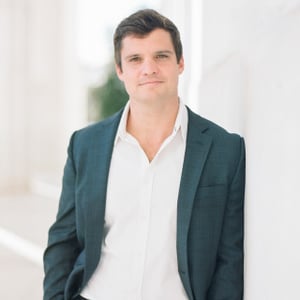
Managing Director, SCF Partners
Daniel G. West invests in energy services, equipment, and technology companies at SCF Partners in Houston, Texas. He provides equity capital and strategic growth assistance to entrepreneurs and leaders of both start-up ventures and established, growing businesses.
Prior to joining the private sector, Mr. West served as an infantry officer in the United States Marine Corps. As a platoon commander with the 22nd Marine Expeditionary Unit aboard the USS Mesa Verde, he led the Tactical Recovery of Aircraft and Personnel force in support of the NATO aerial campaign over Libya. He then served as executive officer of India Company, 3rd Battalion, 9th Marines as it mentored Afghan forces to assume lead security responsibility and executed counter-narcotics missions in Marjah, Helmand Province, Afghanistan. He also served as a clerk for Judge Laurence H. Silberman on the U.S. Court of Appeals for the D.C. Circuit.
Mr. West holds degrees in law, business administration, and economics from Harvard University, where he served as an editor of the Harvard Law Review and taught undergraduate courses in economics and government. He is a member of the Executive Committee of the International & National Security Law Practice Group of the Federalist Society and a term member of the Council on Foreign Relations.

Partner, Earth & Water Law
Susan Bodine is a partner at Earth & Water Law.
Susan Bodine is a former Assistant Administrator for EPA’s Office of Enforcement and Compliance Assurance (OECA). Prior to this position, Susan served as Chief Counsel for the Senate Committee on Environment and Public Works and previously worked for the House Committee on Transportation and Infrastructure.
This is Susan’s second position at EPA, having served as Assistant Administrator for the Office of Solid Waste and Emergency Response (now the Office of Land and Emergency Management) from 2006 to 2009.
Susan has also practiced environmental law at Covington and Burling LLP and at Barnes and Thornburg LLP.
Susan is a graduate of Princeton University and the University of Pennsylvania School of Law.
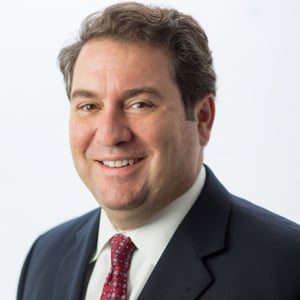
Former Attorney General, State of Arizona
Mark Brnovich served as Arizona's 26th Attorney General from 2015 to 2023. He was first inaugurated in 2015, and again in 2019 after winning re-election. Mark has spent most of his professional life serving as a prosecutor at the local, state, and federal levels. Mark met his wife Susan while they both worked as prosecutors for the Maricopa County Attorney's office. Mark worked in the Gang/Repeat Offender Unit and prosecuted many difficult and high profile cases from 1992 to 1998. He then went on to work as an Assistant Attorney General with the Arizona Attorney General's Office from 1998 to 2003, where he developed an expertise in gambling law. Brnovich later went on to serve as an Assistant United States Attorney for the District of Arizona where he prosecuted public integrity crimes, as well as crimes occurring in Indian Country.
Brnovich has also been a Judge Pro Tem of Maricopa County Superior Court, a Command Staff Judge Advocate in the U.S. Army National Guard, the Director for Constitutional Government at the Goldwater Institute, and the Director of the Arizona Department of Gaming, a law enforcement agency that investigates illegal gambling activity, as well as working with tribal regulators to ensure the integrity of tribal gaming.
Brnovich is known for restoring public confidence in the office of "Arizona's Top Cop" and for assembling some of the nation's most talented public servants for his administration. Mark argued at the United States Supreme Court in defense of the "one-person, one-vote" principle, was featured on 60 Minutes in defense of capital punishment, and has initiated national public education efforts to combat human sex trafficking.
Brnovich has been recognized by the National Federation of Independent Business as a "Champion of Small Business." and was elected by his bi-partisan colleagues to serve as the Chairman of the Conference of Western Attorneys General.
Mark's wife Susan was recently appointed by the United States Senate to serve as a U.S. District Judge for the District of Arizona. He has two teenage daughters and lives in Phoenix.
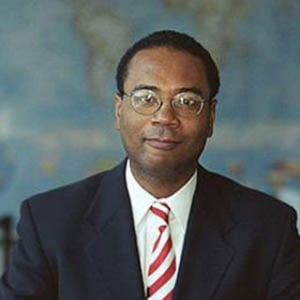
Chairman, Project 21 National Advisory Board, National Center for Public Policy Research
Horace Cooper is a senior fellow with the National Center for Public Policy Research, chairman of the Project 21 National Advisory Board and a legal commentator.
Horace averages over 400 talk radio appearances per year representing the National Center and Project 21, in addition to regular television appearances and interviews by the print media.
Horace taught constitutional law at George Mason University in Virginia and was a senior counsel to U.S. House Majority Leader Dick Armey.
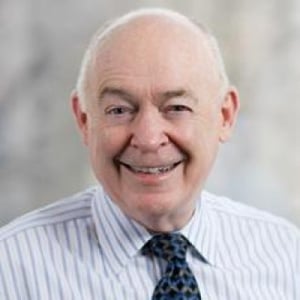
Principal, Beveridge & Diamond, PC
John offers clients the benefit of decades of experience as a top environmental lawyer, a leader of major bar and environmental organizations, and a distinguished military career.
John provides strategic counsel on high-stakes environmental and natural resources litigation, civil and criminal enforcement, and compliance. Working with clients makes the practice of law worthy and valuable to him as they advance strategic needs while protecting human health and the environment.
For more than two decades, John served as a senior leader on environment and natural resource matters at the United States Department of Justice (DOJ), where he supervised some of the department’s most significant litigation, including the Exxon Valdez oil spill, Love Canal, and Bunker Hill litigation. As the Senate-confirmed, Assistant Attorney General, ENRD, John worked on the most high-profile environment cases, and personally negotiated the multi-billion dollar resolutions of the Deepwater Horizon oil spill and the Volkswagen emissions scandal. These cases required a great deal of coordination, expert assistance, and sophisticated management of numerous players to reach successful outcomes. This experience has given John insight into the workings of large corporations, as well as into the challenges that major companies face in lawsuits.
As the former President of the Environmental Law Institute, the former Chair of the American Bar Association (ABA) Section on Environment, Energy, and Natural Resources, and the immediate past President of the American College of Environmental Lawyers, John has led each of the premier environmental organizations in the United States. In addition, he was the first government attorney to be elected and serve as the President of the District of Columbia Bar, now the largest bar in the nation.
Professional Background
John’s leadership is a defining characteristic of his long and distinguished legal career. Before joining the DOJ, John was the Chief Legislative Counsel of the U.S. Army. After graduating from the United States Military Academy at West Point, John served in Airborne, Ranger, and Special Forces units in Germany and Vietnam. His subsequent military assignments include as a criminal prosecutor in Germany and civil trial lawyer in the Pentagon; Chief of Litigation Branch, Europe; General Counsel, Defense Nuclear Agency; Staff Judge Advocate in Germany; and Director of Administrative and Civil Law, Judge Advocate General’s School, Charlottesville, Virginia. His military education includes being a Fellow, Army War College, and the Command and General Staff College. He is a graduate of the University of Santa Clara Law school (summa cum laude) and the University of Virginia (MA with honors).
John’s awards for government and military service include the President Rank Award from three different Presidents, the Bronze Star, Legion of Merit, Defense Meritorious Service Medal, Air Medal with Oak Leaf Clusters, and the Vietnamese Cross of Gallantry with Silver Star.
Partner, Arnold & Porter
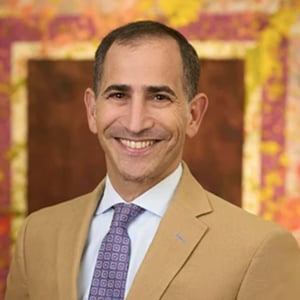
Brian Israel is Chair Arnold & Porter's Environmental Practice Group, as well as co-lead of the firm’s Environmental, Social and Corporate Governance (ESG) working group. Mr. Israel's practice focuses broadly on environmental litigation and counseling—including climate-related issues—and he is one of the nation's leading lawyers for Natural Resource Damages (NRD) claims. Over the course of his career, Mr. Israel has successfully resolved or litigated over one hundred environmental matters. Among other areas, Mr. Israel specializes in cases brought under federal and state environmental laws related to contaminated sites, including toxic tort lawsuits. Since 2010, Mr. Israel has been lead counsel to BP in relation to Deepwater Horizon NRD claims, and was also one of the trial attorneys at the Deepwater Horizon Clean Water Act (CWA) penalty trial. Mr. Israel represents multiple Fortune 500 companies in some of the largest and most complex environmental matters across the country.
Prior to joining the firm, Mr. Israel was an Honors Trial Attorney in the Environmental Enforcement Section of the US Department of Justice (DOJ). While at the DOJ, he handled several high-profile cases, including the largest NRD trial at the time. Additionally, Mr. Israel was awarded the Distinguished Service Award for his accomplishments in a Clean Air Act jury trial during his time at the DOJ. He also litigated claims on behalf of the US Environmental Protection Agency pursuant to the Clean Water Act; the Resource Conservation and Recovery Act (RCRA); and the Comprehensive Environmental Response, Compensation, and Liability Act (CERCLA).
Mr. Israel has spoken and written extensively about environmental law issues. He is a principal author of "Natural Resource Damages: A Guide to Litigating and Resolving NRD Cases," (ABA, 2019). For the last 15 years, Mr. Israel has maintained and regularly updated the State-by-State Guide to NRD Programs in All 50 States and Puerto Rico. Mr. Israel hosts and chairs the annual Advanced Conference on Litigating Natural Resource Damages (sponsored by Law Seminars International). He is the author of the "Natural Resource Damages" chapter in the Environmental Law Practice Guide (Gerrard, ed.). Mr. Israel has published on many other environmental law topics including environmental enforcement, corporate liability, regulatory reform, trial strategy, and Superfund. Mr. Israel's student note, "An Environmental Justice Critique of Risk Assessment," is published in the NYU Environmental Law Journal.
Sterling Professor Emeritus of Law, Yale Law School
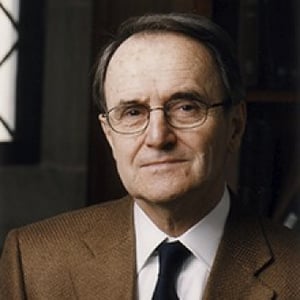
Mirjan Damaška is Sterling Professor Emeritus of Law at Yale Law School. He teaches and writes in the fields of comparative and foreign law, procedural law, evidence, international criminal law, and continental legal history.
He is the author of six books, among which The Faces of Justice and Evidence Law Adrift were translated into several languages. He has published more than 100 articles in professional journals of numerous countries.
He received his basic law degree at the University of Zagreb in his native Croatia. He then studied at the Academy of International Law at The Hague, and the Comparative Law Faculty in Luxembourg. He earned his Ph.D. at the University of Ljubljana (Slovenia). Following time spent practicing in the courts of former Yugoslavia, he began his teaching career at the University of Zagreb Law School, rising quickly to the rank of full professor, and briefly serving as Acting Dean. In 1971, he left his native land, and accepted a tenured position at the University of Pennsylvania Law School. Since 1976, he has been on the faculty of Yale Law School.
Damaška is a fellow of the American Academy of Arts and Sciences, a member of the International Academy of Comparative Law, the Croatian Academy of Arts and Sciences, and the American Society of Comparative Law. In 1978-79, he was fellow of the National Endowment for the Humanities. He is also holder of several honorary degrees.
He was keynote speaker and general reporter at many international congresses. Five symposia were organized about his work: Bielefeld (Germany) in 1987; Siena (Italy) in 1988; San Francisco in 1998; Zagreb (Croatia) in 2006; and New Haven in 2008. From 1990 to 1995, he served on the Advisory Board of the Central and East European Legal Initiative of ABA. Since 1995, he has periodically advised the Croatian government in its relations with the International War Crimes Tribunal for the Former Yugoslavia, and the International Court of Justice in The Hague.
In 2005, he was appointed Amicus Curiae of the International War Crimes Tribunal for the Former Yugoslavia in the matter of transferring cases to domestic courts. In 2009, he was presented the lifetime achievement award by the American Society of Comparative Law. In 2014, he was awarded the Life Achievement award by Jadranko Crnic Foundation, Croatia. He does counseling work on foreign law problems for law firms in New York, Los Angeles, and Washington.
In 2010 he was appointed special adviser to the Prime Minister of Croatia, and agent of the Republic of Croatia before the International Court of Justice, heading a team of Croatian and English lawyers in the case of Croatia v. Serbia.
Two books of essays have been published in his honor: Jackson, Langer, & Tillers (eds.), "Crime, Procedure, and Evidence: Essays in honor of Mirjan Damaška (Oxford 2008), and Ackerman, Ambos, Sikiric (eds.), "Visions of Justice, Liber Amicorum Mirjan Damaška" (Berlin 2016).
Professor of Comparative Constitutional Law, European University Institute
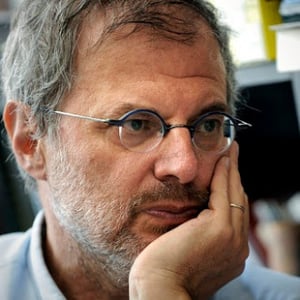
Since September 2016 Gábor Halmai, professor of law, is the chair of Comparative Constitutional Law at the European University Institute in Florence. Since January 2018 he is the Director of Graduate Studies at the Law Department. His primary research interests are comparative constitutional law, and international human rights. He has published several books and articles, as well as edited volumes on these topics in English, German and Hungarian. He is joining the EUI after a teaching and research career (at the Eötvös Loránd University in Hungary, the Princeton University in the USA, the the European Masters Program in Human Rights and Democratization in Italy) as well as years of professional career as chief advisor to the President of the Hungarian Constitutional Court, member of the EU Fundamental Rights Agency’s Management Board and numerous other civic activities.
Prior to joining to EUI Professor Halmai has worked on various research projects at the IWM in Vienna and the Woodrow Wilson School of Princeton University: Backsliding of liberal democracies within the European Union, with special focus on the development of constitutionalism and human rights in Hungary since its democratic transition in 1989-1990 till now; Models of state-church relations and religious freedom; Constitutionalism and transitional justice in Central and Eastern Europe. His most recent book, „Perspectives on Global Constitutionalism” deals with the use of foreign and international law by domestic courts (published by Eleven International Publishing in 2014). In addition to research, Professor Halmai has also been teaching and supervising students in Budapest, Princeton and Florence on the subjects of comparative constitutional law and human rights, as well as on rule of law.
Besides his academic work he was member of the EU Fundamental Rights Agency’s Management Board based in Vienna, Austria (2007-2010), the national director of the European Masters Program in Human Rights and Democratization in Venice, Italy (2003-2013), vice-chair of the Hungarian National Election Commission (2006-2010; chief counsellor to the President of the Hungarian Constitutional Court (1990-1996).
Gábor Halmai is founder and editor-in-chief of Fundamentum, the Hungarian human right quarterly, and Member of the Scientific Advisory Board of the European Yearbook on Human Rights, the Review of Constitutionalism and Constitutional Change (RC3), and the This Century’s Review.
Assistant Professor, University of Ústí nad Labem
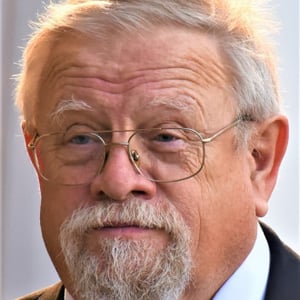
Daniel Kroupa is a Czech politician and philosopher, dissident, signatory of Charter 77, President of the Civic Democratic Alliance (ODA) from 1998 to 2001, former MP, Euro MP and senator. After the Velvet Revolution, he taught political philosophy at several faculties of Charles University in Prague. From 2005 to 2015, he was the Head of the Department of Political Science and Philosophy of the Faculty of Arts, University of Ústí nad Labem. Since 2015 he has been an assistant professor at this department.
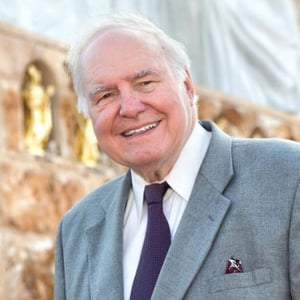
Philosopher, Journalist, Novelist, and Diplomat
Michael John Novak Jr. (1933–2017) was an American Roman Catholic philosopher, journalist, novelist, and diplomat. The author of more than forty books on the philosophy and theology of culture, Novak is most widely known for his book The Spirit of Democratic Capitalism (1982). In 1993 Novak was honored with an honorary doctorate at Universidad Francisco Marroquín due to his commitment to the idea of liberty. In 1994 he was awarded the Templeton Prize for Progress in Religion, which included a million-dollar purse awarded at Buckingham Palace. He wrote books and articles focused on capitalism, religion, and the politics of democratization.
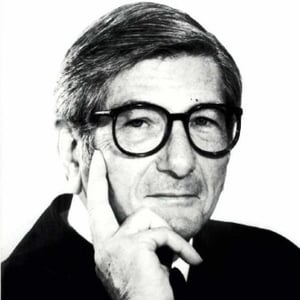
Former Judge, United States Court of Appeals, Fifth Circuit
Alvin Benjamin Rubin's long and storied tenure as a federal judge began with a nomination by President Lyndon B. Johnson in 1966 and ended in 1991 at his death.
Judge Rubin was born in Alexandria, Louisiana, in 1920, and received a B.S. from Louisiana State University in 1941. He started at Louisiana State University Law School in 1940. When World War II broke out, he enlisted in the U.S. Army, was assigned to General Patton's "Big Red 1," and served in the European Theatre of Operations in England, France, Belgium, and Germany, rising to the rank of Captain and serving as an Assistant Judge Advocate. After the war ended, he married Janice Ginsberg, also from Alexandria, and returned to Baton Rouge for law school in an accelerated post-war program for returning war veterans. He graduated first in his law school class in 1942 and was Editor-in-Chief of the Louisiana Law Review.
After his graduation, he began practicing law in Baton Rouge with J.Y. Sanders and Ben Miller, Sr., and after several years the firm of Sanders, Miller, Downing, Rubin and Kean was formed. Judge Rubin specialized in tax law, corporate transactions, and trust and estates law. He also was an arbitrator and mediator.
Soon after he started practice in 1942, the illness of a faculty member at the LSU Law School propelled Judge Rubin back into the classroom as a professor. Judge Rubin taught a variety of subjects continuously at the Law School until 1989, including Admiralty, Civil Code, Ethics, Negotiations, Constitutional Law, Federal Procedure, State and Local Tax Law, Federal Tax Law, Law Office Practice, and many others. Judge Rubin's love of teaching and of student interaction was particularly meaningful to him, and throughout his life Judge Rubin was invited to teach and lecture at schools around the world, including Harvard, Yale, Notre Dame, University of Pennsylvania, Cornell, University of Miami, University of Georgia, University of Texas, Tulane, and Duke. He also traveled to give presentations throughout Europe. Because of his expertise in civil law, during the Vietnam War, Judge Rubin was asked by the State Department to travel to South Vietnam and assist in drafting the constitution for South Vietnam. He also served as a moderator for the Aspen Institute and for many programs for the American Bar Association.
In 1963, Judge Rubin and Dean Henry George McMahon co-authored Louisiana Pleadings and Judicial Forms Annotated. For over 20 years, Judge Rubin continued the annual updates for this vital resource used by Louisiana attorneys. Before 1960, Louisiana civil law prohibited the establishment of Trusts. Judge Rubin was instrumental in the creation of a Trust Code for Louisiana, which was adopted by the Louisiana Legislature in 1960. In 1966 he and his wife, Janice, co-authored the Louisiana Trust Handbook, and later, he wrote Louisiana Wills and Trust: A Drafting System (with Professor Gerald LeVan). Judge Rubin's list of law review and journal articles spans many pages. Two of his most prominent works are "A Causerie on Lawyer's Ethics" and "Hazards of a Civilian Venturer in Federal Court: Travel and Travail on the Erie Railroad" (both in the Louisiana Law Review).
He then practiced law until 1966 when President Johnson nominated him to a new seat on the United States District Court for the Eastern District of Louisiana created by 80 Stat. 75. Judge Rubin served at an important time in the Court's history, hearing many of the desegregation and civil rights cases in the 1960s. He served as Chief Judge of the District and wrote and implemented the first comprehensive written pre-trial procedure rules for the District. He served on and chaired many committees for the Judicial Conference and co-wrote the first law clerk handbook for the federal system. Judge Rubin kept long hours and was often in his Chambers early. He always took home briefs to read and drafts of opinions to edit, keeping two secretaries busy at all times.
After eleven years as a judge on the federal district court, Judge Rubin was nominated in 1977 by President Jimmy Carter to fill a seat on the United States Court of Appeals for the Fifth Circuit vacated by John Minor Wisdom. Judge Rubin assumed senior status on July 1, 1989, and served in that capacity until his death in 1991 in Baton Rouge, Louisiana. In his memory, the Louisiana Law Review published a special edition (Vol. 52, 1992) dedicated solely to his life and work, including articles and remembrances by his wife, Justice Byron White, Judge John Minor Wisdom, Judge Charles Clark, Judge Fred Cassibry, Judge Henry Politz, and many others.
Judge Rubin wrote more than 700 important (and sometimes humorous) opinions during his time as a federal judge. His rulings included ones that ended Louisiana's exemption of women from juries, applied the Voting Rights Act to local elections, and upheld the rights of government employees to criticize their superiors and to organize unions. Judge Rubin's interests spanned poetry, drama, history, art, the classics, and music of all types. He enjoyed writing Gilbert-and-Sullivan-ish parodies concerning legal matters and performing them for students, clerks, lawyers, at judicial seminars, and even for United States Supreme Court Justices.
The judicial activity that Judge Rubin reportedly most enjoyed was conducting naturalization ceremonies in open court. Judge Rubin spoke not as a jurist but as the son of immigrants from Eastern Europe whose parents had lost many relatives to war and hatred. He spoke movingly of his parents, their courage, and their determination to give their children the education and opportunities they had never had. Judge Rubin always emphasized that those citizens, new though they were, had equal rights. They could vote. They could develop their own talents and those of their children. They were entitled to occupy as well as to stand before the bench of justice.
Judge Rubin also enjoyed the close friendship of his many law clerks (serving as officiant of at least one wedding) and was an avid tennis player and jogger, often enlisting law clerks and young lawyers as his tennis or running partner.
Judge Rubin was the first member of the LSU Law Center Hall of Alumni Distinction, and was the First Alumni Member of the LSU Phi Beta Kappa Chapter. He was awarded the Louisiana ACLU Award for his civil rights work and was active in the National Conference of Christians and Jews and his synagogue in Baton Rouge.
Judge John Minor Wisdom wrote that "Alvin Rubin was born to be a judge, a great judge. His intellect, scholarship, and judicial leadership place him in a select group. In recent years, some of this small group graced the Supreme Court: Holmes, Brandeis, and Cardozo. These judges would have welcomed him on equal intellectual terms and as a kindred spirit."
The New Orleans Chapter of the Federal Bar Association hosts an annual symposium in Judge Rubin's honor. The symposium is an annual discussion on aspects of federal law or practice as a living memorial to Judge Rubin's contribution to federal jurisprudence and legal scholarship. The symposium is well attended by his family, friends, former clerks, and lawyers.
Judge Rubin's wife, Janice, best summed him up. "[His] friends spanned continents and age barriers . . . . [He] was the jurist he was because he was the man the boy became, a man who remembered Biblical injunctions about relationships and courage, about discipline and standards, about justice and mercy and integrity, a man whose goal on the bench was the oath taken by judges on the Isle of Man: 'You shall do justice between cause and cause as equally as the backbone of the herring doth lie midmost of the fish.' "
Sterling Professor Emeritus of Law, Yale Law School
Mirjan Damaška is Sterling Professor Emeritus of Law at Yale Law School. He teaches and writes in the fields of comparative and foreign law, procedural law, evidence, international criminal law, and continental legal history.
He is the author of six books, among which The Faces of Justice and Evidence Law Adrift were translated into several languages. He has published more than 100 articles in professional journals of numerous countries.
He received his basic law degree at the University of Zagreb in his native Croatia. He then studied at the Academy of International Law at The Hague, and the Comparative Law Faculty in Luxembourg. He earned his Ph.D. at the University of Ljubljana (Slovenia). Following time spent practicing in the courts of former Yugoslavia, he began his teaching career at the University of Zagreb Law School, rising quickly to the rank of full professor, and briefly serving as Acting Dean. In 1971, he left his native land, and accepted a tenured position at the University of Pennsylvania Law School. Since 1976, he has been on the faculty of Yale Law School.
Damaška is a fellow of the American Academy of Arts and Sciences, a member of the International Academy of Comparative Law, the Croatian Academy of Arts and Sciences, and the American Society of Comparative Law. In 1978-79, he was fellow of the National Endowment for the Humanities. He is also holder of several honorary degrees.
He was keynote speaker and general reporter at many international congresses. Five symposia were organized about his work: Bielefeld (Germany) in 1987; Siena (Italy) in 1988; San Francisco in 1998; Zagreb (Croatia) in 2006; and New Haven in 2008. From 1990 to 1995, he served on the Advisory Board of the Central and East European Legal Initiative of ABA. Since 1995, he has periodically advised the Croatian government in its relations with the International War Crimes Tribunal for the Former Yugoslavia, and the International Court of Justice in The Hague.
In 2005, he was appointed Amicus Curiae of the International War Crimes Tribunal for the Former Yugoslavia in the matter of transferring cases to domestic courts. In 2009, he was presented the lifetime achievement award by the American Society of Comparative Law. In 2014, he was awarded the Life Achievement award by Jadranko Crnic Foundation, Croatia. He does counseling work on foreign law problems for law firms in New York, Los Angeles, and Washington.
In 2010 he was appointed special adviser to the Prime Minister of Croatia, and agent of the Republic of Croatia before the International Court of Justice, heading a team of Croatian and English lawyers in the case of Croatia v. Serbia.
Two books of essays have been published in his honor: Jackson, Langer, & Tillers (eds.), "Crime, Procedure, and Evidence: Essays in honor of Mirjan Damaška (Oxford 2008), and Ackerman, Ambos, Sikiric (eds.), "Visions of Justice, Liber Amicorum Mirjan Damaška" (Berlin 2016).
Professor of Comparative Constitutional Law, European University Institute
Since September 2016 Gábor Halmai, professor of law, is the chair of Comparative Constitutional Law at the European University Institute in Florence. Since January 2018 he is the Director of Graduate Studies at the Law Department. His primary research interests are comparative constitutional law, and international human rights. He has published several books and articles, as well as edited volumes on these topics in English, German and Hungarian. He is joining the EUI after a teaching and research career (at the Eötvös Loránd University in Hungary, the Princeton University in the USA, the the European Masters Program in Human Rights and Democratization in Italy) as well as years of professional career as chief advisor to the President of the Hungarian Constitutional Court, member of the EU Fundamental Rights Agency’s Management Board and numerous other civic activities.
Prior to joining to EUI Professor Halmai has worked on various research projects at the IWM in Vienna and the Woodrow Wilson School of Princeton University: Backsliding of liberal democracies within the European Union, with special focus on the development of constitutionalism and human rights in Hungary since its democratic transition in 1989-1990 till now; Models of state-church relations and religious freedom; Constitutionalism and transitional justice in Central and Eastern Europe. His most recent book, „Perspectives on Global Constitutionalism” deals with the use of foreign and international law by domestic courts (published by Eleven International Publishing in 2014). In addition to research, Professor Halmai has also been teaching and supervising students in Budapest, Princeton and Florence on the subjects of comparative constitutional law and human rights, as well as on rule of law.
Besides his academic work he was member of the EU Fundamental Rights Agency’s Management Board based in Vienna, Austria (2007-2010), the national director of the European Masters Program in Human Rights and Democratization in Venice, Italy (2003-2013), vice-chair of the Hungarian National Election Commission (2006-2010; chief counsellor to the President of the Hungarian Constitutional Court (1990-1996).
Gábor Halmai is founder and editor-in-chief of Fundamentum, the Hungarian human right quarterly, and Member of the Scientific Advisory Board of the European Yearbook on Human Rights, the Review of Constitutionalism and Constitutional Change (RC3), and the This Century’s Review.
Assistant Professor, University of Ústí nad Labem
Daniel Kroupa is a Czech politician and philosopher, dissident, signatory of Charter 77, President of the Civic Democratic Alliance (ODA) from 1998 to 2001, former MP, Euro MP and senator. After the Velvet Revolution, he taught political philosophy at several faculties of Charles University in Prague. From 2005 to 2015, he was the Head of the Department of Political Science and Philosophy of the Faculty of Arts, University of Ústí nad Labem. Since 2015 he has been an assistant professor at this department.
Philosopher, Journalist, Novelist, and Diplomat
Michael John Novak Jr. (1933–2017) was an American Roman Catholic philosopher, journalist, novelist, and diplomat. The author of more than forty books on the philosophy and theology of culture, Novak is most widely known for his book The Spirit of Democratic Capitalism (1982). In 1993 Novak was honored with an honorary doctorate at Universidad Francisco Marroquín due to his commitment to the idea of liberty. In 1994 he was awarded the Templeton Prize for Progress in Religion, which included a million-dollar purse awarded at Buckingham Palace. He wrote books and articles focused on capitalism, religion, and the politics of democratization.
Former Judge, United States Court of Appeals, Fifth Circuit
Alvin Benjamin Rubin's long and storied tenure as a federal judge began with a nomination by President Lyndon B. Johnson in 1966 and ended in 1991 at his death.
Judge Rubin was born in Alexandria, Louisiana, in 1920, and received a B.S. from Louisiana State University in 1941. He started at Louisiana State University Law School in 1940. When World War II broke out, he enlisted in the U.S. Army, was assigned to General Patton's "Big Red 1," and served in the European Theatre of Operations in England, France, Belgium, and Germany, rising to the rank of Captain and serving as an Assistant Judge Advocate. After the war ended, he married Janice Ginsberg, also from Alexandria, and returned to Baton Rouge for law school in an accelerated post-war program for returning war veterans. He graduated first in his law school class in 1942 and was Editor-in-Chief of the Louisiana Law Review.
After his graduation, he began practicing law in Baton Rouge with J.Y. Sanders and Ben Miller, Sr., and after several years the firm of Sanders, Miller, Downing, Rubin and Kean was formed. Judge Rubin specialized in tax law, corporate transactions, and trust and estates law. He also was an arbitrator and mediator.
Soon after he started practice in 1942, the illness of a faculty member at the LSU Law School propelled Judge Rubin back into the classroom as a professor. Judge Rubin taught a variety of subjects continuously at the Law School until 1989, including Admiralty, Civil Code, Ethics, Negotiations, Constitutional Law, Federal Procedure, State and Local Tax Law, Federal Tax Law, Law Office Practice, and many others. Judge Rubin's love of teaching and of student interaction was particularly meaningful to him, and throughout his life Judge Rubin was invited to teach and lecture at schools around the world, including Harvard, Yale, Notre Dame, University of Pennsylvania, Cornell, University of Miami, University of Georgia, University of Texas, Tulane, and Duke. He also traveled to give presentations throughout Europe. Because of his expertise in civil law, during the Vietnam War, Judge Rubin was asked by the State Department to travel to South Vietnam and assist in drafting the constitution for South Vietnam. He also served as a moderator for the Aspen Institute and for many programs for the American Bar Association.
In 1963, Judge Rubin and Dean Henry George McMahon co-authored Louisiana Pleadings and Judicial Forms Annotated. For over 20 years, Judge Rubin continued the annual updates for this vital resource used by Louisiana attorneys. Before 1960, Louisiana civil law prohibited the establishment of Trusts. Judge Rubin was instrumental in the creation of a Trust Code for Louisiana, which was adopted by the Louisiana Legislature in 1960. In 1966 he and his wife, Janice, co-authored the Louisiana Trust Handbook, and later, he wrote Louisiana Wills and Trust: A Drafting System (with Professor Gerald LeVan). Judge Rubin's list of law review and journal articles spans many pages. Two of his most prominent works are "A Causerie on Lawyer's Ethics" and "Hazards of a Civilian Venturer in Federal Court: Travel and Travail on the Erie Railroad" (both in the Louisiana Law Review).
He then practiced law until 1966 when President Johnson nominated him to a new seat on the United States District Court for the Eastern District of Louisiana created by 80 Stat. 75. Judge Rubin served at an important time in the Court's history, hearing many of the desegregation and civil rights cases in the 1960s. He served as Chief Judge of the District and wrote and implemented the first comprehensive written pre-trial procedure rules for the District. He served on and chaired many committees for the Judicial Conference and co-wrote the first law clerk handbook for the federal system. Judge Rubin kept long hours and was often in his Chambers early. He always took home briefs to read and drafts of opinions to edit, keeping two secretaries busy at all times.
After eleven years as a judge on the federal district court, Judge Rubin was nominated in 1977 by President Jimmy Carter to fill a seat on the United States Court of Appeals for the Fifth Circuit vacated by John Minor Wisdom. Judge Rubin assumed senior status on July 1, 1989, and served in that capacity until his death in 1991 in Baton Rouge, Louisiana. In his memory, the Louisiana Law Review published a special edition (Vol. 52, 1992) dedicated solely to his life and work, including articles and remembrances by his wife, Justice Byron White, Judge John Minor Wisdom, Judge Charles Clark, Judge Fred Cassibry, Judge Henry Politz, and many others.
Judge Rubin wrote more than 700 important (and sometimes humorous) opinions during his time as a federal judge. His rulings included ones that ended Louisiana's exemption of women from juries, applied the Voting Rights Act to local elections, and upheld the rights of government employees to criticize their superiors and to organize unions. Judge Rubin's interests spanned poetry, drama, history, art, the classics, and music of all types. He enjoyed writing Gilbert-and-Sullivan-ish parodies concerning legal matters and performing them for students, clerks, lawyers, at judicial seminars, and even for United States Supreme Court Justices.
The judicial activity that Judge Rubin reportedly most enjoyed was conducting naturalization ceremonies in open court. Judge Rubin spoke not as a jurist but as the son of immigrants from Eastern Europe whose parents had lost many relatives to war and hatred. He spoke movingly of his parents, their courage, and their determination to give their children the education and opportunities they had never had. Judge Rubin always emphasized that those citizens, new though they were, had equal rights. They could vote. They could develop their own talents and those of their children. They were entitled to occupy as well as to stand before the bench of justice.
Judge Rubin also enjoyed the close friendship of his many law clerks (serving as officiant of at least one wedding) and was an avid tennis player and jogger, often enlisting law clerks and young lawyers as his tennis or running partner.
Judge Rubin was the first member of the LSU Law Center Hall of Alumni Distinction, and was the First Alumni Member of the LSU Phi Beta Kappa Chapter. He was awarded the Louisiana ACLU Award for his civil rights work and was active in the National Conference of Christians and Jews and his synagogue in Baton Rouge.
Judge John Minor Wisdom wrote that "Alvin Rubin was born to be a judge, a great judge. His intellect, scholarship, and judicial leadership place him in a select group. In recent years, some of this small group graced the Supreme Court: Holmes, Brandeis, and Cardozo. These judges would have welcomed him on equal intellectual terms and as a kindred spirit."
The New Orleans Chapter of the Federal Bar Association hosts an annual symposium in Judge Rubin's honor. The symposium is an annual discussion on aspects of federal law or practice as a living memorial to Judge Rubin's contribution to federal jurisprudence and legal scholarship. The symposium is well attended by his family, friends, former clerks, and lawyers.
Judge Rubin's wife, Janice, best summed him up. "[His] friends spanned continents and age barriers . . . . [He] was the jurist he was because he was the man the boy became, a man who remembered Biblical injunctions about relationships and courage, about discipline and standards, about justice and mercy and integrity, a man whose goal on the bench was the oath taken by judges on the Isle of Man: 'You shall do justice between cause and cause as equally as the backbone of the herring doth lie midmost of the fish.' "
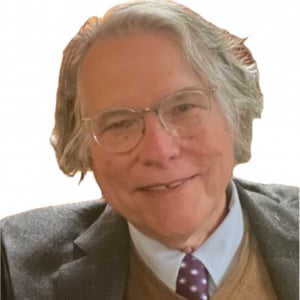
Partner, Earth and Water Law; retired Yale Law School professor (1981-2025), Yangtze River Distinguished Professor, Guangzhou Law School, ChinaDistinguished Adjunct Professor at Antonin Scalia Law School
E. Donald Elliott is a Florence Rogatz Visiting Professor of Law at Yale Law School and a leading academic scholar, as well as practitioner, in the fields of administrative and environmental law. He is “one of the most well-known, well-regarded environmental law professors in the nation,” according to John Cruden, former President of the Environmental Law Institute and Assistant Attorney General, Environment and Natural Resources Division, U.S. Department of Justice during the Obama administration. Elliott has been on the Yale Law faculty since 1981 and currently teaches courses in environmental law, energy law, administrative law and civil procedure. He is also senior of counsel in the Washington D.C. office of Covington & Burling LLP, and co-chair of the firm's Environmental Practice Group. From 2003 until he joined Covington in 2013, he was a partner in Willkie Farr & Gallagher LLP, chairing the firm’s worldwide Environment, Health and Safety Department.
From 1989 to 1991, Elliott served as Assistant Administrator and General Counsel of the U.S. Environmental Protection Agency (EPA). In 1993, he was named to the first endowed chair in environmental law and policy at any major American law school, the Julien and Virginia Cornell Chair in Environmental Law and Litigation at Yale Law School. From 2003-2009, he was a member of the National Academy of Sciences Board on Environmental Studies and Toxicology, which advises the federal government on environmental issues. Elliott also testifies frequently in Congress on environmental issues.
He has served as a consultant on improving the relationship of law and science to the Federal Courts Study Committee, which was chartered by Congress to make recommendations for improving the federal courts, and to the Carnegie Commission for Law, Science and Government. He co-chaired the National Environmental Policy Institute’s Committee on Improving Science at EPA.
Elliott is a Senior Fellow of the Administrative Conference of the United States (ACUS) and an elected member of the American College of Environmental Lawyers and the American Law Institute. He serves on the Board of the Connecticut Fund for the Environment and as chair of its legal committee, as well on the Advisory Board for NYU’s Institute for Policy Integrity. He is a former member of the boards of the Environmental Law Institute, and the Center for Clean Air Policy. He is the author or coauthor of seven books and has published more than 70 articles in professional journals. He was named one of the top 25 environmental attorneys in the United States by the National Law Journal and is highly ranked in Chambers USA: Leading Lawyers for Business; Best Lawyers in America; D.C. Super Lawyers; Who’s Who in American Law; and Who’s Who in the World.
He earned both his B.A., summa cum laude and Phi Beta Kappa, and his J.D. from Yale. Following graduation, he was a law clerk for Gerhard Gesell in the U.S. District Court for the District of Columbia, and for Chief Judge David Bazelon of the U.S. Court of Appeals for the District of Columbia Circuit.
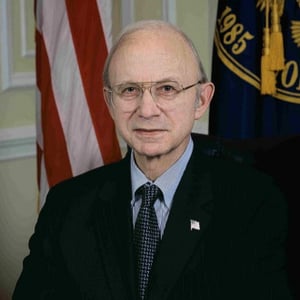
Former Archivist of the United States
Allen Weinstein (September 1, 1937 – June 18, 2015) was an American historian, educator, and federal official who served in several different offices. He was, under the Reagan administration, cofounder of the National Endowment for Democracy in 1983. He served as the Archivist of the United States from February 16, 2005, until his resignation on December 19, 2008. After his resignation, he returned to the International Foundation for Electoral Systems as a senior strategist and was a visiting faculty member at the University of Maryland.
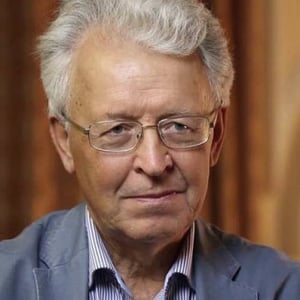
Professor, Department of International Finance, Moscow State Institute for International Relations
Professor, Department of Moscow State Institute of International Finance, doctor of economic sciences, corresponding member of the Academy of Economics and Commerce. He was consultant of the United Nations (1991-1993), member of the Advisory Council to the President of the European Bank for Reconstruction and Development (EBRD) (1993-1996), head of the Department of international monetary relations of the Ministry of Foreign Affairs Russia (2001-11).
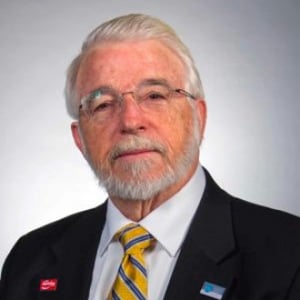
Founder; Chairman Emeritus, Competitive Enterprise Institute
Fred L. Smith, Jr. is the founder and Chairman Emeritus of the Competitive Enterprise Institute. He served as president from 1984 to 2013 and is currently the Director of CEI’s Center for Advancing Capitalism.
His public policy research has covered a wide range of topics, including regulatory reform, free market environmentalism, antitrust law, and international finance and comparative economics. Smith’s current focus is bringing leaders in the business and academic worlds together to defend capitalism and craft narratives that highlight the moral legitimacy of free markets.
His many published works include chapters in the books “Field Guide to Effective Communication” (2004), “Corporate Aftershock: The Public Policy Lessons from the Collapse of Enron and Other Major Corporations” (2003), “Ecology, Liberty, & Property: A Free Market Environmental Reader” (2000), “The Future of Financial Privacy: Private Choices versus Political Rules” (1999), “Environmental Politics: Public Costs, Private Rewards” (1992), and “Steering The Elephant: How Washington Works” (1987). His academic articles have appeared in journals such as Harvard Journal of Law and Economics and Knowledge, Technology, and Policy.
Smith has also written widely for leading newspapers and magazines such as The Wall Street Journal, Washington Post, USA Today, National Journal, Economic Affairs, and Forbes. He has also made hundreds of television and radio appearances on networks such as ABC, CNBC, CNN, Fox News, National Public Radio, and Radio America, among others.
Before founding CEI, Smith served as Director of Government Relations for the Council for a Competitive Economy, as a senior economist for the Association of American Railroads, and for five years as a Senior Policy Analyst at the Environmental Protection Agency. He is currently a member of the Board of Directors of the Competitive Enterprise Institute, the American Conservative Union, and the American Council on Science and Health and a member of the Foundation for Economic Education’s Faculty Network.
Smith graduated with top honors and holds a Bachelors of Science in Theoretical Mathematics and Political Science from Tulane University. He has also done graduate work in mathematics and applied mathematical economics at Harvard, SUNY at Buffalo, and the University of Pennsylvania.

Remembering Gordon Wood: The Revolution, the Constitution, and the Work of History
Lisa Branch, Richard Brookhiser, Steven G. Calabresi, Jeffrey Rosen
Gordon S. Wood, who passed away in June, was one of the nation’s most influential...
Foreign Influence Operations and National Security
Margaret Harker, Park MacDougald, Vincent Vitkowsky
Foreign influence operations have become increasingly important in geopolitical competition and American national security. China...
Hon. Robert H. Bork Memorial Lecture
Stephen E. Sachs
The 2024 National Lawyers Convention will take place November 14-16, 2024 at the Washington Hilton in...
Administrative Law and Regulation: What Is the Future of Administrative Law?
Paul D. Clement, Cary Coglianese, Philip A. Hamburger, Kathryn Kimball Mizelle, Neomi Rao
The Supreme Court's latest term was one of its most significant for administrative law. The...
There Is No Place Like Nebraska [The FedSoc Films Podcast]
Laura Ebke
In this episode of the FedSoc Films Podcast, Laura Ebke, a Senior Fellow at the...
New START, Nuclear Weapons, and the New Landscape: Arms Control and Deterrence Post-Ukraine
Stephen P. Rosen, Daniel G. West
In February 2023, Russian President Vladimir Putin announced that Russia would withdraw from the New...
Environmental Justice, Civil Rights, and the Rule of Law
Susan P. Bodine, Mark Brnovich, Horace Cooper, John C. Cruden, Brian D. Israel
This panel will evaluate efforts in the Biden administration, building upon executive actions dating back...
The Judiciary and the Role of the Rule of Law [Archive Collection]
Mirjan R. Dama?ka, Gábor Halmai, Daniel Kroupa, Michael J. Novak, Alvin Rubin
On November 30- December 1, 1990, the Federalist Society hosted its annual National Lawyers Convention...
The Judiciary and the Role of the Rule of Law [Archive Collection]
Mirjan R. Dama?ka, Gábor Halmai, Daniel Kroupa, Michael J. Novak, Alvin Rubin
On November 30- December 1, 1990, the Federalist Society hosted its annual National Lawyers Convention...
Environmental Problems in Eastern Europe: Learning from the United States' Mistakes [Archive Collection]
E. Donald Elliott, Allen Weinstein, Valentin Katasonov, Fred L. Smith
On November 30- December 1, 1990, the Federalist Society hosted its annual National Lawyers Convention...