

Founder and Co-Director, James Wilson Institute
Hadley Arkes joined the faculty of Amherst College in 1966. He became the Edward Ney Professor of Jurisprudence in 1987, and held that chair until he retired officially in July 2015. But he has not retired from writing and speaking. He has carried that teaching into a new phase; he has become the Founder and Director of the James Wilson Institute on Natural Rights and the American Founding in Washington, D.C. He has written eight books, mostly with Princeton and Cambridge University Presss. Among the books at Princeton have been: The Philosopher in the City (1981), First Things (1986), Beyond the Constitution (1990), and The Return of George Sutherland (1994). With Cambridge Press he has done Natural Rights and the Right to Choose (2002), and Constitutional Illusions & Anchoring Truths: The Touchstone of the Natural Law (2010). His most recent book, with Regnery Press is Mere Natural Law (2023) His articles have appeared in professional journals, but apart from his writing in more scholarly formats, he has become known to a wider audience through his writings in the Wall Street Journal, National Review, Civitas and First Things, a journal that took its name from his book of that title.
He was the main advocate, and architect, of the bill that became known as the Born-Alive Infants’ Protection Act. The account of his experience, in moving the bill through Congress, is contained as an epilogue or memoir in his book, Natural Rights & the Right to Choose. Arkes first prepared his proposal as part of the debating kit assembled for the first George Bush in 1988. The purpose of that proposal was to offer the “most modest first step” of all in legislating on abortion, and opening a conversation even with people who called themselves “pro-choice.” Professor Arkes proposed to begin simply by preserving the life of a child who survived an abortion–contrary to the holding of one federal judge, that such a child was not protected by the laws. Professor Arkes led the testimony on the bill before the Judiciary Committee of the U.S. House in July 2000, then again in July 2001. The legislative calendar was upended in the aftermath of September 11th, but in March 2002, the bill was brought to the floor of the House, where it passed unanimously. To the surprise of Professor Arkes, the bill was brought to the floor of the Senate on July 18 by the Deputy Majority Leader, Harry Reid, and passed in the same way. On August 5, President Bush signed the bill into law with Professor Arkes in attendance.
Professor Arkes was the founder, at Amherst, of the Committee for the American Founding, a group of alumni and students seeking to preserve, at Amherst, the doctrines of “natural rights” taught by the American Founders and Lincoln. That interest has been carried over now to the founding of a new center for the jurisprudence of natural law, in Washington, D.C.: the James Wilson Institute on Natural Rights and the American Founding, named for one of the premier minds among the American Founders. Professor Arkes has drawn to this project a cluster of accomplished federal judges who have wanted to get a firmer hold on the natural law, and brought them together with some gifted teachers of philosophy and law. The new institute will be sponsoring lectures and seminars in Washington and other parts of the country. The purpose of this new James Wilson Institute is to teach anew, to lawyers, judges, and students those principles of law that furnished the guide to the American Founders as they set about framing a Constitution. And the hope is to restore, to a new generation, the furnishings of mind of the men who formed this regime.
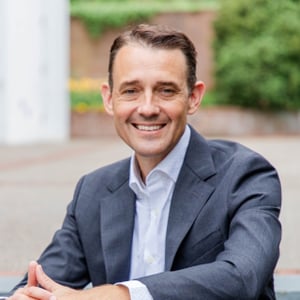
Senior Vice President, Strategic Initiatives & Special Counsel to the President, Alliance Defending Freedom
Ryan Bangert serves as senior vice president for strategic initiatives and special counsel to the president at Alliance Defending Freedom. He oversees ADF’s Blackstone Legal Fellowship and Research & Innovation Team. He also advises executive leadership on strategic initiatives.
Before joining ADF, Bangert served as deputy first assistant attorney general and deputy for legal counsel in the office of the Texas attorney general, and as deputy for civil litigation for Missouri Attorney General Josh Hawley. Prior to his government service, Bangert was a litigation partner at Baker Botts L.L.P., where he was a member of the firm’s commercial litigation and appellate practice sections.
Bangert has been published at First Things, Civitas Outlook, Law & Liberty, National Review, Daily Wire, The Hill, Washington Examiner, The Federalist, Fox News, and the American Reformer. He speaks nationally on constitutional, cultural, and religious liberty issues. He also serves as Visiting Faculty in Law at the University of Austin.
He earned his J.D. from Southern Methodist University, where he was a Hatton Sumners scholar and graduated first in his class. Following law school, he clerked for the Honorable Patrick E. Higginbotham on the Fifth Circuit Court of Appeals.

Anne Fleming Research Professor and Professor of Law, Georgetown University Law Center; Faculty Director, Georgetown Center for the Constitution
Stephanie Barclay is a Professor of Law at Georgetown Law School, and the Faculty Director of the Georgetown Center for the Constitution. Her research focuses on the role our different democratic institutions play in protecting minority rights, particularly at the intersection of free speech and religious exercise. Barclay‘s work is published or is forthcoming in leading journals such as the Harvard Law Review, the Chicago Law Review, the University of Pennsylvania Law Review, and the Yale Law Journal Forum. One of her articles was also selected for the 2020 Stanford/Harvard/Yale Junior Faculty Forum. Her work has been featured in many media outlets, including The New York Times, The Wall Street Journal, The Washington Post, USA Today, Bloomberg BNA, The Hill, and Law 360. And her work has also been cited by the U.S. Supreme Court.
Prior to joining Georgetown, Barclay was twice voted Professor of the Year. Barclay has also litigated constitutional cases at both the trial and appellate level, including before the U.S. Supreme Court. Barclay served as a law clerk to Judge N. Randy Smith on the U.S. Court of Appeals for the Ninth Circuit, and to Justice Neil M. Gorsuch of the U.S. Supreme Court.
Barclay is a Faculty Affiliate at the Constitutional Law Center at Stanford Law School; and she is a Nootbaar Fellow at the Nootbaar Institute on Law, Religion, and Ethics at Pepperdine University. She currently serves as the Chair for the AALS Law and Religion Section and as a Member of the Executive Committee for the AALS Constitutional Law Section. She graduated summa cum laude from BYU Law School, where she was elected to the Order of the Coif. She is completing a Ph.D. in Law at Oxford University as a Clarendon Scholar and a Tang Scholar.
President, Catholic Student Chapter

Judge, United States Court of Appeals, Fifth Circuit
Judge Duncan received his B.A. from Louisiana State University in 1994, his J.D. from the Paul M. Hebert Law Center at Louisiana State University in 1997, and his LL.M. from Columbia Law School in 2004.
After graduating from law school, he clerked for Louisiana-based Circuit Judge John Malcolm Duhé Jr. of the United States Court of Appeals for the Fifth Circuit.
From 2008–2012, Duncan served as Appellate Chief for Louisiana's Attorney General's office. From 2012–2014, he served as general counsel of the Becket Fund for Religious Liberty. From 2004-2008, he was an assistant professor of law at the University of Mississippi School of Law.
Before becoming a judge, Duncan practiced at the Washington, D.C. firm of Schaerr Duncan LLP, where he was a founding partner. He was appointed by President Trump to the United States Court of Appeals for the Fifth Circuit on May 1, 2018.
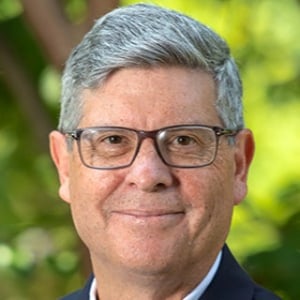
E. Claiborne Robins Distinguished Chair in Law, University of Richmond School of Law
Professor Kurt Lash teaches and writes about constitutional law. Founder and director of the Richmond Program on the American Constitution, Professor Lash has published widely on the subjects of constitutional law and constitutional history, including The Fourteenth Amendment and the Privileges or Immunities of American Citizenship (Cambridge University Press, 2014), The Lost History of the Ninth Amendment (Oxford University Press, 2009), and The American First Amendment in the Twenty-first Century: Cases and Materials(with William W. Van Alstyne) (5th ed., Foundation Press, 2014). An elected member of the American Law Institute, Professor Lash’s work has appeared in numerous legal journals including the Stanford Law Journal, Georgetown Law Journal, Virginia Law Review, andNotre Dame Law Review. He has been a visiting professor at Northwestern University School of Law and is the former director of the University of Illinois College of Law Program in Constitutional Theory, History, and Law.

Solicitor General, Iowa Office of the Attorney General
Eric Wessan serves as Iowa’s Solicitor General in the Iowa Attorney General’s Office. In that role, Wessan leads Iowa’s litigation before State and federal appellate courts, including the Iowa and U.S. Supreme Courts. Before that role, Wessan worked on complex commercial litigation at two large law firms in Chicago. Wessan also served as a law clerk for the Honorable James C. Ho on the U.S. Court of Appeals for the Fifth Circuit and for the Honorable John F. Kness on the U.S. District Court for the Northern District of Illinois. Wessan is a graduate of the University of Chicago Law School, with honors, and of the University of Chicago.

Julius E. Davis Professor of Law, University of Minnesota Law School
Ilan Wurman is the Julius E. Davis Professor of Law at the University of Minnesota, where he teaches administrative law and constitutional law. He previously taught at Arizona State University. He writes primarily on the Fourteenth Amendment, administrative law, separation of powers, and constitutionalism. His academic writing has appeared in the Yale Law Journal, the Stanford Law Review, the University of Chicago Law Review, the University of Pennsylvania Law Review, the Virginia Law Review, the Duke Law Journal, the Minnesota Law Review, the Notre Dame Law Review, and the Texas Law Review among other journals.
Professor Wurman is the author of the new book The Constitution of 1789: A New Introduction (Cambridge 2026). His previous books include A Debt Against the Living: An Introduction to Originalism (Cambridge 2017), and The Second Founding: An Introduction to the Fourteenth Amendment (Cambridge 2020). He is also the author of the casebook, Administrative Law Theory and Fundamentals: An Integrated Approach (Foundation Press 3d ed. 2025).
Professor Wurman practices law with the firm Tully Bailey. He has litigated a variety of administrative law and constitutional law cases, including cases involving COVID-19 restrictions, transmission lines, and Appointments Clause challenges. He also devised winning public nuisance theories to force city governments to address the increasingly challenging public camping crises throughout the country.
E. Claiborne Robins Distinguished Chair in Law, University of Richmond School of Law
Professor Kurt Lash teaches and writes about constitutional law. Founder and director of the Richmond Program on the American Constitution, Professor Lash has published widely on the subjects of constitutional law and constitutional history, including The Fourteenth Amendment and the Privileges or Immunities of American Citizenship (Cambridge University Press, 2014), The Lost History of the Ninth Amendment (Oxford University Press, 2009), and The American First Amendment in the Twenty-first Century: Cases and Materials(with William W. Van Alstyne) (5th ed., Foundation Press, 2014). An elected member of the American Law Institute, Professor Lash’s work has appeared in numerous legal journals including the Stanford Law Journal, Georgetown Law Journal, Virginia Law Review, andNotre Dame Law Review. He has been a visiting professor at Northwestern University School of Law and is the former director of the University of Illinois College of Law Program in Constitutional Theory, History, and Law.
Solicitor General, Iowa Office of the Attorney General
Eric Wessan serves as Iowa’s Solicitor General in the Iowa Attorney General’s Office. In that role, Wessan leads Iowa’s litigation before State and federal appellate courts, including the Iowa and U.S. Supreme Courts. Before that role, Wessan worked on complex commercial litigation at two large law firms in Chicago. Wessan also served as a law clerk for the Honorable James C. Ho on the U.S. Court of Appeals for the Fifth Circuit and for the Honorable John F. Kness on the U.S. District Court for the Northern District of Illinois. Wessan is a graduate of the University of Chicago Law School, with honors, and of the University of Chicago.
Julius E. Davis Professor of Law, University of Minnesota Law School
Ilan Wurman is the Julius E. Davis Professor of Law at the University of Minnesota, where he teaches administrative law and constitutional law. He previously taught at Arizona State University. He writes primarily on the Fourteenth Amendment, administrative law, separation of powers, and constitutionalism. His academic writing has appeared in the Yale Law Journal, the Stanford Law Review, the University of Chicago Law Review, the University of Pennsylvania Law Review, the Virginia Law Review, the Duke Law Journal, the Minnesota Law Review, the Notre Dame Law Review, and the Texas Law Review among other journals.
Professor Wurman is the author of the new book The Constitution of 1789: A New Introduction (Cambridge 2026). His previous books include A Debt Against the Living: An Introduction to Originalism (Cambridge 2017), and The Second Founding: An Introduction to the Fourteenth Amendment (Cambridge 2020). He is also the author of the casebook, Administrative Law Theory and Fundamentals: An Integrated Approach (Foundation Press 3d ed. 2025).
Professor Wurman practices law with the firm Tully Bailey. He has litigated a variety of administrative law and constitutional law cases, including cases involving COVID-19 restrictions, transmission lines, and Appointments Clause challenges. He also devised winning public nuisance theories to force city governments to address the increasingly challenging public camping crises throughout the country.
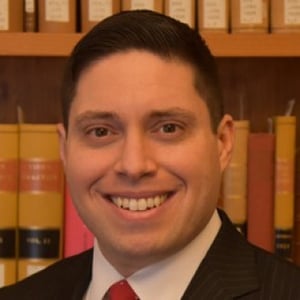
Professor, Associate Dean for Faculty Research, Catholic University of America, Columbus School of Law
José Joel Alicea is the inaugural St. Robert Bellarmine Professor of Law, Associate Dean for Faculty Research, and Director of the Law School’s Center for the Constitution and the Catholic Intellectual Tradition. He has also served as a Visiting Professor at Duke Law School and Notre Dame Law School. Prior to joining the Catholic Law faculty, Professor Alicea practiced law for several years at the law firm of Cooper & Kirk, PLLC, where he specialized in constitutional litigation. He previously served as a law clerk for Justice Samuel A. Alito Jr., on the United States Supreme Court and for Judge Diarmuid F. O'Scannlain on the United States Court of Appeals for the Ninth Circuit.
Professor Alicea’s scholarship has focused on constitutional theory. His scholarship has appeared, or is forthcoming, in the Yale Law Journal, the University of Pennsylvania Law Review, the Virginia Law Review, and the Notre Dame Law Review, among other publications. He has also been active in public debates about constitutional law, testifying before Congress and publishing essays in places like The New York Times, City Journal, and National Affairs.
Professor Alicea is a Fellow at the Columbus School of Law's Center for Religious Liberty and a Nonresident Fellow at The American Enterprise Institute. He is the recipient of several research and teaching awards, including the student-selected Professor of the Year teaching award.
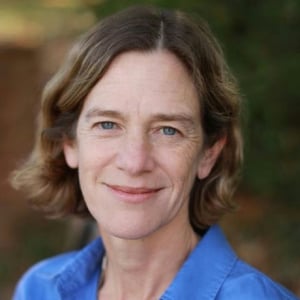
David Lurton Massee, Jr., Professor of Law, Director, Immigration, Migration and Human Rights Program, The University of Virginia School of Law
Amanda Frost is the David Lurton Massee, Jr., Professor of Law and Co-Director of the Immigration, Migration and Human Rights Program at the University of Virginia School of Law. Professor Frost specializes in immigration and citizenship law, federal courts and jurisdiction, and judicial ethics. Professor Frost is the author of the book You Are Not American: Citizenship Stripping from Dred Scott and the Dreamers, which was shortlisted for the Mark Lynton History Prize and was named a "New & Noteworthy" book by the NY Times Book Review. Her scholarship has been cited by state and federal courts, and she has been invited to testify before the House and Senate Judiciary Committees. She has published essays and op-eds in the New York Times, The Atlantic, The New Republic, Slate, USA Today, and The American Prospect.
E. Claiborne Robins Distinguished Chair in Law, University of Richmond School of Law
Professor Kurt Lash teaches and writes about constitutional law. Founder and director of the Richmond Program on the American Constitution, Professor Lash has published widely on the subjects of constitutional law and constitutional history, including The Fourteenth Amendment and the Privileges or Immunities of American Citizenship (Cambridge University Press, 2014), The Lost History of the Ninth Amendment (Oxford University Press, 2009), and The American First Amendment in the Twenty-first Century: Cases and Materials(with William W. Van Alstyne) (5th ed., Foundation Press, 2014). An elected member of the American Law Institute, Professor Lash’s work has appeared in numerous legal journals including the Stanford Law Journal, Georgetown Law Journal, Virginia Law Review, andNotre Dame Law Review. He has been a visiting professor at Northwestern University School of Law and is the former director of the University of Illinois College of Law Program in Constitutional Theory, History, and Law.

David Boies Professor of Law, Yale Law School
Julius E. Davis Professor of Law, University of Minnesota Law School
Ilan Wurman is the Julius E. Davis Professor of Law at the University of Minnesota, where he teaches administrative law and constitutional law. He previously taught at Arizona State University. He writes primarily on the Fourteenth Amendment, administrative law, separation of powers, and constitutionalism. His academic writing has appeared in the Yale Law Journal, the Stanford Law Review, the University of Chicago Law Review, the University of Pennsylvania Law Review, the Virginia Law Review, the Duke Law Journal, the Minnesota Law Review, the Notre Dame Law Review, and the Texas Law Review among other journals.
Professor Wurman is the author of the new book The Constitution of 1789: A New Introduction (Cambridge 2026). His previous books include A Debt Against the Living: An Introduction to Originalism (Cambridge 2017), and The Second Founding: An Introduction to the Fourteenth Amendment (Cambridge 2020). He is also the author of the casebook, Administrative Law Theory and Fundamentals: An Integrated Approach (Foundation Press 3d ed. 2025).
Professor Wurman practices law with the firm Tully Bailey. He has litigated a variety of administrative law and constitutional law cases, including cases involving COVID-19 restrictions, transmission lines, and Appointments Clause challenges. He also devised winning public nuisance theories to force city governments to address the increasingly challenging public camping crises throughout the country.
E. Claiborne Robins Distinguished Chair in Law, University of Richmond School of Law
Professor Kurt Lash teaches and writes about constitutional law. Founder and director of the Richmond Program on the American Constitution, Professor Lash has published widely on the subjects of constitutional law and constitutional history, including The Fourteenth Amendment and the Privileges or Immunities of American Citizenship (Cambridge University Press, 2014), The Lost History of the Ninth Amendment (Oxford University Press, 2009), and The American First Amendment in the Twenty-first Century: Cases and Materials(with William W. Van Alstyne) (5th ed., Foundation Press, 2014). An elected member of the American Law Institute, Professor Lash’s work has appeared in numerous legal journals including the Stanford Law Journal, Georgetown Law Journal, Virginia Law Review, andNotre Dame Law Review. He has been a visiting professor at Northwestern University School of Law and is the former director of the University of Illinois College of Law Program in Constitutional Theory, History, and Law.
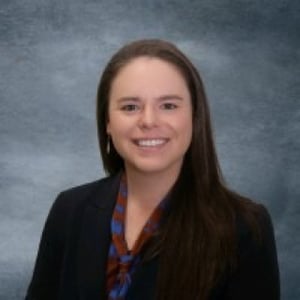
Senior Legal Fellow, Advancing American Freedom
Amy Swearer is a leading national expert on a wide range of public policy, legal, and constitutional issues, including the Second Amendment, criminal justice, and mental health policy. She has long been a respected conservative voice on gun policy and is routinely asked to testify before state and federal legislative bodies. Her work on birthright citizenship, meanwhile, has been featured extensively in litigation over the meaning of the Fourteenth Amendment’s Citizenship Clause.
Swearer was formerly a Senior Legal Fellow in the Edwin Meese III Center for Legal & Judicial Studies at the Heritage Foundation. At Heritage, she ran the Defensive Gun Use Database and was the primary author of the e-book “The Essential Second Amendment.” She was also a driving force behind the organization’s School Safety Initiative.
She was the 2022 recipient of the Heritage Foundation’s Joseph Shattan Award for “writing that presents conservative ideas in a powerful and compelling fashion to policymakers and the American people.” She was also named the Second Amendment Institute’s 2022 Gun Rights Champion.
Swearer received her law degree from the University of Nebraska College of Law and was a member of the Nebraska Law Review. She holds a B.S. in Criminology & Criminal Justice from the University of Nebraska, where she was a Chancellor’s Scholar and a goalkeeper on the women’s soccer team

Emanuel S. Heller Professor of Law, University of California at Berkeley; Thomas Smith Senior Research Fellow, The Civitas Institute, University of Texas at Austin
John Yoo is the Emanuel Heller Professor of Law at the University of California at Berkeley. He is also the Thomas Smith Senior Research Fellow, Civitas Institute, at the University of Texas at Austin. He is also a Nonresident Senior Fellow at the American Enterprise Institute.
His most recent book, The Politically Incorrect Guide to the Supreme Court, co-authored with Robert Delahunty, was published in 2023. Professor Yoo’s other books include Defender-in-Chief: Trump’s Fight for Presidential Power; Striking Power: How Cyber, Robots, and Space Weapons Change the Rules for War; Point of Attack: Preventive War, International Law, and Global Welfare; and Crisis and Command: A History of Executive Power from George Washington to George Bush.
He is a co-author of volumes 1 and 2 of R. Rossum, G. Tarr, V. Munoz & J. Yoo American Constitution Law (Routledge, 2026), and a co-editor of the eight-volume series on the 250th anniversary of the American Revolution, We Hold These Truths, with Yuval Levin and Adam White of the American Enterprise Institute.
Professor Yoo has published more than 100 articles in academic journals on subjects including national security, constitutional law, international law, and the Supreme Court. He also regularly contributes to the editorial pages of the Wall Street Journal, New York Times, Washington Post, Los Angeles Times, and National Review, among others.
Professor Yoo has served in all three branches of government. He was an official in the U.S. Department of Justice, where he worked on national security and terrorism issues after the 9/11 attacks. He served as general counsel of the U.S. Senate Judiciary Committee. He has been a law clerk for Supreme Court Justice Clarence Thomas and federal appeals Judge Laurence Silberman. He has been a visiting professor at the University of Texas at Austin’s School of Civic Leadership, Seoul National University, the Interdisciplinary Center Herzliya, Keio University, Trento University, the University of Chicago, and the Free University of Amsterdam.
Professor Yoo supervises the Public Law and Policy Program and the California Constitution Center. He also serves on the boards of Founding Forward, the Washington Legal Foundation, the Pacific Legal Foundation, the Ulysses Grant Institute, the Federalist Society’s Separation of Powers and Federalism Division, the Universidad Cientifica del Sur Law School, and the Asia-Pacific Law Institute at Seoul National University. He is a winner of the Federalist Society’s Paul Bator award and the Heritage Foundation’s Edwin Meese III Originalism Lectureship.
Professor Yoo graduated from Yale Law School and summa cum laude from Harvard College.
E. Claiborne Robins Distinguished Chair in Law, University of Richmond School of Law
Professor Kurt Lash teaches and writes about constitutional law. Founder and director of the Richmond Program on the American Constitution, Professor Lash has published widely on the subjects of constitutional law and constitutional history, including The Fourteenth Amendment and the Privileges or Immunities of American Citizenship (Cambridge University Press, 2014), The Lost History of the Ninth Amendment (Oxford University Press, 2009), and The American First Amendment in the Twenty-first Century: Cases and Materials(with William W. Van Alstyne) (5th ed., Foundation Press, 2014). An elected member of the American Law Institute, Professor Lash’s work has appeared in numerous legal journals including the Stanford Law Journal, Georgetown Law Journal, Virginia Law Review, andNotre Dame Law Review. He has been a visiting professor at Northwestern University School of Law and is the former director of the University of Illinois College of Law Program in Constitutional Theory, History, and Law.
Senior Legal Fellow, Advancing American Freedom
Amy Swearer is a leading national expert on a wide range of public policy, legal, and constitutional issues, including the Second Amendment, criminal justice, and mental health policy. She has long been a respected conservative voice on gun policy and is routinely asked to testify before state and federal legislative bodies. Her work on birthright citizenship, meanwhile, has been featured extensively in litigation over the meaning of the Fourteenth Amendment’s Citizenship Clause.
Swearer was formerly a Senior Legal Fellow in the Edwin Meese III Center for Legal & Judicial Studies at the Heritage Foundation. At Heritage, she ran the Defensive Gun Use Database and was the primary author of the e-book “The Essential Second Amendment.” She was also a driving force behind the organization’s School Safety Initiative.
She was the 2022 recipient of the Heritage Foundation’s Joseph Shattan Award for “writing that presents conservative ideas in a powerful and compelling fashion to policymakers and the American people.” She was also named the Second Amendment Institute’s 2022 Gun Rights Champion.
Swearer received her law degree from the University of Nebraska College of Law and was a member of the Nebraska Law Review. She holds a B.S. in Criminology & Criminal Justice from the University of Nebraska, where she was a Chancellor’s Scholar and a goalkeeper on the women’s soccer team
Emanuel S. Heller Professor of Law, University of California at Berkeley; Thomas Smith Senior Research Fellow, The Civitas Institute, University of Texas at Austin
John Yoo is the Emanuel Heller Professor of Law at the University of California at Berkeley. He is also the Thomas Smith Senior Research Fellow, Civitas Institute, at the University of Texas at Austin. He is also a Nonresident Senior Fellow at the American Enterprise Institute.
His most recent book, The Politically Incorrect Guide to the Supreme Court, co-authored with Robert Delahunty, was published in 2023. Professor Yoo’s other books include Defender-in-Chief: Trump’s Fight for Presidential Power; Striking Power: How Cyber, Robots, and Space Weapons Change the Rules for War; Point of Attack: Preventive War, International Law, and Global Welfare; and Crisis and Command: A History of Executive Power from George Washington to George Bush.
He is a co-author of volumes 1 and 2 of R. Rossum, G. Tarr, V. Munoz & J. Yoo American Constitution Law (Routledge, 2026), and a co-editor of the eight-volume series on the 250th anniversary of the American Revolution, We Hold These Truths, with Yuval Levin and Adam White of the American Enterprise Institute.
Professor Yoo has published more than 100 articles in academic journals on subjects including national security, constitutional law, international law, and the Supreme Court. He also regularly contributes to the editorial pages of the Wall Street Journal, New York Times, Washington Post, Los Angeles Times, and National Review, among others.
Professor Yoo has served in all three branches of government. He was an official in the U.S. Department of Justice, where he worked on national security and terrorism issues after the 9/11 attacks. He served as general counsel of the U.S. Senate Judiciary Committee. He has been a law clerk for Supreme Court Justice Clarence Thomas and federal appeals Judge Laurence Silberman. He has been a visiting professor at the University of Texas at Austin’s School of Civic Leadership, Seoul National University, the Interdisciplinary Center Herzliya, Keio University, Trento University, the University of Chicago, and the Free University of Amsterdam.
Professor Yoo supervises the Public Law and Policy Program and the California Constitution Center. He also serves on the boards of Founding Forward, the Washington Legal Foundation, the Pacific Legal Foundation, the Ulysses Grant Institute, the Federalist Society’s Separation of Powers and Federalism Division, the Universidad Cientifica del Sur Law School, and the Asia-Pacific Law Institute at Seoul National University. He is a winner of the Federalist Society’s Paul Bator award and the Heritage Foundation’s Edwin Meese III Originalism Lectureship.
Professor Yoo graduated from Yale Law School and summa cum laude from Harvard College.
E. Claiborne Robins Distinguished Chair in Law, University of Richmond School of Law
Professor Kurt Lash teaches and writes about constitutional law. Founder and director of the Richmond Program on the American Constitution, Professor Lash has published widely on the subjects of constitutional law and constitutional history, including The Fourteenth Amendment and the Privileges or Immunities of American Citizenship (Cambridge University Press, 2014), The Lost History of the Ninth Amendment (Oxford University Press, 2009), and The American First Amendment in the Twenty-first Century: Cases and Materials(with William W. Van Alstyne) (5th ed., Foundation Press, 2014). An elected member of the American Law Institute, Professor Lash’s work has appeared in numerous legal journals including the Stanford Law Journal, Georgetown Law Journal, Virginia Law Review, andNotre Dame Law Review. He has been a visiting professor at Northwestern University School of Law and is the former director of the University of Illinois College of Law Program in Constitutional Theory, History, and Law.
Solicitor General, Iowa Office of the Attorney General
Eric Wessan serves as Iowa’s Solicitor General in the Iowa Attorney General’s Office. In that role, Wessan leads Iowa’s litigation before State and federal appellate courts, including the Iowa and U.S. Supreme Courts. Before that role, Wessan worked on complex commercial litigation at two large law firms in Chicago. Wessan also served as a law clerk for the Honorable James C. Ho on the U.S. Court of Appeals for the Fifth Circuit and for the Honorable John F. Kness on the U.S. District Court for the Northern District of Illinois. Wessan is a graduate of the University of Chicago Law School, with honors, and of the University of Chicago.
Julius E. Davis Professor of Law, University of Minnesota Law School
Ilan Wurman is the Julius E. Davis Professor of Law at the University of Minnesota, where he teaches administrative law and constitutional law. He previously taught at Arizona State University. He writes primarily on the Fourteenth Amendment, administrative law, separation of powers, and constitutionalism. His academic writing has appeared in the Yale Law Journal, the Stanford Law Review, the University of Chicago Law Review, the University of Pennsylvania Law Review, the Virginia Law Review, the Duke Law Journal, the Minnesota Law Review, the Notre Dame Law Review, and the Texas Law Review among other journals.
Professor Wurman is the author of the new book The Constitution of 1789: A New Introduction (Cambridge 2026). His previous books include A Debt Against the Living: An Introduction to Originalism (Cambridge 2017), and The Second Founding: An Introduction to the Fourteenth Amendment (Cambridge 2020). He is also the author of the casebook, Administrative Law Theory and Fundamentals: An Integrated Approach (Foundation Press 3d ed. 2025).
Professor Wurman practices law with the firm Tully Bailey. He has litigated a variety of administrative law and constitutional law cases, including cases involving COVID-19 restrictions, transmission lines, and Appointments Clause challenges. He also devised winning public nuisance theories to force city governments to address the increasingly challenging public camping crises throughout the country.
Professor, Associate Dean for Faculty Research, Catholic University of America, Columbus School of Law
José Joel Alicea is the inaugural St. Robert Bellarmine Professor of Law, Associate Dean for Faculty Research, and Director of the Law School’s Center for the Constitution and the Catholic Intellectual Tradition. He has also served as a Visiting Professor at Duke Law School and Notre Dame Law School. Prior to joining the Catholic Law faculty, Professor Alicea practiced law for several years at the law firm of Cooper & Kirk, PLLC, where he specialized in constitutional litigation. He previously served as a law clerk for Justice Samuel A. Alito Jr., on the United States Supreme Court and for Judge Diarmuid F. O'Scannlain on the United States Court of Appeals for the Ninth Circuit.
Professor Alicea’s scholarship has focused on constitutional theory. His scholarship has appeared, or is forthcoming, in the Yale Law Journal, the University of Pennsylvania Law Review, the Virginia Law Review, and the Notre Dame Law Review, among other publications. He has also been active in public debates about constitutional law, testifying before Congress and publishing essays in places like The New York Times, City Journal, and National Affairs.
Professor Alicea is a Fellow at the Columbus School of Law's Center for Religious Liberty and a Nonresident Fellow at The American Enterprise Institute. He is the recipient of several research and teaching awards, including the student-selected Professor of the Year teaching award.
David Lurton Massee, Jr., Professor of Law, Director, Immigration, Migration and Human Rights Program, The University of Virginia School of Law
Amanda Frost is the David Lurton Massee, Jr., Professor of Law and Co-Director of the Immigration, Migration and Human Rights Program at the University of Virginia School of Law. Professor Frost specializes in immigration and citizenship law, federal courts and jurisdiction, and judicial ethics. Professor Frost is the author of the book You Are Not American: Citizenship Stripping from Dred Scott and the Dreamers, which was shortlisted for the Mark Lynton History Prize and was named a "New & Noteworthy" book by the NY Times Book Review. Her scholarship has been cited by state and federal courts, and she has been invited to testify before the House and Senate Judiciary Committees. She has published essays and op-eds in the New York Times, The Atlantic, The New Republic, Slate, USA Today, and The American Prospect.
E. Claiborne Robins Distinguished Chair in Law, University of Richmond School of Law
Professor Kurt Lash teaches and writes about constitutional law. Founder and director of the Richmond Program on the American Constitution, Professor Lash has published widely on the subjects of constitutional law and constitutional history, including The Fourteenth Amendment and the Privileges or Immunities of American Citizenship (Cambridge University Press, 2014), The Lost History of the Ninth Amendment (Oxford University Press, 2009), and The American First Amendment in the Twenty-first Century: Cases and Materials(with William W. Van Alstyne) (5th ed., Foundation Press, 2014). An elected member of the American Law Institute, Professor Lash’s work has appeared in numerous legal journals including the Stanford Law Journal, Georgetown Law Journal, Virginia Law Review, andNotre Dame Law Review. He has been a visiting professor at Northwestern University School of Law and is the former director of the University of Illinois College of Law Program in Constitutional Theory, History, and Law.
David Boies Professor of Law, Yale Law School
Julius E. Davis Professor of Law, University of Minnesota Law School
Ilan Wurman is the Julius E. Davis Professor of Law at the University of Minnesota, where he teaches administrative law and constitutional law. He previously taught at Arizona State University. He writes primarily on the Fourteenth Amendment, administrative law, separation of powers, and constitutionalism. His academic writing has appeared in the Yale Law Journal, the Stanford Law Review, the University of Chicago Law Review, the University of Pennsylvania Law Review, the Virginia Law Review, the Duke Law Journal, the Minnesota Law Review, the Notre Dame Law Review, and the Texas Law Review among other journals.
Professor Wurman is the author of the new book The Constitution of 1789: A New Introduction (Cambridge 2026). His previous books include A Debt Against the Living: An Introduction to Originalism (Cambridge 2017), and The Second Founding: An Introduction to the Fourteenth Amendment (Cambridge 2020). He is also the author of the casebook, Administrative Law Theory and Fundamentals: An Integrated Approach (Foundation Press 3d ed. 2025).
Professor Wurman practices law with the firm Tully Bailey. He has litigated a variety of administrative law and constitutional law cases, including cases involving COVID-19 restrictions, transmission lines, and Appointments Clause challenges. He also devised winning public nuisance theories to force city governments to address the increasingly challenging public camping crises throughout the country.

Panel 4: "The Laws of Nature and of Nature's God"
Hadley P. Arkes, Ryan L. Bangert, Stephanie Barclay, Christopher Dodd, Stuart Kyle Duncan, Kurt T. Lash
Didn't catch this session in person? CLE credit for this event will be available at On-Demand...
From the Courthouse Steps: Trump v. Barbara
Kurt T. Lash, Eric Wessan, Ilan Wurman
In Trump v. Barbara, the U.S. Supreme Court held that the Fourteenth Amendment's Citizenship Clause...
From the Courthouse Steps: Trump v. Barbara
Kurt T. Lash, Eric Wessan, Ilan Wurman
In Trump v. Barbara, the U.S. Supreme Court held that the Fourteenth Amendment's Citizenship Clause...
From the Courthouse Steps: Trump v. Barbara
Kurt T. Lash, Eric Wessan, Ilan Wurman
In Trump v. Barbara, the U.S. Supreme Court held that the Fourteenth Amendment's Citizenship Clause...
From the Courthouse Steps: Trump v. Barbara
Panel: Originalism, Birthright Citizenship and the 14th Amendment
J. Joel Alicea, Amanda Frost, Kurt T. Lash, Keith E. Whittington, Ilan Wurman
Prof. Amanda Frost, David Lurton Massee, Jr., Professor of Law, Director, Immigration, Migration and Human Rights...
Panel: Originalism, Birthright Citizenship and the 14th Amendment
New Orleans, LA27th Annual Faculty Conference
New Orleans, LAWhat's Next for Birthright Citizenship?
Kurt T. Lash, Amy E. Swearer, John C. Yoo
On his first day in office, President Trump signed an Executive Order titled Protecting The...
What's Next for Birthright Citizenship?
Kurt T. Lash, Amy E. Swearer, John C. Yoo
On his first day in office, President Trump signed an Executive Order titled Protecting The...