
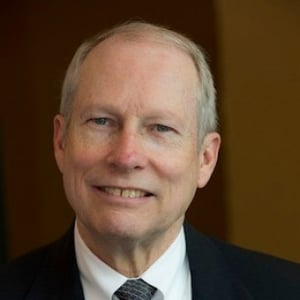
L. Q. C. Lamar Professor of Law, Emory University School of Law
Thomas C. Arthur holds degrees from Yale Law School and Duke University, where he was an Angier B. Duke Scholar and a member of Phi Beta Kappa. Before coming to Emory, he practiced law for eleven years with the Washington, DC office of Kirkland & Ellis. In 1982, he left his law firm partnership to join the Emory Law faculty.
Arthur teaches antitrust, civil procedure, and administrative law, and he has been active on the executive committee of the Antitrust Section of the Association of American Law Schools. His articles in the California and Tulane law reviews have been credited with the founding of a new, "statutory" school of antitrust analysis. His 1991 Emory Law Journal article (co-authored with Professor Richard D. Freer) provoked a nationally noted debate over an important new statute governing the jurisdiction of federal courts. A major antitrust article, "The Costly Quest for Perfect Competition: Kodak and Nonstructural Market Power," was published in the New York University Law Review (vol. 69, April 1994).
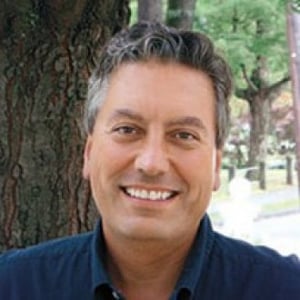
Carroll and Milton Petrie Professor of Law, Harvard Law School
Einer Elhauge is the Petrie Professor of Law at Harvard Law School and Founding Director of the Petrie-Flom Center for Health Law Policy, Biotechnology and Bioethics. He served as Chairman of the Antitrust Advisory Committee to the Obama Campaign. He teaches a gamut of courses ranging from Antitrust, Contracts, Corporations, Legislation, and Health Care Law. Before coming to Harvard, he was a Professor of Law at the University of California at Berkeley, and clerked for Judge Norris on the 9th Circuit and Justice Brennan on the Supreme Court. He received both his A.B. and his J.D. from Harvard, graduating first in his law school class.
He is an author of numerous pieces on range of topics even broader than he teaches, including antitrust, public law, corporate law, patents, the legal profession, and health law policy. His most recent books include: Obamacare on Trial (2012), available at www.amazon.com; Research Handbook on the Economics of Antitrust Law (Edward Elgar Publishing Ltd. 2013); The Fragmentation of U.S. Health Care: Causes and Solutions (Oxford University Press 2010); Statutory Default Rules (Harvard University Press 2008); U.S. Antitrust Law and Economics (Foundation Press 2011); Global. Antitrust Law and Economics (Foundation Press 2011); and Global Competition Law and Economics (Hart Publishing 2011). For his website and publications, see http://www.law.harvard.edu/faculty/elhauge/.
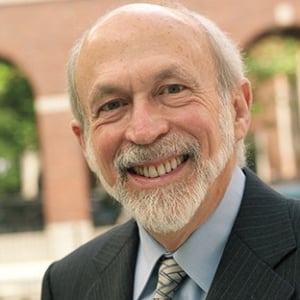
Charles L. Denison Professor of Law and Co-Director, Competition, Innovation, and Information Law Program, New York University School of Law
Harry First is the Charles L. Denison Professor of Law at New York University School of Law and Co-Director of the law school's Competition, Innovation, and Information Law Program. From 1999-2001 he served as Chief of the Antitrust Bureau of the Office of the Attorney General of the State of New York. Professor First's teaching interests include antitrust, regulated industries, international and comparative antitrust, business crime, and innovation policy. Professor First is the co-author of the casebook Free Enterprise and Economic Organization: Antitrust (7th Ed. 2014) (with John Flynn and Darren Bush), as well as a casebook on regulated industries (with John Flynn). He was twice a Fulbright Research Fellow in Japan and taught antitrust as an adjunct professor at the University of Tokyo.
Professor First’s most recent scholarly work has focused on various aspects of antitrust enforcement and theory. These include: The Microsoft Antitrust Cases: Competition Policy for the Twenty-first Century (with Andrew I. Gavil) (MIT Press, 2014), winner of the Jerry S. Cohen Memorial Fund Writing Award for Antitrust Scholarship; “Exploitative Abuses of Intellectual Property Rights” in The Cambridge Handbook of Antitrust, Intellectual Property, and High Tech (2017); “Philadelphia National Bank, Globalization, and the Public Interest” (Antitrust Law Journal, 2015) (with Eleanor M. Fox); “Your Money and Your Life: The Export of U.S. Antitrust Remedies” in Global Competition Law and Economics (Stanford Univ. Press, 2013); “Antitrust’s Democracy Deficit” (with Spencer Weber Waller) (Fordham Law Review, 2013), winner of the Institute of Competition Law’s 2014 Antitrust Writing Award for Best General Antitrust Academic Article; and two chapters in The Design of Competition Law Institutions: Global Norms, Local Choices (Oxford Univ. Press, 2013), one dealing with the United States (with Eleanor Fox and Daniel Hemli), the other with Japan (with Tadashi Shiraishi). First is also the author of a casebook on business crime and of “Business Crime and the Public Interest: Lawyers, Legislators, and the Administrative State” (University of California Irvine Law Review, 2012).
Professor First is a contributing editor of the Antitrust Law Journal, foreign antitrust editor of the Antitrust Bulletin, a member of the executive committee of the Antitrust Section of the New York State Bar Association, and a member of the advisory board and a Senior Fellow of the American Antitrust Institute.

Senior Fellow and Academic Director, Penn Carey Law School
Gus Hurwitz is a Senior Fellow and the Academic Director of the Center for Technology, Innovation & Competition and the University of Pennsylvania Carey Law School where he is working to develop academic and scholarly programs at the intersecution of law, technology, and policy.
He is also Director of Law & Economics Programs at the International Center for Law & Economics (ICLE), a think tank based in Portland, Oregon, where he directs its law and economics-focused research program and helps to translate academic research into applied policy issues.
Hurwitz's research focuses on the regulation of technology, including administrative and regulatory law, antitrust law, torts and products liability, and media law - alongside cognate fields. Inrecent years he has worked on an AI standardization initiative with Seoul National University, a UNICEF-organized study of broadband deployment to public schools in Rwanda, and a book on conglomerate and ecosystems theories of antitrust.
He has published over 30 articles and book chapters, two books (one on cybersecurity law & policy, one on media regulation in the digital era) and have two more in process, over 100 shorter writings (op-eds, shorter analyses, blog posts, &c), hosted over 100 podcast episodes, and regularly appear or am quoted in popular media (including the NY Times, Wall Street Journal, Washington Post, and Associated Press). His work has been cited by legislators, federal courts of appeals, and federal regulatory agencies.
He was previously a full professor and founding director of the Governance & Technology Center at the University of Nebraska, prior to which he was the inaugural research fellow at the Center for Technology, Innovation & Competition (CTIC). From 2007 to 2010, he was a trial attorney with the U.S. Department of Justice Antitrust Division in the Telecommunications and Media Enforcement Section.
He also is, or has been, affiliated with the Classical Liberal Institute at New York University School of Law, the National Security Institute at George Mason University, and the American Enterprise Institute (AEI).
Before attending law school, Hurwitz worked at Los Alamos National Lab and interned at the Naval Research Lab. During this time his work was recognized by the Federal Laboratory Consortium, Los Alamos National Lab, IEEE & ACM, Corporation for Education Network Initiatives in California, R&D Magazine, and even the Guinness Book of World Records.
A current list of Hurwitz’s publications is available on his website: GusHurwitz.net.
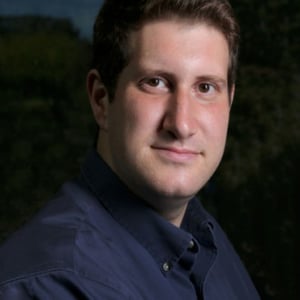
Assistant Professor of Law, Stanford Law School
Gregory Ablavsky’s scholarship focuses on early American legal history, particularly on issues of sovereignty, territory, and property in the early American West. A lawyer and historian, his publications explore a range of topics including the history of the Indian Commerce Clause and the importance of Indian affairs in shaping the U.S. Constitution and the balance of power between states and the federal government. In 2015, the American Society of Legal History named him a Kathryn T. Preyer Scholar. He is currently writing a book based on his dissertation, “The Adjudicatory State: Sovereignty, Property, and the Law in the U.S. Territories, 1783-1803.”
Prior to joining the Stanford Law faculty in 2015, Professor Ablavsky was the Sharswood Fellow in Law and History at the University of Pennsylvania, where he taught courses on land use law and the legal history of empire and race. He clerked for Judge Anthony Scirica of the U.S. Court of Appeals for the Third Circuit. He was also a law clerk for the Native American Rights Fund in Washington, D.C.

Vice President, Global Policy, BSA | The Software Alliance
Aaron Cooper serves as Vice President, Global Policy with BSA | The Software Alliance. In this role, Cooper leads BSA’s global policy team and contributes to the advancement of BSA members’ policy priorities: data privacy and security, intellectual property, and trade. Cooper joined BSA in February 2016 as Vice President, Strategic Policy Initiatives.
Prior to joining BSA, Cooper served as the Chief Counsel for Intellectual Property and Antitrust Law for Chairman Patrick Leahy on the U.S. Senate Judiciary Committee. Most recently, Cooper was of counsel at Covington and Burling, where he provided strategic counseling and policy advice on a range of intellectual property, communications, and privacy issues. Cooper has also served as Legal Counsel to Senator Paul Sarbanes.
Cooper is a graduate of Princeton University and Vanderbilt Law School. He clerked for Judge Gerald Tjoflat on the U.S. Court of Appeals for the Eleventh Circuit.
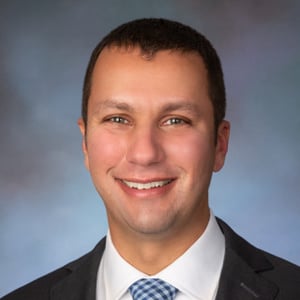
Partner, Duane Morris LLP
Brian Pandya is Partner at Duane Morris LLP. A member of the firm’s Trial Practice Group, Brian represents technology, manufacturing, and healthcare companies in high-stakes litigation, arbitrations, investigations and appeals. He has served as lead trial counsel in a range of intellectual property, antitrust, complex commercial and white-collar matters. He also regularly counsels clients on cybersecurity and national security issues, particularly matters concerning emerging technologies and artificial intelligence.
Before joining Duane Morris, Brian served at the U.S. Department of Justice as Deputy Associate Attorney General from 2019-21, where he oversaw investigations and litigation undertaken by the Antitrust Division and Civil Division and served on several high-profile task forces and trial teams. Brian was also previously a litigation and IP partner at another prominent Washington, DC firm.
Brian clerked for Judge Leonard Davis on the United States District Court for the Eastern District of Texas. He is a two-time recipient of the Federal Circuit Bar Association’s Pro Bono Advocacy Award for work on behalf of military veterans and has served as volunteer federal public defender in the Eastern District of Virginia, among many other bar and community engagements.
Brian graduated cum laude from the University of Michigan Law School, where he was articles editor of the Michigan Telecommunications and Technology Law Review, and with honors and high distinction in mechanical engineering from Penn State University, where he received the Ralph Dorn Hetzel Memorial Award.
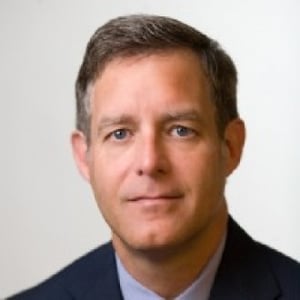
Partner, Shore Chan Depumpo LLP
Michael W. Shore practices in the areas of intellectual property commercialization, business litigation, and other select litigation matters. His intellectual property practice is multifaceted, aiding clients in commercializing their patent and copyright portfolios through strategic development, licensing and litigation. Mr. Shore currently represents clients ranging from Fortune 500 companies to individuals located in the United States, Japan, Great Britain, Luxembourg, Taiwan (ROC) and the People's Republic of China. Prior to forming Shore Chan DePumpo LLP, Mr. Shore headed the Intellectual Property Licensing and Litigation Practice Group as a partner at Akin Gump Strauss Hauer & Feld, LLP.

Founder and Partner, Dowd Scheffel PLLC
Matthew Dowd focuses his skills on complex appellate and trial litigation, with an emphasis on patent and intellectual property issues. Through his years of practice, Mr. Dowd has successfully worked on numerous high-stakes and eclectic legal matters, focusing primarily on all stages of complex patent matters (AIA proceedings, litigation, prosecution, and counseling). Mr. Dowd's expertise and leadership are regularly consulted, as he is frequently asked to comment in the press on leading intellectual property issues.
Mr. Dowd has substantial experience with Hatch-Waxman litigation, including all stages of opinion analysis, litigation, and appeals. His technical background in medicinal chemistry is ideally suited for litigating pharmaceutical patents. He has represented clients in a range of trial forums for patent disputes, such as the Eastern District of Texas and the District of Delaware, as well as the Patent Trial and Appeal Board at the USPTO.
He has argued and briefed numerous appeals before the U.S. Court of Appeals for the Federal Circuit and other courts involving issues such as patent law, Hatch-Waxman, administrative law, Fifth Amendment takings, contract claims, government employment issues, and criminal law. In 2018, Mr. Dowd is co-counsel with the Hon. Richard Posner (ret.) of U.S. Court of Appeals for the Seventh Circuit in an appeal before the U.S. Court of Appeals for the Fourth Circuit.
In 2013, Mr. Dowd represented Nobel Laureate James Watson, co-discoverer of the DNA double helix, as amicus curiae in the groundbreaking 2013 Supreme Court gene patent case. Mr. Dowd has over 15 years of experience representing clients before the U.S. Patent and Trademark Office.
Mr. Dowd is also well-known for his successful pro bono representation in the "free-range kids" case. The case was widely reported in the national, local, and international news.
Mr. Dowd attended The George Washington University Law School, graduating with high honors and being awarded Order of the Coif. While attending law school and before, Mr. Dowd worked full-time as a registered patent agent at the renowned IP boutique Sterne, Kessler, Goldstein & Fox.
After law school, Mr. Dowd clerked for the Honorable Paul R. Michel, Chief Judge (ret.) of the U.S. Court of Appeals for the Federal Circuit. While a law clerk, Mr. Dowd gained an insider's perspective on the appellate process. Understanding the appellate process is critical to maximizing success at the earlier stages of a case.
Mr. Dowd is currently appointed as a Professorial Lecturer in Law at The George Washington University Law School. He teaches appellate advocacy and is the coach for the student moot court team for the AIPLA Giles Sutherland Rich Moot Court Competition.
Prior to his legal career, Mr. Dowd spent four years in a Ph.D. program in medical chemistry, studying organic chemistry, pharmacology, and pharmaceutical drug design. During his Ph.D. program, Mr. Dowd's research discovered a novel structure-activity relationship for nicotinic ligands with potential utility in treating Alzheimer's and Parkinson's diseases. Mr. Dowd attended The College of William and Mary, in Williamsburg, VA, and Regis High School in New York City.
Partner, Duane Morris LLP
Brian Pandya is Partner at Duane Morris LLP. A member of the firm’s Trial Practice Group, Brian represents technology, manufacturing, and healthcare companies in high-stakes litigation, arbitrations, investigations and appeals. He has served as lead trial counsel in a range of intellectual property, antitrust, complex commercial and white-collar matters. He also regularly counsels clients on cybersecurity and national security issues, particularly matters concerning emerging technologies and artificial intelligence.
Before joining Duane Morris, Brian served at the U.S. Department of Justice as Deputy Associate Attorney General from 2019-21, where he oversaw investigations and litigation undertaken by the Antitrust Division and Civil Division and served on several high-profile task forces and trial teams. Brian was also previously a litigation and IP partner at another prominent Washington, DC firm.
Brian clerked for Judge Leonard Davis on the United States District Court for the Eastern District of Texas. He is a two-time recipient of the Federal Circuit Bar Association’s Pro Bono Advocacy Award for work on behalf of military veterans and has served as volunteer federal public defender in the Eastern District of Virginia, among many other bar and community engagements.
Brian graduated cum laude from the University of Michigan Law School, where he was articles editor of the Michigan Telecommunications and Technology Law Review, and with honors and high distinction in mechanical engineering from Penn State University, where he received the Ralph Dorn Hetzel Memorial Award.

Professor of Law, University of Baltimore School of Law (on leave); Senior Counsel, U.S. Department of Justice
Professor Dolin’s scholarship centers on patent law with a specific focus on how the patent regime affects innovation, especially in bio-pharmaceutical areas. His work in these areas includes a number of scholarly articles, presentations, amicus briefs, and congressional testimony.
Dr. Dolin is currently on leave from his academic duties while he serves as Senior Counsel in the Civil Rights Division of the United States Department of Justice.
From January 2020 to January 2022, Professor Dolin served as a resident Associate Justice of the Supreme Court of the Republic of Palau. In this role, he (together with other members of the Court) heard appeals in civil, criminal, administrative, and constitutional law matters.
Prior to joining the University of Baltimore School of Law, Professor Dolin held visiting appointments in other law schools. He also served as a law clerk to the Hon. Pauline Newman, of the U.S. Court of Appeals for the Federal Circuit and the late Hon. H. Emory Widener Jr., of the U.S. Court of Appeals for the Fourth Circuit.
Rumors that he has a real Russian bear in his office are entirely true.
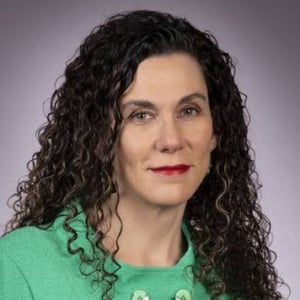
Associate Professor of Law, Center for Intellectual Property and Entrepreneurship, University of Missouri School of Law
Professor Lietzan researches, writes, and teaches primarily in the areas of food and drug regulation, intellectual property, and administrative law. Some of her recent scholarship has focused on the nature and purpose of the new drug approval system, federal regulation of fecal microbiota transplantation, federal regulation of products derived from cannabis, the political economy of the Hatch-Waxman (generic drug) statute, and incentives to study already approved drugs for new uses. She is an award-winning teacher, and she has been an elected member of the American Law Institute since 2006.
Professor Lietzan brings to her scholarship and teaching eighteen years of private practice experience, eight of them as a partner in the food and drug group at Covington & Burling in Washington, DC. In practice, she handled a wide range of complex legal problems and broader legislative and regulatory policy questions affecting FDA-regulated companies. This work included lifecycle management and strategy issues, regulatory strategy and advocacy, white collar defense, congressional investigations, briefing in products liability cases, and international regulatory policy work. She was involved in every major amendment to the Federal Food, Drug, and Cosmetic Act (FDCA) between 1997 and 2014 and was deeply immersed for more than a decade in the development of the Biologics Price Competition and Innovation Act of 2010. She has been consistently identified by her peers in private practice as a “Best Lawyer in America” in the categories of FDA law (since 2013) and Biotechnology Law (since 2007).
Professor Lietzan has held one leadership position or another at the Food and Drug Law Institute (FDLI) since 2004, including a stint on its Board of Directors from 2008 to 2012. She also held leadership positions in the American Bar Association’s Section of Science and Technology Law for fourteen years.
Professor Lietzan received a bachelor’s degree from the University of North Carolina, where she graduated with honors in history. She holds a master’s degree in history from UCLA and a law degree with high honors from Duke Law School.

Andrew A. Hufford is an Intellectual Property attorney with Brinks Gilson & Lione. His practice emphasizes US and global patent prosecution in biopharma, chemistry, and plant genetics. He also has significant experience in patent and trade secret litigation, inter-partes review, and patent due diligence. Mr. Hufford is the Vice Chair of the Utah State Bar Intellectual Property Section; a founding member of the David K. Winder IP Inns of Court; and an active member of the American Bar Association’s IP Law Section.
Mr. Hufford was a Professor of Biology before practicing law. He holds a Bachelor of Science (Cum Laude, Phi Beta Kappa) and Master of Science in Biochemistry, and spent several years conducting clinical pharmacology research. He earned his J.D. from the University of Houston, where he was an Articles Editor with the Houston Journal of Health Law and Policy and a member of the Moot Court and Mock Trial teams.
Vice President of Intellectual Property, Chief Patent Counsel, Celgene Corporation
Mr. Peter Cicala is the Chief Patent Counsel and Vice President of Intellectual Property at Celgene Corporation. His legal practice focuses on all aspects of pharmaceutical and biotechnology intellectual property law. He has extensive experience in patent litigation, prosecution, product lifecycle management, R&D collaborations and joint ventures in the pharma/biotech industry. Mr. Cicala has particular expertise with Hatch-Waxman Paragraph IV litigation as well as substantial experience with patent and regulatory litigation in Europe. Mr. Cicala has regularly participated in due diligence investigations, patent, trademark and copyright licensing, as well as M&A transactions and patent litigation settlements. Additionally, Mr. Cicala has over 10 years of experience as a medicinal chemist and has worked in drug development programs for several major pharmaceutical companies and universities.
Professor of Law, University of Baltimore School of Law (on leave); Senior Counsel, U.S. Department of Justice
Professor Dolin’s scholarship centers on patent law with a specific focus on how the patent regime affects innovation, especially in bio-pharmaceutical areas. His work in these areas includes a number of scholarly articles, presentations, amicus briefs, and congressional testimony.
Dr. Dolin is currently on leave from his academic duties while he serves as Senior Counsel in the Civil Rights Division of the United States Department of Justice.
From January 2020 to January 2022, Professor Dolin served as a resident Associate Justice of the Supreme Court of the Republic of Palau. In this role, he (together with other members of the Court) heard appeals in civil, criminal, administrative, and constitutional law matters.
Prior to joining the University of Baltimore School of Law, Professor Dolin held visiting appointments in other law schools. He also served as a law clerk to the Hon. Pauline Newman, of the U.S. Court of Appeals for the Federal Circuit and the late Hon. H. Emory Widener Jr., of the U.S. Court of Appeals for the Fourth Circuit.
Rumors that he has a real Russian bear in his office are entirely true.

Director, Sterne Kessler Goldstein & Fox PLLC
Robert Greene Sterne is a founding director of Sterne Kessler Goldstein & Fox. At the age of 26, and just one year out of law school, he set out to create a different kind of law firm—one that recognized the contributions of all its members and put a strong emphasis on scientific and technical knowledge. Now, nearly four decades later, Sterne has helped to nurture and grow this revolutionary idea into one of the top five largest intellectual property specialty firms in the country. And in so doing, he has established his place as one of the leading patent lawyers in the United States. In fact, Rob has been recognized by the Financial Times as one of the "Top Ten Most Innovative Lawyers in North America 2015," by Law360 as one of the "Top 25 Icons of IP," and among the country's "IP Trailblazers & Pioneers 2014" by the National Law Journal. He is highly respected by his peers and has received some of the most prestigious awards and rankings for professional excellence in intellectual property law.

Professor of Law, Southern Illinois University School of Law
Professor Mark F. Schultz joined the faculty in 2003. He teaches and writes primarily in the area of intellectual property.
Professor Schultz is a frequent author and speaker known for his work on the law and economics of the global intellectual property system. In one of his most influential projects, he worked with the Organization for Economic Cooperation and Development (OECD) to construct a groundbreaking global trade secret protection index (the TSPI). The TSPI is influencing policy discussions on this cutting-edge topic in capitals around the world. Other recent projects have included an empirical study that quantified for the first time the backlogs in patent offices worldwide, a report on how patented innovation is meeting global health challenges, and the construction of a new global index of copyright strength.
Professor Schultz is an influential voice in public policy debates regarding intellectual property. He has testified before the U.S. Congress on copyright law at the invitation of the House Judiciary Committee and has briefed the staff of the U.S. Senate Judiciary Committee on trade secret legislation. He speaks frequently around the world about the connection between secure and effective intellectual property rights and flourishing national economies and individual lives, with invitations from the U.S. Patent and Trademark Office, the U.S. Trade Representative, and the U.S. Copyright Office, as well as numerous academic institutions, think tanks, and industry groups. He served as an NGO delegate to the World Intellectual Property Organization (WIPO) for several years during the WIPO Development Agenda talks. He is also one of the organizers of an ongoing multilateral diplomatic dialogue on best practices in national trade secret laws, and is co-founder of the Center for Protection of Intellectual Property (CPIP) at George Mason University in Washington, D.C.
Among the awards and recognition he has received for his scholarship was the School of Law's Outstanding Scholar of the Year award in 2008. He has been a distinguished visiting scholar at the University of Botswana and a visiting professor at DePaul University College of Law.
Professor Schultz graduated with honors from the George Washington University School of Law. Following law school, he was a judicial clerk for the Hon. Daniel M. Friedman of the United States Court of Appeals for the Federal Circuit in Washington, D.C., and the Hon. Eric G. Bruggink of the United States Court of Federal Claims. Prior to joining academia, he practiced law for a decade, serving as outside general counsel to several tech startups and helping technology companies to expand their businesses and commercialize their intellectual property in dozens of countries. He holds a B.A. in International Economics from George Washington University and has done PhD level coursework in development economics at Southern Illinois University.
He is active in leadership roles in local and national organizations. He has served as chair of the Federalist Society's Intellectual Property Practice Group and the AALS Section on Internet and Computer Law. He is an officer of the American Bar Association's International IP Committee of the International Law Section and the American Intellectual Property Law Association’s Trade Secret Law Committee. He currently is chair of the Academic Advisory Board of the Copyright Alliance.
Professor Schultz teaches Copyright Law, Trade Secret Law, Trademark Law, and a senior seminar on Intellectual Property and Global Development. He established and directs both the Specialization in Intellectual Property Law and the IP Semester in Practice Externship Program. He also co-founded a Legal Globalization Class, offered every other year, that takes students to South Africa and Botswana after spending a semester learning about the legal system, culture, history, and politics of southern Africa. The popular course is a once-in-a-lifetime experience that introduces students to leading lawyers, judges, government officials, and human rights advocates, taking them from Cape Town to Johannesburg to Gaborone as well as many popular destinations including game reserves, national parks, the Cape of Good Hope, and the Cradle of Humankind.

Special Counsel, Hunton Andrews Kurth
After serving on the United State Court of Appeals for the D. C. Circuit from 2005, Judge Griffith stepped down from the bench in 2020. Currently he is a Lecturer on Law at Harvard Law School, a Fellow at the Wheatley Institute at Brigham Young University, and Special Counsel in the Washington, DC office of the law firm of Hunton Andrews Kurth. Most recently, he was a member of President Biden's Commission on the Supreme Court. He is the author of Civic Charity and the Constitution , and the co-author, along with former judges Michael Luttig and Michael McConnell, of Lost, Not Stolen: The Conservative Case that Trump Lost and Biden Won the 2020 Presidential Election. https://lostnotstolen.org/ . Before being appointed to the D. C. Circuit, Judge Griffith was the General Counsel at BYU; Senate Legal Counsel, the non-partisan chief legal officer of the U. S. Senate; and a partner at Wiley, Rein & Fielding. Long active in rule-of-law programs in former communist nations, Judge Griffith is a member of the international advisory board of the CEELI Institute in Prague. He is a graduate of BYU and the University of Virginia School of Law and is a member of the American Law Institute.
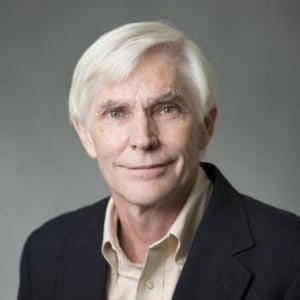
Senior Fellow, Manhattan Institute
Peter Huber, who died in 2021, was a senior fellow at the Manhattan Institute, where he wrote on drug development, energy, technology, and the law. He was the author of The Cure in the Code: How 20th Century Law Is Undermining 21st Century Medicine (2013); The Bottomless Well: The Twilight of Fuel, the Virtue of Waste, and Why We Will Never Run Out of Energy (2005), coauthored with Mark P. Mills, which Bill Gates said “is the only book I’ve ever seen that really explains energy, its history and what it will be like going forward”; and Hard Green: Saving the Environment from the Environmentalists (2000), which William F. Buckley, Jr., called “the richest contribution ever made to the greening of the political mind” and which set out a new conservative manifesto on the environment that advocates a return to conservation and environmental policy based on sound science and market economics.
Huber’s other books included Judging Science: Scientific Knowledge and the Federal Courts (1999), Law and Disorder in Cyberspace: Abolish the FCC and Let Common Law Rule the Telecosm (1997), Orwell’s Revenge: The 1984 Palimpsest (1994), Galileo’s Revenge: Junk Science in the Courtroom (1991), and Liability: The Legal Revolution and Its Consequences (1988). He published articles in scholarly journals, such as the Harvard Law Review and Yale Law Journal, and in such publications as Science, Wall Street Journal, Reason, Regulation, and National Review. He appeared on numerous TV and radio programs, including Face the Nation and The NewsHour with Jim Lehrer.
Before joining MI, Huber was an associate professor at MIT. He clerked on the D.C. Circuit Court of Appeals for Ruth Bader Ginsburg and on the U.S. Supreme Court for Sandra Day O’Connor. Huber was a partner at the Washington, D.C., law firm Kellogg, Huber, Hansen and Todd. He held a J.D. from Harvard University and a Ph.D. in mechanical engineering from MIT.

Special Counsel, Irell & Manella LLP
Lindsay Kelly is Special Counsel in the Los Angeles office of Irell & Manella LLP. Ms. Kelly's practice encompasses complex commercial litigation, including patent litigation, at both the trial court and appellate levels, as well as government investigations and white collar criminal defense.
Prior to joining Irell, Ms. Kelly was an Assistant United States Attorney in the Eastern District of Virginia, where she specialized in intellectual property and computer crimes. During her time as a prosecutor, Ms. Kelly served as lead counsel or co-counsel on five trials, including four jury trials, was lead author of several appellate briefs, and argued before the U.S. Court of Appeals for the Fourth Circuit. Ms. Kelly also presented on trademark counterfeiting at training sessions for federal agents and prosecutors, and received awards from the heads of several government agencies and Inspectors General offices.
Previously, Ms. Kelly practiced at Kellogg, Huber, Hansen, Todd, Evans & Figel PLLC in Washington, D.C., where she worked on complex commercial litigation, internal corporate investigations, and matters before the U.S. Supreme Court. At her previous firm, Ms. Kelly served as co-counsel on two trials and was a team member on a large patent infringement jury trial.
Ms. Kelly served as a law clerk to Chief Judge Paul R. Michel of the U.S. Court of Appeals for the Federal Circuit. Prior to law school, Ms. Kelly worked as a strategic management consultant. Ms. Kelly is also a Chartered Financial Analyst (CFA).

Partner, Covington & Burling LLP
Gerald Masoudi is a partner in the firm’s Washington, DC office and co-chair of the Food and Drug practice group.
Before joining Covington in 2009, Mr. Masoudi served as Chief Counsel of the Food and Drug Administration. In that capacity he was responsible for supervising FDA’s involvement in civil and criminal litigation and investigations; providing legal review of warning letters, guidances and regulations; and providing advice to the FDA commissioner and senior leadership on matters relating to the products regulated by FDA. Before joining the FDA, Mr. Masoudi served as Deputy Assistant Attorney General for international, policy and appellate matters in the Antitrust Division at the Department of Justice. He also served as Principal Deputy Chief Counsel for the FDA in 2004 and 2005. Before entering government service, Mr. Masoudi had a decade of experience in private practice in the areas of antitrust, telecommunications, patent law and energy.
U.S. Court of Appeals, Sixth Circuit
Danny Julián Boggs is a Judge on the United States Court of Appeals for the Sixth Circuit. He was appointed to a newly created seat on that court on January 29, 1986 by President Ronald Reagan, confirmed by the U.S. Senate on March 3, and received his commission on March 25. He served as the Chief Judge of the Sixth Circuit from 2003 to 2009.
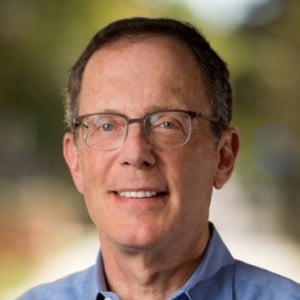
Professor of the Practice of Law, Stanford Law School
Doug Melamed practiced law for 43 years before spending the 2014-15 academic year at the Law School as the Herman Phleger Visiting Professor of Law. He was appointed Professor of the Practice of Law in 2015.
From 2009 until 2014, Professor Melamed was Senior Vice President and General Counsel of Intel Corporation and was responsible for overseeing Intel’s legal, government affairs and corporate affairs departments. Prior to joining Intel in 2009, he was a partner in the Washington, D.C., office of WilmerHale, a global law firm in which he served as a chair of the Antitrust and Competition Practice Group. His practice included appellate and trial court litigation, counseling, and representing clients in matters before government law enforcement and regulatory agencies. He joined WilmerHale’s predecessor in 1971. From 1996 to 2001, Professor Melamed served in the U.S. Department of Justice as Acting Assistant Attorney General in charge of the Antitrust Division and, before that, as Principal Deputy Assistant Attorney General.
Professor Melamed has received numerous professional awards and honors. He has been the Distinguished Visitor from Practice and an adjunct professor at the Georgetown University Law Center, and he has authored numerous articles on antitrust and on law and economics. He is a member of the boards of directors of the Nasdaq exchanges and the American Law Institute and a Contributing Editor of the Antitrust Law Journal. He was for many years a member of the Yale University Council and a member of the board of trustees of Sidwell Friends School in Washington, D.C. After graduating from law school, he clerked for Judge Charles M. Merrill of the U.S. Court of Appeals for the Ninth Circuit.

Professor of Law, Boston University School of Law
The son of an economics professor, Michael Meurer knew by the time he was 13 that he, too, wanted to teach at the university level. An S.B., J.D. and Ph.D. later, he became an economics professor at Duke University and later a law professor at the University of Buffalo. He came to Boston University School of Law in 1999, where he has taught courses in patents, intellectual property and public policy toward the high-tech industry. "It's a special privilege to be able to speak three times a week to an attentive and thoughtful audience," he says.
Professor Meurer has received several grants and fellowships, including two grants from the Pew Charitable Trust, a Ford Foundation grant, an Olin Faculty Fellowship at Yale Law School and a postdoctoral fellowship at AT&T Bell Labs. He has served as an expert witness for the Federal Trade Commission on a merger case presenting issues related to patent licensing. He also has consulted with government officials from developing countries about antitrust law, and taught short courses in American intellectual property law at the law faculties of the University of Victoria and the National University of Singapore. "I'm excited by the prospect of having a positive influence on American technology law and policy," Professor Meurer says. Outside of work, he enjoys playing and watching basketball.
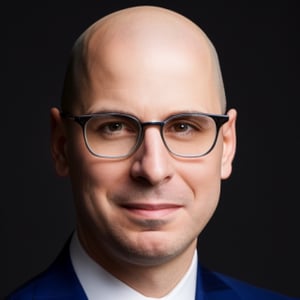
Partner and Lecturer
Adam Mortara graduated from the University of Chicago in 1996 with a B.Sc. in chemistry. He then attended Magdalene College, Cambridge, where he received a masters degree in astrophysics on a British Marshall Scholarship.
Mr. Mortara graduated from the University of Chicago Law School with highest honors in 2001. Following graduation, he clerked for Judge Patrick Higginbotham of the U.S. Court of Appeals for the Fifth Circuit and then for Justice Clarence Thomas of the Supreme Court of the United States. After his clerkships, he was a Temple Bar Scholar of the American Inns of Court.
From 2003 to 2020, Mr. Mortara was with Bartlit Beck LLP where he tried high stakes intellectual property cases and, more notably, Students For Fair Admissions v. Harvard. He retired from Bartlit Beck and founded Lawfair LLC, a civil and voting rights firm. He has been a Lecturer in Law at the University of Chicago Law School since 2007, where he teaches Federal Habeas Corpus, Federal Jurisdiction, Criminal Procedure, and Writing for the Judiciary.
Vice President - Chief IP Counsel, Intellectual Ventures
Phyllis T. Turner-Brim is Vice President, Chief IP Counsel of Intellectual Ventures headquartered in Bellevue, WA.
In this role, Phyllis is responsible for managing and coordinating legal services supporting patent asset acquisitions and divestitures, licensing, prosecution and related transactions. Phyllis’ current team consists of over fifty-five attorneys, para-professionals, assistants and clerks. Immediately prior to this post, Phyllis was Licensing Attorney Director – Program Development at IV.
Prior to joining IV, Phyllis had dual legal and business roles as IP Counsel and Director of RFID Strategy and Licensing at Intermec Technologies Corporation. In her legal role as IP Counsel, Phyllis had responsibility for managing and providing a full spectrum of intellectual property services and related legal counseling including, managing the IP Legal budget, selecting and managing outside prosecution counsel, managing and developing licensing programs, docketing and litigation support. In her business role as Director of RFID Strategy and Licensing, Phyllis had the general management responsibility for Intermec’s RFID BU. In this regard, Phyllis was responsible for driving RFID revenue, developing and implementing product strategy and roadmaps, managing internal and external partner relationships, developing and managing budget, and managing all business unit functions and personnel.
From 2000 to 2004, Phyllis was Associate General Counsel – Intellectual Property at Cabot Microelectronics Corporation. In this position, Ms. Turner-Brim established a full service intellectual property department as part of a corporate “spin-off,” and had responsibility for the corporate intellectual property function worldwide. In addition, Phyllis was responsible for providing legal counseling in the areas of Labor and Employment, Product Stewardship, Environmental Law, and Immigration.
Prior to her post at Intermec, Phyllis served briefly as Assistant General Counsel, Intellectual Property for Wal-Mart Stores, Inc. in Bentonville, Arkansas. She has also served as Intellectual Property Attorney for Amoco Corporation (now BP), and as an associate attorney at the IP boutique firm of McAndrews, Held and Malloy, Ltd.
Phyllis is a 1993 graduate of the University of Cincinnati Law School, and a 1986 honors graduate of the Illinois Institute of Technology (B.S. Chemical Engineering). She has served as a lecturer/presenter on several topics including, developing business focused licensing programs, diversity in the law, recruitment and retention of minorities and women in technical professions, chemical patent drafting, IP strategy development, career development and personal risk taking. Phyllis accepted an invitation to join the Board of Trustees for the AIPLEF in 2013. She has also been a member of the Board of Trustees for the Snohomish County YMCA since 2012 and in 2011, she was elected to Board of Trustees for Trinity Lutheran College in Everett, WA. Prior to pursuing a career in the law, Ms. Turner-Brim held technical management positions with General Electric Co. and Procter and Gamble Co.

Samuel H. McCoy II Professor of Law, University of Virginia School of Law
John F. Duffy is the Samuel H. McCoy II Professor of Law and Class of 1966 Research Professor of Law at the University of Virginia School of Law, where he teaches administrative law, torts and intellectual property. Professor Duffy has published articles on a wide range of administrative law and regulatory issues in journals such as University of Chicago Law Review, Yale Law Journal, Stanford Law Review, Virginia Law Review, Columbia Law Review, Texas Law Review, Northwestern University Law Review, NYU Law Review, University of Pennsylvania Law Review and the Supreme Court Review. His 1998 article Administrative Common Law in Judicial Review, 77 Tex. L. Rev. 113 (1998), was one of the first articles to criticize the Chevron doctrine as being irreconcilable with § 706 of the APA; it won the American Bar Association’s Scholarship Award in Administrative Law. His 2008 article “Are Administrative Patent Judges Unconstitutional?” was covered on National Public Radio), in the New York Times (Adam Liptak, In One Flaw, Questions on Validity of 46 Judges, May 6, 2008), and in the Wall Street Journal (Dan Slater, Patently Unconstitutional, May 6, 2008). The NYT and WSJ agreed that he was “a different kind of law professor,” “one of the lucky few” whose “writings actually wind up changing the law.”
As an attorney in the courts, Duffy has twice successfully convinced the Supreme Court to overturn lower court doctrines that had been applied in many cases over decades but that were unanimously held to be irreconcilable with Supreme Court precedents. See TC Heartland v. Kraft Foods Group Brands, 581 U.S. 258 (2017); KSR v. Teleflex, 550 U.S. 398 (2007).
Prior to entering legal academics, Duffy clerked on the D.C. Circuit for Stephen Williams and on the Supreme Court for Antonin Scalia. While clerking, he became known as Justice Scalia’s “hapless law clerk,” who had been tasked with unearthing three-quarters of a century of legislative history that made “no difference” to the outcome in an otherwise forgettable case. See Conroy v. Aniskoff, 507 U.S. 511, 527-28 (1993) (Scalia, J., concurring in the judgment).
In earlier days, Duffy enjoyed being a professional blackjack player unwelcome in all Atlantic City casinos and a semi-professional road runner (best marathon time 2:24:33). He holds an A.B. in physics from Harvard and a J.D. from the University of Chicago.

Laurence A. Tisch Professor of Law and Director, Classical Liberal Institute, New York University School of Law; Senior Fellow, The Civitas Institute, University of Texas at Austin
Richard A. Epstein is the inaugural Laurence A. Tisch Professor of Law at NYU School of Law. Prior to his joining the faculty, he was a visiting law professor at NYU from 2007 through 2009. He served as the Peter and Kirstin Bedford Senior Fellow at the Hoover Institution from 2000 to 2024. Since 2024 to the present he is a senior lecturer at the Civitas Institute at the University of Texas—Austin. Epstein is also the James Parker Hall Distinguished Service Professor of Law Emeritus and a senior lecturer at the University of Chicago. His initial law school appointment was at the University of Southern California from 1968 to 1972. Epstein received an LL.D., h.c. from the University of Ghent, 2003. He has been a member of the American Academy of Arts and Sciences since 1985 and was a Senior Fellow of the Center for Clinical Medical Ethics at the University of Chicago Division of Biological Sciences, also from 1983. to 2022 He served as editor of the Journal of Legal Studies from 1981 to 1991, and of the Journal of Law and Economics from 1991-2001. From 2001 to 2010 he was a director of the John M. Olin Program in Law and Economics at the University of Chicago.
His newest book, The Myth of Birthright Citizenship: What the Fourteenth Amendment Really Says was published in 2026 (Encounter Books). Prior to that he has published many books including, The Dubious Morality of the Modern Administrative State (Roman & Littlefield 2020).Earlier he published th Classical Liberal Constitution: The Uncertain Quest for Limited Government (Harvard 2014) iHis previous books include Design for Liberty: Private Property, Public Administration and the Rule of Law (Harvard 2011); The Case Against the Employee Free Choice Act (Hoover 2009); Supreme Neglect: How to Revive the Constitutional Protection of Property Rights (Oxford 2008); Antitrust Decrees in Theory and Practice: Why Less is More (AEI 2007); Overdose: How Excessive Government Regulation Stifles Pharmaceutical Innovation (Yale University Press. 2006); How Progressives Rewrote the Constitution (Cato 2006); Cases and Materials on Torts (Aspen Law & Business; 8th ed. 2004); Skepticism and Freedom: A Modern Case for Classical Liberalism (University of Chicago, 2003); Torts (Aspen Law & Business 1999); Principles for a Free Society: Reconciling Individual Liberty with the Common Good (Perseus Books, 1998): Mortal Peril: Our Inalienable Rights to Health Care (Addison-Wesley, 1997); Simple Rules for a Complex World (Harvard, 1995); Bargaining With the State (Princeton, 1993); Forbidden Grounds: The Case Against Employment Discrimination Laws (Harvard , 1992); Takings: Private Property and the Power of Eminent Domain (Harvard, 1985); and Modern Products Liability Law (Greenwood Press, 1980). He has also edited(with Catherine M. Sharkey) Cases and Materials on the Law of Torts (10th edition 2012).
Professor Epstein has written numerous articles on a wide range of legal and interdisciplinary subjects. He has taught courses in administrative law, antitrust law, civil procedure, communications, constitutional law, contracts, corporations, criminal law, employment discrimination law, environmental law, food and drug law health law and policy, legal history, labor law, property, real estate development and finance, jurisprudence, labor law; land use planning, patents, individual, estate and corporate taxation, Roman Law; torts, and workers' compensation.
Professor Epstein also writes a regular column for Civitas Institute, which also sponsors his podcast, The Libertarian with Charles C.W. Cooke, and Law Talk, with Cooke and John Yoo. He also does a podcast with John Batchelor. And appears regularly on the Freedom File with Judge Andrew Napolitano.

Senior Judge, United States Court of Appeals, District of Columbia Circuit
Circuit Judge Douglas H. Ginsburg was appointed to the United States Court of Appeals for the District of Columbia in 1986. After receiving his B.S. from Cornell University in 1970, and his J.D. from the University of Chicago Law School in 1973, he clerked on the D.C. Circuit and for Justice Thurgood Marshall on the United States Supreme Court. Thereafter, Judge Ginsburg was a professor at the Harvard Law School, the Deputy Assistant and then Assistant Attorney General for the Antitrust Division of the Department of Justice, as well as the Administrator of the Office of Information and Regulatory Affairs in the Office of Management and Budget. Concurrent with his service as a federal judge, Judge Ginsburg has taught at the University of Chicago Law School and the New York University School of Law. Judge Ginsburg is currently a Professor of Law at the George Mason University and a visiting professor at University College London, Faculty of Laws.
Judge Ginsburg is the Chairman of the International Advisory Board of the Global Antitrust Institute at the Law and Economics Center of the George Mason University School of Law. He also serves on the Advisory Boards of: Competition Policy International; the Harvard Journal of Law and Public Policy; the Journal of Competition Law and Economics; the Journal of Law, Economics & Policy; the Supreme Court Economic Review; the University of Chicago Law Review; the New York University Journal of Law and Liberty; and, at University College London, both the Centre for Law, Economics and Society and the Jevons Institute for Competition Law and Economics.
In 2020, Judge Ginsburg was the 11th recipient of the John Sherman Award, presented by the Antitrust Division of the Department of Justice in recognition of the awardee’s Lifetime Contributions to Antitrust Law and Policy.
In 2014, Judge Ginsburg received the Lifetime Achievement Award given annually by the Global Competition Review.
He is the author or co-author of several books and more than 100 articles on competition and regulation, including, most recently, Growing Convergence: The Limited Role of Antitrust in Standard Essential Patent Disputes, in CPI Antitrust Chronicle, Summer 2021, Vol. 1, No. 2.

Professor of Law, DePaul University College of Law
Joshua D. Sarnoff is a professor of law at DePaul University and a faculty member in and former director of the Center for Intellectual Property Law & Information Technology (CIPLIT®). He teaches patent law, advanced patent law, administrative law, law and climate change, and other intellectual property law courses. He was previously a professor at the Washington College of Law, American University, in the Glushko-Samuelson Intellectual Property Law Clinic, and at the University of Arizona College of Law. In academic year 2014-2015, Professor Sarnoff was a Thomas A. Edison Distinguished Scholar at the United States Patent and Trademark Office. He is a registered patent attorney and a member of the bars of Washington D.C. and California, a former member of the board of governors of the Federal Circuit Bar Association, and a member of the boards of directors and advisory boards of various nonprofit organizations. He has written numerous articles and book chapters on patent law and climate change and has been involved in a wide range of intellectual property legal and policy disputes. He has submitted testimony on domestic patent law reform bills, has filed numerous amicus briefs in the United States Supreme Court and in the U.S. Court of Appeals for the Federal Circuit on important patent law issues, has been a pro bono mediator for the Federal Circuit, and has been a consultant to the United Nations Conference on Trade and Development on international intellectual property, trade and environmental issues. Professor Sarnoff was formerly in the private practice of intellectual property, environmental, and food and drug law in Washington, D.C. He received his BS from MIT and JD from Stanford.

Founding Partner, Lodestar Law and Economics PLLC
Josh is the founder of Lodestar Law and Economics, PLLC. On January 1, 2013, the U.S. Senate unanimously confirmed Wright as a Commissioner of the Federal Trade Commission (FTC). He is a leading scholar in antitrust law, economics, intellectual property, regulation, and consumer protection, and has published more than 100 articles and book chapters, co-authored a leading antitrust casebook, and edited several book volumes focusing on these issues. Commentators have recognized Wright as “widely considered his generation’s greatest mind on antitrust law,” and his academic work ranks him as one of the most cited antitrust academics in the world. Wright was also awarded the Paul M. Bator Award by the Federalist Society in 2014 to “an academic who demonstrated excellence in legal scholarship, a commitment to teaching, a concern for students, and who has made a significant public impact.” Wright also served as the Executive Director of the Global Antitrust Institute, the world’s premiere academic institute focused upon antitrust education for judges and regulators and has taught hundreds of judges and thousands of regulators from dozens of countries.
Wright’s practice focuses upon helping clients solve complex competition, consumer protection, and regulatory problems by providing legal and economic analysis, strategic advice and counseling, and economic expert testimony.

Topics
Over-regulation is Killing Medical Innovation – But it’s Not the Agency You Think
Usually when we think about regulation of the medical industry – and specifically pharmaceuticals –...
Panel: The Revived Debate About Antitrust
Thomas Carlton Arthur, Einer Elhauge, Harry First, Justin (Gus) Hurwitz
There have been renewed challenges to the Chicago School framework for antitrust law. Some have...
New Frontiers for Tribal Immunity: Patents, Pharmaceuticals, and the PTAB
Gregory Ablavsky, Aaron Cooper, Brian Pandya, Michael Shore
The courts and Congress have long acknowledged the sovereign status of Native American tribes. Tribes,...
Courthouse Steps: Oil States and SAS Institute Inc. v. Matal
Matthew J. Dowd, Brian Pandya
Oil States Energy Services v. Greene’s Energy Group Has the administrative state gone too far into...
Courthouse Steps: Sandoz Inc. v. Amgen Inc. - Podcast
Gregory Dolin, Erika Lietzan
In a decision likely to shape not only future biosimilar litigation but the biosimilar industry...
Courthouse Steps: Amgen, Inc. v. Sandoz, Inc. - Podcast
Andrew A. Hufford
The Biologics Price Competition and Innovation Act of 2010 (42 U.S.C. § 262) created an...
Administrative "Death Squads" for Patents? Assessing the New Administrative Procedures for Challenging Patents - Podcast
Peter Cicala, Gregory Dolin, Robert Greene Sterne, Mark F. Schultz
Property rights in patented inventions are being struck down at an unprecedented rate in a...
Panel III: Innovation and Health Care
Thomas B. Griffith, Peter Huber, Lindsay Kelly, Gerald Masoudi
Given that everyone is getting older and more prone to disease, medical innovation is one...
Panel II: Current Issues in Patent Law
Danny J. Boggs, A. Douglas Melamed, Michael J. Meurer, Adam K. Mortara, Phyllis Turner-Brim
Our patent system has historically been thought to be an engine of innovation, but it...
Intellectual Property: Intellectual Property, Free Markets and Competition Policy
John F. Duffy, Richard A. Epstein, Douglas H. Ginsburg, Joshua Sarnoff, Joshua D. Wright
Are intellectual property rights compatible with free, competitive markets? This question has long been a...