
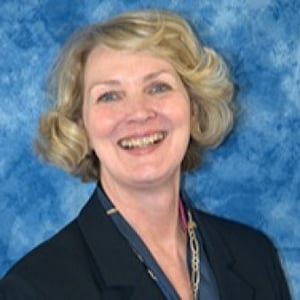
Professor and Director, Prolife Center, University of St. Thomas School of Law
Teresa Collett, J.D., is professor at the University of St. Thomas School of Law, where she serves as director of the school's Prolife Center. Collett received her doctorate at the University of Oklahoma College of Law. As a well-known advocate for the protection of human life and the family, Collett specializes in the subjects of marriage, religion and bioethics in her research.
Collett has published numerous legal articles and is the co-author of a law casebook on professional responsibility and co-editor of a collection of essays exploring “catholic” and “Catholic” perspectives on American law. She is an elected member of the American Law Institute, and has testified before committees of the U.S. Senate and House of Representatives, as well as before legislative committees in several states.
In 2009, Pope Benedict XVI appointed Collett to a five-year term on the Pontifical Council for the Family. Her appointment was renewed by His Holiness Pope Francis until 2016 when the responsibilities of the Council were assumed by the Dicastery for the Laity, Family and Life. In 2013, she served as a delegate to the International Conference on Population and Development (ICPD) for the Mission of the Holy See to the United Nations.
She represented Congressman Ron Paul and various medical groups in the defense of the U.S. federal ban of partial-birth abortion, and the governors of Minnesota and North Dakota defending the N.H. requirement of state parental involvement prior to performance of an abortion on a minor before the U.S. Supreme Court. Collett is often asked to represent the interests of government officials before federal appellate courts. She has served as special attorney general for the states of Oklahoma and Kansas, as well as assisting other state attorneys general in defending laws protecting human life and marriage. Prior to joining St. Thomas in 2003, Collett taught at the South Texas College of Law, where she established the nation's first annual symposium on legal ethics.
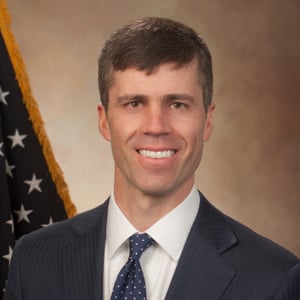
Solicitor General, Mississippi Attorney General's Office
Scott G. Stewart is the Solicitor General of Mississippi. He has litigated and presented oral argument in the U.S. Supreme Court, in all regional federal courts of appeals, and in trial-level courts across the country. Stewart previously served as a Deputy Assistant Attorney General in the U.S. Department of Justice and worked in private practice as a litigator. He served as a law clerk to Justice Clarence Thomas of the Supreme Court of the United States and to Judge Diarmuid F. O’Scannlain of the U.S. Court of Appeals for the Ninth Circuit. Stewart graduated from Princeton University and Stanford Law School.
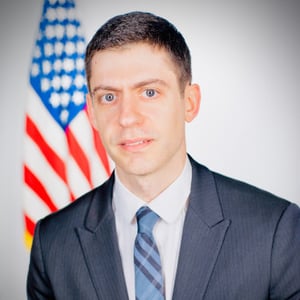
Partner, Quinn Emanuel
John F. Bash is an American attorney who served as the United States Attorney for the Western District of Texas from 2017 to 2020. After graduating from Harvard Law School, Mr. Bash clerked for Judge Kavanaugh during his first year on the bench and went on to clerk for Justice Antonin Scalia. He then served as an Assistant to the Solicitor General in the U.S. Department of Justice, where he argued ten cases in the United States Supreme Court. He also served briefly as Special Assistant to the President and Associate Counsel to the President before his appointment as United States Attorney.
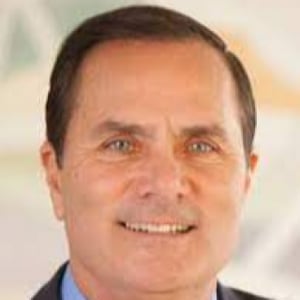
Federal Public Defender for the Southern District of Florida

Co-Director, Tsai Center for Law, Science and Innovation, Altshuler Distinguished Teaching Professor, and Professor of Law, Southern Methodist University Dedman School of Law, SMU Dedman School of Law
Meghan J. Ryan is an award-winning teacher and scholar working at the intersection of criminal law & procedure, torts, and law & science. Her current research focuses on the impact of evolving science, technology, and cultural values on criminal convictions and punishments, as well as on civil liability and remedies. This includes research on forensic science, wrongful convictions, sentencing, cruel & unusual punishments, and toxic torts.
Professor Ryan received her A.B., magna cum laude, in Chemistry from Harvard University. She earned her J.D., magna cum laude, from the University of Minnesota Law School, where she was a member of the Order of the Coif and received the American Law Institute-American Bar Association Scholarship and Leadership Award. She was also a member of both the Minnesota Law Review and the Minnesota Journal of Global Trade.
After graduation, Professor Ryan clerked for the Honorable Roger L. Wollman of the U.S. Court of Appeals for the Eighth Circuit. She also practiced law in the trial group at the Minneapolis-based law firm of Dorsey & Whitney LLP, where she focused her practice on commercial and intellectual property litigation, as well as on white collar defense and compliance. Additionally, Professor Ryan has conducted research in the areas of bioinorganic chemistry, molecular biology, and experimental therapeutics at the Mayo Clinic and the University of Minnesota. Prior to joining the SMU faculty, Professor Ryan was a Visiting Assistant Professor at the University of Minnesota Law School, where she taught Criminal Law, Criminal Process, and Sales.

Professor of Law and Assistant Director, Criminal Justice Center, University of Florida Levin College of Law
Professor Stinneford teaches and writes about legal ethics, criminal law, criminal procedure, and constitutional law. His work has been cited by the United States Supreme Court, several state supreme courts and federal courts of appeal, and numerous scholars. It has published in numerous scholarly journals including the Georgetown Law Journal, the Northwestern University Law Review, the Virginia Law Review, the Notre Dame Law Review, and the William & Mary Law Review. The Stanford-Yale Junior faculty forum selected one of his articles as the best paper in the category of Constitutional History, and the AALS Criminal Justice Section named another article as the best paper in its Junior Scholars Paper Competition. In the fall of 2015, he was a Visiting Scholar at the Georgetown Law Center, Center for the Constitution.
Before joining the Florida faculty in 2009, Stinneford clerked for the Hon. James Moran of the United States District Court for the Northern District of Illinois, served as an Assistant United States Attorney, and practiced law with Winston & Strawn in Chicago. Stinneford teaches first-year courses in Criminal Law and Constitutional Law, and upper-level courses in Professional Responsibility, Criminal Procedure, Federal Criminal Law, Law & Literature, and White Collar Crime.
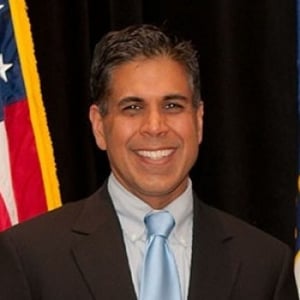
Judge, United States Court of Appeals, Sixth Circuit
Amul R. Thapar serves as a judge on the United States Court of Appeals for the Sixth Circuit. His judicial career began in 2007 when President George W. Bush nominated him to serve on the Eastern District of Kentucky, making him the first South Asian Article III judge in American history. In 2017, he became President Donald J. Trump’s first appellate court nominee.
Before joining the bench, Judge Thapar served as the United States Attorney for the Eastern District of Kentucky. While United States Attorney, Judge Thapar worked on the Attorney General’s Advisory Committee (“AGAC”) and chaired the AGAC’s Controlled Substances and Asset Forfeiture subcommittee. He also served on the Terrorism and National Security subcommittee, the Violent Crime subcommittee, and the Child Exploitation working group.
Judge Thapar has worked in private practice, at Williams & Connolly in Washington, D.C., and Squire, Sanders & Dempsey in Cincinnati, Ohio. He also served as an Assistant United States Attorney in both the Southern District of Ohio and the District of Columbia.
Judge Thapar received his undergraduate degree from Boston College and his law degree from the University of California, Berkeley. After graduating, Judge Thapar worked as a law clerk to the Honorable S. Arthur Spiegel of the United States District Court for the Southern District of Ohio, and the Honorable Nathaniel R. Jones of the United States Court of Appeals for the Sixth Circuit.
Judge Thapar has also published in the Yale Law Journal, Michigan Law Review, and Catholic University Law Review. He teaches courses on originalism, the Federalists and Anti-Federalists, and legal writing at Notre Dame Law School, the University of Virginia School of Law, and Vanderbilt Law School.
American University, Washington College of Law
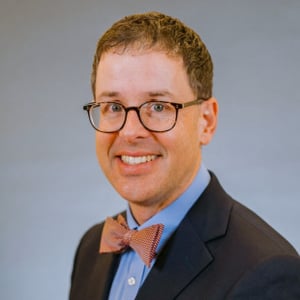
Senior Counsel and VP, Appellate Advocacy, Alliance Defending Freedom
John Bursch is senior counsel and vice president of appellate advocacy with Alliance Defending Freedom. Bursch has argued 12 U.S. Supreme Court cases and more than 30 state supreme court cases since 2011, and a recent study concluded that among all frequent Supreme Court advocates who did not work for the federal government, he had the 3rd highest success rate for persuading justices to adopt his legal position.
Bursch served as solicitor general for the state of Michigan from 2011-2013. He has argued multiple Michigan Supreme Court cases in eight of the last ten terms and has successfully litigated hundreds of matters nationwide, including six with at least $1 billion at stake. As part of his private firm, Bursch Law PLLC, he has represented Fortune 500 companies, foreign and domestic governments, top public officials, and industry associations in high-profile cases, primarily on appeal. He was inducted into the American Academy of Appellate Lawyers and serves as a member of the American Law Institute. His work has resulted in repeated listings in Michigan Super Lawyers and Best Lawyers.
Before entering private practice, Bursch served as a law clerk to the Honorable James B. Loken on the U.S. Court of Appeals for the 8th Circuit. He received his J.D. magna cum laude in 1997 from the University of Minnesota Law School, where he served as Chief Note & Comment Editor for the Minnesota Law Review. Prior to that, he attended Western Michigan University, where he received degrees in mathematics and music performance summa cum laude.
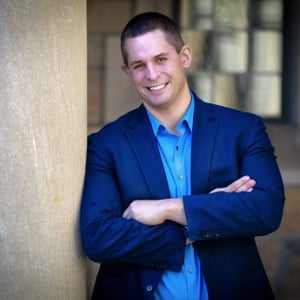
Prosecuting Attorney, Washtenaw County
Eli Savit serves as the elected Prosecuting Attorney for Washtenaw County. Eli’s 4-year term began on January 1st, 2021.
Eli has dedicated this career to public service. He formerly served as a law clerk to Justice Ruth Bader Ginsburg, was a civil-rights and public-interest attorney, and started his career as a public-school teacher. Most recently, Eli served as the City of Detroit’s senior legal counsel, where he led criminal-justice reform work for Michigan’s largest city. Eli is also a nationally recognized attorney who has led public-interest lawsuits against some of the country’s toughest adversaries—adversaries such as banks, the opioid industry, slumlords, and corporate polluters. Eli continues to teach at the University of Michigan as a Lecturer.
Throughout his career in public service, Eli has witnessed first-hand the cascading consequences of a broken criminal-justice system. He ran for Washtenaw County Prosecutor to ensure equitable justice for all Washtenaw County residents and he is humbled by the faith and trust that the voters of Washtenaw County have placed in him.
A Washtenaw County native, Eli grew up in Ann Arbor and graduated from Ann Arbor Pioneer High School (where he captained the basketball team). He graduated from Kalamazoo College, where he played college basketball and was voted senior class commencement speaker. Eli started his career as a public school teacher, teaching special-education and general-education 8th grade American history. He then returned home to Ann Arbor to attend the University of Michigan Law School.
After law school, Eli worked for two federal judges, then as an appellate and Supreme Court lawyer. In private practice, he dedicated significant time to pro bono matters—representing children with disabilities, victims of consumer fraud, and asylum applicants fleeing domestic violence and spousal abuse.
Eli was then selected to work as a law clerk for United States Supreme Court Justices Ruth Bader Ginsburg and Sandra Day O’Connor (ret.). Following his time at the Supreme Court, Eli turned down lucrative opportunities with major D.C. law firms. Instead, he returned home to Michigan, settling in Ann Arbor and accepting an appointment as the City of Detroit’s senior legal counsel.
During his time with the City of Detroit, Eli earned a reputation as a fighter who is unafraid to take on powerful interests. He led the City’s efforts to hold the pharmaceutical industry accountable for the opioid epidemic. He sued banks, slumlords, and corporations whose housing policies were hurting Detroit residents. And he led the City’s landmark legal efforts to establish that all children have a constitutional right to learn how to read and write.
At the City of Detroit, Eli was also a steadfast fighter for criminal-justice reform. He spearheaded the City’s efforts to make it easier for people to expunge criminal records. He served as the City’s liaison to Michigan’s statewide task force on jail and pretrial incarceration. And he led a team of lawyers, statisticians, and trauma-informed professionals to craft city and state policies that will reduce the prison population, and promote rehabilitation and workforce-development for returning citizens.
Eli also earned a reputation as a staunch advocate for children and families. He worked with the Detroit Public Schools, teachers, and parents to prevent the closure of 24 neighborhood schools. He worked with the ACLU and community partners to craft a program that saved thousands of Detroit residents from home foreclosures. He secured millions of dollars in funding for trauma-informed wraparound services for Detroit schoolchildren. And he led the negotiating team which reached an historic deal with the Canadian government to provide nearly $60 million in community benefits related to the Gordie Howe International Bridge project—including $10 million for workforce development, and $35 million for health monitoring and air-pollution remediation in Southwest Detroit.
In addition to serving as Washtenaw County's Prosecuting Attorney, Eli is a faculty member at the University of Michigan Law School. In his academic capacity, he has published scholarly articles on topics such as state and local government, educational equity, campaign-finance reform, and environmental law. His work has also been published in popular publications such as the New York Times, the Wall Street Journal, the Detroit News, the Detroit Free Press, Slate, The Hill, and MLive.com.
Eli has also been an integral part of several major, successful civil rights and environmental initiatives in Michigan and across the country. Representative matters on which he has worked include a successful legal effort to have the Michigan Civil Rights Commission recognize discrimination claims against LGBTQ Michiganders, and assisting the States of New Jersey and Maryland and the Commonwealth of Puerto Rico in their efforts to hold corporate polluters responsible for PFAS and MTBE contamination in the state’s waterways.
Eli serves, or has served, on a number of youth-focused boards of directors, including the Detroit’s Hope Starts Here Early Childhood Initiative Stewardship Board, the Coalition for the Future of Detroit Schoolchildren, the Board of Directors at Ypsilanti’s FLY Children's Art Center. He also serves on the Executive Committee of the Michigan Democratic Party, and on the Executive Board of the Washtenaw County Democratic Party. He is a proud union member, as part of the Lecturers’ Employee Organization (American Federation of Teachers-Michigan Local 6244).
Solicitor General, Mississippi Attorney General's Office
Scott G. Stewart is the Solicitor General of Mississippi. He has litigated and presented oral argument in the U.S. Supreme Court, in all regional federal courts of appeals, and in trial-level courts across the country. Stewart previously served as a Deputy Assistant Attorney General in the U.S. Department of Justice and worked in private practice as a litigator. He served as a law clerk to Justice Clarence Thomas of the Supreme Court of the United States and to Judge Diarmuid F. O’Scannlain of the U.S. Court of Appeals for the Ninth Circuit. Stewart graduated from Princeton University and Stanford Law School.
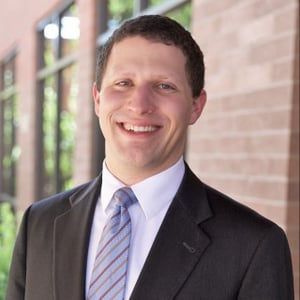
President & General Counsel, Reason for Life
Samuel D. Green serves as President & General Counsel at Reason for Life, a nonprofit ministry working to end abortion in America. In this role, Samuel focuses on educating, but he has also served as counsel of record on amicus briefs in multiple cases, including Dobbs v. Jackson Women’s Health Organization (abortion) and 303 Creative LLC v. Elenis (freedom of speech).
Before founding Reason for Life, Samuel spent five years at Alliance Defending Freedom (ADF), where he engaged in litigation to defend the sanctity of life, freedom of speech, and religious liberty. Samuel has also worked as a litigation associate at a large law firm (Jenner & Block), as a member of a presidential campaign’s legal team, and as a law clerk to the Honorable Raymond W. Gruender of the U.S. Court of Appeals for the Eighth Circuit.
Samuel finished first in his class at Pepperdine University School of Law, where he earned a Juris Doctor degree in 2011. He also studied political science at the University of California, Los Angeles (UCLA), where he graduated, summa cum laude, with a Bachelor of Arts degree in 2008.
Samuel has provided legislative testimony, preached sermons about the sanctity of life, and given presentations across the country to various groups or their chapters (including the Federalist Society, the Christian Legal Society, the St. Thomas More Society, Turning Point USA, Students for Life of America, Live Action, 40 Days for Life, Summit Ministries, and Teen Pact Leadership Schools). Samuel has also participated in media interviews and published articles with various outlets, including Newsweek, The Hill, The Seattle Times, WORLD, Washington Examiner, Arizona Capitol Times, The Federalist, and The Daily Signal.
Samuel is admitted to practice law in California, Arizona, Missouri, Montana, the U.S. Supreme Court, and multiple federal district and appellate courts.
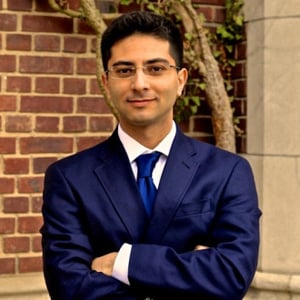
Associate Professor of Law, University of Notre Dame Law School
Sherif Girgis joined Notre Dame Law School in 2021. Prior to joining Notre Dame Law, Sherif practiced law at Jones Day in Washington, D.C., where he focused on appellate and complex civil litigation. Before that, Girgis served as a law clerk to Justice Samuel Alito, Jr., of the U.S. Supreme Court and Judge Thomas B. Griffith of the U.S. Court of Appeals for the D.C. Circuit. Now completing his Ph.D. in philosophy at Princeton, Girgis earned his J.D. at Yale Law School, where he served as an editor of the Yale Law Journal and won the Felix S. Cohen Prize for best paper in legal philosophy. Before law school, he earned a master's degree (B.Phil.) in philosophy from the University of Oxford as a Rhodes Scholar, and his bachelor's degree in philosophy from Princeton, Phi Beta Kappa and summa cum laude. Girgis is coauthor of What Is Marriage? Man and Woman: A Defense, cited in a dissent in United States v. Windsor, and Debating Religious Liberty and Discrimination, released by Oxford University Press in 2017. His work at the intersection of philosophy and law--including criminal law, constitutional liberties, and jurisprudence--has appeared in academic and popular venues including the Yale Law Journal, the Virginia Law Review, the University of Pennsylvania Law Review, the Harvard Journal of Law and Public Policy, the American Journal of Jurisprudence, the Cambridge Companion to Philosophy of Law, The New York Times, and The Wall Street Journal.
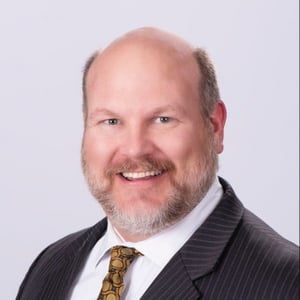
Founder, TGH Litigation LLC
Before forming TGH Litigation, Andy Hirth served as Deputy General Counsel in the Missouri Attorney General's Office, where he represented the people of Missouri in many of the state's highest-profile cases. During his six and a half years with the AGO, Andy defended numerous Missouri statutes from constitutional challenge, including the Macks Creek Law and the Inter-District School Transfer Law; represented Missouri in a $1.14 billion contract dispute between 46 states and more than 30 major tobacco companies; got Missouri's natural resources damage suit over the Bridgeton Landfill fire remanded to state court; and challenged regulations imposed on Missouri farms and businesses by the federal government and the state of California.
Andy graduated cum laude from the University of Missouri-Columbia School of Law in 2005, where he served as Editor-in-Chief of the Missouri Law Review and was inducted into the Order of the Coif. Andy founded and served as president of the University of Missouri-Columbia Student Chapter of the American Constitution Society for Law and Policy. He received a Burton Award for Legal Achievement and the Judge Shepard Barclay Prize for the graduating law student "who has attained the highest standing in scholarship and moral leadership."
After law school, Andy clerked for the Hon. Nanette K. Laughrey, United States District Judge for the Western District of Missouri and spent three years in private practice at Jenner & Block LLP in Chicago, Illinois. As an associate in the firm's Commercial Litigation and Supreme Court and Appellate Practice Groups, Andy represented a national over-the-road trucking company in an EEOC enforcement action alleging a pattern and practice of sexual harassment; defended a national media company from defamation and tortious interference claims by a former radio personality; and challenged the death sentence of an inmate in Florida. In 2010, Andy returned to Missouri to work for Attorney General Chris Koster.
Andy has taught Constitutional Law as an adjunct professor at the University of Missouri-Columbia School of Law. He holds a Juris Doctor and a Master's degree in English from the University of Missouri - Columbia.
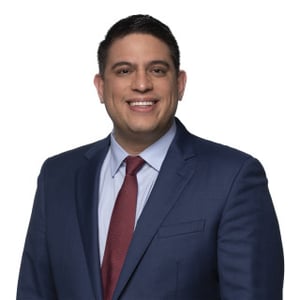
Principal Deputy Assistant Attorney General for Civil Rights, United States Department of Justice
Jesus A. Osete previously served as General Counsel to the Hon. John R. Ashcroft, Secretary of State of Missouri. Mr. Osete previously served as Deputy Solicitor General of Missouri and Deputy Attorney General for Special Litigation. He has presented oral argument in the U.S. Supreme Court. Before joining the Missouri Attorney General’s Office, Mr. Osete worked at Bryan Cave Leighton Paisner LLP in the Appellate and Supreme Court Group. He also clerked for the Hon. Bobby E. Shepherd of the United States Court of Appeals for the Eighth Circuit and the Hon. Chief Justice Zel M. Fischer of the Supreme Court of Missouri. Mr. Osete received his J.D. from Washington University in St. Louis, where he served as Senior Executive Editor of the Washington University Law Review. Before law school, Mr. Osete worked for the late Senator John McCain in the United States Senate, and received an A.B. in political science and pre-law from the University of Arizona.
Mr. Osete serves as Trustee for the Supreme Court of Missouri Historical Society and served as Vice-Chair of the Missouri Bar Appellate Practice Committee. In 2018, he was one of approximately forty individuals in the United States selected to attend the Originalism Summer Seminar at the Georgetown University Law Center. In 2019, he was one of twelve young lawyers in Missouri selected to participate in the MissouriBar’s Leadership Academy.

Partner and Co-Chair, Appellate and Supreme Court Group, Bryan Cave Leighton Paisner
Barbara is a co-chair of the Appellate and Supreme Court Group at BCLP. She is an experienced trial and appellate litigator who counsels clients through their most sensitive and challenging litigation issues, and she routinely handles politically sensitive matters and aggressively advocates for early and complete victory. Her diverse client base—she has represented politicians, fortune 500 companies, foreign sovereigns, and boards of directors—share one thing in common: They need a strong advocate, and they want to win.
Barbara practices—and wins—at all levels of the federal and state courts. Before the United States Supreme Court, Barbara has represented clients filing petitions for certiorari, opposing certiorari, and she has filed merits briefs. She has also represented amici at the certiorari and merits stages.
At the trial court level, she routinely briefs and argues complex dispositive motions in anticipation of defending those victories on appeal. She also has first chair trial experience. On complex trial teams, she has acted as appellate preservation counsel. An experienced appellate advocate, Barbara has notched victories in state and federal appellate courts, including at the United States Supreme Court.
Because some of her clients prefer confidential ADR to public civil litigation, Barbara also has alternative dispute resolution experience, including winning a major arbitration victory for a petitioner-client and successfully mediating a case that (before her involvement) had previously been pending in the court system for more than a decade.
As an example of Barbara’s value-add, she recently crafted a novel standing argument that she briefed and won on a motion to dismiss a putative class action challenging a $198 million transaction in federal court. By winning on a motion to dismiss, she saved her client the time and cost of discovery. Barbara then successfully defended the victory on appeal—after briefing, the petitioner agreed to voluntarily dismiss the appeal and the case ended.
Among other issues, she has litigated questions of constitutional law, statutory construction, administrative law, securities law, labor and employment, white collar crime, ERISA, bankruptcy, and sovereign debt.
Before joining BCLP, Barbara served as a law clerk to Justice Samuel A. Alito, Jr. on the United States Supreme Court and Judge Thomas B. Griffith on the United States Court of Appeals for the D.C. Circuit. She also previously practiced at a Supreme Court litigation boutique, where she represented clients before the United States Supreme Court and various federal courts of appeal.
In her free time, Barbara teaches a class on the United States Supreme Court as an adjunct law professor at Washington University in St. Louis. She also serves on the Steering Committee for the St. Louis Chapter of the Federalist Society.
Barbara earned her J.D. from Stanford Law School, where she was the Editor-in-Chief of the Stanford Journal of Law, Business, and Finance, the President of the Federalist Society, and a member of the law school’s student government. While in law school, Barbara was a moot court semi-finalist and a teaching assistant at Stanford Law School and Stanford’s Graduate School of Business.
Prior to attending law school, Barbara spent two years in the White House Counsel’s Office working for President George W. Bush. She graduated magna cum laude and with honors, from Wake Forest University, with a B.A. in economics and political science.
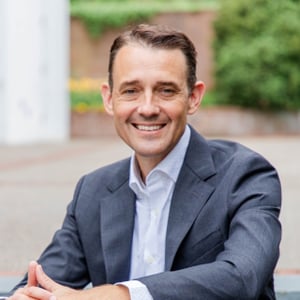
Senior Vice President, Strategic Initiatives & Special Counsel to the President, Alliance Defending Freedom
Ryan Bangert serves as senior vice president for strategic initiatives and special counsel to the president at Alliance Defending Freedom. He oversees ADF’s regulatory practice, government relations, and corporate engagement teams. He also advises executive leadership with strategic initiatives and appears as counsel for ADF clients.
Before joining ADF, Bangert served as deputy first assistant attorney general and deputy for legal counsel in the office of the Texas attorney general. In those roles, he oversaw the state’s Special Litigation Unit, which handled critical litigation against the federal government, and oversaw multiple divisions within the office. Prior to that, he served as deputy for civil litigation for Missouri Attorney General Josh Hawley, overseeing the state’s civil litigation divisions, including the consumer protection and antitrust divisions, with over 200 attorneys and staff. During his time in government service, Bangert handled a diverse array of matters involving Big Tech, election law, civil rights, multistate antitrust and consumer protection investigations, and many other issues.
Prior to his government service, Bangert was a litigation partner at Baker Botts L.L.P., where he was a member of the firm’s commercial litigation and appellate practice sections. A seasoned trial attorney, The Texas Lawyer ranked the verdict Bangert achieved in the Janvey v. Maldonado case as the #1 verdict in the securities category for 2015-2019, and The National Law Journal ranked it in its “Top 100 Verdicts of 2015.” He was named a “Texas Rising Star” for multiple years by Texas Lawyer and Law and Politics magazines. While at Baker Botts, he was a volunteer attorney for ADF and served as amicus counsel in numerous cases, including Trinity Lutheran v. Comer and Salazar v. Buono, receiving the firm’s Opus Justitae Award in recognition of his outstanding commitment to pro bono service.
Bangert earned his J.D. from Southern Methodist University, where he was a Hatton Sumner’s scholar and graduated first in his class. He also participated in ADF’s Blackstone program and is a Blackstone Fellow. Following law school, he clerked for the Honorable Patrick E. Higginbotham on the Fifth Circuit Court of Appeals.
Bangert is a member of the Philadelphia Society and Federalist Society. He is admitted to practice law in Texas, California (inactive), Missouri (inactive), the U.S. Supreme Court and numerous federal district and appellate courts. A frequent op-ed contributor, his work has appeared in National Review, Daily Wire, The Hill, Washington Examiner, The Federalist, Fox News, and RealClear Religion. He speaks nationally on constitutional, cultural, and religious liberty issues.

Arthur B. Hanson Professor of Law, William & Mary Law School
Paul J. Schierl Professor of Law, University of Notre Dame Law School
Professor Richard W. Garnett teaches and writes in the areas of constitutional law, criminal law, the First Amendment, and law and religion. He is a leading authority on questions and debates regarding religious freedom and church-state relations, and is the founding director of Notre Dame Law School’s Program on Church, State, and Society.
Garnett clerked for the late Chief Justice of the United States, William H. Rehnquist, and also for the late Chief Judge of the United States Court of Appeals for the Eighth Circuit, Richard S. Arnold. He earned his J.D. from Yale Law School in 1995 and his B.A., summa cum laude, from Duke University in 1990. He joined the faculty in 1999 after practicing law in Washington, D.C. with Miller, Cassidy, Larroca & Lewin.

Defining “Personhood” in a Post- Dobbs World
Lincoln Memorial Student Chapter
Knoxville, TNThe State's Path to the Supreme Court Decision in Dobbs feat. Scott Stewart
Knoxville Lawyers Chapter
Knoxville, TNAfter Dobbs and Samia: The Potential Implications of Applying a Dobbs Lens to the Supreme Court’s Constitutional Criminal Jurisprudence
2023 National Lawyers Convention
Washington, DCDobbs v. Jackson
American Student Chapter
Washington, DCA Discussion on Religious & Reproductive Freedom
Michigan Lawyers Chapter & Grand Rapids Lawyers Chapter
Lansing, MIShaking Up the Law With Dobbs - An Evening with Scott Stewart
Nashville Young Lawyers
Nashville, TNRoe, Dobbs, and Current Abortion Cases
Fort Worth Lawyers Chapter
Fort Worth, TXAbortion and the Law After Dobbs
Hillsdale Student Chapter
Hillsdale, MIPanel 3: Post-Dobbs Abortion Legislation in Missouri
Jefferson City, MOParental Rights and Religious Liberty: Examining New Conflicts Between Parents and the State
Teleforum