
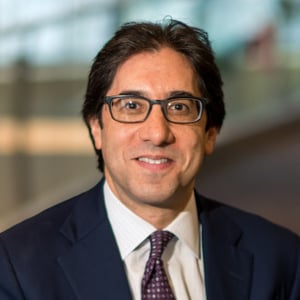
Senior Vice President, Public Policy and Government Affairs, DISH Network
Jeffrey H. Blum is the Senior Vice President of Public Policy and Government Affairs for DISH, overseeing state and federal government affairs in Washington, DC.
Before coming to DISH 2005, Jeff was a partner at Davis Wright Tremaine, where his practice focused on copyright, First Amendment and anti-piracy litigation. At Davis Wright Tremaine, Jeff co-represented a class of songwriters and music publishers in the Grokster P2P file sharing case, which was decided by the United States Supreme Court in favor of Jeff's clients. The Grokster decision established a new basis for secondary copyright liability, called "inducement liability." Jeff was a part-time lecturer at the University of Southern California, Annenberg School of Journalism from 2003-2005, where he taught "Media Law". He currently serves as Chairman of the Satellite Broadcasting and Communications Association (SBCA), and was Co-Chairman of the Broadband Internet Technical Advisory Group (BITAG) from 2013-2015. Jeff also serves on the boards of the Computer & Communications Industry Association (CCIA) and BUILD Metro DC.
Jeff graduated summa cum laude and first in his class at Boston University School of Law, where he was a Note Editor of the Boston University Law Review. He received his undergraduate degree from McGill University, with a B.A. in History and Classics. After law school, he clerked for Chief Judge Joseph Tauro of the U.S. District Court of Massachusetts.

General Counsel and Executive Vice President, Legal and Regulato, National Association of Broadcasters
Rick Kaplan is General Counsel and Executive Vice President, Legal and Regulatory Affairs at the National Association of Broadcasters (NAB).
Prior to joining NAB, Mr. Kaplan served in a number of leadership capacities at the Federal Communications Commission (FCC). During his three-plus years at the FCC, Mr. Kaplan was the Chief of the Wireless Telecommunications Bureau, Chief Counsel to Chairman Julius Genachowski, and Chief of Staff and Media Advisor to Commissioner Mignon Clyburn. As Bureau Chief, Mr. Kaplan helped create and implement policies that maximized the use of underutilized spectrum and promoted meaningful competition in the wireless industry. For example, Mr. Kaplan helped spearhead the agency’s renewed attempt to free up a sizable chunk of spectrum in the 2.3 GHz WCS band, which had laid fallow for well over a decade, and the FCC’s efforts to convert spectrum in the 2 GHz S-Band from mobile satellite to terrestrial broadband use. Mr. Kaplan also played a leading role at the FCC in reviewing nearly every major transaction brought before the agency during Chairman Genachowski’s tenure. These included Comcast/NBCU, AT&T/T-Mobile, AT&T/Qualcomm, DISH/DBSD & TerreStar, and Verizon Wireless/SpectrumCo & Cox.
As Chief Counsel, Mr. Kaplan managed the Commission’s overall policy agenda, and was responsible for policy coordination among each of the Bureaus and Offices. During that time, Mr. Kaplan worked with Congress on the passage of its groundbreaking incentive auction legislation, negotiated a resolution to the nearly decade-old TV white spaces proceeding, brought to decision rules requiring wireless carriers to offer data roaming on commercially reasonable terms, and helped navigate an evolution in the retransmission consent marketplace, ensuring that the government did not unnecessarily interfere with private market negotiations.
Before joining the Commission, Mr. Kaplan practiced appellate litigation and regulatory law at Sidley Austin LLP, and served in the Office of the General Counsel at the U.S. House of Representatives. At the U.S. House, Mr. Kaplan helped orchestrate the Judiciary Committee’s successful and historic litigation in the U.S. District Court for the District of Columbia to obtain documents and testimony from White House officials in the face of claims of executive privilege. Mr. Kaplan began his legal career as a law clerk for Judge Harry T. Edwards of the U.S. Court of Appeals for the D.C. Circuit. Prior to his legal career, Mr. Kaplan founded and operated a sports management and public relations agency that represented and served professional athletes and sports-related organizations. Kaplan earned his Juris Doctor from Columbia Law School, where he served as Editor-in-Chief of the Columbia Law Review, and undergraduate degree from Wesleyan University.
Vice President, Regulatory Affairs, Cox Enterprises
Mr. Barry J. Ohlson serves as Vice President of Regulatory Affairs at Cox Enterprises, Inc. Mr. Ohlson serves as a Partner at Wilkinson Barker Knauer & Quinn. Mr. Ohlson served as Vice President of Policy for Cox Enterprises, Inc. since January 1, 2012. Mr. Ohlson served as the Chief Policy Counsel of Cox Enterprises, Inc. since November 15, 2010 to January 1, 2012. Mr. Ohlson's practice focuses on the wireless, telecommunications, and broadband sectors, with an emphasis on assessing the strategic and regulatory implications of advanced technologies and new telecommunications services. He has nearly 20 years of government, corporate, and legal experience to this role, and he has been intimately involved in the complex regulatory and legal issues that impact businesses and stakeholders. For the majority of his six-year tenure at the Federal Communications Commission, he was Senior Legal Advisor to Commissioner Jonathan S. Adelstein, providing counsel on all administrative and policy matters, particularly those involving spectrum, satellite, technology, public safety and international issues. Mr. Ohlson previously served as Chief of the Policy Division of the FCC's Wireless Telecommunications Bureau, as a Legal Advisor to the Wireless Telecommunications Bureau Chief, and as Acting Chief of the Bureau's Public Safety and Private Wireless Division. Before his government service, Mr. Ohlson was the senior director of federal regulatory affairs at Winstar Communications, and he practiced law at McDermott, Will & Emery and Keller and Heckman in Washington, D.C. He is a member of the Federal Communications Bar Association, and currently serves as a co-chair of the Professional Responsibility Committee. Mr. Ohlson earned a J.D. from the George Washington University Law School and an A.B. degree in international economic relations and mathematics from The College of William & Mary.

Partner, HWG LLP
Patricia Paoletta is a partner with the law firm of HWG LLP, where she specializes in telecommunications, trade and technology policy. Ms. Paoletta provides advice on regulatory, trade and legislative policy to clients before the FCC, Congress and the Administration. Her clients include providers of content, cloud, mobile broadband, VoIP, international telecommunications, small cells, cognitive radio, public safety and homeland security solutions. She serves on Advisory Boards for several entities engaged in information services, communications and technology.
Ms. Paoletta has accrued considerable experience with telecommunications trade and policy in the public sector. From 1990 to 1995, she was senior advisor to the International Bureau Chief and Office Director at the Federal Communications Commission. In the mid 1990s, Ms. Paoletta served as Director of Telecommunications Trade Policy in the Office of the U.S. Trade Representative, Executive Office of the President, where she worked on the WTO Information Technology Agreement (ITA) and the Basic Telecommunications Agreement. After USTR, Ms. Paoletta served as Majority Counsel to the House Energy and Commerce Committee. She then moved to Level 3 Communications, as Vice President, Government Relations.
Ms. Paoletta is on the Steering Committee of the Transatlantic Roundtable on Telecommunications and Information Technology of the European Institute. She is a member of the USTR Alumni Association, Washington International Trade Association, the Federal Communications Bar Association (FCBA), and Women in Technology. Ms. Paoletta has served on the Board of Advisors for the Inter-American Dialogue's Latin America Telecom Advisor, Co-Chairman of the American Bar Association International Communications Committee, and as a member of the U.S. Chamber of Commerce's Technology Policy Committee.
Ms. Paoletta served as a delegate in 2012 to the ITU-R's Study Group 6 Working Party 6A Meeting and in 2009 and 2010 to the ITU-R's Study Group I Working Party IB Meetings; the 2009 meetings of CITEL (the Committee on International Telecommunications at the Organization of American States) PCC-II; the International Telecommunication Union (ITU) World Telecommunications Standards Assembly (2000); the ITU Internet Protocol Telephony Experts Group and the ITU World Telecommunications Policy Forum in 2001; as Chairman of the National Reliability and Interoperability Council (NRIC) Steering Committee (2000-2001); as Board Member for the Voice on the Net Coalition (2001); as Co-Chairman of the FCBA's Annual Seminar Committee (2009-2011); as a member of the FCBA's Ad Hoc Speakers Committee (2006-2007); as Co-Chairman for the FCBA International Practice Committee (2001-2002 and 2005-2006); and as a Co-Chairman of the FCBA Legislative Practice Committee (1999-2000).
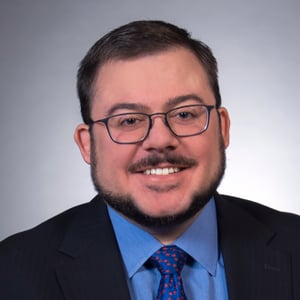
Research Fellow and Regulatory Counsel, Competitive Enterprise Institute
As Research Fellow and Regulatory Counsel, Ryan Radia focuses on adapting law and public policy to the unique challenges of the information age. His research areas at the Competitive Enterprise Institute include intellectual property, information privacy, telecommunications, cybersecurity, competition policy, media regulation, and Internet freedom.
Radia has published articles in major news outlets including The Seattle Times, Forbes, San Jose Mercury News, The Star-Ledger, Ad Age, Investor’s Business Daily, and Ars Technica. He has been quoted in publications including the Los Angeles Times, The New Republic, TIME, Fortune, Chicago Tribune, San Francisco Chronicle, The Boston Globe, POLITICO, The Baltimore Sun, and Bloomberg. He has appeared on dozens of television and radio programs, including “Marketplace” on National Public Radio, “Cavuto” on Fox Business Network, and the “Laura Ingraham Show” on Talk Radio Network.
Radia also blogs on the Technology Liberation Front, a group technology policy blog dedicated to advancing freedom and liberty in the digital age. His commentary has been referenced by blogs including The Atlantic’s Daily Dish, The Washington Post’s Faster Forward, and Techdirt. His research has been cited scholarly journals such as the Brooklyn Law Review, the University of Pennsylvania Journal of Business Law, and the Iowa Law Review Bulletin.
Radia earned his J.D. from The George Washington University Law School, where he served as Senior Articles Editor of the Federal Communications Law Journal. He also holds a B.A. in economics from Northwestern University. Before joining CEI in 2007, he worked in the alternative risk financing sector.
He is admitted to the District of Columbia Bar.
Senior Vice President, Public Policy and Government Affairs, DISH Network
Jeffrey H. Blum is the Senior Vice President of Public Policy and Government Affairs for DISH, overseeing state and federal government affairs in Washington, DC.
Before coming to DISH 2005, Jeff was a partner at Davis Wright Tremaine, where his practice focused on copyright, First Amendment and anti-piracy litigation. At Davis Wright Tremaine, Jeff co-represented a class of songwriters and music publishers in the Grokster P2P file sharing case, which was decided by the United States Supreme Court in favor of Jeff's clients. The Grokster decision established a new basis for secondary copyright liability, called "inducement liability." Jeff was a part-time lecturer at the University of Southern California, Annenberg School of Journalism from 2003-2005, where he taught "Media Law". He currently serves as Chairman of the Satellite Broadcasting and Communications Association (SBCA), and was Co-Chairman of the Broadband Internet Technical Advisory Group (BITAG) from 2013-2015. Jeff also serves on the boards of the Computer & Communications Industry Association (CCIA) and BUILD Metro DC.
Jeff graduated summa cum laude and first in his class at Boston University School of Law, where he was a Note Editor of the Boston University Law Review. He received his undergraduate degree from McGill University, with a B.A. in History and Classics. After law school, he clerked for Chief Judge Joseph Tauro of the U.S. District Court of Massachusetts.
General Counsel and Executive Vice President, Legal and Regulato, National Association of Broadcasters
Rick Kaplan is General Counsel and Executive Vice President, Legal and Regulatory Affairs at the National Association of Broadcasters (NAB).
Prior to joining NAB, Mr. Kaplan served in a number of leadership capacities at the Federal Communications Commission (FCC). During his three-plus years at the FCC, Mr. Kaplan was the Chief of the Wireless Telecommunications Bureau, Chief Counsel to Chairman Julius Genachowski, and Chief of Staff and Media Advisor to Commissioner Mignon Clyburn. As Bureau Chief, Mr. Kaplan helped create and implement policies that maximized the use of underutilized spectrum and promoted meaningful competition in the wireless industry. For example, Mr. Kaplan helped spearhead the agency’s renewed attempt to free up a sizable chunk of spectrum in the 2.3 GHz WCS band, which had laid fallow for well over a decade, and the FCC’s efforts to convert spectrum in the 2 GHz S-Band from mobile satellite to terrestrial broadband use. Mr. Kaplan also played a leading role at the FCC in reviewing nearly every major transaction brought before the agency during Chairman Genachowski’s tenure. These included Comcast/NBCU, AT&T/T-Mobile, AT&T/Qualcomm, DISH/DBSD & TerreStar, and Verizon Wireless/SpectrumCo & Cox.
As Chief Counsel, Mr. Kaplan managed the Commission’s overall policy agenda, and was responsible for policy coordination among each of the Bureaus and Offices. During that time, Mr. Kaplan worked with Congress on the passage of its groundbreaking incentive auction legislation, negotiated a resolution to the nearly decade-old TV white spaces proceeding, brought to decision rules requiring wireless carriers to offer data roaming on commercially reasonable terms, and helped navigate an evolution in the retransmission consent marketplace, ensuring that the government did not unnecessarily interfere with private market negotiations.
Before joining the Commission, Mr. Kaplan practiced appellate litigation and regulatory law at Sidley Austin LLP, and served in the Office of the General Counsel at the U.S. House of Representatives. At the U.S. House, Mr. Kaplan helped orchestrate the Judiciary Committee’s successful and historic litigation in the U.S. District Court for the District of Columbia to obtain documents and testimony from White House officials in the face of claims of executive privilege. Mr. Kaplan began his legal career as a law clerk for Judge Harry T. Edwards of the U.S. Court of Appeals for the D.C. Circuit. Prior to his legal career, Mr. Kaplan founded and operated a sports management and public relations agency that represented and served professional athletes and sports-related organizations. Kaplan earned his Juris Doctor from Columbia Law School, where he served as Editor-in-Chief of the Columbia Law Review, and undergraduate degree from Wesleyan University.
Vice President, Regulatory Affairs, Cox Enterprises
Mr. Barry J. Ohlson serves as Vice President of Regulatory Affairs at Cox Enterprises, Inc. Mr. Ohlson serves as a Partner at Wilkinson Barker Knauer & Quinn. Mr. Ohlson served as Vice President of Policy for Cox Enterprises, Inc. since January 1, 2012. Mr. Ohlson served as the Chief Policy Counsel of Cox Enterprises, Inc. since November 15, 2010 to January 1, 2012. Mr. Ohlson's practice focuses on the wireless, telecommunications, and broadband sectors, with an emphasis on assessing the strategic and regulatory implications of advanced technologies and new telecommunications services. He has nearly 20 years of government, corporate, and legal experience to this role, and he has been intimately involved in the complex regulatory and legal issues that impact businesses and stakeholders. For the majority of his six-year tenure at the Federal Communications Commission, he was Senior Legal Advisor to Commissioner Jonathan S. Adelstein, providing counsel on all administrative and policy matters, particularly those involving spectrum, satellite, technology, public safety and international issues. Mr. Ohlson previously served as Chief of the Policy Division of the FCC's Wireless Telecommunications Bureau, as a Legal Advisor to the Wireless Telecommunications Bureau Chief, and as Acting Chief of the Bureau's Public Safety and Private Wireless Division. Before his government service, Mr. Ohlson was the senior director of federal regulatory affairs at Winstar Communications, and he practiced law at McDermott, Will & Emery and Keller and Heckman in Washington, D.C. He is a member of the Federal Communications Bar Association, and currently serves as a co-chair of the Professional Responsibility Committee. Mr. Ohlson earned a J.D. from the George Washington University Law School and an A.B. degree in international economic relations and mathematics from The College of William & Mary.
Partner, HWG LLP
Patricia Paoletta is a partner with the law firm of HWG LLP, where she specializes in telecommunications, trade and technology policy. Ms. Paoletta provides advice on regulatory, trade and legislative policy to clients before the FCC, Congress and the Administration. Her clients include providers of content, cloud, mobile broadband, VoIP, international telecommunications, small cells, cognitive radio, public safety and homeland security solutions. She serves on Advisory Boards for several entities engaged in information services, communications and technology.
Ms. Paoletta has accrued considerable experience with telecommunications trade and policy in the public sector. From 1990 to 1995, she was senior advisor to the International Bureau Chief and Office Director at the Federal Communications Commission. In the mid 1990s, Ms. Paoletta served as Director of Telecommunications Trade Policy in the Office of the U.S. Trade Representative, Executive Office of the President, where she worked on the WTO Information Technology Agreement (ITA) and the Basic Telecommunications Agreement. After USTR, Ms. Paoletta served as Majority Counsel to the House Energy and Commerce Committee. She then moved to Level 3 Communications, as Vice President, Government Relations.
Ms. Paoletta is on the Steering Committee of the Transatlantic Roundtable on Telecommunications and Information Technology of the European Institute. She is a member of the USTR Alumni Association, Washington International Trade Association, the Federal Communications Bar Association (FCBA), and Women in Technology. Ms. Paoletta has served on the Board of Advisors for the Inter-American Dialogue's Latin America Telecom Advisor, Co-Chairman of the American Bar Association International Communications Committee, and as a member of the U.S. Chamber of Commerce's Technology Policy Committee.
Ms. Paoletta served as a delegate in 2012 to the ITU-R's Study Group 6 Working Party 6A Meeting and in 2009 and 2010 to the ITU-R's Study Group I Working Party IB Meetings; the 2009 meetings of CITEL (the Committee on International Telecommunications at the Organization of American States) PCC-II; the International Telecommunication Union (ITU) World Telecommunications Standards Assembly (2000); the ITU Internet Protocol Telephony Experts Group and the ITU World Telecommunications Policy Forum in 2001; as Chairman of the National Reliability and Interoperability Council (NRIC) Steering Committee (2000-2001); as Board Member for the Voice on the Net Coalition (2001); as Co-Chairman of the FCBA's Annual Seminar Committee (2009-2011); as a member of the FCBA's Ad Hoc Speakers Committee (2006-2007); as Co-Chairman for the FCBA International Practice Committee (2001-2002 and 2005-2006); and as a Co-Chairman of the FCBA Legislative Practice Committee (1999-2000).
Research Fellow and Regulatory Counsel, Competitive Enterprise Institute
As Research Fellow and Regulatory Counsel, Ryan Radia focuses on adapting law and public policy to the unique challenges of the information age. His research areas at the Competitive Enterprise Institute include intellectual property, information privacy, telecommunications, cybersecurity, competition policy, media regulation, and Internet freedom.
Radia has published articles in major news outlets including The Seattle Times, Forbes, San Jose Mercury News, The Star-Ledger, Ad Age, Investor’s Business Daily, and Ars Technica. He has been quoted in publications including the Los Angeles Times, The New Republic, TIME, Fortune, Chicago Tribune, San Francisco Chronicle, The Boston Globe, POLITICO, The Baltimore Sun, and Bloomberg. He has appeared on dozens of television and radio programs, including “Marketplace” on National Public Radio, “Cavuto” on Fox Business Network, and the “Laura Ingraham Show” on Talk Radio Network.
Radia also blogs on the Technology Liberation Front, a group technology policy blog dedicated to advancing freedom and liberty in the digital age. His commentary has been referenced by blogs including The Atlantic’s Daily Dish, The Washington Post’s Faster Forward, and Techdirt. His research has been cited scholarly journals such as the Brooklyn Law Review, the University of Pennsylvania Journal of Business Law, and the Iowa Law Review Bulletin.
Radia earned his J.D. from The George Washington University Law School, where he served as Senior Articles Editor of the Federal Communications Law Journal. He also holds a B.A. in economics from Northwestern University. Before joining CEI in 2007, he worked in the alternative risk financing sector.
He is admitted to the District of Columbia Bar.

Panel: The Future of Media: Is Government Regulation In Today's Media Landscape "Over-The-Top"?
Jeffrey Blum, Rick Kaplan, Barry Ohlson, Patricia J. Paoletta, Ryan Radia
The Federalist Society's Telecommunications & Electronic Media Practice Group and its George Washington University Law...
Panel: The Future of Media: Is Government Regulation In Today's Media Landscape "Over-The-Top"?
The Future of Media
Washington, DC